


resources
Navigate Europe Like a Pro: The Ultimate List of Best Travel Apps for Europe
06 Dec 2025

Embarking on a European adventure can often feel like a significant undertaking, can't it? You've meticulously arranged flights, perhaps even secured a few accommodations, yet the logistics of seamless navigation, effective communication, and discovering intriguing locales—all while adhering to your budget—can quickly become daunting. Overwhelmed? It's a common sentiment. However, the judicious selection of mobile applications can truly transform your travel experience. Drawing from years of personal exploration, I can attest that these digital tools have undeniably alleviated considerable stress and saved invaluable time. Bid farewell to the days of fumbling with cumbersome paper maps or resorting to charades to order your morning coffee; these indispensable apps are poised to become your most trusted companions for traversing Europe. Below, we present a curated selection of the finest travel applications for Europe, essential downloads before your journey commences.
Key Takeaways
- Google Maps is a go-to for directions, finding places, and even offline use, making it a top choice among the best travel apps for Europe.
- Google Translate helps break down language barriers instantly with text, voice, and camera translation, a must-have for any European journey.
- Rome2Rio is fantastic for comparing different travel options like trains, buses, and flights between cities, simplifying complex routes.
- Citymapper offers real-time public transport information and notifications, especially useful in major European cities.
- Ride-sharing apps like Uber, Bolt, FreeNow, and Cabify provide convenient and flexible transportation options across various European countries.
1. Google Maps
For those navigating the diverse landscapes of Europe, Google Maps is, without doubt, widely regarded as the definitive application for most travelers—and for exceptionally good reasons. Its capabilities are remarkably comprehensive, seamlessly handling everything from precise walking directions within ancient city centers to orchestrating more extensive journeys via public transportation. Users can effortlessly ascertain real-time traffic conditions, pinpoint the most expeditious routes, and even receive timely updates on public transit schedules across numerous urban hubs.
Among its most invaluable features for European exploration is the distinct ability to download maps for offline access. This proves to be an absolute boon when venturing into locales with intermittent cellular service or simply when conserving precious mobile data is a priority. A proactive tip: always remember to download the maps for your intended destinations before departing from your hotel's Wi-Fi network.
Here’s why it’s a top pick:
- Offline Maps: Download entire city maps to use without an internet connection.
- Public Transit Integration: Get directions for buses, trains, and metros, often with real-time updates.
- Points of Interest: Easily find restaurants, ATMs, pharmacies, and attractions nearby.
- Reviews and Photos: Get a feel for a place before you go, thanks to user-submitted information.
While the EU's Digital Markets Act has introduced some changes, like static map images in search results that require opening the app separately for directions, Google Maps remains a reliable and indispensable tool for exploring the continent. It's free, available on all major platforms, and consistently updated.
Indeed, this app serves as your indispensable digital compass for almost any destination in Europe.
2. Google Translate

When your travels take you across Europe, particularly to locales where English isn't universally spoken, Google Translate truly becomes an indispensable companion. This complimentary application, readily available for both Android and iOS devices, has—speaking from personal experience—proven remarkably effective in navigating challenging situations, be it deciphering intricate menus or requesting directions in an unfamiliar tongue.
One of its truly standout features is the camera translation capability. Simply direct your phone at a sign, a restaurant menu, or even a product label, and observe as the translation instantly overlays on your screen. While perhaps not always flawless, it proves utterly invaluable when attempting to comprehend your order or absorb crucial information. Indeed, I’ve relied on it extensively during grocery runs in various countries.
Another remarkably practical feature is the conversation mode. Activate the microphone, and the app endeavors to translate live dialogue in real-time. Again, while not entirely without occasional imperfections, it consistently provides sufficient context to keep discussions progressing. Moreover, it’s an excellent resource for refining pronunciation should you wish to attempt speaking a modicum of the local language.
Don't forget to download languages for offline use before you leave. This way, you can still translate even if you don't have Wi-Fi or a data connection, which happens more often than you'd think.
Beyond interpreting spoken words and text, Google Translate also offers robust website translation. If you find yourself attempting to book services online and the page is not in English, this feature can significantly streamline the entire process. It’s a seemingly simple tool, but one that makes a profound difference when you're striving to understand foreign websites.
3. Rome2Rio
Pondering the optimal route from, for instance, the vibrant streets of Paris to the charming canals of Amsterdam—or perhaps an equally captivating smaller town nestled en route? Rome2Rio stands as the quintessential resource for meticulously charting such journeys. This ingenious platform aggregates all conceivable modes of transport—be it flights, trains, buses, or even ferries—and presents a clear, concise overview of your available options. Simply input your origin and destination, and it promptly displays estimated travel durations and potential costs.
It proves exceptionally beneficial during the initial planning stages, offering a tangible sense of what travel connections are genuinely feasible. The ability to compare various transport modes side-by-side significantly assists in balancing the twin priorities of time efficiency and budgetary considerations. Moreover, with an extensive global reach spanning over 160 countries, its coverage is remarkably thorough.
Here's a quick look at what it offers:
- Route Comparison: See flights, trains, buses, and ferries all in one place.
- Time Estimates: Get a good idea of how long each journey will take.
- Cost Estimates: Find out the approximate price for each travel option.
- Booking Links: Often provides links to where you can book your tickets.
This app is fantastic for getting a broad overview of your travel possibilities. While it might not always furnish the absolute cheapest or most up-to-the-minute pricing, it nevertheless serves as an excellent starting point for truly grasping your journey options across Europe—it genuinely simplifies the complexities of multi-step trips and helps clarify whether a train or a bus represents the more sensible choice.
4. Citymapper
When immersed within a bustling European metropolis, deciphering its intricate public transport network can often present a perplexing challenge. It is precisely in these scenarios that Citymapper truly excels. Imagine having access to a seasoned local guide, privy to all the most efficient shortcuts and optimal routes for reaching your destination—whether by bus, train, subway, or even a shared scooter.
Citymapper is undoubtedly your foremost choice for comprehensive, real-time public transit information within a city's confines. While other applications might offer a broader stroke of inter-city travel, Citymapper delves into the intricate specifics of intra-city movement. It meticulously aggregates live data, ensuring you're instantly informed of any train delays or service disruptions long before you ever leave your accommodation. Furthermore, it even furnishes helpful, nuanced tips—such as which specific part of the train to board for the swiftest exit at your intended stop.
Here's what makes it stand out:
- Multiple Transport Options: It doesn't just stick to one mode. You'll get directions for buses, trains, subways, trams, ferries, cycling, walking, and even ride-sharing services.
- Live Updates: Get real-time departure times and alerts about delays or changes to service.
- Step-by-Step Guidance: Clear, easy-to-follow directions that make navigating unfamiliar systems much less stressful.
- Journey Comparisons: See estimated travel times and sometimes even costs for different routes, helping you pick the best option for your needs.
Its utility is particularly pronounced in major hubs such as London, Paris, Berlin, and Rome, though its coverage continues to expand steadily. If your exploration hinges heavily on public transport, then downloading Citymapper is—without question—an unequivocal necessity. It significantly diminishes the guesswork associated with urban navigation, allowing you to focus more intently on enjoying the sights and less on the anxiety of potentially missing your stop.
5. Maps.me
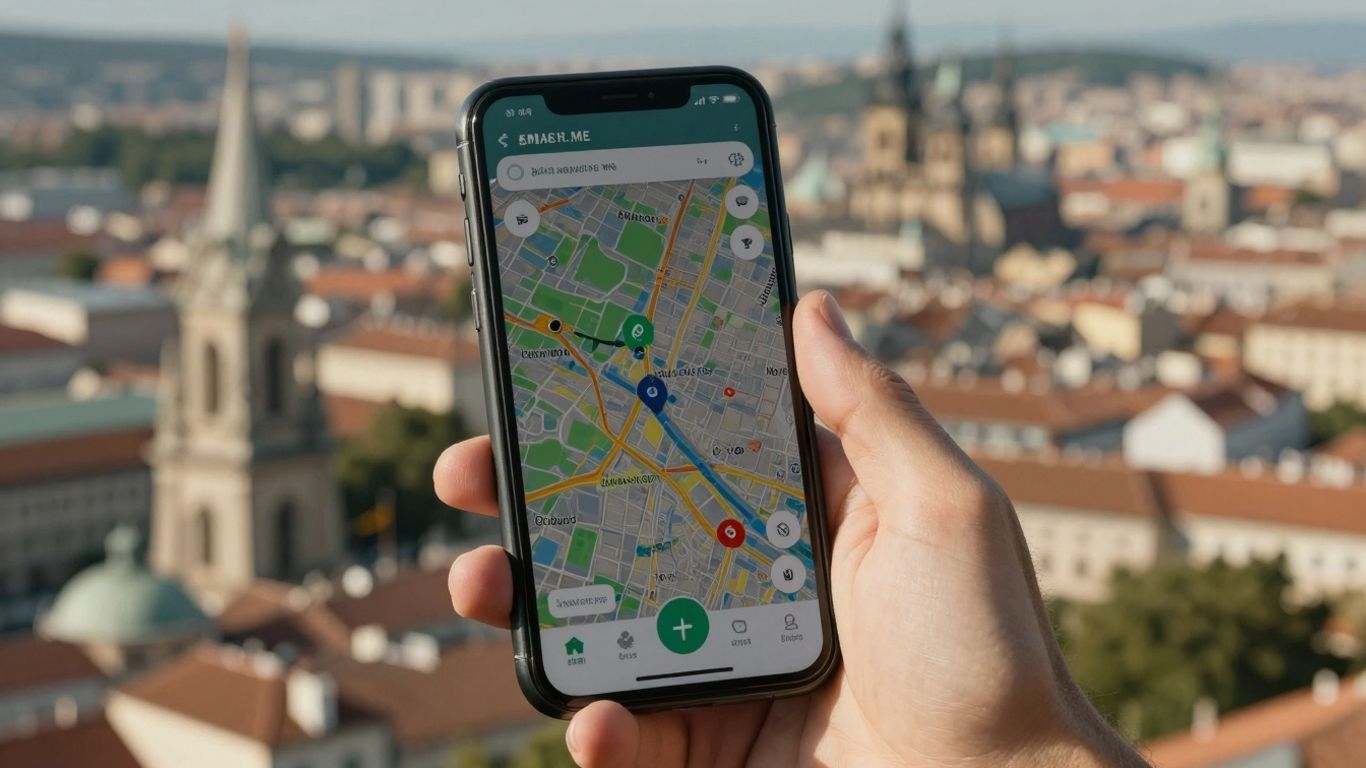
When embarking on an exploration of Europe, particularly in regions where Wi-Fi connectivity might be sporadic or where conserving precious mobile data is paramount, the availability of offline maps offers a truly transformative advantage. This is precisely where Maps.me truly distinguishes itself. Built upon the comprehensive OpenStreetMap data, it frequently furnishes remarkably granular detail—sometimes surpassing other applications—especially concerning intricate walking paths and smaller arterial roads.
Its robust offline functionality stands as the primary appeal. You possess the invaluable ability to download entire city or even country maps before departing your hotel or a designated Wi-Fi zone, subsequently utilizing them for seamless navigation without requiring any internet connection. This feature proves exceptionally useful for orienting oneself within historic city centers or even for traversing remote hiking trails.
Here’s what makes Maps.me a solid choice:
- Detailed Maps: Often includes points of interest like restaurants, shops, and landmarks, which are searchable even offline.
- Offline Navigation: Provides turn-by-turn directions for driving, walking, and cycling, working reliably without data.
- Free to Use: While some apps are moving towards subscriptions, Maps.me has historically offered its core mapping features for free.
While Maps.me is great for offline use, it's worth noting that real-time updates, like traffic or public transport changes, won't be available. It’s best for pre-planned routes or when you know you'll be off the grid for a while.
It’s a consistently reliable tool for navigating when you simply cannot depend on a constant internet connection. A crucial reminder: ensure you download your maps well ahead of time!
6. Uber, Bolt, FreeNow, Cabify
For those instances when rapid, hassle-free transit from point A to point B is a priority, ride-sharing applications emerge as your optimal choice across Europe. While Uber is a globally recognized name, its presence isn't entirely ubiquitous, and its availability can indeed be somewhat inconsistent depending on the specific country or even individual city. In certain regions, for example, you might discover that Bolt is a more prevalent—or even more economical—option, particularly popular throughout Eastern Europe and Portugal. FreeNow, meanwhile, stands as a dependable option in major metropolitan areas such as London and Berlin, and should your travels take you to Spain, Cabify frequently presents competitive pricing alongside a more premium service experience.
It's a genuinely prudent strategy to download a selection of these apps before your departure and then compare their offerings upon arrival. Pricing structures and driver availability are subject to change, and possessing multiple options ensures you can consistently secure the most advantageous deal for your particular journey. It’s not uncommon for one app to exhibit surge pricing while another maintains a standard rate, or for a particular service to have more drivers accessible in your immediate vicinity.
Here's a quick look at what to expect:
- Uber: Widely available, but sometimes restricted to luxury car services (like Uber Black) in certain countries, such as Italy. Always check local regulations, as some places have strict rules or even bans.
- Bolt: Often a more budget-friendly alternative, particularly popular in Eastern Europe and Portugal. It's also used for food delivery in some regions.
- FreeNow: A reliable option in major cities like London and Berlin. It's also the legally recognized ride-hailing service in Rome.
- Cabify: A strong contender in Spain and Portugal, known for its fixed pricing and a slightly more upscale service.
Remember that local taxi services are always an option too, but ride-sharing apps often provide the convenience of upfront pricing and real-time tracking, which can be really comforting, especially when you're traveling solo or late at night.
Do bear in mind that Europe's ride-sharing landscape is constantly evolving. Some countries implement specific regulations that may either limit certain services or necessitate their operation in a manner more akin to traditional taxis. Norway and Germany, for instance, have historically enforced quite stringent rules. Therefore, it’s always wise to conduct a quick verification of the specific apps you intend to utilize for each country on your itinerary. Having these indispensable applications readily accessible on your phone can genuinely save you both time and expense, ultimately fostering a far smoother European travel experience.
7. FlixBus
For those prioritizing economical travel between cities—or even across countries—within Europe, FlixBus is a name you will undoubtedly frequently encounter. It stands as one of the foremost intercity bus networks globally, linking thousands of destinations across the continent and beyond. The accompanying application itself is quite intuitive for orchestrating your journeys, allowing you to search for routes, verify schedules, and, naturally, secure your tickets directly within the platform.
FlixBus represents a superb choice for affordable long-distance travel throughout Europe. A notable advantage is that many of their coaches are equipped with amenities such as Wi-Fi and power outlets, which can significantly enhance comfort during extended trips. It is wise to download the app prior to your travels, particularly if you have already booked your tickets; having your digital ticket readily accessible can spare you considerable unnecessary inconvenience during boarding.
Here’s what makes FlixBus a go-to for many budget travelers:
- Extensive Network: Connects over 2,500 cities in 36 countries, offering a wide reach for your travels.
- Affordability: Generally offers some of the lowest prices for intercity travel, helping your budget stretch further.
- In-App Features: Allows for easy ticket booking, schedule viewing, and real-time bus tracking so you know when your ride is arriving.
While occasional delays can certainly occur, particularly on longer routes or during international border crossings, the inherent convenience and substantial cost savings frequently render it a worthwhile choice. Ultimately, it’s a reliable method to experience more of Europe without unduly straining your finances. You can find out more about their routes and services on the FlixBus website.
Keep in mind that while the app is great for booking and accessing tickets, real-time updates on your bus's exact location might require a data connection. However, your ticket itself will be available offline once downloaded.
8. Trainline
When the objective is seamless inter-city travel across Europe by rail, Trainline has undeniably emerged as a preferred resource for a multitude of travelers, myself among them. It significantly streamlines the entire process of booking both train and bus tickets across an impressive forty-five countries—a truly expansive network.
What I particularly appreciate about Trainline is the inherent ease with which one can compare prices and unearth the most advantageous fares. You gain the ability to view diverse routes and timings all within a single interface, which conserves a considerable amount of time compared to laboriously checking individual national railway websites. Furthermore, once your booking is complete, your tickets are instantly accessible on your smartphone. This feature is an invaluable asset, eradicating any concern about printing documents or manually validating tickets—a genuine source of frustration, and one that could even incur fines should it be overlooked.
The app provides real-time updates, including platform information, which is super helpful when you're in a busy station trying to figure out where to go.
However, its utility extends beyond mere booking. The application ensures you remain well-informed with crucial departure updates and other pertinent trip details. Personally, it has rendered my train journeys across Europe considerably smoother, allowing me to focus intently on the experience itself rather than the logistical complexities of securing the correct ticket or locating the appropriate platform. For anyone contemplating rail travel in Europe, it's unequivocally a highly dependable option.
9. Booking.com
When the search for accommodation across Europe begins, Booking.com stands as a premier application for a multitude of travelers. Boasting an extensive inventory, it spans everything from expansive hotels to intimate guesthouses and even private apartments. Regardless of your budget or preferred travel style, you can discover virtually any accommodation type you seek.
A feature I find particularly advantageous is the robust review system. Given that only individuals who have genuinely completed a stay can submit feedback, you gain a quite accurate understanding of what to anticipate. Furthermore, a significant number of properties offer complimentary cancellation, serving as a critical safeguard should your travel plans unexpectedly shift.
Here's a quick look at what makes it stand out:
- Vast Selection: Millions of properties worldwide, covering hotels, apartments, hostels, and unique stays.
- Verified Reviews: Feedback from actual guests helps you make informed decisions.
- Flexible Booking: Many options for free cancellation and paying at the property.
While Booking.com is exceptionally convenient, always double-check the cancellation deadlines and meticulously review your booking details. A minor oversight could unfortunately mean forfeiting a refund, even if circumstances prevent your stay.
This platform is free to download and utilize, accessible across both iOS and Android devices, as well as via desktop computers.
10. AllTrails
For those among us who cherish outdoor exploration and the embrace of nature, AllTrails stands as an essential application for your European adventures. It is ideally suited for hikers, trail runners, or indeed anyone eager to discover the continent's diverse natural landscapes. Users can effortlessly search for trails based on their current location, with the app offering robust filtering options for criteria such as difficulty level, desired hike duration, or even specific scenic preferences—envision majestic mountains, serene forests, or breathtaking coastal vistas.
The 'Navigate' feature proves to be a truly transformative addition, enabling you to track your activity directly on the trail itself. This functionality essentially operates as a dynamic, live map, meticulously ensuring you adhere to your planned route and mitigating any risk of becoming disoriented. It's excellent for uncovering those less-traveled paths and for digitally bookmarking intriguing spots you may wish to explore on future outings.
Here’s what makes it so useful:
- Discover New Paths: Find trails you might not have known about otherwise.
- Offline Maps: Download maps before you go so you can use them even without cell service.
- User Reviews: Read what other hikers thought about a trail before you head out.
This app is fantastic for finding hidden gems and planning future outdoor excursions. It really helps you connect with the natural beauty of Europe beyond the usual tourist spots.
Your European Adventure, Simplified
And so, we conclude our exploration—a comprehensive overview of applications poised to profoundly enhance the fluidity of your European excursion. From effortlessly deciphering intricate train schedules to confidently requesting directions when a momentary disorientation strikes, having these powerful digital tools readily available on your smartphone is truly transformative. Isn't it quite remarkable to consider just how much more accessible and streamlined travel has become compared to even a mere few years prior? These apps are designed to conserve your valuable time, mitigate superfluous expenses, and, frankly, to significantly reduce anxieties. Therefore, before you finalize your packing, dedicate a few moments to downloading these incredibly helpful applications. The majority are free to acquire, and they will assuredly amplify your enjoyment of your European journey a whole lot more. Happy travels!
Frequently Asked Questions
Which app is best for getting around Europe?
For comprehensive general navigation and efficient public transport insights, Google Maps remains a top choice, functioning effectively almost everywhere and offering invaluable offline map capabilities. Citymapper also excels for real-time public transport information within numerous major cities. Should you need to compare various inter-city travel options—such as buses, trains, or flights—Rome2Rio proves exceptionally helpful.
How can I avoid getting lost in Europe?
A truly transformative step is downloading offline maps from applications like Google Maps or Maps.me before your journey commences. These apps will continue to provide your precise location and directions even without an internet connection. Additionally, apps such as Citymapper can meticulously guide you, indicating precisely when to disembark from your bus or train, thereby preventing missed stops.
What's the best app for translating languages in Europe?
Google Translate stands as your most reliable ally against language barriers. It enables text input, voice translation, and even utilizes your phone's camera to instantly translate signs and menus. It’s an invaluable tool when attempting to order food or solicit directions in an unfamiliar language.
Are there apps to help me find cheap transport between European cities?
Absolutely! Rome2Rio is excellent for viewing all your potential options—trains, buses, flights, and ferries—consolidated in one place with estimated prices. FlixBus is a highly popular and economical choice for bus travel across many cities, and Trainline is an outstanding platform for booking train tickets throughout Europe.
What apps should I use for booking places to stay?
Booking.com is a very widely utilized and dependable application for discovering hotels, apartments, and various other accommodation types across Europe. It features an extensive selection and frequently provides user reviews to assist your decision-making process.
Can I use ride-sharing apps like Uber in Europe?
Yes, ride-sharing applications are generally available in many European cities. Uber is common in numerous locations, but Bolt often serves as a more budget-friendly alternative, particularly prominent in Eastern Europe and Portugal. FreeNow is popular in urban centers like London and Berlin, while Cabify presents a strong option in Spain and Portugal. It’s a judicious move to download a couple of these apps before your trip to readily compare prices and availability on the ground.


