


NVIDIA Unveils Isaac-Powered Humanoid Robot at GTC Berlin 2026, Advancing Physical AI Research
21 Oct 2026

NVIDIA and Agile Robots introduce a new humanoid research platform powered by Isaac GR00T and Jetson Thor, alongside advances in robot learning, simulation and physical AI development.
NVIDIA has announced a major expansion of its Isaac robotics platform at GTC Berlin 2026, introducing a new humanoid reference robot alongside technologies designed to accelerate the development of intelligent machines. The announcement, made during CEO Jensen Huang's keynote on October 21, highlights the growing role of artificial intelligence in robotics research and physical automation.
Developed by robotics company Agile Robots, the new Agile ONE SN humanoid combines NVIDIA's Isaac GR00T foundation models, Jetson Thor computing platform and integrated tools for robot training, simulation and deployment.
The robot is designed to provide researchers with a ready-to-use platform for developing physical AI systems, reducing the time required to integrate complex robotics hardware and software from weeks to days, according to NVIDIA.
The development reflects a broader transition in robotics, where machines are increasingly being designed to learn adaptable behaviours rather than operate exclusively through predefined instructions.
Agile ONE SN: A New Platform for Humanoid Robotics Research
Agile ONE SN is a humanoid robot designed to support research into general-purpose physical intelligence.
The robot stands approximately 1.40 metres tall, weighs 40 kilograms and features 31 degrees of freedom across its body, allowing researchers to investigate complex movements and coordinated physical tasks.
It also includes two five-finger robotic hands, each offering 20 degrees of freedom and tactile sensing capabilities. These features are designed to support dexterous manipulation, enabling the robot to interact with objects using feedback from its environment.
Onboard computing is provided by NVIDIA Jetson Thor, which delivers up to 2,070 FP4 teraflops of AI performance and 128GB of unified memory, according to the company.
The system integrates cameras, lidar sensors and motion-tracking technologies that help the robot perceive its surroundings and respond to changing conditions.
Agile ONE SN is expected to become available in early 2027, with research institutions including Stanford University and ETH Zurich expressing interest in the platform.
NVIDIA Isaac GR00T Connects AI Models With Physical Robots
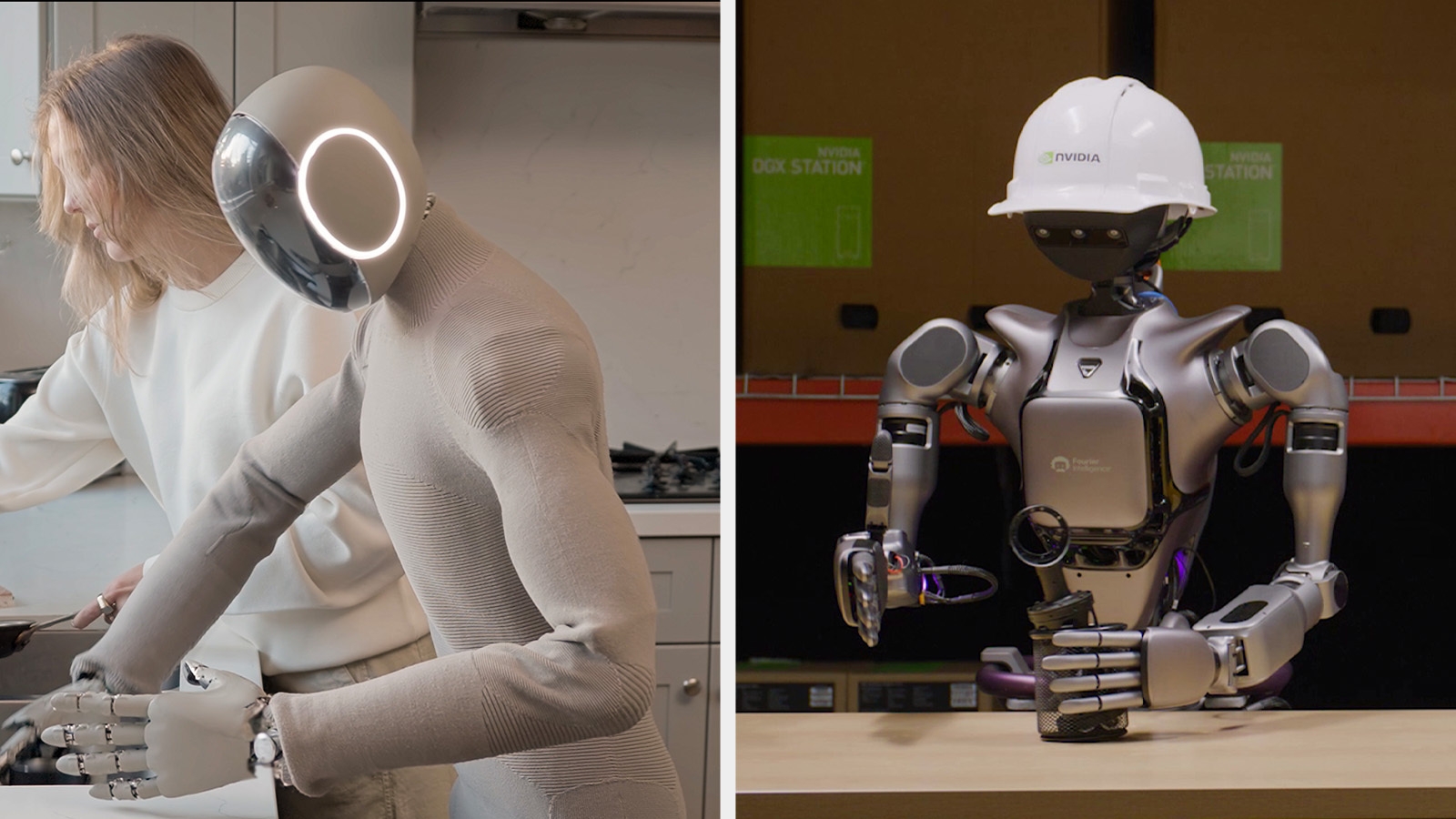
A central component of Agile ONE SN is NVIDIA Isaac GR00T, an open robotics platform designed to help developers create, train and deploy general-purpose humanoid robot behaviours.
Unlike traditional industrial robots, which often perform highly specialised tasks in controlled environments, humanoid robots are being developed to operate across a wider range of activities and physical settings.
Isaac GR00T combines foundation models with simulation frameworks, data-processing pipelines and tools for controlling robotic movement.
The objective is to allow researchers to develop robot skills using different forms of information, including visual observations, human demonstrations and simulated experiences.
For example, a robot learning to manipulate unfamiliar objects may require repeated training across different object positions, movements and environmental conditions.
Simulation environments allow researchers to generate some of these experiences without repeatedly conducting physical experiments.
However, transferring learned behaviours from simulation into real-world environments remains a significant research challenge, particularly when robots encounter situations not represented in their training data.
Isaac Lab 3.0 and New Simulation Tools Accelerate Robot Learning
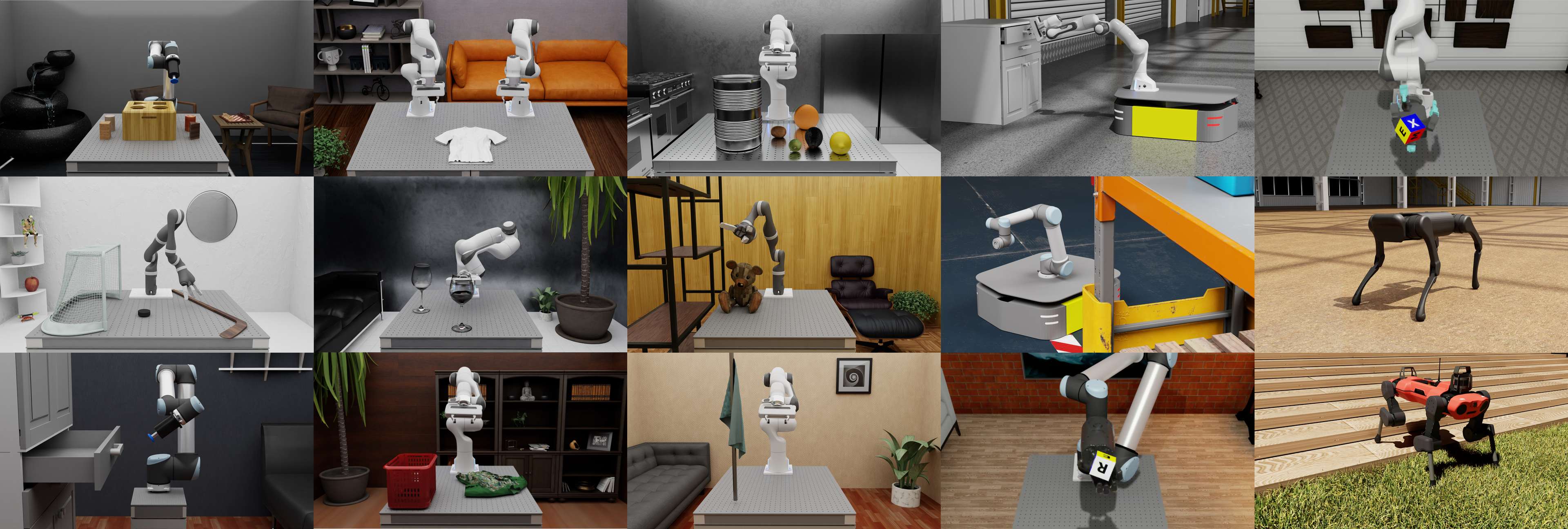
Alongside Agile ONE SN, NVIDIA announced updates to its broader Isaac development ecosystem.
Isaac Lab 3.0 introduces improvements for simulation-based robot learning, while the new Isaac OS runtime supports the deployment of robotics applications.
NVIDIA also introduced SimReady Central, a library containing more than 2,000 simulation-ready robotics and factory assets.
These digital assets can help researchers create virtual environments for testing robotic systems, potentially reducing the time required to build detailed simulation scenarios.
The company additionally highlighted its Human 1M Dataset, which provides examples of human activities supported by synchronised video and hand-tracking information.
Such datasets can contribute to research into robotic manipulation, movement and interaction with physical environments.
Together, these technologies aim to create a more integrated development process, connecting data collection, model training, simulation and deployment.
Physical AI and the Future of Intelligent Machines
Physical AI refers to artificial intelligence systems that can perceive, reason about and interact with the physical world.
Its applications extend beyond humanoid robots to industrial automation, autonomous vehicles, warehouse systems and assistive technologies.
At GTC Berlin, NVIDIA highlighted a growing European robotics ecosystem, including ABB Robotics, KUKA, NEURA Robotics, Universal Robots and other companies developing intelligent machines.
For research institutions, more integrated robotics platforms could reduce some of the technical barriers involved in experimenting with general-purpose robot intelligence.
However, significant challenges remain. Humanoid robots must operate safely around people, handle unpredictable environments and demonstrate reliable performance outside controlled laboratory conditions.
Their practical value will depend on whether they can perform useful tasks consistently, safely and economically.
A New Chapter for Robotics Research
NVIDIA's announcements at GTC Berlin 2026 demonstrate how advances in AI models, accelerated computing and simulation are reshaping robotics development.
Agile ONE SN provides researchers with an integrated humanoid platform, while Isaac GR00T, Isaac Lab 3.0 and new simulation resources offer tools for developing and evaluating intelligent behaviours.
The technologies could help researchers investigate how robots learn new skills, adapt to unfamiliar environments and coordinate increasingly complex physical tasks.
Yet the development of general-purpose humanoid intelligence remains an ongoing scientific and engineering challenge.
The next stage of progress will depend not only on improving AI models but also on combining reliable hardware, physical reasoning, safety systems and effective real-world testing.
As the boundary between digital intelligence and physical machines continues to evolve, platforms such as Agile ONE SN could contribute to a new generation of robotics research and development.
Sources
- NVIDIA Newsroom — NVIDIA Advances Isaac Platform for General-Purpose Robotics With New Reference Humanoid, Frameworks, Simulation Pipelines and Data (21 October 2026) https://nvidianews.nvidia.com/news/nvidia-advances-isaac-platform-for-general-purpose-robotics-with-new-reference-humanoid-frameworks-simulation-pipelines-and-data/
- NVIDIA — GTC Berlin 2026: Live Updates From Jensen Huang's Keynote (21 October 2026) https://blogs.nvidia.com/blog/gtc-berlin-2026-keynote/
- NVIDIA — Isaac GR00T Humanoid Robot Development Platform https://www.nvidia.com/en-us/industries/robotics/isaac-groot/
- NVIDIA Developer — Isaac GR00T: Generalist Robot 00 Technology https://developer.nvidia.com/isaac/gr00t


