
Cities
Organic Natural Farming
10 Feb 2026

My Inspiration: Meeting Mr Ratan Daga, a Non-Official member of the Commission for Agricultural Costs and Prices (CACP), visiting his farm, and reading his book inspired me to learn more about natural farming. This experience led me to explore the topic further and share what I have learned in this article.
Organic natural farming is about growing crops in harmony with nature. It relies on living soil, clean water, sunlight, and natural materials produced on the farm. Avoiding chemical fertilisers and pesticides, it helps keep food, soil, and farmers healthy for the long term.
Organic Natural Farming and the Role of AI in Sustainable Agriculture
Organic, natural farming is a sustainable, low-cost way to farm by working with nature. It keeps the soil alive, saves water, supports biodiversity, and avoids the use of chemical fertilisers and pesticides. This approach makes soil healthier, improves food quality, lowers farmers' costs, and helps farms cope with changing weather.
Organic natural farming is based on balancing the five elements of nature: soil, water, air, sunlight, and climate. Practices like composting, mulching, growing different crops, keeping animals, and following the seasons help restore soil, keep water in the ground, reduce pests, and prevent damage from chemical farming. Examples from India and around the world show that these methods can heal the land, stabilise farm incomes, and improve life in rural areas.
Still, expanding organic farming can be hard, especially for small farmers. They may not have enough technical support, struggle to prove their product quality, face limited market access, and take on more risk when starting out. Working together in cooperatives or Farmer Producer Organisations (FPOs) helps by sharing resources, preparing inputs together, and securing better market prices.
Artificial Intelligence (AI) and digital tools can help strengthen organic farming. AI can help farmers plan crops based on weather conditions, warn about pests and diseases early, provide advice on soil and nutrient management, and use water more efficiently. Keeping digital records of soil health, nutrients, and organic practices also makes it easier for farmers to demonstrate quality, obtain certifications, and reach better markets.
For policymakers, combining organic natural farming with digital tools focused on farmers can help achieve many goals: sustainably using land, coping with climate change, improving food security, raising farmers' incomes, and protecting the environment. Support through incentives for organic inputs, digital infrastructure for cooperatives, training, and better market connections can help more farmers adopt these methods and benefit from them.
With the right technology and support from cooperatives, organic natural farming offers a strong path to a resilient, low-carbon, financially sustainable farming system.
Simple, Low-Cost Farming in Harmony with Nature
Organic, natural farming means growing food by respecting nature rather than trying to control it.
It focuses on:
- Healthy soil
- Clean water and air
- Low farming cost
- High-nutrition food
- Inputs made within the farm
This type of farming lasts for generations because it protects land, water, animals, and people.
Nature and the Five Elements
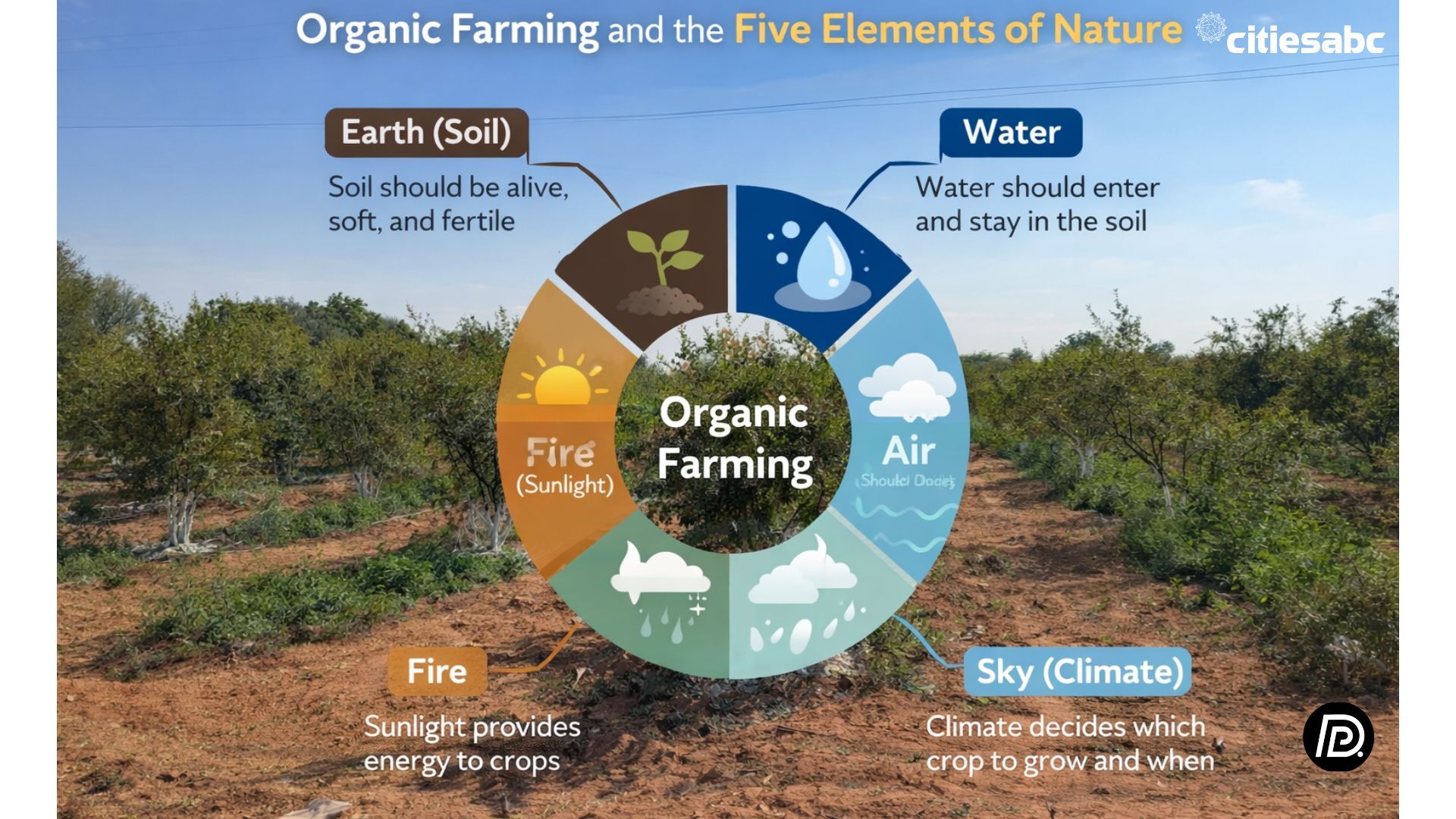
Nature is made up of five elements, and organic farming works best when these are in balance:
- Earth (Soil): Soil should be alive, soft, and fertile.
- Water: Water should enter the soil slowly and stay for a longer time.
- Air: Air should move freely in the soil and around the plants.
- Fire (Sunlight): Sunlight provides energy for crop growth.
- Sky (Climate): Climate decides which crop to grow and when to grow it.
When these five elements are balanced, crops grow strong and healthy without the need for chemical fertilisers or pesticides.
Soil Is Not Just Dirt: Soil Is Alive
Healthy soil contains:
- Microorganisms
- Earthworms
- Insects
- Organic matter
- Air and water
What Chemicals Do
Chemical fertilisers like urea and DAP:
- Kill soil life
- Slowly make the soil hard like stone
- Reduce water absorption
- Cause cracks and runoff
- Increase in floods and drought
After a few years, the soil loses its life, and farmers end up needing more chemicals every season and that increases the input cost and adds extra burden for the farmers.
Microorganisms: Invisible Friends of the Farmer
Microorganisms are tiny living beings in soil. They are nature’s workers.
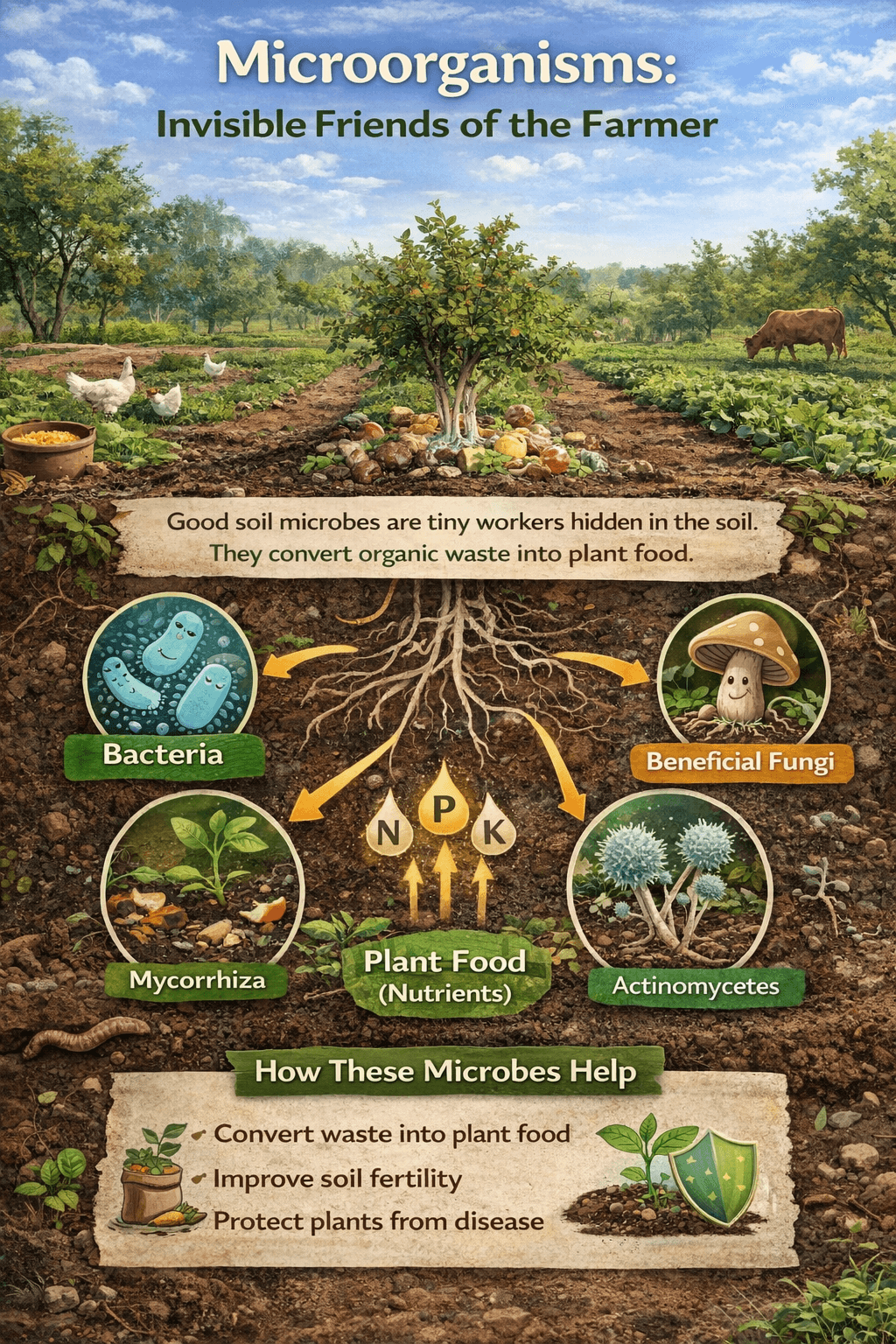
Good Microorganisms (Friends)
They:
- Convert waste into plant food
- Improve soil fertility
- Protect plants from disease
- Help roots absorb nutrients
Examples:
- Bacteria
- Beneficial fungi
- Mycorrhiza
- Actinomycetes
Healthy soil has a sweet, earthy smell. This scent comes from good microbes.
Bad Microorganisms (Enemies)
They increase when:
- Soil is waterlogged
- Soil is compact and hard
- Chemicals are overused
- Air circulation is poor
They cause:
- Yellow spots
- Root rot
- Gummosis
- Leaf curl
- Fruit cracking and shedding
Organic farming does not kill all microbes. It encourages the growth of beneficial microbes, which naturally reduce the number of harmful ones.
Earthworm: Farmer’s Best Partner
The earthworm is often called a “living plough”.
Benefits of Earthworms
- Loosen soil naturally
- Improve air and water flow
- Convert waste into vermicompost
- Increase soil fertility
- Improve root growth
If earthworms disappear, it means the soil is sick.
Chemical farming kills earthworms. Adding organic matter helps restore earthworm populations.
Insects: Not All Are Bad
Many insects are useful and protective good insects
- Honeybees – Pollination, higher yield
- Ladybird beetle – Eats aphids
- Spiders – Eat harmful insects
- Lacewing – Controls pests
- Birds – Natural pest control
It is normal and healthy to see insects on the farm.
Harmful Insects
- Aphids
- Whiteflies
- Fruit borers
- Leaf miners
They increase when:
- Only one crop is grown
- Plants are weak
- Chemicals kill friendly insects
Organic farming maintains a natural balance. It does not try to eliminate all insects.
Animals on the Farm Create Natural Balance
Cow (Indian & Global Traditional Farming)
- Cow dung = microbial factory
- Cow urine = natural pesticide & growth booster
Hens
- Eat insects
- Add nutrients to the soil
Fish (Integrated Farming – Asia)
- Improve water quality
- Recycle nutrients
Bees (Global Practice)
- Increase fruit size and yield
- Improve seed quality
Keeping animals on the farm helps make it more self-sufficient.
Note: For small farms, some of these solutions may not be economical when practised individually. In such cases, the best approach is to form a local farmer cooperative, where resources, knowledge, and inputs can be shared for the benefit of all.
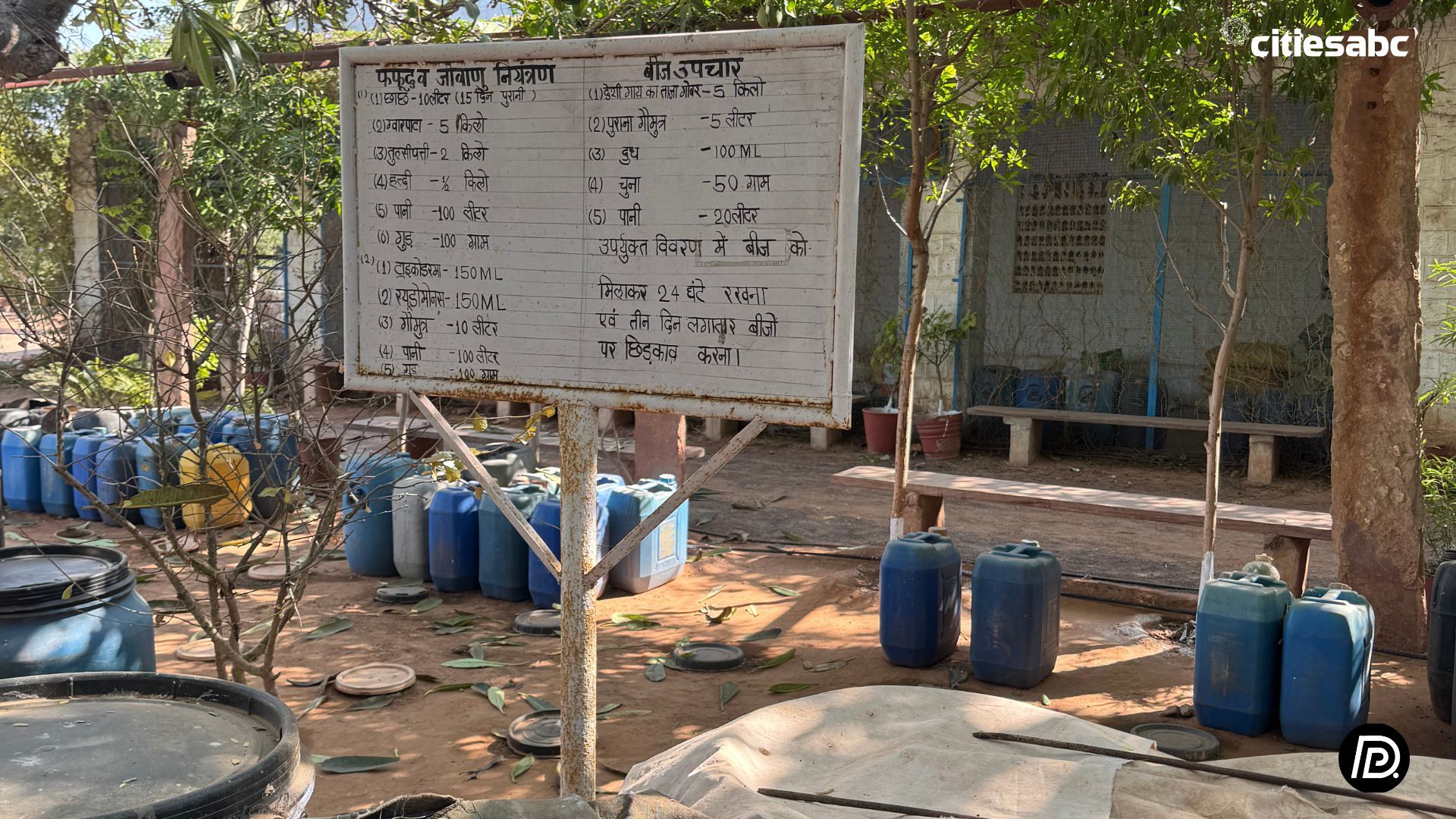
Local Organic Inputs and Preparations
1. Cow Dung Compost (India / Global)
- Improves soil fertility
- Feeds microbes and earthworms
2. Jeevamrut (India)
Made from:
- Cow dung
- Cow urine
- Jaggery
- Pulse flour
- Soil from the farm
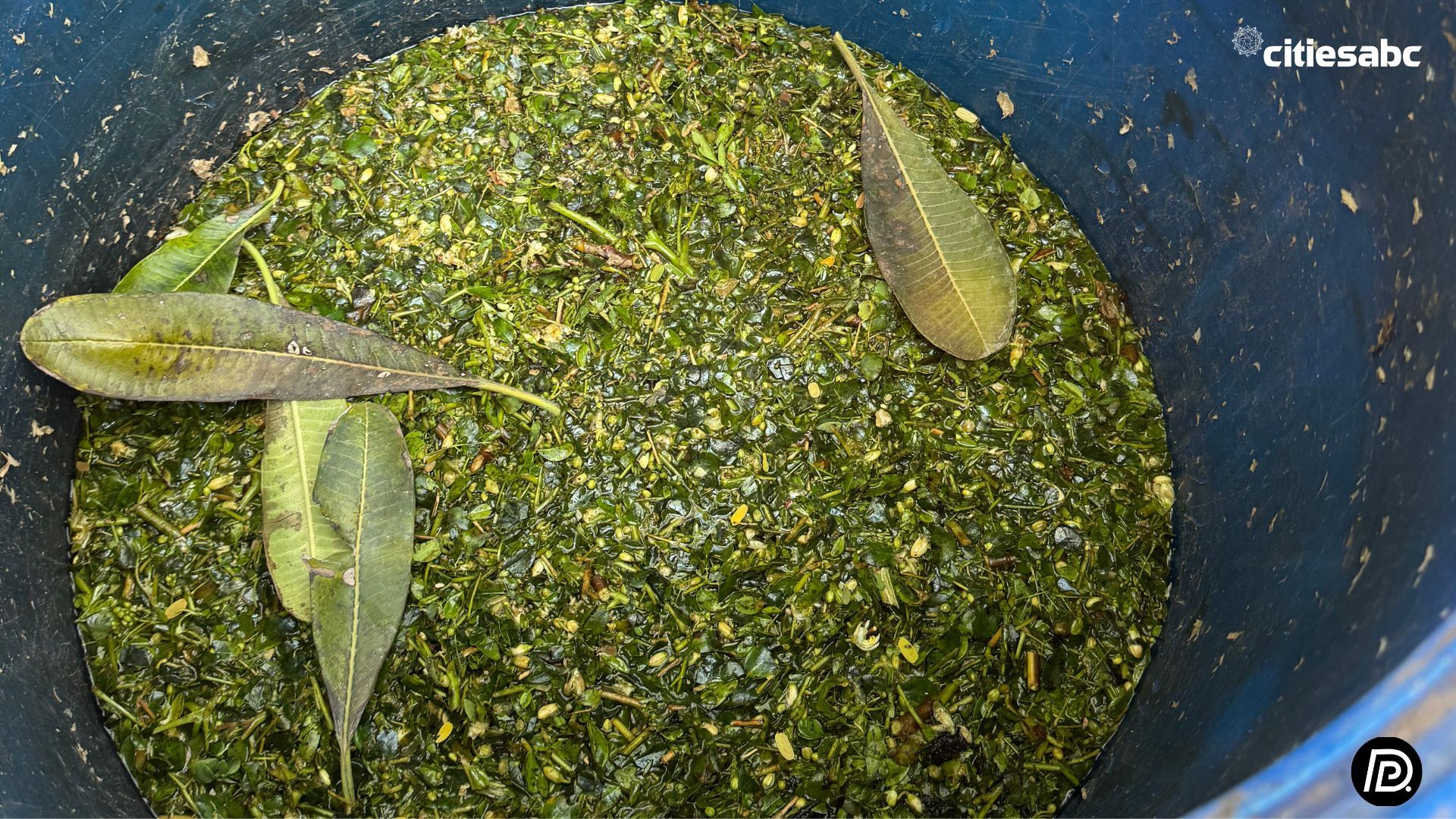
It helps boost microbial life in the soil.
3. Beejamrut (Seed Treatment – India)
Protects seeds from disease and improves germination.
4. Buttermilk / Curd Spray
- Controls fungal disease
- Improves leaf health
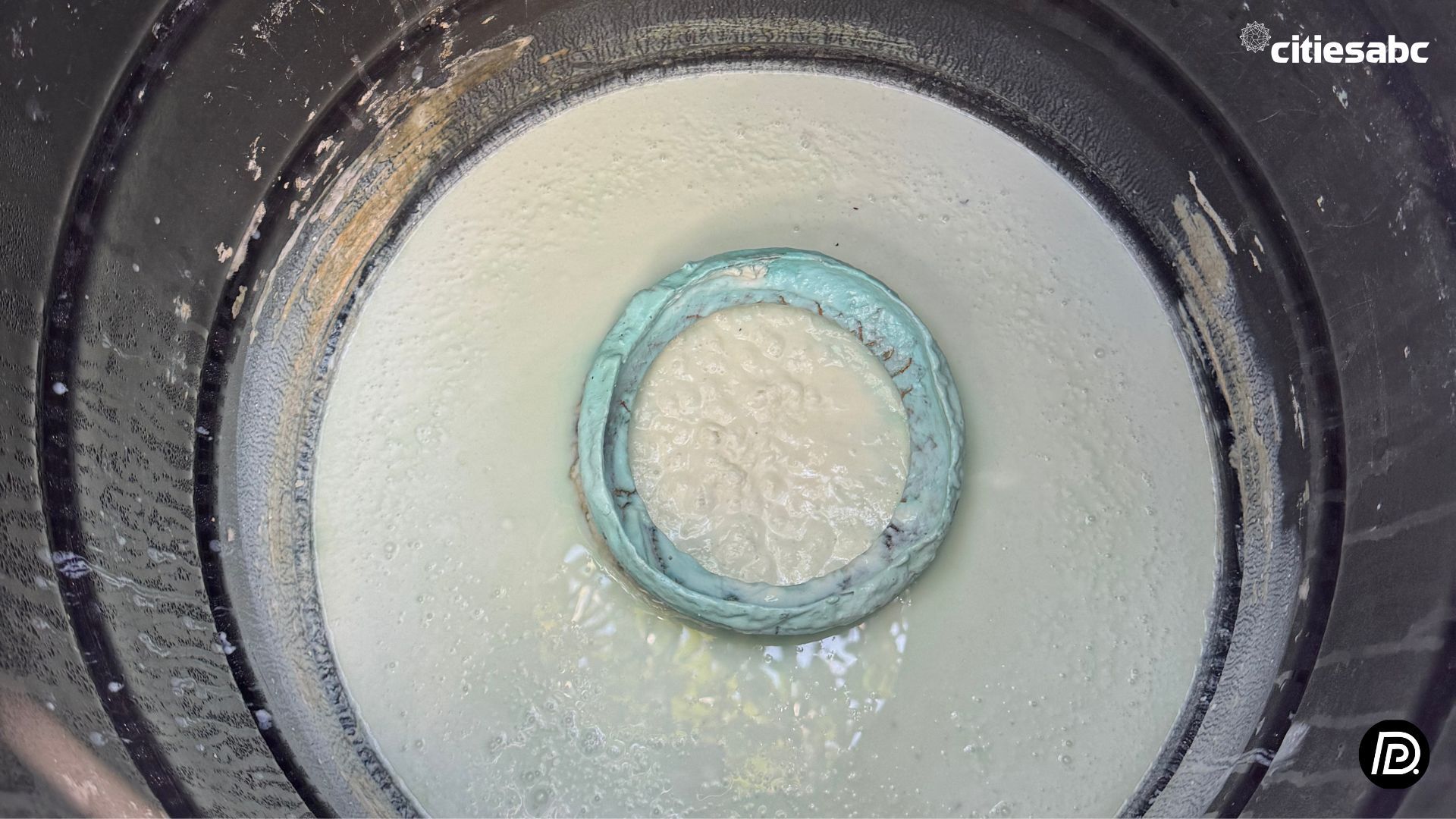
Used traditionally in:
- India
- Africa
- South America
5. Neem-Based Spray (India)
- Repels pests
- Safe for beneficial insects
6. Copper (Limited Use – Global Organic)
- Used only when the disease is severe
- Controls fungal and bacterial diseases
Use only a small amount, just as you would with medicine.
Mulching: Nature’s Protective Cover
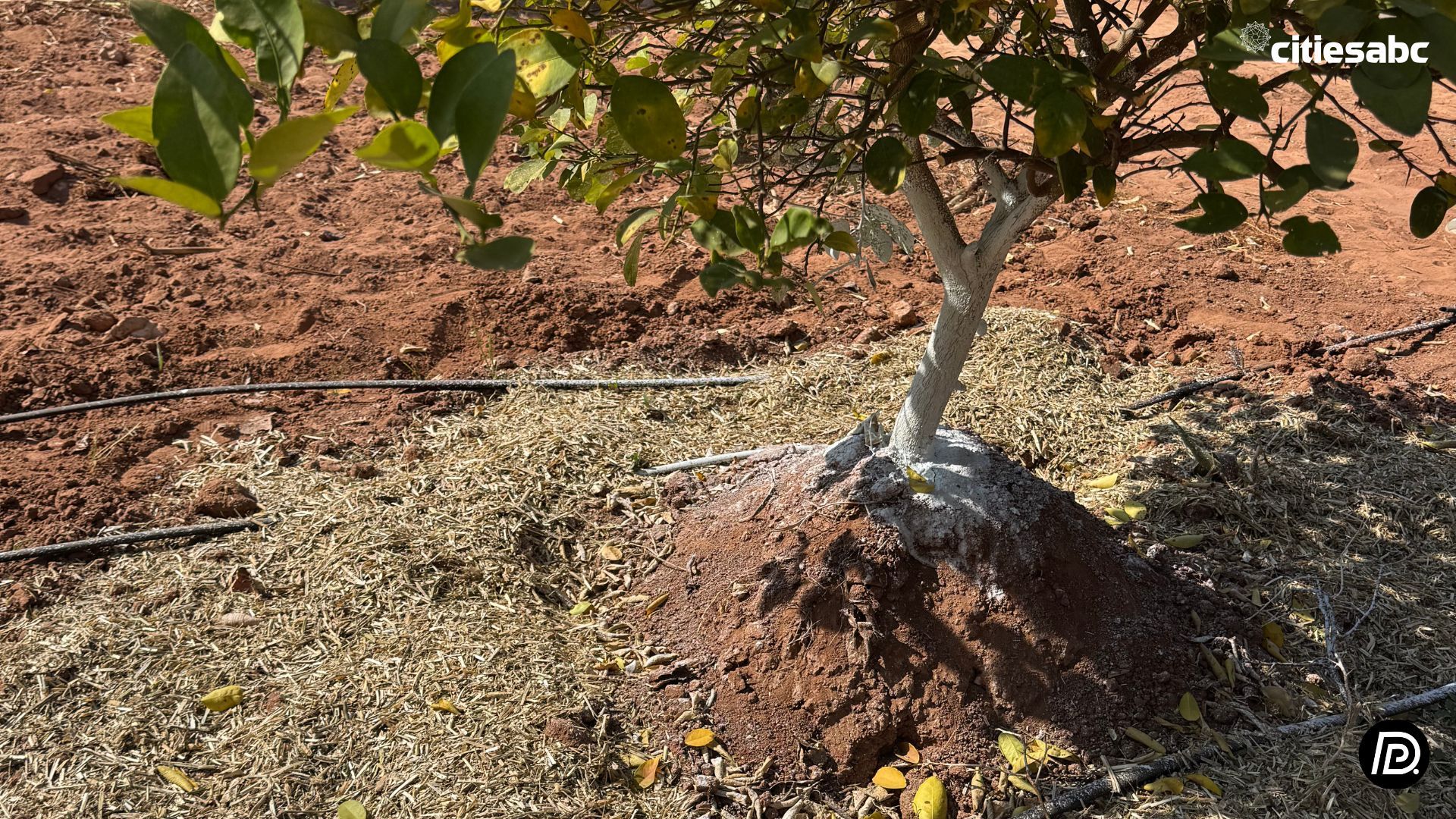
Mulching means covering the soil using farm waste, such as:
- Dry leaves
- Straw
- Crop residues
- Grass and weeds
This practice transforms farm waste into a valuable resource, reducing the need to burn or discard it.
Benefits of Mulching
- Keeps the soil moist for a longer time
- Controls unwanted weeds
- Protects beneficial soil microorganisms
- Reduces the need for frequent irrigation
- Slowly improves soil fertility
Mulching is particularly critical in sandy soils, which are prone to rapid moisture loss.
Reuse of Farm Waste and Careful Use of Ash
Crop waste should not be openly burned, as uncontrolled burning:
- Pollutes air
- Destroys nutrients
- Kills soil life
- Harms human and animal health
However, limited and controlled burning in specific cases can be useful.
Use of Ash (Only in Small Quantity)
- Ash from clean crop residue or dry wood contains minerals like potassium and calcium
- Helps correct soil acidity when used carefully
- Can be applied in very small amounts around trees or compost pits
Important Cautions
- Never burn large quantities of crop residue
- Avoid burning in open fields
- Do not burn plastic or mixed waste
- Prefer composting and mulching as the first option
Best practice:
Use most crop waste for mulching and composting, and use ash only when necessary and in a controlled manner.
Key Message
Farm waste should be regarded as a resource that nourishes the soil.
Mulching safeguards soil health, and judicious use of ash can be beneficial; however, excessive burning is detrimental to the environment and must be avoided.
Trees Around the Farm
Trees planted according to:
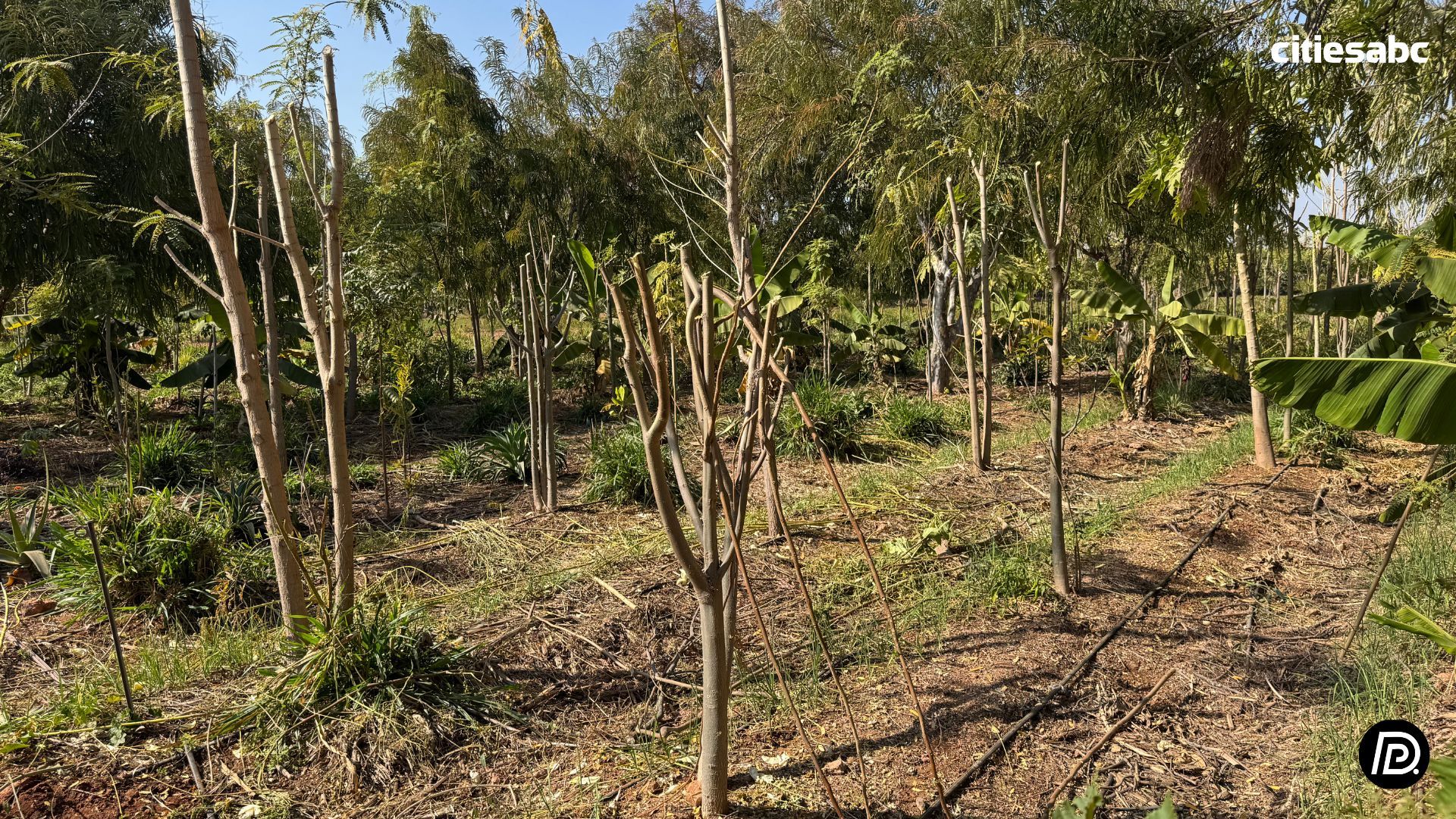
- Wind direction
- Sun direction
Benefits:
- Reduce hot winds
- Prevent soil erosion
- Improve micro-climate
- Provide leaf manure
- Attract birds and insects
Fallen leaves serve as mulch, decompose into manure, and help sustain soil biota.
Complementary (Companion) Planting
This practice involves cultivating crop species that provide mutual benefits.
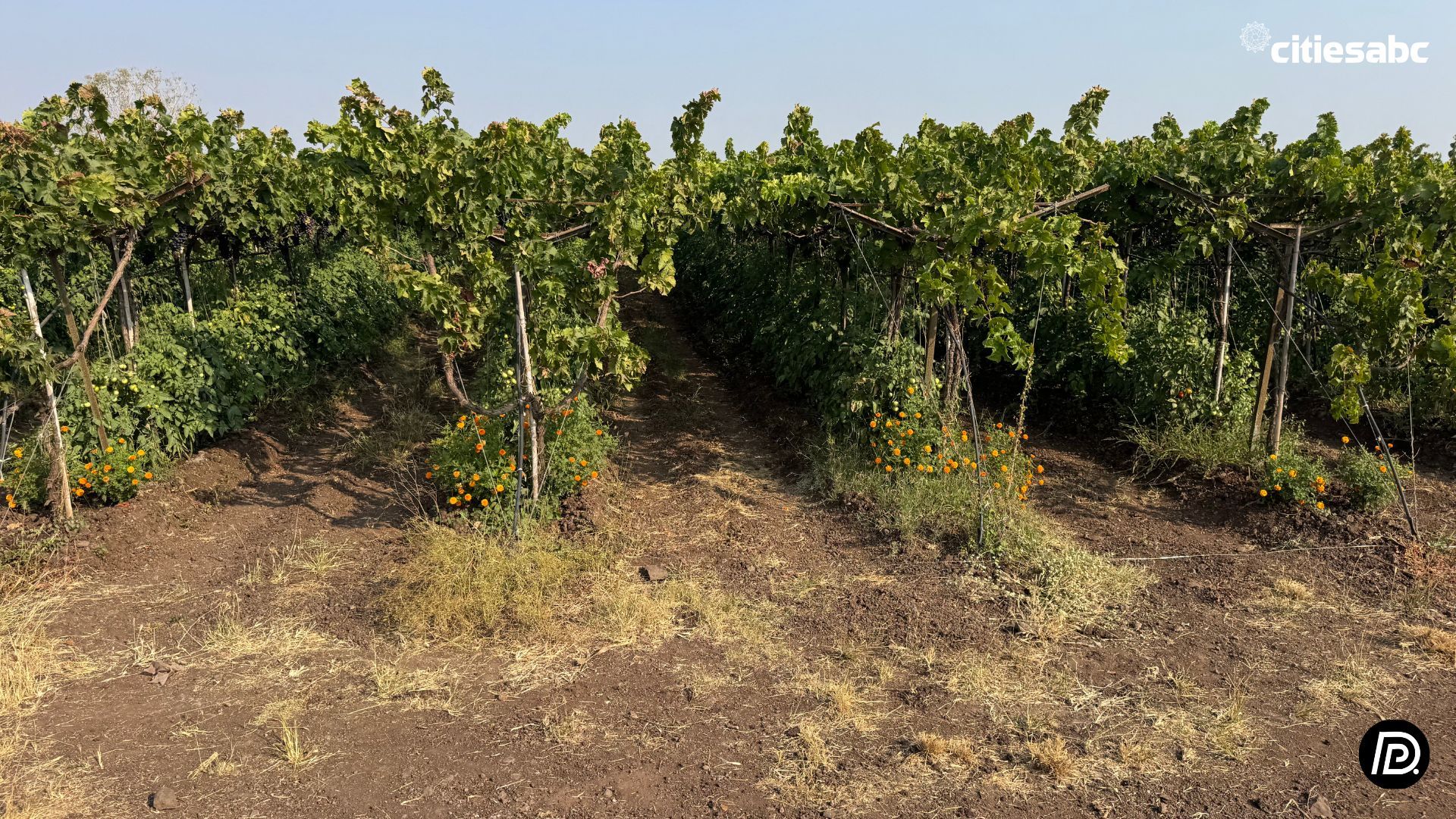
Examples:
- Legumes add nitrogen
- Tall crops give shade
- Strong-smelling plants repel pests
Benefits:
- Less disease
- Better soil
- Enhanced income stability
Multilayer Farming (Forest Model)
Using vertical space:
- Tall trees (coconut, mango)
- Medium plants (banana, papaya)
- Short crops (vegetables)
- Ground cover (greens)
Benefits:
- More yield
- Less water loss
- Natural pest control
- Climate protection
Safe Distance
Proper spacing:
- Improves airflow
- Reduces disease
- Strengthens plants
Weather and Seasonal Farming
Organic farming aligns with natural seasonal cycles.
Farmers observe:
- Rain pattern
- Temperature
- Wind
- Seasons
Growing crops in the right season:
- Needs less water
- Fewer diseases
- Better taste and nutrition
Examples:
- Wheat in winter
- Vegetables as per season
- Local fruits in the local climate
Identifying Crop Problems Early
Common Signs
- Yellow leaves → nutrient imbalance
- Curled leaves → pest or virus
- Gummosis → stress or fungus
- Cracks → water imbalance
- Early fruit drop → weak plant
Maintaining healthy soil results in vigorous plant growth and reduced incidence of disease.
Why Organic Farming Is Important Today
Organic farming:
- Reduces cost
- Protects soil and water
- Improves nutrition
- Handles climate change
- Gives long-term income
Chemical-based farming may yield rapid results, but it often leads to long-term environmental and soil degradation.
Although organic farming may take longer to demonstrate results, its benefits are enduring.
Message to Farmers
Organic natural farming is not new.
It is the farming our ancestors practised.
When:
- Soil is alive
- Microbes are active
- Earthworms return
- Insects are balanced
Then:
- Crops become strong
- Input cost reduces
- Nature protects the farm
When the soil is healthy, the farmer thrives too.
Respecting natural systems ensures reciprocal benefits for both the environment and agricultural productivity.
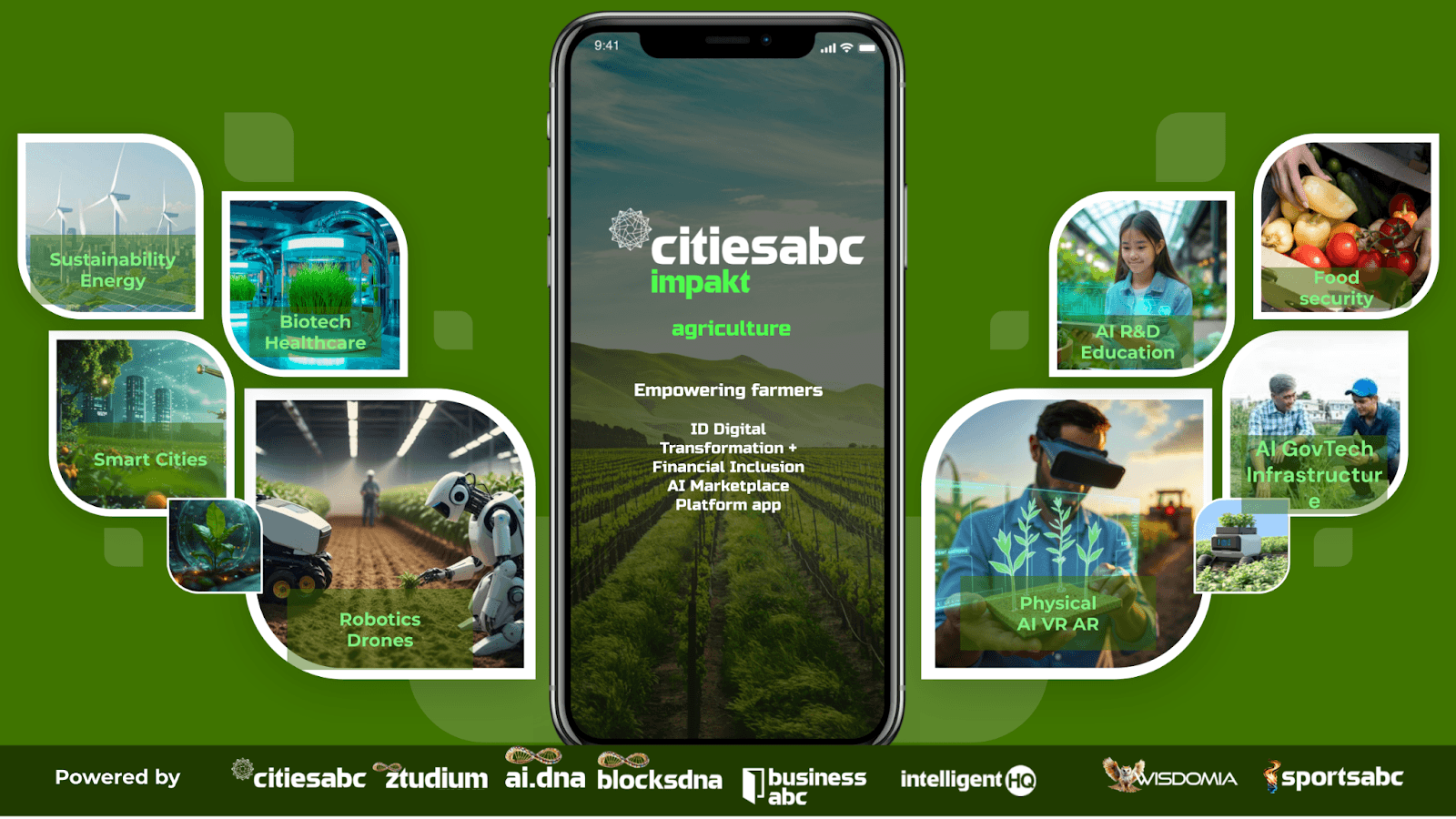
How Citiesabc Impakt AI Platform Can Help Organic Farming and Farmers’ Income
Organic farming works with nature, but modern tools like AI (Artificial Intelligence) can help farmers understand, plan, and sell better without harming the environment. AI does not replace the farmer’s wisdom; it supports it.
Better Farm Decisions
A platform can help farmers by using simple data such as:
- Weather Conditions (Rain and Temperatures)
- Sensor data for Soil condition
- Using drone and satellite images for the crop stage
- Pest patterns
Using this information, AI tools can:
- Suggest the right time for sowing
- Warn about pest or disease risk early
- Advise irrigation timing
- Help choose crops suitable for the local climate
This reduces loss and saves money.
Soil and Nutrient Management
The platform can help track:
- Soil organic carbon
- Nitrogen, phosphorus, potassium
- Micronutrients
- Moisture levels
With simple soil test data, AI can:
- Recommend organic inputs in the correct quantity
- Avoid overuse of any input
- Maintain long-term soil health
This is very helpful in organic farming, where keeping balance is important.
Recording Nutrient Values: A Strong Selling Point
One major challenge in organic farming is proving quality to buyers.
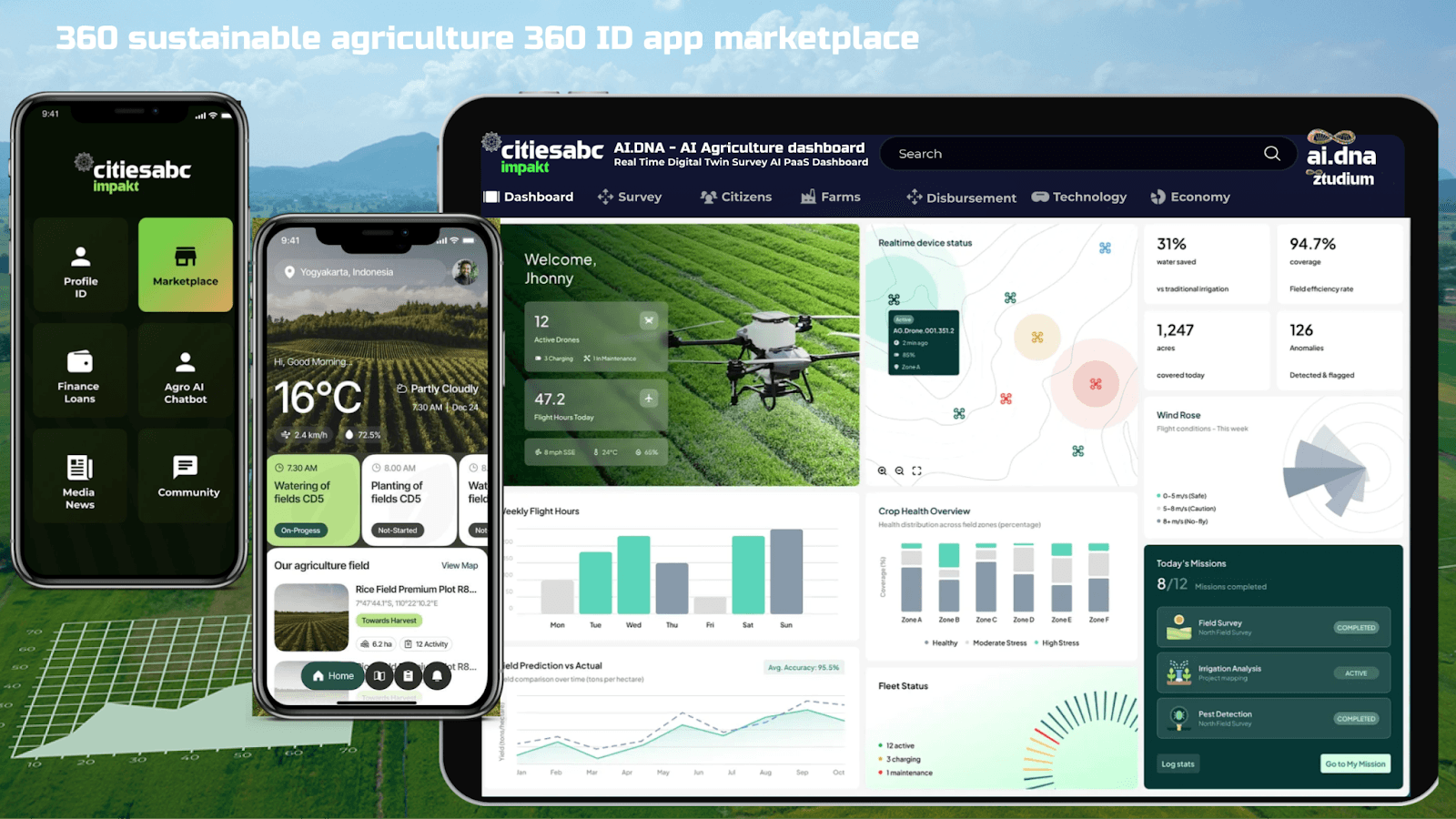
The platform can help farmers maintain records of:
- Soil health
- Crop nutrient values
- Organic practices followed
- Input sources used on the farm
Benefits for Farmers
- Builds trust with buyers
- Justifies premium pricing
- Helps in certification
- Improves the brand value of the produce
When farmers offer nutrient-rich, traceable produce, buyers are willing to pay more.
Market Access and Better Pricing
The platforms can help farmers:
- Compare market prices
- Connect directly with consumers
- Sell to organic stores, exporters, and institutions
- Reduce dependency on middlemen
- Create a trade corridor between cities, states and countries.
This increases farmer income.
Simple Tools Farmers Can Use Today
Even small farmers can use the platform through:
- Mobile apps with support of a local language interactive agent
- Cooperative-level systems
- Local extension services
- Farmer producer organisations (FPOs)
For small farms, cooperative use of the platform is more economical and effective.
Combining Tradition and Technology
Organic farming draws on traditional wisdom, and the platform adds modern support.
When both work together:
- Farming becomes easier
- Risk reduces
- Income improves
- Consumers get healthier food
Key Message
A platform powered with AI helps farmers as companions and not to control them.
Nature grows the crops, the farmer guides them, and the platform supports planning, record-keeping, and sales.
Combining traditional farming with modern tools is the future of organic agriculture.


