


resources
Park Güell: A Must-Visit Among Things to Do in Barcelona

Gaudí looked at a hillside overlooking Barcelona and decided straight lines were boring. What resulted is Park Güell—a fever dream of mosaic lizards, tilted columns that look like tree trunks, and benches that curve like dragon spines. It's weird. It's beautiful. It's absolutely one of the best things to do in Barcelona.
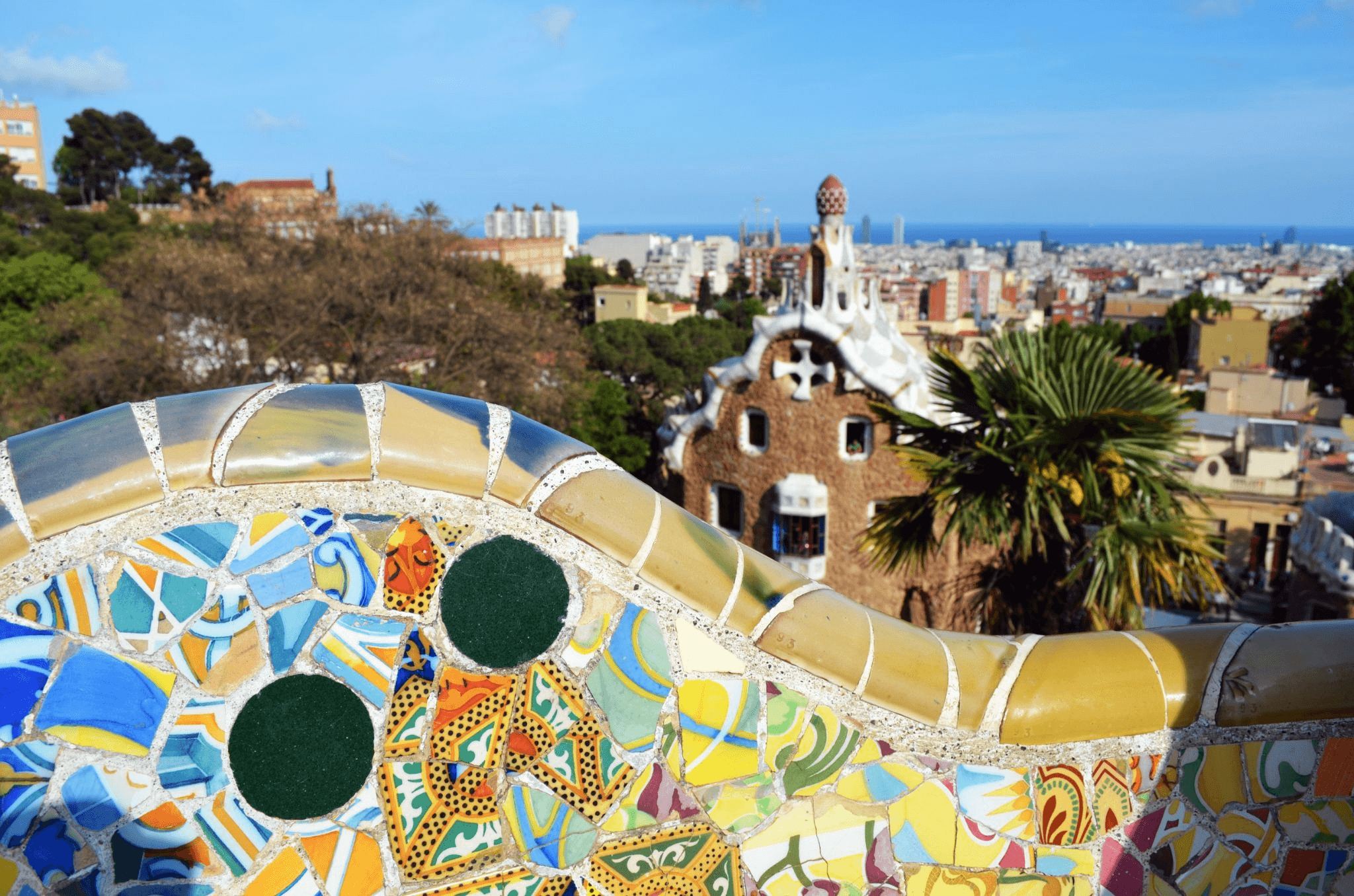
This isn't just a park where you spread out a picnic blanket. It's a UNESCO World Heritage site where nature and architecture blur until you can't tell where one ends and the other begins.
The Story Behind the Madness
Park Güell started as a rich guy's fantasy. Eusebi Güell wanted to build a fancy housing development for Barcelona's elite in the early 1900s. He hired Gaudí to design it, which was like hiring Salvador Dalí to decorate your living room—ambitious and slightly unhinged.
The housing project flopped. Only two houses sold. But the park that was supposed to connect them? That became something extraordinary. After Gaudí died in 1926, the city bought it and opened it to the public. Now it's one of Barcelona's most visited sites, proving that sometimes the best outcomes come from failed plans.
El Drac: The Famous Lizard
Right at the entrance, you'll meet the park's unofficial mascot—a mosaic-covered lizard (or dragon, depending on who you ask) that's been photographed approximately 47 billion times. El Drac is covered in colorful broken tiles, a technique called trencadís that Gaudí used throughout the park.
Is it slightly ridiculous to wait in line to photograph a ceramic lizard? Yes. Will you do it anyway? Also yes. It's become one of those things to do in Barcelona that feels mandatory, like seeing the Sagrada Familia or eating overpriced paella on Las Ramblas.
The Mosaics That Made It Famous
Gaudí didn't just slap some pretty tiles on benches and call it a day. Every mosaic in Park Güell serves a purpose—drainage, comfort, visual flow. The serpentine bench running along the main terrace curves and undulates for 110 meters, covered entirely in colorful ceramic fragments.
The genius? The bench was designed using human subjects to create the perfect ergonomic curve. Gaudí had workers sit in wet plaster to mold the shape. Uncomfortable process, comfortable bench.
The colors aren't random either. Gaudí used whatever broken ceramic was available—plates, cups, tiles from construction sites. It's recycling before recycling was cool, turned into art that's lasted over a century.
The Monumental Zone: Where You'll Spend Your Money
Here's the thing about Park Güell: part of it is free, part costs money. The free areas are nice. The Monumental Zone—where all the famous stuff is—requires tickets.
The Great Staircase leads up past El Drac to the main terrace. The views from up here are legitimately spectacular. You can see the Sagrada Familia poking up in the distance, Montjuïc Hill, and Barcelona spreading out to the Mediterranean. Bring your camera. Everyone does.
Below the main terrace sits the Hypostyle Room, originally designed as a market but now just a forest of 86 Doric columns. Except they're not really Doric—they're Gaudí's interpretation, tilted and organic, mimicking trees. The ceiling features more mosaics forming circular medallions. Look up. Most people forget to.
The whole zone feels like walking through an architectural hallucination. It's disorienting in the best way.
What They Don't Tell You
It's on a hill. A steep one. The walk up from the nearest metro stop will test your cardiovascular fitness. Wear comfortable shoes. Those cute sandals are a mistake.
Book tickets online. They limit daily visitors to protect the site. Show up without tickets, especially in summer, and you might get turned away. Or wait hours. Don't be that person.
Go early or late. Mid-morning to mid-afternoon is chaos—tour groups, influencers staging photo shoots, and families with melting children. Early morning (8am opening) or late afternoon offers better experiences and lighting.
The free areas are worth seeing. Even if you skip the Monumental Zone (budget travel, I respect it), the free sections offer Gaudí architecture and decent views. You won't get El Drac, but you'll get the vibe.
Restrooms are limited. Use them when you see them. This applies to most things to do in Barcelona, but especially here.
The Gràcia Neighborhood: Where Locals Actually Live
Park Güell sits in Gràcia, one of Barcelona's most charming neighborhoods. Unlike the Gothic Quarter or Las Ramblas, Gràcia feels like actual Barcelona—locals drinking coffee in small plazas, independent shops selling things other than Barcelona FC jerseys, and restaurants without picture menus.
After you've walked through Gaudí's fantasy land, come back to reality in Gràcia. Plaça del Sol fills with locals in the evenings. Cafés line the streets. It's the perfect place to decompress after sensory overload from all those mosaics.
Guided Tours: Worth It or Waste?
Depends on you. If you want to understand why Gaudí designed things the way he did—the symbolism, the technical innovations, the religious references—a guide helps. Gaudí was deeply religious and incorporated lots of Catholic imagery that isn't obvious unless someone points it out.
If you just want to wander, take photos, and absorb the atmosphere, skip the tour and save your money. The park speaks for itself visually even if you don't understand the deeper meanings.
Best Times to Visit
Spring and Fall - Perfect weather, fewer crowds than summer, flowers blooming or autumn colors adding to the scenery.
Summer mornings - Before 10am, before the heat gets brutal and crowds arrive in force.
Winter - Fewer tourists, though it can be chilly. Barcelona doesn't really do cold, but it's not beach weather either.
Avoid August if possible - Peak tourist season means peak crowds, peak heat, and peak frustration.
Making It Part of Your Day
Park Güell deserves 2-3 hours minimum. More if you're a Gaudí superfan or want to explore Gràcia thoroughly.
Combine it with other things to do in Barcelona nearby: Casa Vicens (another Gaudí masterpiece) is walking distance. The Bunkers del Carmel offer even better views of Barcelona and are completely free. Gràcia's market, Mercat de la Llibertat, is perfect for lunch.
Don't try to see Park Güell and then rush to the Sagrada Familia and then squeeze in the Gothic Quarter all in one day. You'll end up exhausted, cranky, and barely remembering any of it.
What to Bring
- Water - There's a reason Barcelona sells so much bottled water
- Sunscreen - Limited shade up there
- Comfortable shoes - Cannot stress this enough
- Camera - Obviously
- Patience - For crowds, photo-takers, and the inevitable selfie sticks
Is It Overhyped?
Honestly? No. Park Güell lives up to the hype, which is rare for famous tourist attractions. Yes, it's crowded. Yes, you'll see it on every Barcelona Instagram account. But standing in that space, looking at architecture that shouldn't work but does, makes you understand why people lose their minds over Gaudí.
The man looked at conventional architecture and said "what if we did the opposite of all that?" The result is a park that feels like it grew organically from the hillside rather than being built on it.
Final Thoughts
Among all the things to do in Barcelona, Park Güell offers something unique—a place where art, architecture, and nature collaborate instead of competing. It's not just about seeing famous landmarks or checking boxes on a tourist list. It's about experiencing a space where someone's creative vision became three-dimensional reality.
Book your tickets, wear comfortable shoes, go early or late, and give yourself time to actually absorb it instead of just photographing it. Park Güell rewards those who slow down and look carefully.
Gaudí spent years here. You can spare a few hours.


