
business resources
Plus AI Review 2026: Features, Pricing & Who It's Actually Built For
07 Apr 2026

Search “best AI presentation makers,” and Google still buries Plus AI—the tool you actually had in mind. We noticed the same gap, so we investigated.
This guide stacks Plus AI against today’s leading slide generators and helps you pick the one that fits your workflow. Spoiler: it’s the only Slides/PowerPoint add-in here with a full SOC 2 Type II report—a must for many IT teams.
Up next, a quick decision path shows you which section to read first. From there we break down workflow fit, pricing, and the fine print vendors hope you miss, with three tables and a screenshot-ready pros-and-cons sheet.
Ready to reclaim your search results? Let’s map the field so you can choose with confidence.
How to read the decision path
We promised clarity, not homework, so here’s the cheat sheet you’ll see right after this section.
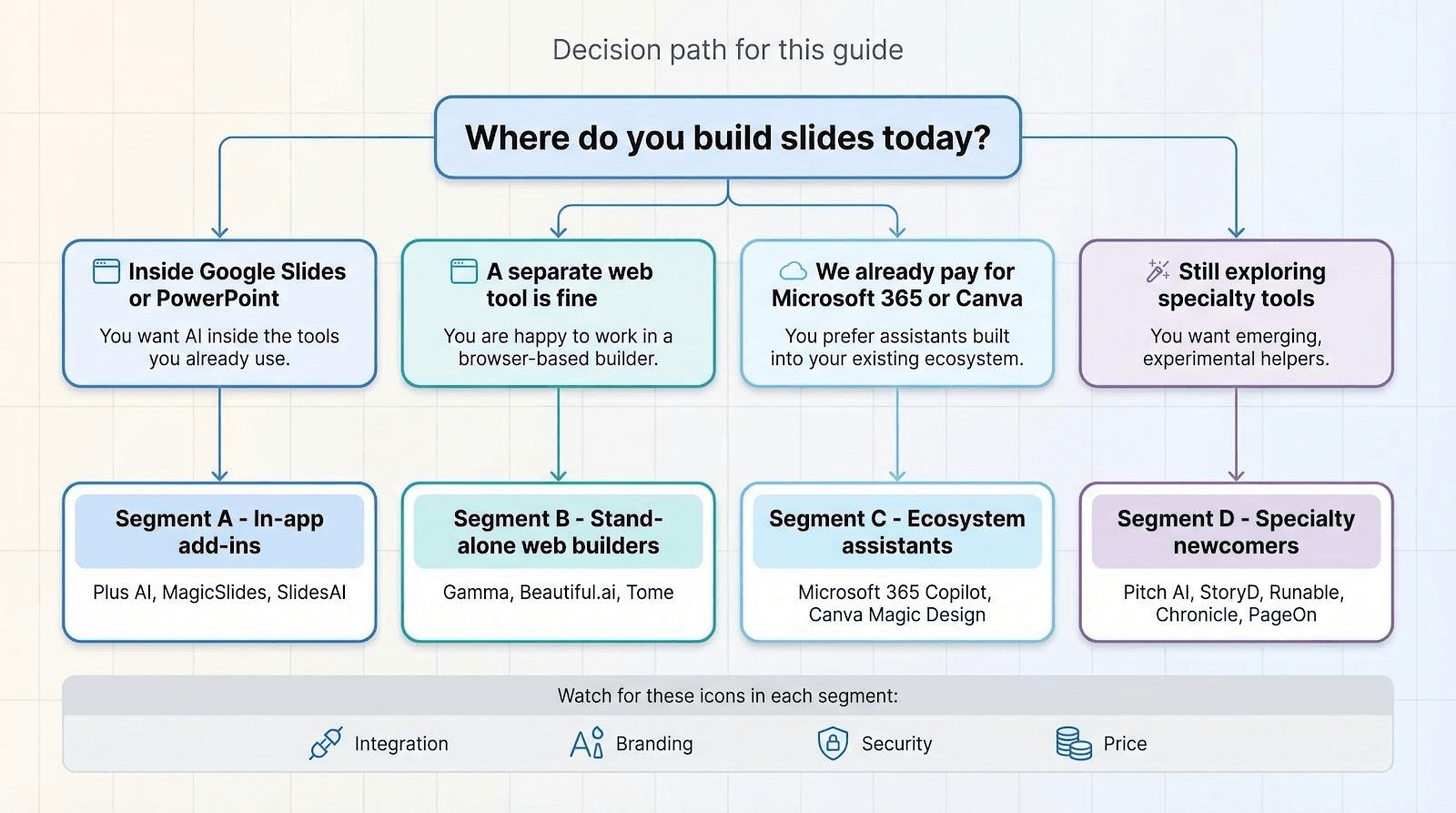
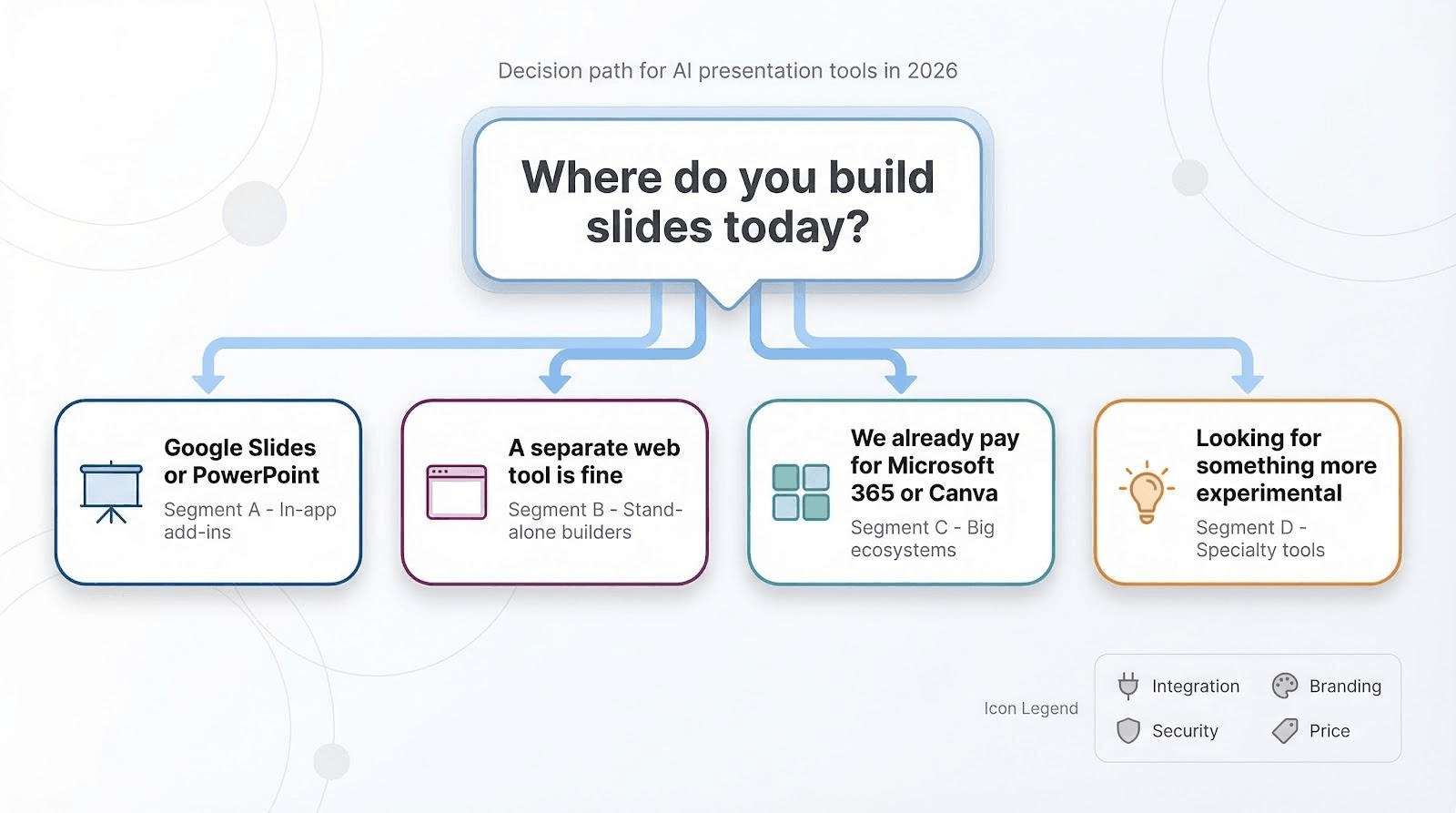 Picture a slim flowchart. At the top, a single question waits: “Where do you build slides today?”
Choose Google Slides or PowerPoint and you zip to Segment A, where Plus AI sits with the other in-app add-ins.
Pick “A separate web tool is fine” and you jump to Segment B for the stand-alone builders.
Click “We already pay for Microsoft 365 or Canva” and Segment C covers those ecosystem giants.
Still browsing for something edgy? Segment D gathers the specialty newcomers.
Each segment opens with a color-coded table, then moves into short, conversational breakdowns of the tools inside. Keep an eye on four icons that repeat: Integration, Branding, Security, and Price. They help you scan quickly without missing deal-breakers.
Feel free to skip straight to the segment that matches your workflow. We wrote each one to stand alone, so you won’t lose the thread if you hop around.
Next up: the add-ins that live right inside Slides and PowerPoint, and why Plus AI often earns the first install slot.
Segment A: add-ins that live inside Google Slides and PowerPoint
CRITICAL RULES:
- Make ONLY the specified edit - do not modify any other text
- Preserve ALL formatting and line breaks exactly:
- Keep line breaks in the section content
- Keep line breaks WITHIN the replacement text
- If replacement text contains blank lines (line breaks), preserve them exactly
- Do NOT normalize multi-line text into a single paragraph
- PRESERVE MARKDOWN LINK SYNTAX: Keep text format for links - do NOT convert to HTML <a> tags
- DO NOT use HTML entities: Keep & as &, not &, keep " as ", not ", etc.
- DO NOT use em-dashes (—) or en-dashes (–): Use regular hyphens (-) only
- Return ONLY the edited section content with no explanations, no preamble, no markdown code fences
- If you cannot find the exact sentence, find the closest match and replace it
- Do not add any commentary or notes
- The output should be pure article text that can be directly inserted
- CRITICAL: If the replacement text contains line breaks (blank lines between sentences), you MUST preserve those line breaks in your output. Do NOT combine lines into dense paragraphs.
Plus AI: your AI wingman inside the file you already use
Open a deck, tap the Plus AI sidebar, and watch a blank slide turn into a structured story in seconds. No exporting, no new log-ins—just generation inside Google Slides or PowerPoint. That single design choice does two things. First, it slashes the learning curve because every shortcut and comment thread you rely on stays put. Second, it keeps your IT team happy, since documents never leave the corporate workspace.
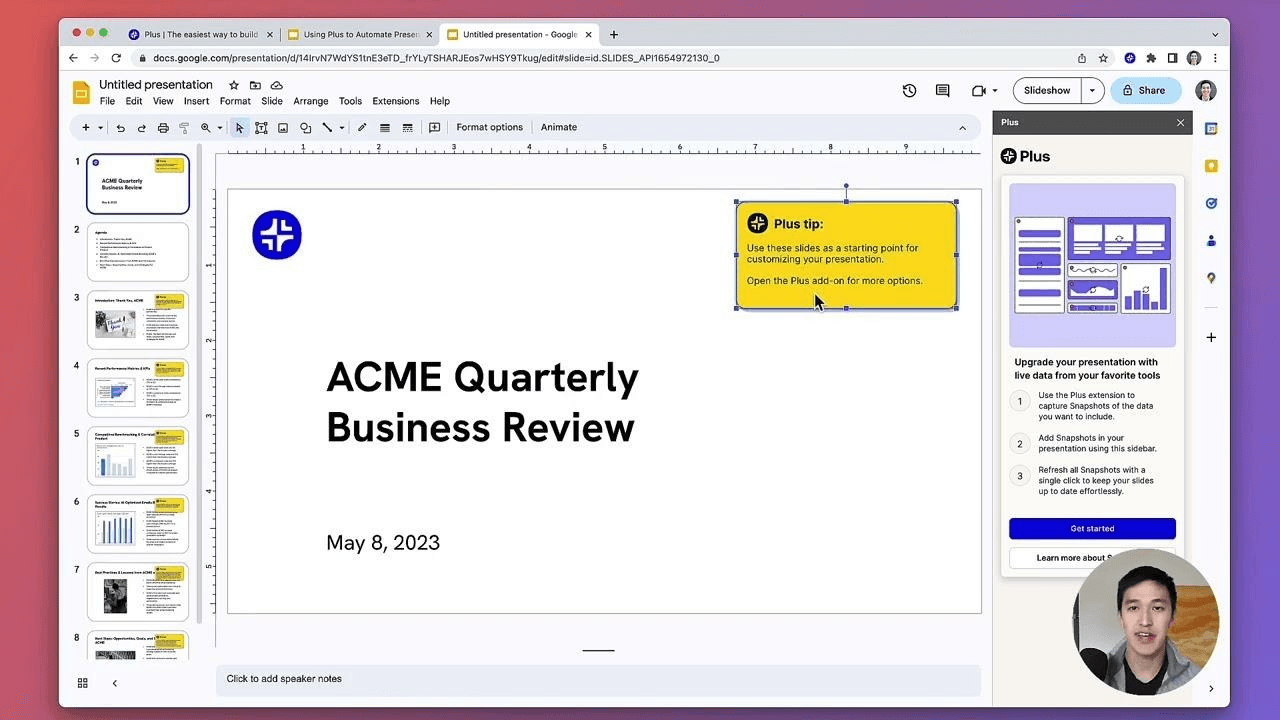
Plus AI Sidebar Inside Google Slides And PowerPoint UI Screenshot.
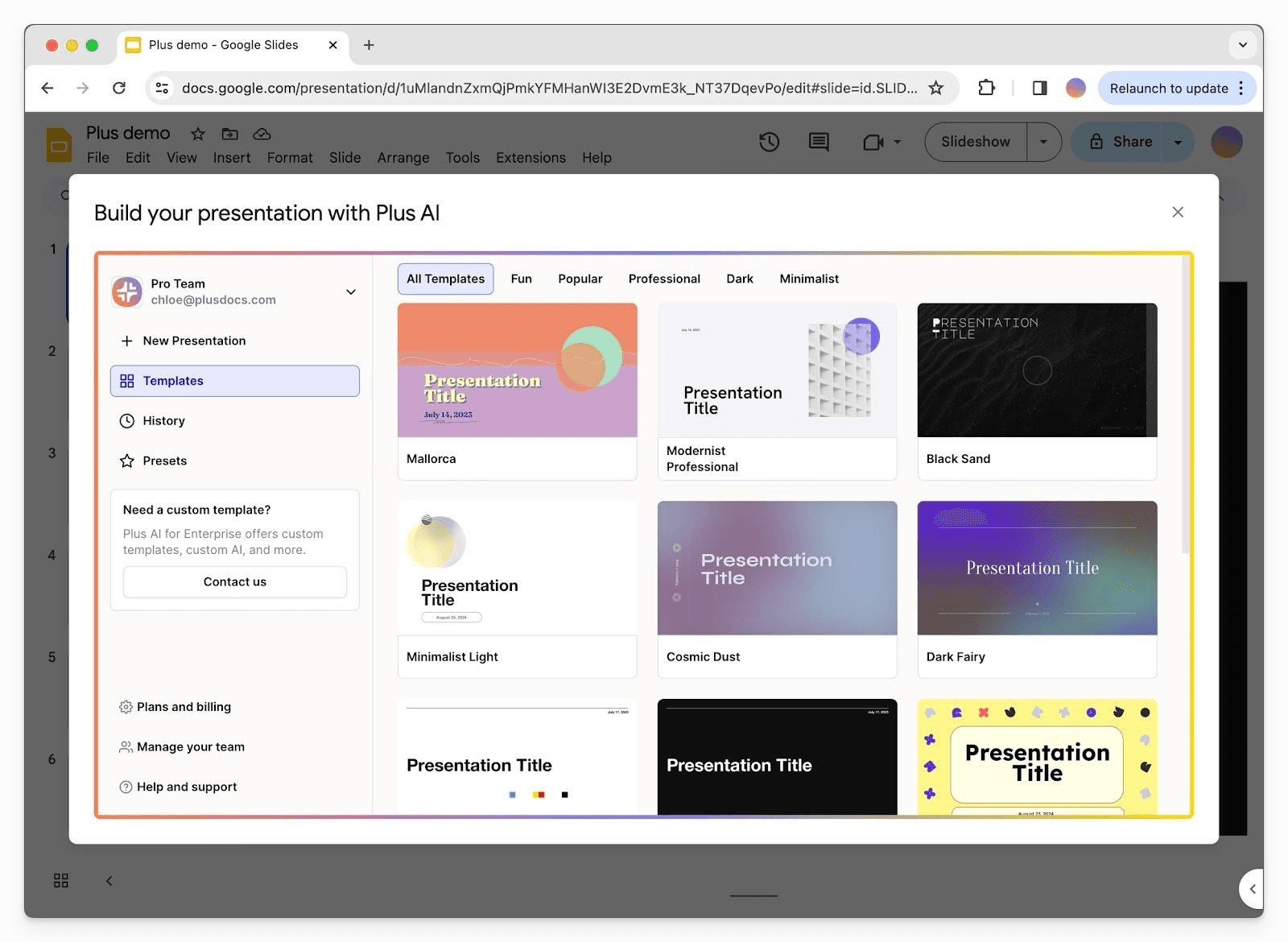
Plus AI sidebar inside Google Slides and PowerPoint screenshot.
Pricing is just as direct. plusai.com sets the Basic seat at $10 per user each month, and that single license already covers unlimited slide generation in both Slides and PowerPoint files. Team plans layer on brand-template controls, so the AI matches your fonts, colors, and logo without a designer hovering over every layout. Compared with credit-based tools that meter every prompt, the math tilts quickly in Plus AI’s favor, especially for anyone building decks daily.
Security checks the enterprise box. Plus AI holds a full SOC 2 Type II report, meaning auditors have examined encryption, access logs, and retention rules. You can even request region-specific data storage if compliance teams need it.
Real-world traction supports the spec sheet. The Google Workspace Marketplace lists more than one million installs with an average rating above 4.6 stars, a signal that everyday users—not just tech reviewers—keep it pinned to their toolbars. One review captures the theme: “It feels like an AI intern who already knows our template.”
If you spend most of your week inside Slides or PowerPoint and want AI help without switching apps, Plus AI is the fastest way to level up your workflow. Next we’ll look at the lighter add-ins chasing the same promise.
MagicSlides and SlidesAI: handy, but built for lighter lifting
If Plus AI feels like an AI copilot, MagicSlides and SlidesAI behave more like quick-fix macros. They live in the same Google Slides sidebar, accept a short prompt, and build a deck outline in under a minute. For teachers prepping a one-off lesson or founders whipping up a teaser deck, that speed is welcome.
The trade-off starts after the first draft. Layout choices repeat, images often miss the brief, and neither add-in understands a custom template. You end up nudging text boxes back into place or swapping a sunny beach photo that somehow illustrates quarterly churn. Small chores, yes, but they eat the time AI promised to save.
Pricing leans on limits rather than freedom. Both tools gate output behind monthly credit buckets. Hit the ceiling and you either wait for the meter to reset or pay for extra packs. That model works if you build decks occasionally. Heavy users may find a flat-rate tool like Plus AI cheaper by the second project of the month.
User reviews tell a consistent story: great for a head start, less great for polish. One Reddit thread summed it up nicely: “SlidesAI gets me 60 percent there, but I still spend twenty minutes cleaning fonts and images.” For many teams, those twenty minutes mark the line between “AI saved us” and “We should have done it manually.”
MagicSlides and SlidesAI shine when you need a fast outline and can live with rough edges. If brand fidelity, unlimited use, or enterprise compliance matter, you’ll outgrow them quickly.
Segment B: stand-alone web builders
Gamma: storytelling first, slide files second
Open Gamma and the first thing you notice is the absence of traditional slides. Instead, you scroll through a single, responsive page that feels closer to a microsite than a deck. Type a prompt, such as “Pitch deck for a seed-stage fintech,” and Gamma autogenerates sections, layouts, and motion cues in the time it takes to sip your coffee.
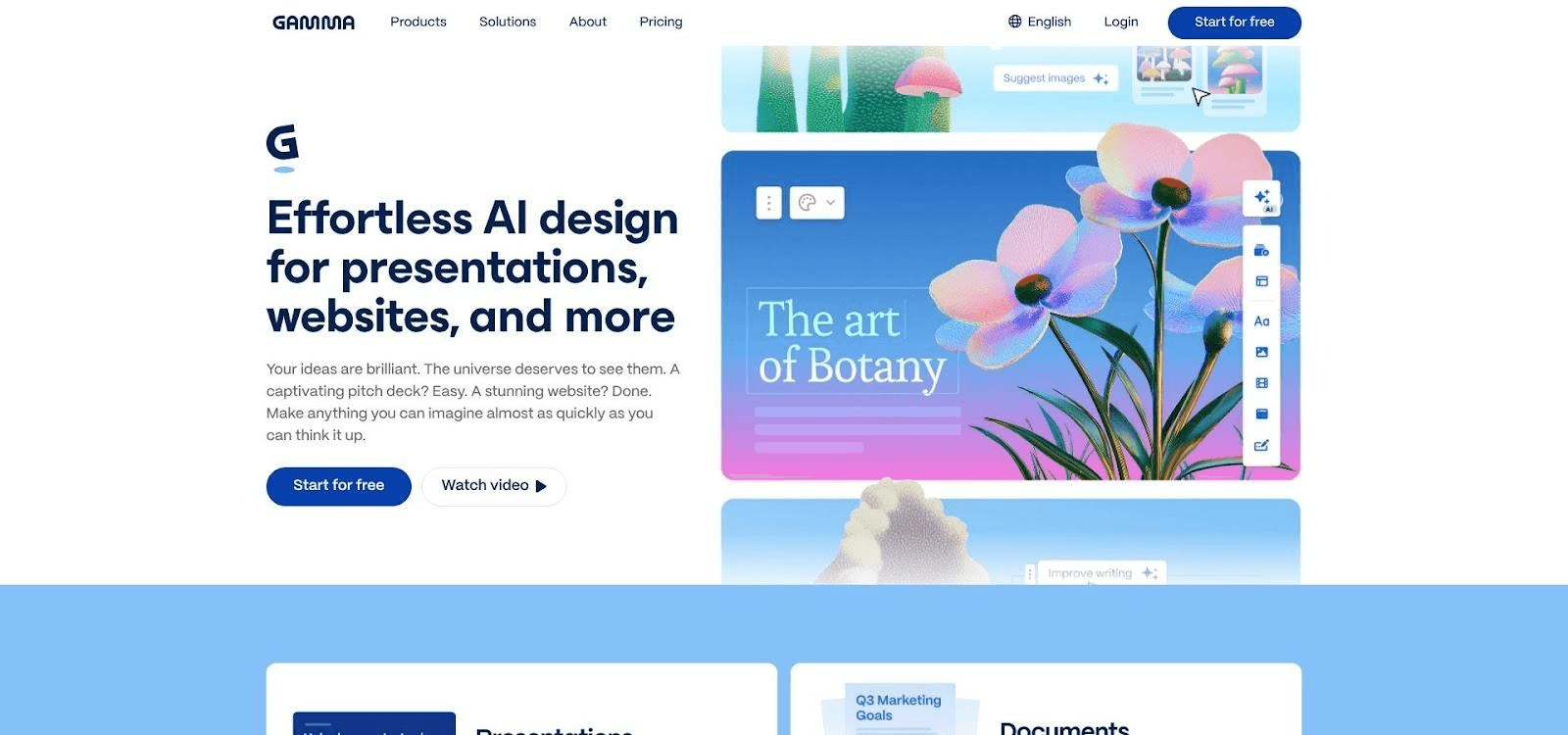
Gamma AI Web Presentation Builder Scrolling Deck Interface Screenshot.
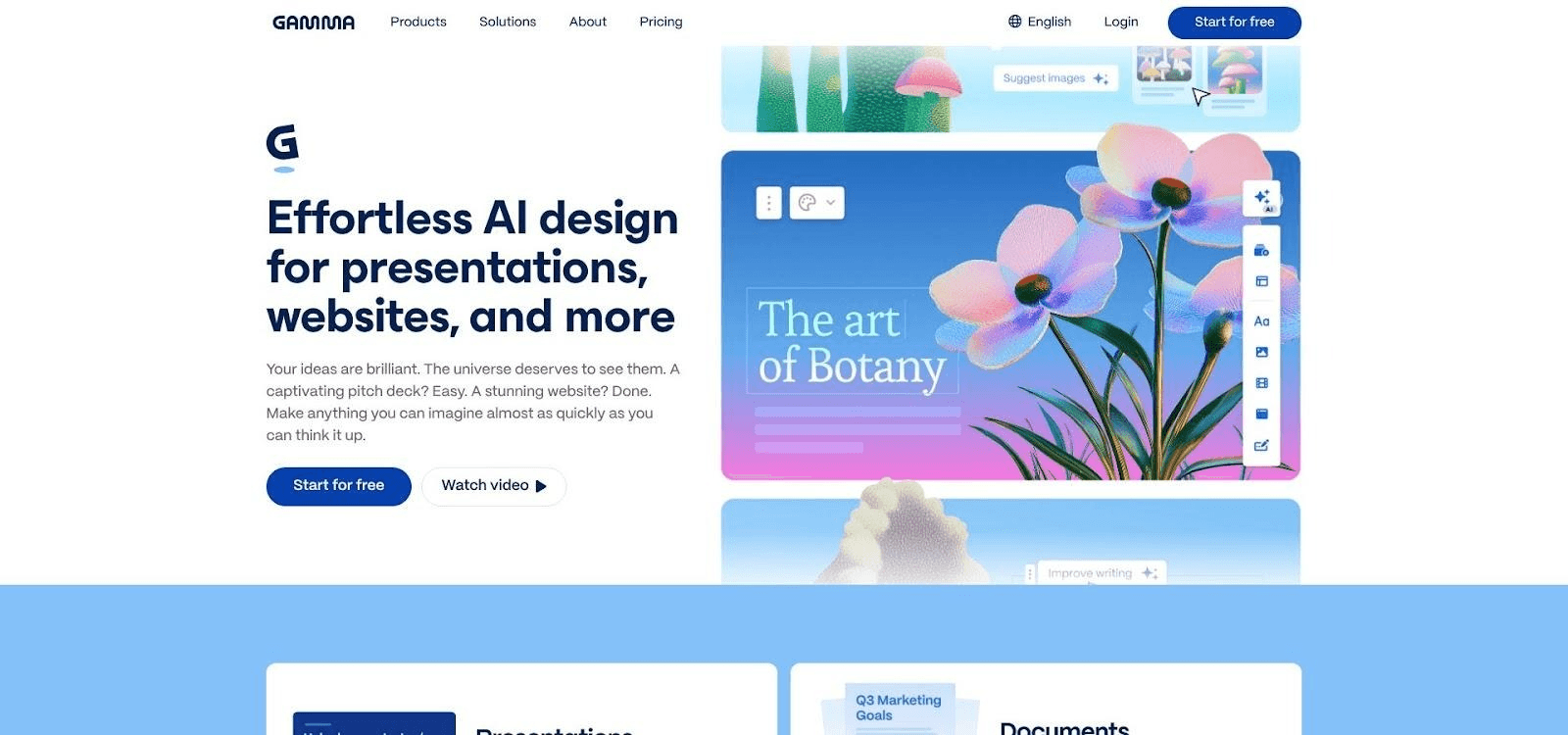
Gamma AI web presentation builder scrolling deck interface.
That format delights founders and marketers who care more about narrative flow than rigid templates. It also lets you drop live embeds—videos, tweets, Loom clips—without wrestling with PowerPoint animations. Share the finished work as a link and your audience scrolls, clicks, and plays content inline.
The flip side appears when a stakeholder asks, “Send me the PPT.” Gamma exports, but the file can land with broken spacing and flattened design flourishes. If your board still wants an editable deck, expect to spend polish time you thought you saved.
Gamma’s paid tier starts at about $10 per user each month, matching Plus AI’s entry price, but the value changes if you need unlimited slide editing or strict brand control. Gamma offers brand kits, yet it will not lock every color, font, or logo the way a slide master does inside Google Slides or PowerPoint.
Bottom line, Gamma excels at web-native storytelling and interactive demos. If your audience embraces links and scrolling narratives, it can impress in minutes. If they demand editable slides, keep a backup plan ready—likely another tool in this list.
Beautiful.ai: designer polish without the file flexibility
Beautiful.ai trades raw speed for showroom-ready aesthetics. Fire it up, choose a smart template, and the platform auto-tunes every font, margin, and animation so your slides look like they rolled off a creative agency’s MacBook. For marketing or sales teams that prize visual pop over granular control, the experience feels luxurious.
That polish, however, lives inside Beautiful.ai’s own web studio. Export to PowerPoint and you may spot misaligned text boxes or images that lost their smart-resize logic in transit. If your workflow involves red-lining decks in Slides or sharing .pptx files with clients, those quirks add friction.
Cost sits above the add-in tier: the Team plan runs $40 per user each month. You get slick design automation and a large template library, but no SOC-grade compliance badge and no way to force every slide to follow your official master. For companies with strict brand rules, that gap often sends them back to a tool that respects native templates, such as Plus AI inside Slides or PowerPoint.
In short, Beautiful.ai works when visual impact outweighs everything else. Just budget time for export cleanup, and be ready to compromise on brand governance if enterprise standards sit high on your checklist.
Tome: narrative flow for pitch-perfect storytelling
Tome treats presentations like a screenplay. You type a single prompt such as “Launch story for a mental-wellness app,” and it builds a scrolling sequence of headlines, visuals, and calls to action. The result feels closer to a modern web story than a stack of bullet slides, which is why startups and product teams flock to it.
That narrative bias pays off when you are selling vision. Investors swipe down a continuous canvas, watch embedded demos, and absorb your plot without the jolt of slide transitions. Collaboration is live and friction-free, so feedback loops move quickly during funding rounds.
The freedom fades when you need a classic .pptx. Tome can export, but the file often lands as a PDF or a PowerPoint deck stripped of its smooth-scroll magic. If your board still prints decks, budget time to retrofit the content into traditional slides.
Pricing sits in the middle lane at $16 per user each month for unlimited generation. That works for solo founders, but teams that revise daily may prefer a flat $10 Plus AI seat inside Slides, where every export stays fully editable.
Tome shines when story beats and interactivity matter more than file fidelity. It turns raw ideas into a shareable narrative that feels fresh. Just keep another tool ready for the moment someone asks, “Can you send the PowerPoint?”
Microsoft 365 Copilot: PowerPoint muscle at enterprise scale
Copilot feels inevitable if you already pay for Microsoft 365. Open PowerPoint, ask for a ten-slide investor update, and the assistant pulls data from Word docs, Excel sheets, and Teams chats. Charts arrive wired to live spreadsheets, and speaker notes land under every title. For time-pressed execs, that depth is gold.
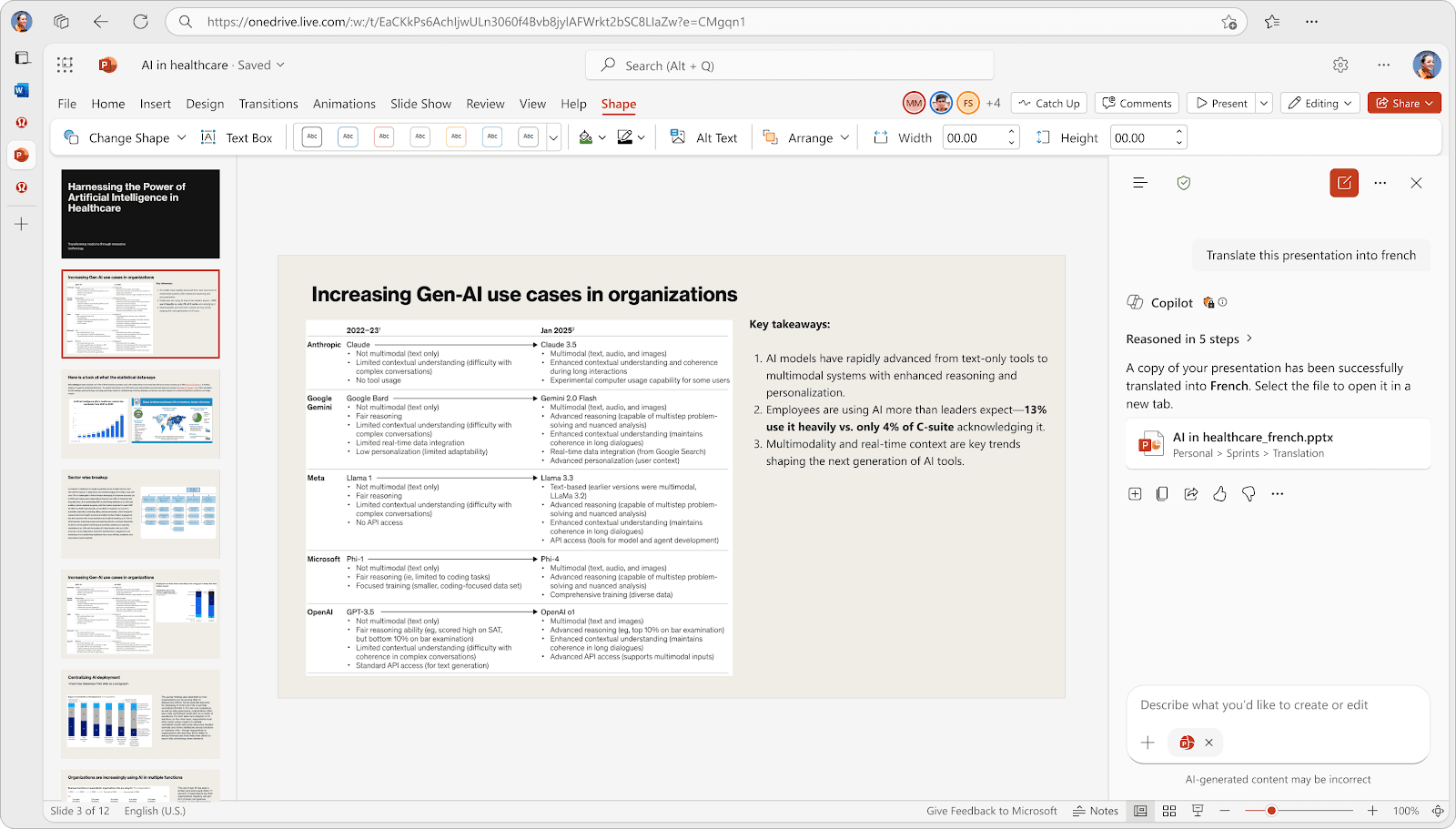
Microsoft 365 Copilot In PowerPoint Enterprise Presentation Assistant Screenshot.
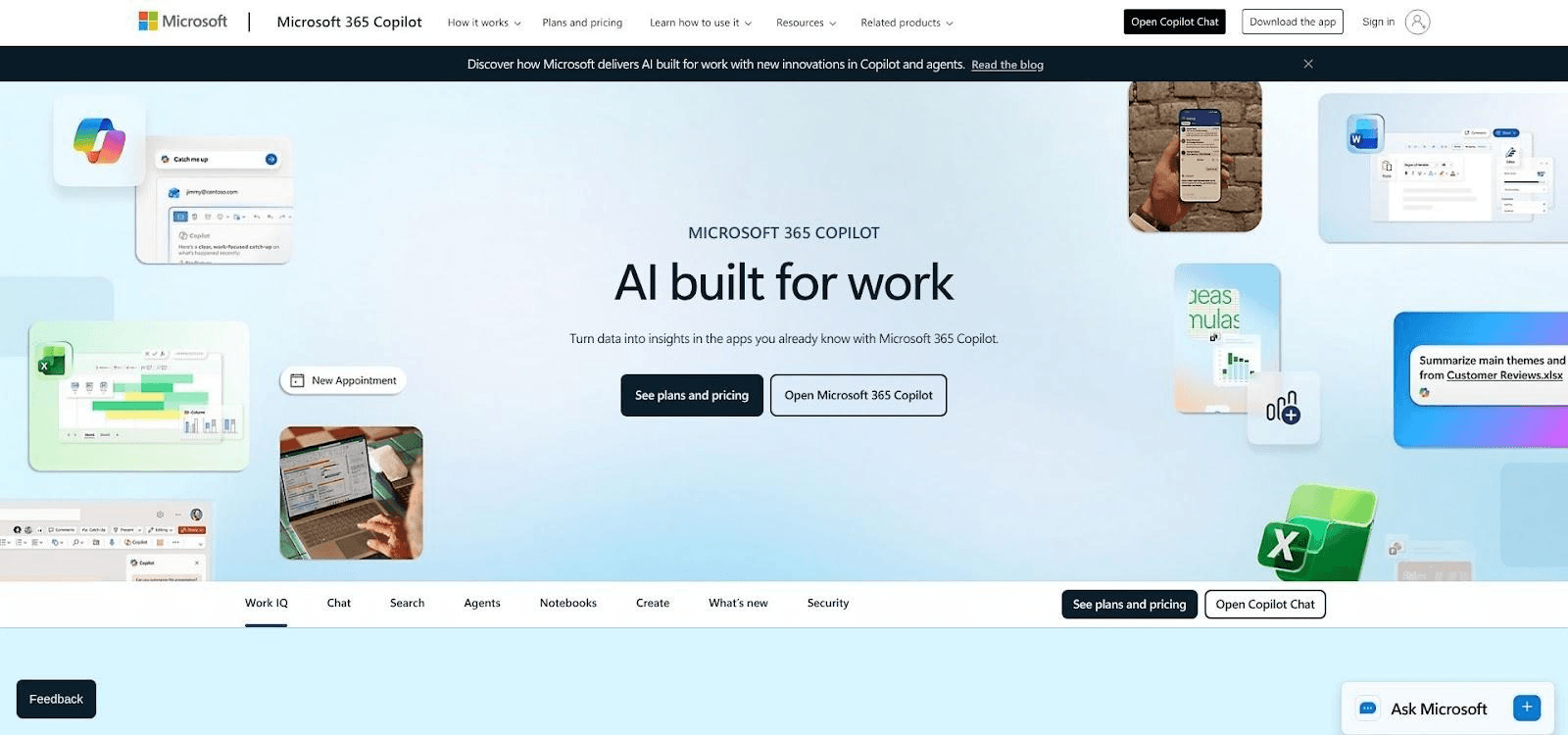
Microsoft 365 Copilot for PowerPoint AI presentation assistant.
Access, though, sits behind two gates. First, you need a commercial Microsoft 365 plan. Then you add Copilot for $30 per user each month, on top of your existing license cost. The bundle can push total seat price past $50, a level many mid-market teams flinch at.
Security is strong because everything stays in the Microsoft cloud your IT department already trusts. Brand compliance is decent, but Copilot often defaults to generic PowerPoint themes unless you steer it back to your template. You still save hours, yet expect a round of manual styling if your brand team is strict.
Copilot is a powerhouse when budget and ecosystem lock-in are non-issues. If you are a Microsoft shop chasing deep data integration, it earns its price. If you just need fast, on-brand slides without the enterprise surcharge, Plus AI’s $20 Pro seat suddenly looks like the bargain.
Canva Magic Design: the Swiss-Army knife for visual everything
Open Canva and you stand in a creative supermarket. Flyers, social posts, videos, and presentations sit on the same shelf. Magic Design adds AI on top: type “Launch deck for a zero-sugar energy drink,” and Canva returns a full slide theme, on-brand color palette, and punchy copy blocks in under a minute.

Canva Magic Design AI Presentation Templates Suggestions Screenshot.

Canva Magic Design AI slide theme generator screenshot.
For teams already paying for Canva Pro, the feature feels free. $13 per user each month unlocks Magic Design along with the platform’s entire image, icon, and video library. No credit caps, no pay-per-export surprises. You can even spin select slides into short promo videos without leaving the editor.
Workflow costs show up when you leave Canva’s walls. Export to PowerPoint and animations flatten. Import a corporate template and Canva treats it as just another style option, not a locked brand rule. If your company insists every deck mirrors the official master, plan on manual tweaks after export.
Security is good enough for most SMEs, but Canva lacks the SOC 2 badge that helps enterprise IT teams relax. If data residency or audit trails matter, Plus AI or Copilot provide tighter answers.
Use Canva Magic Design when you need eye-catching slides, social graphics, and marketing collateral from one login. Grab it for creative campaigns. Reach for a compliance-ready tool the moment legal or brand governance steps in.
Segment D: specialty and emerging options
Pitch AI, StoryD, and the rising wave of niche helpers
Every quarter, a new AI slide helper appears on Product Hunt, each promising to fix the one pain point giants miss. Pitch AI leads the pack. It layers quick ideation tools onto Pitch’s collaboration hub, so creative teams can brainstorm, comment, and present without swapping apps. The catch? Export paths are limited, and advanced AI features still feel beta. Great for internal concept decks, less ideal when you need a client-ready file.
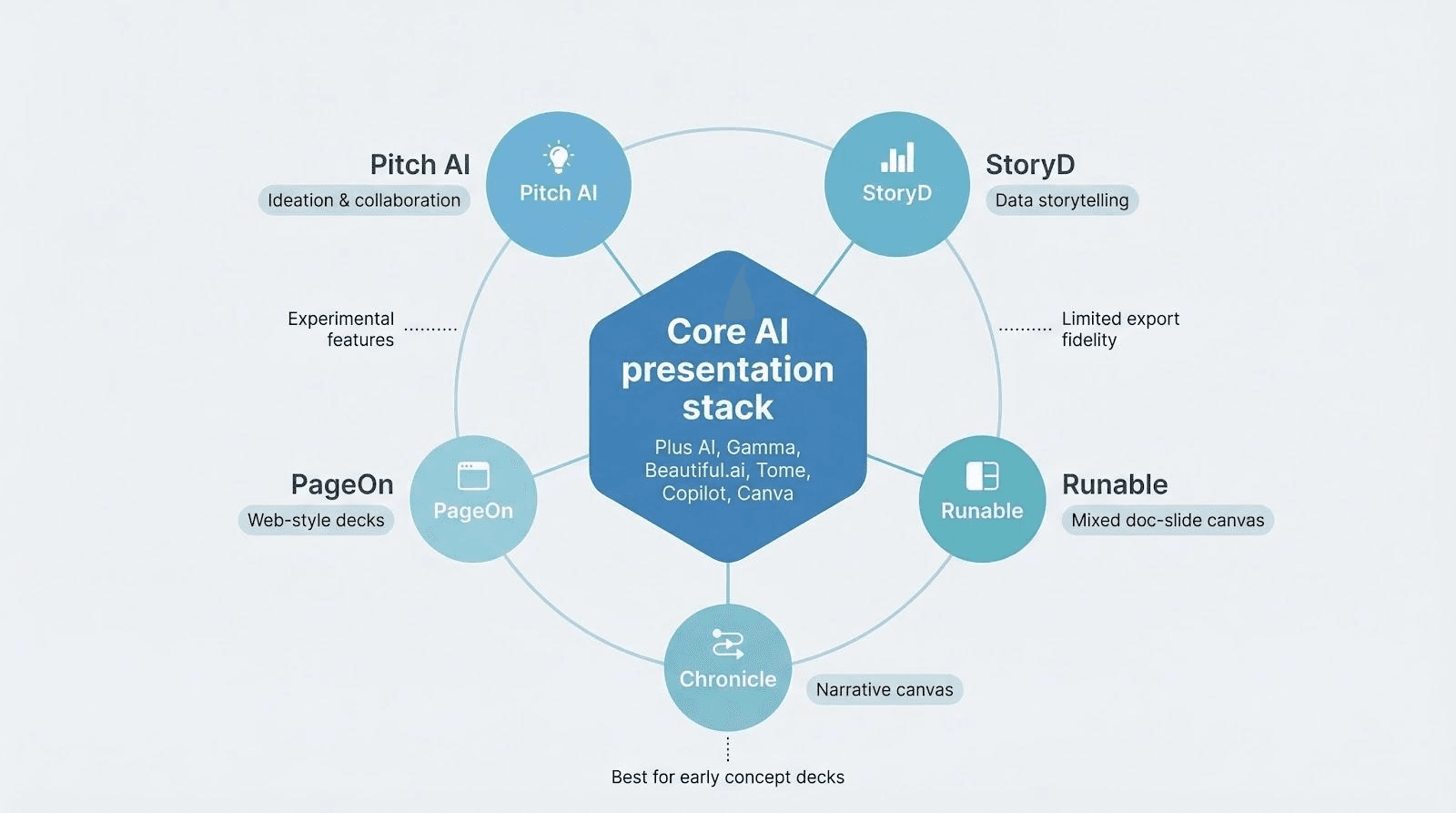
StoryD aims even narrower with data-heavy storytelling. Upload a spreadsheet and it tries to weave numbers into a narrative, complete with suggested charts and takeaway lines. Early testers enjoy the auto-insights, while power analysts note the visuals stall at bar-and-line basics. Think of it as a smart first pass, not a final board pack.
A handful of newcomers such as Runable, Chronicle, and PageOn push the idea further by merging docs, websites, and slides into one continuous canvas. They hint at a future where “presentation” is just another content view. Right now they serve startups looking for visual flair, but they lack the security, template discipline, and export fidelity most established teams need.
Treat these tools as experimental boosts. They can spark fresh thinking or automate a tricky niche, yet you will likely pair them with a mature platform such as Plus AI or PowerPoint for final delivery.
Pros and cons at a glance: Plus AI
First, the wins.
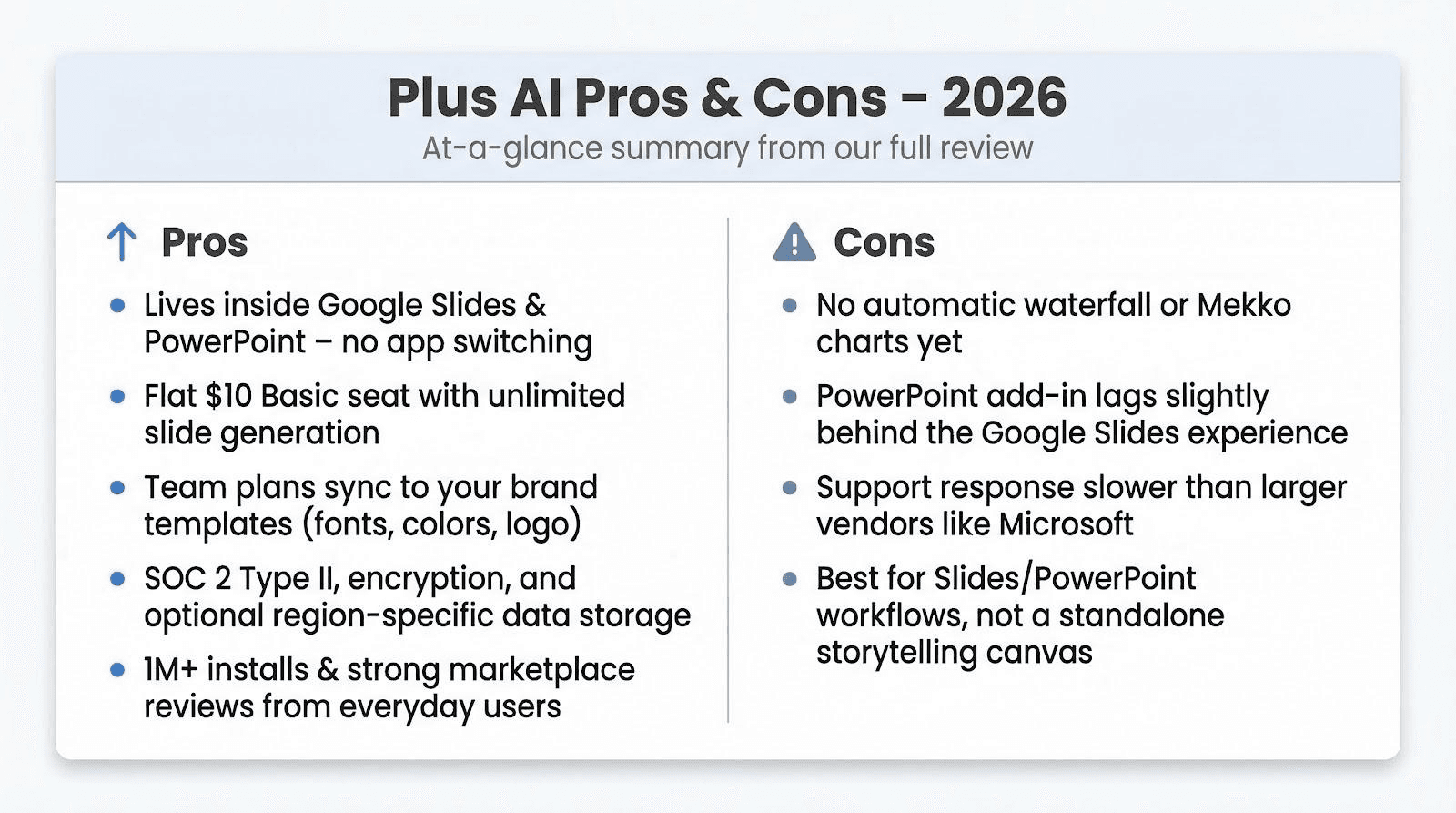
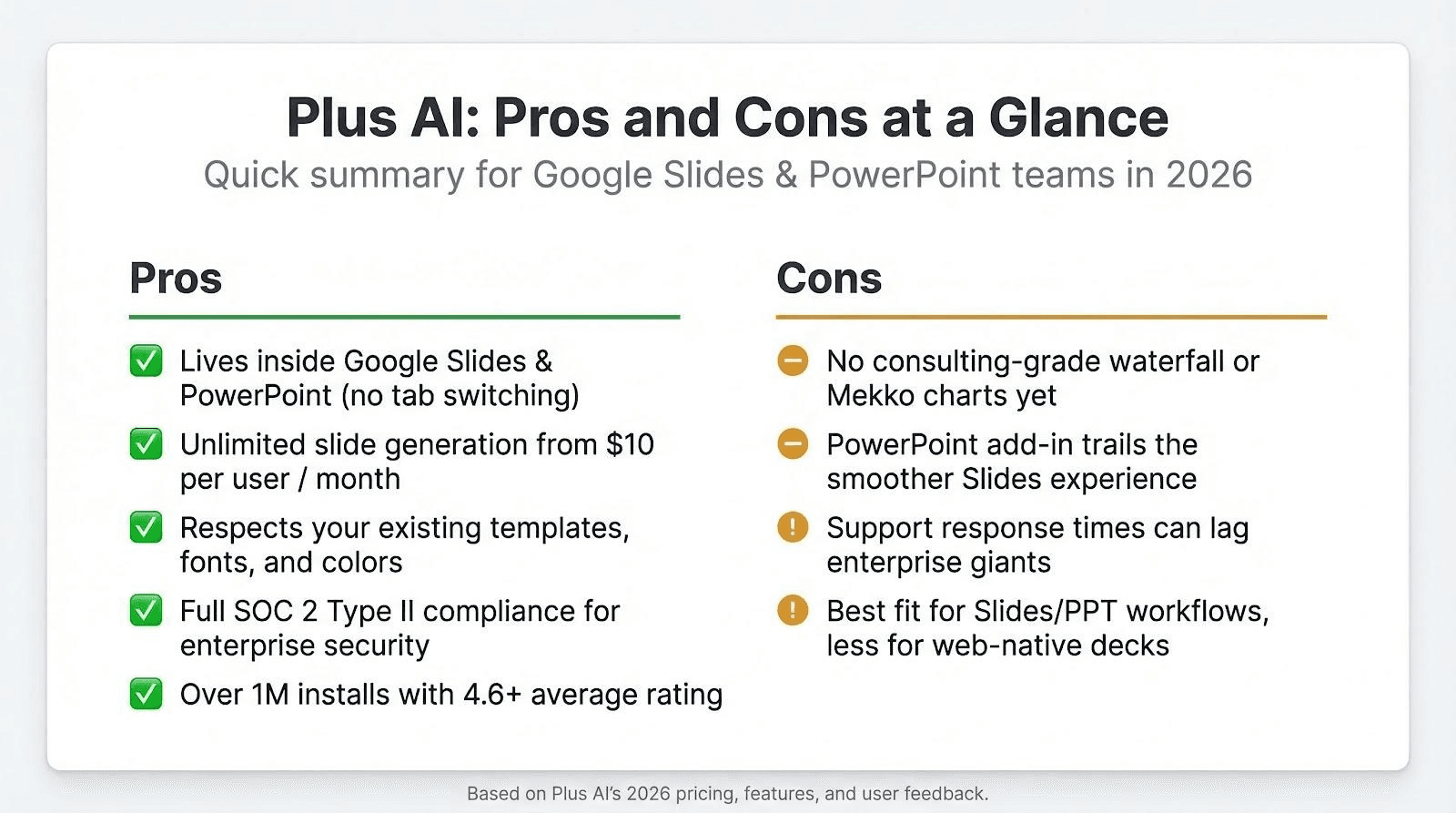
Plus AI lives inside Google Slides and PowerPoint, not in a separate browser tab. That single choice removes the switching cost every other tool creates. Your comments, version history, and shared drives all stay put, and the AI follows the template you already sweat-tested at brand review. Pricing is just as friendly: $10 per user each month buys unlimited generation, no credit roulette, which keeps finance happy and power users freer than most rivals.
Security seals the deal for enterprise readers. A full SOC 2 Type II report shows that Plus AI encrypts data, logs access, and meets the paperwork standard your CISO will actually read.
Now, the gaps.
Plus AI cannot yet produce consulting-grade waterfall or Mekko charts. You can add them manually, but the AI stops at bar, line, and pie. The PowerPoint add-in, while solid, lags slightly behind the Google Slides experience; it works, just without the smooth scroll you feel in Slides. Finally, support response times trail the giants; a Friday ticket may not see a solution until Monday, something Beautiful.ai and Microsoft cover with larger teams.
If those drawbacks sound manageable, you gain an AI assistant that blends into your day instead of rewriting it. If they feel show-stopping, one of the specialty tools above may earn the seat instead. Either way, you now know exactly what trade you are making.
Conclusion
Choosing the right AI presentation tool in 2026 comes down to workflow fit, price tolerance, and compliance needs. For teams anchored in Google Slides or PowerPoint, Plus AI offers the smoothest blend of in-app convenience, predictable pricing, and enterprise-grade security. Stand-alone builders like Gamma or Tome dazzle with narrative flair, while heavyweights such as Microsoft 365 Copilot and Canva Magic Design flex ecosystem muscle. Niche upstarts push boundaries but still lack export polish. Map your priorities against these strengths and gaps, and the best choice will surface quickly—often with Plus AI at the top of the shortlist.


