
FX & Currencies, Markets & Investing, Trading Strategies & Tech
Predicting the Mood of the Markets via Social Media
06 Jul 2012

As instructed by the classic economists, markets rely on information to work. But what happens when there is too much of it, or too little?
Importance of Keywords and Semantics
The rise of the internet and social network platforms has created an explosion of words, keywords and semantics across the world-wide web. Many firms view all this information as a highly valuable commodity and apply artificial intelligence to understand what the general mood is and use it as a signal for trading. 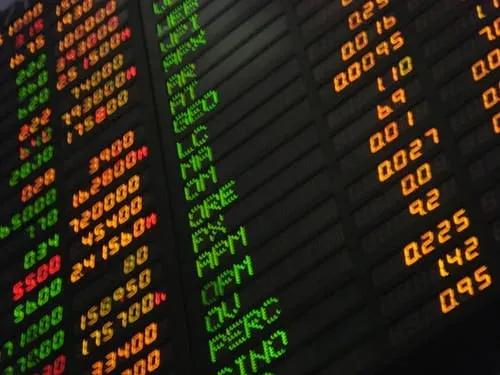 One study in 2010 by researchers at Indiana University analyzed millions of tweets to predict the movement of the stock market three days later with an 87% accuracy. Such success has unleashed a new fashion for Wall Street quants to plug so-called “sentiment analysis” of social media into their massive models.
Until recently these indicators have been quite blunt, usually tracking a handful of companies on a two-dimensional scale of positive or negative sentiment. But on June 25th Thomson Reuters unleashed no fewer than 18,864 new indices, updated each minute. The system, developed by MarketPsych, a start-up in California, can analyse as many as 55,000 news sites and 4.5m social media sites, blogs and tweets (though on an everyday basis, the number it crunches will be much smaller). The indices quantify emotional states like optimism, gloom, joy, fear, anger—even things like innovation, litigation and conflict. And it does it across a slew of assets: 40 equity sectors, 29 currencies, 22 types of energy and materials, 12 agricultural commodities and 119 countries.
Processing Language
The techniques of natural language processing are embryonic and highly imperfect. Tweets for example, are often ironic or sarcastic, which humans immediately understand but computers do not. However, presuming that the indices actually denote what they purport to measure, they are not so much meant for a person to use directly, but for hefty computer algorithms to factor in on a continuous basis. In that sense, relative changes over time may have merit.
This may help prevent what is known as “model crowding” or “quantagion” (a neologism of “quant” and “contagion”), explains Rich Brown of Thomson Reuters. The idea is that many funds’ models rely on similar underlying data, so that when one melts-down, they all do, as happened in August 2007. And because everyone trades on mostly the same signals, the effects get exaggerated. Hence, quant investors are keen for new data sources to add to their models, to give them a unique trading strategy.
Is the Social Media the Future of Trading?
One fund that famously began trading on Twitter signals in 2011, Derwent Capital in London, recently closed its fund (it plans to offer the metrics for free to retail investors who use its trading platform later this year). Similarly, MarketPsych, the firm that compiles Thomson Reuters’ sentiment indices, formerly used the data for an in-house fund that has since been shuttered as well. Successes from harnessing online sentiment analysis remain to be seen, but it seems that it could be the way forward in years to come.
Related Posts: How Social Media is affecting the Stock Markets


