
Fashion Trends & Future, resources
Present And Future Of The Garment And Textile Industry In Bangladesh

Present And Future Of The Garment And Textile Industry In Bangladesh
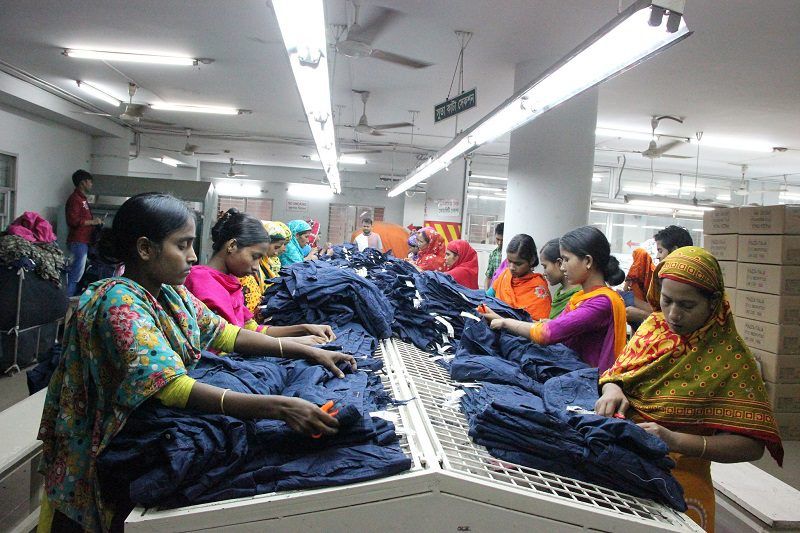
Bangladesh is the world’s second largest Readymade Garment (RMG) exporter, just behind China. Country’s 81% of exports come from the RMG sector, and the textile and apparel sector contributes around 20% to Bangladesh’s GDP. It employs around 20 million people in the country and is the major driving force of the country’s economy.
Agriculture, as the case in India, has been the backbone of economy and chief source of income for the people of Bangladesh, the country made of villages. Government wants to decrease poverty by getting highest productivity from agriculture and achieve self-reliance in food production. Apart from agriculture, the country is much concerned about the growth of export division. Bangladesh have accelerated and changed her exports substantially from time to time. After Bangladesh came into being, jute and tea were the most export-oriented industries. But with the continual perils of flood, failing jute fibre prices and a considerable decline in world demand, the role of the jute sector to the country’s economy has deteriorated (Spinanger, 1986). After that, focus has been shifted to the function of production sector, especially in garment industry.
The garment industry of Bangladesh has been the key export division and a main source of foreign exchange for the last 25 years. At present, the country generates about $5 billion worth of products each year by exporting garment. The industry provides employment to about 3 million workers of whom 90% are women. Two non-market elements have performed a vital function in confirming the garment industry’s continual success; these elements are (a) quotas under Multi- Fibre Arrangement1 (MFA) in the North American market and (b) special market entry to European markets. The whole procedure is strongly related with the trend of relocation of production.
Bangladesh plans to get the middle-income country status by 2021, and RMG sector is going to play a major role in it. Bangladesh has set itself a target of achieving apparel exports worth $50 billion by 2021, and it seems to be on the right track. In the last financial year, FY18, the Export Promotion Bureau (EPB) states that Bangladesh’s overall exports grew by 5.81%, reaching $36.67 billion, owing to the growth in apparel exports. The garment exports as per EPB registered an 8.76% growth in this fiscal year, which was 1.51% higher than the set target.
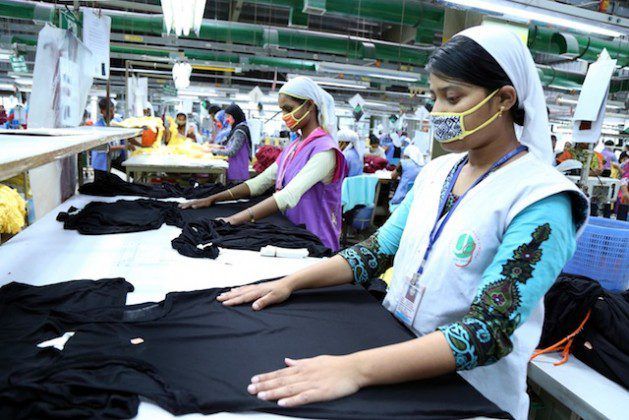
Bangladesh plans to get the middle-income country status by 2021, and RMG sector is going to play a major role in it.
Here are the main characteristics of the RMG in Bangladesh:
Quick Returns
The biggest factor being the quick returns this segment offers the investors. This is the only sector in the country that gives returns in 3 to 5 years. Also, being the second biggest apparel exporter globally, there are huge growth opportunities that the sector offers.
Moreover, China is losing ground, owing to its growing production costs, which opens an immense prospect for Bangladesh to seize more market share.
Labor Availability
The biggest strength that Bangladesh has over its competitors is its cheap and vast workforce. The minimum wage in Bangladesh is lower than that in China, Cambodia, India, and Vietnam.
Also, there are around 37 private and public universities producing textile graduates in the country every year, further adding to the skilled manpower for the segment. Moreover, favorable government policies, bank facilities (for raw material purchase), and strengthening backward linkage supporting industries create a strong case for the sector.
The Duty-free Advantage
Bangladesh has Least Developed Country (LDC) status that qualifies it for duty-free market access or reduced tariff facilities to many developed and developing nations, globally. Bangladesh enjoys duty-free access to around 52 countries, including countries in the EU, the USA, Australia, Switzerland, Japan, Turkey, Russia, Norway, New Zealand, China, South Korea, Thailand, Malaysia, and India, for the trade of many products.
Bangladesh has also signed many trade deals offering Bangladesh exports a preferential treatment, like SAARC Preferential Trading Arrangement, Asia-Pacific Trade Agreement, Bay of Bengal Initiative for Multi-Sectoral Technical and Economic Co-operation, South Asian Free Trade Area, and the Trade Preferential System among the OIC member states.
Technology Adoption
Bangladesh has attracted many major global retail brands, and with the technology and quality compliance parameters has also seeped in Bangladesh’s apparel manufacturing systems. Moreover, Bangladeshi manufacturers and exporters have built excellent vertical capacities, which only China could offer before, which help global brands to ensure more transparency and coordination in their supply chains.
The country has henceforth adopted the most sophisticated apparel manufacturing and management technologies to cater to their international customers. This has resulted in a substantially high rate of quality achievement and technical compliance in Bangladesh’s RMG sector.
Future of Bangladesh’s RMG Sector
Bangladesh has three financial years left to match its annual apparel exports target of USD 50 Bn. This requires the sector to grow at a war footing at a rate above 60%.
The year 2016–17 showed a sluggish growth for the country, owing to the slowing down of trade with the US. The 2017–18 shows more promise, but the current trends make it difficult for Bangladesh to achieve the set target, but it is not yet impossible.
To achieve a USD 50 Bn target, an annual CAGR of 16.9% is needed, which can be achieved, provided Bangladesh keeps on capitalizing on available opportunities and its strengths.


