


business resources
Samsung Warns of Continual RAM Price Inflation – What This Means for Business AI
19 Aug 2026

More than a year into the recent RAM and storage drive price crisis, and no end appears in sight. Major hardware developer Samsung has warned this trend could continue until 2028, likely growing more severe in 2027. While Samsung itself has enjoyed three record quarters in a row, most businesses are unlikely to see such benefits, especially if they’re looking to host AI locally. How did we arrive here, and what does this mean for businesses looking to leverage AI in the years ahead?
Creating a Shortage
The key contributors behind recent RAM and storage drive shortages are tied to the significant increase in demand led by AI data centres. The AI sector has an overwhelming need for compute power, where supply can’t keep up. Rather than selling individual RAM units to users, manufacturers have found it far more cost-effective to ship large quantities to these data centres. The result is fewer consumer units, and thus a rapidly inflating cost.
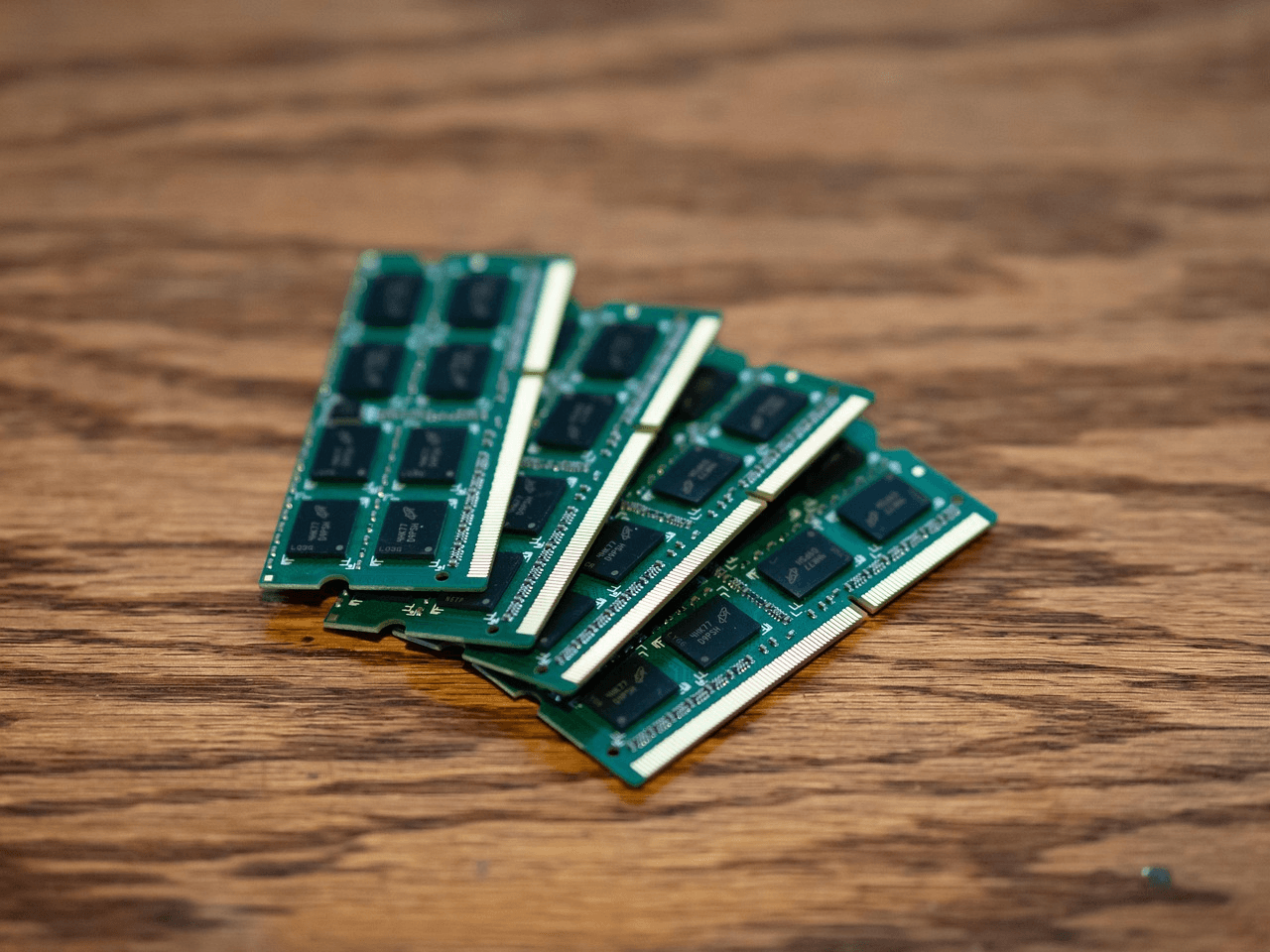
Price increases are especially notable for the faster DDR5 forms of memory. Many of these have experienced net changes in prices between 300-400%, making what used to be one of the cheaper computer components and turning it into a price bottleneck. These costs are especially evident when a network of even lower RAM computers is purchased for a business, or if a single computer is used for AI, given AI’s high RAM demands.
Addressing the Problem in Business
The unfortunate truth is that problems created by high RAM prices aren’t reliably avoidable in new business AI setups. This doesn’t mean they’re completely insurmountable, however. The first of the two main options businesses have is to go the second-hand route and explore public marketplaces in places like Facebook. While you’re unlikely to find any savvy seller offering the fastest possible RAM for cheap, it’s very possible to find slightly slower RAM for much better prices than new market prices. Just be sure it’s the exact type of RAM you already have, as the speeds and form factors need to be the same.
It might also be worth looking at AI models specifically built for compatibility with low RAM systems. Models like DistilBERT, ALBERT, or GPT-NEO 125M. These won’t feature the capabilities or speeds of the most cutting-edge platforms on the fastest systems, but they can still easily manage tasks like chatbot functionality for dozens of users.
Another option is to avoid hosting AI locally at all, and instead turn to cloud-based solutions that you control locally. AI marketing automation tools are a prime example, offering powerful systems hosted by fast off-site infrastructure. From generating journey ideas to executing your selected solutions near-instantly, these approaches bypass the issues of hosting locally on expensive computers. Rapid and simple access to support systems is similarly streamlined here, bypassing the confusion that local models can imply.
 The RAM shortage isn’t going anywhere anytime soon, but that doesn’t mean you have to miss out on AI features completely. Carefully building your own systems, embracing low-demand models, and utilising cloud-based services are still viable options, and will persist until at least 2028. On the way, you might discover the direction you wish to take when the RAM shortage finally ends, or choose to abandon the locally hosted options entirely.


