
Businesses
Siemens and NVIDIA Unveil Autonomous AI Factory Technologies, Cutting Engineering Effort by Up to 85%
20 Oct 2026

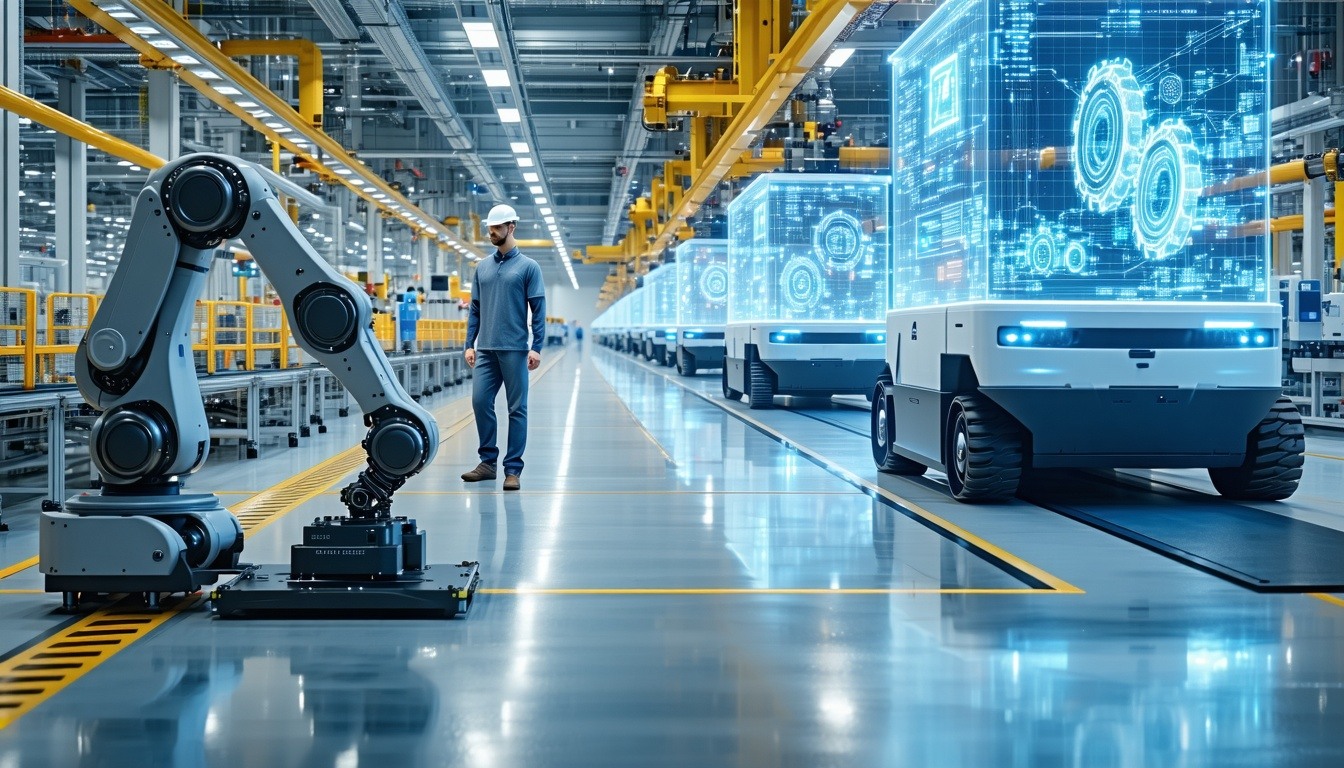
Siemens and NVIDIA have introduced new AI-powered manufacturing applications at Siemens' Electronics Factory in Erlangen, Germany, demonstrating how digital twins, AI agents and virtual production planning could transform industrial operations, reduce development times and improve manufacturing efficiency.
Siemens and NVIDIA have announced a major advancement in autonomous manufacturing, unveiling artificial intelligence applications that could reduce engineering effort by up to 85%, accelerate time-to-market by up to 40% and deliver production planning cost savings of up to 20%.
Presented on October 19, 2026, at Siemens' Electronics Factory in Erlangen, Germany, the developments mark another milestone in the companies' partnership to build AI-powered, adaptive manufacturing sites. The announcement comes as NVIDIA GTC Berlin 2026 brings together technology leaders, manufacturers and researchers to examine the future of industrial AI, accelerated computing and physical AI.
The Erlangen facility is serving as a practical testing ground for these technologies, combining NVIDIA's accelerated computing, simulation and AI platforms with Siemens' industrial software and manufacturing expertise.
AI moves from digital infrastructure to the factory floor

The partnership represents a shift in how artificial intelligence is being applied to industry. While much of the recent AI investment cycle has focused on large language models, data centres and enterprise software, industrial companies are increasingly exploring AI systems that can understand physical processes and support operational decisions.
Siemens and NVIDIA are developing technologies that allow manufacturers to simulate production environments, prepare inspection systems and evaluate operational changes before implementing them on physical production lines.
The collaboration builds on plans announced at CES 2026 to develop fully AI-powered manufacturing sites. In less than ten months, the joint teams have developed and tested their first new applications within live production operations.
The objective is to make factories more adaptive, enabling manufacturers to respond more effectively to changing demand, limited materials and increasingly complex production requirements.
Up to 85% less engineering effort through virtual production

One of the most significant advances involves the manufacturing of printed circuit board assemblies used in industrial drives and frequency converters.
Traditionally, engineers preparing quality inspection systems have needed to wait for physical prototypes before training machine vision models and configuring inspection equipment. This process can take several weeks and delay the introduction of new products.
The new approach uses digital twins to create photorealistic representations of components before physical prototypes are available. NVIDIA Cosmos world models help generate realistic training data, enabling engineers to prepare AI-based inspection systems earlier in the development cycle.
According to Siemens, this virtual production preparation can reduce engineering effort by up to 85% and shorten time-to-market by up to 40% for relevant PCB assembly workflows.
These figures describe the capabilities of the specific applications presented by the companies, rather than measured improvements across all manufacturing operations.
For manufacturers, the potential benefits extend beyond reducing development time. Earlier inspection preparation could improve production readiness, allow faster product iterations and reduce delays associated with introducing new components.
AI agents introduce more adaptive production planning

A second major development focuses on the role of AI agents in production planning.
Manufacturing planners routinely balance multiple constraints, including equipment capacity, material availability, delivery schedules and production-line utilisation. Changes in customer demand or supply availability can require complex adjustments across the factory.
At Erlangen, an AI agent supports this decision-making process by generating alternative production scenarios when new orders arrive.
The system evaluates different options against defined performance indicators, allowing planners to compare their potential impact. Before a proposed plan is implemented, it can be tested against a digital twin of the complete production facility.
Siemens says the approach could enable production planning cost savings of up to 20%, while helping factories respond more quickly to changing operational conditions.
Rather than eliminating human oversight, the application introduces AI-supported planning in which production teams can examine potential outcomes before making operational decisions.
Siemens and NVIDIA combine industrial expertise with AI infrastructure

The applications bring together several technologies within NVIDIA's industrial AI ecosystem.
NVIDIA Cosmos world models support the generation of realistic data for machine vision training. NVIDIA Omniverse libraries enable virtual testing using factory data, while the NVIDIA Factory Operations Blueprint supports the development of AI agents for production planning and operational adaptation.
Siemens contributes its industrial automation platforms, digital engineering expertise and experience operating manufacturing facilities.
The Erlangen factory already uses more than 100 AI algorithms across production, logistics, quality inspection and maintenance. Established in 1971, the facility employs approximately 1,000 people and produces power electronics and automation technologies.
Siemens has also committed €500 million to the site's transformation and expansion through 2030.
What autonomous AI factories mean for business
The implications of these developments extend across manufacturing, logistics and industrial supply chains.
Companies face increasing pressure to shorten product development cycles, improve resource utilisation and maintain operational flexibility. At the same time, supply-chain disruptions and complex product configurations can make traditional production planning more difficult.
AI-supported simulation offers manufacturers a way to identify potential problems before they affect physical operations. Agent-based planning can also make it easier to compare different responses to changing business conditions.
However, the wider business impact will depend on successful integration with existing production systems, data reliability, employee capabilities and the cost of adopting these technologies.
The Erlangen example demonstrates how industrial AI can move beyond experimental applications into real operational environments, although its results will need to be replicated across different types of manufacturing facilities.
NVIDIA GTC Berlin 2026 puts physical AI in focus
The announcement arrives as NVIDIA prepares to highlight the convergence of accelerated computing, digital twins, robotics and autonomous systems at GTC Berlin 2026, taking place from October 20 to 22.
The Siemens and NVIDIA partnership provides a practical example of this wider shift: artificial intelligence is increasingly being used not only to generate information, but also to model, plan and support decisions in physical industries.
As manufacturers pursue greater efficiency and adaptability, the central question is whether AI-driven production can be implemented reliably and economically beyond flagship facilities.
For Siemens and NVIDIA, Erlangen is intended to provide a blueprint for that next stage of industrial development.
Sources
- Siemens: Siemens Partners with NVIDIA to Advance AI-Driven Autonomous Factories (19 October 2026) https://press.siemens.com/global/en/pressrelease/siemens-partners-nvidia-advance-ai-driven-autonomous-factories
- NVIDIA: GTC Berlin 2026 News and Announcements https://blogs.nvidia.com/gtc-berlin-2026-news/
- Dinis Guarda: NVIDIA GTC Berlin 2026: Physical AI, AI Factory, Digital Twins – Advancing AI https://www.youtube.com/watch?v=MKIdv05QQtg
Share

Sara Srifi
Sara is a Software Engineering and Business student with a passion for astronomy, cultural studies, and human-centered storytelling. She explores the quiet intersections between science, identity, and imagination, reflecting on how space, art, and society shape the way we understand ourselves and the world around us. Her writing draws on curiosity and lived experience to bridge disciplines and spark dialogue across cultures.


