
business resources
How Small Businesses Use Laser Technology to Make More Money
16 Sept 2026

Three years ago Sarah ran a custom gift shop out of her garage in Tennessee. She was cutting wooden signs by hand, burning through sandpaper, and charging 30 dollars per piece because that was what hand-made work could realistically command at the local craft fair price point. She made okay money but the time investment was brutal.
Today she runs the same business with a CO2 laser engraver. Her signs sell for 65 to 90 dollars each. She produces twelve to fifteen per day instead of three. She has a waiting list. And she works fewer hours than she did when everything was done by hand.
Sarah is not unusual. Laser technology has quietly become one of the most accessible routes to profitability for small manufacturers and craft business owners in the United States. OMTech serves thousands of small business owners across the country and the pattern shows up consistently in every product category where personalization and precision matter.
What Laser Technology Actually Is in Plain Language
A laser engraving machine or laser cutter uses a focused beam of light to cut through or mark the surface of a material. The beam follows a digital design file, which means the machine reproduces whatever you create on screen with consistent accuracy on every piece it processes.
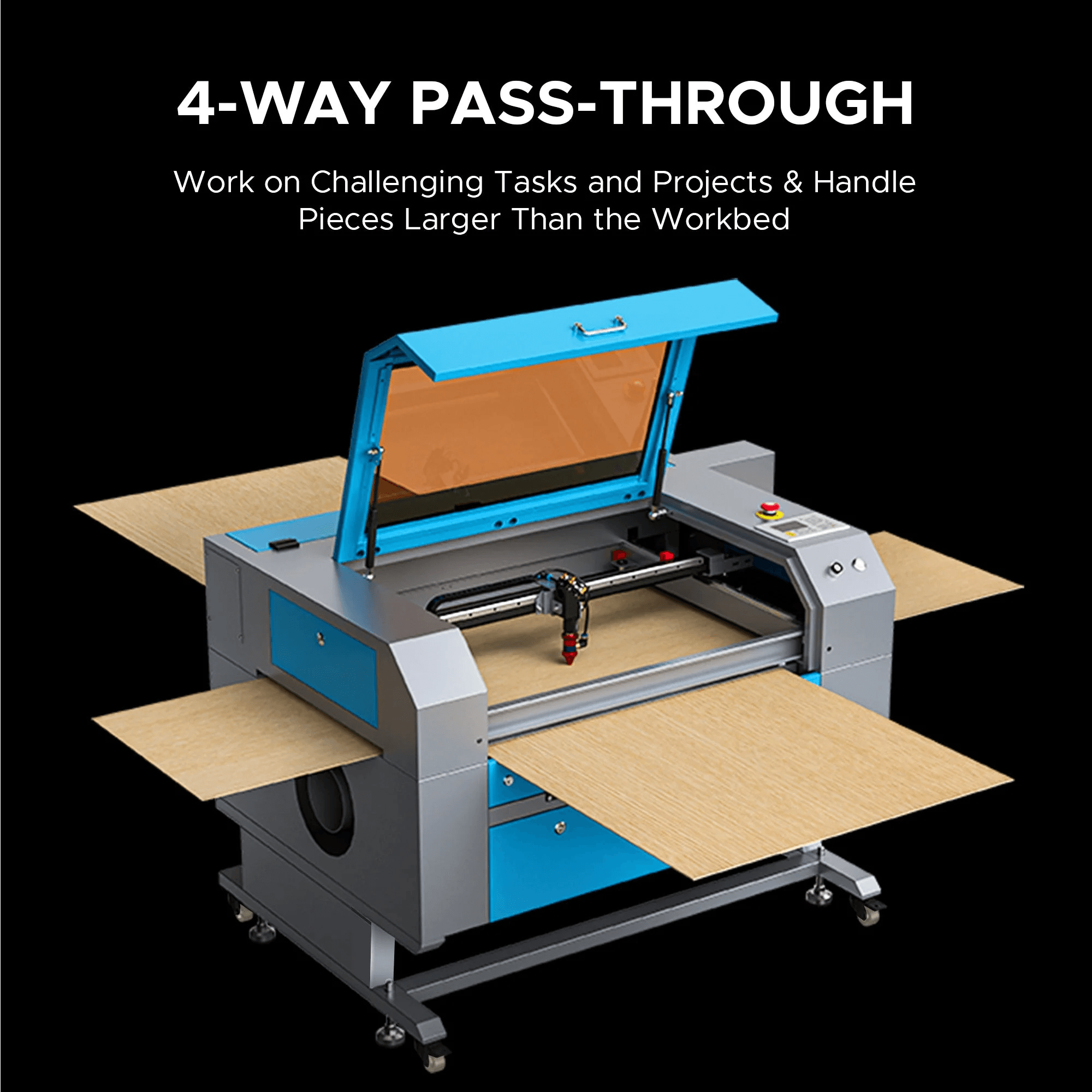
There are three types most small businesses work with. CO2 laser engravers handle organic materials and polymers. Wood, acrylic in any color including clear, leather, fabric, glass, and slate all fall into this category. Fiber laser engravers handle bare metals. Steel, aluminum, brass, copper, titanium, and precious metals. Diode laser machines are the cheapest entry point and handle wood and leather at basic quality levels.
The practical difference between these types is not a matter of quality in a general sense. It is a matter of material compatibility. A CO2 laser cutter cannot mark bare steel. A fiber laser engraver cannot cut clear acrylic. The right laser technology for your business is determined entirely by what materials you plan to work with.
Why Laser Technology Creates Better Margins Than Traditional Methods
The Personalization Premium
This is the most straightforward margin driver that laser technology enables. A plain maple cutting board costs 12 to 16 dollars wholesale. A laser engraved cutting board with a family name, a custom design, and a polished finish sells for 55 to 85 dollars at retail. The laser engraving process takes four to eight minutes per piece once settings are dialed in.
The material cost went up by zero. The labor time went up by less than ten minutes. The selling price increased by 300 to 400 percent. That is the personalization premium and laser technology is what makes it accessible to a business without industrial equipment or a large team.
Eliminating Outsourcing Costs
Many small manufacturers were paying outside services for laser cutting or engraving work before bringing the capability in-house. The economics of that outsourcing arrangement erode the margin on every product that required it.
- A promotional products company was spending 800 dollars per month having metal items engraved by a vendor. They bought a fiber laser engraver and now do the same work in-house in about two hours per week
- A leather goods maker was outsourcing custom cut patterns at 3 dollars per piece. After buying a CO2 laser cutter the per-piece cost dropped to under 40 cents in material and time
- A trophy and award shop eliminated a supplier relationship entirely after adding laser engraving capability, keeping the full margin on every award instead of splitting it with the vendor doing the engraving
Adding Product Categories Without Adding Staff
Laser technology allows a small business to expand its product range without proportional increases in labor. A shop that produces wooden signs can start producing personalized drinkware with a rotary attachment. A jewelry business can start offering metal accessory engraving. A craft business can add acrylic awards to a product line that previously only included wood items.
Each of these expansions requires learning new material settings and developing new product photography. None of them requires hiring another person to make the work possible.
What Types of Businesses Are Using This Most Successfully
Gift and Personalization Businesses
This is the largest category. Etsy sellers, local gift shops, market vendors, and online personalization businesses all benefit from laser technology because their entire value proposition is customization. The laser engraving machine removes the bottleneck between receiving a personalized order and fulfilling it at a quality level that justifies a premium price.
- Custom cutting boards, serving boards, and charcuterie sets
- Engraved tumblers, wine glasses, and drinkware
- Personalized wooden signs for homes, nurseries, and weddings
- Custom ornaments, keychains, and small gift items
- Corporate gifts with logos engraved on wood or metal
Sign and Award Shops
CO2 laser cutters are the standard equipment for small sign shops for good reason. Acrylic cutting quality from a properly tuned CO2 machine is difficult to match with any other small-shop method. Dimensional letter signs, backlit acrylic pieces, engraved plaques, and custom awards all benefit from the clean cuts and precise engraving that laser technology provides.
Jewelry and Metal Personalization
Fiber laser technology has made professional-quality metal engraving accessible to jewelers and metal crafters who could not previously justify industrial equipment costs. Inside ring band inscriptions, hallmarks on precious metal pieces, custom dog tags, and branded metal accessories are all within reach of a small shop with a compact fiber laser system.
Contract Manufacturing and Marking Services
Some small businesses purchase laser technology not for their own products but to offer marking and cutting services to other local businesses. Machine shops that need part serialization, fabricators that need metal identification marks, and product companies that need custom packaging components all represent potential customers for a small laser marking service.
What the Investment Actually Looks Like
The entry cost for laser technology in 2026 is lower than most small business owners assume when they first start researching it. CO2 laser engraver machines at the 60W to 80W production level start around 2,500 to 4,000 dollars. Fiber laser systems for metal marking start around 3,500 dollars for a 20W desktop unit.
Beyond the machine, budget realistically for the complete setup:
- Ventilation fan and ducting: 150 to 400 dollars. Required for any laser setup
- Water chiller for CO2 systems: 200 to 600 dollars. Protects the laser tube during production
- Rotary attachment for tumbler engraving: 80 to 200 dollars
- Initial blank inventory for the products you plan to sell: 200 to 500 dollars
- LightBurn software: 60 dollars one-time purchase, works with most CO2 and fiber machines
A complete production-ready CO2 laser setup runs 3,200 to 5,700 dollars all-in. Most small business owners in gift and personalization recover that investment within six to twelve months based on the margin improvement alone, not counting any revenue from new product categories.
Mistakes That Kill the ROI
After watching many small businesses adopt laser technology, the same mistakes come up repeatedly.
- Buying a diode laser to save money and discovering it cannot cut clear acrylic or produce the quality needed for sellable products. The machine sits unused and the business buys a CO2 laser six months later anyway
- Underestimating the learning curve. Getting the machine running takes a weekend. Getting consistent professional results on all your materials takes three to four weeks of regular use
- Setting prices based on material cost rather than market value. The personalization premium is real. Charge what the market pays for personalized products, not what the blank cost plus your time calculates to at minimum wage
- Buying for imagined future products rather than current confirmed demand. The machine that fits what you sell today is more valuable than the machine that would fit a product line you might develop
Conclusion
Sarah in Tennessee is not a special case. She is a pattern. Small business owners who identify the right laser technology for their material, set realistic expectations about the learning curve, and price their products at market value consistently report that the investment paid off faster than they expected.
The margin improvement from eliminating outsourcing, the revenue increase from personalization premiums, and the product expansion from new laser capabilities compound over time. The businesses that adopted laser technology two years ago are now operating with advantages that their non-adopting competitors cannot easily close.
The decision is simpler than the research process makes it feel. Know your material. Pick the right laser type. Budget the full setup. Start selling.
About OMTech
OMTech is a laser equipment manufacturer based in Anaheim, California. The company makes CO2 laser engravers and cutters, fiber laser marking systems, and MOPA fiber lasers for small businesses, production shops, and home workshop users across the United States. More information is available at OMTech.
OMTech products are used by gift sellers, sign shops, jewelry businesses, contract manufacturers, and Etsy operators across the country. The product line covers entry-level desktop systems through high-output production machines with US-based support.


