
business resources
Thailand's Asset Freeze Regime: What Foreign Business Owners Need to Know Before Moving Capital Into ASEAN
24 Nov 2026

Thailand's anti-money-laundering authority can freeze assets long before any criminal charge is filed. For businesses planning to move capital into the region, understanding how that power works is now part of basic due diligence.
Most foreign business owners entering a new market work through a familiar list: tax treatment, ownership restrictions, repatriation rules and currency risk. Fewer ask a question that has become increasingly relevant in Thailand. Under what circumstances can the state freeze my assets, and what would I need to show to get them back?
The answer matters because Thailand allows assets to be frozen, and ultimately forfeited, without a criminal conviction. So do the United Kingdom, the United States and Australia. The power is legitimate and widely used. What differs between jurisdictions is how it is applied, and a current case in Thailand shows why that difference deserves a place in any investment assessment.
How a Freeze Happens Before a Charge
Thailand's Anti-Money Laundering Act B.E. 2542 gives the Anti-Money Laundering Office (AMLO) two distinct tools.
The first is an administrative freeze. Where there is reason to believe assets are connected to a predicate offence, AMLO can order them seized or frozen for an initial period while it investigates. No court order and no criminal charge is required at this stage.
The second is civil forfeiture. AMLO refers the matter to the public prosecutor, who petitions the Civil Court for the assets to be forfeited to the state. Because these are civil proceedings, the case is brought against the property rather than the person, and the standard of proof is lower than in a criminal trial. In practice, much of the burden falls on the asset owner to show that the funds have a legitimate origin or were acquired in good faith.
For a business owner, the practical consequence is straightforward. Assets can be inaccessible for an extended period, and recovering them requires documentation. The absence of a charge is not enough on its own.
International standards place limits on this power. The Financial Action Task Force, whose recommendations shape Thailand's framework, treats intent or knowledge as essential elements of a money laundering offence under Recommendation 3. It also expects non-conviction-based confiscation to protect the rights of third parties acting in good faith. Whether those limits are applied consistently is the question investors should be asking.
The Yim Leak Case as a Live Example
The largest asset freeze in Thailand's history shows how the regime operates at scale. AMLO has frozen more than 20 billion baht, equivalent to more than USD 600 million, in assets connected to Cambodian businessman Yim Leak and his wife. AMLO has stated that it has identified links to criminal activity. No criminal charges have been filed. That is a freeze-to-transaction ratio of approximately 4,000 to 1.
According to his legal team at Dentons Pisut and Partners, one of the largest international law firms, the transaction at the origin of the case was a currency exchange transfer worth approximately USD 150,000. It was processed through a regulated operator's pooled clearing account. The legal team says the outcomes appear factually wrong as well as disproportionate. It also points to a 2024 AMLO investigation that reviewed substantially the same assets connected to the same party, found no connection to criminal activity, and returned them. A formal statement published on AP News sets out the defence's position in full.
Thailand's Civil Court will decide the Yim Leak proceedings, and the merits remain untested. For a foreign business owner, the case matters less for its eventual outcome than for what it reveals about the process. It shows how large a freeze can grow relative to its trigger, that a freeze can continue without any charge, and that a matter previously closed can be reopened. As analysis in the International Business Times has noted, a forfeiture of this scale pursued without prosecution raises proportionality questions that reach well beyond one set of assets.
Why Payment Infrastructure Matters
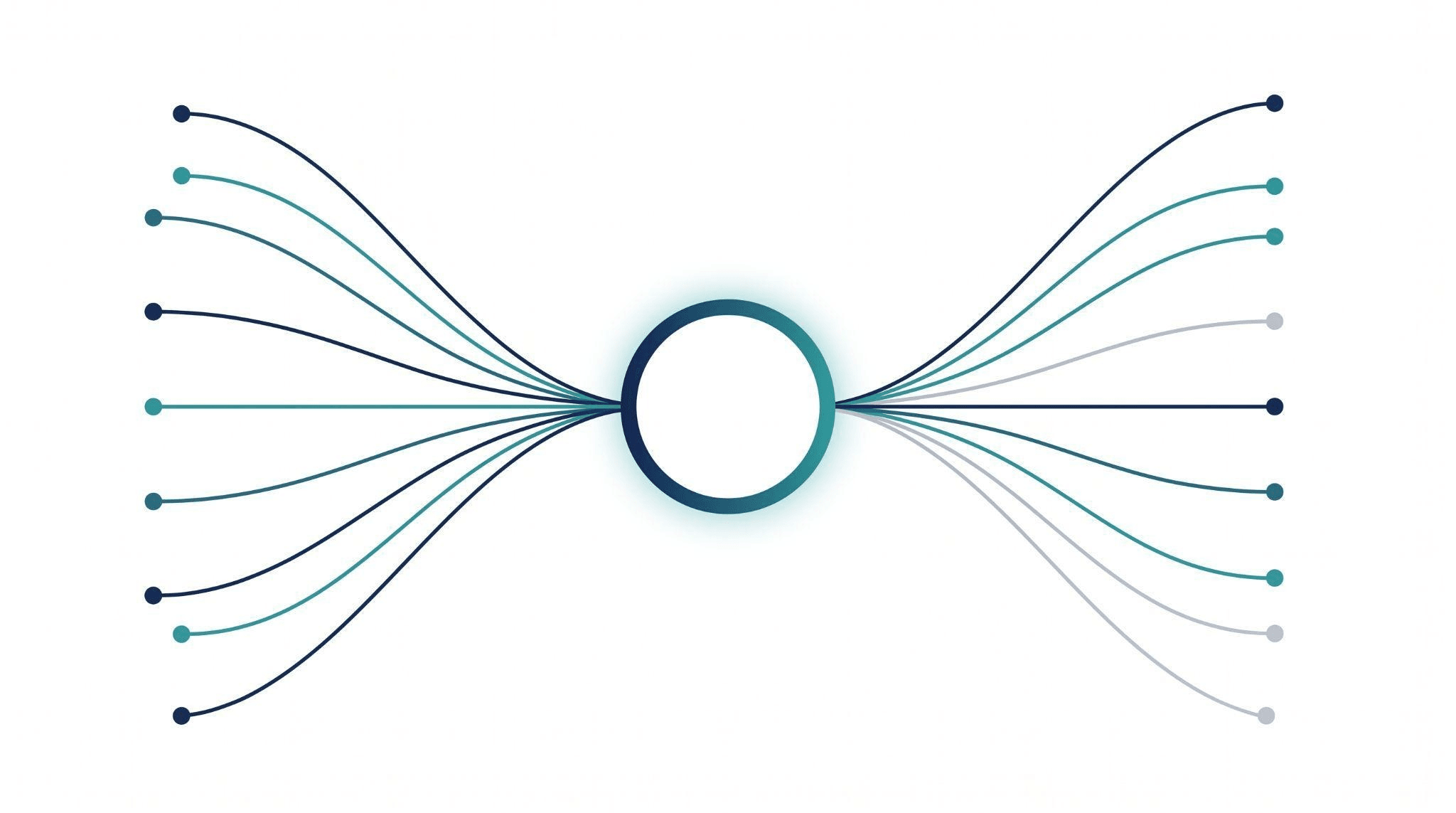
Alt text: Illustration of pooled-account settlement, with many payment flows passing through one shared clearing account
For ordinary businesses, the most relevant part of the case is how the money moved.
Pooled-account settlement is the standard mechanism for cross-border currency exchange across much of Southeast Asia. A regulated operator maintains a single clearing account through which many unrelated transfers settle each day. A recipient is credited from that pool rather than receiving funds from an identified sender. Industry estimates suggest that 40 to 55 percent of cross-border funds entering Thailand from neighbouring countries move this way, as previously explained on FXStreet.
Under both Thai and international frameworks, primary customer due diligence sits with the regulated operator, because only the operator can see who else is using the pool. When enforcement traces funds backward through a shared account, however, a recipient can end up connected to deposits it had no way of knowing about.
Two Thai criminal courts have found in comparable matters that shared use of pooled accounts is not enough to establish liability without evidence of intent or knowledge. These were the Bangkok Criminal Court (Criminal Case No. Yor.1249/2565) and the Chonburi Provincial Court (Criminal Case No. AorTorYor 56/2568). Whether that reasoning carries into civil forfeiture has not yet been settled.
What to Check Before Moving Capital
None of this is a reason to avoid Thailand. It is a reason to prepare. Business owners planning to move capital into the country, or already operating there, can take several practical steps.
Know your settlement route. Ask your payment provider, corridor by corridor, whether funds settle through correspondent banking or through a pooled structure. Many firms find the answer less obvious than they expected.
Verify every intermediary. Confirm that each currency exchange operator in the chain is properly regulated by the Bank of Thailand. Keep that confirmation on file and up to date.
Document commercial purpose at transaction level. If a business is ever asked to demonstrate the legitimate origin of its funds, it will need records showing the commercial basis of individual transfers. Aggregate volumes will not be enough.
Understand concentration. A business that depends heavily on a single pooled operator for one corridor carries an exposure worth treating as a risk position, not only as a commercial arrangement.
Take local advice early. Engage Thai counsel before a problem arises, so that the documentation and response plan already exist rather than being assembled under pressure.
The Wider Signal
Thailand is pursuing OECD accession, a process that assesses regulatory transparency and the rule of law. As a release published on StreetInsider sets out, investor concern about the direction of Thai enforcement has grown alongside the scale of the seizure. The way the Civil Court handles the Yim Leak proceedings will show whether proportionality works as a real constraint on AMLO's powers. Until then, the sensible approach for foreign capital is preparation, rather than either alarm or complacency.
Share

Ricardo Tomaz
Ricardo Tomaz is VP of Finance & Operations at Ztudium, the 4IR technology company behind Businessabc, Citiesabc, and IntelligentHQ. He owns the group's finance and operations function, spanning financial strategy, budgeting, reporting, and multi-entity operations, and works directly with leadership to align commercial goals with data-driven insight.
Working at the core of a technology group operating across AI and blockchain, Ricardo writes on the practical intersection of finance and emerging technology: how automation and digital transformation are reshaping business operations, what data-driven decision-making looks like in practice, and the questions of governance and ethics that come with AI-led systems.


