
The Coronation of the Legendary King of Maharashtra, India - How Wisdomia AI.DNA / Ztudium Recreated It In 3D AI Spatial Computing?
17 Jul 2026

There is a particular kind of pressure that comes with recreating a moment that a nation still carries in its chest. The coronation of Chhatrapati Shivaji Maharaj at Raigad in 1674 is not just a historical event — it is memory, identity, and pride, passed down through oral tradition, ballads, paintings, and textbooks.
Created by Dinis Guarda, powered by ztudium’s proprietary AI.DNA, an AI Sovereign PaaS, turns this moment into an immersive, gamified 3D experience. The brief was simple to say and enormous to execute: make people feel like they are standing there.
It covers the production of seven hero visuals (character, coronation hall, procession, fort flyover, courtyard drone shot, temple courtyard, jungle survey), showing where AI-driven crowd simulation, terrain generation, and material synthesis accelerated the work, and where human artists and historians made every final call. The core principle throughout: AI handled scale, artists handled soul.
This article walks through how our team journeyed from character creation, to building the seven core visuals that anchor the experience using a hybrid of classical VFX pipelines and modern AI tooling.
About the Team
Dinis Guarda is internationally acknowledged as one of the top global influencers and thinkers in technology namely AI, Smart Cities, Fintech, Metaverse, by renowned platforms like Thinkers 360, SocialBlade, and Cointelegraph. He has also been recognised among the 'Top AI creators You Need To Know' by Edelman, and featured in a 'Me and my digital twin' documentary by Ghislaine Boddington on BBC podcast platform, amongst others.
Dinis is the Founder, Chairman, and CEO of Ztudium Group. He has been instrumental in creating over 100 products and numerous platforms, including Businessabc.net, citiesabc.com, Wisdomia.ai and intelligenthq.com, to name a few.
Dilip Pungliya, a thought leader, author, investor, and entrepreneur, has brought positive impact to multiple industries with his focus and acumen in data. Dilip has a proven track record in delivering comprehensive solutions for business processes and data optimisation, including data modelling and governance.
Dilip is the Co-Founder, VP, and Chief Business Officer at ztudium Group, a global leading and maker of 4IR technologies, including Web 3.0, Artificial Intelligence, Blockchain, and Metaverse.
Pallavi Singal is VP of Content & Publishing at Ztudium, contributing to character, environment, and scene-level pipeline work for the coronation experience.
Pratham Padoshi is the 3D/VFX artist on the production team, contributing to character, environment, and scene-level pipeline work for the coronation experience.
The Character: Reconstructing Shivaji Maharaj from a Single 2D Image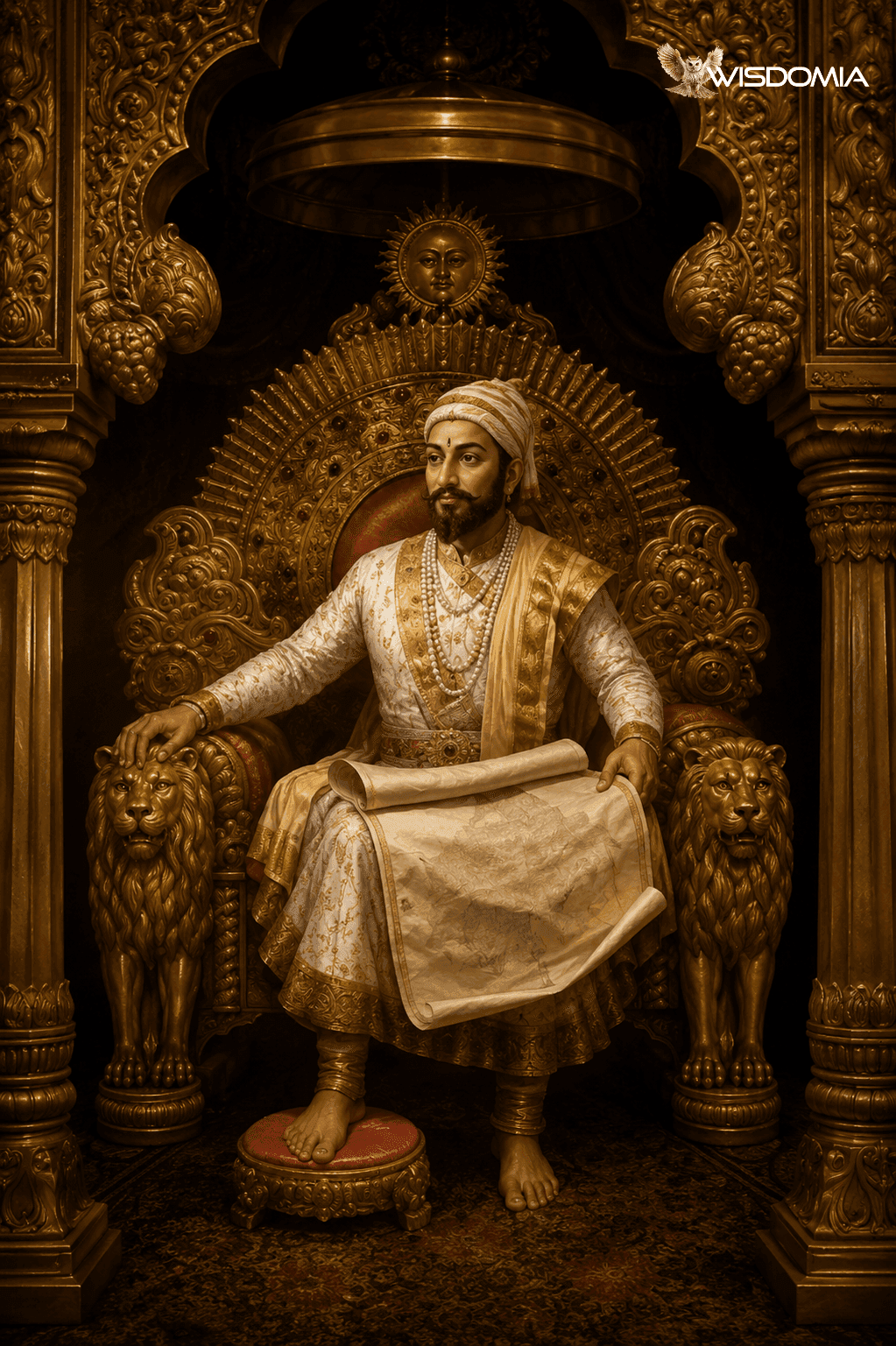
Every immersive world needs a protagonist the audience can believe in, and every reconstruction like this begins with the hardest constraint: we have no photographs, only paintings, sculptures, and written descriptions. Our starting reference was a single 2D portrait image — stylized, iconic, but not built for 3D.
The process here wasn't a simple image-to-3D conversion. We treated the portrait as a design anchor rather than a literal blueprint. Our modeling team cross-referenced multiple historical portraits, Maratha-era armor and costume records, and regional facial-structure studies to build a plausible, respectful, and consistent likeness. AI-assisted sculpting tools helped us rapidly iterate on facial topology and proportions, but every pass was manually reviewed and corrected by artists — nothing shipped without a human sign-off, especially given how culturally significant an accurate, dignified portrayal is.
The result is a fully rigged digital character: cloth-simulated royal attire, physically-based rendering (PBR) materials for silk, gold embroidery, and the iconic jigha and shirpech ornaments, all built to hold up under extreme close-up in VR.
The Coronation Hall: Crowds, Emotion, and Architecture at Scale
The coronation hall scene was, technically, the most demanding shot in the entire experience. A ruler's coronation is nothing without the people witnessing it — courtiers in ceremonial dress, priests conducting Vedic rites, citizens overflowing with emotion at the gates.
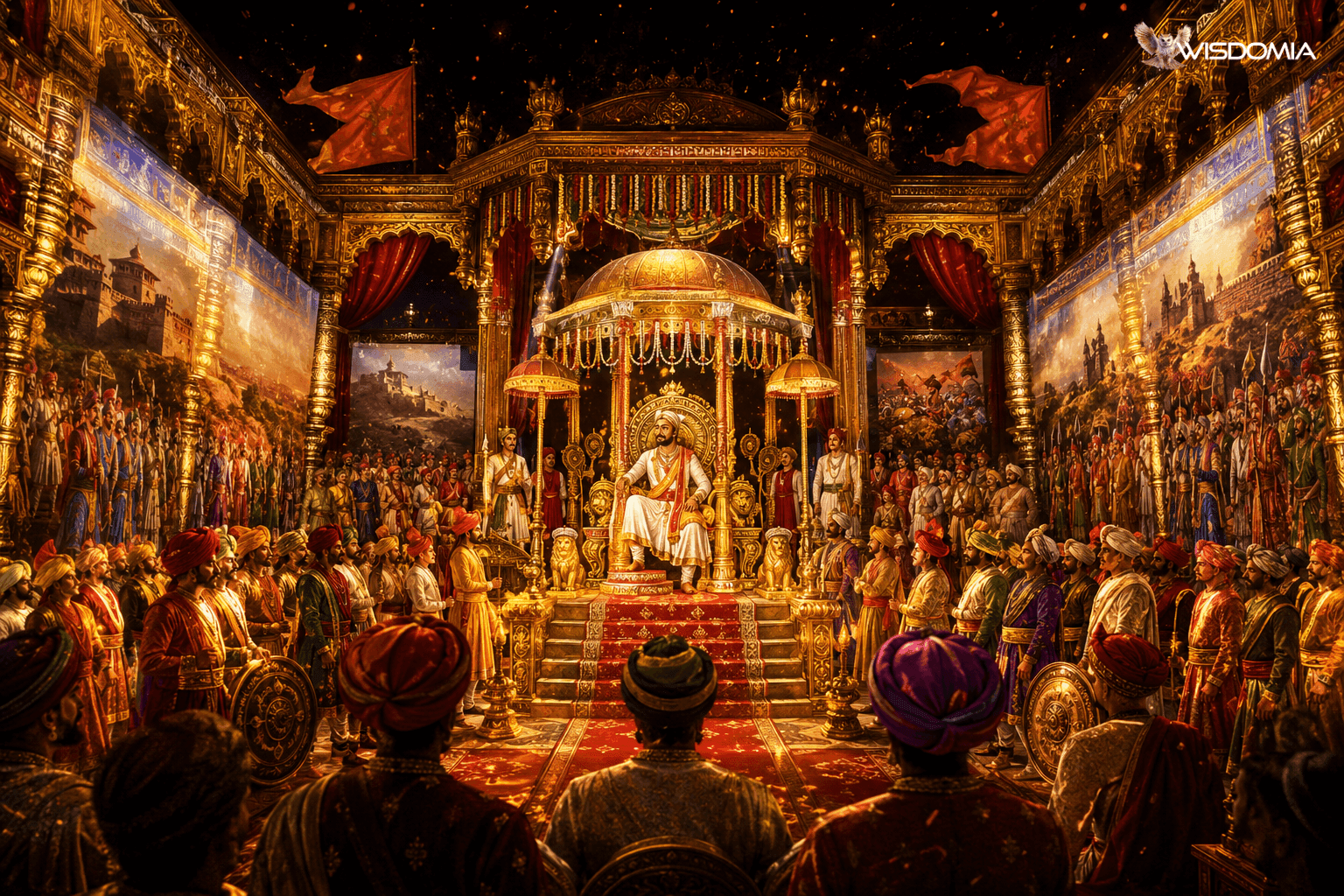
We couldn't hand-animate hundreds of individual characters, so this is where AI-driven crowd simulation earned its place in the pipeline. We used procedural crowd systems layered with motion-capture libraries of period-appropriate gestures — bowing, folded-hand greetings, celebratory gestures — and AI-driven variation engines to ensure no two courtiers moved identically. Facial animation on hero characters (those close to camera) was hand-keyed; background crowds used AI-blended motion cycles to keep performance costs manageable in real time for the interactive/gamified build.
Lighting was critical: the hall needed to feel lit by oil lamps and daylight through stone openings, not studio softboxes. We built a volumetric lighting rig simulating dust and incense haze, which also happens to be a great trick for masking crowd-simulation repetition at a distance.
The Coronation Procession: Choreographing Movement Through Space
Where the hall scene is about density, the procession is about momentum. This sequence needed to be read as a living, moving river of people, elephants, horses, and musicians threading through the fort's pathways.
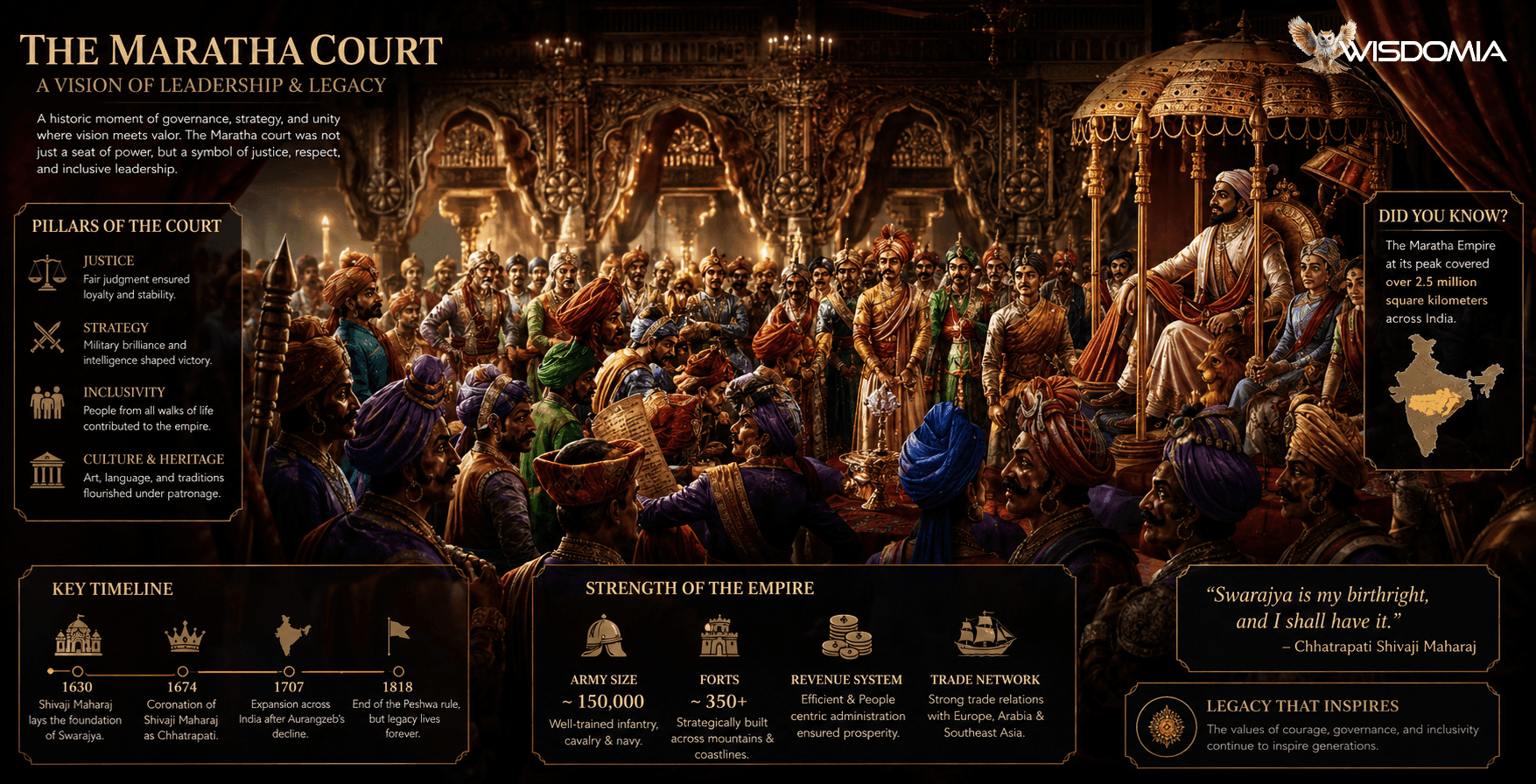
We used a spline-based crowd path system, where AI agents were given behavioral rules (formation spacing, pace matching a musical tempo track, reaction to camera proximity) rather than fixed keyframed paths. This let us re-shoot the "camera" through the procession from multiple angles — helicopter-following shots, ground-level immersive walkthroughs, first-person VR — without re-animating the scene from scratch each time. It's a technique borrowed from game-engine cinematics, and it's what makes the scene replayable and explorable rather than a fixed linear film clip.
Helicopter View of the Fort: Terrain, Scale, and the Power of Geography
This is the establishing shot that does the emotional work of saying this really existed, and it was immense. Raigad Fort's geography — a plateau fortress ringed by cliffs — is itself a character in the story.
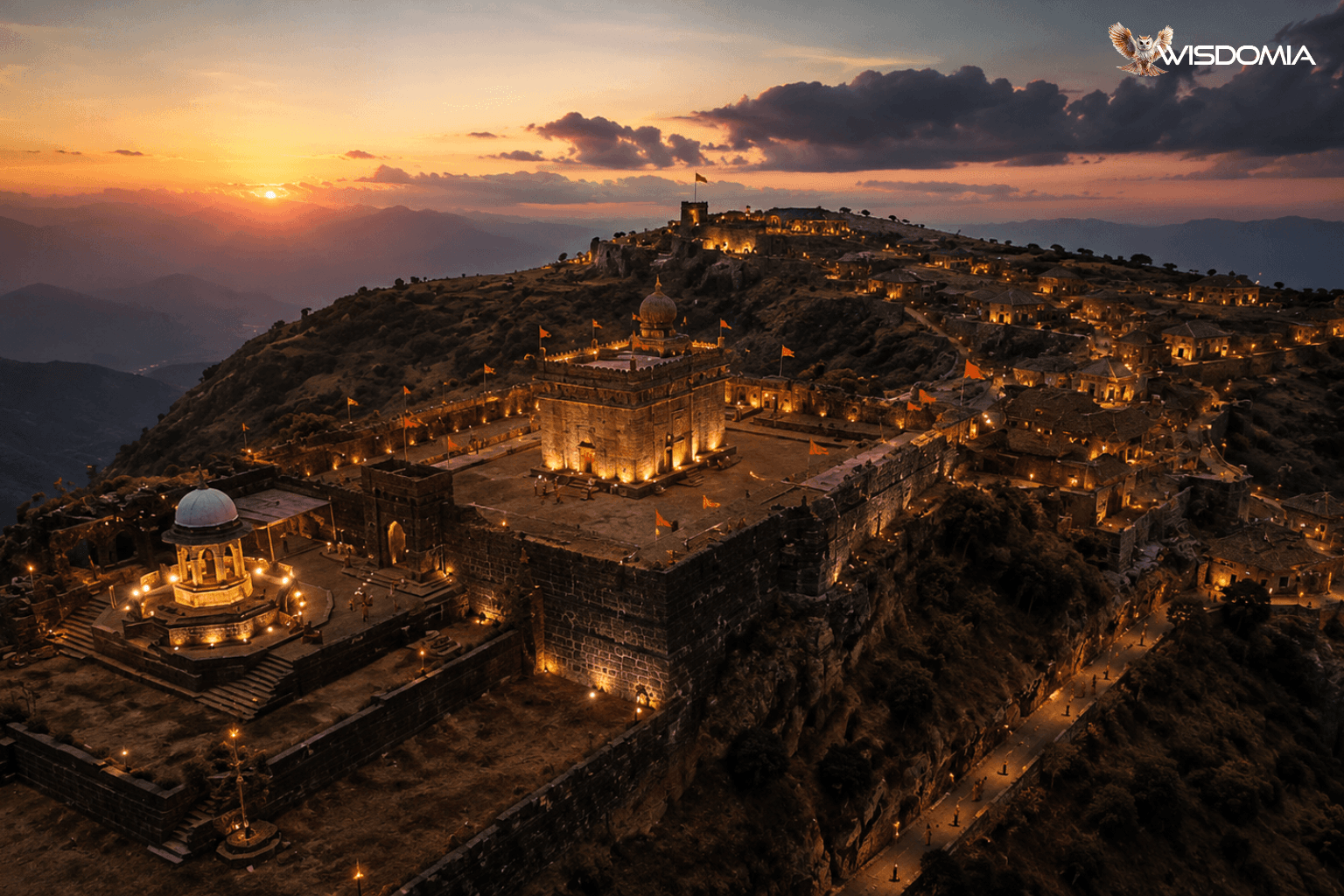
We built this from a combination of real-world elevation/terrain data and photogrammetry-informed terrain sculpting, layered with procedural vegetation systems tuned to the Sahyadri region's ecology. AI upscaling and texture-synthesis tools let us generate high-resolution rock, laterite soil, and foliage detail across a massive terrain footprint without manually painting every square meter. The helicopter camera path was designed with real cinematographic principles in mind — a slow reveal, rising altitude, golden-hour lighting — so it feels like a drone shot that a modern audience already knows how to read emotionally.
Drone View of the Courtyards: Architecture as Storytelling
Where the helicopter shot sells scale, the drone-style courtyard flythrough sells detail and function — how the fort actually worked as a living space. This required much tighter architectural accuracy: gate structures, water cisterns, market areas, and the layout logic of a fortified capital.
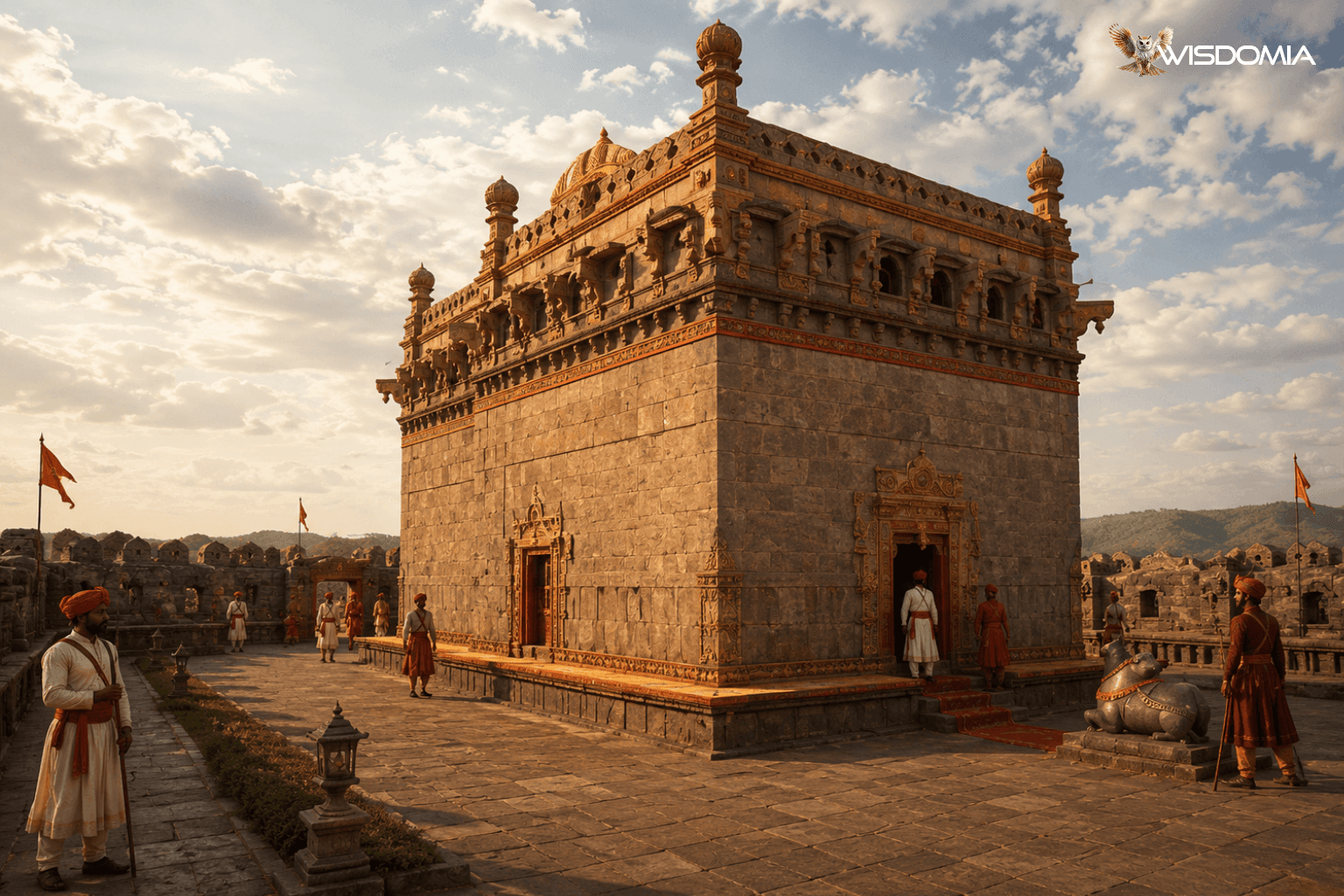
Here, our pipeline leaned heavily on structure-from-motion and 3D site-scanning data from existing fort ruins, reconstructed digitally to their presumed 17th-century state by architectural historians working alongside our team. AI-assisted reconstruction tools helped us fill in eroded or missing sections by learning patterns from intact Maratha-era fort architecture elsewhere in the region — always flagged internally as "informed reconstruction," never presented as certain fact, and reviewed against historical consultation.
The Temple Courtyard: Stillness, Ritual, and Material Detail
In contrast to the procession's motion, the temple courtyard needed to feel still and sacred. This scene lives and dies on material fidelity — stone carving detail, the play of light through a temple gate, the texture of worn steps.
We used AI-assisted material generation to create high-fidelity, tileable stone and carving textures based on real temple photogrammetry scans, then hand-placed hero carvings and idols with full manual sculpting for accuracy. Subsurface scattering shaders on stone and skin, combined with a carefully tuned volumetric god-ray setup, gave the space the hushed, reverent quality it needed.
The Jungle Survey Scene: Building the World Before the Fort
The jungle scene serves a narrative purpose — it's the "discovery" beat, hinting at the terrain and strategic thinking that led to a fort being built where it was. This is pure environment artistry: dense procedural foliage systems, AI-assisted ecosystem placement (so tree species, undergrowth, and rock scatter follow real ecological logic rather than looking randomly scattered), and dynamic wind/foliage simulation to sell life and scale.
This scene is also where our "digital twin" character technology gets its first real test-run — a scout or survey figure moving through dense terrain, with AI-driven locomotion adapting in real time to uneven ground, which is essential groundwork for the fully agentic historical-figure interactions planned for later phases of the project.
The Common Thread: AI as a Force Multiplier, Not a Replacement
Across all seven scenes, the pattern was the same: AI handled scale, artists handled soul. Crowd behavior, terrain generation, texture synthesis, and reconstruction-gap-filling were where generative and procedural AI tools genuinely changed what was possible on a realistic timeline and budget. But every face, every costume detail, every architectural judgment call, and every moment of cultural significance passed through human hands and, where needed, historical consultation.
That balance is, we believe, the only responsible way to build something like this. A coronation like Shivaji Maharaj's isn't just an asset library — it's a story a lot of people are trusting you to get right.
Frequently Asked Questions
How was the Shivaji Maharaj character built without any photographs? The team used a single stylized 2D portrait as a design anchor rather than a literal blueprint, cross-referencing it against multiple historical paintings, sculptures, Maratha-era armor and costume records, and regional facial-structure studies. AI-assisted sculpting tools sped up iteration on facial topology, but every pass was manually reviewed and corrected by artists before approval.
What is AI.DNA? AI.DNA is Ztudium's proprietary AI Sovereign PaaS (Platform-as-a-Service). In this project, it powers the underlying AI framework — including plans for agentic, LLM-driven "digital twin" personalities for historical figures — that sits behind the immersive, gamified experience built for Wisdomia University.
Is this recreation historically accurate? The team's goal was historical plausibility and respect rather than unverifiable certainty. Architectural gaps were filled using AI-assisted reconstruction informed by intact Maratha-era fort architecture elsewhere in the region, always treated internally as "informed reconstruction" and reviewed against historical consultation rather than presented as verified fact. Costume, likeness, and ritual details were built from cross-referenced historical sources, with final decisions made by artists and historians, not by AI tools alone.
What tools and techniques were used in production? The pipeline combined classical VFX techniques — photogrammetry, 3D site scanning, hand-keyed character animation, cloth and PBR material simulation — with modern AI tooling for crowd simulation, terrain and texture synthesis, and reconstruction of eroded architectural detail.
What We'd Need Next
To take this from a set of hero visuals into the fully agentic, explorable Wisdomia experience described in the wider project vision, our next production phase would benefit from:
- Higher-resolution photogrammetry passes of Raigad Fort's remaining structures (if not already captured)
- Historical costume and armor reference approval from project historians
- Voice and dialect reference material for the AI.DNA personality layer of the Shivaji Maharaj digital twin
- Final creative sign-off on crowd density and camera paths for the gamified interactive build
We're excited to keep building this — few projects let you combine cutting-edge VFX and AI with something this meaningful.


