


resources
The Fortrade review of the best trading tools in 2026
12 May 2026

The trading landscape in 2026 looks very different compared to just a few years ago. Technology has continued to reshape how market participants interpret data, manage positions, and react to volatility. While the tools themselves are more advanced, the underlying goal remains the same: making sense of increasingly complex markets.
Fortrade, a brokerage regulated by the FCA, states that the emphasis today is less on access and more on how effectively traders can process information. The modern toolkit reflects this shift, combining speed, clarity, and adaptability across multiple environments.
Charting platforms have become more analytical
Charting software is no longer just about plotting price movements. Nowadays, these platforms have evolved into comprehensive analytical environments where users can layer multiple indicators, test scenarios, and refine their interpretation of market structure.
Modern charting tools allow traders to combine trend indicators with volume analysis and volatility metrics in real time. The result is a more nuanced view of price action, where patterns are not simply observed but contextualized. This has become particularly relevant for those involved in day trading, where short-term fluctuations require quick interpretation.
According to Fortrade, what defines a strong charting setup today is not the number of indicators available, but how seamlessly they integrate. Cluttered analysis often leads to conflicting signals, while well-structured layouts tend to support clearer decision-making processes.
Order management tools are more precise
Execution has always been a critical part of trading, and now, order management systems have become significantly more refined. These tools now allow for detailed control over how positions are entered and exited, with a focus on timing and risk parameters.
Advanced order types, such as conditional and bracket orders, are now widely accessible. These features allow users to define both potential gains and losses at the moment a position is opened, creating a more structured approach to managing trades.
Analysts from Fortrade note that this level of precision is particularly important in fast-moving markets. Instead of reacting after the fact, traders can predefine their approach and let the system handle execution based on set conditions.
Latency has also improved across most platforms, reducing the gap between intention and execution. While this may seem like a technical detail, it has practical implications, especially in environments where price changes occur rapidly.
Analytical tools go beyond basic indicators
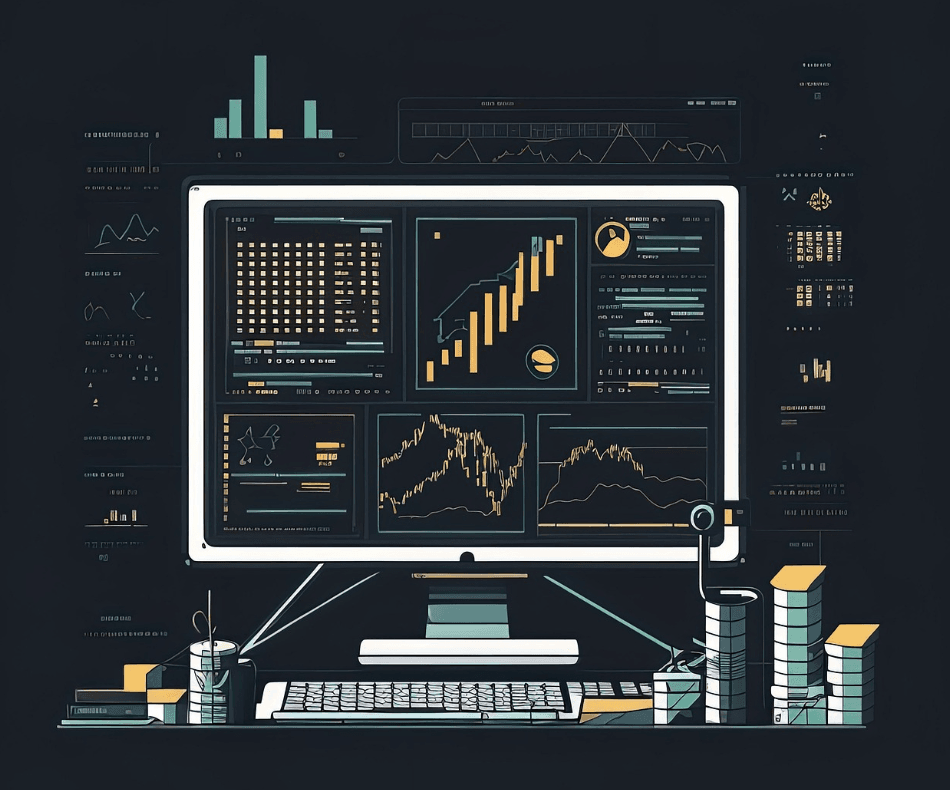
Beyond charting, analytical tools have expanded into areas that were once considered highly specialized. In 2026, traders have access to data-driven insights that combine historical patterns with real-time inputs.
These tools often include statistical overlays, sentiment tracking, and correlation analysis across different financial instruments. Rather than relying solely on price movements, traders can now examine how markets interact with each other, offering a broader perspective.
According to Fortrade, this shift reflects a growing awareness that no market operates in isolation. For example, movements in commodities can influence currency behavior, while macroeconomic signals can affect equities. Analytical tools help connect these dots, making it easier to understand the bigger picture.
Another important aspect is customization. Traders can adjust parameters to align with their own methodologies, rather than relying on default settings. This flexibility allows for more tailored analysis, though it also requires a clear understanding of what each tool is measuring.
Despite their sophistication, these tools are not without limitations. Data interpretation still depends on context, and even the most advanced systems cannot fully account for unexpected geopolitical or economic developments.
Risk management features are more integrated
Risk management has moved from being a separate consideration to a fully integrated part of the trading process. Many tools incorporate risk metrics directly into the interface, allowing traders to monitor exposure in real time.
Position sizing calculators, margin indicators, and drawdown tracking are now standard features. These elements provide immediate feedback on how a trade fits within an overall strategy, rather than being assessed after execution.
Fortrade emphasizes that this integration helps create a more disciplined approach. When risk parameters are visible at every stage, it becomes easier to maintain consistency and avoid overexposure.
Another development is the use of scenario modeling. Traders can simulate how their portfolio might respond to different market conditions, offering a forward-looking perspective. While these simulations are based on assumptions, they can still provide useful insights into potential outcomes.
This is particularly relevant in uncertain environments, where external factors can quickly alter market direction. Having a structured view of risk allows traders to adapt more effectively when conditions change.
Final thoughts
Trading tools in 2026 are more advanced, more integrated, and more adaptable than ever before. From charting platforms to risk management systems, each component contributes to a more structured and informed approach to the markets.
According to Fortrade, understanding how these tools function is just as important as having access to them. While they can provide valuable insights, their effectiveness ultimately depends on how they are used and interpreted.


