
citiesabc, first_page
The Great Re-Shuffle: How Unternehmertag 2026 explores the future of cities, technology and global power
03 Mar 2026

From energy security and digital infrastructure to artificial intelligence and urban resilience, decisions made now will shape how cities operate, compete and sustain growth over the next decade. These themes will take centre stage at Unternehmertag 2026, the invitation-only summit bringing together business leaders, policymakers and technology pioneers at Lake Tegernsee in Germany.
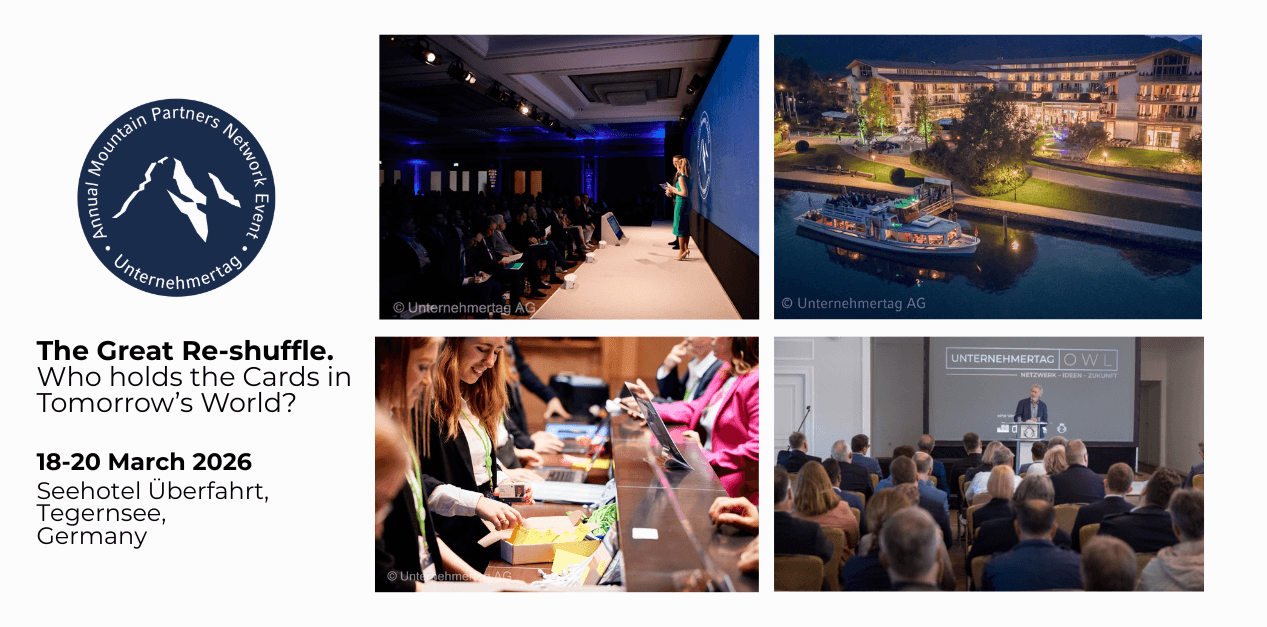
Taking place from 18–20 March 2026 at the Althoff Seehotel Überfahrt, the 19th edition of Unternehmertag gathers more than 600 global decision-makers each year. Founded in 2007 by venture capital entrepreneur Dr Cornelius “Conny” Boersch, the event has evolved into a key European platform where economic strategy, technological innovation and geopolitical realities converge.
Why the “Great Re-Shuffle” matters for cities
The 2026 theme — “The Great Re-Shuffle. Who Holds the Cards in Tomorrow’s World?” — reflects a period of structural change affecting nations, industries and urban ecosystems.
Across Europe, defence spending has increased significantly, energy supply chains have been restructured, and policymakers are investing heavily in digital sovereignty and technology infrastructure. At the same time, AI investment remains concentrated in the United States and China, pushing Europe to rethink its innovation and industrial policies.
For cities, this shift is direct and practical. Urban areas must adapt to:
- New energy and infrastructure models
- Growing demand for automation and AI integration
- Supply-chain realignments affecting logistics and manufacturing
- Digital governance and cybersecurity pressures
Unternehmertag’s agenda approaches these developments from a systems perspective, examining how technological change reshapes not only industries, but the way cities function and compete globally.
A programme linking policy, innovation and urban resilience
The summit combines keynotes, panels and masterclasses that connect macro trends with real-world implementation.
Strategic masterclasses
The opening day includes specialised sessions designed to translate strategy into execution, covering areas such as:
- AI-supported decision intelligence and leadership
- Cybersecurity and risk management in increasingly digital environments
- Sustainable innovation models and circular economy practices
- Cross-continental investment strategies shaping global urban growth
These discussions highlight how businesses and governments are redesigning systems for efficiency, resilience and sustainability, priorities that increasingly define modern city planning.
Stage themes: power, technology and transformation
19 March — Policy, resilience and sovereignty
Day two focuses on major strategic questions:
- How stakeholder capitalism responds to changing global power dynamics
- Europe’s role in a shifting economic order
- Digital sovereignty and control of critical infrastructure
- Energy strategy and future competitiveness
- Security, defence and geopolitical stability
For cities, these discussions point toward a growing need for strong public-private collaboration in infrastructure, data governance and security planning.
20 March, Quantum, AI and the next industrial wave
The final day looks forward, examining technologies expected to reshape urban economies:
- Quantum computing and its implications for industries and infrastructure
- Robotics and automation transforming commerce and manufacturing
- AI governance and its societal consequences
- Defence technology and innovation ecosystems
Sessions featuring industry leaders, researchers and policymakers explore how emerging technologies will influence labour markets, mobility, and the design of future cities.
A diverse global speaker ecosystem
Unternehmertag brings together voices from business, government and science, creating a rare cross-disciplinary dialogue. The 2026 roster includes global economists, political leaders, technology pioneers and corporate executives discussing:
- Digital governance and AI adoption
- Economic strategy and capital allocation
- Innovation ecosystems and entrepreneurship
- The ethical implications of AI and automation
Some of the prominent names include: Dr Cornelius “Conny” Boersch, Professor Klaus Schwab, Edi Rama, Karl Nehammer, Christian Lindner, Bill Anderson, Joe Kaeser, Thomas Saueressig, Dr Ferri Abolhassan, Jonas Andrulis, Prof Lucrezia Reichlin, Prof Peter Bofinger, Lars-Hendrik Röller, Prof Alexander Waibel, Dr Regina Finsterhölzl, Markus Pflitsch, Thomas Treml, Dr Annika von Mutius, Niko Bullwinkel, Tobias Rietzler, Yuval Noah Harari, Vanessa Cann, Dr Claudia Major, Prof Sönke Neitzel, Dr Florence Gaub, Heiko Thoms, Dr Michael Schöllhorn, Oleksandr Danylyuk, Dr Andreas Schwer, Graça Machel-Mandela, Yulia Nawalnaya, Michael Mronz, Dr Adalbert Lechner, Kai Diekmann, Kathi Wörndl, Philipp Hartmann, Benjamin Bargetzi, Anja Wehler-Schöck, Dr Hans-Peter Siebenhaar, Marc Kowalsky, Paul Ronzheimer, Christian Underwood, Daniel Büchle, Marc Votteler, Anja Heßeler, Jeannine Metzger, Finn Hänsel, Katharina Schmitt, Jillian Manus, Marco Jung, Sascha Jung, and additional entrepreneurs, investors and industry experts who will contribute to the discussions on global power shifts, AI, quantum technologies, security, finance, leadership and innovation.
Cities as innovation platforms
Beyond policy and economics, the summit also highlights the role of partnerships in shaping tomorrow’s ecosystems. Sponsors and collaborators include technology platforms, investment firms, consulting organisations and digital infrastructure specialists, reflecting how urban innovation increasingly depends on interconnected networks rather than isolated initiatives.
Learning from 2025: resilience as a foundation
The previous edition of Unternehmertag focused on security and resilience, emphasising cybersecurity risks, defence capability and operational readiness. The transition to the 2026 theme signals a broader step: moving from resilience alone toward proactive leadership in shaping global change.
For cities, this means shifting from reactive governance to strategic planning that integrates technology, energy, economics and social impact.
Why this matters for the future of cities
As climate pressures intensify, AI advances accelerate and geopolitical competition reshapes supply chains, cities are becoming the primary arenas where global shifts play out.
Unternehmertag 2026 positions itself as a forum where these realities are examined holistically, connecting policy, innovation and entrepreneurship to explore how urban centres can remain competitive, resilient and human-centred.
In a world where power is being redistributed across technology, capital and governance, the summit’s core question resonates strongly with city leaders: not only who holds the cards, but how cities can remain active players in shaping the future.


