
Businesses
The India–UK FTA Is Here. But Are Businesses Ready to Make Money From It?
02 Nov 2026

Beyond tariff reductions, a new opportunity is emerging for businesses to rethink profitability, supply chains, technology, partnerships and global competitiveness.
The trade agreement has been signed. Tariffs have started falling. Political leaders have celebrated. But I have a more practical question: What has actually changed for businesses?
On 15 July 2026, the India–UK Comprehensive Economic and Trade Agreement came into force, connecting two major economies through a more favourable trade and investment framework.
With bilateral trade already worth approximately £48 billion in 2025, the agreement is expected to support substantial long-term growth.
But an agreement alone does not create a successful business.
Entrepreneurs must still find customers. Manufacturers must still deliver competitively. Exporters must navigate regulations. Investors must still see returns.
The real success of this agreement will therefore be measured not by the number of political announcements, but by how businesses improve their operations, profitability and ability to compete internationally.
The First Signals Are Emerging
The first two complete months after implementation offer an interesting picture.
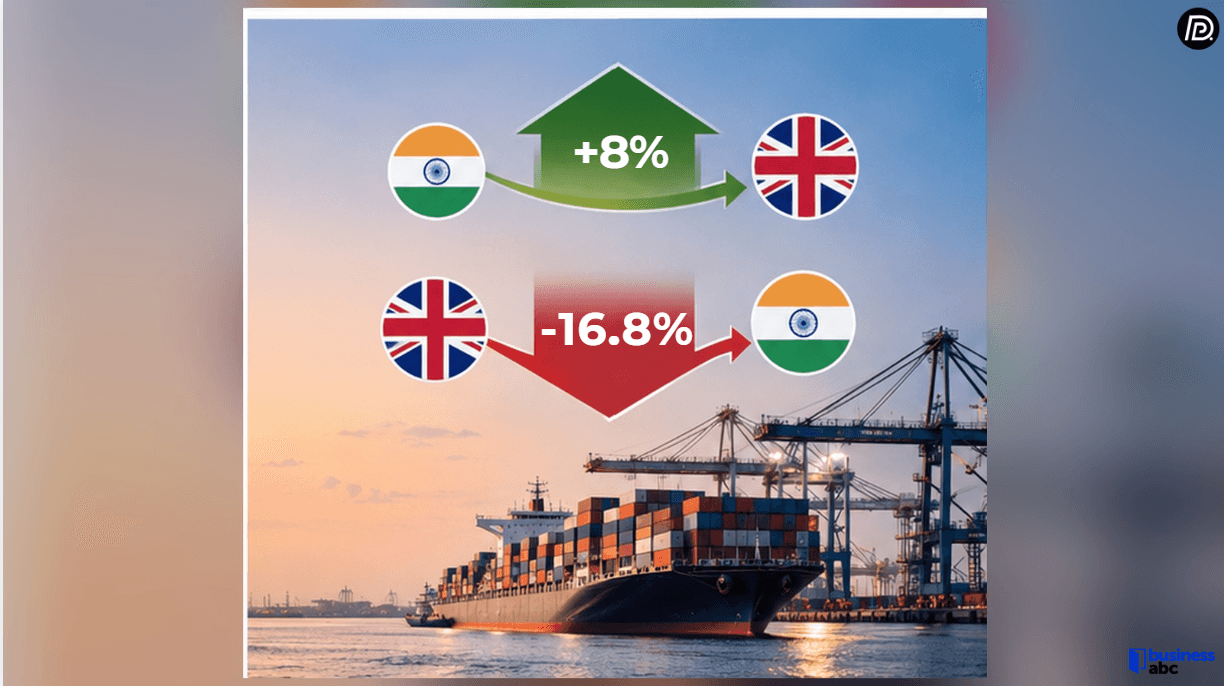
Indian merchandise exports to the UK rose approximately 8% year on year to $2.43 billion during August and September 2026. At the same time, Indian imports from the UK declined approximately 16.8% to $1.36 billion.
These early numbers do not tell the complete story.
Some changes may reflect existing demand, currency movements, commodity purchases or shipping cycles. Two months are too short a period to establish the FTA's independent impact.
Nevertheless, the figures raise an important question.
Why are some businesses appearing better positioned to capture new trade opportunities than others?
The answer may lie less in tariffs themselves and more in business readiness.
Lower Tariffs Are an Opportunity to Improve Margins
Imagine an Indian manufacturer exporting products to the UK.
Before the agreement, tariffs on a particular qualifying product might have increased its landed cost. Following tariff removal, that cost could fall, assuming the product satisfies the applicable rules of origin.
What should the business do with those savings?
It has several choices.
It could reduce its selling price to gain market share. It could maintain the price and improve profitability. It could invest in product quality, marketing or distribution. Or it could share the benefit with customers while improving its own operating efficiency.
The difference between these approaches can determine whether the FTA produces a short-term sales increase or sustainable business growth.
A tariff advantage is therefore not simply a saving.
It is a commercial resource that management must decide how to deploy.
The same applies to British manufacturers entering India, particularly where tariff reductions are being introduced progressively over several years.
Businesses should be building multi-year pricing strategies around those schedules rather than treating the agreement as a one-off discount.
Supply Chains Must Be Reconsidered
The second opportunity is more structural.
Many businesses have built supply chains around historical tariffs, established suppliers, shipping arrangements and distribution relationships.
The FTA changes some of those commercial calculations.
A British business sourcing manufactured components might now consider qualified Indian suppliers. An Indian engineering company could explore UK partnerships for specialised technology, certification, design or market distribution.
But simply changing a supplier is not enough.
Businesses need to calculate the complete landed cost, including transportation, insurance, currency exposure, customs compliance, warehousing, working capital and delivery reliability.
A lower tariff may improve sourcing economics, but poor logistics can quickly eliminate the advantage.
This creates opportunities for logistics businesses, digital trade platforms, freight operators, certification providers and supply-chain technology companies.
The next phase of India–UK trade may involve redesigning how products are made, moved, verified and sold.
SMEs Need Market Access, Not Just Tariff Access
Large corporations have legal departments, trade specialists, established distribution networks and financial resources.
Small and medium-sized enterprises often do not.
A small British manufacturer might produce an excellent industrial component but have no distributor in India.
An Indian company might produce competitive consumer goods but lack access to British buyers, warehousing and certification support.
The tariff may be lower, but the commercial barrier remains.
This is where an entirely new business ecosystem could emerge.
Cross-border business networks, verified supplier marketplaces, export-readiness services, trade finance providers and local distribution partners could help SMEs operate internationally without building expensive overseas operations from the beginning.
For many SMEs, the greatest commercial improvement would not be a tariff reduction of a few percentage points.
It would be finding a credible customer and completing the first transaction.
Services, Talent and Technology Could Be Equally Important
The FTA isn't limited to physical goods.
India has established capabilities in software development, engineering, business services and digital technology.
Britain has strengths in financial services, research, education, professional services, advanced engineering and innovation.
Combining these capabilities could create commercially valuable partnerships.
Consider a British engineering company working with an Indian technology business to develop an AI-enabled industrial maintenance solution.
One partner brings industrial knowledge, customers and market access. The other contributes software development, engineering capacity and digital capabilities.
Together, they may create a product or service that neither could deliver as competitively on its own.
The agreement also provides a framework for services and professional mobility, while the accompanying Double Contributions Convention can reduce duplicate social-security contributions for qualifying temporary assignments.
These arrangements do not eliminate immigration requirements, but they can improve the economics of eligible cross-border operations.
The opportunity is not simply to export existing products.
It is to build new businesses together.
AI Could Help Smaller Businesses Compete Internationally
Another dimension deserves attention.
International expansion traditionally requires significant investment in market research, legal support, trade documentation, customer acquisition and operational planning.
AI and digital infrastructure could reduce some of these barriers.
An Indian SME could use AI-supported tools to identify potential British customers, compare market requirements, translate product documentation and monitor demand.
A British business could analyse Indian consumer preferences, evaluate supplier risks and improve inventory planning.
Digital verification, traceability and secure trade documentation could also strengthen confidence between businesses that have never previously worked together.
However, AI does not replace relationships, compliance or commercial judgement.
Its value comes from helping businesses make better decisions and execute them more efficiently.
The FTA opens the commercial corridor. Digital intelligence could make that corridor accessible to many more businesses.
A New Opportunity for Investment and Joint Ventures

The agreement should also encourage companies to reconsider where they invest and how they form partnerships.
Instead of viewing India only as a supplier or the UK only as an export market, businesses can explore joint ventures, technology partnerships, manufacturing collaborations and shared distribution networks.
For example, a UK business could partner with an Indian manufacturer to serve customers in both markets.
An Indian technology company could collaborate with a British business to access new customers, technical expertise or international capital.
These arrangements require careful assessment of ownership, intellectual property, taxation, regulatory compliance and commercial risk.
But they may offer greater long-term value than conventional importing and exporting alone.
The real opportunity is to move from bilateral trade towards bilateral business creation.
The Business Readiness Test
If I were advising an SME or business leader today, I would start with five practical questions.
- Which of our products or services receive a meaningful advantage under the agreement?
- Can we convert that advantage into better pricing, higher margins or greater market share?
- Do we have reliable partners, distribution channels and compliance capabilities in the other market?
- Could technology and AI reduce the costs of entering or serving that market?
- Should we rethink our business model through partnerships, investment or joint ventures?
These questions are more important than simply asking how much bilateral trade is expected to grow.
The agreement is only the starting point.
From Trade Agreement to Business Transformation
Governments can negotiate market access. They can reduce tariffs, improve regulatory frameworks and create opportunities for investment.
But governments cannot guarantee that businesses will use those opportunities effectively.
That responsibility belongs to entrepreneurs, business leaders, investors and the institutions supporting them.
The India–UK FTA has created an opportunity for businesses of different sizes and sectors to reconsider their strategies.
Some companies will benefit from lower export costs. Others may discover new markets, suppliers, partners or investment opportunities.
The most significant gains may come from businesses that use the agreement to rethink their entire operating model.
For me, that is where this story becomes interesting.
The India–UK FTA should not simply help businesses trade more. It should encourage them to become better businesses.
And perhaps the most important question for business leaders in both countries is no longer what the FTA offers.
Share

Dilip Pungliya
Industry Expert & Contributor
Dilip Pungliya is a business leader, Artificial Intelligence consultant, blockchain advisor, metaverse solution expert, data leader, technologist, and business, process, & technology architect. As a board member and significant shareholder of ztudium, Dilip brings a wealth of experience in business leadership and data technology. In his role as the Managing Partner of the ztudium Group, he benchmarks his strategic acumen in steering effective strategy and framework development for the company. Dilip also plays a pivotal role in his family's limited company in India, VPRPL, where he oversees operations and strategic planning. His professional journey includes impactful collaborations with esteemed organisations such as Shell, the Department for Environment Food and Rural Affairs, Deutsche Bank, ICBC Standard Bank Plc, BNP Paribas, and HSBC Investments. Beyond his professional endeavours, Dilip is deeply committed to philanthropy and charitable work, particularly during the global challenges presented by the COVID-19 pandemic.


