
resources-impakt
The Price of Ignorance: Mapping the Gaps that Cost Indian Agriculture Trillions
01 Apr 2026

The article is inspired by real-world experiences and conversations with farmers who rise before dawn, as well as by seminars where scientists and farmers explore diverse communication styles. It highlights the insights from agri-businesses pursuing efficiencies that sometimes overlook the vital needs of those who cultivate our food. While a year may not suffice for full expertise, it offers a remarkable opportunity to ask meaningful questions. I aim to shed light on the communication challenges in agriculture and inspire discussion. I am eager to share my findings and look forward to hearing your thoughts and perspectives on this important topic.
A Civilisation Built on Soil
Before we delve into the challenges we face, it's important to recognise what we are truly protecting: agriculture. Agriculture is not just a sector; it represents the very foundation of human civilisation, an extraordinary moment when our ancestors transitioned from wandering in search of food to cultivating it themselves. Highlighting this importance can inspire a sense of shared responsibility among policymakers and stakeholders.
Every meal enjoyed around the globe has a deep-rooted connection to a seed, a dedicated farmer, and countless choices made in the fields. This journey is seldom a straight path. It weaves through many hands, numerous decisions, fluctuating markets, and vulnerable cold chains that can falter. Often, crucial information systems are lacking. By the time food arrives on our plates, the individual who nurtured it has typically received the least reward for their hard work.
India exemplifies this reality with striking clarity. With over 140 million farming households, agriculture is the backbone of the workforce, employing nearly 45 percent of the workforce. Yet, the average net income of these agricultural families remains distressingly low at around ₹10,218 per month, according to the latest NABARD estimates. In contrast, many urban professionals can earn several times that amount in just one day. Highlighting this disparity can motivate citizens and policymakers to advocate for better support systems for farmers.
Throughout my year of exploring this ecosystem, visiting farms, attending seminars, meeting FPO(Farmer Producer Organisation) leaders and extension officers, and walking the fields with agronomists, I found myself continually reflecting not on why farming is difficult; that has been the case for generations. Instead, I questioned: "How do systemic gaps in support, such as access to technology, credit, and training, directly impact food security and rural livelihoods?" Addressing these issues is vital for ensuring a resilient and equitable food system for all.
Before you continue, think about Indian farming. What is the first gap that comes to mind: price, knowledge, trust, or something else? Keep that in mind as you read on.
Understanding Farm-to-Fork as a System, Not a Slogan
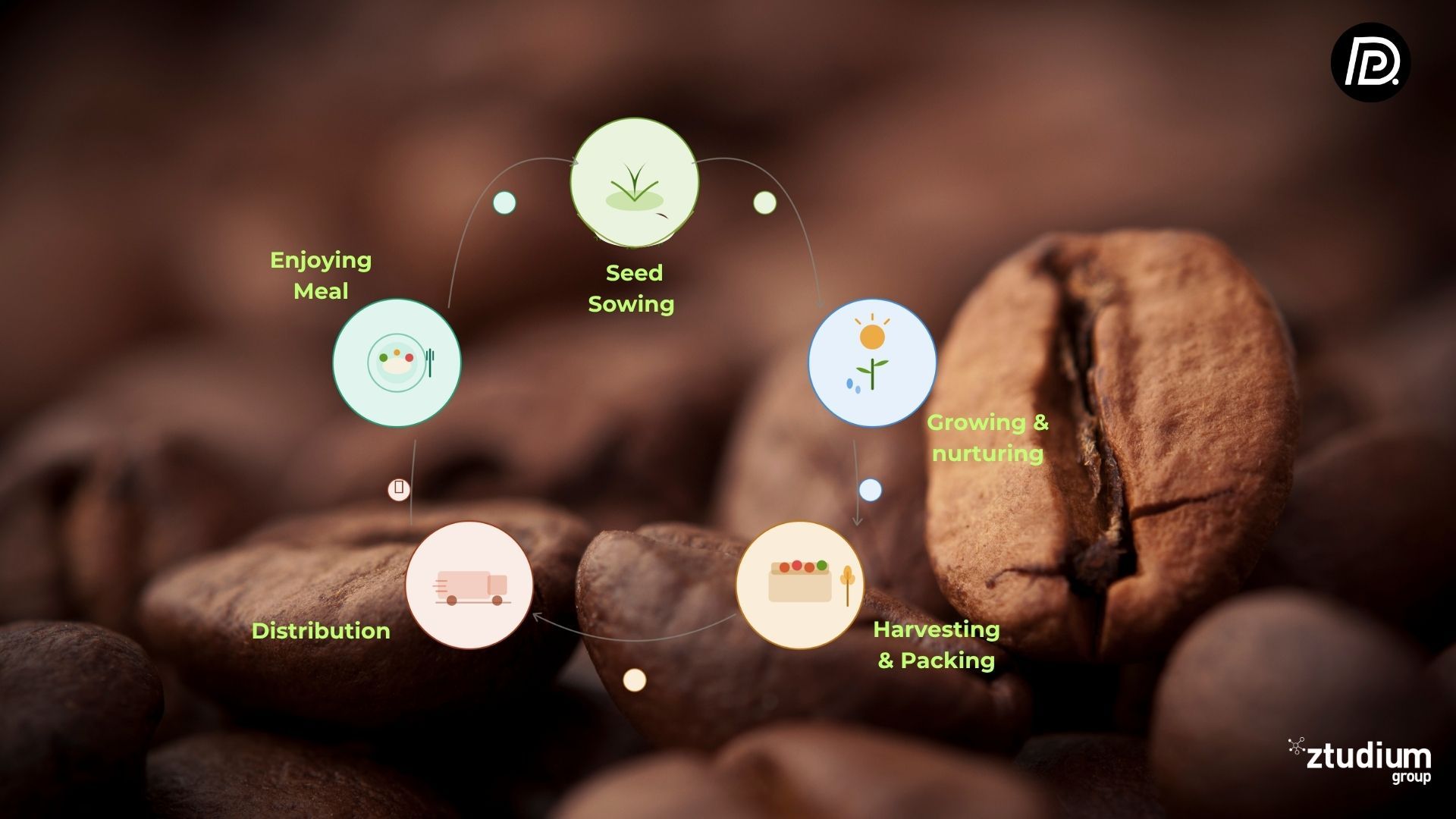
The term "farm-to-fork" has gained significant traction, yet it's important to ensure that its meaning remains impactful. In the realm of food marketing, it signifies freshness and authenticity, while in policy discussions, it points towards necessary supply chain reforms. However, spending time within the actual ecosystem reveals that "farm-to-fork" is fundamentally about interdependency.
Every participant in this chain influences the others. For instance, seed companies' variety choices affect the nutritional quality of what consumers ultimately eat. Similarly, the training and support provided by extension officers greatly influence farmers' utilisation of those varieties. Pricing behaviours in markets can determine whether farmers prioritise nutritional crops or higher volume production in the following season. Additionally, the quality standards set by food processors play a crucial role in determining which farmers gain premium access to markets.
When addressing challenges in agriculture, one must recognise that they are not just dealing with isolated broken links. Rather, they are looking at a complex web of interconnected issues. Each of these issues is individually manageable, but their cumulative effect can hinder the system from effectively serving the very communities it was designed to benefit. By focusing on strengthening these connections, we can create a more resilient and equitable agricultural system.
The farm-to-fork chain involves many players, and when even one link is weak, both the farmer and the consumer feel the impact. The farmer sacrifices income and dignity, while the consumer pays with health and trust. Let us strengthen this chain together for a brighter future!
Gaps That Hold Indian Agriculture Back
After more than a year of dedicated research, observation, and discussion, I have pinpointed recurring gaps across regions, crops, and stakeholder groups. While some of these issues are well documented in the policy literature, others are often discussed informally in quieter settings. To tackle these challenges effectively, I have categorised them and provided clear definitions. This approach emphasises that naming issues is a crucial first step toward finding solutions and making meaningful progress.
The Trust Gaps
The Consumer Trust Gap
Definition: It's the challenge consumers face in verifying the origin, cultivation methods, input history, and safety of the food they buy. When transparent, verifiable data is lacking, consumers often rely heavily on brand marketing or overlook high-quality produce that deserves fair pricing.
Why It Matters: Building consumer trust is essential for farmers who commit to organic or low-chemical practices, as it enables them to achieve premium pricing for their efforts. This situation creates a unique opportunity: by enhancing market transparency, we can encourage responsible farming practices and improve the overall quality of the food available. Focusing on the actual origins and methods of food production can lead to a marketplace that values substance over mere presentation.
Who Needs to Act: Collaboration is key among food processors, retailers, agri-tech platforms, policymakers (to establish traceability standards), and certification bodies. Farmers can't bridge this gap alone. They need a supportive infrastructure that fosters trust and transparency around their practices. By working together, we can create a more equitable system that benefits everyone involved.
The Supply Chain Trust Gap
Definition: The absence of verified and reliable information flow between producers, aggregators, processors, and retailers can create challenges in the supply chain. Each transition point presents an opportunity to improve transparency and accountability, ensuring quality is maintained throughout the process.
Why It Matters: When traders blend organic produce with conventional products without proper oversight, it undermines the value that organic farmers work hard to establish. By enabling processors to verify the quality of incoming materials accurately, we can encourage fair pricing that rewards quality producers. Building trust at every link in the supply chain is crucial for fostering a healthy market environment.
Who Needs to Act: Key stakeholders, including aggregators, FPOs, commodity exchanges, grading and testing infrastructure providers, and technology platforms, play a vital role. By creating verifiable digital records, these entities can enhance transparency and accountability, driving improvements across the supply chain.
Have you ever purchased food, only to later question whether it was organic, local, or premium? Imagine the confidence you'd have if you could truly trust the source of your food.
The Knowledge Gaps
The Agronomics Knowledge Gap
Definition: There is a significant gap between advancements in agricultural science, particularly regarding soil health, crop varieties, pest management, and sustainable practices and the practices of the average Indian farmer. This disparity isn't due to farmers' lack of intelligence but rather limited access to relevant information.
Why It Matters: When farmers rely on outdated advice or peer influence, they often struggle with yields. They may overuse costly inputs, such as applying 40kg of urea instead of the required 25kg, simply because they lack information.
Who Needs to Act: To bridge this gap, agricultural universities, ICAR (The Indian Council of Agricultural Research), state extension services, agri-input companies, and digital advisory platforms must collaborate. By providing accurate and accessible information, we can empower farmers to make informed decisions that enhance productivity and sustainability.
The Data Literacy Gap
Definition: Many farming households face challenges accessing and using data from modern agricultural technologies, such as soil reports and weather forecasts. Despite the availability of valuable information, it often fails to reach farmers effectively.
Why It Matters: Bridging this gap is vital for a fair agricultural landscape. Larger corporate farms tend to have the resources to interpret precision data, while smallholder farmers often rely on intuition and traditional practices. The issue lies not just in the availability of technology but in understanding and applying data.
Who Needs to Act: Collaboration among stakeholders is essential. AgriTech companies should create user-friendly data solutions, while rural digital literacy programs can empower farmers. State and central government initiatives, along with FPOs, can help contextualise data, ensuring that all farmers benefit from modern advancements.
In your experience, whether as a farmer, consumer, researcher, or professional, where is the knowledge gap most painful? Is it that the knowledge doesn't exist or is lost or limited to a few, or that it simply doesn't reach the people who need it? Or is it too fragmented, or is it ignorance?
The Advisory and Data Gaps
The Personalised Advisory Gap
Definition: There's a notable opportunity to improve advisory services for smallholder farmers. While resources like government programs and digital platforms offer useful information, they often lack customisation, research basis, and timeliness. Holistic data can help farmers make informed decisions throughout the season.
Why It Matters: Farming conditions vary greatly, requiring tailored advice. For example, a soybean farmer in Vidarbha with black cotton soil has different needs than one in Rajasthan with sandy loam. Generic guidance can be detrimental to their livelihoods.
Who Needs to Act: To bridge this gap, collaboration among AgriTech platforms, trained agronomists, FPOs with local agents, and government entities focusing on precision services is essential. Together, we can develop effective support systems that address farmers' unique needs and boost productivity.
The Integrated Data Gap
Definition: The agricultural sector faces challenges due to fragmented data across systems. Soil health cards, weather data, satellite imagery, market prices, and insurance records often exist separately, preventing a comprehensive view of farm conditions.
Why It Matters: Integrating data is essential for informed decision-making in agriculture. Connected data enables farmers to make informed decisions about irrigation, harvesting, selling, and insuring crops, leading to improved efficiency and better resource management.
Who Needs to Act: Collaboration among stakeholders is vital for a connected agricultural ecosystem. Technology developers, policymakers, IoT manufacturers, telecom providers, and agricultural departments must work together to create a unified framework that empowers farmers with essential insights.
If you could empower a farmer with access to just one type of data, be it soil, weather, market prices, pest alerts, or advisory, which would you choose and why?
The Market and Price Gaps
The Price Discovery Gap
Definition: This refers to the ongoing information imbalance between farmers and buyers during sales. Farmers often sell in local markets without access to pricing in larger markets, while buyers are informed about multiple market prices, this structural gap benefits intermediaries.
Why It Matters: When a farmer sells tomatoes for ₹4/kg while the market price is ₹14/kg, it highlights a forced decision shaped by factors such as distance, lack of cold storage, debt to local buyers, and insufficient price information. This price gap directly impacts farmers' incomes.
Who Needs to Act: To address this issue, we need digital market platforms (like e-NAM), collective selling through FPOs, agricultural market intelligence services, and supportive government policies to enhance market access and empower farmers.
The Quality Premium Gap
Definition: Market pricing often fails to reward quality differences in agricultural produce. In India, many commodities are traded as undifferentiated bulk, meaning farmers who invest in better practices receive the same price as those who do not, highlighting the need for market signals that recognise quality.
Why It Matters: Without quality recognition, there’s little incentive to produce it, leading to cost-cutting in inputs and practices. It impacts consumer health and trust, as the market struggles to differentiate quality.
Who Needs to Act: Improvements can be made by developing quality grading and testing infrastructure, encouraging food processors and retailers to adopt differential pricing, implementing blockchain for traceability, and increasing consumer awareness to drive demand for high-quality products. Collaboration among stakeholders can enhance quality and benefit everyone involved.
Should farmers be rewarded for cultivating food that nourishes both our planet and our well-being, even if it requires greater investment on their part? Who should embrace that commitment: the consumer, the government, or the food industry?
The Systemic and Structural Gaps
The Post Harvest Infrastructure Gap
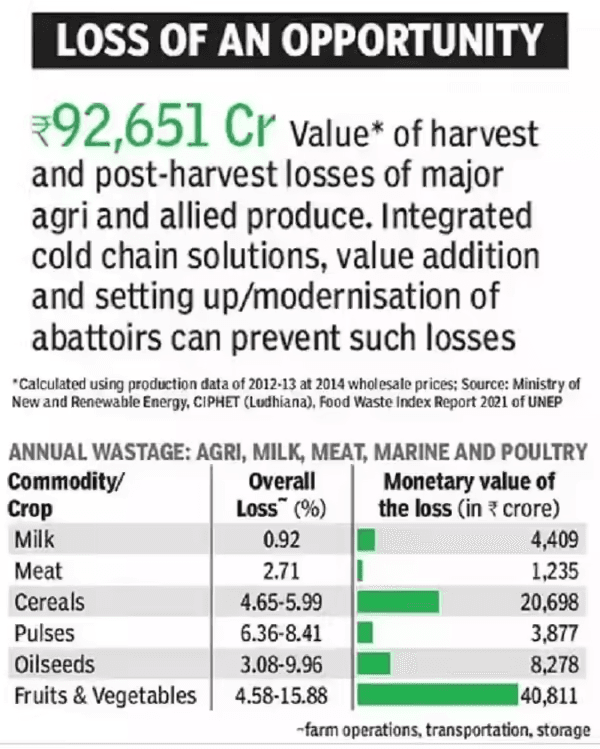
Definition: India's agricultural landscape can be significantly improved through investments in cold chain, processing, grading, and storage infrastructure. Currently, 20–30% of agricultural produce is lost from harvest to consumption, with perishables such as fruits and dairy products experiencing higher loss rates. This problem often causes financial strain for farmers during harvest gluts.
Why It Matters: Reducing post-harvest losses is vital to advancing Indian agriculture, as losses are estimated at over ₹90,000 crore (approx $11bn) annually. Each lost unit not only represents a financial setback for farmers but also a missed opportunity to feed those in need, underscoring the issue's crucial role in economic growth and nutritional security.
Who Needs to Act: Infrastructure financiers, state governments, food processors, and logistics companies must collaborate to strengthen cold-chain incentives and reduce post-harvest losses, ultimately boosting the agricultural sector.
The Credit & Financial Access Gap
Definition: Smallholder farmers often struggle to access timely, affordable credit and appropriately designed crop insurance. Formal credit reaches only a small percentage of farming households, and when available, it often does not align with the agricultural calendar.
Why It Matters: Timely credit is essential; farmers need funds for seeds in March, not June. Additionally, navigating complex insurance claims after a crop loss in October can be overwhelming. The financial system must better align with farmers' needs.
Who Needs to Act: Public sector banks, NABARD, fintech companies, and insurance providers can collaborate to create effective agricultural credit solutions and simpler insurance products. By reforming policies around KCC (Kishan Credit Card) and claims, we can enhance support for smallholder farmers.
The Policy to Practice Gap
Definition: The gap between agricultural policy intentions and actual practices. India has ambitious initiatives focused on soil health, irrigation, crop insurance, natural farming, and market access, but these often fall short in implementation. Improving the last-mile delivery of support to farmers could significantly enhance outcomes.
Why It Matters: Effective policies should reach their intended beneficiaries. When they don’t, they become mere budget allocations without real impact. Closing the policy-to-practice gap can turn good intentions into real benefits for farmers, fostering trust and engagement.
Who Needs to Act: Collaborative efforts from state and central governments, local administrators, technology platforms for digital service delivery, Farmer-Producer Organisations (FPOs), and civil society are essential. Together, they can navigate bureaucracy and ensure farmers receive necessary assistance, leading to a more effective agricultural support system.
Which of these gaps do you see as the greatest challenge to overcome, and why? Is there a gap in your experience that remains unrecognised here?
The Hidden Gaps: What the Data Doesn't Capture
In addition to the well-documented gaps highlighted above, my year in the field has uncovered important aspects of agricultural challenges that often go unnoticed in policy reports or conference discussions. These insights are deeply grounded in the experience of those of us working closely with the land and farmers, and recognising them can lead to more effective and inclusive solutions.
The Dignity Gap
There is a profound gap in how farmers are perceived in policy discussions. Often, they are spoken of as mere beneficiaries, targets, or data points, rather than being recognised for their true identities as skilled practitioners, caretakers of the land, and vital providers of nourishment to countless individuals. When agricultural schemes are designed with the assumption that farmers need to be directed rather than supported in their existing expertise, it can diminish their motivation, initiative, and self-belief. It’s crucial to remember that no amount of technology or market reform can replace the value of acknowledging farmers as intelligent, knowledgeable individuals and stewards of their craft. Their traditional wisdom should be seen as a valuable asset to build upon, not as an obstacle to overcome.
The Gender Gap in Agriculture
Women play a crucial role in India's agricultural sector, accounting for about 65% of the workforce. Despite this significant contribution, they hold less than 13% of agricultural land and have limited access to extension services. Additionally, their perspectives are often missing from the development of policies and technologies designed for the sector. Currently, many AgriTech products are created by urban male engineers with a focus on male landowners, which does not reflect the diverse realities of the agricultural landscape. To unlock the full potential of agricultural transformation, it is essential to prioritise women's participation, ownership, and agency in all aspects of the industry. By doing so, we can create a more inclusive and effective agricultural sector that benefits everyone.
The Generational Gap
India's agricultural landscape is at a pivotal moment, especially as the average age of farmers now exceeds 50 years. A significant number of young, educated individuals are seeking opportunities beyond farming, motivated by the promise of stable incomes and economic advancement. This demographic shift presents both challenges and exciting opportunities for the future of Indian agriculture.
It's essential to discuss who will cultivate India's food in the years to come. If we see a trend towards larger, mechanised farms run by corporations, we must proactively consider the impact on the 600 million people currently dependent on farming for their livelihoods. To ensure a thriving agricultural sector, we can develop policies and initiatives that empower young farmers, promote sustainable practices, and encourage innovation within agriculture.
While the Government of India and various state governments have introduced numerous programs to support young agriculturalists, it is crucial to improve the implementation and effectiveness of these initiatives. By fostering a collaborative approach and investing in the next generation of farmers, we can build a vibrant agricultural future that benefits all stakeholders in the industry.
The Mental Health and Farmer Wellbeing Gap
Farmer suicides in India highlight the urgent need for systemic changes to support the most economically vulnerable members of the food chain. Addressing issues such as debt, crop failure, and price volatility is crucial to ensuring the wellbeing of farming communities. By recognising and addressing these challenges as critical elements of agricultural policy, we can foster a healthier and more resilient agricultural sector. Prioritising the mental health and wellbeing of farmers is essential, as it serves as a key indicator of the success of agricultural transformation initiatives. Together, we can work towards solutions that empower farmers and strengthen the foundation of our food systems.
The Environmental Feedback Gap
Indian agriculture is at a pivotal moment, offering an opportunity to address significant challenges related to natural resource depletion and climate change. We are witnessing declines in groundwater levels in key agricultural regions, reductions in soil carbon content, and changes in rainfall patterns. These challenges can inspire innovative solutions in agricultural planning and pricing. By valuing water, prioritising soil health, and considering climate risks, it is necessary to develop a sustainable framework for food production. Closing the gap between the true cost of food and its market price is crucial for ensuring long-term food security in India. Together, one can create a resilient agricultural system that meets both current and future needs.
When one reflects on the subtle yet significant gaps in discussions about Indian agriculture, such as dignity, gender, generational perspectives, mental health, and environmental issues, which of these do you feel is most often overlooked? How would our dialogue and policies shift if it truly embraced and prioritised this aspect?
Not Solutions, But Directions
I am not writing this article to propose a definitive solution. Instead, I aim to highlight the importance of openly recognising the gaps I've outlined and fostering meaningful discussions about their interconnectedness. Addressing these challenges requires a collaborative effort; no single technology, policy, or individual can tackle them alone. However, I want to share some promising directions, based on my observations, understanding from various farming actors, and a drop-in on the Citiesabc Impact platform, that could guide us forward on this journey.
Integrated Intelligence, Not Isolated Data
The most significant opportunity for enhancing Indian agriculture today lies not in developing new crop varieties or launching new schemes, but rather in effectively integrating existing data, such as soil, weather, market conditions, and satellite information, into personalised and easily accessible intelligence for individual farmers. To achieve this, we need technology platforms committed to the essential work of reaching farmers directly and collaborating with experts to create cooperative solutions. Additionally, it is crucial to advocate for the liberation of government data from departmental silos, facilitating a more interconnected and supportive environment for farmers.
My initiative on the Citiesabc Impakt platform aims to unite individuals in creating an agriculture cooperative focused on intelligence and technology. Together, we can drive change for a future filled with nourishing food and a thriving health-focused farming community. Join me in this transformative journey!
Traceability as a Market Mechanism
Blockchain-powered traceability offers an exciting opportunity to enhance transparency in the agricultural market. By recording every input, practice, and test result immutably, Citiesabc Impakt platform gives buyers and consumers access to vital information about the products they purchase. When farmers can demonstrate that their produce is clean, organic, and nutritious, they gain valuable negotiating power. It's important to recognise that traceability is not just about implementing technology. It's about building a robust market infrastructure that benefits everyone involved.
FPOs as the Scaling Unit
Smallholder farmers encounter various challenges, particularly in accessing technology, reaching markets, and gaining negotiating power. A constructive solution to these issues is the establishment and empowerment of FPOs. When designed with the active involvement of farmers and effective governance, FPOs can significantly address these challenges. By investing in and supporting these organisations, we can foster substantial advancements in agricultural development in India, effectively enhancing individual farmers' capabilities and contributing to their overall success.
Skills, Not Just Technology
Every technology in agriculture reaches its full potential when operated by knowledgeable individuals. By investing in the next generation of agricultural technology operators, specifically the children of farmers who are equipped with skills in drone operation, data interpretation, platform literacy, and agronomic knowledge, we create valuable career opportunities for rural youth. It also enhances service delivery for farm communities. Citiesabc Impakt is actively seeking such resources for a skills development program in partnership with Agri and Tech institutes, emphasising the vital role of human expertise in the successful deployment of AgriTech solutions.
Carbon and Nature as Economic Assets
Farmers who engage in practices that sequester carbon, enhance soil health, and manage water resources effectively provide valuable ecosystem services that are currently unrecognised by the economy. However, innovative mechanisms such as carbon credit markets, payments for ecosystem services, and premium pricing for sustainably certified products have the potential to transform the economic landscape for responsible farming. As the necessary infrastructure to support these initiatives is being developed, supportive policies must be implemented to enhance and encourage these positive changes in agriculture.
A Year Was Not Enough. But It Was a Start.
I began this article by expressing that a year is merely a fleeting moment in agriculture. Farming is shaped by seasons, decades of soil health, and generations of accumulated wisdom. Anyone who claims to grasp it after just twelve months fully is overlooking the bigger picture.
Yet, a year was sufficient to recognise this: the gaps in Indian agriculture are not due to a lack of effort, but a lack of connection. A connection between knowledge and those who need it. A connection between quality and the price it deserves. A connection between what we grow and our understanding of how it was grown. A connection between the farmer's intelligence and the systems designed to support them.
Bridging these gaps is not primarily a technological challenge, even though technology can aid it. It is not solely a policy issue, although policy reform is essential. It is fundamentally a matter of imagination. Can we envision a food system where the individual who grows the food also reaps the greatest rewards?
This vision is possible. However, I am convinced it will not materialise without the kind of honest, uncomfortable, multi-stakeholder dialogue that this article aims to ignite.
If you enjoy food, and we all do, you have a stake in Indian agriculture. What is the most crucial gap we need to address? How can you contribute to making a difference? Additionally, what information or assurances would you need to feel confident about changing your engagement with the food system?
I’m all ears! Share your thoughts with me, whether you agree, disagree, or have something to add. Your input is what truly makes this conversation meaningful. Let’s dive in!


