
business resources
The ROI of Preventative Commercial Roof Maintenance
10 Jul 2026

Commercial building owners face many structural expenses every single year. Managing a large facility requires careful budgeting, and the upper roof represents one of the largest physical assets on any property. Neglecting this structural shield creates a major financial risk for the enterprise.
Implementing a regular inspection plan shifts the financial outlook completely. Property managers can avoid sudden emergency expenditures by focusing on early detection. Preventive steps shield corporate savings from unexpected damage.
Understanding Preventative Maintenance Costs
Property budgets require predictable numbers to maintain positive cash flow throughout the fiscal cycle. Engaging a trusted commercial roofing contractor allows businesses to track structural weak points before major winter storms arrive. Experienced service teams spot minor damage before moisture penetrates deep ceiling layers.
Small repairs require minimal labor and material costs when discovered early. Ignoring tiny surface cracks leads to massive capital replacement projects down the road.
Regular maintenance inspections clear out heavy debris and maintain proper drainage flow across the flat surface.
Maximizing Asset Lifespan Through Upkeep
Commercial roofs are built to last several decades under standard weather conditions. Severe structural neglect cuts this lifespan short, forcing premature replacements that drain corporate reserves. A proactive care structure protects the initial building investment by keeping materials in peak performance condition.
A study by a national roof inspection association showed that a proactive upkeep program costs roughly 1% to 3% of the total roof value each year.
This small annual percentage prevents the need for a total tear-off that can cost over $50,000 decades ahead of schedule. Regular tune-ups preserve the underlying insulation layers from destructive water rot and mold growth.
Energy Savings From Reflective Materials
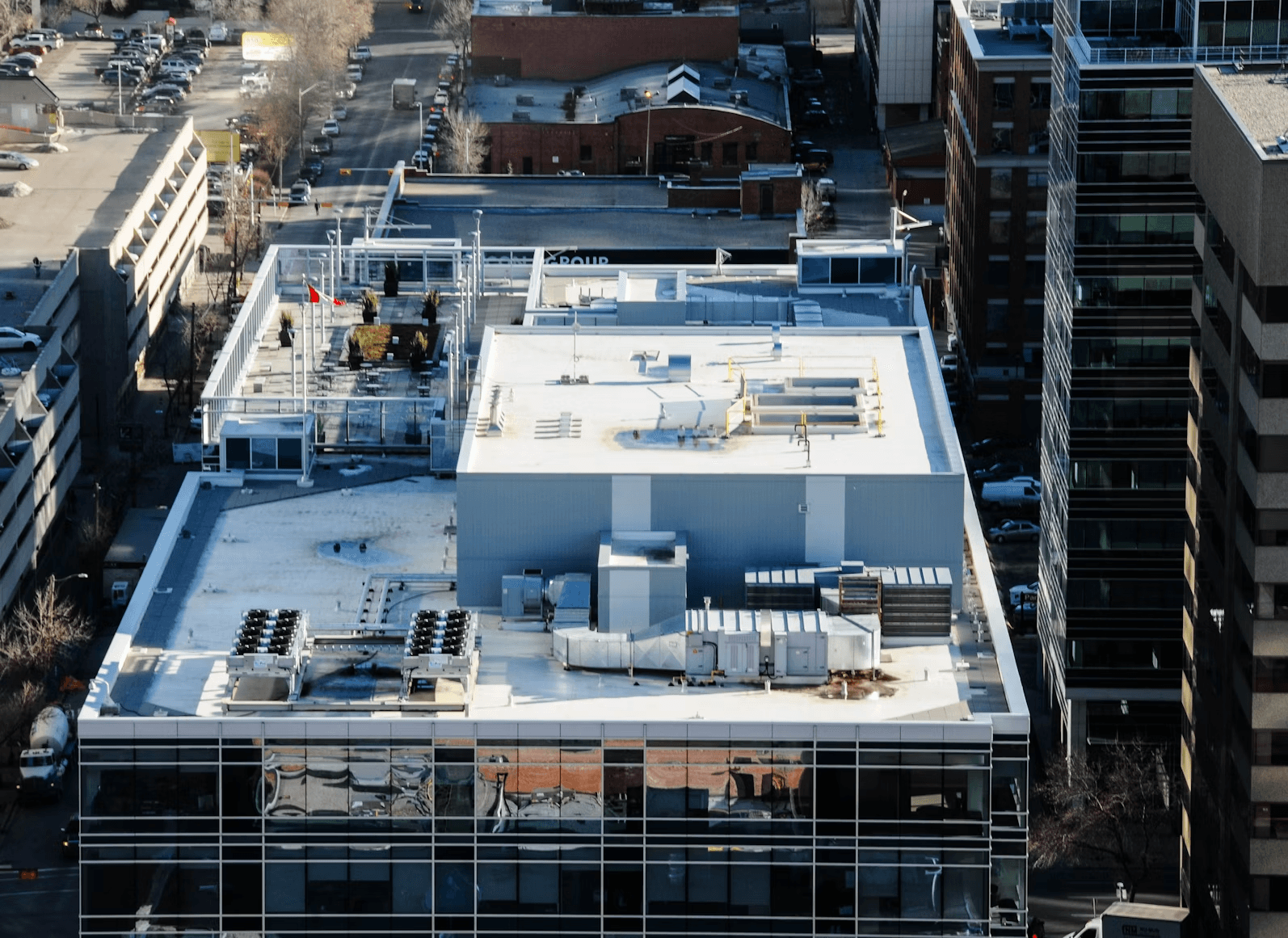
Roof surfaces absorb massive amounts of solar radiation during hot summer months. This thermal energy transfers directly into the building structure, forcing air conditioning units to run constantly. Keeping the upper white membrane clean maintains its natural reflective capabilities over the seasons.
Data from a climate resilience organization revealed that surface temperatures can drop by 60°F under peak sunlight when using reflective setups, dropping annual cooling expenses by up to 25 percent.
Lowering the internal temperature relieves the heavy strain on expensive HVAC machinery. Facilities see immediate utility savings right after a thorough washing and sealing service.
Decreasing Operational Disruptions And Leaks
A sudden leak inside an industrial facility stops business operations immediately. Water dripping onto electronics or warehouse inventory creates massive liability issues and ruins expensive product stock.
Manufacturing plants or retail spaces cannot afford unexpected corporate closures due to structural failures.
Consistent maintenance inspections catch failing seams before water enters the interior workspace.
Field technicians patch small punctures caused by high winds or flying debris during regular site visits. This active approach keeps the indoor environment dry and completely safe for daily employees.
Financial Returns On Metal Roofing Systems
Different materials offer distinct financial advantages when evaluated over long periods. Metal panels provide exceptional durability but still require periodic fastener checks. Tightening loose industrial components guards the entire structure against heavy storm wind uplift.
An industry update from a building systems company highlighted that metal roof designs can provide a 10% to 25% reduction in total energy costs.
These savings quickly offset the initial installation premium when combined with routine maintenance. Clean panels reflect heat much better than rusted or dirty metal sheets.
Preserving Manufacturer Warranty Compliance
Many commercial roofing warranties require proof of regular professional inspections to remain valid. Neglecting annual checkups can completely void the protection plan provided by the original manufacturer. Property owners lose their financial safety net if they fail to document routine asset upkeep.
Filing a claim for premature material failure requires clear maintenance records. Product manufacturers want to see that the building owner took reasonable steps to clear debris and fix small issues. Staying compliant with these terms saves companies from paying out of pocket for expensive material defects.
Long-Term Budget Stability For Property Managers
Predictable maintenance costs allow businesses to allocate capital toward corporate growth rather than emergency repairs.
Knowing the exact condition of the roof membrane helps executives plan facility upgrades years. Routine care transforms an unpredictable physical liability into a stable line item.
Consistent upkeep offers several clear financial advantages for commercial property managers. These benefits help protect the total valuation of the facility:
- Lower insurance premiums through documented safety checks.
- Reduced emergency repair fees during severe weather events.
- Extended warranties from manufacturers who require regular inspections.
A documented history of professional care increases the total resale value of the commercial real estate asset. Potential buyers feel confident purchasing corporate properties with verified maintenance logs and inspection history.
Smart asset management requires moving from a reactive mindset to a strategic one. Protecting the commercial roof shield guarantees long-term stability for the entire organization.
Small investments made today prevent catastrophic financial losses tomorrow. Every single dollar spent on early detection returns value through extended structural life and lower utility bills.
Maintaining a solid roof protects the business bottom line. Corporate leaders save substantial capital by committing to a proactive inspection schedule. Regular maintenance remains the smartest path to financial efficiency.
Share

Arthur Brown
Writer
A dad of 3 kids and a keen writer covering a range of topics such as Internet marketing, SEO and more! When not writing, he's found behind a drum kit.


