
resources
The Top 7 IPv4 Brokers: Competitors & Alternatives (2026)
08 Jul 2026

IPv4 addresses ran out of free allocation more than a decade ago. Any business that needs new address space today must buy it on the secondary market.
A small group of specialized brokers and marketplaces serves that market. Each one differs in regional coverage, pricing model, and how it screens IP addresses' reputations.
Registry rules add another layer of complexity to every deal. ARIN requires a justified need for most transfers, while RIPE and APNIC each apply their own approval process.
Demand has only grown as AI infrastructure, cloud expansion, and broadband buildouts compete for the same shrinking pool of addresses. Much of that pressure overlaps with the wider wave of digital infrastructure investment reshaping cities worldwide, as urban networks scale up to support connected services.
Picking the wrong broker can mean blocked routes, failed registry approval, or wasted budget. This guide compares seven of the most established IPv4 brokers operating in 2026, so you can weigh your options before committing.
Comparison Table
Broker | RIR Coverage | Pricing Model | Best For |
| IPv4 Connect | ARIN, RIPE, APNIC, LACNIC | Fixed price | Fixed pricing with full service transfer management |
| IPv4.Global | ARIN, RIPE, plus inter-RIR | Auction, brokerage, leasing | Large enterprise buyers wanting the deepest transaction history |
| IPXO | RIPE, ARIN, APNIC, LACNIC, AFRINIC | Leasing only | Temporary address space with heavy automation |
| Prefixx | ARIN, RIPE, APNIC, LACNIC | No fee for buyers, seller commission | Buyers who want zero brokerage cost |
| IPTrading | ARIN, RIPE, APNIC, LACNIC | Negotiated per deal | Complex, relationship driven transactions |
| InterLIR | RIPE, ARIN, APNIC, LACNIC, AFRINIC | Quoted per transaction | Managed compliance and KYC support |
| Prefix Broker | RIPE, with ARIN and APNIC | Fixed price, listed in euros | Fast, self-service RIPE region purchases |
1. IPv4 Connect
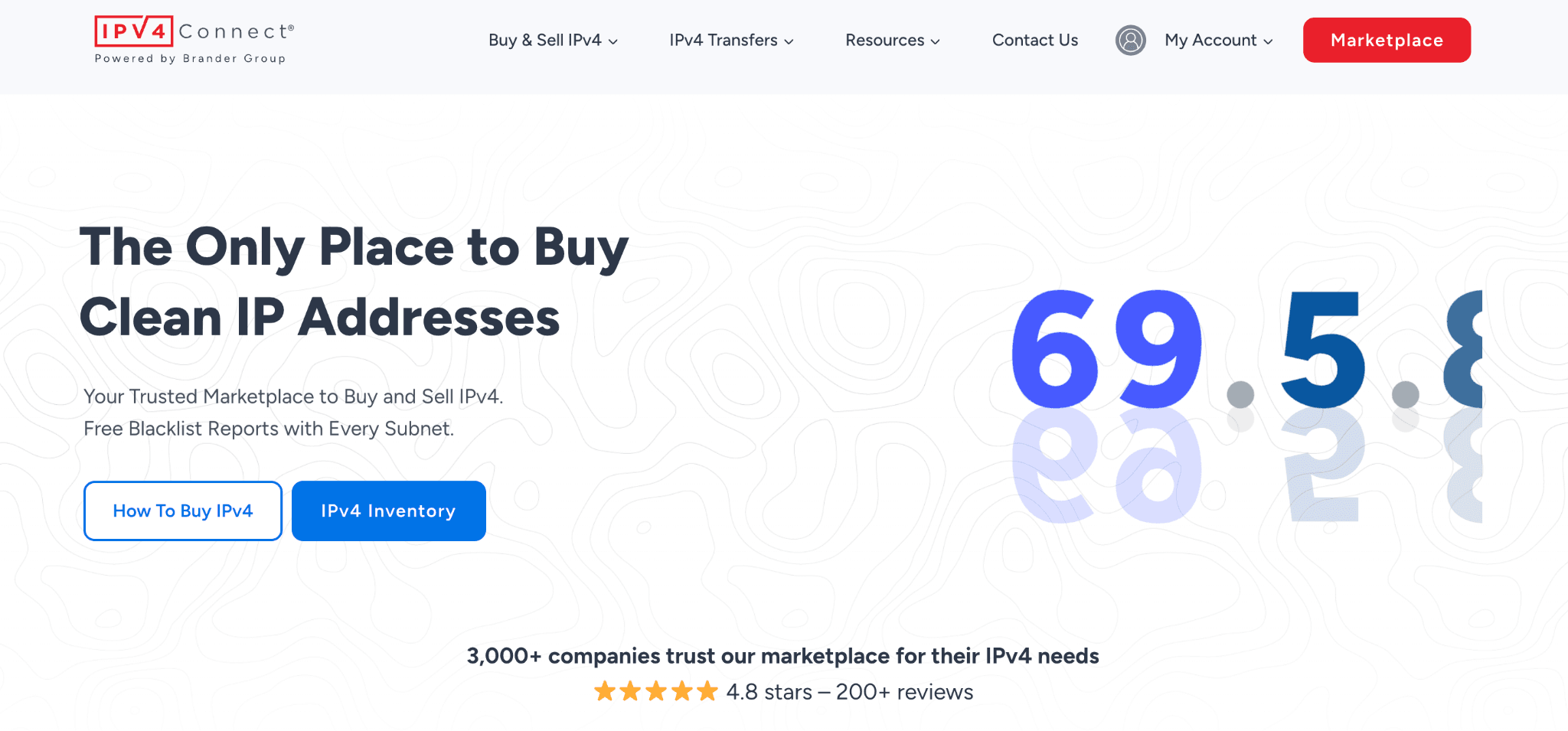
IPv4 Connect is the marketplace arm of Brander Group, a brokerage founded in 2007 with a track record across ARIN, RIPE, APNIC, and LACNIC. The platform lists inventory at fixed prices, which removes the bidding uncertainty that comes with auction based marketplaces.
Every subnet on IPv4 Connect is screened against more than 100 global blacklists before it goes live. The team also strips old BGP announcements, stale route records, and outdated DNS entries ahead of each transfer.
Buyers get geo-location support to confirm their new IP blocks map to the correct region, which matters for content delivery and compliance. Transfers through the platform typically complete within two to three weeks, in line with industry norms.
Fixed pricing also gives buyers a clearer basis for comparison against other listings on the market. That transparency can shorten internal approval cycles for companies that need budget sign-off before purchasing.
IPv4 Connect states it has worked with more than 3,000 clients across 60 plus countries. For businesses that want fixed pricing paired with full service transfer management, IPv4 Connect is one of the more established options on this list.
2. IPv4.Global
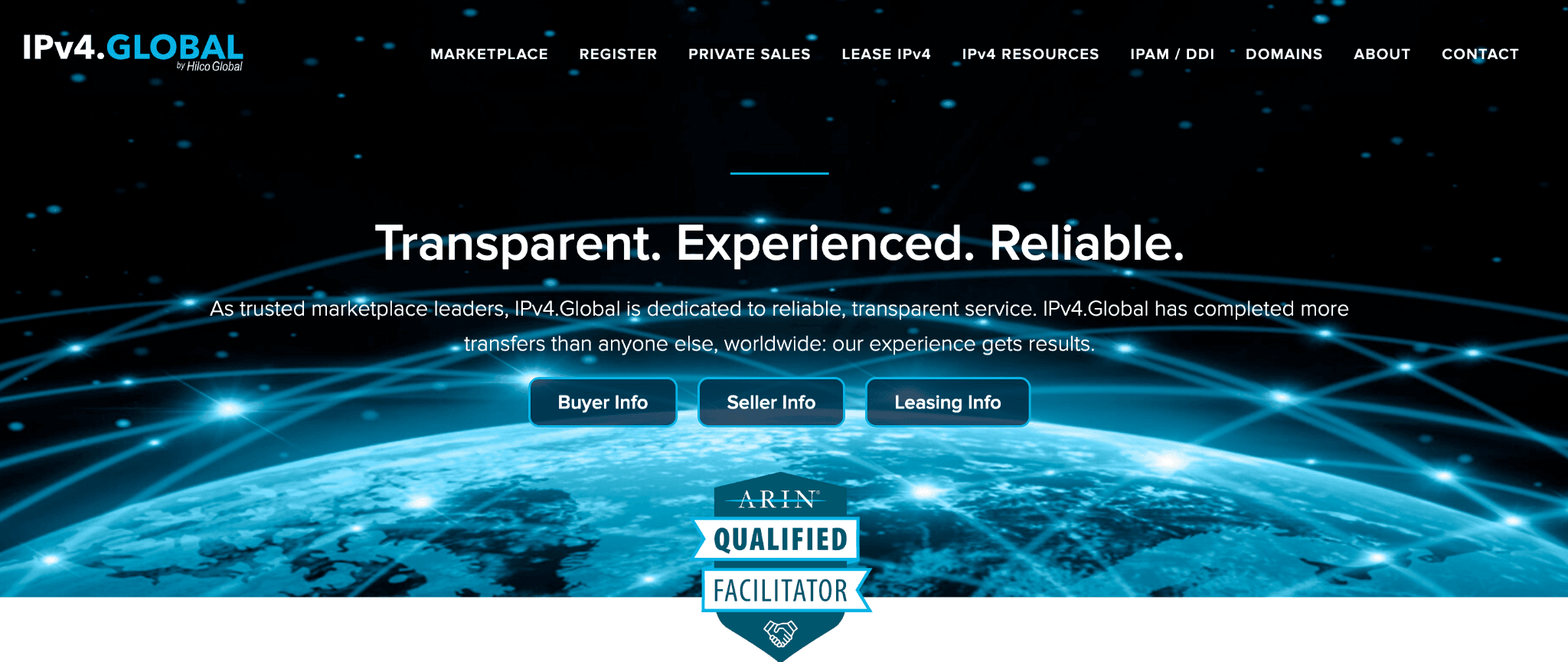
IPv4.Global is operated by Hilco Streambank, a division of Hilco Global. The company states it has facilitated the transfer of more than 65 million IPv4 addresses and generated over 1.3 billion dollars for its clients since launch.
In September 2025, ORIX Corporation completed its acquisition of 71.4 percent of Hilco Global. That gave the platform institutional backing that smaller competitors cannot easily match.
The platform runs three transaction modes: an online auction for smaller blocks, private brokerage for large allocations, and a newer leasing hub. Primary coverage is ARIN and RIPE, with inter-RIR transfers supported for other regions.
Its long operating history means the platform has processed deals across nearly every block size and market condition. That depth of transaction data can be useful for buyers trying to gauge fair market pricing.
The main trade off is the auction model itself. Buyers cannot know their final cost upfront, which complicates budget planning compared to fixed price platforms.
3. IPXO
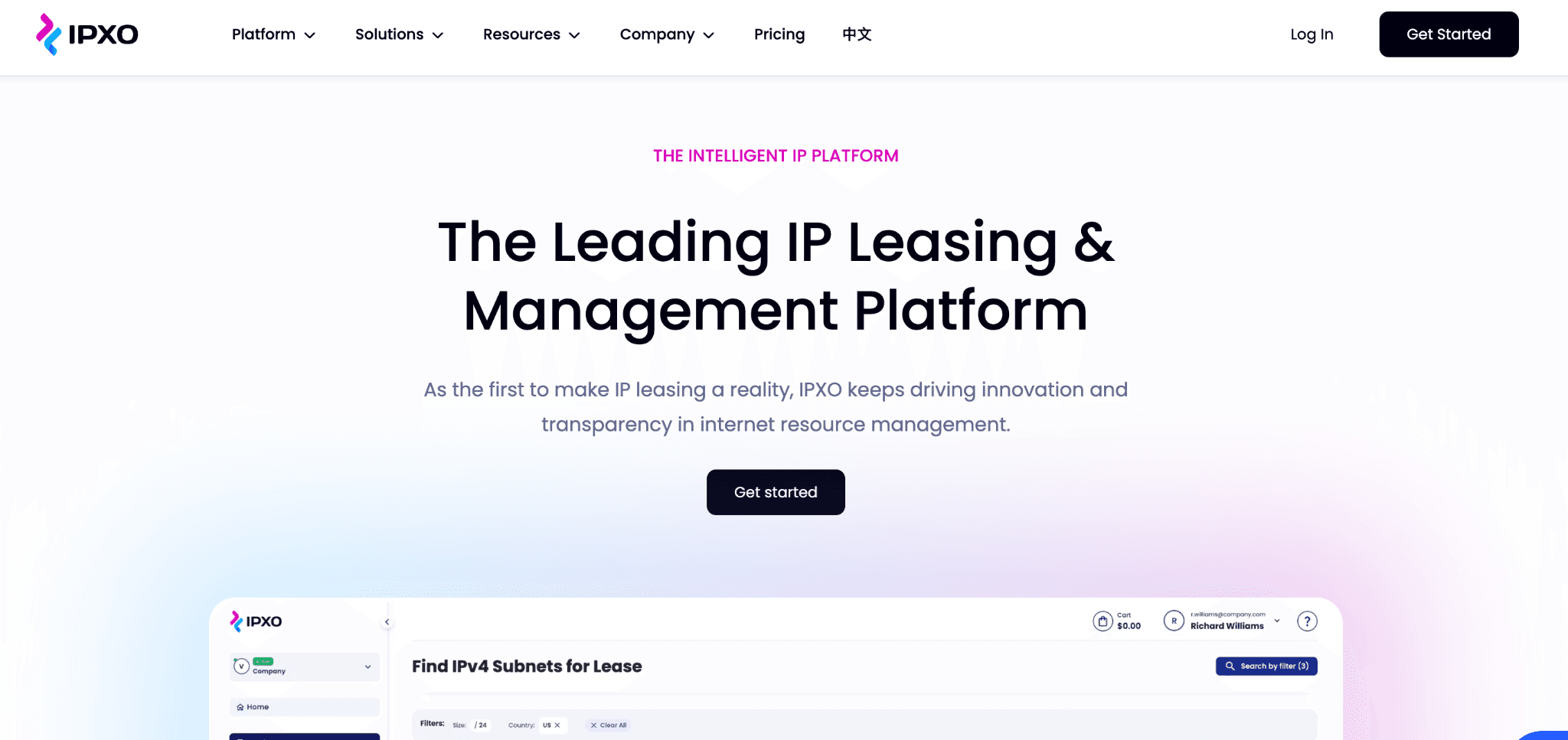
IPXO takes a different approach by focusing entirely on leasing rather than outright sales. According to IPXO's own platform data, the company manages a pool of more than 6 million IPv4 addresses across RIPE, ARIN, APNIC, and other regions.
Automation is the platform's biggest strength. IPXO reports that it handles the large majority of abuse incidents without human intervention, which reduces the operational load on both IP owners and lessees.
Lease rates on the platform vary by RIR and block size, with published averages sitting well below the cost of an outright purchase. Utilization across the marketplace has stayed consistently high, which points to steady demand from lessees.
The trade off is control, since IP owners cannot set their own lease terms or choose their lessees directly. Everything runs through IPXO's centralized pool rather than a direct relationship between parties.
Because IPXO is leasing only, there is no path to outright buying or selling address space through the platform. Businesses that need permanent ownership will need to look elsewhere on this list.
4. Prefixx
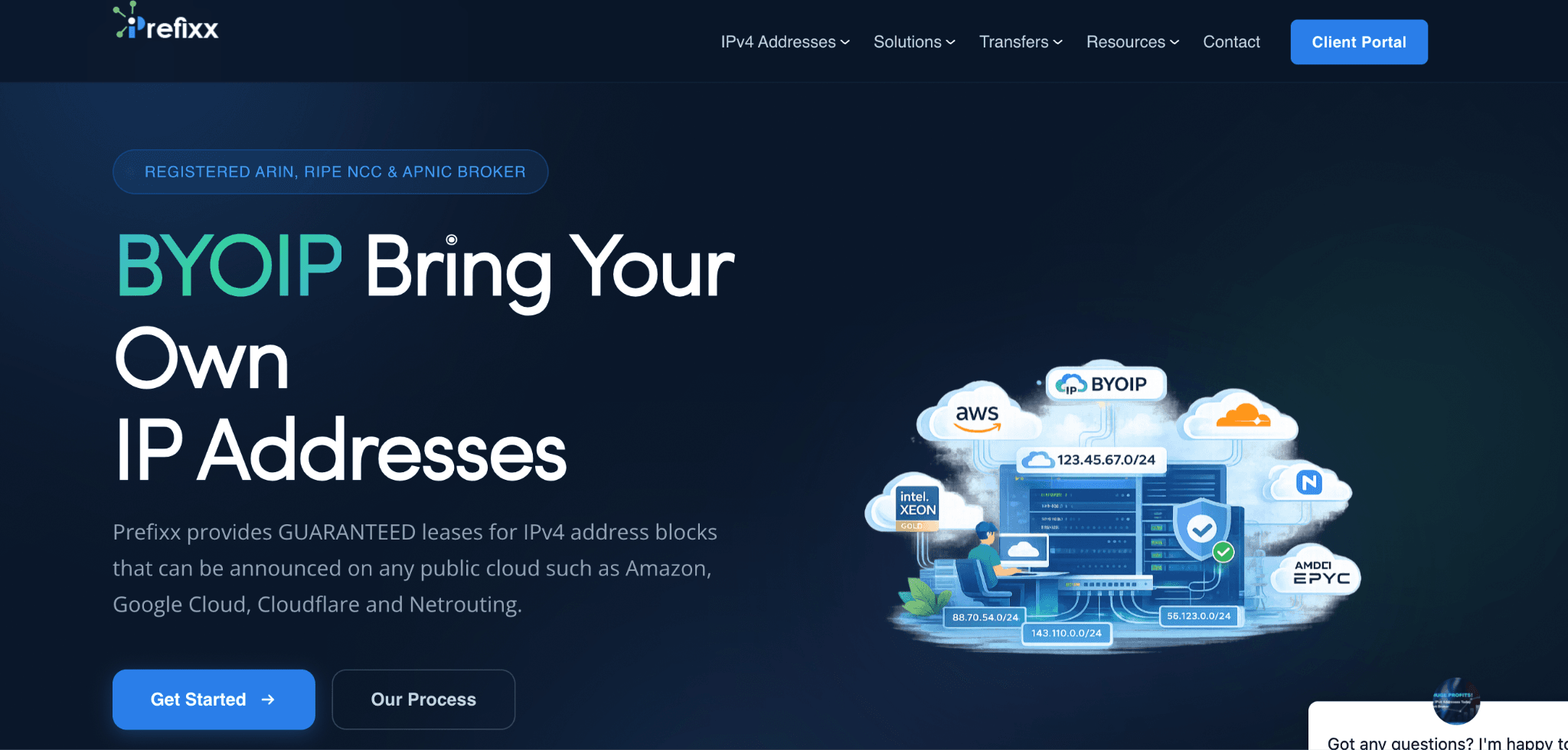
Prefixx is a boutique broker founded in 2018 and based in Miami, covering ARIN, RIPE, APNIC, and LACNIC. Its reported model is no win no fee for buyers, meaning buyers pay no brokerage fees on a transaction.
Sellers instead pay a commission that industry coverage puts in the mid single digit percentage range, scaled to block size. Funds are held in escrow and released only after the relevant registry confirms the transfer.
Every block reportedly passes through the company's internal due diligence process, which includes blacklist scanning, reputation checks, and abuse history review. Client references cited in industry write ups include ExpressVPN and M247.
The firm also supports longer term leasing arrangements alongside outright sales. That flexibility appeals to buyers who are not yet ready to commit to a permanent purchase.
Prefixx is not built for self-service buyers. It suits organizations that prefer a senior consultant managing the transaction end to end.
5. IPTrading

IPTrading holds the distinction of being the first public IPv4 broker, established in 2010. Its leadership has roots dating back to the ARPANET era, which gives the firm deep familiarity with registry policy.
The company leans into relationship driven deals rather than a fully automated marketplace. That means personalized pricing and flexibility on non-standard requests, though with less self-service automation than newer platforms.
Coverage spans ARIN, RIPE, APNIC, and LACNIC. That breadth allows the firm to advise on inter-RIR transfers, which can be one of the more complicated parts of a cross border deal.
Pricing on IPTrading tends to be negotiated case by case rather than published as a fixed rate. That approach works well for larger or more complex transactions where terms need to flex.
IPTrading is a reasonable fit for organizations that value a long operating history and hands-on deal structuring over a purely digital experience. Buyers who prefer a phone call over a dashboard tend to gravitate toward this model.
6. InterLIR
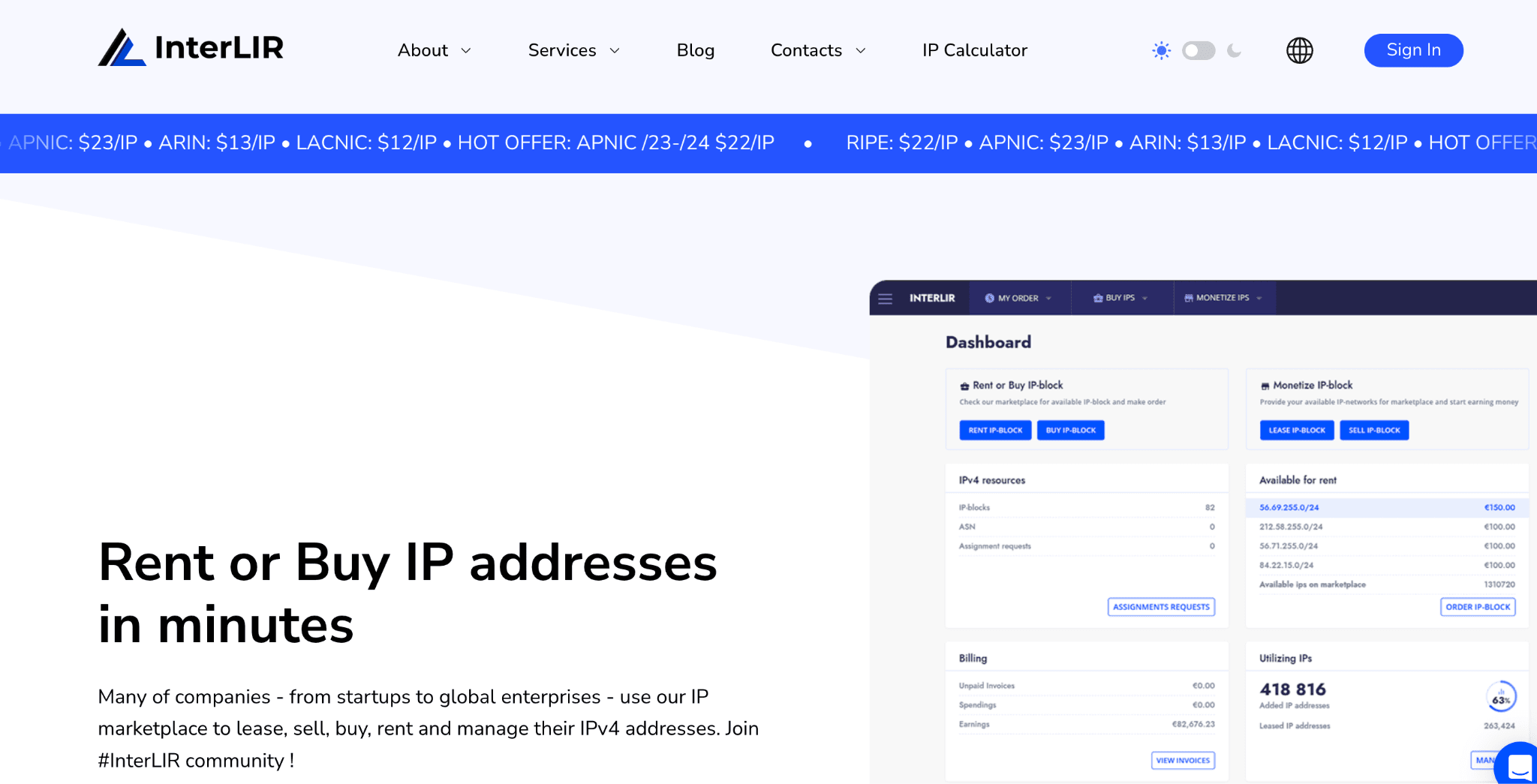
InterLIR is a Berlin based marketplace founded in 2020, with legal entities in both the EU and the US. It covers leasing, buying, and selling across RIPE, ARIN, APNIC, LACNIC, and AFRINIC.
The platform's strength is managed compliance support. InterLIR handles RIPE database operations, KYC workflows, and transfer coordination for buyers who prefer guidance over a self-service process.
Incoming blocks are reportedly scanned against more than two dozen blacklists at onboarding, with ongoing abuse monitoring afterward. Provisioning for leasing typically completes within 24 hours.
The company also offers ASN registration and LIR sponsoring, which matters for operators without their own registry membership. That combination positions InterLIR as more of a full service partner than a pure listing site.
InterLIR suits operators who want marketplace functionality paired with hands-on compliance help, particularly in the RIPE region. Fee structures are quoted per transaction rather than published as a flat rate.
7. Prefix Broker
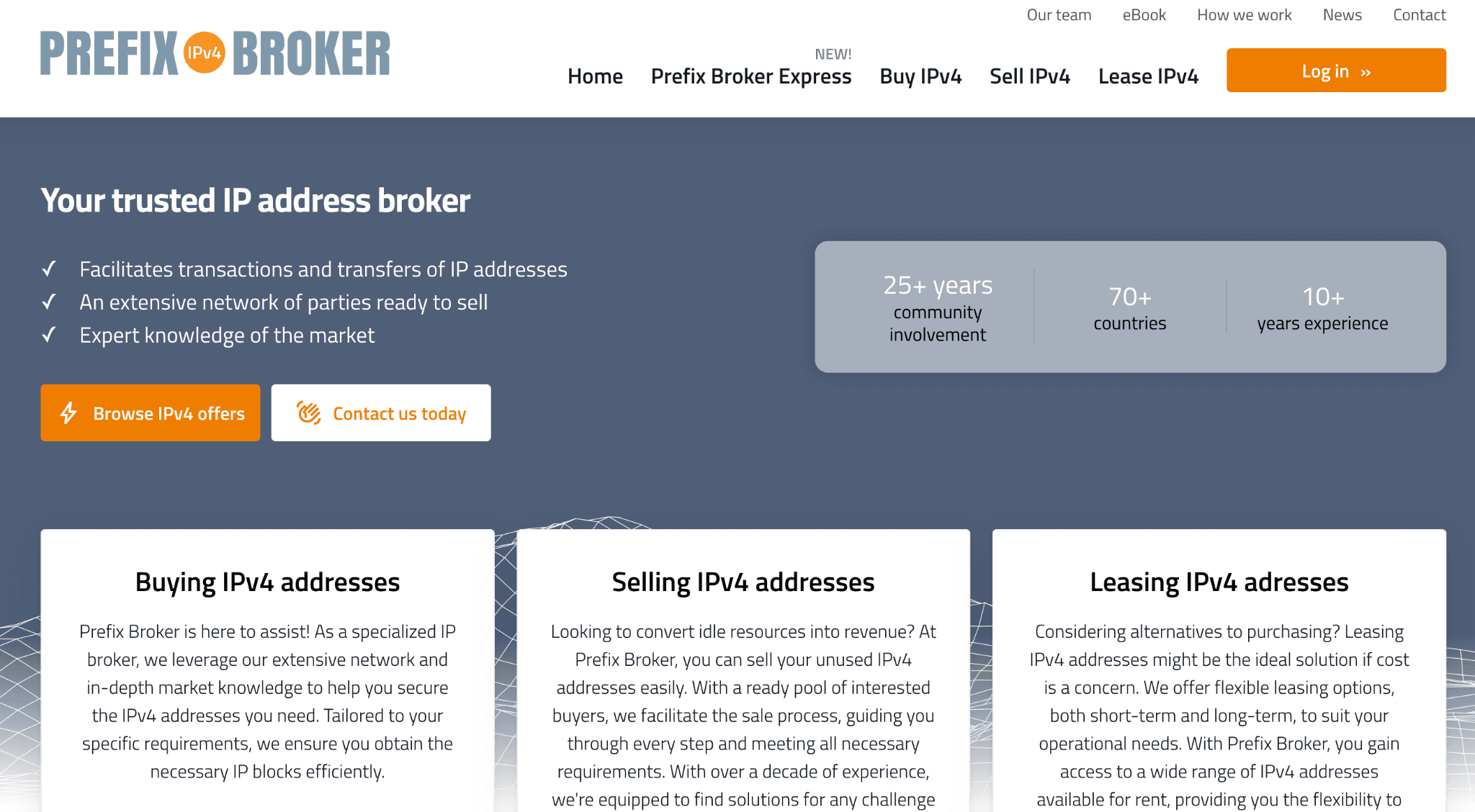
Prefix Broker offers an auction free platform with deep expertise in the RIPE region and additional coverage in ARIN and APNIC. Prices are listed transparently in euros, which simplifies budgeting for European buyers.
The platform is built for speed. Buyers can register, select a block, and complete a purchase without waiting for bids to close.
Prefix Broker conducts seller vetting and compliance checks before any block is listed. New IPv4 addresses are reported to be operational within 24 hours of payment in most cases.
That speed comes from a tighter regional focus rather than an attempt to cover every market equally. Buyers outside the RIPE region may find deeper inventory elsewhere on this list.
This makes Prefix Broker a solid choice for organizations that need address space quickly and prefer a straightforward buying process over auction bidding. It is best suited to buyers who already understand the RIPE region and want a fast, no-frills transaction.
Frequently Asked Questions
How much does it cost to buy IPv4 addresses in 2026? Market trackers put current IPv4 transfer prices in roughly the 18 to 45 dollar per address range, depending on block size and region. Pricing is well below the 2021 to 2022 peak, when rates ran closer to 50 to 60 dollars per address.
Is leasing IPv4 addresses cheaper than buying them? Yes, in most cases. Lease rates generally run from roughly 0.30 to 0.60 dollars per IP per month depending on the registry and block size, which is far lower than the upfront cost of a purchase.
How long does an IPv4 transfer usually take? Most brokers on this list report transfer timelines of two to three weeks across ARIN, RIPE, and APNIC. LACNIC and AFRINIC transfers can take longer due to additional holding period requirements.
Do I need to be pre-approved by a registry before buying IPv4 addresses? It depends on the region. ARIN and APNIC generally require buyers to demonstrate justified need before a transfer is approved, while RIPE NCC does not apply the same needs based test.
What is the difference between buying and leasing IPv4 addresses? Buying transfers permanent ownership of the address block to you, subject to registry approval. Leasing gives you temporary use of addresses owned by someone else, usually with lower upfront cost and more flexibility to scale up or down.
Choosing the Right IPv4 Broker
The seven brokers above cover different priorities, from fixed pricing and full service transfers to pure leasing and auction based bidding. Region coverage, transfer speed, and pricing transparency should all factor into the decision.
Buyers who want predictable pricing and managed compliance across multiple registries tend to gravitate toward full service platforms. Those who only need temporary address space are usually better served by a leasing only provider.
Block size also shapes the decision, since smaller /24 purchases move faster than large enterprise allocations. Larger buyers should expect more negotiation and a longer compliance review regardless of which broker they choose.
Pricing has also shifted in recent years, with per-address costs well below the peak seen in 2021 and 2022. That makes it worth comparing current quotes across more than one broker before finalizing a deal.
There is no single best broker for every situation. The right choice depends on block size, target region, budget, and whether the goal is permanent ownership or short term access.


