
technology, resources
Tips to Build Strong Digital Presence Of Your Construction Business
07 Dec 2025

Having a strong online presence for your construction business is a must. Word-of-mouth and local contacts alone no longer keep a company busy. In 2025, a solid digital footprint helps you win new clients, show your skills, and stay ahead of competitors.
This guide explains a clear approach to building your online presence, covering websites, search engine optimization, content, and digital ads.
Online channels give construction companies many new ways to reach the right people, from homeowners planning renovations to developers looking for partners. Using these tools can widen your reach and feed your pipeline.
Also, social media marketing for construction companies has become a strong tool, changing how businesses talk with clients and turn interest into signed work.
Why an Online Presence Matters for Construction Businesses
Construction is built on hands-on work and visible results, so digital visibility may seem less important at first. But that view is now outdated. Most people go online to find services, compare options, and check reviews. A strong online presence is now a core part of success for builders and contractors.
Treat your online presence like your digital storefront and a salesperson that never sleeps. It is how people find you, learn about your capabilities, and decide whether to contact you. Without it, even skilled companies can get passed over in a crowded market.
Benefits of Building a Strong Online Presence
A solid online presence helps in several ways. It grows brand awareness. By showing up on key digital channels, you can display your work and reach far more people than traditional methods.
It also helps you bring in steady, high-quality leads. With smart digital marketing, you can attract people who are actively looking for your services and filter out poor fits. Paid ads paired with SEO can keep your pipeline full.
It builds trust. A professional website, consistent social profiles, and active engagement with feedback show that you are reliable. Clear messaging helps people understand your services and view your business as credible and professional. In a trust-based field, this matters a lot.
Risks of Ignoring Digital Visibility
Skipping digital channels today is risky. If you avoid the places where clients search for contractors and request bids, your company may fade from view. With over half of social media users researching products and most influenced by social recommendations, missing online presence means missing many potential clients.
A weak or missing online footprint can also make your business look dated or untrustworthy. If people cannot easily find your info, past projects, or reviews, they may assume you are not a serious choice. Competitors who invest in digital marketing will keep winning those jobs.
Develop a Professional Website
Your website is your base online-often the first contact someone has with your brand. It should give a strong, professional first impression that reflects your skill, reliability, and quality.
A website is more than a brochure. It should guide visitors to become clients. It needs to look good, be easy to use, and include the details prospects need. Slow or clunky sites push people away before they see your work.
Features Every Construction Website Needs
Include a clear list of services so visitors quickly understand what you do. Display your contact info in obvious places so inquiries are easy. Add interactive pieces like project galleries and inquiry forms to engage people and drive action.
Explain what makes you different. Are you great at sustainable builds, creative design, or strong project management? Share that message across your site to show your identity and strengths. You can also add online payments or client accounts to make working with you easier and to encourage repeat business — an approach agencies like BuiltFor Studio often recommend to help construction companies streamline client experience and boost retention.
Showcasing Projects and Credentials
Proof matters in construction. Put your portfolio or case studies front and center so visitors can easily explore your work. Let the visuals do the talking with sharp photos, before-and-after images, drone shots, and walkthrough videos.
Tell the story of each job: the challenge, your solution, and the outcome. Include materials, design choices, and the value delivered. Share your licenses, certifications, awards, and client testimonials to back up your results.
Mobile Responsiveness and Site Speed
In 2025, mobile-friendly design is a must. Many visitors use phones. If your site does not work well on small screens, you will lose them. A responsive layout helps your site look and work well on any device.
Site speed matters too. People expect pages to load fast. Large images and weak hosting slow things down and cause high bounce rates. Compress images, use caching, and pick reliable hosting to keep pages quick and smooth. A fast, mobile-friendly site shows professionalism and respect for your visitors’ time.
Optimize for Search Engines (SEO)
A great website is only helpful if people can find it. SEO helps your site show up in Google and Bing. For construction companies, good SEO means your business appears high in results for terms like “commercial builders in [your city]” or “home renovation contractors.”
Unlike paid ads that stop when you stop paying, SEO builds traffic over time. It brings a steady stream of visitors without paying for each click. It’s a long-term play that helps your business look relevant and trusted.
On-Page SEO Basics for Construction Sites
On-page SEO is about improving each page to rank better. Start by finding the keywords your ideal clients use, like “residential construction [your city],” “commercial building services,” or “kitchen remodelers [your neighborhood].”
Use these keywords naturally in headlines, service pages, case studies, and blog posts. Avoid keyword stuffing. Write helpful content that answers real questions. Also, make sure your meta titles and descriptions include your target terms to improve clicks from search results.
Local SEO: Reaching Clients in Your Area
Most construction work is local, so local SEO is very important. Target searches like “construction company near me” or “general contractor [city/state].” You’ll compete mainly with others in your area, not nationwide.
Local SEO helps search engines understand your location and services, which helps you show up in the Google “map pack.” Good reviews and active responses help you appear there more often, as ratings and activity influence the algorithm.
Directories and Google Business Profile
A key part of local SEO is your Google Business Profile (GBP). It controls how your business appears on Google Search and Maps. Fill it out with accurate details, great photos, and current hours. Ask happy clients to leave reviews, and reply to all feedback professionally.
Also list your business on sites like Porch, Houzz, Yelp, and Thumbtack to grow visibility and leads. Many people browse these to compare contractors and view projects. Keeping multiple profiles up to date takes time, but it helps you get found. Keep your name, address, and phone number the same across all listings to avoid confusion and help rankings.
Use Social Media to Build Brand Awareness
Social media is now a strong channel for construction companies to show work, grow brand awareness, and talk with potential clients. The Construction Marketing Association reports that all construction pros use social media in some way. It’s often a low-cost way to expand your reach and add a human touch in a visual field.
But just having profiles is not enough. You need a simple plan and steady posting that matches what your audience wants. Social media works like modern word-of-mouth, helping you reach local people, build relationships, and turn interest into jobs.
Best Platforms for Construction Businesses
Pick the right platforms. If you try to be everywhere, you might end up with empty accounts. Start with one or two and get good at those before you add more. For construction, these platforms stand out:
- Instagram: Great for visuals. Share project photos, videos, progress clips, and before-and-after posts. It also reaches younger audiences and can support influencer work.
- Facebook: With billions of users, Facebook helps grow brand recognition, talk with your audience, and join local groups. You can run targeted ads by area and demographics for local outreach.
- LinkedIn: Useful for B2B. Network with pros, show your team’s skills, and connect with partners and commercial clients.
- YouTube: Best for longer videos like project walkthroughs, how-tos, and educational clips. It can help your SEO and present your company as an expert.
- TikTok: Short, engaging videos. Reach younger viewers and show company culture. Share project clips, safety tips, and quick advice.
Content Ideas that Attract Clients
Focus on content your audience wants to see. Construction is visual, so lead with visuals. Try these ideas:
- Before-and-After Photos/Videos: Show the change your work delivers. These posts get strong engagement.
- Progress Updates & Behind-the-Scenes: Share milestones, a day on the job, or team moments to build trust and add a human side.
- Project Spotlights & Case Studies: Share the challenge, your solution, and the outcome, not just the photos.
- Employee Spotlights: Introduce team members to make your brand feel approachable.
- Educational Content: Offer DIY tips, code basics, or remodeling advice. This shows you know your craft and provides value.
- Client Testimonials: Share reviews and quotes to provide social proof.
- Community Involvement: Share local events or projects you support to show you care about the area.
- Light Humor: Tasteful jokes or memes can make your brand friendlier. Keep it on-brand and respectful.
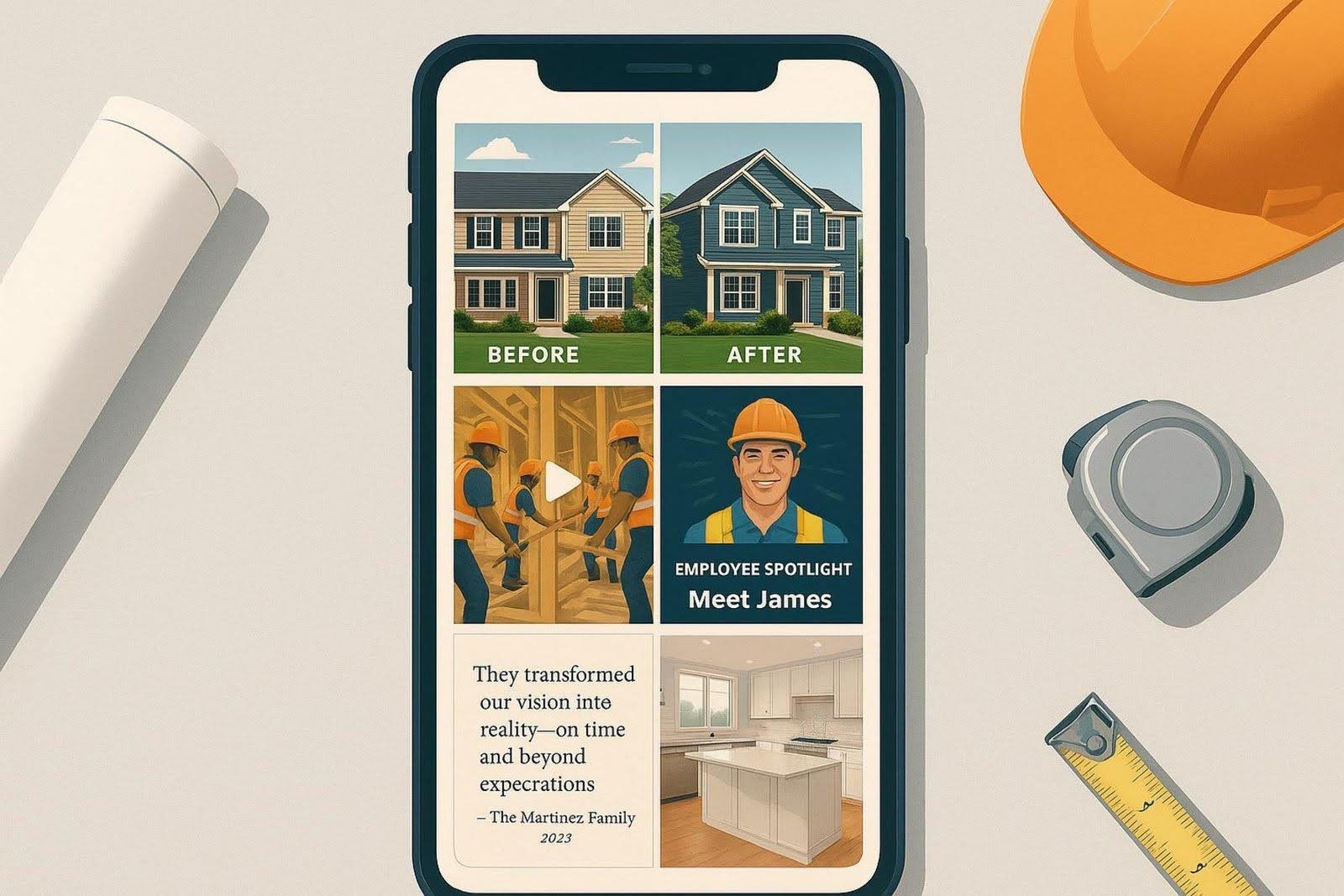
Whenever possible, include a link back to your website in posts to increase traffic and boost search rankings.
Consistency and Community Engagement
Consistency matters. Regular posts keep you visible, build trust, and grow familiarity. Quality beats quantity, but keep a steady schedule. For Facebook, try to post at least three times a week.
Engage with people. Don’t just post-reply to comments and messages quickly, even if they are critical. Fast, helpful replies show professionalism and can turn interest into leads. Join industry groups, take part in discussions, and run interactive content like contests, Q&As, or polls to energize your audience. Be real and avoid overly polished content that feels fake.
Create Compelling Content to Demonstrate Expertise
Being online is one thing; proving your value is another. Content marketing helps you share knowledge, teach potential clients, and build trust before they call. Offer useful content that shows how you solve problems.
Go beyond service lists. Anticipate questions, share insights, and explain construction details in plain language. Steady, useful content also helps your SEO because search engines reward sites with fresh, relevant posts.
Publishing Project Updates and Case Studies
Project updates and case studies are some of the best content types for construction. Show progress with photos, videos, and short notes on your site and social profiles. This keeps your audience informed and shows your team’s work ethic.
Case studies go deeper. Pick a project, share the client’s needs, the challenges, your smart solutions, and the result. Add visuals, quotes, and numbers if you have them. This shows how you solve real problems and helps people picture working with you.
Leveraging Videos and Virtual Tours
Video works very well for construction. Share on-site clips, planning moments, and team interactions to add a human touch. Time-lapse videos of builds are very engaging and highlight real progress and change.
Virtual tours of finished homes or commercial spaces let people explore your quality from anywhere. Go live on Facebook or Instagram with Q&As or quick jobsite tours to invite real-time questions and build trust.
Educating Prospects with Blog Posts and FAQs
Blog posts and detailed FAQs help answer common questions and show your expertise. Cover topics your clients ask about before, during, and after a project. Examples: “Planning a Home Renovation,” “Basics of Commercial Building Codes,” or “Picking the Right Materials.”
This content shows you know your field and supports SEO with relevant keywords. Keep posts clear, actionable, and easy to read. Share them on social media to bring people back to your site and grow leads.
Collect and Display Reviews and Testimonials
Trust matters a lot in construction. Reviews and testimonials carry real weight. People often trust what other customers say more than ads. So, gather feedback and show it clearly across your channels.
Your online reputation is like a public stamp of approval. It tells new prospects that others had good experiences with you, lowering risk and making them more likely to choose you. Ignoring reviews leaves a powerful tool on the table.
Encouraging Satisfied Clients to Leave Reviews
Ask for reviews. After a project wraps, send a direct link to leave a review on Google, Yelp, or trade sites. Make it quick and simple. You can automate this with a follow-up email or text.
You may not need a huge number of reviews for large commercial jobs, but steady, positive feedback is important for your Google Business Profile and search visibility. A flat review history can hurt how often you show up.
Responding to Feedback and Building Trust
Reply to all reviews. Thank people for positive comments. For negative ones, respond calmly and professionally, and try to resolve the issue. This openness and care can greatly improve your reputation.
Everyone can see your replies. How you handle a complaint can matter more than the complaint itself. Use it to show your service mindset and attention to clients.
Showcasing Testimonials on Multiple Channels
Don’t leave testimonials on review sites only. Add them to your website on a “Testimonials” or “Client Stories” page. Place short quotes on service pages and case studies. Share standout reviews on social media as graphics or videos.
Video testimonials are very real and convincing. Wherever someone finds you online, they should also see proof of happy clients. Sharing this across many channels increases its impact.
Implement Digital Advertising for Targeted Reach
SEO and social media build long-term visibility, while digital ads can bring targeted attention fast. In a busy market, ads can put your message in front of people who are actively searching for what you offer.
Digital ads are about precision, not blasting everyone. You can target by area, interests, demographics, and search intent so your budget goes to people most likely to contact you.
Pay-Per-Click Advertising for Construction Leads
Pay-Per-Click (PPC) means you pay when someone clicks your ad. Google Ads is the most common platform, placing your ads at the top of results for the keywords you choose. For construction, this reaches people already looking for services like yours.
A well-planned PPC campaign can drive qualified visitors to your site so they can learn more and request quotes. You can track clicks, conversions, and ROI to improve performance over time. If you focus on commercial work, you can target business owners and developers in your area.
Local Services and Social Media Ads
Local Services Ads (LSAs) work especially well for local service areas. They appear at the very top of Google results for local searches and show your rating, reviews, hours, and service area.
Importantly, LSAs include the Google Guarantee badge, which adds trust because Google screens these businesses. Leads can call or message you straight from the ad, and you pay per lead, not per click-often making them cost-effective for local work.
Facebook and Instagram also provide strong ad options. With detailed audience data, you can target by location, interests, and demographics. Setup is free, and you pay when someone clicks. This helps you reach beyond organic posts and promote services, offers, or events.
Create Compelling Content to Demonstrate Expertise
Being visible online is one step; showing your value is the next. Content lets you teach, build trust, and prove your skills before a client calls. Share helpful information that reflects how you solve problems.
Go past simple service lists. Answer common questions, share useful tips, and explain construction details plainly. Posting steady, helpful content also supports SEO because search engines prefer fresh, relevant pages.
Publishing Project Updates and Case Studies
Project updates and case studies work very well for construction. Share progress with photos, videos, and short notes on your site and social channels. This keeps people interested and shows your team in action.
Case studies go deeper. Highlight the client’s goals, obstacles, your solution, and the outcome. Add strong visuals, client quotes, and results if you have them. This shows your approach and helps prospects see how you can help them too.
Leveraging Videos and Virtual Tours
Video is very useful for this field. Share behind-the-scenes clips, team moments, and planning steps to make your brand feel human. Time-lapse videos of builds are very engaging and show clear progress.
Virtual tours of finished work let people explore your quality from anywhere. Live streams on Facebook or Instagram with Q&As or quick tours invite real-time questions and build trust.
Educating Prospects with Blog Posts and FAQs
Blog posts and detailed FAQs answer common client questions and show your expertise. Topics could include “Tips for Planning a Home Renovation,” “Understanding Commercial Building Codes,” or “Choosing the Right Materials.”
This content shows you know your field and helps SEO with relevant keywords. Keep posts clear, simple, and actionable. Share them on social platforms to bring traffic back to your site.
Collect and Display Reviews and Testimonials
Trust and reputation matter most in this industry. Positive reviews and testimonials prove your work to new clients. People trust other customers more than ads, so ask for feedback and put it in visible places.
A strong review profile tells prospects that others had good outcomes with your team. That lowers risk for them and makes picking you easier. Skipping reviews leaves a proven trust signal unused.
Encouraging Satisfied Clients to Leave Reviews
Ask happy clients for reviews soon after completion. Send them a direct link for Google, Yelp, or trade sites and make the process quick. Consider automating this with follow-up emails or texts.
Even for large projects, a steady stream of new, positive reviews helps your Google Business Profile and search visibility. A stale review history can hold you back.
Responding to Feedback and Building Trust
Reply to all reviews. Thank clients for positive notes. For negative feedback, respond thoughtfully and professionally. Show you care and are willing to improve. This can greatly build trust.
Your replies are public. How you respond can matter more than the complaint itself. Use it to show your customer service and professionalism.
Showcasing Testimonials on Multiple Channels
Use testimonials across your channels. Add a “Testimonials” or “Client Stories” page. Sprinkle quotes on service and case study pages. Share top reviews on social media with graphics or short videos.
Video testimonials feel honest and convincing. The goal is for people to see proof of success wherever they meet your brand online. Sharing in many places increases impact.
Implement Digital Advertising for Targeted Reach
Long-term methods like SEO and social help you grow steadily, while digital ads can bring in leads sooner. Ads help you stand out and reach people who are already searching for your services.
With ad platforms, you can narrow your audience by area, interests, demographics, and intent. This makes your budget work harder by speaking to people most likely to hire you.
Pay-Per-Click Advertising for Construction Leads
PPC ads charge you when someone clicks. Google Ads places your message at the top of results for chosen keywords. For contractors, this means reaching people who want services now.
Good PPC can bring qualified traffic to your site and convert them into leads. You can track clicks, forms, calls, and ROI so you can improve your campaigns over time. For commercial work, target business owners and developers in your service area.
Local Services and Social Media Ads
Local Services Ads work very well in defined areas. They sit at the top of local search results and include your rating, reviews, hours, and coverage map.
They also include the Google Guarantee badge, which builds trust through Google’s screening. Leads can contact you from the ad, and you pay per lead, making them budget-friendly for local jobs.
Facebook and Instagram ads let you target very specific groups by location and interests. You only pay for clicks or actions. This helps push your reach beyond organic posts and is useful for promoting services, deals, or events.
Nurture Leads with Email Marketing
After you get attention from your website, SEO, or social media, keep the relationship going. Email marketing is one of the lowest-cost channels with some of the best returns. It keeps you in touch with prospects and past clients so they think of you when they are ready.
Your email newsletter is like a digital business card in the inbox. Even unopened emails remind people that you are active and delivering new work and ideas. This steady contact helps turn interest into real projects.
Building and Segmenting an Email List
Start with a solid, engaged list. Add sign-up forms to your site (as a pop-up or in the footer). Offer helpful downloads-like renovation tips or building guides-in exchange for an email.
At events, collect emails with sign-up sheets or QR codes. Ask current clients to opt in at project closeout or through follow-up surveys. Then, split your list into groups by interest (residential vs. commercial), location, or behavior. This lets you customize messages so they feel relevant to each group.
Types of Emails that Engage Prospective Clients
Give value in your emails instead of constant sales pushes. Useful types include:
- Newsletters: Monthly or quarterly updates with recent projects, trends, company news, and offers. Make them visual and personal.
- Educational Content: Share blog posts, guides, and tips. Homeowners can get renovation advice; commercial clients can get updates on large projects.
- Project Showcases: Highlight recent jobs with strong images and a short story.
- Testimonials & Case Studies: Share wins and client quotes to add social proof.
- Event Invitations: Invite subscribers to trade shows, open houses, or webinars.
- Special Offers: Send occasional promotions without overwhelming your audience.
Automated sequences help welcome new subscribers, follow up, and nurture leads based on actions. Track open rates, clicks, and conversions to keep improving your results.
Track, Analyze, and Refine Your Online Presence
Building your online presence is ongoing work. You need to watch results, learn from the data, and adjust. This helps you focus on what works, cut what doesn’t, and get better returns over time.
Reviewing performance shows what your audience likes, which channels drive results, and where you can improve. Without this, it’s like moving through digital channels with your eyes closed-you won’t know what impact your efforts have.
Key Metrics for Construction Businesses
Focus on the right numbers. Track these KPIs:
- Website Traffic: Visitor totals, sources (search, social, referral, direct), and top pages.
- Lead Generation: Inquiries, forms, calls, and quote requests. Note the difference between marketing-qualified and sales-qualified leads.
- Conversion Rate: The share of visitors who take an action, like filling out a form.
- Engagement Metrics: Social likes, comments, shares, reach, and follower growth. On your site, watch bounce rate and time on page.
- Online Reviews & Reputation: Average rating, number of reviews, and how often you reply.
- Cost Per Lead (CPL) & Return on Ad Spend (ROAS): For ads, these show efficiency and profit.
Pull these into one dashboard for a quick view that supports smart decisions.
Tools for Monitoring Website and Social Media Performance
Many easy tools can help you track results without heavy tech skills:
- Google Analytics: Free tracking for site traffic, user actions, and conversion goals. Learn who visits, how they found you, and what they do.
- Google Search Console: Free search performance tracking, indexing checks, and keyword insights.
- Social Media Insights: Built-in analytics on Facebook, Instagram, LinkedIn, YouTube, and TikTok. See audience details and post performance.
- Ad Platform Dashboards: Google Ads and social ad managers offer full views of spend, performance, and ROI.
- Review Management Tools: Tools like ServiceTitan’s Reputation Management help collect, track, and reply to reviews in one place.
Using these tools gives you the information you need to spot wins and fix weak spots.
Adapting Strategy Based on Data
Data only helps if you act on it. Compare your results to your SMART goals (Specific, Measurable, Achievable, Relevant, Time-bound). If a certain content type gets strong engagement, make more of it. If keywords aren’t sending traffic, update your SEO or content.
A page with a high bounce rate might need better headlines, faster load times, or clearer calls to action. If an ad brings few leads, check your targeting or creative. This ongoing cycle of tracking, reviewing, and adjusting helps your online presence stay effective and aligned with your business goals.
Frequently Asked Questions About Building an Online Presence in Construction
Figuring out digital marketing can feel like starting a major build without a plan. Many construction companies ask similar questions. Here are clear answers and practical tips.
Which Digital Channels Are Most Effective for Construction?
The best channels depend on your audience and the projects you want. Still, these are helpful for most:
- Your Website: Your main hub and digital storefront for your portfolio, services, and lead capture.
- Google Business Profile: Important for local searches and the map pack for “near me” queries.
- Social Media Platforms: Instagram and Facebook are great for visuals and broad reach. LinkedIn helps with B2B and commercial work. YouTube supports longer videos and how-tos. Choose based on where your clients spend time.
- Email Marketing: A low-cost way to nurture leads and stay in touch with past clients.
Start by focusing on one or two channels and do them well before expanding.
How Do Construction Companies Get Online Leads?
Winning online leads takes visibility, helpful content, and clear next steps:
- SEO & Local SEO: Optimize your site and Google Business Profile to rank when people look for your services.
- Strong Website Content: Share high-quality photos, videos, and testimonials. Publish helpful blogs and FAQs to show expertise.
- Social Media Engagement: Post often, interact with followers, and use local targeting on Facebook and Instagram.
- Digital Advertising: Run targeted Google Ads, Local Services Ads, and social ads to reach likely buyers.
- Clear Calls to Action: Use prompts like “Request a Quote,” “Schedule a Consultation,” or “View Our Projects.”
- Fast Follow-Up: Reply quickly to comments, messages, and inquiries to convert interest into leads.
Used together, social media and other digital tactics can feed your pipeline with people who already trust your brand.
What Content Performs Best for Contractors Online?
The best content is visual, helpful, real, and easy to relate to:
- Strong Visuals: Before-and-after photos, time-lapse videos, and drone footage grab attention and show your craftsmanship.
- Behind-the-Scenes & Team Highlights: Show your people and daily work to make your brand feel human and approachable.
- Educational Advice: Use blogs and videos to answer common questions, share tips, and explain processes. This builds trust and shows expertise.
- Testimonials & Case Studies: Real stories from happy clients provide social proof and help prospects imagine their own results.
- Interactive Posts: Q&As, polls, and contests increase engagement and give you useful feedback.
Create content that meets your audience’s needs, shows your skills, and reflects your company’s personality. Be consistent and authentic for the best results.


