
business resources
Top 5 All-in-One Platforms for Digital Marketing Agencies in 2026
24 Nov 2026

Running a digital marketing agency means keeping client relationships, project timelines, billable hours, and invoices in sync, often across six or more tools that don't talk to each other. The top 5 all-in-one platforms for digital marketing agencies in 2026 aim to collapse that stack into one workspace, cutting the overhead that quietly eats into margins. This list covers what each platform genuinely does well and where it fits best.
Why Agencies Need an All-in-One Platform
Disconnected tools create a specific kind of agency pain: account managers copy project details into spreadsheets, finance chases timesheets at month-end, and no one has a clean view of which clients are actually profitable. The gap between "busy" and "making money" is usually a data problem.
An all-in-one platform closes that gap by keeping CRM, project delivery, time tracking, and invoicing on the same data model. When a proposal converts, the project brief is already there. When hours log against a retainer, the invoice builds automatically. That's not a minor convenience. It directly affects how accurately an agency can price, staff, and forecast.
1. Verbial
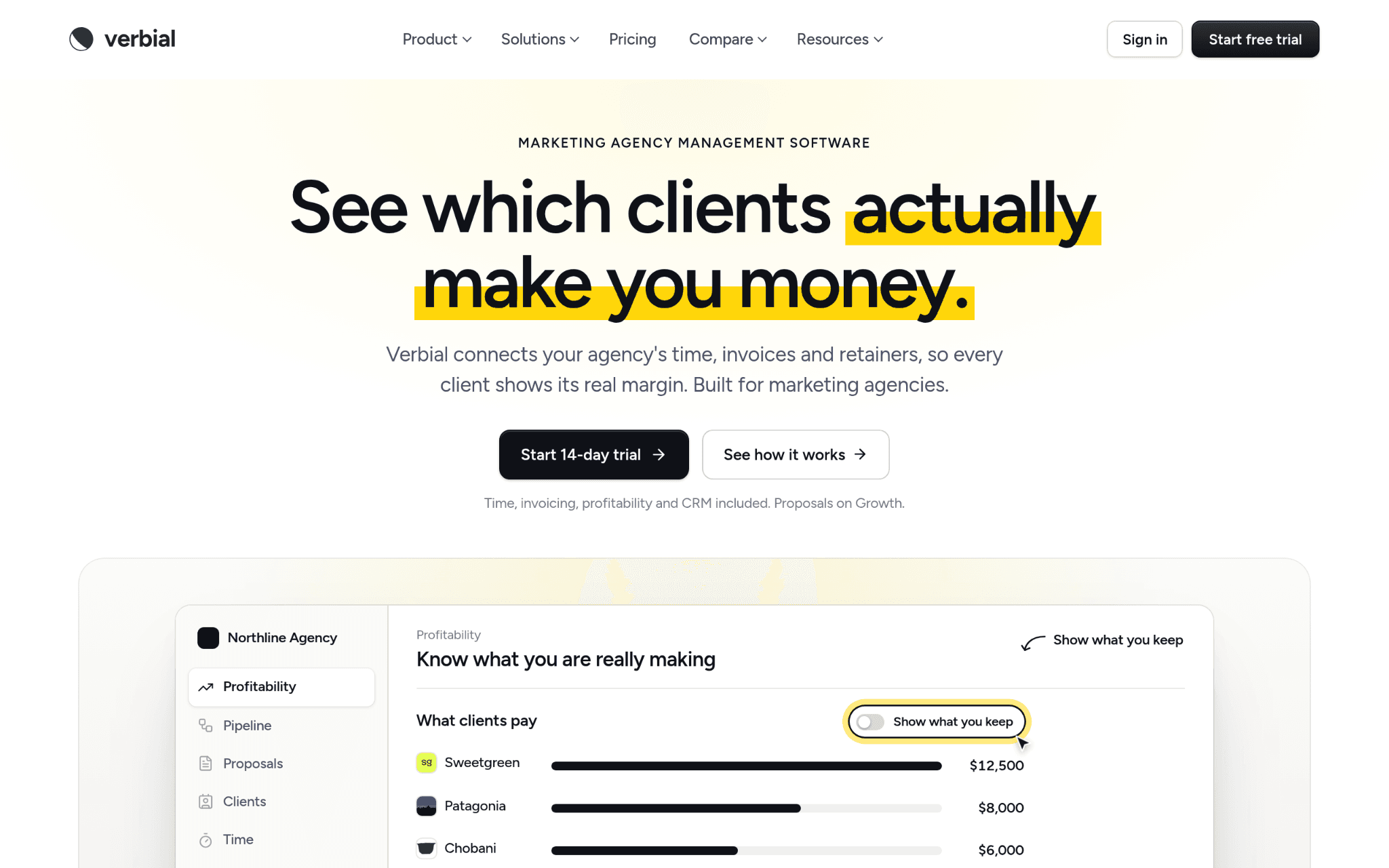
Verbial is agency management software built for marketing agencies, covering CRM, proposals, project delivery, time tracking, invoicing, and financial analysis in one place.
Where it fits: Verbial serves agencies across PR, SEO, paid media, social, content, web, and full-service operations. Its billing model flexibility (handling mixed retainer, hourly, and project arrangements on the same account) addresses a real gap that generic project tools don't solve. White-label client reporting and AI-assisted proposal drafting from discovery calls make it particularly well-suited to agencies that want to look polished without spending hours on admin.
2. Bonsai
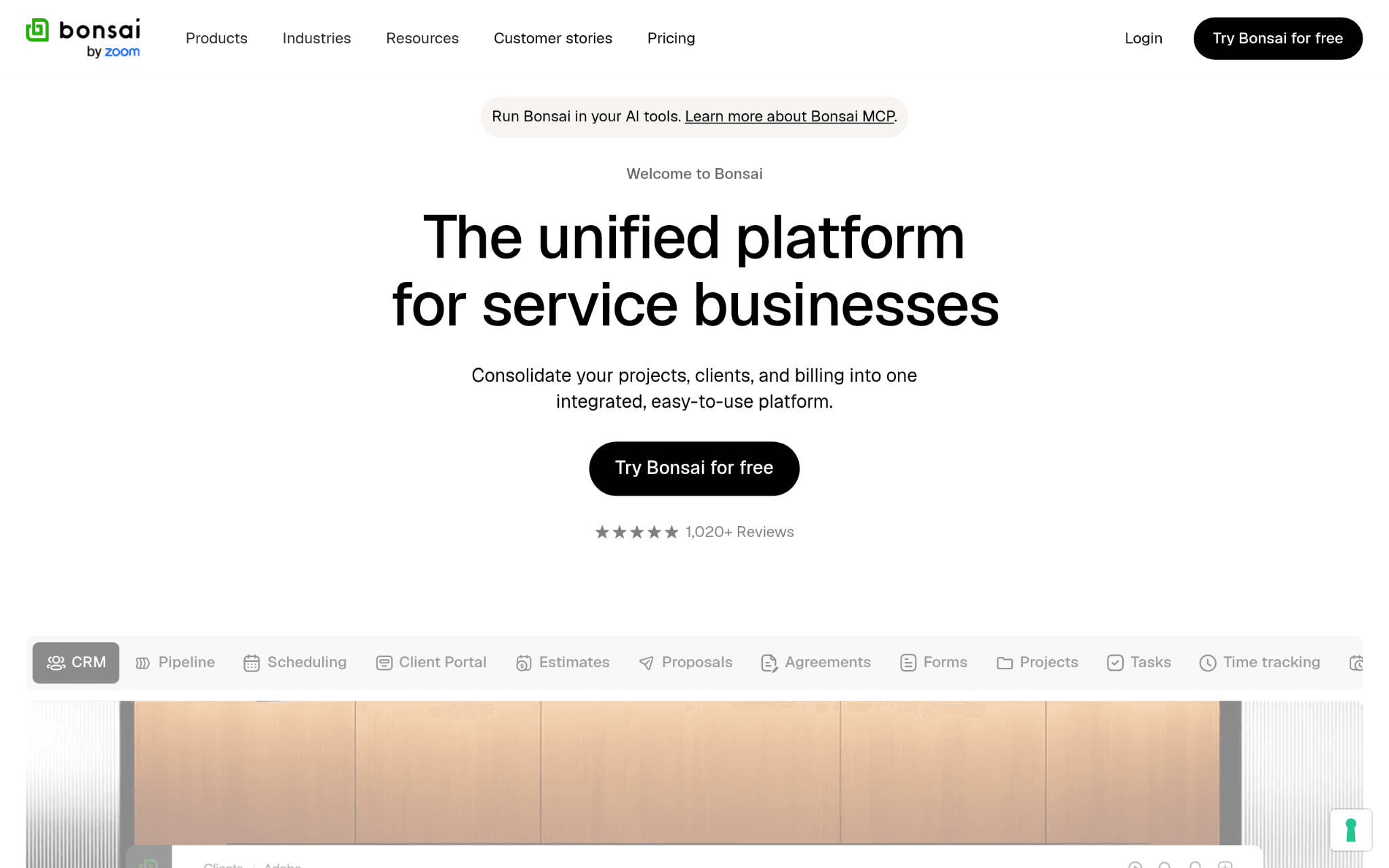
Bonsai is a business management platform founded in 2015 and used by more than 500,000 small businesses globally, with tooling across client management, project delivery, and financial operations.
Where it fits: Bonsai works best for small agencies and independent consultants who need proposals, contracts, time tracking, and invoicing without a steep learning curve. A case study on the company's website describes Zabal Media, a 50-person agency, saving $150,000 per year after switching to Bonsai, which suggests the platform can scale past solo operations. The recently introduced Bonsai MCP adds AI connections with Claude, ChatGPT, and Gemini.
Worth checking: Pricing starts at $15 per user per month (or $9 billed annually), with the top Elite plan at $59 per user per month. There's no free plan, and the 7-day trial requires a credit card, a small friction point for teams that want to test before committing.
3. Teamwork
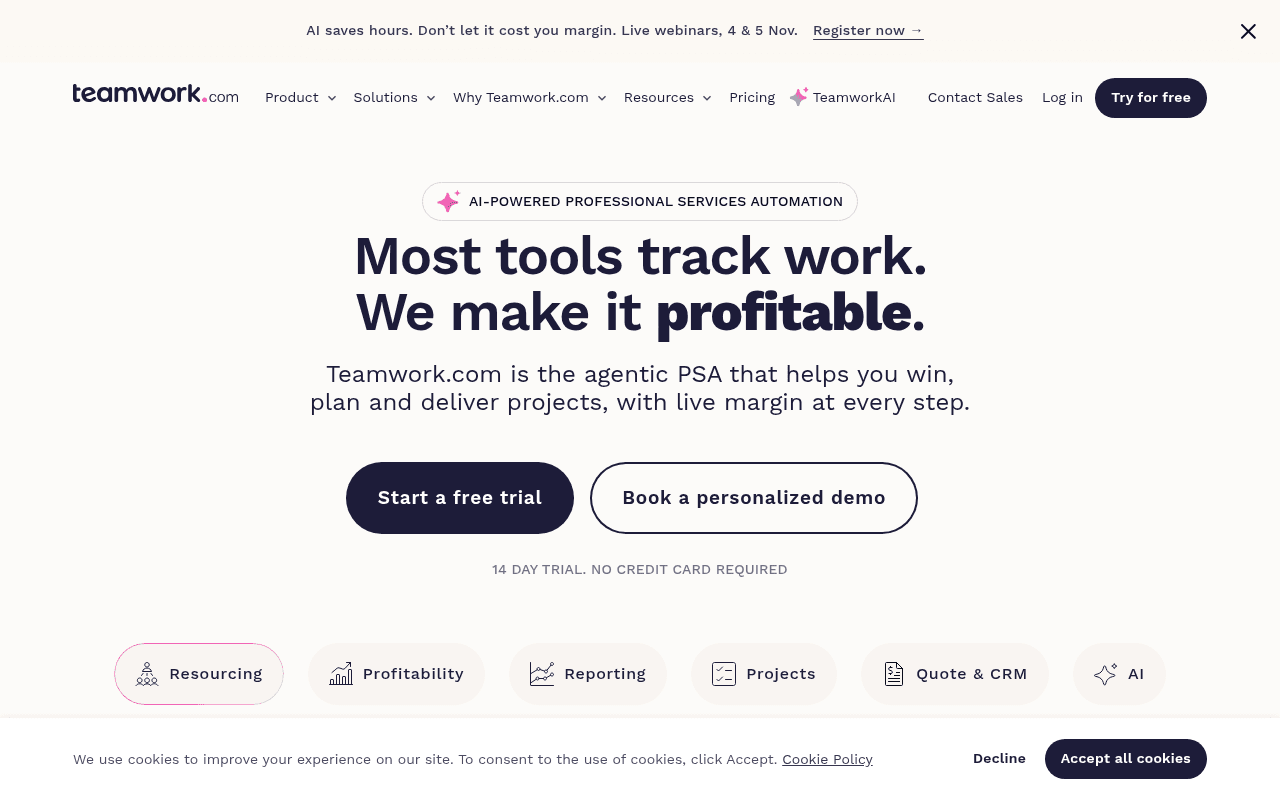
Teamwork is a project management and professional services automation platform founded in Cork, Ireland in 2007, now serving more than 20,000 customers, including Disney and Spotify.
Where it fits: Teamwork's focus is client-work margins. The platform reports a 23% or more average improvement in billable utilization for customers in their first year and a 430% average three-year return on investment, figures the company publishes alongside named case studies for clients like OIC Advisors and CLC Consulting. It suits mid-size agencies and consultancies that need margin control, resource planning, and real-time forecasting under one roof. TeamworkAI is included in all paid plans through an introductory period, with usage-based AI credits expected to follow later.
Worth checking: Basics start at $9.99 per user per month, with the Accelerate tier at $24.99. The top tier is custom-priced, so larger agencies will need a sales conversation before they can budget accurately.
4. Accelo
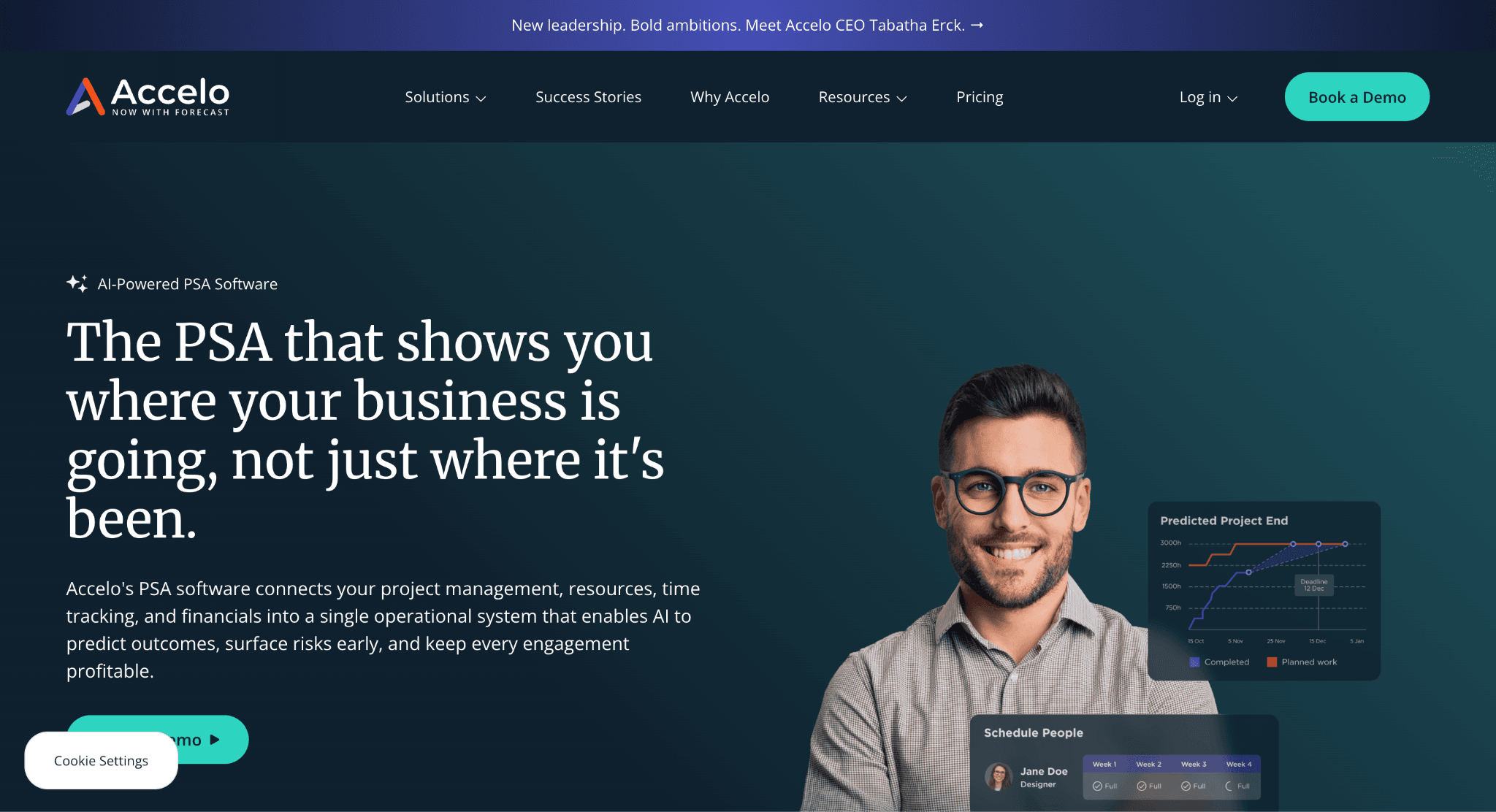
Accelo is a professional services automation platform founded in 2011 in Wollongong, Australia, later rebranded from AffinityLive in 2015, and now headquartered in Denver, CO, with roughly 1,500 customers across consulting, agency, IT, accounting, and engineering sectors.
Where it fits: Accelo connects project management, resourcing, and financials through native AI that surfaces risks and predicts outcomes before they become problems. Its July 2025 acquisition of UK-based PSA firm Forecast strengthened its predictive planning and resource planning capabilities. The platform earned 89 unique G2 badges in 2025 and was ranked first for professional services automation in the G2 2023 awards, which gives it a credible track record for mid-market and enterprise service firms.
Worth checking: Accelo's depth makes it better suited to complex operations than to small agencies; teams running straightforward retainer models may find the feature surface broader than they need.
5. Productive
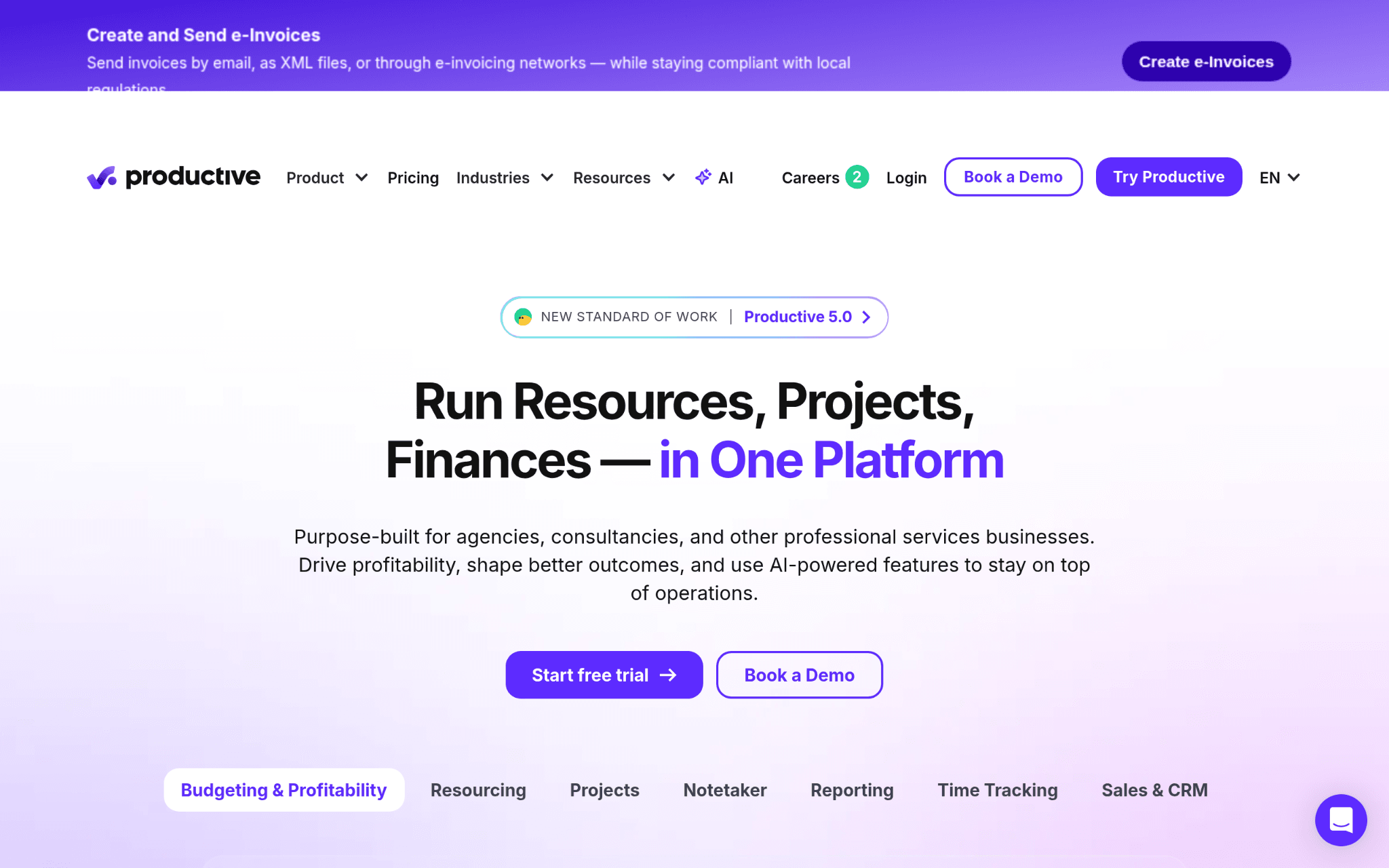
Productive is a bootstrapped PSA platform founded in 2014 by the team behind a 350-person design and development firm, now headquartered in Claymont, Delaware, and serving roughly 200 customers across agencies, consultancies, IT services, and architecture and engineering firms.
Where it fits: Productive covers resourcing, Gantt-based project management, time tracking, budgeting, margins, invoicing, revenue recognition, and a sales CRM with an AI notetaker, all in one platform. Its bootstrapped and profitable status means the product plans answer to customers rather than investors, which some agency operators find reassuring. The company offers a 14-day free trial with no credit card required.
Worth checking: With around 200 current customers, Productive's ecosystem of integrations and community resources is thinner than those of longer-established competitors. Agencies that rely on a large library of native integrations may hit limits faster.
What Capabilities Matter Most
Not every feature on a marketing checklist carries the same weight day to day. These are the ones that tend to separate useful platforms from ones that get partially adopted and eventually abandoned.
Billing model flexibility. Marketing agencies rarely bill the same way across every client. A platform that can't handle mixed retainer, hourly, and fixed-fee arrangements on the same account forces workarounds, usually spreadsheets that live outside the system.
Margin visibility. Revenue numbers feel good; margin by client tells you something actionable. Time logged against a project is only useful if the platform connects it to what was billed and what was budgeted.
Client-facing output. Proposals, reports, and invoices are what clients actually see. Platforms that make those outputs look polished and that reduce the manual effort to produce them pay back their subscription cost quickly.
Adoption friction. A platform the team won't use is worse than no platform at all. Ease of time entry, clear task views, and minimal click-depth to common actions matter more than feature count.
How to Pick the Right Platform for Your Agency
The right answer depends less on feature parity and more on the specific shape of the agency's operations. A few questions narrow it down fast.
How involved is the billing? Agencies with straightforward retainers can run on simpler tools. Agencies with mixed billing models, change orders, and multi-currency invoicing need a platform built with that in mind from the start.
How important is margin tracking? Some teams only need to know if projects are on time. Others need margin by client, utilization rates, and forward revenue forecasting. These are different products even when they carry similar category labels.
What's the current tool stack? An all-in-one platform only saves time if the team actually migrates to it. If the agency runs deeply on a CRM or accounting tool that isn't going away, check how well each platform integrates before committing.
How many people need to adopt it? A five-person agency and a 50-person agency have very different adoption tolerances. Platforms with a steeper learning curve, typically the ones with the most capability, benefit from a phased rollout rather than a hard cutover.
Bottom Line
Picking the right all-in-one platform for a digital marketing agency in 2026 means looking past the marketing copy and asking which tools actually match how the agency earns revenue.
For smaller, leaner operations: Bonsai and Productive suit agencies that want straightforward proposals, contracts, time tracking, and invoicing without a steep learning curve or heavy infrastructure.
For mid-size to larger firms with complex resourcing needs: Teamwork and Accelo carry more depth for margin control, predictive planning, and enterprise-scale project management.
For agencies with mixed billing models and client reporting demands: Verbial is built around flexible retainer, hourly, and fixed-fee arrangements on the same account, with polished client-facing output included.
The right fit is the one the whole team will actually open and use, so it's worth testing any option before making a long-term commitment.


