
resources
Traditional Greek Food: A Guide to Iconic Dishes

Savor the soul of Greece, where every dish, from moussaka’s spiced layers to souvlaki’s smoky skewers, tells a story of tradition and flavor. Taste history on a plate, whether it’s spanakopita’s flaky phyllo, fresh horiatiki salad, or honey-drenched loukoumades, Greek cuisine is a feast for the senses. Dive into a culinary journey, where coastal octopus, hearty pastitsio, and festive dolmades bring the Mediterranean’s vibrant spirit to your table.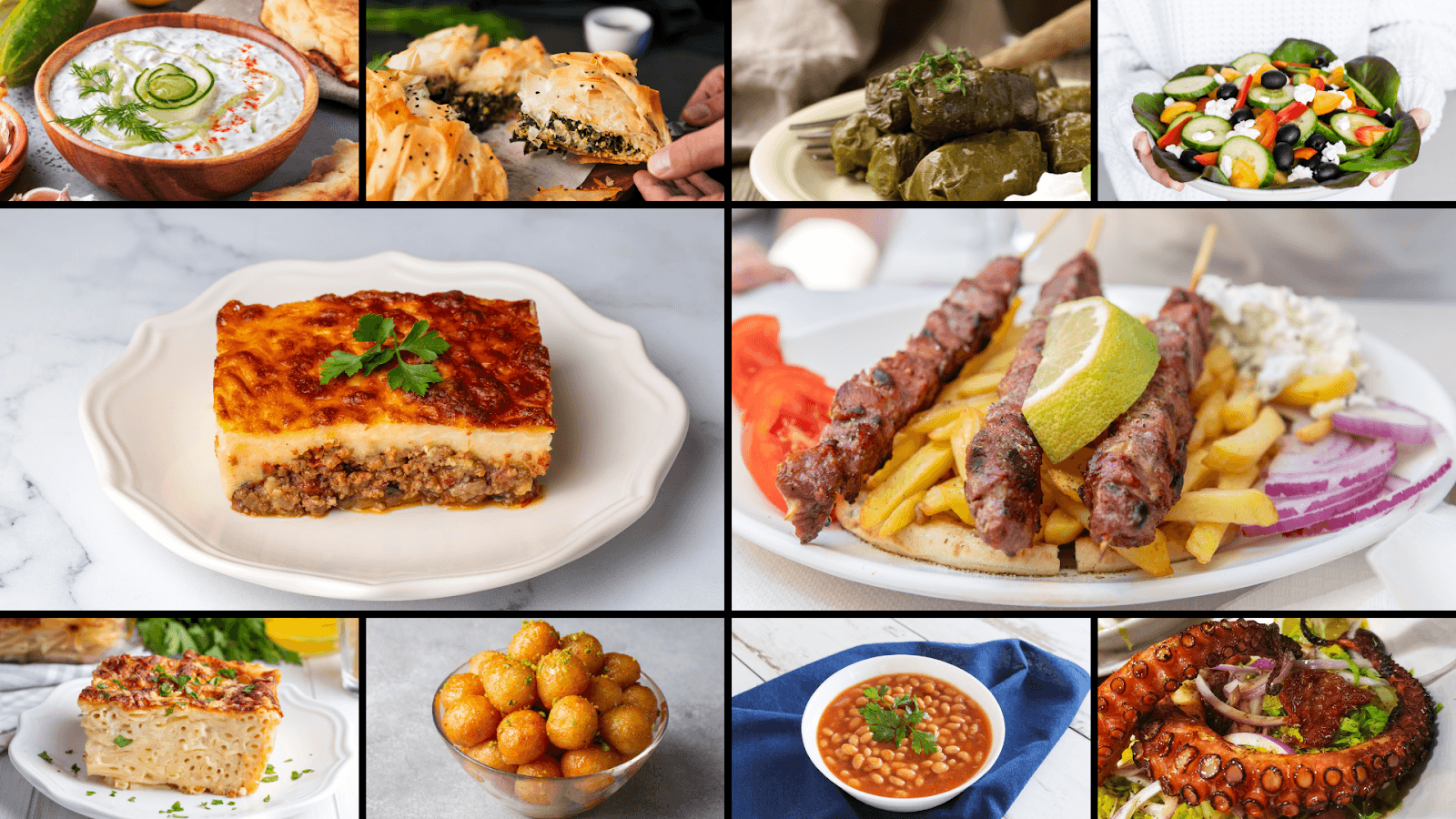
Greek cuisine is a celebration of fresh ingredients, bold flavors, and centuries-old traditions deeply embedded in Greek culture.
Rooted in the Mediterranean diet, it emphasises olive oil, herbs, grains, fresh vegetables, and seafood, while also featuring hearty meat dishes and decadent desserts. Imagine strolling through a sunlit taverna in Athens, where the scent of oregano and grilled meat dances in the air. A plate of golden, crispy spanakopita arrives, its flaky layers revealing spinach and feta, a taste of Greece’s love for simple, fresh flavors.
Nearby, a family gathers over steaming moussaka, its creamy béchamel topping a nod to Ottoman influences. At the next table, juicy souvlaki skewers sizzle, paired with cool tzatziki, while a fisherman’s catch, tender grilled octopus glistens with lemon. Every bite is a story: of ancient traditions, family gatherings, and the Mediterranean’s warm embrace. Greek food isn’t just a meal, it’s a celebration of life itself.
Here’s a guide to the most iconic Greek dishes, showcasing the rich heritage of Greek culture.
Moussaka:
Moussaka is Greece’s answer to lasagna, a layered casserole of eggplant, spiced ground meat (usually lamb or beef), and béchamel sauce. The dish is baked until golden and bubbling, creating a rich, creamy, and satisfying meal that is a staple in Greek culture.
- Key Ingredients: Eggplant, ground meat, tomatoes, onions, cinnamon, and a thick béchamel topping.
- Why It’s Iconic: A staple at family gatherings, moussaka reflects Greek culture’s Ottoman influences and love for hearty, baked dishes.
- Where to Try It: Best enjoyed at traditional tavernas in Athens or Thessaloniki.
Souvlaki:
Souvlaki consists of grilled skewers of marinated meat, typically pork or chicken, served with pita bread, tomatoes, onions, and tzatziki. It’s Greece’s most famous fast food, perfect for a quick, delicious meal and a cornerstone of Greek culture.
- Key Ingredients: Pork or chicken, olive oil, lemon, oregano, and pita.
- Variations: Gyros (rotisserie-cooked meat) is another popular version, often wrapped in pita with fries and sauce.
- Where to Try It: Street vendors in Athens (Kostas in Syntagma) or Thessaloniki.
Spanakopita:
Spanakopita is a flaky phyllo pastry filled with spinach, feta cheese, and herbs. It can be served as a snack, appetizer, or light meal, and is a staple at festive tables and bakeries, deeply rooted in Greek culture.
- Key Ingredients: Spinach, feta, onions, dill, and crispy phyllo dough.
- Why It’s Iconic: A vegetarian-friendly dish that showcases Greek culture’s love for phyllo pastries and cheese.
- Where to Try It: Bakeries across Greece, especially in central markets like Varvakios in Athens.
Dolmades:
Dolmades are grape leaves stuffed with rice, herbs, and sometimes ground meat, cooked in a lemony broth. They can be served hot or cold, often with a yogurt or avgolemono (egg-lemon) sauce, and are a beloved part of Greek culture.
- Key Ingredients: Grape leaves, rice, dill, mint, and lemon.
- Variations: Stuffed vine leaves (gemista) with tomatoes and peppers are also popular.
- Where to Try It: Home-cooked meals or mezze platters in tavernas.
Tzatziki:
Tzatziki is a cool, creamy dip made from yogurt, cucumber, garlic, and dill, drizzled with olive oil. It’s a must-have with grilled meats, pita, or as a mezze (appetizer), and a staple in Greek culture.
- Key Ingredients: Thick Greek yogurt, cucumber, garlic, olive oil, and lemon.
- Why It’s Iconic: A refreshing contrast to rich Greek dishes, perfect for hot summer days.
- Where to Try It: Served with souvlaki, bread, or as part of a mezze spread.
Greek Salad (Horiatiki):
The Greek salad (Horiatiki) is a vibrant mix of tomatoes, cucumbers, olives, feta, and onions, dressed with olive oil and oregano. Unlike other salads, it never includes lettuce, making it a unique part of Greek culture.
- Key Ingredients: Tomatoes, cucumber, Kalamata olives, feta, red onion, and olive oil.
- Why It’s Iconic: A symbol of Greek simplicity and freshness, using seasonal produce.
- Where to Try It: Everywhere in Greece, but best with locally grown tomatoes and feta.
Pastitsio:
Pastitsio is a baked pasta dish with layers of macaroni, spiced ground meat, and béchamel sauce, similar to moussaka but with pasta instead of eggplant, and a beloved dish in Greek culture.
- Key Ingredients: Pasta, ground beef, tomatoes, cinnamon, and béchamel.
- Why It’s Iconic: A comfort food often served at family dinners and celebrations.
- Where to Try It: Home-style tavernas in northern Greece.
Loukoumades:
Loukoumades are deep-fried dough balls drizzled with honey and cinnamon, sometimes topped with walnuts or chocolate, and a sweet staple of Greek culture.
- Key Ingredients: Flour, yeast, honey, and cinnamon.
- Why It’s Iconic: A street food favorite since ancient times, often served at festivals and carnivals.
- Where to Try It: Street vendors in Athens or Christmas markets.
Fasolada:
Fasolada is a hearty white bean soup with tomatoes, carrots, and celery, often called Greece’s national dish. It’s a comforting, budget-friendly meal deeply rooted in Greek culture.
- Key Ingredients: White beans, tomatoes, olive oil, and vegetables.
- Why It’s Iconic: A staple in Greek homes, especially in winter.
- Where to Try It: Local tavernas or grandmother’s kitchen.
Grilled Octopus:
Greek grilled octopus is tender, smoky, and drizzled with lemon and olive oil. It’s a must-try in coastal regions, showcasing Greek culture’s love for fresh seafood.
- Key Ingredients: Octopus, olive oil, lemon, and oregano.
- Why It’s Iconic: Showcases Greece’s love for fresh seafood and simple preparation.
- Where to Try It: Seaside tavernas in the Cyclades or Peloponnese.
Final Thoughts:
Greek food is a journey through flavor, history, and culture. Whether you’re enjoying a crispy spanakopita, a juicy souvlaki, or a sweet baklava, each dish tells a story of tradition, family, and the Mediterranean way of life. Next time you visit Greece, dive into these iconic dishes and experience the true taste of Greek hospitality!


