
citiesabc, first_page
UK Defence CEOs Earn 138 Times More Than the Average Worker as Military Spending Heads Towards £80 Billion
03 Jul 2026

As the UK government commits an additional £15 billion to defence and plans to increase annual military expenditure to £80 billion by 2029, new analysis by Action on Armed Violence (AOAV) highlights the widening gap between executive remuneration in Britain's defence sector and average worker earnings.
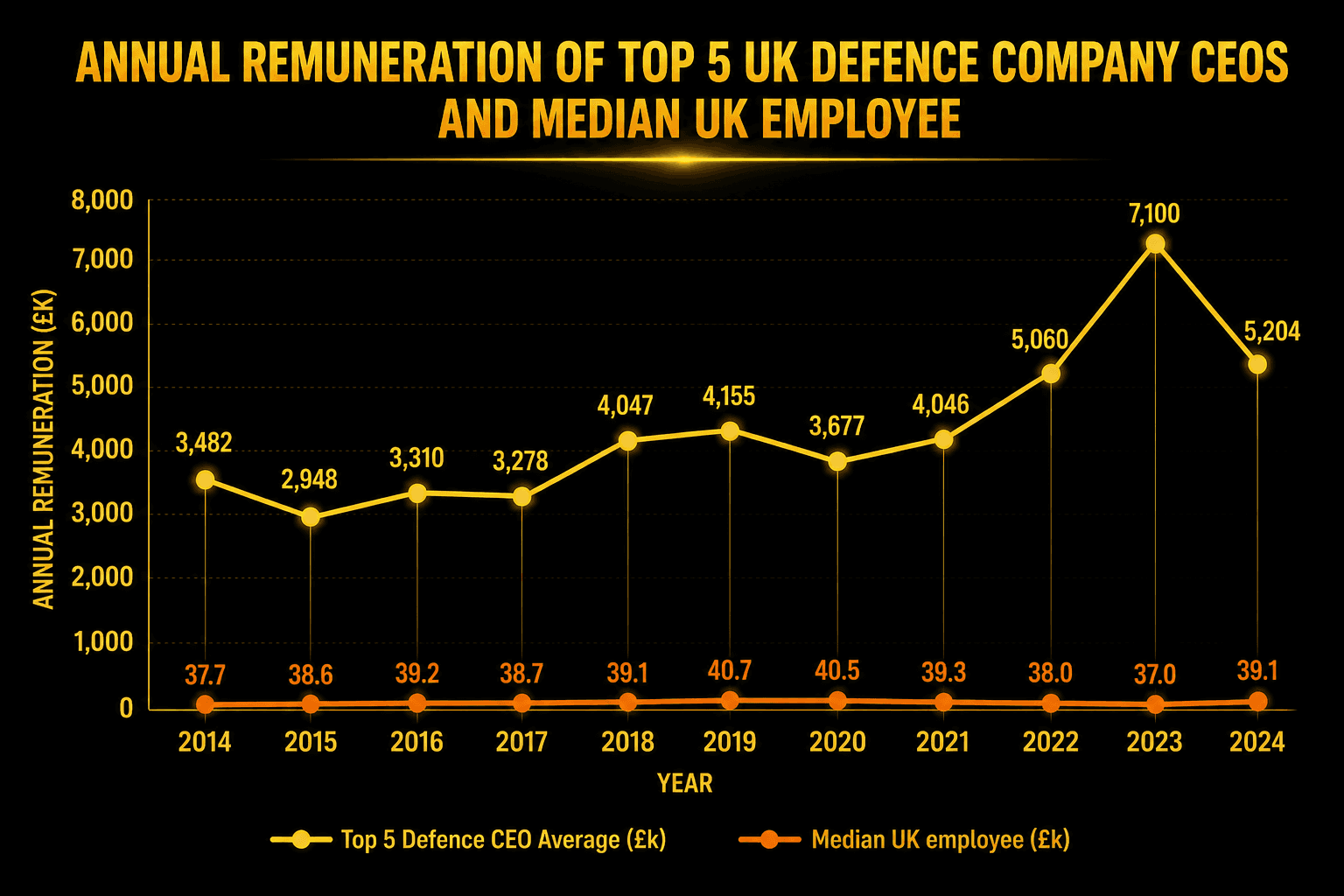
According to AOAV, the chief executives of the UK's five largest defence companies received an average remuneration package of £5.2 million in 2024, equivalent to more than 138 times the annual earnings of the median full-time UK worker, whose salary stood at £37,430 according to the Office for National Statistics (ONS).
The research examines remuneration across BAE Systems, Rolls-Royce Holdings, Babcock International Group, QinetiQ Group and Serco Group, drawing on company annual reports and remuneration disclosures. It forms the first part of a broader four-part study analysing executive compensation among the UK's ten largest publicly listed defence companies between 2014 and 2024.
The findings arrive as the UK accelerates investment in defence amid changing geopolitical realities. Following Russia's invasion of Ukraine and growing security concerns across Europe, the government has committed to raising defence expenditure to 2.5% of GDP by 2027, with an ambition of reaching 3% during the following Parliament. The recently announced Defence Investment Plan allocates an additional £15 billion, bringing annual defence spending to £80 billion by 2029.
Defence Executives Among Britain's Highest Paid Corporate Leaders
Among the companies analysed, Charles Woodburn, Chief Executive of BAE Systems, received the largest remuneration package.
According to AOAV's analysis, Woodburn earned £12.2 million during 2024, including more than £10.9 million through benefits and long-term incentive awards. Previous research by the High Pay Centre ranked him as the seventh highest-paid FTSE 100 chief executive during the 2024-25 financial year.
At Rolls-Royce Holdings, Chief Executive Tufan Erginbilgic received £4.3 million, including more than £3.1 million in bonuses, share awards and benefits.
Meanwhile, David Lockwood, Chief Executive of Babcock International Group, received £4.09 million, with over £3.2 million linked to performance-related incentives and additional benefits.
AOAV also notes that defence sector executive remuneration exceeded the broader FTSE 100 median CEO pay of £5.01 million, according to Deloitte, placing defence company leaders consistently within the upper tier of Britain's largest listed corporations.
Executive Pay Has Increased Significantly Over the Past Decade
Beyond individual remuneration, AOAV identified a sustained increase in executive compensation across the sector.
After adjusting for inflation, chief executive remuneration across the UK's ten largest listed defence companies increased by an average of £1.53 million between 2014 and 2024.
Examples highlighted in the analysis include:
- Serco Group, where former Chief Executive Rupert Soames saw remuneration increase from £1.05 million in 2014 to £5.03 million in 2022, his final year in office.
- Former Rolls-Royce Chief Executive Warren East, whose remuneration increased from £2.9 million in 2016 to £4.41 million in 2022.
AOAV also tracked cumulative executive earnings over longer periods. Between 2018 and 2024, BAE Systems Chief Executive Charles Woodburn received approximately £56.6 million in total remuneration, while Serco's chief executive accumulated approximately £42.1 million between 2014 and 2022.
Defence Spending and Economic Priorities
The analysis coincides with significant changes in UK defence policy.
The government's Defence Investment Plan commits billions of pounds towards military capability, although the announced package remains below the £28 billion reportedly requested by the Ministry of Defence. The increased spending reflects broader NATO commitments and growing emphasis on strengthening national defence capabilities amid heightened geopolitical tensions.
For cities and regional economies, expanded defence investment also carries wider implications. Major defence manufacturers support thousands of highly skilled jobs across the UK, contribute to advanced manufacturing, aerospace, engineering and digital technology supply chains, and remain important employers in several regional industrial clusters. At the same time, increased public investment in defence inevitably prompts wider discussions around fiscal priorities, industrial policy and long-term allocation of public resources.
Questions Around Public Accountability
AOAV argues that increasing defence expenditure should be accompanied by greater transparency regarding corporate rewards and public accountability.
As Iain Overton, Executive Director of Action on Armed Violence, said:
These figures reveal the extraordinary wealth now concentrated at the top of Britain's defence industry. At a moment when governments are pouring billions into rearmament, the public has a right to ask who ultimately benefits from this expanding military-industrial complex.
The organisation states that understanding financial incentives within the defence industry forms part of a broader discussion around responsible arms transfers, civilian protection, public spending priorities and the long-term humanitarian consequences associated with armed conflict.
According to AOAV, examining executive remuneration alongside expanding defence budgets helps inform debates about how governments balance military investment with wider priorities, including conflict prevention, civilian protection, welfare spending and post-conflict recovery.
As defence budgets continue to grow across Europe and NATO, the financial performance of major defence contractors and the remuneration of their leadership is likely to remain an area of increasing public, political and investor scrutiny.


