
resources
Unlocking the Future: How the Smart Grid in IoT is Revolutionizing Energy
21 Jan 2026

Remember the old days when electricity just flowed one way, from a massive power plant directly to your house? While that system has reliably powered us for generations, it's undeniably starting to reveal its limitations. It struggles to keep pace with modern demands, such as the proliferation of electric vehicles, and it's notoriously inefficient, wasting a significant amount of energy. However, a profound transformation is now underway. We're witnessing the rise of the smart grid in IoT—a concept that essentially endows our conventional power system with a sophisticated intelligence. This integration is making everything more connected, considerably smarter, and far more efficient. This article will delve into how this groundbreaking technology is reshaping the way we generate, distribute, and consume power, steering us towards a cleaner, more dependable energy future for everyone.
Key Takeaways
- The smart grid, leveraging the Internet of Things (IoT), is revolutionizing our energy infrastructure, transitioning it from a simplistic one-way street to an intelligent, bidirectional network through the seamless connection of devices like smart meters and sensors.
- This innovative grid offers substantial advantages, including a dramatic reduction in wasted energy, enhanced power supply stability, and empowering consumers with superior insights into their own energy consumption patterns.
- IoT is unlocking novel capabilities, such as automated adjustments to energy use during peak demand periods (known as demand response) and facilitating the greater integration of intermittent renewable energy sources, like solar and wind power.
- Artificial Intelligence (AI) and machine learning are pivotal components, instrumental in accurately predicting energy requirements, implementing dynamic pricing models, and even anticipating equipment maintenance needs before critical failures occur.
- While the journey presents challenges—notably significant initial investment costs and the imperative for interoperability among diverse devices—the future smart grid holds the promise of an energy system that is more efficient, reliable, and environmentally sustainable for all.
Understanding the Smart Grid in IoT
The Evolution from Traditional Grids
For many decades, our electrical grid operated in a largely consistent fashion. Power plants would generate electricity, which then traversed a vast network of wires and substations to reach our homes and businesses. It was, quite simply, a one-way street. This system served us remarkably well for its time, yet it's now beginning to reveal its inherent limitations. It was never engineered to meet the complex demands of the 21st century, such as the rapid ascent of electric vehicles or the pressing need to integrate clean energy sources, which, by their nature, aren't always consistently available. Moreover, it struggles to effectively manage sudden disruptions, often leading to those frustrating and disruptive power outages we're all too familiar with.
Defining IoT in Energy Management
So, what exactly constitutes the "smart grid" within the expansive context of the Internet of Things (IoT)? Picture it as imbuing our aging grid with a sophisticated brain and an intricate nervous system. IoT in energy management signifies the online connectivity of diverse devices—ranging from smart meters and sensors strategically placed on power lines to even common household appliances. These interconnected devices can then communicate seamlessly with each other and with the utility company, exchanging vital information in real-time. It's akin to transforming a passive, unresponsive system into an active, self-aware entity. This continuous flow of data enables a far superior level of control and a much deeper understanding of how energy is being utilized, generated, and transmitted across the network.
The Grid as an Intelligent Network
Far from merely being a passive delivery mechanism, the grid is actively evolving into an intelligent, responsive network. This advanced capability allows it to perform functions such as:
- Detecting potential issues before they escalate into widespread blackouts. Sophisticated sensors can pinpoint anomalies on power lines, and equipment can proactively signal when maintenance is required.
- Adjusting automatically to fluctuating conditions. If a substantial surge of solar power becomes available, the grid can adeptly integrate and manage it. Similarly, if demand suddenly spikes, it can react with remarkable swiftness.
- Facilitating two-way communication. Utilities can transmit operational signals to devices, while devices, in turn, can relay comprehensive usage data back. This establishes a truly dynamic system that is both more efficient and highly responsive.
This profound shift fundamentally transforms the grid from a static infrastructure into a dynamic, interconnected ecosystem. Ultimately, it's about ensuring energy flows smarter, cleaner, and more reliably for every participant in the system.
Core Benefits of IoT for Energy Efficiency
The strategic integration of the Internet of Things (IoT) into our fundamental energy infrastructure is ushering in a plethora of improvements, making the entire system operate with greater efficacy and considerably less waste. It transcends mere incremental savings; rather, it represents a more intelligent, interconnected paradigm for managing power that confers widespread benefits upon all.
Operational Improvements and Reduced Waste
Have you ever paused to consider just how much energy is squandered in traditional systems? Think of lights inadvertently left illuminated in unoccupied rooms, heating or cooling systems operating in vacant buildings, or machinery running at suboptimal efficiencies. IoT fundamentally alters this landscape by providing us with invaluable real-time data and automated control mechanisms. Smart sensors, for instance, can detect when a space is occupied, subsequently adjusting lighting and climate control precisely as needed. Connected appliances can be intelligently programmed to operate during off-peak hours, thereby alleviating strain on the broader grid and concurrently reducing consumer costs. In industrial environments, sensors meticulously monitor equipment performance, predicting maintenance requirements proactively, long before a breakdown occurs. This anticipatory approach prevents energy-intensive malfunctions and extends the operational lifespan of machinery, significantly mitigating waste and curtailing the need for premature replacements.
- Automated adjustments: Lighting, heating, and cooling systems can respond dynamically to occupancy and prevailing external conditions without necessitating manual intervention.
- Optimized appliance use: Smart devices gain the capability to schedule their operations during periods when energy is more economical and grid demand is lower.
- Predictive maintenance: Sensors accurately pinpoint potential equipment failures at an early stage, thereby preventing energy wastage stemming from malfunctioning machinery.
The cumulative effect of these myriad, intelligent adjustments—applied across millions of homes and businesses—translates into substantial overall energy savings and a discernible reduction in environmental impact.
Enhancing Grid Stability and Reliability
An unstable power grid can, regrettably, lead to highly disruptive outages and economically costly interruptions. IoT plays a pivotal role in fostering a more robust and inherently dependable energy system. By continuously monitoring grid conditions in real-time, utility providers can swiftly identify and proactively address potential issues before they have a chance to escalate. For example, sophisticated sensors affixed to power lines can detect subtle anomalies, facilitating much quicker diagnostic processes and repairs. Smart meters, furthermore, furnish granular consumption data, which proves invaluable in balancing supply and demand with far greater precision. This incessant flow of critical information empowers a more proactive and anticipatory approach to grid management, thereby minimizing downtime and ensuring a consistently reliable delivery of electricity.
Empowering Consumers with Data
IoT effectively places the reins of energy management directly into the hands of both individuals and enterprises. Smart meters and intuitive home energy monitors offer clear, real-time insights into energy usage patterns. This newfound transparency enables consumers to truly comprehend where their energy is being expended and to readily identify opportunities for both cost savings and consumption reduction. When individuals are able to directly perceive the tangible impact of their actions, they are demonstrably more inclined to adopt sustainable, energy-saving habits. This crucial shift—from passive consumption to active, informed participation—is absolutely key to cultivating a more sustainable energy future for all stakeholders.
Key Applications of the Smart Grid in IoT
The smart grid, powered by the ubiquitous Internet of Things (IoT), is far from being a mere theoretical concept; it's actively and profoundly reshaping how we generate, distribute, and consume energy. This intricately interconnected system brings forth a multitude of practical applications that are progressively making our energy landscape more efficient, robust, and responsive. We'll now explore some of the most impactful ways IoT is being effectively deployed.
Automating Demand Response Programs
Demand response is primarily concerned with strategically managing when electricity is consumed. Traditionally, utility companies were compelled to construct additional power plants—often costly, and frequently more environmentally impactful, ones—solely to cope with those critical peak consumption periods each day when household lights and appliances simultaneously flicker to life. IoT dramatically alters this paradigm. Smart meters and connected devices within homes and businesses can communicate directly with the grid. When the grid detects a surge in demand that risks overloading its capacity, it can issue a signal to these devices to temporarily, and often imperceptibly, reduce their power consumption. This might manifest as your smart thermostat subtly adjusting the temperature by a degree or two, or your electric vehicle charger briefly pausing its charging cycle. This automated coordination plays a crucial role in balancing the overall load without necessitating manual intervention or, critically, sacrificing consumer comfort.
- Load Shifting: This encourages consumers to reschedule energy-intensive activities (such as operating dishwashers or charging EVs) to off-peak hours.
- Peak Shaving: The strategic reduction of overall demand during critical peak periods effectively prevents undue strain on the grid.
- Grid Stabilization: These programs provide a flexible buffer that is instrumental in maintaining consistent and reliable power delivery.
By adeptly managing demand, we can significantly diminish the reliance on costly, and often less efficient, "peaker" plants, thereby leading to lower operational expenditures and a measurably cleaner environment.
Integrating Renewable Energy Sources
Renewable energy sources like solar and wind are highly beneficial environmentally, yet they present a distinct operational challenge: their output is inherently intermittent. The sun doesn't consistently shine, nor does the wind perpetually blow. IoT furnishes the essential tools required to effectively manage this inherent variability. Sensors can meticulously monitor weather patterns and provide remarkably accurate predictions of renewable energy generation. Smart grid systems can then leverage this crucial information to maintain grid balance, drawing power from supplementary sources when renewable generation is low and intelligently storing excess renewable energy during periods of high generation. This capability facilitates a much smoother and more reliable integration of these vital clean energy sources into our existing power infrastructure.
Enabling Peer-to-Peer Energy Trading
Imagine a future where you possess the ability to directly sell the surplus solar power generated by your rooftop panels to your next-door neighbor, entirely circumventing the need for a traditional utility as an intermediary for every transaction. This captivating vision represents the promise of peer-to-peer (P2P) energy trading, a concept made tangible by IoT. Smart meters, often bolstered by blockchain technology, can meticulously track energy production and consumption at an incredibly granular level. This capability empowers individuals and businesses equipped with distributed energy resources—such as residential solar panels or battery storage systems—to engage in direct energy trading with others connected to the grid. The result is a more decentralized energy market, one that potentially offers more favorable prices for both buyers and sellers and significantly enhances the utilization of localized, clean energy.
AI and Machine Learning in Smart Grids

Artificial intelligence (AI) and machine learning (ML) are truly what elevate the smart grid's intelligence. Consider the sheer volume of data emanating from smart meters, myriad sensors, and countless connected devices across the network—it constitutes an immense volume of information. AI and ML serve as the indispensable tools that help us discern patterns and derive actionable insights from this raw data.
Advanced Load Forecasting Capabilities
One of the primary functions of AI involves predicting precisely how much electricity will be needed by consumers. It meticulously analyzes past usage patterns, incorporates precise weather forecasts, and even accounts for factors such as holidays or major local events. By analyzing these vast datasets, AI can forecast energy demand with a significantly higher degree of accuracy than ever before. This advanced capability empowers utility companies to optimize their power generation plans, thereby reducing waste and ensuring an adequate supply for all users.
- Historical Data Analysis: AI algorithms meticulously learn from years of aggregated energy consumption data.
- Weather Pattern Recognition: Forecasts for temperature, wind speeds, and sunlight intensity are seamlessly incorporated.
- Event Impact Assessment: AI gains an understanding of how public events or holidays influence energy usage trends.
Accurate load forecasting means utilities can truly optimize power generation, leading to less wasted energy and a far more stable supply for everyone.
Dynamic and Real-Time Pricing
Instead of a static, flat rate for electricity, AI and IoT together enable dynamic pricing. This innovative approach means that the cost of electricity can fluctuate throughout the day, directly influenced by current usage levels and available supply. When demand is high, prices typically rise; conversely, when demand is low, prices often decrease. Smart devices can be intelligently programmed to capitalize on these lower price periods, automatically adjusting their operation to both save money for consumers and actively help balance the grid.
Predictive Maintenance for Grid Equipment
AI also offers a profound capability to prevent problems before they even materialize. By consistently monitoring the performance of critical grid equipment—such as transformers and power lines—AI can spot early indicators of wear, degradation, or potential failure. This proactive intelligence allows maintenance crews to address issues expeditiously, rather than passively waiting for a component to fail and subsequently cause a disruptive outage. It's much like receiving a timely heads-up that your car might need a new part well before it unexpectedly breaks down on the highway.
Smart Grid IoT Solutions and System Architecture
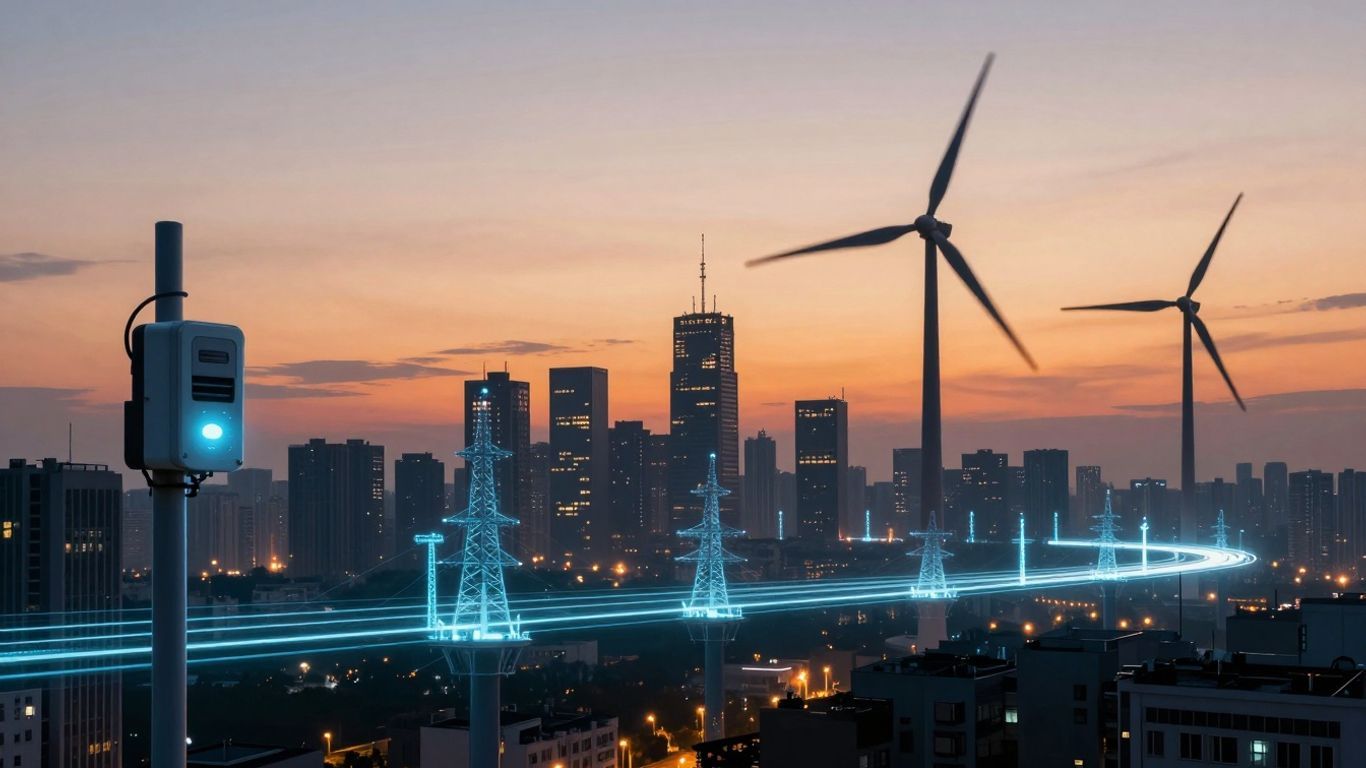
A smart grid is not merely a singular piece of technology; rather, it comprises a multi-layered system, meticulously built in distinct architectural tiers. Envision it akin to constructing a house, where each component serves a specific function, yet all elements collaborate synergistically. This intricate architecture is fundamentally geared towards managing vast streams of information, from the minutiae gathered by tiny sensors deployed in the field to the sophisticated computational systems processing data back at the central office.
The Device and Connectivity Layers
At the very foundation, you'll find the 'device layer.' This constitutes the tangible components—all the interconnected hardware. This encompasses smart meters affixed to homes, an array of sensors strategically positioned on power lines, intelligent appliances capable of communicating with the grid, and even the sophisticated charging stations designated for electric vehicles. These devices collectively serve as the eyes and ears of the smart grid, meticulously collecting data and, at times, autonomously executing commands.
Next comes the 'connectivity layer.' This critical layer dictates how all these disparate devices communicate with one another and with the central control systems. Essentially, it is the communication backbone of the network. This can leverage a range of technologies, from standard cellular networks (such as 4G or the more advanced 5G) to Wi-Fi, or even specialized low-power wide-area networks like LoRaWAN. The overarching objective is to reliably transmit data from point A to point B and, frequently, to do so in real-time.
Data Management and Analysis
Once the data has been meticulously collected and transmitted, it necessitates comprehensive management and interpretation. This is precisely where the 'data management and analysis' phase becomes critical. Immense volumes of information are generated every single second, thereby demanding robust systems capable of storing, processing, and deriving meaningful insights from this deluge. This often entails leveraging scalable cloud platforms and highly sophisticated software. AI and machine learning play a profoundly significant role here, aiding in the identification of intricate patterns, the prediction of potential issues, and the optimization of both energy utilization and delivery.
Smart Cities and Energy Management Systems
All these individual pieces converge within larger, integrated systems, notably those implemented in smart cities. In this context, the smart grid represents just one vital component of a much broader, interconnected ecosystem. Comprehensive energy management systems harness the data flowing from the grid to orchestrate everything from city-wide traffic lights to the heating and cooling of large buildings, all with the overarching aim of utilizing energy more efficiently across the entire urban environment. Ultimately, it's about enabling cities to operate more smoothly and sustainably by adopting a smarter approach to power management.
The architecture of a smart grid is deliberately engineered for flexibility. It must adeptly accommodate diverse device types, various communication methodologies, and ever-increasing quantities of data, all while steadfastly ensuring the uninterrupted provision of power.
Securing the Future Energy Landscape
Addressing Cybersecurity Threats
While connecting our vital energy systems to the internet brings forth a multitude of benefits, it concurrently introduces an array of new risks. Consider it akin to opening your front door to welcome fresh air—you embrace the positive, yet you also invite the possibility of unwelcome visitors. A sophisticated cyberattack on the smart grid could signify far more than just a temporary blackout; it possesses the potential to severely disrupt essential services or even compromise sensitive private information concerning our energy consumption habits. Consequently, safeguarding this intricately interconnected system stands as an absolute top priority.
To ensure robust security, we necessitate a strong, multi-layered defense strategy:
- Device Security: Each smart meter, sensor, and control unit must incorporate security features from its foundational design. It's much like ensuring every lock on your house is impeccably sturdy before you even contemplate moving in.
- Network Protection: All data traversing between these devices requires securing through encryption, rendering it unreadable should it be intercepted by malicious actors.
- Access Control: Strict protocols must govern who can access specific segments of the grid system. Not everyone requires the keys to the control room, after all.
- Constant Vigilance: The deployment of intelligent tools, including advanced AI, to continuously monitor the network for any unusual or suspicious activity is paramount. It’s akin to employing a security guard who operates without reprieve.
The fundamental objective is to construct a grid that can not only withstand concerted attacks but also recover with impressive speed should an incident occur, much like a resilient organism adapting dynamically to its environment.
Ensuring Data Privacy and Ethical Use
Beyond the critical task of maintaining power supply, we must diligently consider the sensitive information these smart devices meticulously collect. Your smart meter, for instance, can reveal a considerable amount about your daily routines—when you awaken, when you depart for work, or when you typically return home. This constitutes deeply personal information, and its handling demands the utmost care and responsibility. Robust regulations and transparent guidelines are indispensable to guarantee that this data is utilized ethically and exclusively for its intended, explicit purpose. Utility providers must maintain absolute transparency regarding the data they collect and its intended application, and crucially, consumers should retain a voice in how their information is managed.
Building Resilient IoT Devices
It’s important to acknowledge that not all IoT devices are engineered to the same exacting standards, and when it pertains to the energy grid, reliability is unequivocally non-negotiable. Devices must be engineered for resilience, capable of enduring not only typical physical wear and tear but also sophisticated cyber threats. This mandate implies the necessity of regular software updates to promptly patch any security vulnerabilities, alongside designing devices that can continue to function effectively even if they experience a temporary loss of connection to the main network. Think of it as embedding a robust backup system directly into the device itself, ensuring it doesn't suffer a complete failure if the internet experiences a momentary flicker.
Navigating the Challenges of IoT Adoption
While the profound promise of a smart grid, powerfully augmented by the Internet of Things (IoT), is undeniably exciting, the journey to full implementation presents a complex path. There are several significant obstacles to overcome before we can truly reap the comprehensive benefits of this transformative technology. Envision it akin to constructing a vast new highway system—it demands extensive planning, substantial resources, and intricate coordination.
Significant Initial Investment Requirements
The endeavor of upgrading our current energy infrastructure—which, in numerous regions, is decades old—to integrate sophisticated smart sensors, meters, and advanced communication networks necessitates a substantial financial investment. For many utility companies, particularly those operating in developing regions, this considerable upfront cost represents a major factor contributing to their reservations about rapid adoption. It’s not simply a matter of acquiring new technological gadgets; it involves a comprehensive overhaul of existing, ingrained systems.
Ensuring Interoperability and Standards
The IoT landscape is somewhat akin to an expansive global marketplace teeming with products from thousands of distinct companies, and regrettably, not all of them adhere to a universal communication standard. Achieving seamless communication and collaborative functionality among devices from various manufacturers presents a complex technical puzzle. We critically require common standards to ensure that a smart thermostat from one brand can communicate seamlessly with a smart meter from another, entirely without fuss. This interoperability is absolutely key for the realization of a truly integrated smart energy system.
Managing Big Data Streams
Imagine millions of smart devices, all transmitting information every single second. That generates an enormous volume of data! Utility companies must consequently develop robust systems capable of effectively collecting, securely storing, meticulously processing, and ultimately deriving insights from this veritable data deluge. The ability to extract valuable, actionable insights from this torrent of information is paramount for rendering the grid both smarter and demonstrably more efficient.
Developing Supportive Regulatory Frameworks
The energy sector is already an inherently heavily regulated field. New paradigms introduced by IoT—such as individuals directly selling surplus solar power to their neighbors—frequently outpace the evolution of requisite legal and regulatory frameworks needed to govern them. Governments and regulatory bodies must proactively create frameworks that enable these innovative models to operate both safely and fairly, fostering an environment conducive to progress.
The path to a fully realized smart grid involves more than just technological advancements. It requires careful consideration of financial resources, technical compatibility, robust data handling, and the evolving legal landscape. Addressing these points head-on is unequivocally necessary for the successful integration of IoT into our collective energy future.
The Next Generation of Smart Grids
Towards a Decentralized Energy Internet
The smart grid is not merely becoming more intelligent; it is fundamentally altering our perception of energy distribution. We are progressively moving away from a traditional one-way system, where power flows exclusively from a few large-scale plants to individual homes, towards a far more dynamic, interconnected system. Consider it an analogy to the internet itself, but specifically tailored for electricity. This emerging "energy internet" implies that both energy and vital information can flow in multiple directions, involving an innumerable array of devices and diverse sources. It represents a significant paradigm shift, rendering the grid inherently more flexible and responsive to fluctuating demands.
The Role of 5G and Future Wireless
To ensure the seamless operation of this nascent energy internet, we will require ultra-fast and exceptionally reliable communication capabilities. This is precisely where 5G and subsequent wireless technologies become indispensable. They empower devices across the grid to communicate with one another virtually instantaneously. Such rapid communication is critical for intricate tasks like managing the charging schedules of electric vehicles or coordinating the output from numerous solar panels spread across countless homes. Without these swift communication capabilities, the grid would simply be unable to react quickly enough to dynamic changes.
AI-Driven Predictive Capabilities
Artificial intelligence is poised to assume an even more pivotal role in the smart grid's evolution. Can you imagine your home appliances, or even specific components of the vast power grid, proactively signaling that they might require maintenance _before_ a critical failure occurs? AI possesses the capacity to meticulously analyze data streaming from all these connected devices to accurately predict potential problems. This foresight translates directly into fewer unexpected outages and, crucially, a far more stable power supply for every user. Ultimately, it's about addressing issues before they escalate into major disruptions, thereby conserving both time and valuable resources.
- Predictive Maintenance: Grid equipment will autonomously signal potential failures, enabling proactive intervention.
- Optimized Energy Flow: AI will intelligently manage energy distribution in real-time, ensuring maximum efficiency.
- Enhanced Demand Management: Superior forecasting capabilities will lead to more precise management of energy needs.
The future grid will materialize as an intricate web of interconnected devices, all communicating tirelessly to maintain the efficient and reliable flow of power. This interconnectedness is absolutely key to adeptly handling the ever-growing demands and the seamless integration of burgeoning new energy sources.
The Road Ahead for a Smarter Energy Future
So, what does this profound transformation ultimately signify for us? Fundamentally, the smart grid—powered by an array of ubiquitous interconnected devices—is revolutionizing how we acquire and utilize electricity. It's making our systems operate with greater efficacy, facilitating a wider adoption of cleaner energy sources, and granting us enhanced autonomy over our own power consumption. This is not merely a transient fix; it represents an entirely new philosophical approach to energy management. While the path forward may present its own challenges, the overarching objective remains crystal clear: a power system that is cleaner, significantly more dependable, and ultimately, more economical. Those seemingly unassuming devices emerging everywhere are indeed the foundational building blocks for a much smarter, greener tomorrow.
Frequently Asked Questions
What is a smart grid?
Consider the traditional power grid as a one-way street for electricity, channeling power from a large generation plant directly to your residence. A smart grid, by contrast, is akin to upgrading that thoroughfare to a sophisticated, modern highway, replete with numerous sensors and advanced communication systems. It harnesses cutting-edge technology, particularly the Internet of Things (IoT), to render the flow of electricity more intelligent, more efficient, and capable of seamlessly integrating new energy components like solar power and electric vehicles. Crucially, it facilitates bidirectional communication, rather than merely sending power one way.
How does the Internet of Things (IoT) help the smart grid?
IoT essentially endows the power grid with a cohesive brain and an intricate nervous system. It achieves this by connecting various devices—such as smart meters, sensors strategically placed on power lines, and even intelligent appliances within your home—to the internet. This connectivity empowers these devices to collect vital information and communicate with one another. Consequently, this enables the utility company to ascertain precise electricity usage, pinpoint its distribution, and swiftly identify any emerging issues. Furthermore, it allows devices to react autonomously to conserve energy or ensure a smooth, uninterrupted power flow.
What are the main benefits of a smart grid?
The primary advantage of a smart grid lies in its capacity to make energy utilization significantly more efficient, which translates directly into less wasted electricity. It also substantially enhances the reliability of the power supply, thereby reducing the likelihood of inconvenient blackouts. Moreover, with the advent of smart meters and intuitive applications, consumers gain immediate visibility into their energy consumption, empowering them to save money and make more informed decisions about when and how they use electricity.
Can a smart grid help with renewable energy like solar and wind?
Indeed, it can—and very significantly so! Renewable energy sources can be somewhat unpredictable; the sun, for instance, doesn't always shine, nor does the wind consistently blow. A smart grid leverages sensors and data analytics to anticipate when these sources will generate power. It can then automatically adjust other components of the system to guarantee a continuous and adequate supply of electricity. This capability greatly facilitates the smoother integration of these clean energy sources into our existing power infrastructure.
Is it safe to have a smart grid with so many connected devices?
That's a profoundly important question, and a valid concern. Connecting an extensive network of devices to the internet undeniably introduces new vulnerabilities, notably the risk of cyberattacks. For this very reason, companies are diligently working to embed robust security measures directly into the smart grid's architecture. This includes fortifying the devices themselves, encrypting data to prevent unauthorized interception, and continuously monitoring the network for any suspicious activity. Protecting your personal data privacy is also a paramount focus.
What's next for smart grids?
The smart grid is continually evolving, becoming ever more sophisticated! The future promises even more advanced technological integrations, with artificial intelligence (AI) playing an increasingly central role in predicting potential problems before they occur and autonomously managing energy usage. We are likely to see a further shift towards a more decentralized system, where energy can be shared more directly and locally between homes and businesses, almost akin to a 'super internet' for energy. Furthermore, emerging wireless technologies like 5G will be instrumental in enabling faster and more reliable communication across the entire grid.


