
resources
Unpacking the UK: How Many Cities Are Actually in the United Kingdom?
01 Mar 2026

One might reasonably ask, just how many cities are there in the UK? While seemingly straightforward, the answer, surprisingly, is rather more intricate than a simple numerical tally. We often instinctively associate 'city' with expansive, populous urban centers, yet the designation encompasses far more. Indeed, historical legacy, economic prowess, and even profound cultural influence collectively contribute to a locale's official 'city' status. Join us as we delve into the definitive characteristics that grant a place city status across the UK and uncover some of the pivotal urban areas defining this nation.
Key Takeaways
- The UK's formal definition of a 'city' extends beyond mere population figures; it inherently considers historical designation, economic impact, and profound cultural significance as equally vital criteria.
- Undoubtedly, London stands as the UK's preeminent urban center, commanding a substantial lead and serving as an unparalleled global nexus for finance and culture.
- Cities such as Birmingham, Manchester, and Glasgow represent significant urban conurbations, each possessing distinct identities, considerable populations, and pivotal economic functions.
- Beyond these, other notable cities—think Liverpool and Sheffield—enrich the UK's urban tapestry, seamlessly weaving rich heritage with forward-thinking modern development.
- Although population density certainly plays a role, it's worth noting that the UK boasts abundant green spaces; consequently, housing availability frequently poses a greater challenge than securing physical land for new development.
Understanding What Constitutes A City
So, you're naturally curious about the actual count of cities within the United Kingdom? It’s a query that arises more frequently than one might imagine, and frankly, the answer isn't quite as straightforward as simply tallying the well-known metropolises. While we often conceptualize cities primarily as locales dense with inhabitants, their essence truly encompasses far more than mere demographic statistics. Indeed, it’s a nuanced interplay of deep history, significant influence, and that intangible quality that allows a place to genuinely distinguish itself.
Beyond Population: Historical and Economic Factors
When discussing urban centers, our minds readily gravitate towards population figures. Yet, in the UK, this represents merely one facet of a much richer narrative. Many settlements were afforded city status centuries ago—often, though not exclusively, due to the presence of a cathedral. This profound historical recognition, remarkably, continues to hold sway even as contemporary demographics ebb and flow.
- Historical Charters: A substantial number of UK cities initially received their official designation via royal charter—a tradition often tied to the establishment of a cathedral, and one that stretches back many centuries.
- Economic Powerhouses: The economic clout of a locale is undeniably a pivotal factor. Does it serve as a vibrant hub for finance, cutting-edge technology, or robust industry? Does it consistently generate employment opportunities and draw in new enterprises? Such sustained economic activity stands as a fundamental marker of a city’s enduring significance.
- Regional Influence: The extent to which a place exerts influence over its surrounding region is also crucial. Does it attract individuals for work, retail experiences, or essential services? This broader sphere of influence serves as a clear indicator of a truly significant urban center.
The Nuance of Urban Classification
This classification system, it must be said, becomes quite nuanced because no single, universally agreed-upon official list currently exists. The UK government, quite notably, does not uphold a definitive register of urban areas designated as cities based solely on contemporary metrics. Rather, city status is traditionally bestowed by the monarch, typically coinciding with significant national celebrations, such as a jubilee. Consequently, a locality can retain its city status due to historical precedent, even if it happens to be quantitatively smaller than a neighboring large town that, for whatever reason, never acquired that formal recognition.
The designation of 'city' in the UK, therefore, represents a sophisticated amalgamation of entrenched historical precedent, dynamic economic vitality, and, on occasion, purely administrative recognition. It is, unequivocally, far from a straightforward metric.
What Distinguishes A City?
So, what really sets a city apart? It's a combination of things:
- Population Size: While certainly not the sole determinant, a substantial population generally plays a discernible role. Larger populations frequently correlate with a broader array of services, more developed infrastructure, and a higher concentration of inhabitants.
- Economic Activity: A city’s identity is frequently forged by its function as a robust economic engine. This encompasses the presence of significant businesses, myriad job opportunities, and its overall contribution to the broader national economy.
- Cultural Significance: Urban centers commonly serve as epicenters for the arts, culture, and heritage. Consider, for instance, the array of museums, theaters, music venues, and distinctive traditions that consistently attract visitors and residents alike.
- Historical Status: As previously noted, historical recognition—frequently conferred via royal grants—remains a time-honored pathway for a locale to achieve, and subsequently retain, city status.
Indeed, it is precisely this intricate blend of factors that renders the UK’s urban landscape so remarkably rich and diverse. Beyond mere statistics, the true essence lies in a place’s unique character, its profound history, and its pervasive influence.
The United Kingdom's Largest Urban Centers
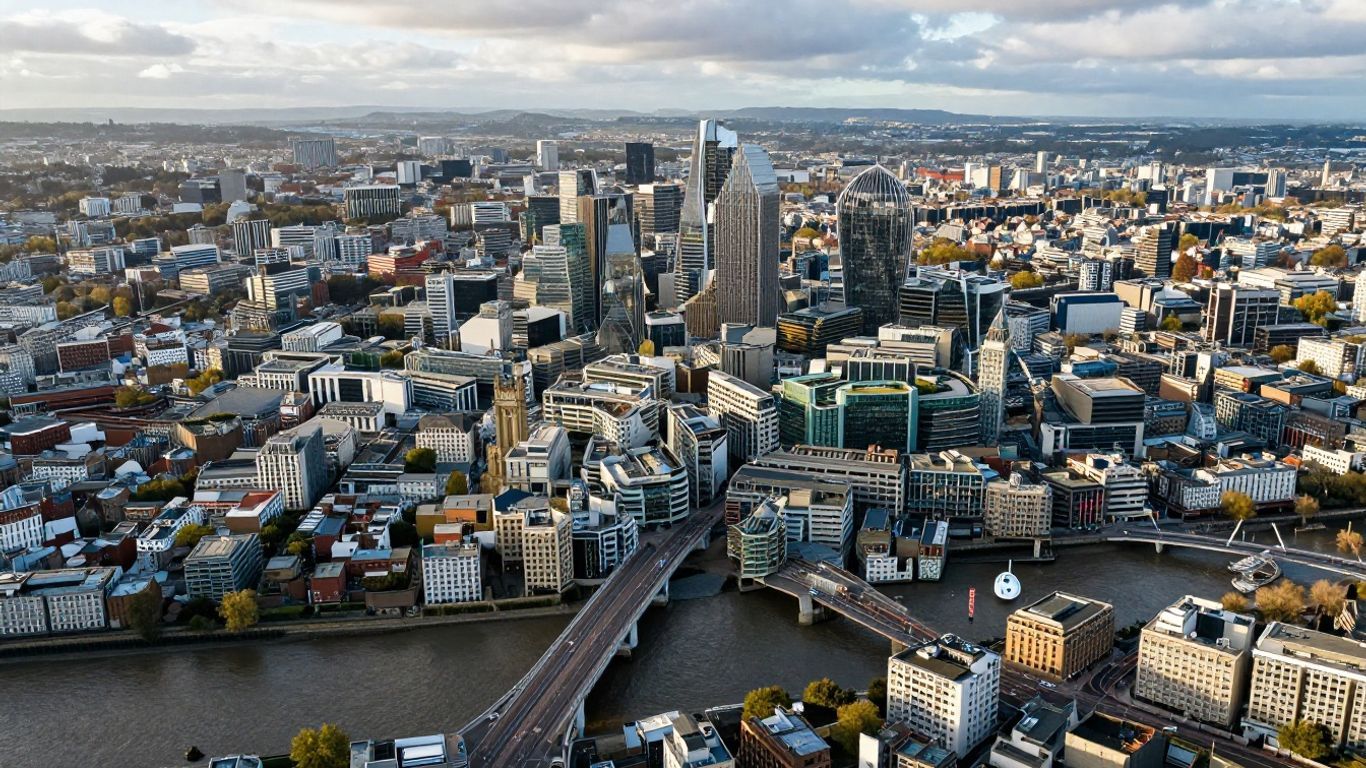
When contemplating the UK’s most expansive cities, it’s quite natural to initially focus on their population counts. And yes, demographics are undeniably a significant element, but that’s hardly the entire narrative, is it? Perhaps consider it akin to a bustling market: while the sheer multitude of people is striking, it’s truly the vibrant atmosphere, the embedded history, and those singular attributes that make it exceptional. The UK, rich with its venerable history and undergoing continuous modern transformations, proudly hosts some remarkably sizable urban concentrations.
London: The Unrivaled Metropolis
Unsurprisingly, London consistently occupies the pinnacle of virtually any ranking. It stands as an undisputed global nexus for finance and culture, alongside its venerable role as the historic capital. Its population figures are truly immense—vastly overshadowing those of any other UK city. The metropolis exudes an almost ceaseless energy, not unlike New York City in its relentless dynamism. This formidable confluence of sheer human volume and incessant economic activity undeniably places London in a league entirely its own.
Birmingham: A Hub of Transformation
Venturing beyond the capital, the urban tapestry notably shifts. Birmingham, for instance, frequently garners recognition as the UK's second-largest city when measured by its core municipal population. While steeped in a formidable industrial heritage, it is demonstrably evolving into a vibrant center for the arts, academia, and commerce. One can palpably sense this transformative energy permeating its thoroughfares. Birmingham’s extensive ongoing regeneration projects are fundamentally reshaping both its physical appearance and its intrinsic identity.
Manchester: A City of Reinvention
Manchester, without doubt, constitutes another formidable player in the urban landscape. It enjoys renown for its groundbreaking music scene, its celebrated football clubs, and its indomitable spirit. Over recent decades, the city has witnessed remarkable regeneration and substantial growth, transforming into a contemporary hub that nonetheless deeply respects its historical foundations. This perpetual capacity for reinvention is, in large part, what truly distinguishes Manchester.
Crucially, a city's actual scale transcends mere demographic statistics. It fundamentally encompasses its economic potency, its far-reaching cultural influence, and its rich historical tapestry. These interwoven elements collectively narrate a much more profound story about what truly confers significance upon an urban center.
For a concise overview of some of these leading urban centers, consider the following:
- London: The undisputed global financial and cultural capital.
- Birmingham: Where a deep industrial heritage converges with a flourishing modern landscape of arts and commerce.
- Manchester: Celebrated for its influential music scene, prominent sports culture, and extensive urban renewal.
These diverse cities, while each unique in character, collectively serve as vital epicenters of population and dynamic activity, profoundly shaping the very fabric of the UK’s urban landscape.
Key Cities Shaping The Urban Landscape
Beyond the sheer expansive scale of the UK’s largest metropolises, a host of other cities assert their crucial significance in delineating the nation's broader urban character. These locales, though they may not consistently rank highest in population figures, prove profoundly significant due to their distinctive contributions and vigorous, dynamic development.
Glasgow: Scotland's Vibrant Heart
Glasgow, once the formidable powerhouse of Scottish industry, has undergone a remarkable metamorphosis, emerging as a vibrant cultural and economic nucleus for the nation. It is widely acclaimed for its striking Victorian architecture, an exceptionally lively music scene, and a profoundly independent spirit. The city has, with considerable success, meticulously rebranded itself, thereby drawing in a fresh generation of residents and dynamic businesses alike.
Liverpool: A City of Heritage and Music
Liverpool’s identity is inextricably linked with its storied maritime history and its legendary musical heritage—most famously, of course, as the very birthplace of The Beatles. The city has experienced substantial regeneration, particularly evident around its iconic historic docks, which has transformed it into both a highly sought-after destination for tourists and a truly vibrant place to call home.
Sheffield: Blending Industry with Green Spaces
Sheffield, affectionately known as the 'Steel City'—a nod to its formidable industrial past—has achieved a truly remarkable transition. It is now widely celebrated for its expansive green spaces, boasting an enviable distinction of more trees per person than any other UK city, alongside a flourishing creative and digital sector. This compelling amalgamation of rich heritage and innovative, forward-thinking development solidifies its status as a singularly unique urban center.
These distinctive cities—Glasgow, Liverpool, and Sheffield being prime examples—eloquently illustrate that a city’s profound importance transcends mere population metrics. Rather, it is intrinsically tied to their specific contributions, their ongoing evolution, and the rich narratives they consistently convey.
The intrinsic character of any city emerges from a complex amalgamation of its historical foundations, the dynamism of its populace, and its continuous transformations. This intricate interplay is precisely what endows each urban area with its unique distinctiveness and its particular significance.
Population Distribution Across The UK
When contemplating the United Kingdom, one might instinctively envision a singular, densely populated expanse; however, this perception is quite inaccurate. The population, in fact, exhibits a markedly uneven distribution. One could perhaps liken it to a patchwork quilt, where certain sections are tightly woven with inhabitants, while others remain considerably more sparse.
Urbanization Trends
The vast majority of the UK populace resides within towns and cities. Indeed, we are referring to an overwhelming proportion of the population that considers urban areas their permanent abode. This phenomenon suggests that the inherent dynamism and vibrancy of city life powerfully attracts individuals, establishing these locales as prime centers of activity. It stands as compelling evidence that the UK is, without question, a profoundly urbanized nation.
- The predominant share of the UK's population makes its home in urban centers.
- This prevailing trend underscores the powerful allure of urban living and the numerous economic opportunities it presents.
- Conversely, rural areas, though invaluable, accommodate a considerably smaller segment of the populace.
Regional Population Concentrations
England, by a considerable margin, is home to the largest segment of the UK population. Within its borders, the southeast—and particularly London and its contiguous areas—stands out as a significant demographic hotspot. This region witnesses a high concentration of inhabitants within a comparatively smaller geographical footprint. Scotland, despite its substantial landmass within the UK, hosts a lesser population, with a notable tendency for residents to cluster in its central belt.
England's Dominant Share
Indeed, England unequivocally commands the lion's share of the UK's population. Boasting millions more inhabitants than Scotland, Wales, or Northern Ireland combined, it fundamentally dictates the overall demographic landscape of the United Kingdom. This pronounced concentration within England, most acutely observed in its southern regions, profoundly influences everything from critical infrastructure planning to political representation.
The intricate spatial distribution of the UK population extends far beyond mere numerical counts; it directly impacts the strategic planning of services, the localization choices for businesses, and even our collective perceptions of community. It truly represents a dynamic, perpetually evolving demographic tableau.
For an approximate breakdown of the population by constituent country, please refer to the following table:
| Country | Approximate Population |
|---|---|
| England | 46 million |
| Scotland | 6 million |
| Wales | 3.1 million |
| Northern Ireland | 1.9 million |
Factors Beyond Size In City Significance
When engaging in discussions about urban centers, it's often tempting to fixate solely on population statistics. While these certainly constitute a significant aspect, they hardly encapsulate the entire narrative. Consider this: a locale might boast a substantial populace, yet if it lacks significant dynamism or activity, does it genuinely convey the impression of a major city? Given the UK’s extensive historical trajectory, many of its cities possess intricate layers of narrative and significance that extend far beyond mere demographic tallies.
Economic Engine and Job Creation
Among the most compelling attributes contributing to a city’s perceived significance is its economic vitality. Does it represent a coveted location for businesses seeking to establish operations? Does it consistently foster substantial job creation? Certain cities, for instance, are renowned as pivotal hubs for finance, others for cutting-edge technology, and some steadfastly for manufacturing. This sustained economic dynamism, quite naturally, draws individuals inward and ensures the city remains a vibrant, bustling entity.
- Finance and Business: While London serves as an undeniable prime example, other cities such as Edinburgh and Manchester also fulfill crucial, substantial roles.
- Technology and Innovation: Regions encompassing Cambridge and Manchester are increasingly recognized as burgeoning centers for tech startups and innovation.
- Industry and Manufacturing: Although certain traditional industries have experienced decline, cities like Sheffield nonetheless maintain a robust manufacturing foundation, frequently adept at integrating novel technologies.
Cultural Heartbeat and Global Reach
Beyond the tangible metrics of economics and employment, culture exerts a truly profound influence. What constitutes the city’s artistic panorama? Is it celebrated for its influential music, its distinguished theatres, its world-class museums, or perhaps its unique local traditions? The comprehensive cultural offerings of an urban center can forge a truly distinct identity and captivate audiences from across the globe. Indeed, this inherent cultural magnetism is frequently the very essence—what makes a city memorable and establishes its global renown.
- Music: Liverpool's legendary association with The Beatles is undeniable, while Manchester boasts a formidable heritage in indie music.
- Arts and Theatre: Cities such as Glasgow and London are home to world-class museums and possess extraordinarily vibrant theatre scenes.
- Heritage: Urban centers endowed with unique historical sites or cherished traditions, exemplified by York or Bath, invariably attract substantial tourism.
Historical Significance in Urban Identity
History, quite literally, is etched into the very thoroughfares of numerous UK cities. These locales have borne witness to centuries of profound transformation, progressing from ancient settlements through the crucible of industrial revolutions, and onward to contemporary urban renewal. This deep-seated historical foundation fundamentally molds a city’s physical appearance, influences its inhabitants' self-perception, and colors external perceptions. It is precisely this compelling juxtaposition of the venerable and the modern that imbues many urban centers with their distinct character and enduring appeal.
The multifaceted historical strata embedded within a city—spanning from its earliest foundations through periods of profound transformation such as industrialization, and extending right up to present-day developments—all invariably contribute to its unique ambiance and its overarching national significance.
Thus, while population statistics offer a valuable initial benchmark, it is ultimately the potent economic impetus, the palpable cultural vibrancy, and the profound weight of history that collectively and unequivocally define a city's enduring significance within the UK.
The Evolving Nature of UK Cities
Regeneration and Modern Development
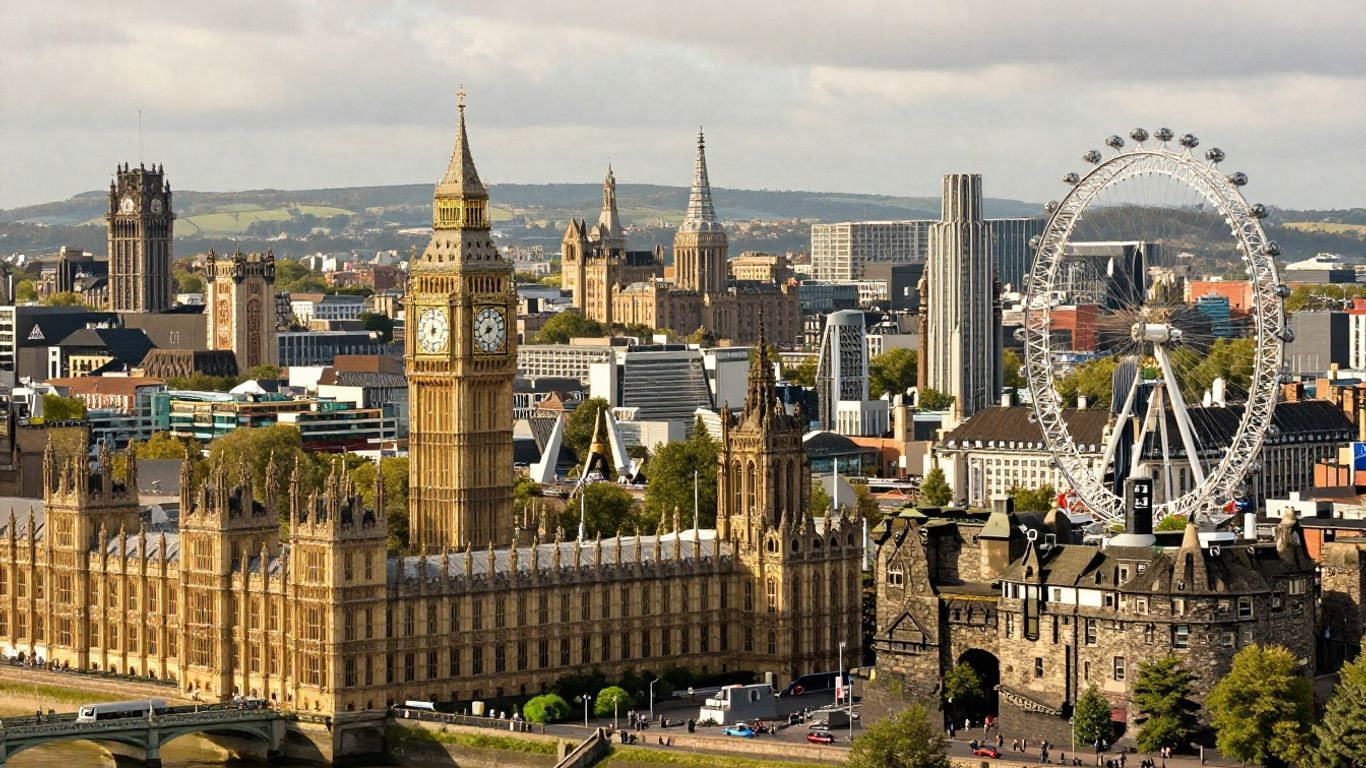
UK cities are by no means static entities; rather, they are in a state of perpetual transformation. Consider, if you will, how locales once synonymous with heavy industry now pulsate with dynamic new enterprises and contemporary residential developments. This evolution extends far beyond the mere emergence of new structures; it signifies a fundamental paradigm shift in how these places operate and how they are experienced. Numerous cities have embarked on extensive projects, meticulously transforming former industrial zones into thriving hubs for culture, technology, and residential living. Such endeavors represent significant undertakings, frequently demanding considerable foresight in planning and substantial investment to ensure these transformations genuinely enhance the lives of all residents.
Balancing Past and Future
It truly is a delicate—and often complex—balancing act, isn’t it? The challenge lies in ushering a city into the twenty-first century without inadvertently obliterating the very essence that renders it unique. Many UK cities, to their credit, are skillfully navigating this precise dilemma. They are diligently preserving historic buildings and districts that eloquently narrate their past, concurrently erecting sleek, contemporary structures. This compelling amalgamation yields a distinct character that one simply doesn't encounter universally. It offers, for instance, the extraordinary experience of traversing a streetscape where centuries of history coexist harmoniously with cutting-edge architectural design.
The inherent adaptability of cities powerfully demonstrates their resilience. They adeptly integrate their historical foundations with their present realities, consciously building toward their aspirational future, all the while striving to preserve their core identity. This is, in essence, a continuous and organic process of growth and transformation.
Cities as Living, Evolving Entities
Ultimately, cities transcend mere geographical outlines or assemblages of structures. They are vibrant, dynamic entities, profoundly shaped by the individuals who inhabit and contribute to their daily life. Their economies are in flux, their cultures steadily evolve, and their physical landscapes undergo ceaseless transformation. What precisely defines an urban center today may, quite conceivably, differ markedly a decade hence. This constant state of evolution is precisely what imbues urban life with such compelling interest and ensures these places maintain their vital relevance on both national and international platforms. They are, in a very real sense, perpetually in the process of becoming something new.
So, What's the Takeaway?
Ultimately, attempting to pinpoint an exact numerical count for "cities" within the UK proves considerably more intricate than it might initially appear. The designation extends beyond mere population metrics; indeed, historical legacy, economic prominence, and cultural significance each play an indispensable role. London, undoubtedly, occupies a category of its own, yet locales such as Birmingham, Manchester, and Glasgow stand as formidable urban players. Furthermore, countless other substantial towns and cities hold profound regional importance. Therefore, rather than fixating on a singular figure, the richer understanding emerges from appreciating the comprehensive tapestry—the diverse urban areas that collectively constitute the United Kingdom. Each contributes its unique character, thereby shaping the very identity of the nation.
Frequently Asked Questions
What actually makes a place a 'city' in the UK?
The criteria extend beyond simply possessing a large residential population. While population size certainly holds significance, a locality must additionally demonstrate historical importance, function as a prominent economic center, or possess a robust cultural identity to attain official city status in the UK. Essentially, it’s an intricate amalgamation of several factors, rather than reliance on a single metric.
Besides London, are there other really big cities in the UK?
Without question! London stands as the preeminent urban center, akin, perhaps, to New York City in the United States. However, locales such as Birmingham and Manchester are likewise immensely sizable and profoundly influential. They boast substantial populations and exert considerable national impact.
How do we know if a city is 'crowded'?
Typically, we assess this through population density—that is, the number of inhabitants residing within a specific geographical area, such as a square mile. Crucially, though, it's equally important to consider housing availability for the entire populace, rather than focusing solely on the sheer concentration of individuals within a given space.
Is the UK building enough new homes?
Regrettably, for an extended period, the UK has struggled to construct a sufficient number of new homes to adequately meet its growing demographic needs. This persistent shortfall translates into significant difficulties for individuals seeking affordable housing options, representing a considerable national challenge.
If the UK seems full, where can new homes be built?
While a perception of crowdedness might occasionally arise, the reality is that the vast majority of the UK comprises open countryside. Residential properties and gardens, surprisingly, occupy merely a modest fraction of the total land area. Consequently, ample space remains available for new housing developments, particularly if we approach planning with foresight and optimize land utilization effectively.
Can technology help solve housing problems?
Indeed, technology offers considerable potential to accelerate construction processes, notably through innovations like prefabricated homes that permit rapid assembly. Furthermore, it empowers urban planners to design new neighborhoods more effectively, ensuring seamless integration with existing infrastructure and transport networks.


