


resources-malaysia
Unraveling the Mystery: New Insights into Malaysia Airlines Flight 370
27 Nov 2025

Years have passed since Malaysia Airlines Flight 370 vanished from our skies, yet the entire episode remains a profound and unsettling puzzle. We've seen countless theories surface over time, from official search missions to some rather wild speculation. Now, fresh perspectives are emerging, suggesting that perhaps we need to shift our focus and reconsider what might have happened. It's a story that has deeply marked our nation, and the hope for answers about Malaysia Airlines Flight 370 still flickers.
Key Takeaways
- Aviation expert Ismail Hammad proposes a renewed focus on hijacking theories, pointing towards abandoned airstrips or lakes in the Philippines as potential locations for Malaysia Airlines Flight 370.
- Hammad casts doubt on some of the recovered wreckage, suggesting its condition is inconsistent with having been submerged in the ocean for an extended period.
- The core idea is that concentrating on these alternative sites for Malaysia Airlines Flight 370 could be far more efficient—saving both time and money—than the sprawling deep-sea searches.
- The incredible difficulty of flying a long-haul route manually and the aircraft's dependency on autopilot systems without a solid GPS signal are being highlighted as key factors.
- Ocean Infinity's most recent search for Malaysia Airlines Flight 370 was paused due to weather, but there are plans to resume later this year, as families continue their long wait for closure.
Revisiting the Hijacking Theory for Malaysia Airlines MH370
It's been so long since Malaysia Airlines Flight 370 disappeared, and for many of us, the incident still feels like a national wound that has yet to heal. While official searches have largely concentrated on the vast southern Indian Ocean, a number of experts are now urging a different approach. They believe it's time to seriously reconsider the hijacking theory and investigate some less-explored possibilities.
Expert Ismail Hammad's Alternative Hypothesis
An aviation specialist by the name of Ismail Hammad has brought forward a theory that’s certainly making people think. He suggests that instead of solely combing the ocean floor off the coast of Perth, we should entertain the possibility of a deliberate hijacking. Hammad’s line of thinking is that if the goal was to make the plane disappear, the perpetrators might have attempted a landing in a concealed location. He points to the Philippine archipelago—with its thousands of islands—as a region filled with abandoned airstrips and lakes that could have served this purpose. It’s a starkly different angle compared to the established search parameters.
Exploring Abandoned Airstrips and Lakes
Hammad's theory hinges on investigating these secluded spots. Just think about it for a moment: with over 7,600 islands, the Philippines offers countless potential hiding places. These aren't just simple landing strips; some are coastal, ending in the sea, while others lead into lakes or marshlands. It's a complex scenario, but it points to a calculated act intended to erase the aircraft's existence, rather than a simple flight path ending in the ocean.
The sheer number of potential landing sites across the Philippines, combined with their varied terrain, presents a compelling alternative to the widely searched ocean floor. This theory suggests a level of planning and execution aimed at complete disappearance.
Challenging Conventional Search Areas
This entire hypothesis challenges the official narrative and the primary search zones. Hammad also touches on the practicalities of flying such an immense distance manually. He questions if a pilot could realistically maintain a Boeing 777 on a steady course for nearly nine hours over open water, particularly at night, without significant reliance on autopilot and GPS. Should those systems have been disabled or compromised, flying with such precision becomes an incredibly daunting task. It really makes you wonder if the unwavering focus on the southern Indian Ocean might have led everyone down the wrong path.
New Perspectives on the Malaysia Airlines MH370 Disappearance
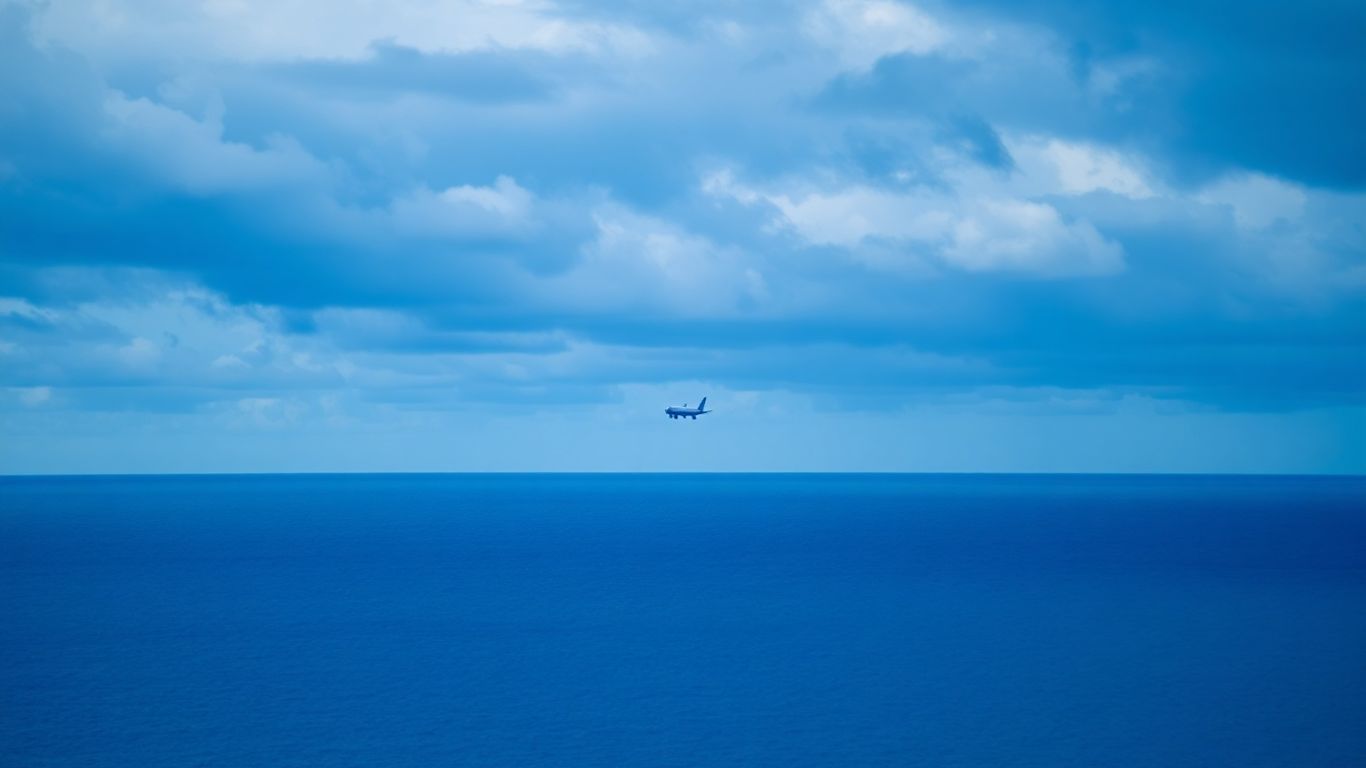
More than a decade has gone by since Malaysia Airlines Flight 370 disappeared, and the mystery continues to weigh heavily on our minds. While countless search efforts have scanned the vast southern Indian Ocean, new ideas are emerging that suggest we may need to look in entirely different places. One aviation specialist, in particular, believes a fresh approach could finally lead to a breakthrough.
An Aviation Specialist's Bold Claims
Ismail Hammad, an engineer, has presented a compelling alternative theory. He proposes that instead of confining the search to the ocean floor, we should give the hijacking scenario another serious look. Hammad speculates that if someone intended to hide the aircraft, they might have attempted to land it on one of the numerous abandoned airstrips or even lakes scattered across the Philippines. He highlights how many of these remote locations end in water or swampy terrain, making them perfect for concealment. This perspective, which you can delve into through expert Ismail Hammad's analysis, could potentially save tremendous time and money compared to the near-endless ocean expeditions.
Questioning Retrieved Wreckage Authenticity
Hammad also raised some thought-provoking questions about the debris that has been recovered so far. He expressed scepticism over photographs of certain wreckage pieces, supposedly from MH370, questioning if they were what they appeared to be. He specifically noted that the paint on some fragments didn't show the kind of degradation one would expect after prolonged exposure to saltwater. This certainly makes you wonder about the accuracy of what we thought we knew about the recovered items.
Potential for Time and Resource Savings
When you consider Hammad's suggestions, the potential for saving resources becomes quite clear. The current search zones are mind-bogglingly huge, and the costs are astronomical. By shifting the focus to more specific areas like abandoned airstrips or lakes, particularly in a region like the Philippines, the search could become much more targeted. This would translate to less fuel, fewer vessels, and a more concentrated effort—which could, in turn, lead to a faster resolution. Honestly, after so many years, a fresh perspective might be exactly what's needed.
The Limits of Pilot Endurance and Navigation
Flying a colossal aircraft like the Boeing 777 for almost eight hours non-stop, especially over a dark, featureless ocean, is an extraordinary feat. We're talking about a scenario that would push any pilot to their absolute limits, both mentally and physically. It’s difficult to fathom anyone maintaining perfect alertness and precision for that duration under such gruelling circumstances.
Challenges of Manual Long-Haul Flight
Just picture it: no breaks, nothing but the drone of the engines and the immense blackness of the sea below. Pilots are, of course, highly trained for these conditions, but there’s a threshold where fatigue inevitably begins to compromise performance. When you add the stress of a potentially diverted or unusual flight path, it becomes a perfect storm for human error, even for the most seasoned aviators.
Autopilot Systems and GPS Dependency
Modern aviation leans heavily on autopilot and GPS technology. These systems are programmed with precise routes and waypoints. If the GPS signal were to be lost or intentionally jammed, the autopilot would find it difficult to maintain its intended course. The pilots would have to revert to older, less exact navigation methods, which are notoriously challenging to use over vast stretches of open water.
- Manual flying requires constant, unwavering attention.
- Navigation becomes significantly more difficult without reliable GPS.
- Fatigue can seriously impair judgment and reaction time.
Navigational Difficulties Over Open Water
Trying to keep an aircraft on a perfectly straight trajectory for hours over the ocean, with no visual landmarks for reference, is an incredibly demanding task. Even with instruments, slight deviations can accumulate into significant errors over time. If the objective was to vanish, flying a predictable, straight line into the ocean might not have been the most logical plan. Perhaps a more intricate route, or a landing somewhere completely unexpected, would have been a more likely choice for someone attempting to cover their tracks.
The sheer duration and the nature of the flight path raise serious questions about the feasibility of maintaining precise control for such an extended period, especially if the usual technological aids were compromised or intentionally bypassed.
Ocean Infinity's Search for Malaysia Airlines MH370
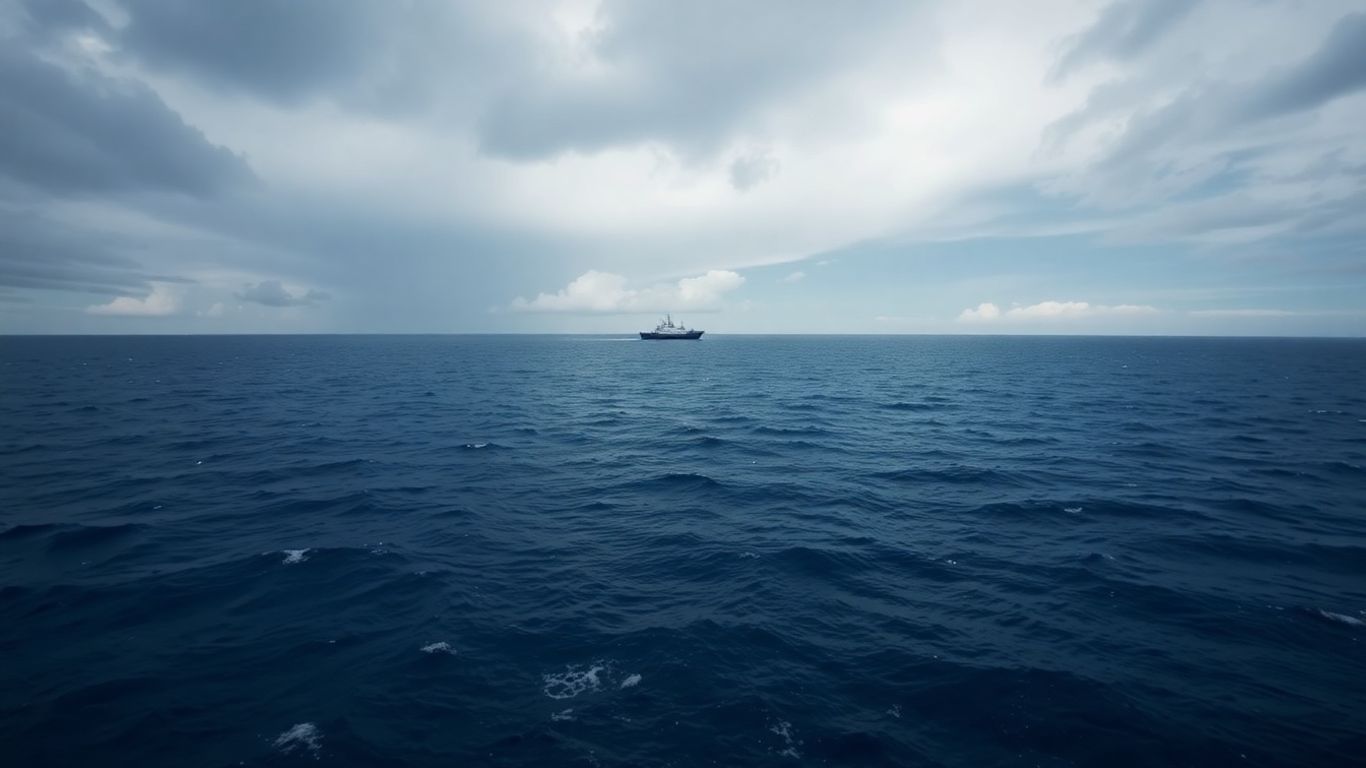
Marine robotics company Ocean Infinity has been at the forefront of the daunting mission to locate MH370, focusing its advanced technology on the vast expanse of the Southern Indian Ocean. However, their most recent mission was temporarily paused. This suspension wasn't for a lack of trying but was a necessary measure against the changing seasons. As Malaysia's Transport Minister, Anthony Loke, explained, operations were halted due to adverse weather conditions, with a plan to restart later in the year. While practical, this delay undoubtedly adds to the ongoing frustration for families still desperate for answers.
Suspension of Latest Search Mission
Ocean Infinity's recent search operation was brought to a halt, marking a temporary pause in the physical hunt for the missing aircraft. This decision was primarily driven by environmental factors.
Seasonal Conditions Affecting Operations
Certain times of the year bring challenging conditions for deep-sea exploration. Rough seas and poor visibility can severely impede the effectiveness of the highly specialised equipment needed for these searches. The company's decision to suspend operations was a pragmatic one, aimed at preserving resources and ensuring safety until conditions improve.
Resumption of Search Efforts
Despite this temporary setback, the commitment to finding MH370 has not wavered. The search is expected to resume once the seasonal hurdles have passed. This renewed push will hopefully build on the data already collected and inch the investigation closer to a resolution. The hope remains that this next phase, perhaps guided by new hypotheses, will finally yield more definitive results. The initial phase of their underwater search focused on the 7th arc within the Southern Indian Ocean.
The ongoing search efforts, while extensive, highlight the immense difficulty in locating an aircraft that disappeared over a decade ago. The vastness of the ocean and the passage of time present significant obstacles to uncovering the truth.
Unresolved Questions Surrounding Malaysia Airlines MH370
It's been more than a decade since Malaysia Airlines Flight 370 vanished, and to be frank, the entire situation remains a huge question mark. We're talking about a modern aircraft with 239 souls on board that simply disappeared. It stands as the deadliest incident of a missing aircraft in aviation history—not just for the tragic loss of life, but for the profound, unending uncertainty that continues to haunt everyone touched by this tragedy.
The Deadliest Case in Aviation History
This is far more than just another missing plane incident. MH370 carries the grim title of being the most fatal case involving a vanished aircraft. The complete absence of definitive answers makes it a uniquely troubling chapter in the story of modern aviation.
Lingering Uncertainty for Families
Can you imagine waiting years upon years for answers that may never come? That is the harsh reality for the families of those aboard MH370. Every new theory that emerges and every search that gets paused just adds another layer to their prolonged grief. They deserve closure more than anything, but right now, it seems perpetually just beyond their grasp.
Diverse Theories and Lack of Closure
Over the years, we've heard just about every possibility, haven't we? From elaborate conspiracy theories to more scientifically grounded, yet unproven, hypotheses. Some experts, like aviation specialist Ismail Hammad, are now suggesting we look beyond the southern Indian Ocean, perhaps towards abandoned airstrips in the Philippines. He even questions the authenticity of some recovered debris, noting that the paint's condition doesn't seem to match a long submersion in saltwater. It really makes you wonder if the search has been focused on the wrong area all this time.
- The possibility of a hijacking scenario is being revisited.
- Investigators are considering alternative search locations, including remote airstrips and lakes.
- Questions remain about the true condition and origin of some recovered wreckage.
The sheer scale of the mystery, coupled with the absence of a confirmed crash site, leaves a void that speculation and theories try to fill. Without concrete evidence, the path to resolution remains elusive.
In the meantime, major search efforts like Ocean Infinity's have been put on hold due to seasonal conditions, with plans to resume later this year. This pause, though understandable, only deepens the frustration and the collective need for definitive answers that have yet to come.
What's Next?
So, after all this time and all these theories, where do we stand with MH370? It’s still a massive, heartbreaking puzzle. While the idea of investigating abandoned airstrips in the Philippines instead of just the deep ocean is a fresh take—and possibly a smarter use of resources—it remains just another theory for now. The families deserve answers, and frankly, the world does too. For the moment, all we can do is wait and see if the search resumes later this year as planned. Perhaps that will finally bring something new to light. Or perhaps this painful mystery will endure. It’s impossible to say, but one thing is for sure: the world is still watching, still hoping for closure.
Frequently Asked Questions
Why, after all this time, do we still not know what happened to MH370?
Flight MH370 vanished in March 2014 with 239 people on board. Despite numerous extensive search efforts, the main wreckage has never been found. The lack of physical evidence combined with many conflicting theories means the mystery of what truly happened remains unsolved to this day.
What new idea has expert Ismail Hammad suggested about MH370?
Mr. Hammad suggests that instead of only searching the southern Indian Ocean, investigators should revisit the possibility of a hijacking. He proposes looking in unconventional places like abandoned airstrips and lakes across the Philippines, believing this could be a more targeted and resource-efficient approach to finding the plane.
What makes Mr. Hammad question the wreckage found so far?
Mr. Hammad has raised doubts about some of the photographed debris believed to be from the plane. He pointed out that the paint on some pieces doesn't look like it has been in salty ocean water for a long period, which makes him question if these parts are genuinely from MH370.
Why is the hijacking theory being discussed again?
Experts like Mr. Hammad are bringing it up again because if the intention was to make the plane disappear, a secret landing on a remote airstrip or in a lake in a place like the Philippines might make more sense than simply flying into the vast ocean. This logic makes the hijacking theory seem plausible to some investigators.
What are the challenges of flying a plane for a very long time manually?
Flying a large aircraft like a Boeing 777 for nearly nine hours straight by hand, especially at night over the ocean, would be incredibly demanding for any pilot. Additionally, modern planes rely heavily on autopilot and GPS; if those systems were not functioning correctly, navigation would become extremely difficult.
When will the search for MH370 likely continue?
The company in charge of the latest search, Ocean Infinity, had to temporarily stop its mission due to poor weather at sea. They have announced plans to resume the search later this year once conditions become more favourable for their operations.


