
resources
Unveiling the 2028 Smart City List: What to Expect from Tomorrow's Urban Innovations
10 Dec 2025

With the year 2028 rapidly approaching, urban centers worldwide are actively preparing to become significantly smarter. Imagine a future where technology isn't merely a collection of gadgets, but an intrinsic and foundational element of municipal operations, ultimately enhancing life for everyone. This article delves into what we can anticipate from the forthcoming 2028 smart city list—a comprehensive look at the transformative shifts occurring in urban environments and the groundbreaking innovations on the horizon. Envision cleaner energy solutions, more efficient commutes, and governance that is increasingly responsive to community needs. Indeed, it promises a fascinating evolution.
Key Takeaways
- Cities are evolving into more intelligent entities, and the 2028 smart city list will illuminate the forthcoming advancements in urban technology.
- Expect cities to prioritize sustainable energy solutions and environmentally conscious mobility strategies.
- Technologies such as artificial intelligence (AI) and the Internet of Things (IoT) will assume an increasingly central role in urban functionality and service delivery.
- Fostering citizen engagement in city planning and enhancing urban resilience against challenges like climate change are paramount considerations.
- The 2028 smart city list will highlight urban centers that demonstrate exemplary application of technology to measurably improve daily life for their residents.
Foundations Of The 2028 Smart City List
Defining Smart City Initiatives
So, what exactly constitutes a "smart" city? It extends far beyond merely installing sensors on lampposts and declaring the task complete. Rather, a smart city leverages technology and data strategically to enhance urban life for all its inhabitants. Consider the possibilities for improving aspects such as transportation, energy consumption, and even municipal governance. This overarching concept aims to foster more efficient, sustainable, and livable urban environments. The core goal is to improve the quality of life for residents through thoughtful application of technology.
Evolution of Urban Technology
Cities, throughout history, have continually adapted to technological advancements, from the innovation of paved roads to the widespread adoption of the electric grid. The "smart city" paradigm represents merely the latest chapter in this ongoing narrative. Initially, efforts concentrated on foundational infrastructure and communication systems. The advent of the internet subsequently unlocked new avenues for connecting disparate systems and facilitating information exchange. Today, propelled by the emergence of the Internet of Things (IoT), artificial intelligence (AI), and big data, urban centers are becoming unprecedentedly interconnected and responsive. Crucially, this evolution transcends mere gadgetry; it's fundamentally about how these sophisticated tools address genuine urban challenges.
Key Components of Smart Cities
The construction of a truly smart city necessitates the synergistic interplay of several interconnected components. Much like a complex organism, its various systems must communicate effectively. Here are some of the main pieces:
- Digital Infrastructure: This forms the essential backbone, encompassing high-speed internet, extensive Wi-Fi networks, and robust data centers that enable the seamless flow of information.
- Data Collection and Analysis: Sensors and various devices meticulously gather information pertaining to traffic flow, energy usage, air quality, and much more. This collected data subsequently requires rigorous analysis to uncover patterns and derive actionable insights.
- Integrated Systems: Diverse city services—such as transportation, energy provision, and public safety—must possess the capability to share data and operate in a collaborative fashion.
- Citizen Engagement Platforms: These provide crucial avenues for residents to interact with municipal authorities, offer valuable feedback, and readily access essential services.
The success of a smart city isn't solely measured by the sophistication of its technology, but by its ability to translate that technology into tangible improvements for its citizens and the environment.
Emerging Trends In Urban Innovation
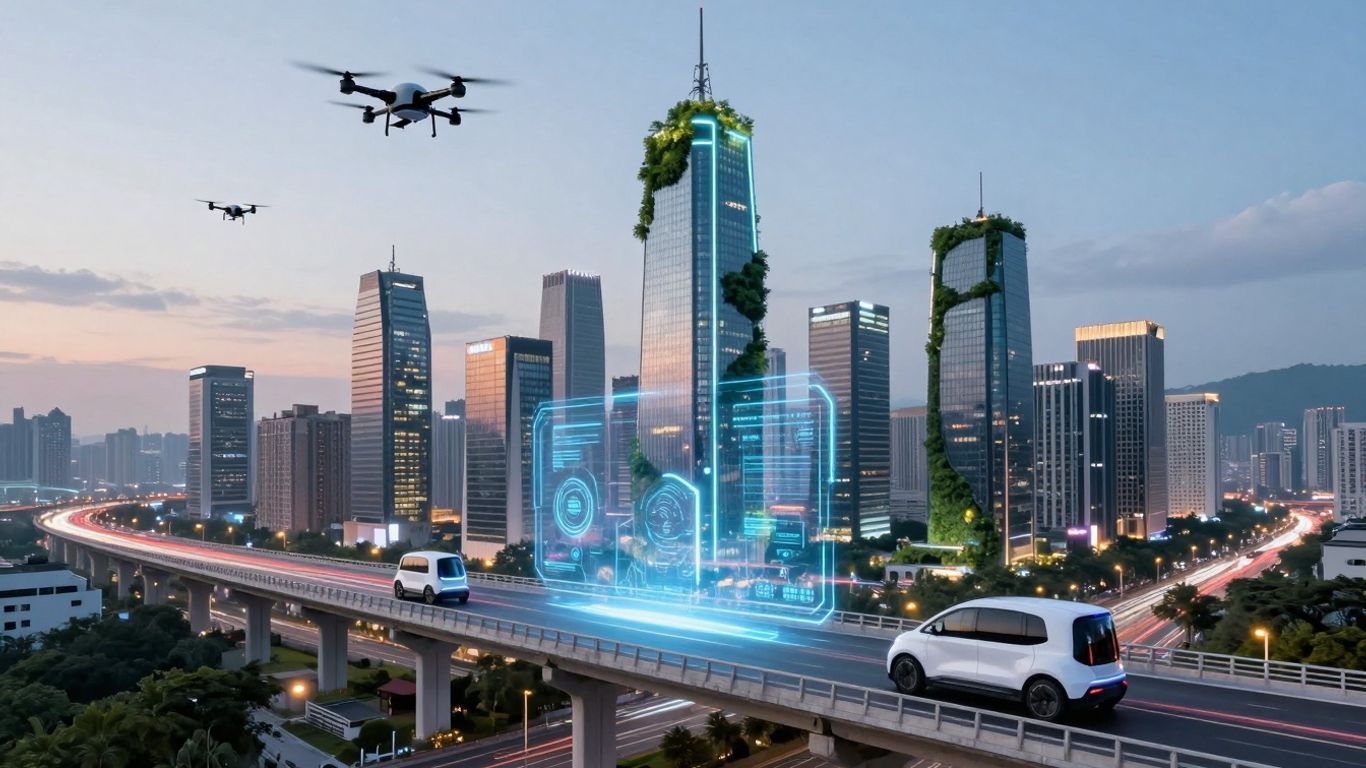
Urban landscapes are in a perpetual state of flux, and the forthcoming years promise some truly remarkable transformations in how these areas function. A significant impetus is clearly discernible towards creating greener, more intelligent, and increasingly connected urban environments. This isn't simply a pursuit of sophisticated gadgets; rather, it's about devising practical solutions that genuinely enhance daily life for all inhabitants.
Sustainable Transportation Networks
Have you ever considered the sheer volume of urban space consumed by vehicles? While the pandemic offered a fleeting glimpse of quieter streets, traffic congestion has unfortunately resurfaced with renewed intensity. This issue is more than just an inconvenience; it exacts a toll in terms of time, environmental pollution, and economic productivity. Consequently, municipalities are fundamentally re-evaluating urban mobility paradigms.
- Electrification is a major focus. This imperative extends far beyond a simple exchange of internal combustion engines for electric counterparts. It demands the redesign of charging infrastructure, collaborative efforts with power companies, and a thorough resolution of supply chain challenges for components like electric buses. Indeed, numerous cities globally are actively pursuing the electrification of their public transport fleets.
- Digitalization is transforming how transportation works. This encompasses more efficient operational processes, on-demand services, and predictive maintenance systems. Moreover, it translates into the provision of superior information for travelers.
- Rethinking street usage proves pivotal. Cities are exploring methods to better share road space among cars, bicycles, pedestrians, and public transit. Such initiatives might entail dedicated lanes, intelligent traffic management, and the promotion of shared mobility solutions.
The goal is to create transportation systems that are not only efficient but also environmentally friendly and accessible to all residents.
Integrated Energy Systems
Urban centers consume substantial amounts of energy, and the methods of its generation and management are undergoing profound shifts. The prevailing trend points towards an increased reliance on renewable sources and more sophisticated grids capable of accommodating fluctuating supply and demand. This translates into enhanced energy efficiency within buildings, greater localized energy generation—think rooftop solar panels—and systems capable of storing energy for peak demand periods. Imagine, for a moment, an urban environment where buildings communicate seamlessly with the grid, automatically adjusting their energy consumption to optimize load balancing and minimize waste. Such integration is absolutely vital for achieving climate objectives and bolstering urban resilience against power disruptions.
Digital Governance Frameworks
The very administration of cities is also experiencing a profound digital transformation. This entails deploying technology to render governmental services more accessible and responsive to citizens' needs. The focus is on establishing platforms where residents can effortlessly retrieve information, report concerns, and even participate in crucial decision-making processes. Digital governance aims to make city operations more transparent and efficient. This might manifest as online portals for permit applications, dedicated applications for reporting infrastructure issues like potholes, or digital tools facilitating public consultations on nascent city projects. The fundamental premise is to dismantle traditional bureaucratic impediments and forge a more direct conduit between municipal authorities and the populace they serve.
Technological Advancements Shaping Cities
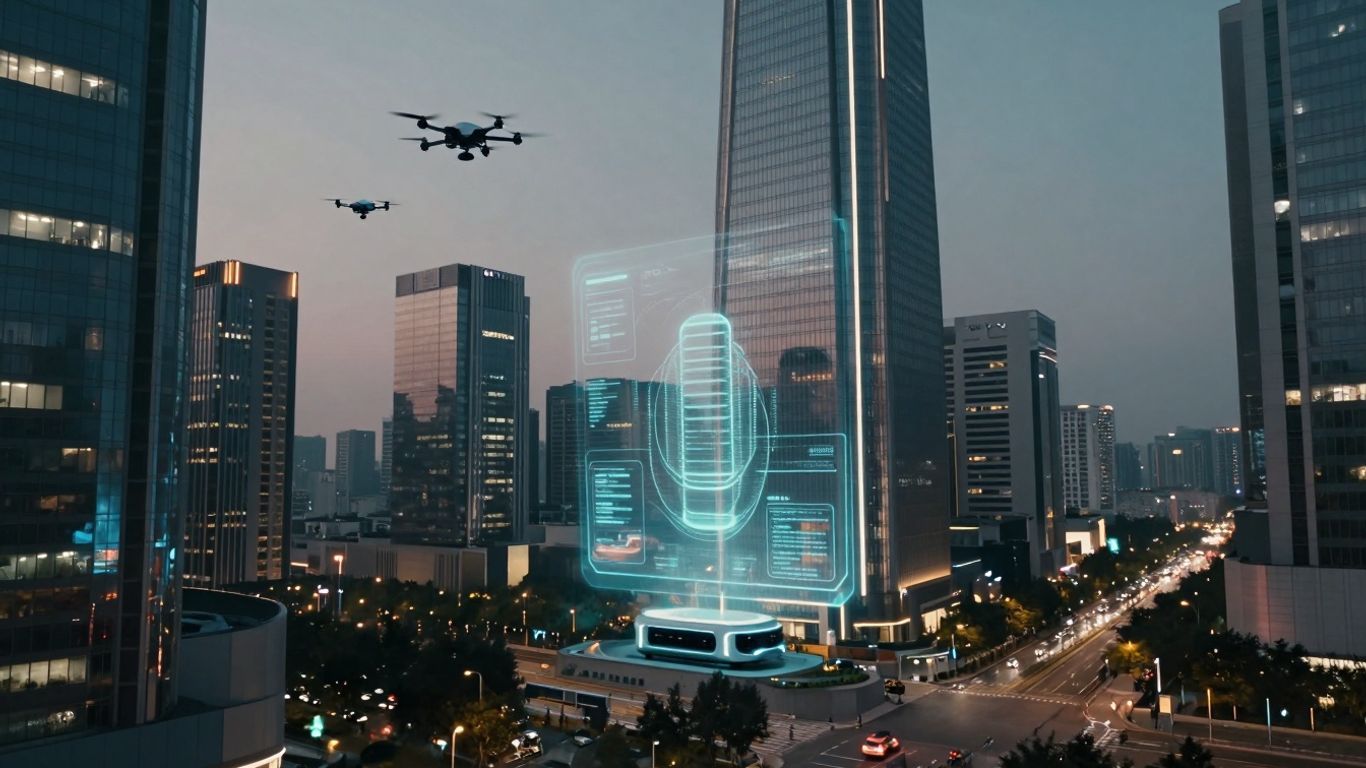
As urban centers increasingly embrace intelligence, a significant portion of this evolution is attributable to the sophisticated technologies being seamlessly woven into their very fabric. We are referring to interconnected systems that communicate autonomously, thereby optimizing everything from traffic flow to energy utilization. Indeed, it’s not merely about the allure of novel gadgets; rather, it’s about strategically deploying technology to resolve tangible urban dilemmas and enrich the quality of city life for everyone.
Artificial Intelligence In Urban Management
Artificial intelligence (AI) is rapidly emerging as a pivotal force in the stewardship of urban environments. Consider it a highly intelligent assistant, capable of processing vast datasets to empower city managers with superior decision-making capabilities. AI possesses the capacity to anticipate traffic congestion before it materializes, optimize public transport networks, and even enhance the efficacy of waste collection protocols. Furthermore, it is increasingly employed for infrastructure monitoring, detecting potential vulnerabilities—such as structural fissures in bridges or malfunctioning water pipes—prior to their escalation into significant problems. The goal is to create cities that run more smoothly and respond faster to the needs of their residents.
Internet Of Things For City Services
The Internet of Things (IoT) fundamentally links ordinary objects to the internet, endowing them with communicative capabilities. Within an urban context, this translates to strategically placed sensors on streetlights, waste receptacles, public transport vehicles, and even buildings. These sensors meticulously collect data, which can then be harnessed to refine municipal services. For instance, intelligent streetlights can autonomously dim in the absence of pedestrian or vehicular activity, thereby conserving energy, and subsequently intensify illumination upon detecting movement. Beyond efficiency, IoT also contributes significantly to public safety, with integrated cameras and sensors capable of alerting authorities to incidents in real-time. Ultimately, the objective is to cultivate municipal services that are both remarkably responsive and supremely efficient.
Data Analytics For Urban Planning
Urban centers produce an astonishing volume of data on a daily basis. Data analytics constitutes the systematic process of extracting meaningful insights from this prodigious quantity of information. By discerning patterns in human movement, energy consumption, and service utilization, urban planners can craft superior urban environments. This evidence-based data can guide decisions regarding the optimal placement of new parks, strategies for enhancing public transport, or locations for nascent housing developments. Crucially, it transitions urban planning from a realm of conjecture to a more rigorously evidence-based methodology.
The seamless integration of AI, IoT, and data analytics isn't solely about enhancing urban efficiency; it's about creating urban spaces that are more livable, sustainable, and responsive to the people who call them home. This technological shift is paving the way for a future where cities can better manage resources, improve quality of life, and adapt to the challenges of a growing population.
To illustrate, let's explore how these groundbreaking technologies are currently being applied in urban contexts:
- Traffic Management: AI analyzes real-time traffic data to intelligently adjust signal timings, reroute vehicles, and accurately predict congestion. IoT sensors, naturally, furnish the foundational raw data for such analyses.
- Energy Grids: Smart grids effectively utilize IoT devices to continuously monitor energy consumption and distribution, allowing for superior load balancing and seamless integration of renewable energy sources.
- Public Safety: Connected cameras and sensors, when analyzed by AI, can significantly aid in the quicker detection of and response to emergencies.
- Waste Management: IoT sensors embedded within waste bins can signal when they reach capacity, thereby optimizing collection routes and considerably reducing unnecessary trips.
Citizen Engagement And Smart City Development
The creation of a truly intelligent urban environment transcends the mere deployment of sophisticated technology and hyper-efficient systems; it fundamentally hinges upon the involvement of its residents. Ensuring that every citizen has a voice in their city's evolution is, undeniably, a crucial piece of this complex puzzle. Indeed, when citizens are actively engaged, urban centers typically function more effectively for everyone.
Collaborative Governance Models
Envision collaborative governance as a dynamic framework enabling diverse stakeholders—municipal officials, businesses, and residents alike—to co-operate on urban projects. Gone are the days of purely top-down decision-making. Instead, the emphasis is on the collaborative sharing of ideas and responsibilities.
- Open Data Platforms: Making city data transparently accessible to the public, enabling citizens not only to comprehend urban developments but also to conceive and develop their own innovative solutions.
- Participatory Budgeting: Empowering citizens to directly influence how a designated portion of the city's budget is allocated and spent.
- Citizen Advisory Boards: Establishing formal groups where residents can provide invaluable input on specific city planning or technology initiatives.
The fundamental objective here is a paradigm shift: moving away from a model where decisions are made for people, towards one where decisions are genuinely made with people. This builds trust and leads to solutions that actually fit the community's needs.
Public-Private Partnerships
Municipalities, quite frequently, cannot undertake the entirety of such ambitious endeavors independently. Collaborating with private enterprises can introduce fresh perspectives, essential funding, and specialized technical expertise. Such partnerships prove pivotal in the successful implementation of nascent smart city services.
- Infrastructure Development: Private companies might assist in the construction and ongoing management of critical infrastructure, such as public Wi-Fi networks or charging stations for electric vehicles.
- Service Delivery: Private firms could partner with the city to manage smart waste collection systems or to optimize urban traffic flow.
- Innovation Hubs: Collaborating to create dynamic spaces where startups and established companies can rigorously test new urban technologies.
It is, however, imperative that these partnerships are meticulously structured, with unequivocally clear goals and robust accountability mechanisms, ensuring that the public good remains the paramount priority.
Enhancing Citizen Participation
Soliciting citizen involvement necessitates more than simply extending an invitation to attend. It truly means cultivating accessible avenues through which residents can meaningfully contribute their insights and experiences.
- Digital Feedback Tools: Utilizing intuitive apps or dedicated websites where residents can easily report issues, suggest improvements, or even cast votes on proposed city initiatives.
- Community Workshops: Conducting localized meetings within neighborhoods to discuss specific city projects and to gather diverse feedback directly from residents.
- Educational Campaigns: Informing residents about new smart city initiatives and clearly explaining how they can both benefit from and actively participate in them.
Ultimately, a truly smart city is one that operates more intelligently for its citizens—a reality that unequivocally demands active participation from every single individual.
Resilience And Future-Proofing Urban Environments
Building Resilient Infrastructure
Contemporary urban centers confront an accelerating array of challenges, ranging from extreme climatic events to unforeseen disruptions. Developing infrastructure capable of enduring these shocks and rapidly recovering is no longer a mere aspiration; it is an undeniable imperative. This necessitates a perspective that transcends simply constructing durable edifices, focusing instead on systems endowed with inherent adaptability. Consider, for instance, roadways engineered to manage inundation, or power grids capable of rerouting electricity in the event of a localized failure. Ultimately, it’s about forging an urban environment that doesn’t just endure adversity, but actively maintains functionality throughout such periods.
- Smart Grids: These can automatically detect and isolate faults, efficiently rerouting power to minimize outages.
- Modular Construction: The strategic use of pre-fabricated components significantly allows for faster repairs and upgrades.
- Green Infrastructure: Features such as permeable pavements and green roofs play a crucial role in managing stormwater and reducing the urban heat island effect.
The goal is to move from a reactive approach to problems to a proactive one, where the city is designed from the ground up to be robust and adaptable.
Adapting To Climate Change
The realities of climate change are undeniably upon us, and urban centers must proactively prepare. This preparation extends far beyond the construction of sea walls; it entails a fundamental reconsideration of how we inhabit and construct within a warmer, more unpredictable world. We must thoughtfully assess how escalating temperatures influence our energy consumption, how shifting precipitation patterns impact our water resources, and how more frequent severe storms can compromise our homes and businesses. Prudent planning for these inevitable changes now can avert significant complications and considerable expense in the future.
- Urban Heat Island Mitigation: Implementing a greater number of green spaces, cool pavements, and reflective surfaces to effectively lower city temperatures.
- Water Management: Developing sophisticated systems for water conservation, rainwater harvesting, and comprehensive flood control.
- Energy Transition: Shifting decisively towards renewable energy sources that are inherently less vulnerable to climate-related disruptions.
Ensuring Digital Security
As urban centers evolve into smarter entities, their heightened connectivity simultaneously renders them more susceptible to cyber threats. Safeguarding the intricate digital infrastructure that underpins our cities—from traffic management systems to emergency services—is absolutely paramount. Indeed, a significant cyberattack possesses the potential to cripple an entire city. Consequently, robust security protocols are indispensable to protect our data and ensure the uninterrupted operation of our systems. This involves not just protecting against external attacks, but also building systems that can recover quickly if something does go wrong.
- Robust Cybersecurity Frameworks: Implementing multi-layered security protocols and conducting regular, thorough vulnerability assessments.
- Data Encryption and Privacy: Rigorously protecting sensitive citizen and city data from any form of unauthorized access.
- Incident Response Plans: Developing clear, actionable procedures for efficiently detecting, responding to, and recovering from cyber incidents.
The 2028 Smart City List: A Glimpse Ahead
Criteria For Inclusion
Securing a coveted spot on the 2028 Smart City List will extend far beyond merely possessing the most cutting-edge gadgets. Instead, cities will undergo evaluation based on a nuanced combination of practical application and visionary, forward-thinking strategies. The assessment will scrutinize the efficacy of existing smart initiatives in genuinely benefiting residents, rather than simply tallying the number of installed sensors. Consider factors such as:
- Measurable Impact: Does the technology demonstrably improve quality of life, reduce waste, or boost economic opportunity?
- Scalability and Adaptability: Can the city's smart solutions grow and change as needs evolve?
- Inclusivity: Are smart city benefits accessible to all residents, regardless of income or background?
- Sustainability Integration: How effectively are smart technologies supporting environmental goals?
The emphasis is unequivocally shifting from the mere adoption of technology to its judicious application for producing tangible, positive change.
Anticipated Innovations
By the year 2028, one can reasonably anticipate smart cities pushing technological and operational boundaries across several pivotal domains. We are likely to witness the proliferation of more advanced autonomous public transport systems, designed not only for passenger conveyance but also for sophisticated goods delivery. Energy grids, too, will attain greater intelligence, dynamically managing renewable sources and even empowering buildings to engage in energy trading. Digital twins—virtual, dynamic replicas of the urban environment—will achieve heightened sophistication, employed for everything from intricate traffic flow simulations to agile emergency response planning. Furthermore, expect to see an expansion of personalized public services, wherein AI assists in tailoring everything from waste collection routes to public health outreach, all based on real-time data.
The true measure of a smart city lies not in its technological sophistication, but in its ability to translate that technology into practical improvements that benefit every citizen.
Impact On Urban Living
What, then, might this mean for the everyday individual residing in a smart city by 2028? It signifies a notably more convenient, efficient, and potentially healthier urban experience. Envision daily commutes made less arduous thanks to intelligent traffic management, or public spaces whose lighting and services adapt autonomously based on real-time usage patterns. Access to crucial information regarding municipal services will become more intuitive, and participation in local governance could be significantly streamlined via digital platforms. While inherent challenges undoubtedly persist, the clear trajectory indicates a future where cities are increasingly responsive to the nuanced needs of their inhabitants, thereby rendering urban life more manageable and genuinely enjoyable.
Looking Ahead: The Evolving Smart City
As we have explored, the very notion of a 'smart city' is in a state of continuous evolution. Concepts discussed today will, in all probability, differ significantly within a mere few years, let alone by 2028. Those urban centers poised to genuinely distinguish themselves are precisely the ones that will perpetually adapt, harnessing novel technology not merely for its own sake, but to profoundly enhance the ways in which people live and work. Ultimately, it is about cultivating urban environments that are more livable, more efficient, and more interconnected for the benefit of every resident. The ongoing journey towards smarter urban living is, by all accounts, a continuous endeavor, and the nascent innovations we are now observing represent merely the vanguard of what is truly possible.
Frequently Asked Questions
What exactly is a "smart city"?
Imagine a city that harnesses technology to measurably enhance the quality of life for all its inhabitants—that, in essence, is a smart city! It fundamentally involves leveraging tools such as sensors and computational systems to manage aspects like traffic, energy consumption, and public services with greater efficiency. Conceive of it as an urban entity continually learning and refining itself to better serve its populace.
How will cities be different in 2028?
By 2028, we can anticipate urban centers becoming even more interconnected and increasingly automated. One might witness a greater prevalence of autonomous vehicles, more intelligent systems for electricity management that minimize waste, and streamlined digital avenues for interacting with municipal governance. It's all about making city life smoother and, importantly, more sustainable.
What role does technology play in making cities "smart"?
Technology, quite simply, serves as the fundamental engine driving smart cities. Innovations such as the Internet of Things (IoT)—where everyday objects gain internet connectivity—facilitate extensive data collection. Subsequently, powerful computing systems and artificial intelligence (AI) analyze this information to empower city leaders in making more informed decisions across a spectrum of issues, from infrastructure repair to urban park planning.
How do people get involved in making their city "smart"?
Truly smart cities are not solely the creation of technology firms; they intrinsically require the active participation of their residents! Municipalities are actively developing novel methodologies for citizens to contribute their ideas and offer feedback, often through user-friendly online platforms or engaging community gatherings. Such collaborative endeavors, for instance, through partnerships between city administrations and private companies, help ensure that smart city initiatives genuinely benefit the communities they are designed to serve.
What does "resilience" mean for a smart city?
For a smart city, "resilience" denotes its capacity to recover swiftly and effectively from challenging circumstances, such as natural disasters or widespread power outages. To that end, smart cities are purposefully engineered with robust infrastructure capable of withstanding these adversities. Moreover, they employ technology to facilitate adaptation to evolving conditions, including managing the impacts of more extreme weather attributable to climate change, and rigorously safeguarding all of the city's digital systems from potential cyber threats.
What kind of new ideas might we see in 2028 smart cities?
Prepare for a wave of truly exciting innovations! We could foresee advanced systems that autonomously manage traffic flow, buildings that exemplify exceptional energy efficiency, and even more profoundly personalized services for residents. The overarching aim is to foster urban environments that are not only efficient and ecologically sound, but also exceptionally desirable places in which to live, work, and recreate.


