
resources-impakt
Voice Of An FPO Leader: We Are Stronger Together, The System Does Not Believe That Yet
01 May 2026

Exploring the collective action paradox, we can identify three key challenges that often hinder farmer-producer organisations (FPOs) and examine the strategies employed by truly successful FPOs to overcome these obstacles.
Previously In Voices From The Chain
Part of the Agriculture Gap Series, Building on 'The Price of Ignorance' and followed by the series of Article 1: 'Voice of Farmer: He Grows It. Others Price It' and Article 2: Voice of Agronomist: I Know Your Soil, But I Can't Reach You, which explore the journey of Raju, a cotton farmer from Vidarbha, and Dr Priya, an agricultural scientist from Pune. Both face challenges due to a lack of vital information and the inability to translate research into practical applications in the field.
These challenges highlight a common issue: talented individuals often cannot reach their full potential without a robust support system. This article delves into the Farmer-Producer Organisation, an initiative designed to address these gaps, and discusses ways to enhance its effectiveness in supporting farmers and researchers alike.
Collective Strength, Not yet Trusted
The meeting has been ongoing for three hours, with twenty-two farmers gathered in a school hall generously provided for their evening discussion. What began as a review of quarterly accounts has naturally evolved into a familiar debate. Santosh advocates for holding off on selling the onion crop for another two weeks, hoping for a better price. In contrast, Balu argues for selling now to capitalise on the current market. Among them, six support Santosh's perspective, eight align with Balu, while four have drifted into their thoughts.
Meena, the chairperson of the FPO, has witnessed this discussion in various forms over the past eleven years. She founded this organisation at thirty-four, motivated by the stark realisation that her neighbours were selling onions for ₹2 per kilogram the same week they were priced at ₹28 in a Mumbai market. This experience crystallised her understanding: the core issue for farmers isn't productivity, it's power.
The power of collective selling. When four hundred farmers unite and speak as one, they can negotiate with buyers who might otherwise engage with each farmer individually, often at a disadvantage during harvest time. This collective strength is theoretically available to every FPO in India. Still, in reality, it requires overcoming a more challenging barrier than any agronomic issue: building trust among individuals who have spent generations competing against one another.
Meena's FPO stands as a testament to what can be achieved. With 410 members, a well-functioning cold storage unit, direct supply connections with three Mumbai retailers, and a proven record of paying its members 12 to 18 percent above local mandi prices for the past 6 years, it exemplifies a successful approach.
However, it's essential to recognise that such success remains an exception, highlighting the potential for growth and collaboration among farmers across the region.
10,000 FPOs. Fewer Than 30% Genuinely Functional
The Farmer-Producer Organisation (FPO) model holds great promise as a strategic solution in the development of Indian agriculture. The government's commitment to this initiative is substantial, with significant investments such as the FPO promotion programme under the Ministry of Agriculture, a ₹6,865 crore plan to establish 10,000 new FPOs by 2024, a credit guarantee scheme, and mechanisms for equity grants. The policy framework is robust, and its intentions are commendable.
However, there is a notable challenge: around 65-70% of registered FPOs in India are currently not operational. While these organisations have formal structures, including registration numbers, board members, bank accounts, and financial commitments, many lack the vital component that brings their value to life: a functioning collective that enhances the earning potential of their members beyond individual efforts.
Addressing this implementation gap is essential for realising the full potential of FPOs, which are central to building strong rural institutions in India. By critically analysing the reasons behind the inactivity of many FPOs and moving beyond typical narratives, we can gain deeper insights into the necessary steps to strengthen these organisations and ensure they fulfil their intended purpose.
The FPO model represents India's boldest effort to empower the individual smallholder farmer with the collective strength that has long been elusive in the market. While its challenges highlight the complexities of collective action, they also underscore the opportunity for transformative change and the need for a system that supports and uplifts these farmers.
Have you ever been part of a collective like a housing society, professional association, community group, or cooperative that achieved better results than individuals working alone? Conversely, have you experienced one that didn’t succeed? What contributed to the difference?
Beyond the Definition: What Collective Agriculture Looks Like in Practice
A Farmer Producer Organisation (FPO) is legally defined as an entity registered under the Companies Act or the Cooperative Societies Act, operated and managed by its farmer-members. The primary aim of an FPO is to bring farmers together to aggregate their produce, enhance market access, and improve economic efficiency. Additionally, FPOs often provide training, access to new technologies, and capacity-building initiatives that help farmers improve productivity and sustainability. This definition captures the essence of an FPO but doesn't fully convey its transformative potential.
To grasp the true impact of an FPO, it's essential to understand the challenge it addresses, the scale challenge faced by individual farmers. For instance, a farmer with just two acres cultivating onions may find themselves at a disadvantage when negotiating prices. With limited bargaining power, they often have to accept whatever price a processor or retailer offers, especially when dealing with perishable goods, existing debts, and no alternative markets for their produce.
However, when farmers unite within an FPO, their influence grows significantly. This collective can represent hundreds of farmers and amass thousands of quintals of produce. With access to resources such as cold storage, they can strategically hold back their supply when market prices are low, enabling better price negotiations with large buyers, exporters, and food processors. FPOs also help farmers manage risks associated with price fluctuations and market uncertainties by providing a more stable platform for selling their produce and accessing market information. Additionally, an FPO can facilitate access to institutional credit that individual farmers often struggle to obtain. By pooling resources, they can invest in shared infrastructure such as grading machines, certified testing facilities, and logistics vehicles, which would be beyond the reach of a single farmer.
The benefits of collective selling are substantial. Research on effective FPOs consistently indicates that member farmers can earn 15 to 25 percent more on their produce than non-member farmers in the same region, selling identical crops. This improvement stems not from superior agricultural practices, but from the enhanced bargaining power that comes with collective action. In this way, FPOs not only empower individual farmers but also contribute to a more equitable agricultural market.
The Collective Action Paradox in Agriculture: The situation presents an intriguing challenge: although collective selling offers significant economic benefits for individual farmers, fostering this collaborative effort can be difficult due to a long history of resource competition. It's important to recognise that farmers are making rational decisions. However, in environments where trust is low, these decisions often result in less-than-ideal outcomes. By building trust and encouraging cooperation, we can work towards more optimal solutions that benefit everyone involved.
The Governance Failure, The Market Failure, and The Finance Failure
Over her eleven years of experience in building, managing, and observing FPOs across Maharashtra, Meena has identified patterns that contribute to their challenges, insights not found in government reports. She outlines three primary factors leading to the difficulties faced by FPOs. The key takeaway is that these factors are often interconnected, with each one potentially amplifying the impact of the others. Understanding this dynamic can help in developing strategies for more resilient and successful FPOs.
Failure Mode 1: The Governance Failure
- A small group of members, often including the founding board and those with pre-existing social or political influence, gradually start to capture the benefits of the Farmer-Producer Organisation (FPO) for themselves.
- Decisions are made without genuine input from the members, and financial accounts are not shared transparently.
- The collective premiums are distributed unevenly, with better-connected members consistently receiving better prices or earlier payments.
- It leads most members to feel that the FPO serves the interests of a select few.
- Attendance at meetings declines, and trust begins to erode.
- Although the FPO may continue to exist on paper, it ceases to function as a true collective.
A warning sign is when the same three families dominate every committee position for more than two consecutive years.
Failure Mode 2: The Market Access Failure
- The FPO successfully aggregates produce but struggles to find buyers willing to engage with them on their terms, particularly regarding the necessary documentation and credit requirements.
- Large institutional buyers, such as food processors, export houses, and organised retailers, have procurement systems tailored for established, large suppliers.
- An FPO consisting of 400 smallholder farmers produces aggregated lots that may vary in quality and cannot guarantee precise delivery times, which does not fit neatly into these procurement models.
- As a result, the FPO often ends up selling to the same local traders its members used individually, at roughly the same price, but with the added overhead of the collective structure.
A warning sign to watch for is when the FPO's average sale price is within 5% of the local mandi rate for the same produce.
Failure Mode 3: The Finance Failure
- FPOs (Farmer-Producer Organisations) require working capital to purchase and store produce from their members, operate cold storage facilities, and cover the financial gap between purchasing goods and receiving payment from buyers. Its need for working capital is predictable, seasonal, and urgent.
- Unfortunately, the formal credit system is slow, primarily focused on collateral, and tailored for different credit profiles.
- As a result, many FPOs are forced to either operate at a sub-optimal scale due to insufficient funding for adequate procurement or to resort to high-cost borrowing from informal sources, which diminishes the profit margins they were established to secure.
- In either scenario, these financial constraints limit the collective's growth potential.
A warning sign is when an FPO consistently runs out of working capital in the first month of the harvest season.
These three failure modes are interconnected and highlight opportunities for improvement. A governance challenge can erode member trust, thereby discouraging sales through the FPO at harvest. This decline in trust can lead to decreased procurement volume, limiting access to institutional buyers and creating market access challenges. Lower procurement volume can also reduce revenue, complicate debt management, and threaten financial stability. By proactively addressing governance issues, the FPO can rebuild trust, increase procurement volume, and strengthen its financial health, thereby enabling long-term success in overcoming these interconnected challenges.
FPOs do not fail because the idea of collective action is flawed. They falter due to the lack of essential institutional scaffolding, transparent governance, patient working capital, market relationships, and a neutral facilitation infrastructure that the system that birthed them has yet to provide systematically.
Have you seen an institution fail despite having good intentions? The issue often lies not in the goal, but in the structure supporting it. What does this failure show about the importance of creating the right conditions for an institution to succeed?
Building Trust Among People Who Have Never Had a Reason To
Return to Meena's meeting. The argument between Santosh and Balu highlights a core issue, the vital role of trust among farmers in uniting for a common goal, even when individual sacrifices are required. Addressing this trust is essential for the success of any FPO program.
These farmers, asked to form collectives, have navigated a lifetime of scarcity and betrayal. To overcome this, implementing trust-building practices such as transparent communication and shared decision-making can help address issues related to water sharing, credit access, and market information, fostering stronger cooperation.
In such an environment, collective action doesn't come naturally. It must be nurtured through shared effort and mutual understanding. It demands consistent, tangible proof that unity triumphs over isolation, that rules are fair, and that sacrifices for the group are recognised and rewarded.
Building this trust is a journey that takes time. Meena didn't establish a successful FPO in a season or a year. Instead, she dedicated eight years to transparent and consistent institutional work, punctual monthly meetings, accessible minutes, shared accounts, democratic price decisions, and above all, a steadfast commitment to honouring promises. Meena's transparency and perseverance exemplify the power of trust and collective action, inspiring others to follow in her footsteps.
The Currency Of Collective Action: Trust is not merely a feeling; in the realm of an FPO, it stands as a vital economic asset. It flourishes through consistent, steadfast institutional behaviour, yet can be irrevocably shattered by a single significant betrayal. Common governance failures, such as a secretary delaying member payments, a board awarding contracts to relatives, or a chairman borrowing from the FPO treasury without disclosure, transcend ethical lapses. They are events that erode trust. In a farming community, the loss of trust is profound, as it takes a decade of dedication and effort to restore what was lost. Let us commit to nurturing trust as the foundation of our collective success.
Three FPOs That Worked & the Lessons They Share
India is home to some outstanding Farmer-Producer Organisations (FPOs). While they may not be widespread, analysing their successful strategies can provide valuable insights. These successful FPOs often benefit from adequate funding, strong government support, and the cultivation of superior crops. Additionally, they are characterised by thoughtful institutional design and a long-term vision that surpasses the usual constraints of the system. Focusing on these positive examples can guide the development of more effective FPOs in the future.
Case Study: Sahyadri Farms, Nashik
Sahyadri Farm is an established grading, cold chain, and quality certification before entering export markets, took seven years to become profitable, and withheld dividends until reserves were sufficient. The governance structure features a professional CEO and a farmer board, ensuring uniform pricing for all members, leading to premium export prices unattainable for individual farmers.
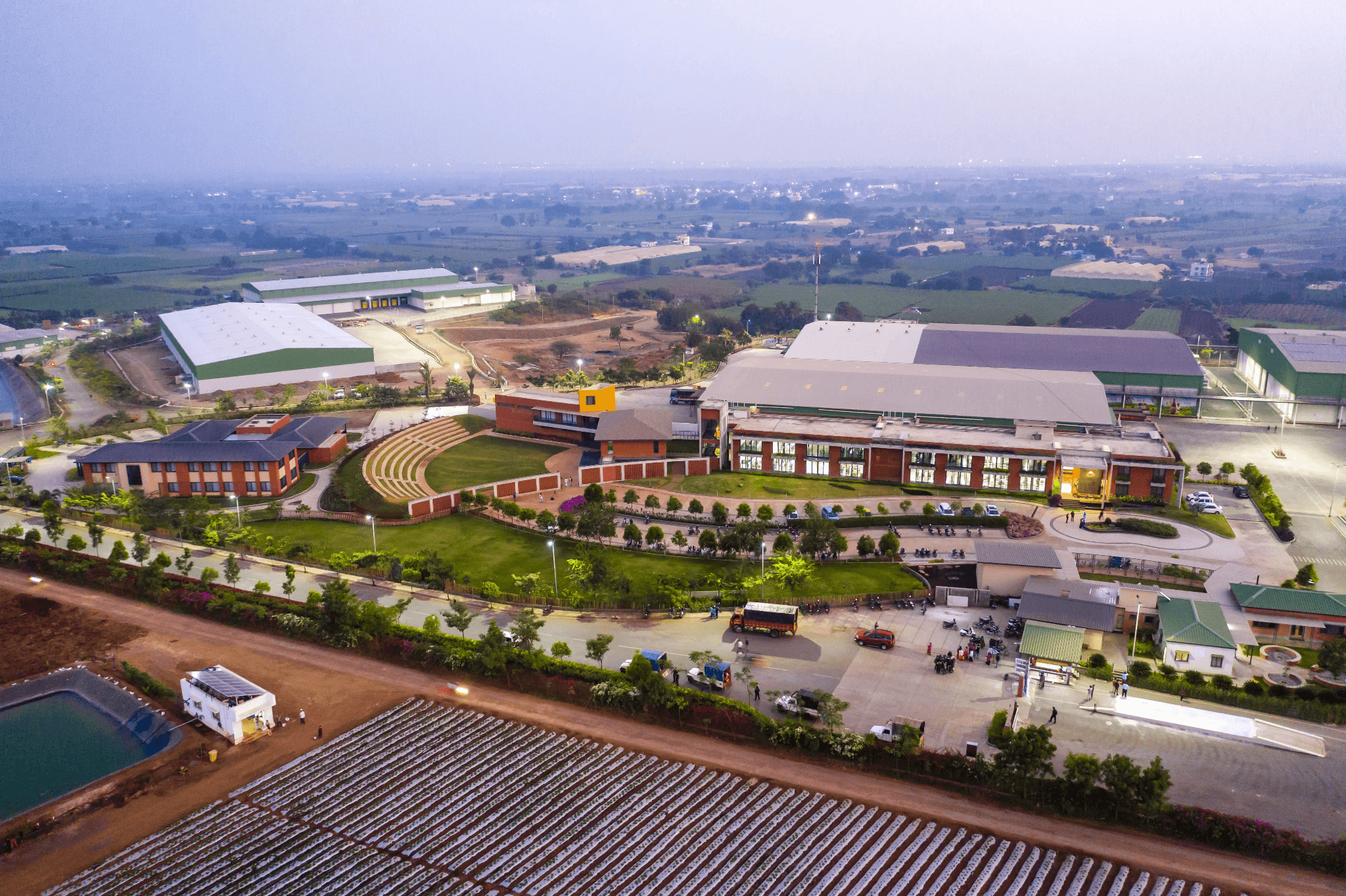
Overview
- Founded: 2010 by Vilas Shinde
- Type: Farmer Producer Company (FPC)
- Focus: High-value horticulture (grapes, tomato, pomegranate)
- Model: Farmer-owned, market-linked agri-enterprise
Scale
- 30,000+ farmers & ~40,000 acres of agricultural land
- Exports to 40+ countries
- Processes 3 lakh+ tonnes annually
Problem (Before FPO)
- Low farmer income due to middlemen
- High post-harvest losses
- Limited access to markets, tech, and quality standards
Solution (FPO Model)
- Aggregation: Collective farmer network
- Integration: Farm > Processing > Export
- Infrastructure: Packhouses, cold chain, processing units
- Market linkage: Direct retail & global buyers
Financial Snapshot
- Turnover: FY24: ₹1,548 Cr & FY23 ₹1,007 Cr with ~55% YoY growth and EBITDA ~11%
- Revenue: from Exports: ~₹352 Cr & Domestic: ~₹654 Cr
- Infrastructure investment: ₹558 Cr+
Impact
- Higher farmer income (~20–30% uplift)
- Reduced wastage via processing
- Shift to export-grade quality farming
- Jobs created: 1,300+ full-time
Key Success Factors
- Farmer ownership & professional management
- Full value chain control (not just aggregation)
- Strong focus on exports & value addition
- Investment in infrastructure & technology
Key Insight
Sahyadri Farms proves FPOs succeed when they move from “aggregation” to “integrated agri-business.”
Case Study: Vasundhara Agri-Horti Producer Company (FPO)
Operated at a loss for three years with NGO funding before achieving viability. Key innovation: a digital member ledger accessible via SMS, allowing farmers to check payment details and eliminating information asymmetry. Member retention is 94% over six years, among the highest for any Indian FPO.
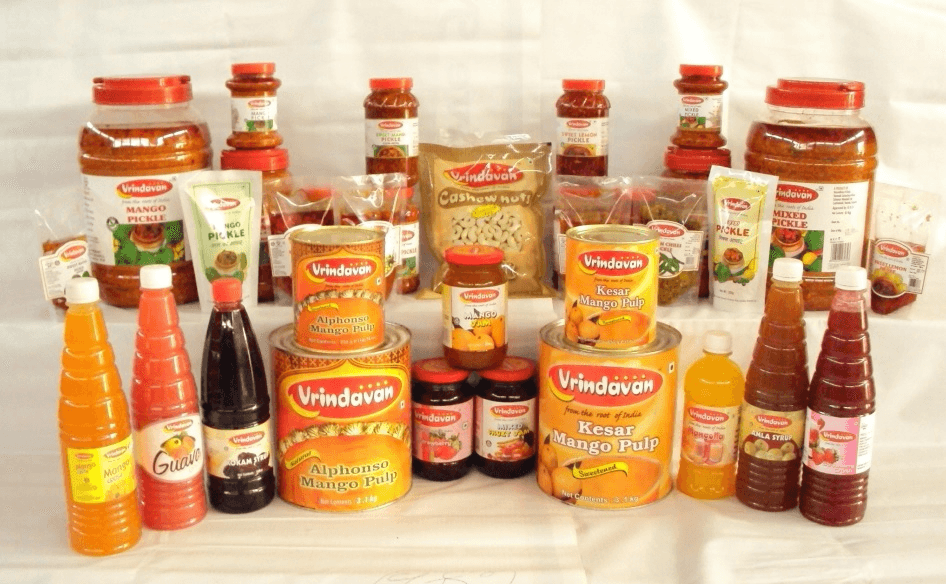
Overview
- Founded: ~2015 (supported under FPO promotion programs)
- Type: Farmer Producer Company (FPC)
- Location: Odisha (tribal & rainfed regions) & Maharashtra
- Focus: Primarily deals in cashew, honey, Minor Forest Produce (MFP) from Odisha's tribal belt, and Horticulture crops (vegetables, fruits, and NTFPs).
- Model: Farmer aggregation, input services, and local market linkage
Scale
- 800–1,500 farmers (primarily small & tribal farmers)
- Operates across cluster villages
Problem (Before FPO)
- Poor access to quality inputs & advisory
- Distress selling to local traders/middlemen
- Weak market connectivity (remote geography)
- Low productivity and income instability
Solution (FPO Model)
- Aggregation: Collective sale of vegetables & produce
- Input Services: Affordable seeds, fertilisers
- Market Linkage: Local mandis, institutional buyers
- Extension Support: Basic agronomy & crop planning
Financial Snapshot (Indicative)
- Annual turnover: ₹2–8 Cr range (early-stage FPO scale)
- Revenue streams: Input supply to members & Aggregated produce sales
- Margins: Low (2–5%), typical aggregation model
- Financial support: Backed by NABARD / NGOs / government schemes (SFAC, state programs)
Note: Public audited financials are limited; values reflect realistic operating range for similar Odisha FPOs.
Impact
- 10–15% better price realisation for farmers
- Reduced dependence on exploitative local traders
- Improved access to inputs & basic knowledge
- Strengthened collective bargaining power
Key Success Factors
- Strong community-based mobilisation (tribal focus)
- Support from promoting institutions (NGOs/NABARD)
- Focus on practical services (inputs & aggregation)
- Localised, trust-driven operations
Challenges
- Limited scale and infrastructure (no major processing)
- Weak logistics & cold chain in remote areas
- Dependence on external institutional support
- Limited access to high-value markets
Key Insight
Vasundhara emphasises the important role that FPOs (Farmer Producer Organisations) in remote areas play in initially addressing access and aggregation challenges. To further enhance farmer incomes, it is essential to invest in infrastructure and facilitate market integration. This step will unlock greater economic opportunities for farmers and strengthen the agricultural ecosystem.
Case Study: Spices Board Linked FPO Network, Kerala
Leveraged Geographical Indication certification for Wayanad pepper and Idukki cardamom to command premium prices internationally. The FPO's role included quality standardisation and certification management, allowing them to control the premium and attract buyers. The lesson: FPOs that own quality standards dominate the market.
Overview
- Institution: Spices Board of India (Govt. of India), Kochi, Kerala
- Type: Cluster-based FPO network (spice-focused)
- Focus: Pepper, cardamom, ginger, turmeric, nutmeg, vanilla
- Model: Institution-led FPOs & export-oriented value chain
Scale
- Kerala: Major spice hub (large share of exports)
- Multiple FPOs across spice-growing districts (Wayanad, Idukki, Kannur, etc.)
- Each FPO typically: 100–1,000 farmers (cluster-based structure)
- Network linked to exporters, processors, and global buyers
Problem (Before FPO/Intervention)
- Fragmented smallholders in hilly/tribal regions
- Poor quality standardisation > weak export access
- High dependence on local traders
- Limited knowledge of global quality norms (MRL, traceability)
Solution (Spices Board–FPO Model)
- Cluster Formation: Organising spice growers into FPOs
- Extension & Training: Scientific cultivation, post-harvest handling
- Quality Systems: Testing labs, export standards compliance
- Market Linkages: Direct connection to exporters & global markets
- Traceability: Farm-level quality tracking for export markets
Financial Snapshot (Indicative)
- FPO turnover (typical range): ₹3–20 Cr (crop & export dependent)
- Revenue streams: Raw spice aggregation & Cleaned, graded, export-quality produce
- Value addition margins: Higher than basic FPOs (~5–12%) due to export linkage
- Institutional support: Spices Board schemes & export promotion support
Note: Network-level consolidated financials are not public; figures reflect realistic Spice FPO economics.
Impact
- Improved price realisation (15–25% higher for quality produce)
- Access to export markets (EU, Middle East, etc.)
- Better adoption of scientific practices & quality compliance
- Strengthened farmer–exporter linkage
Key Success Factors
- Strong institutional backbone (Spices Board)
- Focus on quality & export readiness (not just aggregation)
- Integration with research (IISR) & certification systems
- High-value crop focus > better margins
Challenges
- Strict export quality compliance (MRL, traceability)
- Climate sensitivity of spice crops (cardamom, pepper)
- Dependence on global price fluctuations
- Limited processing, value-add at FPO level
Key Insight
Kerala's spice FPOs demonstrate that connecting farmers to quality standards and export opportunities beyond traditional markets is crucial to enhancing income in high-value agriculture. This approach can unlock new potential for farmers and contribute to their financial success.
The pattern across these three cases serves as a powerful reminder of success. First, all invested in crucial infrastructure grading, cold chain, and certification before reaching out to markets. Second, they established governance models rooted in genuine accountability, embracing payment transparency, equitable price formulas, and professional management. Third, they embraced patient capital, funding that waited for profitability until the institution was ready to thrive. Lastly, they embarked on a journey that took significantly longer to build than conventional programme cycles typically allow, illustrating the value of perseverance and dedication.
The successful FPOs are not magical. They result from dedication, effective governance, and the right infrastructure. The FPOs that do not thrive are not a reflection of the concept itself, but rather the challenges posed by the conditions in which they operate.
The Institutional Scaffolding That Was Never Built
The timeline associated with the Indian FPO policy is a crucial aspect to consider, often more revealing than the number of registered FPOs. Typically, government FPO promotion programs offer three years of support to help these organisations transition toward independence. According to NABARD's FPO promotion guidelines, a three- to five-year incubation period is recommended before achieving financial viability.
Notably, the journey to self-sustainability can vary significantly among different FPOs. For instance, Meena's FPO took eight years to become genuinely financially self-sustaining, while Sahyadri Farms achieved this in seven years. The Vasundhara network operated at a loss for 3 years before finally reaching stability.
These examples highlight that the current timeline assumptions in the system may need to be reevaluated to better align with the complex realities of institution-building. By acknowledging and addressing these discrepancies, future policies could foster a more supportive and effective environment for FPOs to thrive and succeed.
The Working Capital Problem
One of the key operational challenges that Farmer-Producer Organisations (FPOs) face is accessing sufficient working capital during the harvest season. For an FPO to buy produce from its members, store it, and sell it at a more advantageous time, it must secure financing for the procurement before receiving payment from buyers, a process that can take from weeks to months. While this timing gap is predictable and relatively small compared to the transaction value, it remains persistently underfunded.
To address this challenge, tailored financial solutions are needed. Currently, Kisan Credit Cards, which serve as the primary credit instrument for farmers, are designed for individual borrowers rather than for FPOs engaged in bulk procurement. The banking sector has been gradually recognising this gap and the importance of developing FPO-specific credit products. By doing so, FPOs could avoid the need to sell their produce immediately at harvest, eliminating the main benefit of collective storage and strategic pricing or relying on costly informal borrowing that diminishes their margins. With targeted support and innovative financing options, FPOs can enhance their operational efficiency and financial sustainability.
The Market Linkage Problem
The government's e-NAM platform was established to connect Farmer-Producer Organisations (FPOs) with national-level buyers. However, many large institutional buyers have yet to embrace this opportunity fully. The food processing and organised retail sectors, which naturally align with collective supply from FPOs, typically have procurement strategies focused on larger, established suppliers rather than small collective groups of farmers. As a result, these FPOs often face challenges due to seasonal supply fluctuations and incomplete documentation.
To effectively bridge this gap, a dedicated intermediary institution is needed that understands both the unique supply capabilities of FPOs and the specific procurement needs of buyers. This intermediary can enhance communication, streamline documentation, ensure quality certification, maintain volume reliability, and foster long-term relationships. The Citiesabc Impakt Platform's Market Intelligence and Trade Corridor architecture is specifically designed to fulfil this crucial role, facilitating stronger linkages between FPOs and buyers for mutual benefit.
The Programme Cycle Problem
Government support programs for Farmer-Producer Organisations (FPOs) typically operate on three-year funding cycles, which align with both the tenure of the promoting agency and the political cycles of the ministry. While three years is generally sufficient to establish an FPO, it often falls short for developing the critical trust, track record, market relationships, and governance culture required for long-term success.
When the program cycle concludes and the promoting agency steps back, FPOs that relied heavily on external support without building strong internal capacities may face challenges and struggle to sustain themselves over the next 12 to 18 months.
This situation highlights not just a funding issue but also an opportunity to rethink program design. By shifting the focus from merely forming FPOs to fostering their ongoing development, we can address the underlying needs for sustainability and resilience. This approach could help lower the current 70 percent dormancy rate, ultimately leading to more robust, functional FPOs that thrive independently.
The system establishes FPOs with a three-year support framework, after which they are expected to thrive independently. However, Meena's experience spanned eight years. What does this disparity reveal about our criteria for success in rural institution-building? Moreover, who bears responsibility for the FPOs that were set up, received three years of backing, and were subsequently abandoned to struggle?
The Institutional Scaffolding the System Should Have Built
Patient and Structured Working Capital
FPOs require a credit instrument that aligns with their cash flow cycles, specifically, procurement at harvest, sales over the subsequent three to six months, and repayment upon receipt of buyer payments. While NABARD's FPO credit guarantee scheme offers a promising solution, its practical reach, accessibility, and alignment with FPO operational timelines could be enhanced.
Developing a technology platform that provides verified procurement data, quality documentation, and buyer contracts to lending institutions would significantly help mitigate the information asymmetry that currently poses challenges for FPO lending. This constructive approach could foster greater collaboration between FPOs and banks, ultimately supporting the growth and sustainability of FPOs.
Governance Technology
The payment transparency initiative within the Vasundhara network empowers every member to easily SMS-query their exact payment status, and this innovative approach can be effectively scaled through a platform layer. By enabling every member of each FPO to access real-time information about their contributions, the prices at which their produce has been sold, and the timing of their payments, we can significantly reduce information asymmetry between leadership and members.
This change would enhance governance by fostering greater trust and transparency. Implementing this requires only a straightforward payment ledger accessible to members. The Citiesabc Impakt Platform's FPO management module is specifically designed to facilitate this kind of transparency.
Market Connectivity Infrastructure
The difference between an FPO's supply capabilities and a large buyer's procurement needs lies less in pricing and more in essential documentation, quality verification, and relationship building. An FPO equipped with verified blockchain quality certificates, a reliable supply track record documented on the platform, and a direct link to the platform's buyer-matching engine holds a significantly stronger negotiating position.
In contrast, an FPO that approaches a procurement office with only a paperweight slip may face challenges. It's important to recognise that market connectivity serves as foundational infrastructure rather than a mere sales tactic. This infrastructure should be developed once and continuously maintained, rather than requiring a rebuild for each FPO.
A Longer System Time Horizon
To enhance the effectiveness of our approach, it's crucial to focus on structural reforms that address the core challenges we face. We need to shift our mindset and metrics away from merely counting registered Farmer-Producer Organisations (FPOs) as a measure of success. It's important to recognise that a registered FPO does not equate to an active, functioning entity, and that a three-year supported FPO does not automatically become self-sustaining.
By prioritising the evaluation of FPO success based on tangible member income outcomes over ten years, rather than solely on registration numbers within a three-year policy cycle, we can create more meaningful incentives. This shift in measurement will help reduce the current dormancy rate, which stands at 70%, and enable FPOs to thrive sustainably in the long run.
The Night Meena Won the Argument
The meeting concluded at 10:30 PM. While Meena faced a challenge persuading the group about the onion price, she effectively turned the discussion in her favour, not through debate or authority as chairperson, but by using the mobile phone and the FPO's market price application. She presented valuable insights to both Santosh and Balu, showcasing price trends for Nashik onions over the past six seasons, current storage levels across the three competing FPOs in their district, and demand signals from the Mumbai wholesale market, which were updated that very morning.
The data illuminated what had been a point of contention for three hours: prices were projected to peak in twelve days based on historical patterns, the inventory levels of competing FPOs indicated that supply constraints would soon ease, and a buyer in Mumbai had expressed willingness to purchase the entire lot at a price above the existing mandi rate. Ultimately, the members decided to hold, with fourteen in favour and eight against, while Balu abstained.
This scenario exemplifies how market intelligence operates at the FPO level. It transcends simple dashboards aimed at analysts; it serves as a powerful tool that replaces discussions grounded in opinion with evidence during village meetings. The importance lies not merely in the technology itself. Still, in the robust institution Meena has fostered, fourteen members share a high level of trust, enabling them to take informed collective risks. They understand that any losses would be shared, as would the benefits if they succeeded.
This profound level of trust, cultivated over eleven years through consistent, transparent, and diligent institutional efforts, cannot be achieved in three years, funded through a short grant cycle, or mandated through a policy. It is nurtured meeting by meeting, through transparent accounting, and reinforced by honouring commitments time and again.
The potential for farmers to establish effective collectives is evident, as demonstrated by successful examples like Meena's FPO, Sahyadri Farms, and the Vasundhara network. While the 10,000 FPO program assumes collective action can be rapidly initiated and sustained with limited external support, experience shows that this process requires more nuanced approaches and longer-term commitment.
The key challenge is not whether farmers are capable of building successful collectives. They have clearly proven that they can. Rather, the focus should be on how we can create the right conditions for more farmers to achieve similar success. This includes providing adequate working capital, governance tools, market connectivity, and sufficient time for development. By addressing these areas, we can enable more farmers to thrive as effective organisations.
An FPO is not just a scheme. It is a living institution. Institutions grow and evolve. Every organisation that has attempted to shortcut this vital process has faced a 70 per cent dormancy rate, a reality that underscores the need for dedication in India's most important rural development programme.
On the night when Meena's FPO decided to hold back the onion crop, fourteen farmers demonstrated remarkable trust in both the data and each other by taking a shared financial risk. This level of trust was not built overnight. It took eleven years of commitment and collaboration. Consider this: what is your organisation, team, community, or institution willing to invest in fostering such profound trust? And what transformative returns could you expect by doing so?
Next In Voices From The Chain: Article 3 Of 8
I Offer You the Seed. I Offer You the Guidance. Only One Truly Supports Your Growth. The input dealer's narrative: a pivotal yet often overlooked player in the Indian farm-to-fork journey. A structural exploration of the incentive framework that influences the input dealer's advice, creating a systematic bias against the farmer's agronomic potential, all while maintaining the integrity of individual dealers.
About This Series
“Voices from the Chain is an important addition to the Agriculture Gap Series, building on the insights from 'The Price of Ignorance: Mapping the Gaps That Cost Indian Agriculture Trillions,' which can be found at impakt.citiesabc.com. Over the past year, I have engaged deeply with the agricultural community by visiting farms, attending agri-sector seminars, and connecting with FPO leaders, agronomists, and input dealers throughout Maharashtra and beyond. This experience has been instrumental in shaping the Citiesabc Impakt Platform, which aims to address the gaps identified in our findings and enhance the agricultural landscape.”


