
resources-impakt
Voice Of Food Processor & Buyer: We Want Better Food, We Cannot Prove It Exists
04 Jun 2026

Previously, in Voices From The Chain
The ongoing Agriculture Gap Series delves into the complexities of the agricultural supply chain, highlighting the interconnected challenges faced by both farmers and food companies. The section titled "The Price of Ignorance" reveals crucial insights through a series of articles that capture various perspectives in the agricultural sector.
The first article, "Voice of Farmer: He Grows It. Others Price It," discusses the struggles of farmers who are unable to demonstrate the quality of their produce. This theme continues through subsequent articles, featuring voices from agronomists, farmer-producer organisations (FPOs), input dealers, and mandi (Agriculture Market) traders, each representing different facets of the supply chain and the barriers they encounter in accessing and sharing crucial information.
Importantly, the series addresses a parallel issue faced by food processors and organised retailers. Despite their willingness to pay more for quality produce, they find themselves in a situation akin to that of farmers, ensnared by the same information deficit. Without reliable means to verify the quality of the agricultural products, these stakeholders are unable to make informed purchasing decisions. Thus, the series illustrates a mirrored challenge within the agricultural ecosystem: effective communication and information flow are essential to improving overall quality and profitability.
Quality Failure
Prabhav is the head of raw material procurement for a mid-sized food processing company located in Pune. Their flagship product is a premium tomato paste, marketed under a clean-label brand that highlights its commitment to quality with the promise of "farm-fresh, no preservatives, responsibly sourced" on the packaging. This premium offering costs three times as much as generic alternatives, and consumers willingly pay the premium for quality.
This morning, Prabhav is analysing his quarterly rejection report and has noted that 12% of the tomato lots received in the past three months were rejected due to issues such as excessive moisture, pesticide residue exceeding acceptable limits, or colour inconsistencies that caused the paste to fall below specifications. Each rejected lot results in a write-off, necessitating emergency purchases from spot suppliers at a higher cost and delaying the production schedule. The total cost of quality failures this quarter is ₹2.8 crore.
Prabhav is eager to source better tomatoes and is willing to invest in higher-quality ingredients. The success of his company's brand positioning and retail margin depends on securing superior tomatoes. Yet, he has faced challenges for six years in establishing a reliable supply chain that consistently delivers them.
The core of the challenge lies in the inability to verify tomato quality before purchase. Addressing this issue is crucial for enhancing procurement processes and ultimately ensuring the company can maintain its commitment to offering top-quality products to consumers.
The Buyer's Problem Is the Mirror of the Farmer's Problem
In Article 1, we introduced Raju, a dedicated cotton farmer in Vidarbha. Despite his hard work and commitment to quality, his efforts go unnoticed by buyers because there's no reliable record of his production methods and the quality of his cotton. Raju produces excellent cotton, but without proof, he cannot command a premium for it.
On the flip side, Prabhav faces a similar challenge. He is eager to purchase tomatoes from farmers who cultivate them with care, use responsible inputs, harvest at the right time, and maintain a cold chain from field to market. He is prepared to pay more for tomatoes that meet these standards, but he struggles to find them. The issue isn't a lack of quality produce. It's the absence of a system to differentiate high-quality tomatoes from those grown with less care at a lower cost.
This reflection highlights a crucial insight: the gap in quality premiums is not merely a supply-and-demand issue. Instead, it stems from a verification challenge that exists between the two, hindering the price signals that could resolve the situation. Farmers cannot claim a premium for their quality products because they lack the means to verify it, and buyers are unable to pay more without proof of quality.
Addressing this challenge doesn't necessarily involve improving farming techniques or finding more discerning buyers. It calls for the establishment of a verification infrastructure, a system for documenting what was grown, how it was cultivated, the quality standards it meets, and who can substantiate those claims. It is precisely where blockchain traceability comes into play. It aligns the interests of food processors and farmers in a way that the existing system does not, opening the door to a more equitable market for quality produce.
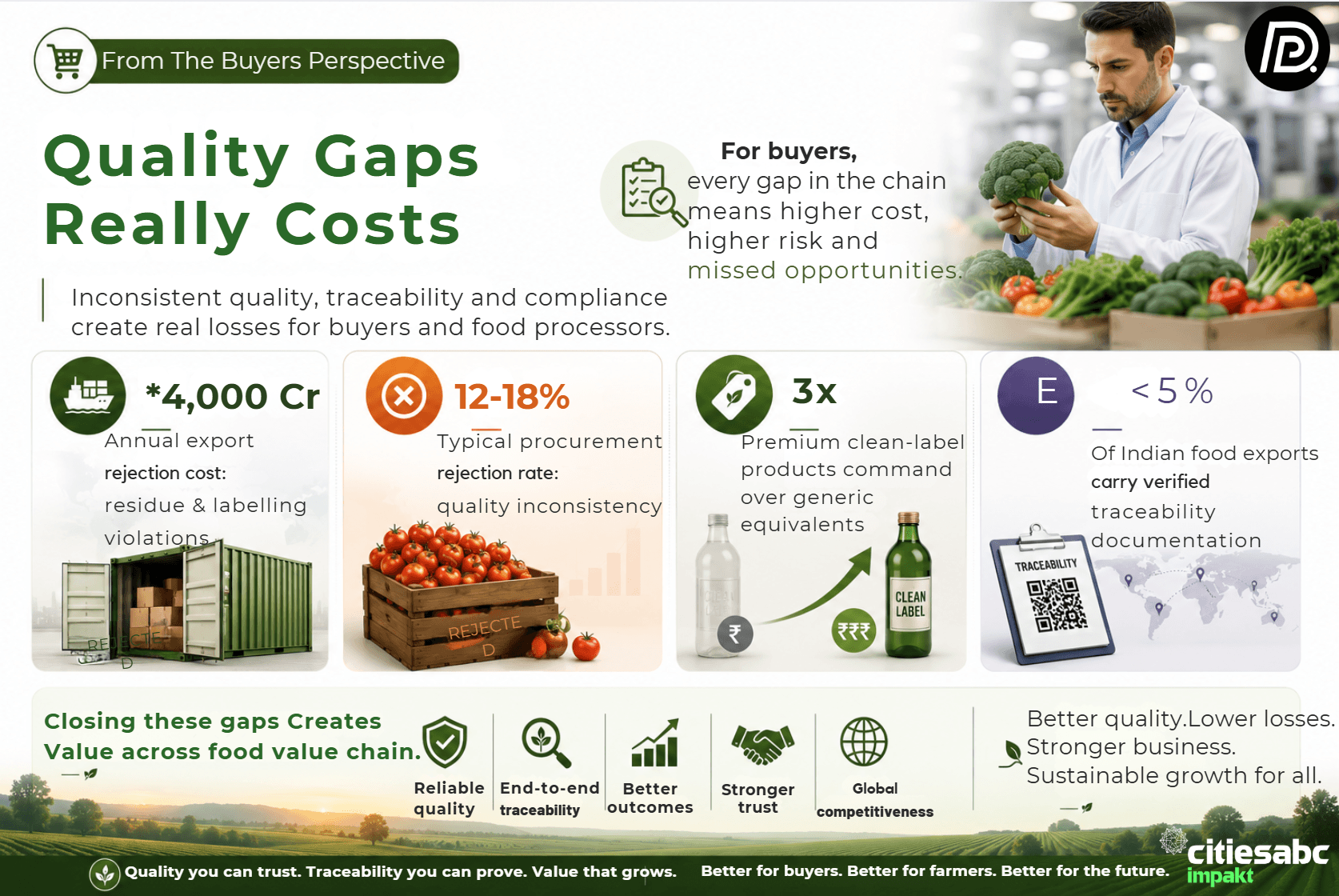
The food processor that struggles to verify quality sets the lowest defensible price for all items, as it cannot justify a higher price for something that lacks proof of superiority. It is not an act of greed; it is a testament to rational risk management in a world without verification infrastructure. Unfortunately, the true cost is shouldered by the farmer who produces exceptional quality, yet receives the same price as the one who does not.
When you purchase food at a local grocery store, supermarket, from a restaurant, or online, how much of your decision is influenced by verifiable information compared to marketing claims? What would it take for you to trust a quality claim made about a food product, truly? Additionally, how much would you be willing to pay for that level of trust?
What Quality Failure Actually Costs a Food Business
The procurement rejection rate that Prabhav is reviewing highlights an opportunity to address a broader issue within our supply chain. By establishing a reliable quality signal between the farm and the processing gate, we can significantly enhance our operations. Let's evaluate the tangible benefits of implementing this improvement across the food processor's business, focusing on how it can enhance efficiency and reduce costs.
| Quality Failure Type | Cost To Buyer | Root Cause |
| Pesticide residue above Maximum Residue Limit (MRL) | Product recall, regulatory fine, export rejection, brand damage, i.e. around ₹15–80 Cr per incident | No verified input log at farm level. No traceability to identify affected lots |
| Moisture content variance | Yield loss in processing (1% excess moisture = 1.2% yield reduction in paste), reformulation cost | No standardised grading at farm gate, visual inspection insufficient |
| Colour inconsistency | Batch rejection, downgrade to commodity grade, loss of clean-label premium | No documented harvest timing or variety specification in supply chain |
| Microbiological contamination | Recall, destruction of stock, customer claim, reputational damage | No cold chain documentation; no farm-level hygiene verification |
| Incorrect variety for specification | Processing line reconfiguration, product quality variance, customer complaint | Variety not documented at point of supply; seed lot not traceable |
| Organic certification fraud | Premium payment without premium produce; regulatory exposure if misrepresented | No independent verification of input use; certification often paper-only |
Determining the total economic cost of quality failures within Indian food processing presents challenges, as many companies do not publicly share their rejection data. Nonetheless, industry estimates indicate that quality inconsistency could be costing the organised food sector between 8 and 15 percent of its annual raw material procurement value. With a sector-level procurement base of approximately ₹2.5 lakh crore, this translates into a potential annual cost of ₹20,000 to ₹37,500 crore. Addressing even a portion of this issue could significantly transform the industry.
Procurement leaders in food companies are well aware of these figures, but the challenge lies in effectively minimising these losses. To make meaningful progress, there's a critical need for access to farm-level data. By gaining insights into quality at the source, companies can better identify and mitigate quality issues before they reach the processing stage. Fostering collaboration and innovation in data sharing could pave the way for enhanced quality control and, ultimately, a more resilient and efficient food processing sector.
The Insurance Policy Framing: Traceability is often viewed as an ethical investment expense that food companies incur to meet ESG commitments, fulfil certification requirements, or enhance brand marketing. However, this perspective can hinder the adoption of traceability in Indian food supply chains. A more constructive way to frame traceability is as insurance. By utilising a verified, blockchain-based traceability record from farm to gate, companies can effectively lower rejection rates, mitigate recall risks, reduce regulatory exposure, and decrease reformulation costs. When analysed from the viewpoint of cost reduction associated with quality failures, the return on investment for traceability becomes clear. For any food company with a rejection rate above 8 percent, such as Prabhav's 12 percent, investing in traceability is likely to deliver a positive ROI.
The Information Gap Between Specification and Reality
Each food company maintains a quality specification document that thoroughly outlines the requirements for each raw material input. These documents can be extensive and often contain detailed technical information. However, at the point of purchase, it can be challenging to verify that incoming produce meets these specifications, as the supply chain currently lacks a robust mechanism to document compliance.
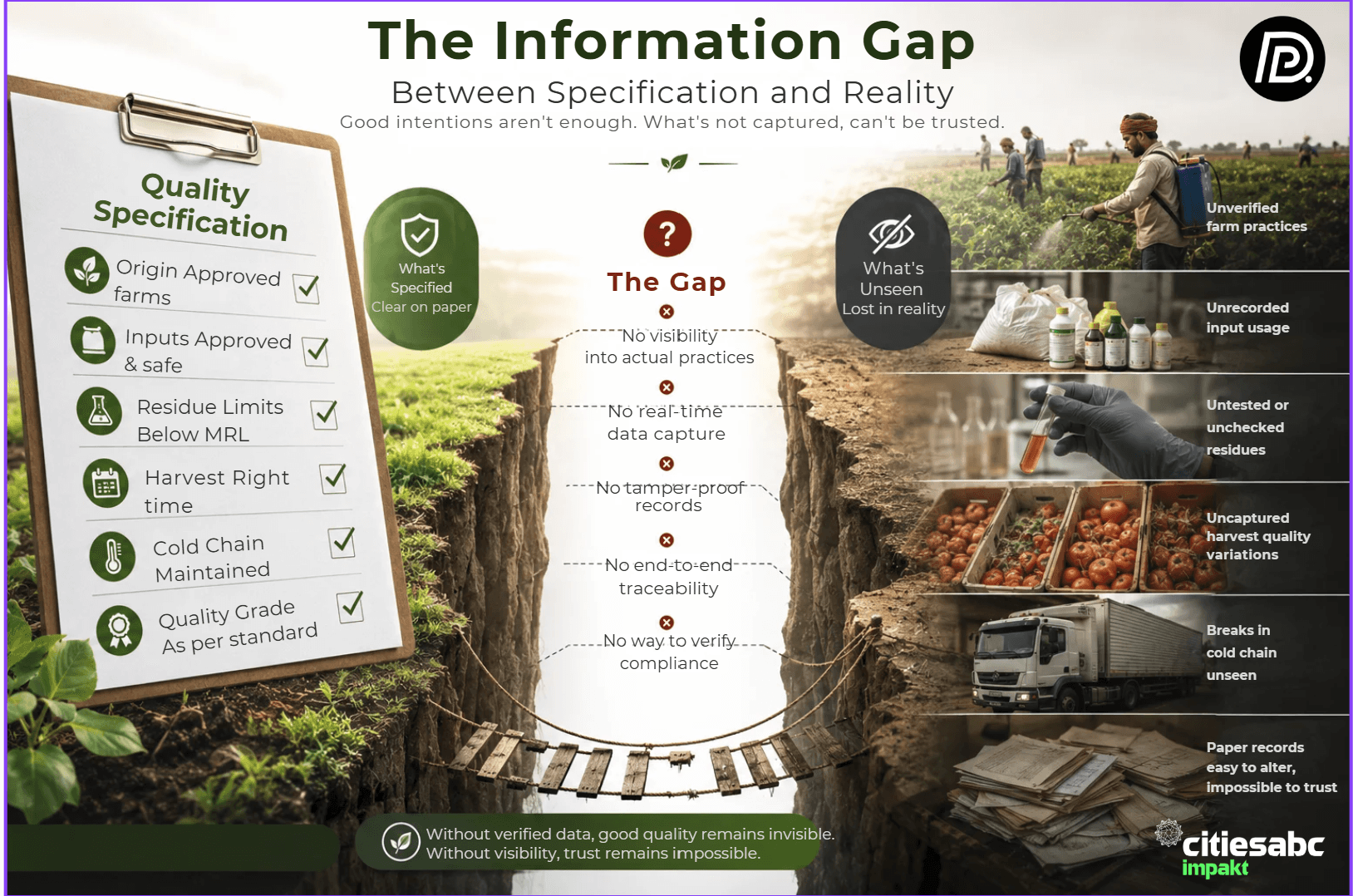
To enhance the quality assurance process, it would be beneficial to develop a traceability system. Such a system would bridge the gap between what food buyers seek to know and what they can currently verify, addressing the quality premium gap from the demand perspective. The following table illustrates this relationship, highlighting areas for improvement to ensure product quality meets buyer expectations.
| What Buyers Want To Know | What They Can Currently Verify | What Traceability Enables |
| Which farm did this come from? | Country of origin only, state at best | GPS-linked farm parcel with farmer identity |
| What inputs were applied and when? | Nothing, paper declaration at best | Blockchain input log, product, dose, date, applicator |
| Was the MRL threshold respected? | Lab test on arrived lot, after purchase | Input log cross-checked against MRL table before dispatch |
| What variety was planted? | Self-declared by aggregator | Seed lot number recorded at planting: verifiable |
| When was it harvested? | Approximate window from aggregator | Harvest date stamped by field agent with GPS |
| Was the cold chain maintained? | Visual inspection and temperature log from truck only | IoT temperature sensor from farm gate to processing gate |
| Is the organic claim genuine? | Third-party certificate: often paper-only | Input log, soil test, no-prohibited-substance verification |
| What is the nutritional profile? | Laboratory test on sample: not traceable to specific farm | Calculated from soil health data + input log + variety |
The features outlined in the right-hand column of that table are not merely theoretical. They are actively being utilised on farms connected to the Citiesabc Impakt Platform. Capabilities such as the blockchain input log, GPS-stamped harvest records, IoT cold chain monitoring, and nutrient calculations from soil and input data are already enhancing farm operations today.
However, to fully realise the potential of these advancements, integrating farm-level data into food processors' procurement systems is essential. Establishing an API connection would allow buyers to access verified quality records at the intake stage, which marks a significant step forward.
This integration holds transformative potential. Buyers who can view verified quality records before purchase will be incentivised to offer differentiated pricing. In turn, farmers who know their verified records are under scrutiny will be motivated to maintain accurate records. This model facilitates a flow of premium pricing from buyers to farmers through a robust verification mechanism, effectively replacing the traditional reliance on trust. In a commodity market lacking verification infrastructure, this innovative approach can ensure accountability and quality assurance, benefiting all stakeholders.
A food processor that can assess quality before making a purchase doesn't have to pay the same price for every product. They can choose to pay more for higher-quality produce, less for lower-quality options, and, most importantly, they can discern the differences in quality. This price signal, which flows back through the supply chain, influences farmers' behaviour. It's not about education or extension services; it's about the pricing.
If you were running a food company with access to a verified digital record detailing how each lot of raw material was grown, including inputs, harvest timing, cold chain, and nutritional profile, how would this impact your procurement strategy? How much more would you be willing to pay for a lot with a verified clean record compared to an unverified one?
Millions Lost Annually & Every Rupee Is Traceable to a Missing Record
India holds a prominent position as one of the world's largest agricultural exporters, offering a diverse array of products, including rice, spices, fruits, vegetables, marine products, and processed foods. However, it also faces challenges with import rejection notices from markets such as the EU, the US, Japan, and the Gulf Cooperation Council. Organisations such as the Food Safety and Standards Authority of India (FSSAI) and the Agricultural and Processed Food Products Export Development Authority (APEDA) are responsible for monitoring these incidents. However, detailed statistics are not widely disseminated, raising concerns.
The European Union's Rapid Alert System for Food and Feed (RASFF) database indicates that India often ranks among the top five source countries for various notifications, which include information notices, border rejections, and product recalls. The predominant issues are pesticide residues exceeding the EU's MRL, microbiological contamination, and incorrect or fraudulent labelling. Each of these challenges highlights an opportunity to improve traceability throughout the supply chain.
For instance, a pesticide residue violation suggests that, at some stage between the field and the export container, an input was incorrectly applied without proper documentation. Similarly, microbiological contamination indicates an undocumented disruption in the cold chain. Fraudulent labelling indicates a lack of verified records to support the product's authenticity.
Implementing a robust traceability system can significantly mitigate these issues. By utilising technologies such as blockchain to verify input logs, GPS-stamped harvest records, and documented cold chain processes, exporters can significantly reduce the risk of MRL violations. With a proactive approach to compliance and traceability, the costs associated with rejections can be minimised, benefiting both producers and consumers in the long run.
The Cascading Cost Of A Single Rejection
A rejected export lot carries costs beyond just the value of the produce. It includes expenses such as shipping costs, customs clearance fees, storage fees at the destination port, testing costs, and the logistics of returning or disposing of the goods. Additionally, it may result in the loss of buyer relationships, the potential for the exporter to be blocked from the destination market, and damage to the reputation of Indian produce within that category. For a mid-sized export house, a single rejection can cost 8 to 12 times the value of the rejected lot. Implementing a traceability system that prevents even one rejection per quarter can pay for itself within the first year, especially for any exporter with annual revenues exceeding ₹20 crore.
Why the Food Processor Cannot Simply Pay More for Better
It's insightful to analyse the complexities surrounding the solution, which suggests that food processors like Prabhav should offer higher prices for traceable produce, thereby encouraging the market to adapt. Prabhav's considered response highlights some important challenges that need to be addressed.
Firstly, verification is crucial. If Prabhav were to offer a 20 percent premium for 'traceable organic' tomatoes, everyone in the supply chain would likely claim their produce met those standards. Without a reliable, tamper-proof verification system, this premium risk becomes a means of misrepresentation rather than a genuine incentive for quality. Establishing a robust verification process is essential to prevent fraud and maintain integrity.
Secondly, there's the challenge of scale. Prabhav's plant processes 800 metric tonnes of tomatoes monthly, while an individual farmer cultivating traceable tomatoes on just five acres might only yield 30 metric tonnes per season. To fulfil his entire requirement from verified farms, Prabhav would need to establish relationships with numerous individual farms, a significant undertaking that he currently cannot manage effectively. Creating an aggregation layer that can combine volume while ensuring farm-level traceability is vital. This is exactly what the FPO connected to the Impakt Platform is designed to achieve.
Lastly, we encounter the chicken-and-egg dynamic. Farmers are hesitant to invest in traceability infrastructure without assurance that buyers will pay a premium for it. Conversely, buyers are cautious about committing to a premium without the means to verify traceability at scale. Both parties are waiting for the other to take the first step. The key to breaking this stalemate lies in a platform that provides verification infrastructure for both sides concurrently, offering farmers the necessary records while giving buyers access before trust is established.
By addressing these challenges constructively, Citiesabc Impakt can pave the way for a more efficient and transparent supply chain that benefits both farmers and food processors.
What Prabhav Would Change If He Could
Prabhav has diligently maintained a list for six years, continuously updating it as he navigates challenges in solving his supply chain quality problem. This list reflects a unified vision for enhancing the quality of incoming produce:
- A verified input log for every lot of produce, utilising a cryptographically signed blockchain record. It allows his intake quality control team to verify compliance before accepting deliveries, ensuring higher standards upfront.
- An accessible API connection to farm quality data, including soil health, input history, harvest timing, and cold chain records. It lets Prabhav match actual agricultural practices against his specifications, fostering transparency and accountability.
- Collaboration with a farmer-producer organisation (FPO) or aggregation partner that guarantees a consistent volume of produce while providing individual farm-level traceability. This arrangement enables Prabhav to confidently sign forward contracts, secure in the knowledge that supplies will meet specifications.
- A pricing mechanism that incentivises quality at the supply point instead of penalising failures at the intake stage. It encourages suppliers to proactively invest in compliance, shifting the focus to preventing issues before they arrive.
- An insurance product linked to verified quality data, ensuring that when a lot does not meet standards despite good-faith efforts, the financial loss is shared rather than solely absorbed by the processor or unfairly charged back to a well-intentioned supplier.
Each element of Prabhav's list corresponds to features of the Citiesabc Impakt Platform's architecture. Components like the blockchain quality certificate, the API gateway for buyer integration, the FPO aggregation layer with farm-level traceability, the quality-based pricing mechanism, and the intelligent insurance trigger are operational tools purpose-built to address the verification gaps that have traditionally complicated supply chain quality.
The food processor does not require the farmer to enhance the quality of their extraordinary produce. Indian farmers already cultivate remarkable food. What the food processor needs is a system that can validate this excellence, ensuring quality claims are verifiable before purchase rather than discovered only after rejection.
What Changes When Quality Becomes Verifiable
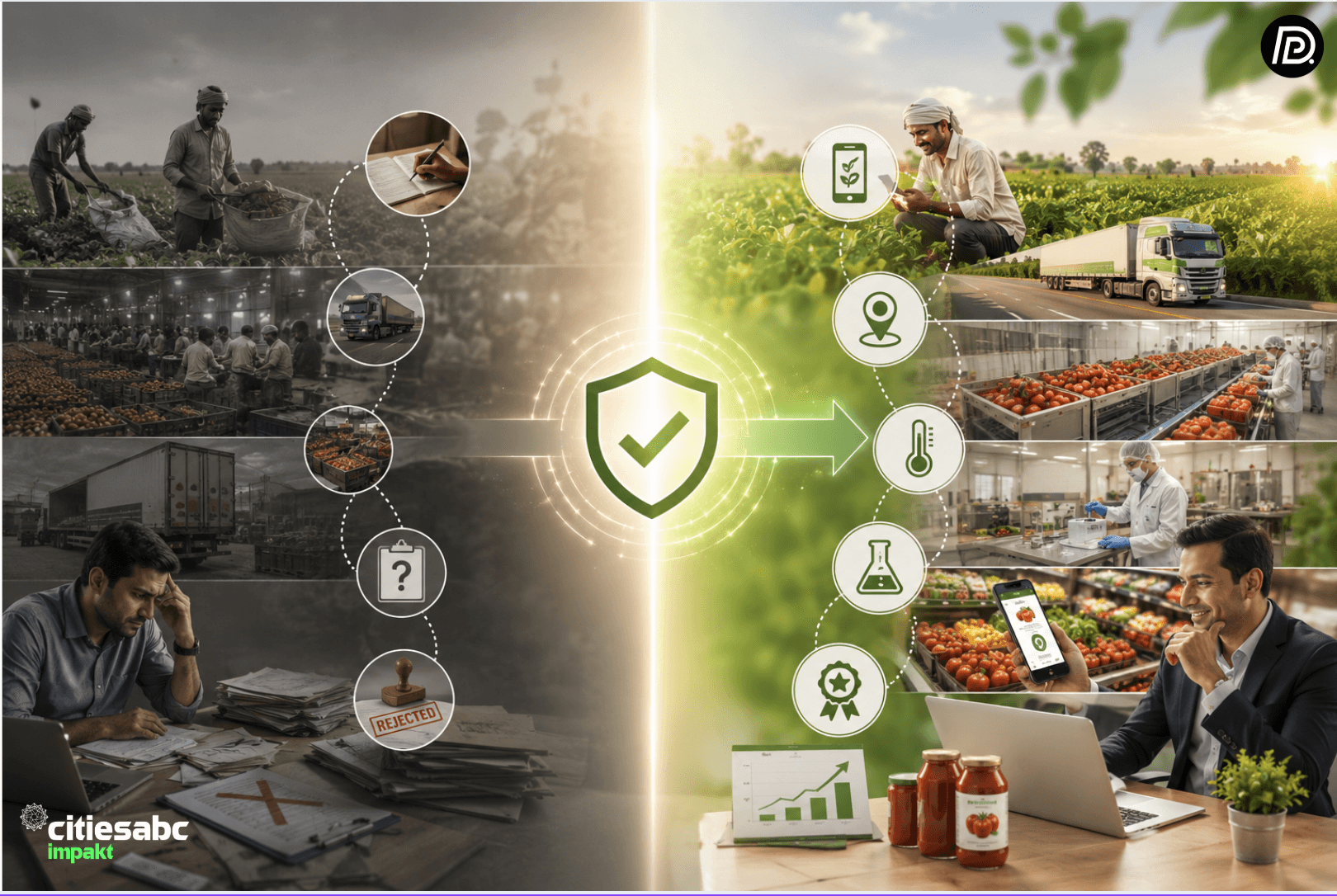
The four reform directions outlined below are actionable strategies that become feasible with the implementation of farm-to-gate traceability. Each direction is backed by a solid business case, allowing Prabhav's team to analyse and compare against current quality failure costs effectively. These shifts not only enhance operational efficiency but also pave the way for significant improvements in our business model.
Model 1: Specification-Linked Forward Contracts
When a food processor has access to a farmer's or a Farmer Producer Organisation's verified production record input log, soil health data, crop variety details, and harvest timing before the growing season, it opens up opportunities for forward contracts that link pricing to specification compliance. This arrangement benefits the farmer, as they gain clarity on the price they will receive at planting time, provided they meet the agreed specifications. Simultaneously, the buyer gains assurance about the quality of the product they will receive, facilitating a mutually beneficial relationship. Both parties effectively mitigate price risks, and the verification system enhances the buyer's confidence in product quality.
Business Case
Pilot program documentation shows that specification-linked contracts can reduce procurement rejection rates by 40–65%, eliminating the premium-discovery timing issue that currently prevents buyers from paying above-market prices for quality they cannot yet verify.
Model 2: Premium Tiering Based on Verified Quality Score
A food company utilising blockchain-quality data can adopt an innovative tiered pricing model instead of a flat rate for all produce that meets minimum specifications. This model offers distinct pricing tiers:
- Standard Grade: This grade meets the basic minimum specifications but lacks traceability documentation and is priced at the market rate.
- Verified Grade: Produce in this tier not only meets the necessary specifications but also comes with a blockchain quality certificate, commanding a price that is 15–20% above the market average.
- Premium Grade: This top-tier product is fully verified, organic-certified, and tied to a specific variety, with documented cold-chain logistics, allowing it to be priced at a premium of 30–45% above market rates.
This tiered approach enables pricing to reflect buyers' willingness to pay for assured quality, shifting the focus from trust in the seller to confidence in verified product integrity.
Business case
Brands that have embraced verified quality tiering are experiencing remarkable transformations, with a 28% reduction in raw material cost variance, a 40% decrease in rejection rates, and a significant boost in finished product consistency scores, ultimately justifying the premium payment through impressive downstream quality improvement.
Model 3: Clean-Label Export Documentation as a Service
For Indian exporters looking to enter the EU, UK, US, and Japanese markets, it's essential to recognise that Maximum Residue Limits(MRL) requirements are significantly stricter than those in the Indian domestic market. As digital traceability becomes increasingly important, it shifts from a differentiator to a necessity. By utilising technology for input logs and GPS records of harvests, exporters can create reliable export documentation. Those who can provide a digitally verified, tamper-proof record of all inputs applied to each lot, formatted to meet the specifications of the importing country's food safety authority, will experience a lower risk of rejection. This capability not only enhances compliance but also opens doors to premium market buyers who prioritise this level of documentation as a key condition for trade.
Business case
Export houses equipped with verified traceability documentation experience a remarkable 70–85% reduction in destination-country rejection rates, unlocking access to premium retailers, health-focused brands, and institutional buyers that were once beyond reach due to documentation barriers.
Model 4: Supply Chain Insurance Linked to Verified Farm Data
Innovative insurance products that leverage verified quality data significantly improve the risk assessment for both buyers and farmers. When a lot is rejected due to a documented supply chain issue, such as a cold chain disruption confirmed by IoT data or a pesticide application recorded in the input log that discourages insurance activation, it occurs automatically, leading to prompt settlements. This approach transforms the current landscape, where quality disputes are often settled through negotiations that may favour buyers, into a more equitable process grounded in verified data, ensuring transparent outcomes for both parties.
Business case
Pilot programmes in Maharashtra and Karnataka demonstrate the transformative power of supply-chain insurance linked to verified data, cutting dispute resolution time from 45 days to just 6. This innovation not only accelerates the development of solutions but also empowers farmers to openly address quality issues, fostering a culture of transparency and trust.
What Changes When Prabhav Can See the Farm
It is 11:30 AM. Prabhav has just completed a review of his rejection report and is now engaged in a call with his operations director to discuss an urgent spot purchase needed this week to address the rejected lots. The spot purchase will be 22 percent above the contracted price, with quality still uncertain. They plan to conduct an expedited lab test to ensure the product meets their standards.
Prabhav has held variations of this conversation for the past six years, highlighting an underlying structural issue: he often buys produce without visibility until it arrives. The supply chain connecting him to the farmers who grow the tomatoes lacks transparency. However, this visibility is available to the FPO leader, who understands her members' farming practices, to the field agent who tracks input applications, and to the Agri LLM that identifies moisture content risks five days before harvest. The information is out there, but hasn't been integrated into Prabhav's procurement system.
This integration is precisely what the Impakt Platform's buyer API offers. By connecting Prabhav's procurement system with the platform, he can access essential data such as the verified identities of contributing farms, complete input logs for the crops, soil health baselines, harvest date stamps, grading results from certified quality partners, and cold chain records from the FPO aggregation centre to his location before accepting any delivery or processing payment.
This enhanced visibility will facilitate three significant changes.
- Prabhav can confidently pay more for higher-quality produce because he can verify its excellence upfront.
- Farmers who produce high-quality crops using the right inputs at the right times will receive prices that reflect their efforts. and
- Farmers who fall short will receive lower prices with clear feedback on the reasons, incentivising them to improve their practices.
This is the ideal way for markets to operate. Unfortunately, the verification infrastructure necessary for this to happen has been lacking in Indian agriculture. Building this infrastructure is not merely a charitable act or corporate social responsibility; it is essential for establishing an effective market that benefits not just Prabhav, but Raju and every participant in the agricultural supply chain.
The farmer cultivated exceptional food. The food processor sought the same quality. Yet between them lay a flawed verification system, rendering 'good' unprovable and thus unpriceable. This is the quality premium gap, not a gap of effort or intention, but an infrastructure gap. And that infrastructure can be built.
Prabhav's rejection report indicates a 12% raw-material rejection rate this quarter, resulting in a quality failure cost of ₹2.8 crore. Implementing a traceability system that lowers the rejection rate to 4% could save approximately ₹1.9 crore per quarter. If Prabhav shares half of these savings as a quality premium with the farmers contributing to improved quality, what would that equate to for a Vidarbha farmer managing four acres? Additionally, what measures would ensure both parties trust the system enough to engage with it?
Next In Voices From The Chain: Article 7 Of 8
I Share the Solutions. Few Experience Them. The journey of the agricultural scientist. Discover why India's exceptional agricultural research system generates thousands of peer-reviewed findings each year that often fall short of transforming farm practices. It's a call to address the challenge of knowledge sharing rather than knowledge application, and to recognise that bridging the divide between Dr Priya's insights and Raju's choices demands more than improved extension services.
About This Series
“Voices from the Chain is an important addition to the Agriculture Gap Series, building on the insights from 'The Price of Ignorance: Mapping the Gaps That Cost Indian Agriculture Trillions,' which can be found at impakt.citiesabc.com. Over the past year, I have engaged deeply with the agricultural community by visiting farms, attending agri-sector seminars, and connecting with FPO leaders, agronomists, and input dealers throughout Maharashtra and beyond.
The Citiesabc Impakt Platform has emerged as a pivotal initiative to address gaps identified in recent agricultural research. The project is informed by insights from "Voices from the Chain," a publication in The Capital Signal, part of the Agriculture Gap Series. This publication builds on a foundational report titled "The Price of Ignorance: Mapping the Gaps That Cost Indian Agriculture Trillions," which can be accessed at impakt.citiesabc.com.
The author dedicated a year to visiting various agricultural settings, including farms, mandis, farmers' producer organisations (FPOs), and agri-businesses throughout Maharashtra. The findings from these explorations directly guided the development of the Citiesabc Impakt Platform, which aims to enhance the agricultural landscape by addressing documented issues. The tags associated with this initiative highlight critical topics such as APMC reform, price discovery, and information asymmetry in agricultural markets.


