


resources-impakt
Voice Of Input Dealer: I Sell You the Seed & Advice, Only One of Those Is in Your Interest
14 May 2026

This article explores the underlying structural challenges in Indian agricultural advice, emphasising that effective solutions require addressing the incentives at play rather than focusing solely on farmer training.
It’s important to note that this discussion is not meant to criticise input dealers. Many are small business owners who face significant financial pressures and cultivate meaningful relationships with their farmer customers, often rooted in genuine goodwill. The goal here is to shine a light on the incentive system they operate within, suggesting that the issues stem from the overall structure rather than individual actions. Recognising this distinction is essential for fostering meaningful change in the agricultural landscape.
Previously In Voices From The Chain
Part of the Agriculture Gap Series, Building on 'The Price of Ignorance' and followed by the series of Article 1: 'Voice of Farmer: He Grows It. Others Price It' Article 2: Voice of Agronomist: I Know Your Soil, But I Can't Reach You, and Article 3: Voice Of An FPO Leader: We Are Stronger Together, The System Does Not Believe That Yet, which explore the journey of Raju, a cotton farmer from Vidarbha, Dr Priya, an agricultural scientist from Pune, and Meena the chairperson of FPO. all face challenges due to a lack of vital information and the inability to translate research into practical applications in the field or agree on the joining hand to grow and sell.
These challenges highlight a common issue: talented individuals often cannot reach their full potential without a robust support system and the power of collaboration.
Agri-Input Shop Owner Advisor
Vijay's shop opens at eight-thirty each morning, and by nine, three farmers are already seated on the familiar bench outside just as his father had placed it in 1987 when the shop first opened. By midday, the number of farmers waiting could reach twelve or even fifteen. Most of them will make a purchase, but before that, they all seek advice.
This vital role of providing guidance was once filled by the government extension officer, whose name Vijay struggles to recall. This officer visited the village twice a year in the early 2000s, but after 2008, when the program was restructured and the position was left vacant, that source of support disappeared. Ever since, a consistent question has emerged from every farmer who visits Vijay, what should I do?
Farmers come in with queries about their yellowing leaves, what to plant for the upcoming season, the appropriate amount of urea for their soil, effective pesticides for newly discovered pests, the timing of spraying, and whether a new seed variety is more suitable than their last.
Vijay takes the time to answer all these queries, drawing on his twenty-two years of experience. While he may not possess the extensive knowledge of a trained agronomist, he brings a wealth of practical insight that most farmers lack. He has participated in product training sessions led by 12 different input companies, each promoting its solutions to farmers' challenges. Over the years, he has gained a solid understanding of what works and what doesn't. In many ways, he has become the go-to agricultural advisor for the forty-odd villages his shop serves.
It's worth noting that Vijay's recommendations also influence his business. This dual role positions him uniquely within the community, fostering a relationship in which informed advice and local agricultural needs intersect for the benefit of all involved.
The input dealer did not steal the advisory role. The advisory system vacated it. When the government extension officer stopped visiting, the market filled the vacuum with the person who was already at the farm gate for commercial reasons. The problem is not that dealers give advice. It is that the incentive attached to their advice points in the wrong direction.
The Most Consequential Unregulated Advisor in Indian Agriculture
To gain a comprehensive understanding of the incentive structure in Indian agriculture, it is crucial to acknowledge the vital role of input dealers in providing agricultural advice. The statistics underline their significance.
India is home to approximately 270,000 registered agricultural input dealers, with informal estimates suggesting that the number of active sellers, including unlicensed operators, may be even higher. These dealers cater to around 140 million farming households, resulting in roughly one dealer for every 500 households. This accessibility makes input dealers much more reachable than government extension officers, many of whom are currently unavailable due to vacant positions.
In rural Maharashtra, for example, farmers are often more inclined to seek help from their input dealers for crop-related concerns than to reach out to KVK scientists, read advisory pamphlets, call helplines, or use digital platforms. Input dealers are embedded within communities, foster personal relationships, communicate in the local language, provide credit facilities, and are available every day of the week. For numerous farming households, the input dealer serves as the primary and often sole source of agricultural advice.
This scenario offers a unique opportunity for agricultural institutions to rethink their approaches to knowledge delivery. Instead of relying solely on an extension system that struggles to meet the diverse needs of farmers, there is potential to capitalise on the established trust and accessibility of input dealers. By recognising and integrating the critical role of these dealers, agricultural advice can be made more effective, aligning closely with farmers' practices and requirements. It's time to harness this existing network to drive improved agricultural outcomes.
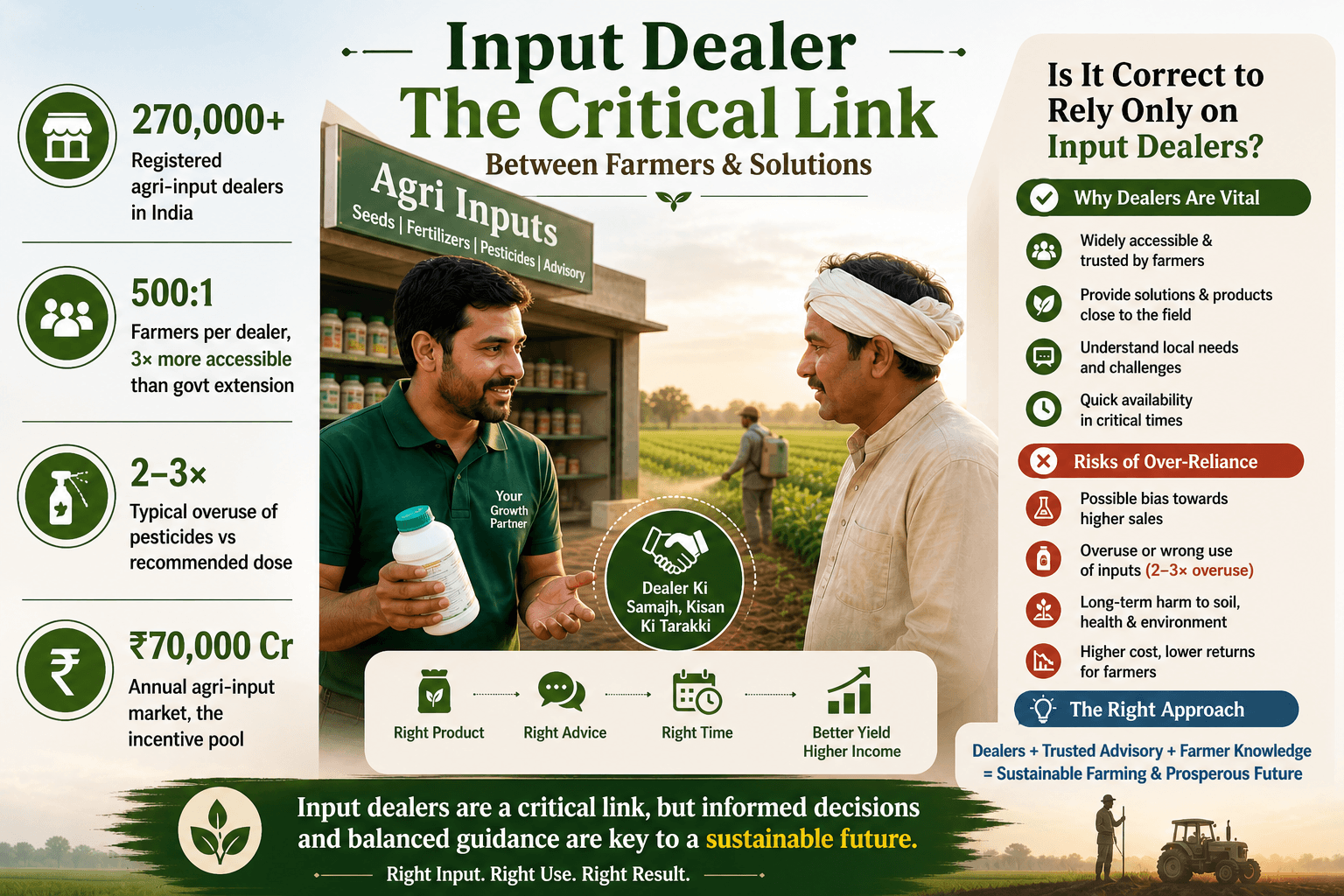
The input dealer did not take away the advisory role; rather, the advisory system created space for new opportunities. When the government extension officer ceased visits, the market stepped up, filled with individuals already present at the farm gate for commercial reasons. The focus shouldn’t be on dealers providing advice, but rather on ensuring the incentives linked to that advice lead us towards the right path.
Understanding the Margin Architecture That Shapes Every Recommendation
To gain insight into the structural biases in the advice given by input dealers, it's essential to examine their business models, which reveal how they generate revenue. This analysis helps clarify the potential advice challenges without assigning any deliberate dishonesty to the dealers.
For a typical rural input dealer like Vijay in Maharashtra, revenue primarily stems from three key sources, which generally break down as follows:
- Product Margins: This represents the difference between the wholesale price paid to distributors and the retail price charged to farmers. Margins vary significantly by product category. For instance, generic fertilisers like urea and DAP have slim margins of 3 to 7 per cent, often due to government price controls. In contrast, branded pesticides and proprietary seed varieties can yield margins of 15 to 30 percent. At the same time, new or premium product launches may offer additional dealer incentives, boosting effective margins of 35 to 45 percent during their initial seasons.
- Volume Incentives: Manufacturers often offer bonuses for achieving sales targets on specific products, which can add 8 to 15 per cent to turnover on those products. When dealers successfully meet these targets for branded pesticides, they might receive cash payments or merchandise bonuses at the end of the quarter. This system encourages dealers to focus on high-volume sales of products with higher margins, regardless of farmers' specific needs.
- Credit Interest: Many rural input dealers offer seasonal credit, enabling farmers to purchase inputs upfront and pay later at harvest time. This credit typically carries an implicit interest rate of 18 to 36 per cent annually, either through explicit charges or integrated into the product pricing for credit customers. The reliance on credit can create a cycle of dependency, as farmers who owe money to the dealer at harvest often sell back to the dealer at potentially lower prices than the market rate.
Understanding these revenue sources highlights the factors influencing the advice input dealers provide, emphasising the importance of awareness around these dynamics for both dealers and farmers.
The Advisory-Sales Bundling Problem: When a transaction involves both the sale of a product and professional advice regarding its necessity, quantity, and duration, there's a risk that the advice may unintentionally prioritise the product over the farmer's best interests. This challenge is not exclusive to agriculture. It mirrors situations in financial services with commission-based advisors, in medicine with relationships between pharmaceutical companies and prescribing doctors, and in law, where hourly billing may encourage complexity rather than efficient resolution. To address these conflicts effectively, a structural solution could be to distinguish income from advisory services from income from product sales. Promoting this separation in Indian agriculture could lead to more balanced decisions that truly benefit farmers.
Consider a professional advisor you've worked with, like a financial advisor, doctor, mechanic, or lawyer. Have you ever questioned if their recommendations were truly in your best interest or if they were more focused on their own earnings? What clues did you notice to support your thoughts? How would you feel if you discovered they were receiving bonuses from the companies tied to the products they suggested?
Agronomically Optimal vs Commercially Optimal: Seven Decision Points
The difference between recommended agronomic best practices and the incentives faced by input dealers is a notable pattern that emerges at seven key decision points for farmers. The following table illustrates this pattern effectively.
It's important to note that this table reflects general trends within the incentive structure, rather than the actions of every individual dealer. Many dealers do prioritise recommending the agronomically correct products, particularly when those choices are also profitable or when they value their long-term relationships with farmers over short-term gains. The key takeaway is that while individual dealers may strive for accuracy and integrity, the overall incentive structure can create pressures that lean towards profitability. This aggregated impact, when considered across the landscape of 270,000 dealers and 140 million farm households, has the potential to lead to significant consequences in farming practices.
| Agronomically Optimal | Commercially Optimal For Dealer |
| Minimum effective dose of fertiliser based on soil test | Recommended dose or higher, 'insurance' framing reduces liability and increases product volume |
| Generic or off-patent product where efficacy is equivalent | Branded or proprietary product with higher margin and volume incentive |
| Biological or IPM pest management as first-line response | Synthetic pesticide as default, faster acting, visible result, higher margin |
| Wait and monitor before intervention, many symptoms resolve | Immediate application, removes risk of farmer returning to complain |
| Crop rotation or fallow to break pest and disease cycle | Increased pest management spend, higher chemical sales next season |
| Reduce irrigation frequency to build root depth | Standard schedule regardless of soil moisture, no financial stake in input reduction |
| Invest in soil health amendment over three to five seasons | This season's visible problem, the payoff horizon for soil investment is too long for a commercial transaction |
The column on the right highlights a common scenario in the agricultural sector: commercial dynamics often prioritise volume over accuracy. While the dealer who advocates the minimum effective dose and the use of generic products is acting in the farmer's best interest, they may find themselves at a financial disadvantage compared to those who promote higher doses of branded products.
This situation reveals a challenging balance: the dealer who prioritises ethical practices may face difficulties, while the dealer who thrives in the current system may not prioritise long-term sustainability. It underscores the need for a shift in industry incentives, so that principles aligning with agronomic best practices can be recognised and rewarded, fostering an environment where both ethical considerations and commercial success can coexist.
The market often favours misguided advice, not because farmers are unable to discern good from bad, as they usually can with experience. Instead, it's because transactions occur before outcomes are clear, and the deep relationships dealers cultivate with farmers give them a significant advantage over other information sources.
What the Incentive Divergence Looks Like in a Field
Examining incentive structures is crucial for understanding farmers' choices and can help them feel recognised and supported. The following three scenarios, reflecting common situations farmers across Indian farming districts face each season, highlight how the disconnect between commercial and agronomic advice can pose significant challenges for farmers and the broader food system. By addressing these gaps, we can work towards more effective solutions that benefit both the farming community and our food supply.
Case Study 1: The Yellowing Leaf
A cotton farmer is observing yellowing leaves in mid-season, which may indicate several potential issues. It could indicate a nitrogen deficiency, magnesium deficiency, spider mite pressure, or early signs of a fungal infection. Each of these problems requires a tailored response to address the underlying cause and promote healthy crop growth.
What agronomic advice says
It's recommended to begin with soil and tissue tests before any interventions. Conduct a careful visual inspection for mites using a magnifying glass. If a nitrogen deficiency is confirmed, consider applying 25 kg of urea per acre as a foliar spray, at a total cost of ₹180. Implementing these steps can greatly enhance crop health and yield.
What the dealer typically recommends
This product is a well-branded combination solution that features a fungicide, micronutrients, and an insecticide, specifically designed to address yellowing symptoms in crops. It offers a broad-spectrum approach to plant health management. The cost for this solution is ₹850 per acre, providing a solid margin of ₹240 per acre, significantly higher than the ₹18 margin associated with alternative responses.
Consequence to farmer
If nitrogen deficiency is the issue, the combination product offers a partial solution but also includes fungicide and insecticide that may add ₹670 in unnecessary costs. This could introduce residues and may not effectively resolve the underlying soil health problem for the upcoming season.
Case Study 2: The New Pest
A new pest species has been observed in the district, with reports from neighbouring villages. The farmer is seeking advice on effective spray options to manage the situation.
What agronomic advice says
It's important to take a thoughtful approach before spraying for pests. Begin by evaluating the actual level of infestation on your farm. Be sure to observe whether any natural predators are present that can help manage the pest population. If you find that the economic threshold has been exceeded, consider using the most effective product with the lowest toxicity at the recommended dosage for optimal results.
What the dealer typically recommends
It's advisable to apply a broad-spectrum insecticide promptly, selecting the product with the highest margin in the dealer's current stock or one that the manufacturer's representative recently promoted. Given the resistance observed in this pest, consider recommending a dose twice the label rate for more effective control.
Consequence to farmer
Unnecessary application of insecticides can kill natural predator populations, potentially leading to secondary pest outbreaks. Double-dosing accelerates resistance development. Rs. 600 spent on pesticides that were not needed can result in produce residues that exceed maximum residue limit (MRL) thresholds.
Case Study 3: The Input Planning Meeting
At the beginning of the season, a farmer takes the opportunity to strategise their input purchases. They recently reviewed their Soil Health Card, last updated 18 months ago, which contains valuable recommendations for enhancing soil quality. Specifically, it suggests reducing phosphorus levels while also increasing the application of micronutrients. This information will guide the farmer in making informed decisions for a successful growing season.
What agronomic advice says
To enhance soil health and nutrient efficiency, let's consider the following recommendations: Follow the Soil Health Card guidelines by reallocating 30% of the phosphorus budget towards micronutrient application. Additionally, incorporating a soil organic matter builder can further improve nutrient use efficiency. These adjustments could lead to a total input expenditure that is potentially 15–20% lower than the previous season.
What the dealer typically recommends
Please recommend the same input plan as last season, along with a newly launched premium slow-release fertiliser that offers a 25% dealer margin and a manufacturer target incentive. Although the Soil Health Card is mentioned, it will not be included in this recommendation.
Consequence to farmer
The farmer spends ₹4,200 more than the optimal agronomic plan for the season. Soil phosphorus levels continue to exceed agronomic requirements. The Soil Health Card system, despite significant government expenditure, has not changed farm practices.
The case studies mentioned are typical examples. In Indian agriculture, similar conversations occur daily in 270,000 shops involving 140 million farmers. What is the total cost of these conversations, and who is tracking it?
Why It Is Unfair to Make Vijay the Villain
At some point in reading this article, a perception of Vijay as a calculating exploiter of farmer trust may develop. However, it's important to dispel that notion to accurately understand the complexities of his situation and the underlying structural issues. Recognising his efforts to clarify his actions can help farmers and stakeholders feel respected and foster mutual understanding.
Vijay is navigating significant financial pressure. His shop embodies twenty-two years of family investment, and he employs two staff members. He faces seasonal cash flow fluctuations that could challenge even the most seasoned city-based professional. He extends credit to farmers, who sometimes struggle to pay at harvest, and assumes the risk associated with slow-moving or expired stock. Additionally, he competes with a new online agri-input platform that offers home delivery of branded products at discounted prices, which impacts his sales of the items that have traditionally provided him with margins. Understanding these challenges can help traders and development professionals feel empathetic and supportive of Vijay's situation.
When a manufacturer's representative offers a new product with a volume incentive, Vijay views it as a typical trade opportunity, similar to a supermarket negotiating better shelf placement. Recognising this as standard practice helps prevent misconceptions about his intentions and emphasises the normalcy of such incentives in his decision-making.
When Vijay recommends the branded combination product over a targeted generic, he believes he's offering a practical, convenient solution that could genuinely help farmers. His goal is to simplify their tasks and deliver results, even if partial. Understanding his intent to operate within system constraints fosters a more nuanced view of his actions and motivations.
The Real Target Of This Critique: The focus of the issue isn't Vijay himself but rather the system that positions a commercially motivated actor in an advisory role without ensuring the independence of that advice. To improve the situation, we need established mechanisms for assessing the quality of advice, accessible and trusted alternative information channels, and accountability for the outcomes of the advice given. Vijay operates within the existing framework, so to achieve better results, we should focus on reforming the system architecture rather than placing the blame on an individual.
The evidence suggests that Vijay's behaviour can adapt positively to changing conditions. When input dealers were introduced to a fee-for-advice model, compensating them based on the quality of crop outcomes rather than the volume of products sold, there was a noticeable improvement in their advice. This shift has led to increased agronomic accuracy in their recommendations, strengthened relationships with farmers, and enhanced long-term customer retention. It highlights that Vijay is responding to the system's incentive structure around him, rather than intentionally selecting less effective guidance. By creating a supportive framework, we can encourage better outcomes for everyone involved.
Vijay offers advice based on the incentives provided by the system he works within. If the incentives were to change, his advice would adapt accordingly. This observation highlights a fundamental principle of incentive design, one that institutions developing agricultural advisory systems can benefit from applying more effectively. By aligning incentives with desired outcomes, these institutions can improve the relevance and impact of the advice they provide.
Thirty Years of Input Dealer Advice: What It Has Done to Indian Soil
The long-term effects of excessive agrochemical use may not be immediately apparent, but they accumulate over time and primarily impact the soil, the foundation of agricultural productivity. Current data from the All India Soil Survey indicates that approximately 30 per cent of India's agricultural soils are deficient in organic carbon, a crucial nutrient for maintaining healthy, productive soil. In regions such as Punjab, Haryana, and western Maharashtra, where farming intensity is highest, this percentage is even greater.
The Green Revolution initially boosted soil productivity through chemical inputs. Still, we now observe a declining yield response to these same practices, a trend agronomists refer to as a decline in input use efficiency. This phenomenon arises when farmers, incentivised by the input dealer system, apply nitrogen fertiliser at rates two to three times above what is optimal. The surplus nitrogen that crops cannot absorb leaches into groundwater or escapes into the atmosphere as nitrous oxide, a potent greenhouse gas.
Moreover, the soil microbiome, which plays a vital role in making nitrogen available to plants, is affected by this excess. Soil compaction increases, organic matter diminishes, and the very yields that fertilisers aim to protect gradually decline, leading to a reliance on even more inputs. This cycle primarily benefits input dealers while compromising the ecosystem.
This realisation highlights an important opportunity for improvement. The current state of India's productive farmland provides a compelling case for adopting a carbon credit model. Farmers who adopt practices to restore soil health, such as reducing chemical inputs, incorporating organic matter, and demonstrating verified improvements, are providing valuable ecosystem services. These efforts deserve recognition and compensation, supporting both the environment and the farmers who steward it.
The Residue Connection: The dealer incentive problem presents an opportunity to enhance both agricultural practices and food safety. When farmers utilise pesticides at rates higher than recommended or use unregistered products for specific crops or pests, the potential for pesticide residue on produce may exceed the Maximum Residue Limit, raising food safety concerns. Currently, India's food testing infrastructure detects only a small portion of these issues. This situation puts farmers at risk, exposing them to potential health impacts, regulatory challenges, and even export rejections, collectively costing the sector approximately ₹4,000 crore annually. By fostering accountability among dealers who recommend products, we can work toward a more sustainable, safer agricultural environment that benefits both farmers and consumers.
Four Models That Change What Vijay Gets Paid For
The solutions to the dealer incentive issue are not overly complicated from a technical standpoint. However, they do involve institutional and political intricacies, as implementing them requires altering an economic framework that currently supports a large, widespread industry with considerable sway over state agricultural departments and political representation in rural areas. Fortunately, effective models are already available. They have been tested and have shown positive results. Here's an overview of what these solutions entail.
Model 1: Fee-for-Service Advisory Certification
Dealers who participate in a structured agronomic training program and successfully pass a certification examination earn the designation of Certified Agri-Advisors. This certification allows them to charge a separate consultation fee (₹50–200 per visit) in addition to their product sales. While product sales remain their primary source of revenue, the introduction of certified advisory fees enables them to provide guidance that is less reliant on selling specific products. This innovative model has been trialled in select areas of Karnataka and has demonstrated a promising improvement in the quality of recommendations.
Challenge: The certification requirement must be enforced, necessitating a regulatory framework that state agriculture departments have been hesitant to develop. Without proper enforcement, certification loses its validity.
Model 2: Platform-Linked Advisory: The Impakt Agent Model
The Citiesabc Impakt Platform introduces an innovative field-agent model that effectively addresses the input-dealer challenge by establishing an alternative advisory channel within the same geographic area. Certified Impakt Field Agents, often family members of local farmers, receive training in both agronomy and platform technology. They offer advice supported by the Agri LLM, ensuring that their recommendations are independent of any product sales. Instead of being incentivised by product margins, these agents are compensated by the platform for their advisory services. This approach allows farmers to continue purchasing from their usual suppliers, such as Vijay, while also gaining valuable insights from a trusted source without any financial bias.
Challenge: The field agent model works best in geographies with high FPO membership and established collective trust in the platform. In areas without that foundation, the input dealer's relationship advantage remains dominant.
Model 3: Outcome-Linked Dealer Incentives
Instead of providing volume incentives to dealers based on product sales, manufacturers and platform operators could explore a more innovative approach by implementing outcome-based bonuses. These bonuses would be aligned with measurable achievements such as verified crop yields, enhanced input-use efficiency, or improvements in soil health within the dealer's service area. This concept is already being utilised in certain private agri-input company programs, highlighting its potential. With the robust blockchain input log and IoT monitoring capabilities of the Impakt Platform, this outcome-focused model can be effectively scaled for the first time, paving the way for more sustainable agricultural practices.
Challenge: Manufacturers have limited incentive to adopt outcome-linked models while the current volume incentive model continues to generate sales. Structural change of this kind typically requires either regulatory pressure or a market signal from large buyers who value certified low-residue produce highly enough to pay a premium.
Model 4: Mandatory Input Logging and Transparency
Recording every purchase of agricultural products along with details such as product name, quantity, application date, and crop on a digital platform linked to the farmer's land parcel could lead to significant improvements in agricultural practices. Firstly, establishing an audit trail would enhance accountability by enabling traceability of residue violations back to the point of sale. This could encourage dealers to recommend only registered products and appropriate dosages. Secondly, aggregating this data would provide regulators, researchers, and policymakers with valuable insights into actual input use patterns, thereby replacing the current situation in which reliable data on what Indian farmers are applying to their crops is lacking. This initiative could ultimately contribute to better decision-making and sustainable farming practices.
Challenge: Data recording can either be required by regulation or adopted voluntarily. Mandatory recording can be a politically sensitive issue, while voluntary adoption relies on farmers recognising a clear benefit. This is most likely to occur when recording is associated with quality premiums and traceability labels.
What Changes If the Advice Changes
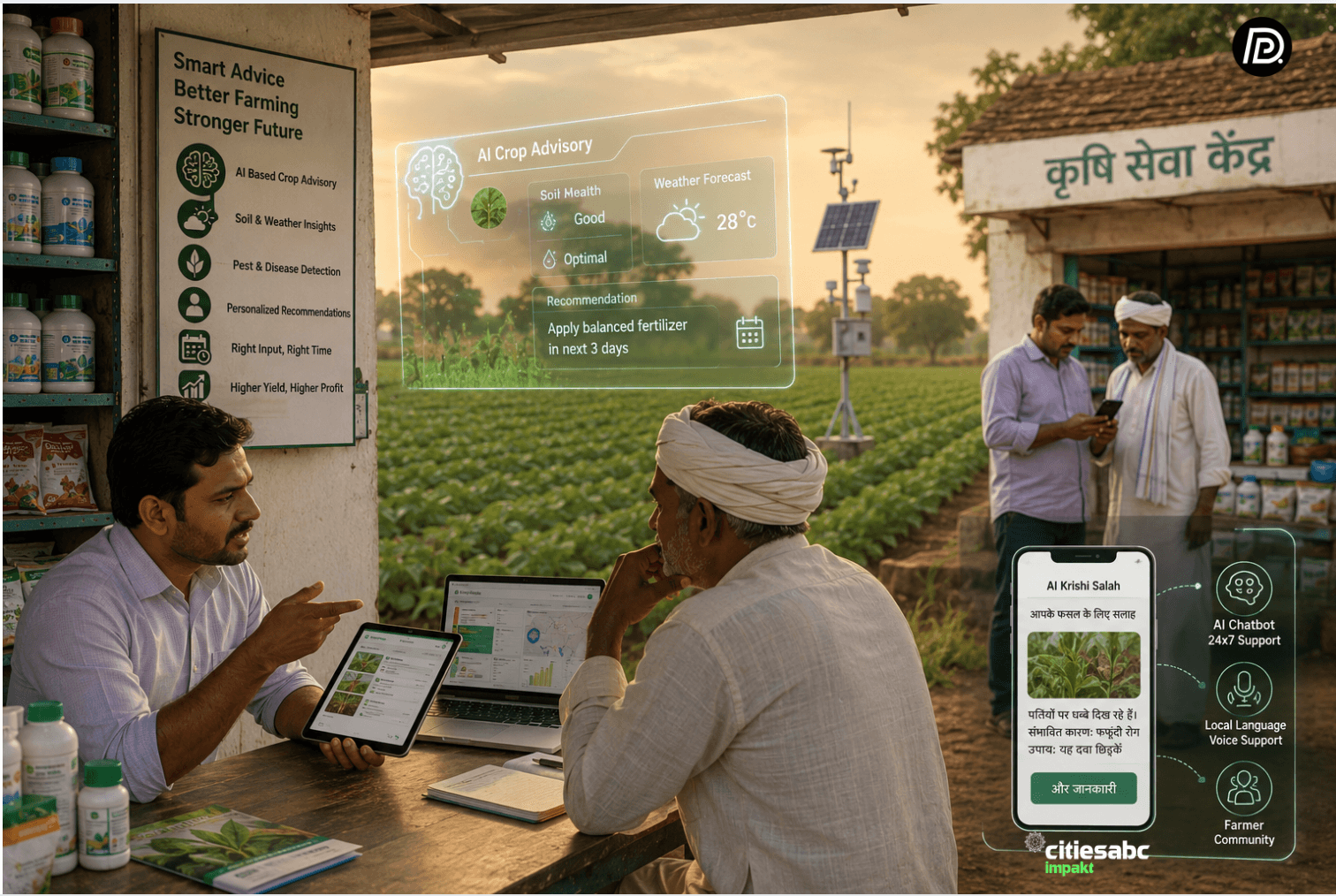
At six o'clock in the evening, as the last farmer departs, Vijay reflects on his day. He successfully sold products worth ₹ 28,400, a respectable figure. He provided guidance to nine farmers and feels confident that most of his recommendations were sound. However, he does have some lingering doubts about the combination product he sold to the farmer from Bhadli, who had yellowing leaves. Vijay suspects that the farmer's Soil Health Card, indicating magnesium deficiency, may have been a more relevant diagnosis. Nevertheless, the combination product was readily available, the manufacturer needed to meet their volume target, and the profit margin was appealing.
This sense of uncertainty represents a crucial opportunity for improvement. Vijay is not a bad person. Rather, he operates within a system that often prioritises immediate financial gains over optimal agronomic practices. The extension officer who could have confirmed the magnesium diagnosis has not been available, and the soil-testing lab is 40 kilometres away. Furthermore, the technology that could analyse soil sensor data and satellite imagery to identify the problem as magnesium deficiency instead of fungal issues has yet to reach his village.
Once this technology arrives and Vijay gains access to high-quality, farm-level data that an Agri LLM can convert into verified recommendations, the commercial pressures to overprescribe will not disappear entirely but will become less influential. Farmers empowered with the ability to verify recommendations through reliable platforms who understand that their input usage is documented and who have a trusted field agent will no longer be completely reliant on Vijay's suggestions. As a rational actor, Vijay will adapt his advice to align with this new information landscape.
Addressing the challenges faced by input dealers is not about placing blame but rather about creating a robust, trustworthy information infrastructure. When farmers can easily access verified data, the value of commercially motivated recommendations will naturally diminish. By focusing on verified crop outcomes, we can reshape the market dynamics one step at a time, fostering a healthier agricultural ecosystem for everyone involved.
Each pesticide-residue violation in an Indian export shipment underscores the importance of reliable recommendations for farmers. The challenges related to degraded soil in Punjab stem from input plans that farmers believed were beneficial. This issue is tangible; it manifests in our soil, our food, and the financial statements of farmers who may have overspent based on advice from input dealers with vested interests. By fostering better information channels and empowering farmers with knowledge, we can create a more sustainable agricultural environment that supports both their livelihoods and the health of our ecosystems.
Who do you seek advice from in your professional or personal life when you think they may benefit from their recommendations? How do you handle that situation? What would increase your trust in their advice? What does this reveal about what farmers need from the advice system they depend on?
Next In Voices From The Chain: Article 5 Of 8
Understanding the Value of Mandi Traders: Bridging the Information Gap. This discussion sheds light on the crucial role of mandi traders in Indian agricultural reform. It offers a structural analysis of their functions and addresses common misconceptions about their impact. By exploring why disintermediation often falls short, we can identify effective strategies to address the information asymmetry that empowers the mandi system while preserving the essential services these traders provide.
About This Series
“Voices from the Chain is an important addition to the Agriculture Gap Series, building on the insights from 'The Price of Ignorance: Mapping the Gaps That Cost Indian Agriculture Trillions,' which can be found at impakt.citiesabc.com. Over the past year, I have engaged deeply with the agricultural community by visiting farms, attending agri-sector seminars, and connecting with FPO leaders, agronomists, and input dealers throughout Maharashtra and beyond. This experience has been instrumental in shaping the Citiesabc Impakt Platform, which aims to address the gaps identified in our findings and enhance the agricultural landscape.”


