
resources-impakt
Voice of the Consumer: You Eat Three Times a Day. You Know Almost Nothing About It.
02 Jul 2026

The concluding piece of the Agriculture Gap Series, as well as the final entry in the eight-part Voices from the Chain series, delves into the significant impact of the individual at the end of the farm-to-fork supply chain. This actor, often overlooked, plays a crucial role in shaping the entire agricultural landscape. When consumers begin to ask questions about where their food originates, how it is produced, and the practices involved in farming and distribution, a transformative shift occurs.
This change in consumer behaviour not only raises awareness but also fosters accountability among producers and suppliers. As people become more informed and engaged, they exert pressure on the entire system to adopt better practices, prioritising sustainability, ethics, and transparency. This article explores the ripple effects of consumers' inquiries, highlighting the power they hold to drive meaningful change in the agricultural sector.
The Article This Series Has Been Building Toward
Every gap highlighted in this series, such as decision poverty, last-mile advice failure, the collective action paradox, advisory-sales conflict, information asymmetry, the verification gap, and the research-practice chasm, exists because those directly affected may not be aware of these challenges or may not feel empowered to seek solutions. This is a crucial insight, not as a criticism, but as an opportunity for growth and change. Recognising this reality is the first step toward fostering awareness and driving positive transformations. Together, we can work towards addressing these gaps and creating a more informed and responsive system.
Previously, in Voices From The Chain
The ongoing Agriculture Gap Series delves into the complexities of the agricultural supply chain, highlighting the interconnected challenges faced by farmers and food companies alike. The section titled "The Price of Ignorance" reveals crucial insights through a series of articles that capture various perspectives in the agricultural sector.
The first article, "Voice of Farmer: He Grows It. Others Price It," discusses the struggles of farmers who cannot demonstrate the quality of their produce. This theme continues through subsequent articles, featuring voices from agronomists, farmer-producer organisations (FPOs), input dealers, mandi (Agricultural Market) traders, Food Processors & Buyers, and the scientist, each representing different facets of the supply chain and the barriers they encounter in accessing and sharing crucial information.
Importantly, the series addresses a parallel issue faced by food processors and organised retailers. Despite their willingness to pay more for quality produce, they find themselves in a situation akin to farmers', ensnared by the same information deficit. Without reliable means to verify the quality of the agricultural products, these stakeholders are unable to make informed purchasing decisions. Thus, the series illustrates a mirrored challenge within the agricultural ecosystem: effective communication and information flow are essential to improving overall quality and profitability.
The Gap: A Kitchen In Mumbai
Meghna is preparing breakfast and is excited about using fresh ingredients. As a thirty-six-year-old marketing manager living in Bandra, she values convenience and often orders organic vegetables from a premium grocery app that promises delivery in just thirty minutes. Her reliance on this quick and easy option reflects her busy lifestyle, which many urban food buyers can relate to, making her choices understandable and relatable.
The tomatoes she is slicing come from a village in the Nashik district, where the farmer earned ₹8 per kilogram for his hard work. In contrast, Meghna pays ₹85 per kilogram through the app, a fact she is unaware of. Additionally, the 'organic' label on the packaging was self-declared by an aggregator without independent validation, underscoring the importance of consumers seeking verified certifications. There's also an interesting detail regarding the pesticide used at a higher-than-recommended dosage three weeks ago, which has a residue clearance period of 28 days. The tomatoes, harvested at twenty-two days, might not align with her understanding of organic produce.
While she currently lacks this information, her journey can lead to greater awareness about the complex food supply chain connecting her to the farmer. This article will explore the insights she gains as she begins to inquire into and learn about her food, encouraging readers to ask questions and demand transparency from their food sources.
Why the Consumer Is the Chain's Missing Accountability Mechanism
This series has thoughtfully explored the challenges faced by key actors in the food system who find themselves in structural positions that limit their ability to contribute to the system's overall well-being. For instance, Raju struggles to claim fair prices for his cotton, while Dr Priya faces barriers in delivering her valuable knowledge directly to the field. Meena is unable to strengthen her Farmer-Producer Organisation (FPO) without improved governance, and Vijay finds it difficult to provide unbiased advice due to financial ties to product sales. Ramesh grapples with the challenge of closing his information advantage without jeopardising his business model, and Prabhav cannot afford quality verification.
What could transform these situations across the board? While better policies and technology play important roles, the most significant change would stem from informed consumers. When consumers possess knowledge about the origins of their food, they can ask meaningful questions and adapt their purchasing behaviours based on the answers they receive. This understanding can empower you to make a real difference in the food system.
Consumer demand serves as a powerful market signal that influences every link in the supply chain. When a consumer consistently opts to pay more for verified, traceable produce, they send a price signal that resonates with processors, FPOs, and farmers. By inquiring at the supermarket about the sources of their tomatoes, consumers create accountability that encourages supermarkets to question their suppliers, leading to a deeper understanding throughout the supply chain. Your choices can directly impact procurement practices and foster greater transparency.
The persistent gaps in the farm-to-fork chain are partly due to a lack of consumer demand for transparency. This situation isn't a moral failing but rather a rational response to the limited information available. Consumers, like Meghna, cannot advocate for verified traceability if they aren't aware that such verification is lacking. Increasing awareness and education can empower you to advocate for a healthier, more accountable food system for all.
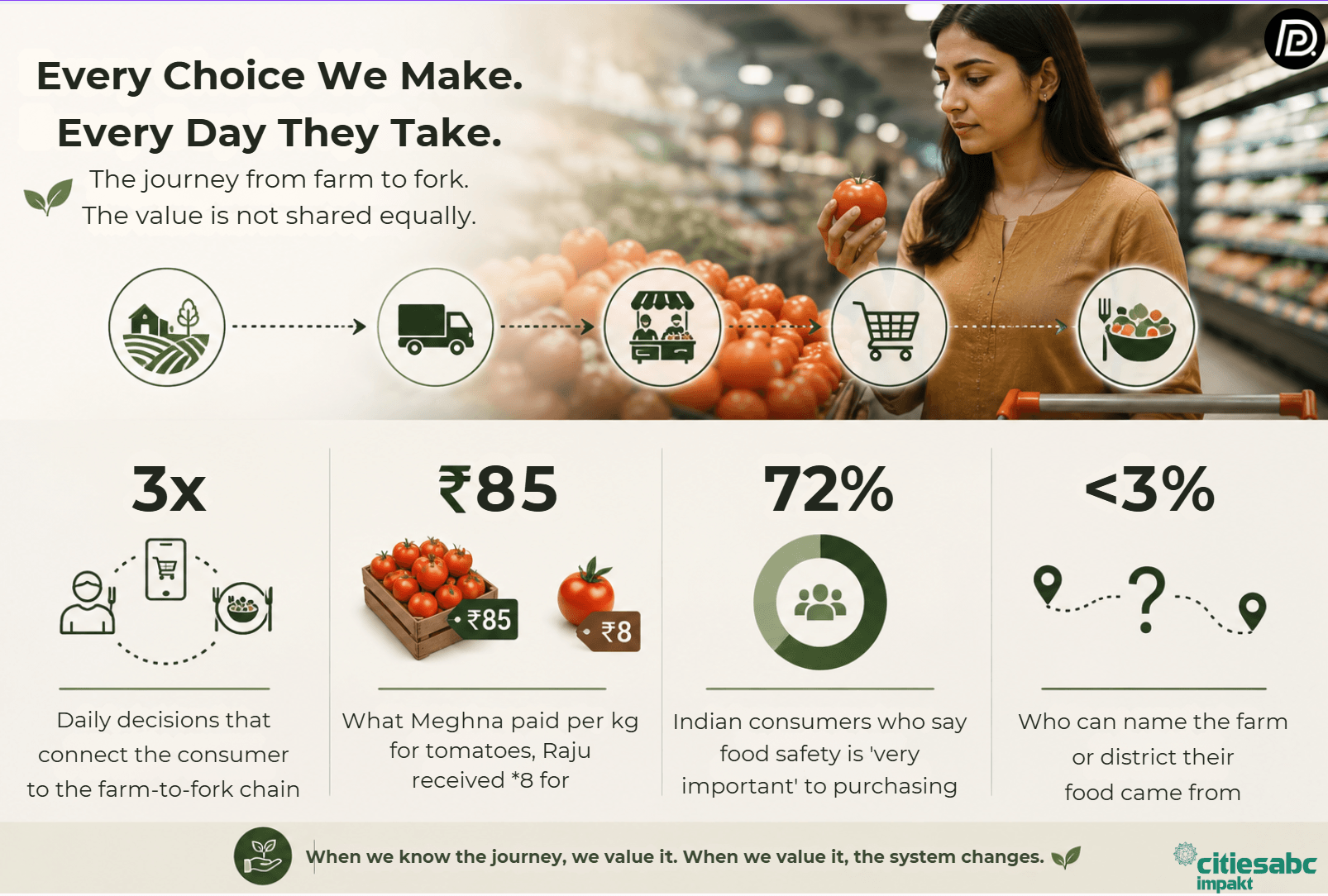
The consumer is not the villain of this story; they are its missing hero. Every structural gap this series has highlighted persists because the demand signal from individuals remains weak. Providing consumers with clear, factual information can transform that demand into a powerful force for change, rather than relying on guilt, leading to more effective interventions.
Before we dive in, take a moment to reflect on your last experience buying fruits or vegetables. How much did you know about their origins? Consider details such as the farm they came from, the district, the farmer's name, or the growing practices used. If those aspects weren't clear to you at the time, think about why that might be. Would you find it valuable to have this information easily accessible? Exploring these details can enhance our connection to the food we consume and the people who grow it.
The Information Gap Meghna Does Not Know She Has
Consumer surveys indicate a strong awareness and concern among urban Indian consumers regarding food safety, provenance, and nutritional quality. However, there is often a disconnect between this concern and actual purchasing behaviour. This gap arises from the lack of accessible information at the point of purchase that could empower consumers to make informed choices. Bridging this divide between consumer perceptions and supply chain data presents an opportunity to enhance transparency and facilitate better decision-making in the marketplace.
| What Consumers Typically Believe | What The Supply Chain Data Shows |
| 'Organic' labelling means certified organic inputs | Organic labelling in Indian retail is largely self-declared; independent certification reaches <12% of labelled products |
| 'Farm fresh' means recently harvested | Cold chain data shows median time-in-chain for fresh vegetables is 4–7 days; some items travel 2–3 weeks |
| Supermarket produce is safety-tested before sale | Spot testing occurs on <5% of lots; most produce is accepted on visual inspection alone |
| Pesticide residues are within safe limits | FSSAI surveillance data shows 20–30% of vegetable samples exceed prescribed MRL thresholds in any given sampling period |
| Premium price indicates better quality | Price premium correlates with brand investment and packaging; correlation with verified quality is weak without traceability |
| 'Local' or 'regional' sourcing is traceable | Local sourcing labels typically indicate a state or district; individual farm identity is rarely documented or verifiable |
| Nutritional content matches label claims | Nutritional degradation in transit and storage is significant and variable; label values are typically based on laboratory benchmarks, not actual lot testing |
Understanding the information in that table can be challenging, and this discomfort highlights a larger issue within the food industry. While many businesses operate honestly, the current framework for information sharing often lacks the clarity needed for effective traceability. This gap between consumer perceptions and documented realities poses a health risk that, unfortunately, isn't always transparent.
The data from the FSSAI regarding MRL exceedances is particularly noteworthy. If 20 to 30 percent of vegetable samples show pesticide residues above permissible limits and this sampling represents only a small portion of the total produce, it suggests that the actual rate of exceedances in our food supply might be significantly higher. As consumers, believing that our food is safe simply because it comes from a reputable retailer reflects a reliance on a supply chain that may not be fully equipped to ensure that safety. Addressing these discrepancies could enhance transparency, ultimately leading to better health outcomes for everyone.
The distinction lies in the choices consumers make when fully informed about the origin, inputs, quality test results, nutritional profile, and supply chain journey of their food, versus the decisions they make when such information is lacking. This gap highlights not consumer irrationality, but rather an opportunity to improve our information infrastructure. By enhancing access to essential data, we can empower consumers to make more informed and rational choices.
Reflecting on the seven items in the belief-versus-reality table above, which one stands out to you the most in terms of surprise? Additionally, is there one particular insight that, if you had been aware of it a year ago, might have influenced a purchasing decision you made?
Every Purchase Is a Vote. Most Votes Are Uninformed.
Understanding the connection between consumer purchasing behaviour and farm-level outcomes is crucial, as this relationship is both real and impactful, even if it isn't always apparent.
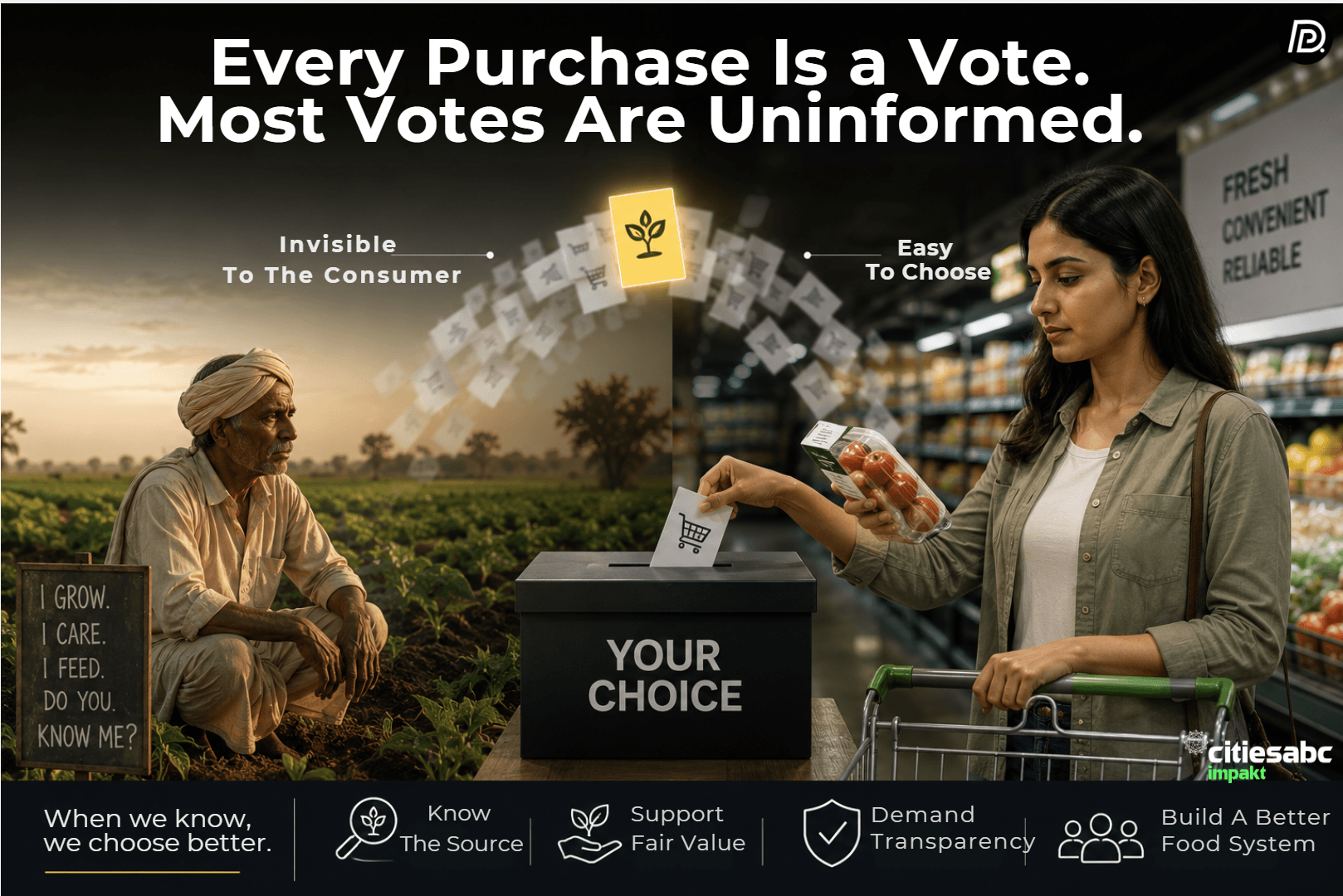
When Meghna chooses to buy 'organic' tomatoes from a premium grocery app without verifying the organic claim, she is contributing to a market where marketing claims sometimes take precedence over validated agricultural practices. Unfortunately, the premium she pays typically benefits the brand and the platform rather than the farmer who cultivated the tomatoes. This situation creates a challenge where farmers using responsible farming methods may not see a price advantage over those who do not.
Moreover, when Indian supermarket buyers consistently favour uniform size and colour over factors like taste, nutritional value, or responsible inputs, because these attributes are what consumers can easily see, they send a clear signal to farmers: prioritise appearance over quality. This trend can lead to the selection of visually appealing varieties that may lack the nutritional richness of traditional, cosmetically irregular options.
Additionally, when consumers respond to food safety scandals by temporarily avoiding certain brands or switching product categories, they do not create lasting demand for the systemic changes needed in the food industry. Instead of fostering the traceability infrastructure that could prevent future issues, these short-term responses may inadvertently perpetuate the cycle of scandals.
While it's important to clarify that Meghna isn't responsible for any pesticide residues in her tomatoes, the responsibility rests with the system that has not provided adequate information to guide her choices; her behaviour, when considered collectively with the actions of 300 million urban consumers, represents a significant opportunity for change. By becoming more informed and intentional, consumers can wield considerable influence in shifting the food system toward better practices.
The Nutritional Depletion Nobody Measures: India's agricultural soil faces challenges in maintaining organic carbon levels. As highlighted in Article 4, incentives for input dealers have led to increased fertiliser use, which can negatively affect soil microbiology and reduce crop nutrient density. For instance, tomatoes grown in soil rich in organic matter and biological activity contain higher levels of lycopene, vitamin C, and essential trace minerals than those cultivated in chemically dependent soils.
It means that even when consumers pay ₹85 per kilogram for 'premium organic' tomatoes, they may not be receiving the same nutritional quality as that produced fifteen years ago. This discrepancy is not related to the postharvest supply chain but is rooted in long-term soil health issues. Recognising and addressing these challenges can help us improve the quality of the food we grow and consume, underscoring the importance of sustainable farming practices for the well-being of both consumers and the environment.
The Information That Would Change Everything
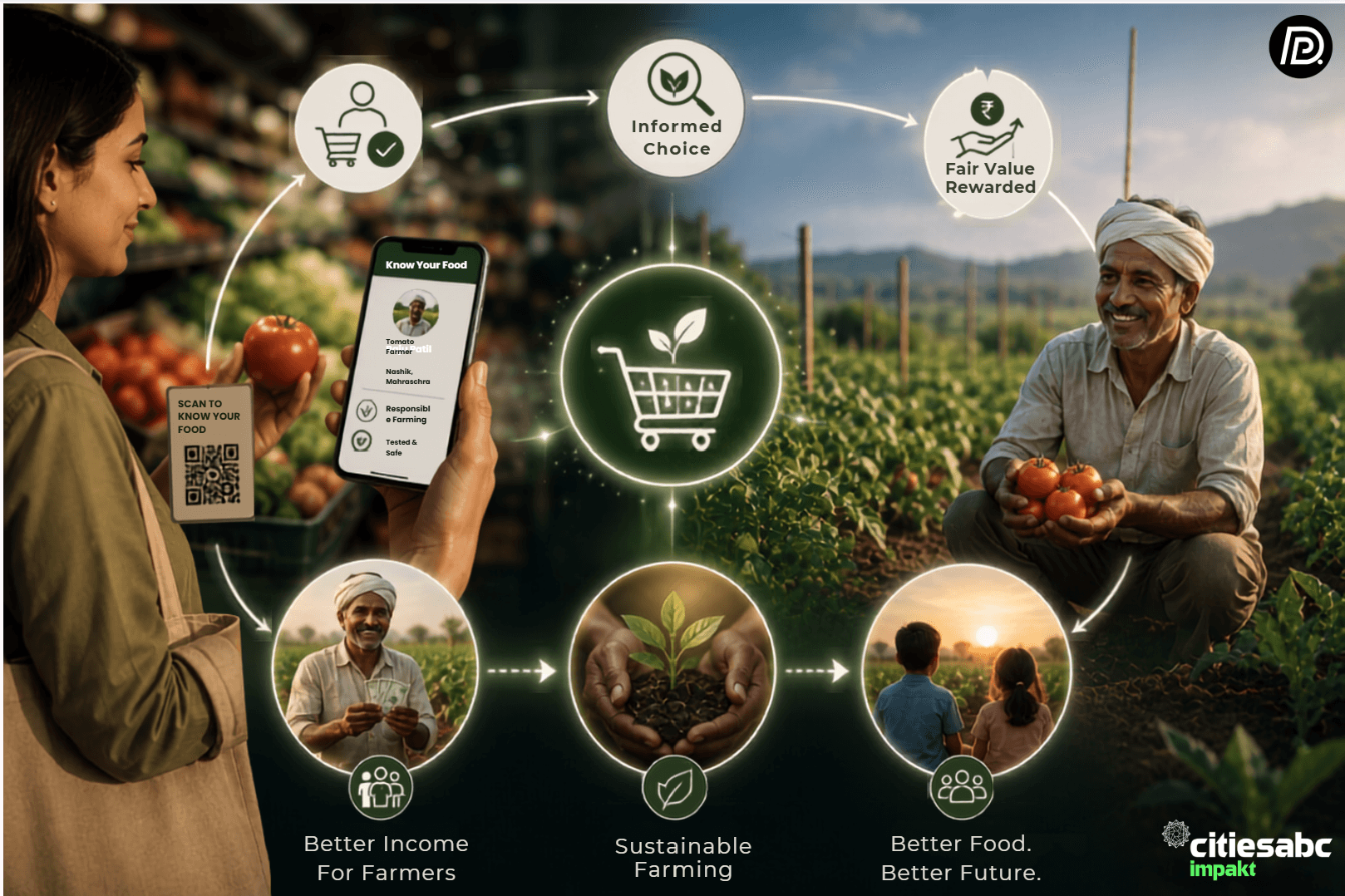
Imagine an alternative version of Meghna's morning. She opens the grocery app and notices a QR code next to the tomatoes, displaying the same price and image. Curious, she scans the code, and her phone reveals:
Grown by: Govind Kumar, Nashik district, Maharashtra, 4.2 acres, rain-fed, black cotton soil
Variety: Desi Hybrid H-86 selected for Nashik conditions, 14-brix sugar content
Inputs applied: Urea (22 kg/acre, within recommended dose), one application of mancozeb fungicide on Day 18 (clearance period: 7 days; harvested Day 32)
Quality test: Pesticide residue, all below FSSAI MRL; Brix 13.8; weight per fruit 95g avg
Harvest date: 6 days ago. Cold chain maintained throughout 4°C from farm gate to your door
Govind received: ₹18.50 per kilogram for this lot, verified payment via platform
Carbon score: 0.8 kg CO₂ equivalent per kg of produce, 40% below category average
Meghna's decision now goes beyond choosing between two tomatoes that appear identical and are priced the same. It's about selecting between a tomato with verified provenance and one without. If the verified tomato is priced ₹8 higher per kilogram yet meets all her stated concerns from a recent survey, the crucial question becomes whether she finds that extra cost justifiable.
Consumer research on food traceability, both in India and worldwide, suggests that the answer hinges on trust. Consumers who have confidence in the verification process and believe that the QR code reflects a legitimate, tamper-proof record rather than a simple marketing claim are often willing to pay a significant premium. On the other hand, consumers who lack trust in the verification mechanism tend to focus on price and appearance instead.
Building that trust is key. While implementing a QR code or a blockchain record may be relatively inexpensive, the real challenge lies in creating a reliable system that ensures accountability, from collecting input logs from field agents to conducting quality tests in accredited labs to maintaining cold chains and verifying payments. Developing and maintaining such a robust system requires a meaningful investment. However, it becomes worthwhile only if there's a substantial base of consumers willing to support it through their purchases. By fostering that trust, we can create a more reflective and beneficial food supply system for everyone.
When a consumer scans a QR code, they're not just indulging their curiosity; they’re actively expressing a demand for transparency. Each scan contributes to a valuable signal that supports the investment in verification infrastructure. Essentially, every scan represents a commitment: a desire for information and a willingness to support the system that delivers it. This engagement not only validates the system's purpose but also strengthens its commercial viability.
Consider the following scenario: If you encountered a QR code on your next purchase of tomatoes or vegetables, would you take a moment to scan it? Imagine that the scan revealed pesticide residues exceeding Maximum Residue Limits (MRLs) on the produce you typically buy. How would that information influence your purchasing decisions? It's important to reflect honestly on your actual behaviour rather than what you feel you "should" do. This difference between your ideal response and your real actions highlights the challenge in changing consumer behaviour.
The Case for Informed Food Choice That Has Nothing to Do With Charity
This series aims to promote constructive dialogue without framing it in moral terms. The farmer is not seeking charity, the Farmer Producer Organisation (FPO) is not seeking sympathy, and the mandi trader is not a villain. Meanwhile, the food processor operates within a market that often favours the lowest prices. This article will also focus on consumer awareness from a practical perspective rather than an ethical one.
Consider the reality of pesticide residues. They are present in Meghna's body, rather than the farmer's, processor's, or regulator's. This exposure occurs multiple times daily, throughout the year. The cumulative effect of consuming organophosphate residues, carbamates, and endocrine-disrupting fungicides from unverified supply chains is not a distant concern; it is a documented public health issue being increasingly examined in India but often remains under-discussed.
Additionally, the nutritional quality of soil-depleted produce affects Meghna. If she pays ₹85 per kilogram for a tomato that contains 30 percent less lycopene and vitamin C than similar tomatoes grown in nutrient-rich soil fifteen years ago, she is unknowingly paying a premium for a product that offers less nutritional value than expected.
A food safety issue will likely eventually impact a brand she trusts. Given the statistical likelihood of a maximum residue limit (MRL) violation within any large food company's supply chain, this disruption may temporarily alter her purchasing habits. However, it is unlikely to result in substantial changes to the supply chain since the response may not provide meaningful insights for improvement.
The case for demanding clear and verifiable food provenance is straightforward; the food supply chain often withholds crucial health information from consumers. It is not necessarily due to malicious intent but rather a lack of demand for transparency. By consistently choosing products from sources with verified provenance, consumers like Meghna can effectively advocate for their health. That of their families making informed purchasing decisions is the most powerful health intervention available.
Food safety is primarily about knowledge rather than values. When consumers prioritise traceability, they are making informed decisions that empower the food system to evolve and improve. By understanding the importance of traceability, consumers can encourage higher standards and positive changes in food production, ultimately benefiting everyone involved.
The series emphasises that the challenges facing Indian agriculture stem from structural issues rather than intentional neglect or malice. No one is deliberately poisoning the food supply, withholding knowledge, or exploiting farmers. Instead, these problems arise from systems that incentivise counterproductive practices. This understanding prompts us to consider the consumer's role in accepting these systems. Does it make our responsibility to demand change more compelling? How can we harness this awareness to advocate for a more equitable and sustainable agricultural future?
From Consumer to Participant: What Informed Choice Looks Like
This article will move beyond the usual call to 'be a conscious consumer,' as that approach has become repetitive and often less effective. Instead, I will present five specific, actionable choices that can genuinely influence those responsible in the food supply chain. These options are designed for urban food consumers in India and balance the need for convenience and budget, ensuring that everyone can make a positive impact without feeling deprived.
Action 1: Scan The QR Code When It Exists
An increasing number of food products, especially in the premium, organic, and direct-farm supply categories, are incorporating QR codes or traceability links on their packaging. By taking just thirty seconds to scan these codes and explore the information they provide, consumers can actively engage with the brand. This consistent engagement generates valuable data that helps brands understand the impact of their traceability investments. For instance, if a brand observes that 40 percent of its premium-segment customers scan QR codes, it has a strong rationale for further enhancing its traceability program. Conversely, if only 0.3 percent are scanning, it might prompt a reassessment of the approach. Each scan serves as a meaningful commercial signal, highlighting consumer interest and value in traceability efforts.
Why it matters: Each QR code scan contributes to the development of a robust traceability infrastructure. It allows brands to monitor engagement levels effectively. When engagement is low, it can hinder investment in verification processes, whereas high engagement provides a strong justification for such investments.
Action 2: Ask One Supply Chain Question Per Month
When purchasing from a premium grocery service, a local organic market, or a restaurant that promotes fresh or locally sourced ingredients, consider asking about the products' origins. You might inquire, "Which district did these vegetables come from?" or "Can you share which farm supplies your tomatoes?" Additionally, asking, "Is the organic claim certified or self-declared?" can be insightful. These questions not only provide valuable information but also encourage vendors to take accountability for their sourcing. Vendors who receive such inquiries are more likely to have accurate answers, while those who aren't asked may not prioritise understanding their supply chain.
Why it matters: Accountability starts with asking the right questions. Vendors who regularly address provenance inquiries are motivated to develop supply chains that can provide clear answers. In contrast, those who aren't asked these important questions may miss opportunities for improvement.
Action 3: Support Fpo-Linked And Direct-Farm Products When Available
A growing number of food brands and platforms are successfully establishing direct sourcing relationships with Farmer-Producer Organisations (FPOs) and documented farm clusters. By purchasing products that clearly outline the farmer's margin, document the connection to FPOs, and feature shorter, more transparent supply chains, these models not only promote commercial viability but also enhance sustainability. Consumers no longer need to compromise on quality or convenience. In fact, the premium segment of Indian food retail that is linked to FPOs is expanding rapidly and often offers quality that surpasses that of traditional, anonymous supply chain options.
Why it matters: Every purchase of FPO-linked produce actively supports the collective's efforts to address and close the gaps highlighted in this series. Your contribution makes a meaningful difference in our community!
Action 4: Report What You Find, One Incident
If you receive produce that doesn't match the description, such as an 'organic' item showing visible pesticide residue or a 'farm-fresh' delivery that appears old, it's important to take action. Consider reporting your experience to the platform, the FSSAI's online consumer complaint portal, or the brand's social media channels. Individual complaints may not always lead to immediate changes, but when consumers consistently report issues, they create valuable data that regulators can act upon, and brands will notice. It's worth noting that the FSSAI complaint portal is often underutilised, especially when compared to the exceedance rates found in the Authority's surveillance data. By participating in this process, you can help drive improvements in food quality and safety.
Why it matters: Consumer reporting serves as an important regulatory tool for addressing issues. When platforms actively engage with and respond to complaints, they can improve their services and customer satisfaction. Conversely, platforms that do not receive complaints often miss valuable opportunities for growth and enhancement.
Action 5: Have The Thirty-Second Conversation
The next time you share a meal with someone, consider taking a moment, just thirty seconds, to ask an open-ended question about one item on your plate: " Where did this come from? Approach it with genuine curiosity, not as a challenge. This simple inquiry can open up a meaningful conversation and reveal insights about our food systems and the people behind them. You might discover that many of us are quite disconnected from the origins of our food. By acknowledging this gap together at the table, we can begin to foster a deeper understanding and appreciation for the entire food chain. This awareness can catalyse change, encouraging both diners and producers to engage more thoughtfully with their food sources.
Why it matters: The conversation at the dinner table about the origins of our food represents an important link in the journey that begins at the farm gate. It also serves as a simple yet powerful way to engage people in understanding and appreciating the food production process.
What Eight Articles Have Been Trying to Say
This is an excellent opportunity to unify the series, not by summarising and oversimplifying the richness that each article has explored, but by illustrating the connections among the eight voices.
# | Article | Remark |
1 | Voice of Farmer: He Grows It. Others Price It | Decision poverty: making consequential choices without the information to make them well. |
2 | Voice Of Agronomist: I Know Your Soil, But I Can’t Reach You | The last-mile advice gap: knowledge produced but never delivered. |
3 | Voice Of An FPO Leader: We Are Stronger Together, The System Does Not Believe That Yet | The collective action paradox: optimal collectively, nearly impossible individually. |
4 | Voice Of Input Dealer: I Sell You the Seed & Advice, Only One of Those Is in Your Interest | The advisory-sales bundling problem: advice that serves the seller, not the buyer. |
5 | Voice Of Agriculture Market (Mandi) Trader: I Know the Price, you don't, that Is Not an Accident | Structural information asymmetry: not deception, but architecture. |
6 | Voice Of Food Processor & Buyer: We Want Better Food, We Cannot Prove It Exists | The verification gap: unable to pay for what they cannot prove exists. |
7 | Voice of the Agricultural Scientist: We Publish the Answer, Nobody Receives It | The translation failure: knowledge produced, precision lost at every stage. |
8 | Voice of the Consumer: You Eat Three Times a Day. You Know Almost Nothing About It | The demand gap: the chain survives because the end of it does not demand otherwise. |
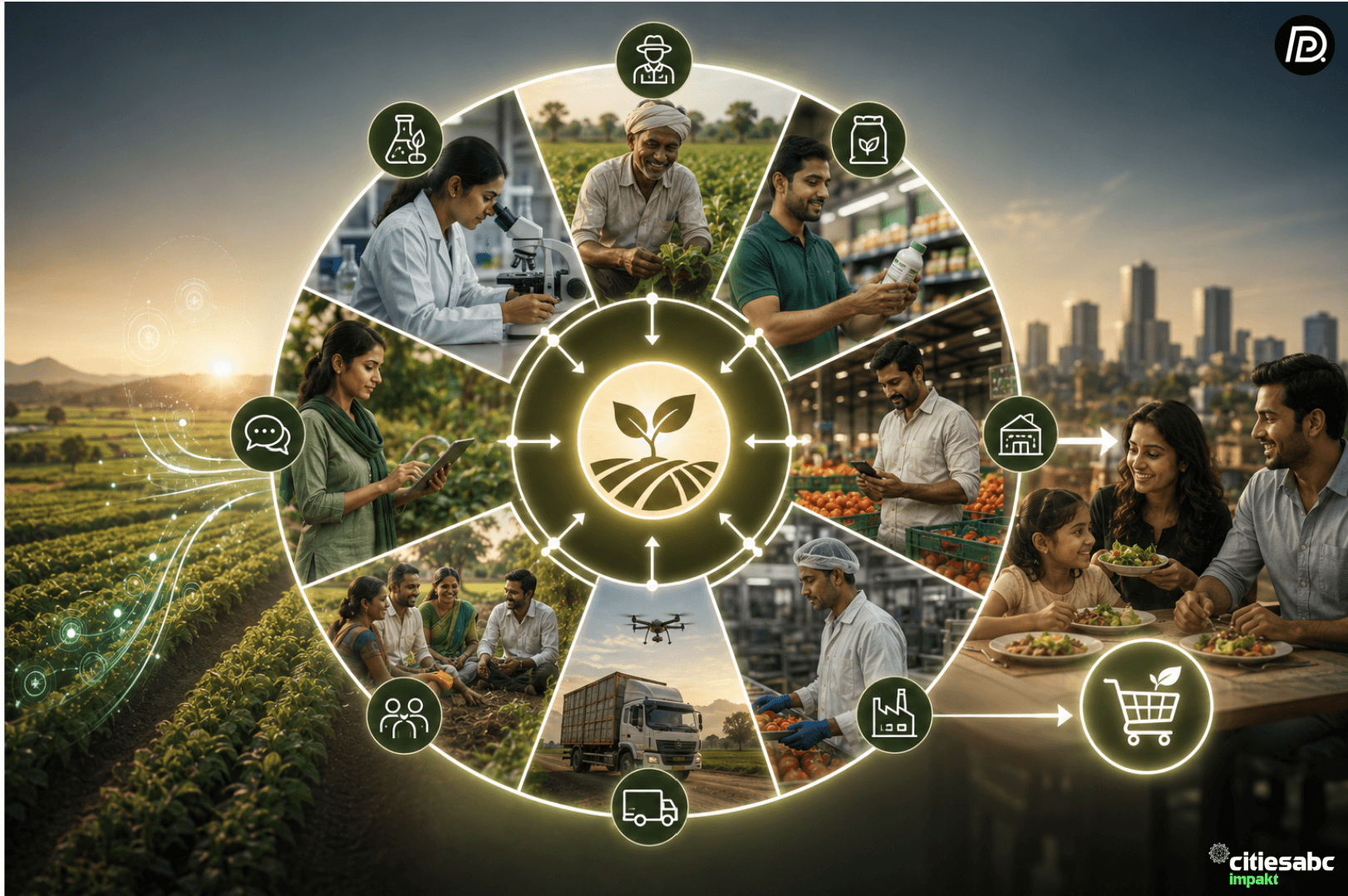
When we examine the table in sequence, a cohesive architecture comes into focus. Each gap we identify points to a structural issue, and every such issue is linked to a specific mechanism that has a known solution. We possess the knowledge to enhance farming practices, the infrastructure to facilitate collective aggregation, and the advisory resources that prioritise farmers' interests. Furthermore, we have access to price information that benefits both buyers and sellers, verification methods to ensure quality, research that translates into practical applications, and consumer demand that drives commercial viability. While these resources are technically available, they often remain disconnected within existing institutions.
The design objective of the Citiesabc Impakt Platform is to create these connections. Rather than focusing on a single product that addresses one isolated problem, we aim to develop an integrated ecosystem that addresses a range of interconnected structural challenges. Recognising that these failures are interrelated, we believe that effective solutions must also be interconnected.
What Changes When She Knows
It's eight o'clock, and Meghna has completed her breakfast. She enjoyed the tomatoes but is unsure of their safety. Opening her laptop, she starts her workday. Her routine includes meals at one o'clock and again at eight in the evening, three times a day, as is her habit, and she participates in a system that often leaves unanswered questions.
In an ideal scenario, where the Impakt Platform is fully operational and the traceability layer integrates seamlessly with her grocery app, she scanned the QR code earlier that morning. It revealed Govind's name and the fact that he received ₹18.50 per kilogram for the tomatoes she purchased for ₹85. For the first time, she comprehended how much of that margin isn't reaching the farmer. She also discovered that the pesticide residue was below the maximum residue limits (MRL), along with the harvest date and cold chain records.
While she didn't become a food activist or overhaul her life, Meghna's experience sparked curiosity. When choosing among similar products at the same price, she opted for the one with the most information available. This decision had a ripple effect: the brand that provided the information recognised that its verified product outperformed its non-verified counterpart. As a result, it decided to extend verification throughout more of its supply chain. The farmer-producer organisation (FPO) associated with the verified produce noticed better pricing from that brand. Meena at the FPO in Nashik informed Govind about this development. Encouraged, Govind, who had been considering sending Suresh to find work in Pune, opted to continue farming for another season.
This narrative illustrates a functioning market in which a demand signal moves backwards through the supply chain, influencing the actions of each participant, initiated by a simple thirty-second scan that Meghna performed almost instinctively.
The challenges facing the farm-to-fork chain do not stem from a lack of good people involved. Raju possesses skills; Dr Priya brings expertise; Meena is determined; Vijay is well-intentioned; Ramesh delivers valuable services; Prabhav strives for quality; Dr Arjun generates knowledge; and Meghna genuinely cares about her food choices. The system struggles because the necessary infrastructure to connect these good intentions and capabilities has yet to be established.
Building that infrastructure represents our future work. This series aims to precisely identify what's broken, where the breakdowns occur, who is affected, and the steps needed to mend the system. This perspective is not just a lamentation but a constructive brief on what lies ahead.
The farm-to-fork chain represents a vital human connection, composed of skilled and dedicated individuals who are navigating complex systems. To enhance this process, what's truly needed is improved infrastructure. By creating systems that effectively link each participant's knowledge to the needs of the next, we can better value their contributions. Additionally, making the journey of food from farm to table more transparent will empower consumers to engage and ask important questions about the products they choose. This focus on collaboration and connection can lead to greater satisfaction for everyone involved in the chain.
The next time you sit down for a meal, take a moment, just thirty seconds, to engage with your food. Choose one item on your plate, any item, and consider a few questions: Where did this come from? Who grew it? What methods were used in its cultivation? What compensation did the grower receive for their work? If you can answer these questions, you are already fostering a deeper connection with your food chain. If you find you can't answer them yet, that's perfectly okay. This curiosity is a fantastic starting point for change. Remember, transformation begins with you, rather than solely relying on policy, platforms, or the farmers themselves.
Voices From The Chain: Series Complete
This article marks the conclusion of the Voices from the Chain series. Comprising eight insightful pieces featuring perspectives from the farmer, agronomist, FPO leader, input dealer, mandi trader, food processor, agricultural scientist, and consumer, the Agriculture Gap Series offers a comprehensive look at the structural challenges facing Indian agriculture. These challenges not only result in significant economic losses estimated in the trillions but also have profound implications for everyone involved in the agricultural chain. The full series can be accessed at impakt.citiesabc.com. Additionally, a white paper that synthesises insights from these articles will be published in conjunction with the formal launch of the Citiesabc Impakt Platform. This initiative aims to raise awareness and drive positive change in the agricultural sector.
About This Series
“Voices from the Chain is an important addition to the Agriculture Gap Series, building on the insights from 'The Price of Ignorance: Mapping the Gaps That Cost Indian Agriculture Trillions,' which can be found at impakt.citiesabc.com. Over the past year, I have engaged deeply with the agricultural community by visiting farms, attending agri-sector seminars, and connecting with FPO leaders, agronomists, and input dealers throughout Maharashtra and beyond.
The Citiesabc Impakt Platform has emerged as a pivotal initiative to address gaps identified in recent agricultural research. The project is informed by insights from "Voices from the Chain," a publication in The Capital Signal, part of the Agriculture Gap Series. This publication builds on a foundational report titled "The Price of Ignorance: Mapping the Gaps That Cost Indian Agriculture Trillions," which can be accessed at impakt.citiesabc.com.
The author dedicated a year to visiting various agricultural settings, including farms, mandis, farmers' producer organisations (FPOs), and agri-businesses throughout Maharashtra. The findings from these explorations directly guided the development of the Citiesabc Impakt Platform, which aims to enhance the agricultural landscape by addressing documented issues. The tags associated with this initiative highlight critical topics such as APMC reform, price discovery, and information asymmetry in agricultural markets.


