


business resources
What Business Leaders Need to Know Before Choosing a Proxy Infrastructure Provider
23 Sept 2026

| Quick Answer: Choosing a proxy provider requires evaluating IP pool diversity, sub-second latency, strict legal compliance, and reliable SLA guarantees to protect corporate security while scaling operations. |
The Strategic Importance of Scalable Proxy Architecture
Digital business needs smooth online links, quick data, and strong privacy. Your company may check prices, use market info, or keep ideas safe. The base system for your web use helps you do well at work. Using a fast datacenter proxy infrastructure gives you high-speed data, low wait times, and makes it easy to grow for big jobs.
Picking the right enterprise proxy provider is not just about the speed or how much you pay. Leaders need to find out if the system works well all the time. They should look to see if rules are being followed and if each small team does what they are supposed to do. It's also important that the support from the company is good. Do not count on low-quality proxy groups. If you do, you might get blocked, lose IP addresses, have targets lock you out, and face trouble keeping data safe. This can lower income and make your business slow.
4 Essential Factors to Evaluate Before Selecting a Provider
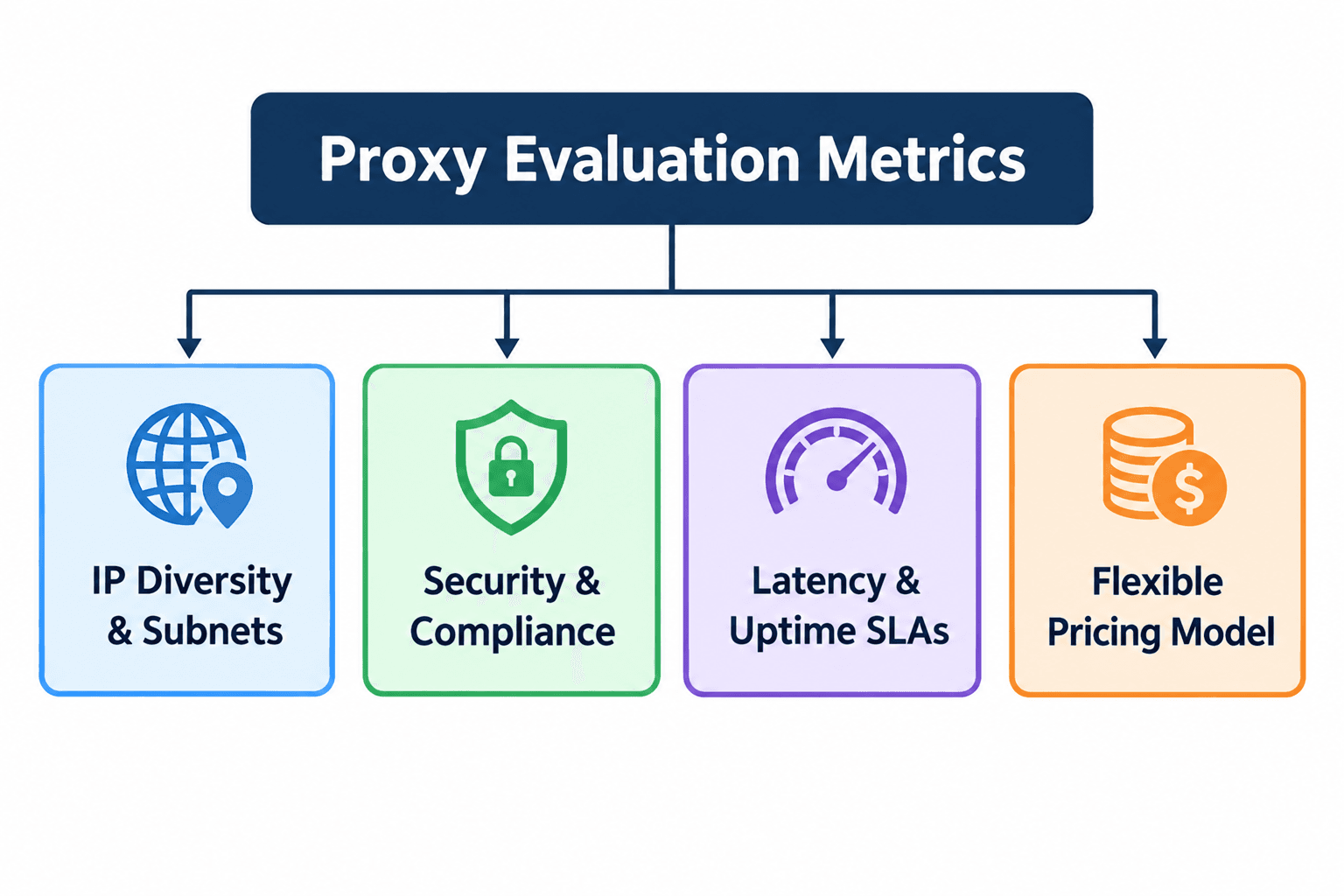
1. IP Diversity and Subnet Hygiene
A big IP pool does not give much help if all the addresses are from just a few subnet ranges. Security firewalls can spot and block these IP blocks if they are grouped in order.
- Clean Subnet Distribution: Check that the provider gives you C-class and B-class IP blocks that do not sit next to each other. This helps lower the risk that many IPs get blocked at the same time.
- Geographic Coverage: Ask if their setup lets you choose spots from all over the world for your web work. It should send requests to places you need.
- IP Refresh & Rotation Protocols: Find out if you can keep using a single IP, or if you can switch it for a new one with little effort. It should fit the way you use it.
2. Enterprise Security and Ethical Compliance
Full openness about where your data comes from and who owns the systems is needed for good compliance. If you work with vendors who do not follow the rules, your business can get into big legal problems. You may also have to pay fines.
- Regulatory Standards: See if there is full follow-through by global data privacy rules, like GDPR and CCPA.
- Ethical Network Sourcing: Make sure all IP stuff is bought and kept the right way in trusted data center places.
- Data Encryption & Anonymity: Find out if the provider uses HTTPS and SOCKS5. These can help traffic move safe and keep inside network signs private.
3. Latency, Throughput, and Network Uptime
For work that a computer does, like watching how other companies act and linking systems together, speed matters a lot. It makes things work better and saves time.
| Performance Metric | Enterprise Standard | Business Impact |
| Uptime Commitment | 99.9% SLA Guarantee | Prevents operational downtime during mission-critical tasks. |
| Response Latency | Sub-100ms Target | Speeds up multi-threaded data retrieval processes. |
| Success Rates | >98% Target Connection | Reduces bandwidth spent on retries and failed connections. |
4. Transparent Cost Structures and Scalability
Enterprise workloads go up and down over time. You need an infrastructure provider that helps you grow when you need to. There are no high scaling fees.
- Predictable Billing: See if unmetered gigabyte bandwidth or flat-rate per-IP plans work better for your budget.
- API Integration: Make sure the platform uses good developer APIs. These are needed for IP setup, login management, and tracking.
- Dedicated Account Support: Ask for help that is ready at all times. Make sure you can reach the engineers who run the systems fast when you need something.
Experience and Technical Integrity in Infrastructure Management
Choosing a proxy partner is not just about what they say in ads. You have to look at how they work in real life. A good system uses smart load balancing, sometimes called "super proxies." This helps move traffic to many locations. It stops servers from getting too busy. It also stops targets from making things slow.
Proxy nodes, when set up the right way, work like shields for the company network. They keep the inside servers safe from dangers on the internet. Tech leads in big businesses should ask for proof-of-concept tests. These tests help show real response times and tell how well targets do. It’s best to see all this before saying yes to a long-term deal for service.
Frequently Asked Questions
What is the primary difference between residential and datacenter proxies?
Datacenter proxies are made by cloud data servers. They give fast speed and the price is low. You can use a lot of bandwidth.
Residential proxies use internet addresses from houses that people get from internet service providers. These are safer for stopping scraping. They cost more.
Why is subnet diversity crucial for proxy infrastructure?
When many proxies use the same IP subnet, like 192.168.1.X, a web server can see odd things happening at one address. It may block the whole group. Subnet variety sends requests to other networks. This helps systems keep running.
How do proxy infrastructures support corporate web scraping?
The proxy networks move web requests through many IP addresses. This stops the target servers from seeing only one main IP. The system lets you take away any limits and helps businesses get market data for many users in a steady way.
Conclusion
Choosing the right partner means you have to think of speed, privacy rules, price, and how dependable the network is. The people who decide must look at more than only the plain cost. They should see how clean the subnets are, what the SLA promises, and where servers are around the world. If you use strong business tools like Evomi's datacenter proxies, you help companies grow machine work, keep online things safe, and stay ahead at work without slowing the network or breaking data rules.


