
business resources
What Separates Growing Companies From Stagnant Ones
23 Aug 2026

Every growing company eventually looks like it caught a lucky break. It didn't. The businesses that keep expanding 2, 5, 10 years out made a specific bet early: they built the boring infrastructure, training, staffing systems, documented processes, before they were forced to.
The businesses that plateau usually made the aopposite bet. They kept everything informal because informal was cheaper, until the informality itself became the tax on every transaction.
Hustle and vision aren't the difference. Most stagnant companies have plenty of both. What they lack is a habit of investing in the mechanics of the business before those mechanics visibly break.
5 practices show up again and again in the companies that keep compounding, and none of them require a bigger headcount to start.
5 Signals That Separate Growing Companies From Stagnant Ones
Get these 5 wrong and revenue keeps climbing while the operation underneath it gets harder to run every quarter.
They Build Training Into the Job, Not Around It
Most companies still treat employee training as an orientation-week ritual instead of a habit. New hires get a manual, a shadow shift, maybe a short video course, and then they are on their own for the rest of their tenure. Growing companies keep training running long after onboarding ends, tied to actual skill gaps rather than a generic curriculum.
LinkedIn's 2025 Workplace Learning Report, based on a survey of 937 L&D and HR professionals, found 88% of organizations now rank providing learning opportunities as their top retention lever. That number matters because retention is usually the first place a training gap shows up, well before it shows up as a productivity problem on a spreadsheet.
Owners who treat training and development as core infrastructure rather than a one-time checkbox tend to see the payoff within 2 to 3 quarters. The mistake most stagnant companies make isn't skipping training. Most of them already have a line item for it in the budget.
What they skip is revisiting the curriculum once it's approved, so the material quietly goes stale while the actual job keeps changing underneath it.
They Make the Investment Visible
Training, scheduling, and documented process are the investments customers never notice. Growing companies also spend on something employees can hold, and a run of custom embroidered hoodies with the team's own phrase on them, a company logo, or a motivational line stitched on the chest tends to land harder than another policy memo.
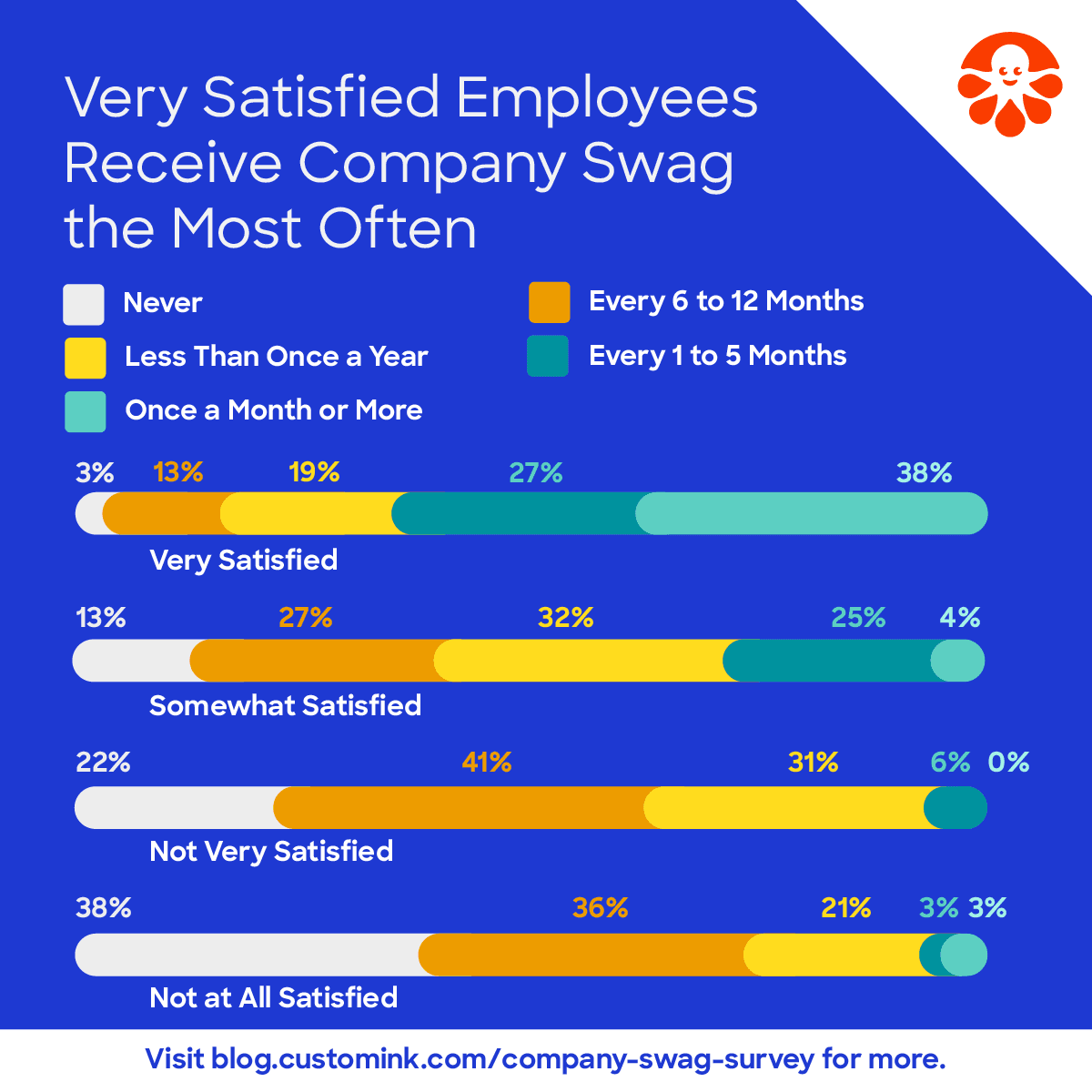
Custom Ink's 2024 survey of 1,064 U.S. employees at companies with more than 50 employees found 92% of those asked to wear company-branded clothing said it increased their sense of connection to their team. Growing companies treat that connection as a retention lever, not a marketing afterthought.
Print-on-demand platforms like Printify and Printful remove the usual friction of ordering apparel in bulk. There is no minimum run and no closet of unsold mediums and larges, so a team of 8 gets the same quality run as a team of 80.
They Staff to Demand, Not Habit
Most small businesses build their weekly schedule off last week's schedule, then patch it when someone complains about being short-handed. Growing companies build the schedule off actual demand data instead, adjusting employee scheduling software like Homebase settings as sales patterns shift rather than repeating the same shift pattern out of habit.
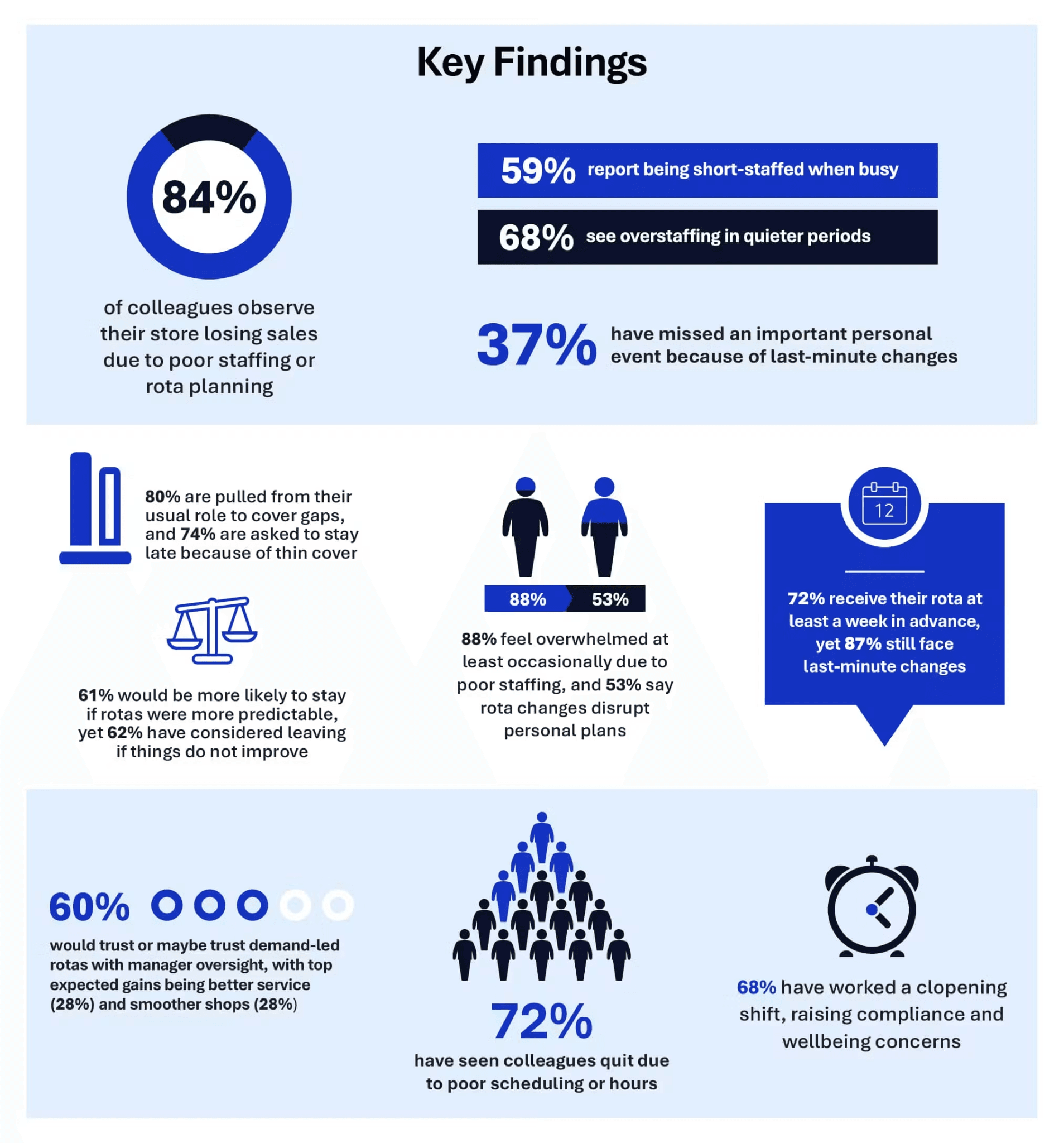
Logile's 2025 UK Labour Planning and Optimisation Report, based on a survey of 500 frontline retail associates conducted in July 2025, found 68% of associates see their store regularly overstaffed during quiet periods. That waste rarely shows up as a single line item. It shows up as a labor cost share of revenue that creeps up 1 to 2 points every quarter with no obvious cause.
Fixing the schedule is usually cheaper and faster than fixing almost anything else in the business, and pairing it with automating payroll closes the loop between hours worked and hours paid for. Stagnant companies keep guessing at both, then blame the guess on a tight labor market instead of the schedule that produced it.
They Standardize How Work Actually Gets Done
Construction is where the problem is easiest to see, but it exists in every business that runs on tribal knowledge instead of documented process. One superintendent knows how change orders get approved, one salesperson knows which discounts are allowed, and the moment that person is out sick or quits, the process stops existing. Growing companies write it down and put it in construction management software like Ressio or an equivalent system built for their industry, so the process survives any single person leaving.
PlanRadar's Construction QA/QC Impact Report 2025, surveying 811 professionals across 13 countries, found 56% of companies with consistent quality assurance processes keep rework costs under 5% of their project budget. Companies without those standards were far more likely to blow past that number, and the gap tends to widen as the project gets bigger.
The pattern holds outside construction too. Any business that never mapped their workflows ends up paying a repeat tax on the same mistakes, project after project. Standardizing still leaves room for judgment.
What changes is where that judgment lives, on paper instead of in one person's head.
They Check In Before Someone Quits
By the time a resignation letter shows up, the decision is usually old news. Gallup's 2024 study of 717 U.S. employees who had voluntarily left a job in the past year found 42% said their manager or organization could have done something to prevent it. Most of them never said anything before they left.
Growing companies build in regular, unscripted conversations about where someone stands, not just an annual review, so problems surface while they are still fixable. Stagnant companies find out in the exit interview, which is one conversation too late to matter. By then the replacement search has already started, along with the overtime everyone else absorbs while that seat sits empty.
Tracking employee turnover rates by team, not just company-wide, usually reveals which managers are quietly bleeding talent long before HR notices a pattern. The fix costs nothing but time, which is precisely why so few companies bother to do it consistently.
The Best Place to Start
None of this requires a bigger budget. It requires spending on the unglamorous stuff while things still feel fine, which is exactly when that spending is cheapest.
The companies that plateau rarely lack effort. They lack the willingness to make that call before the numbers force it, and by then the fix costs more and takes longer than it would have a year earlier.
Pick one of these 5 and give it a real budget this quarter instead of a line on next year's wishlist. Momentum compounds the same way neglect does, just in the direction you actually want. The company that starts now is already ahead of the one still waiting for a better time to begin.


