


resources
When Conservative Care, Regenerative Treatment, or Surgery Makes Sense
19 Aug 2026

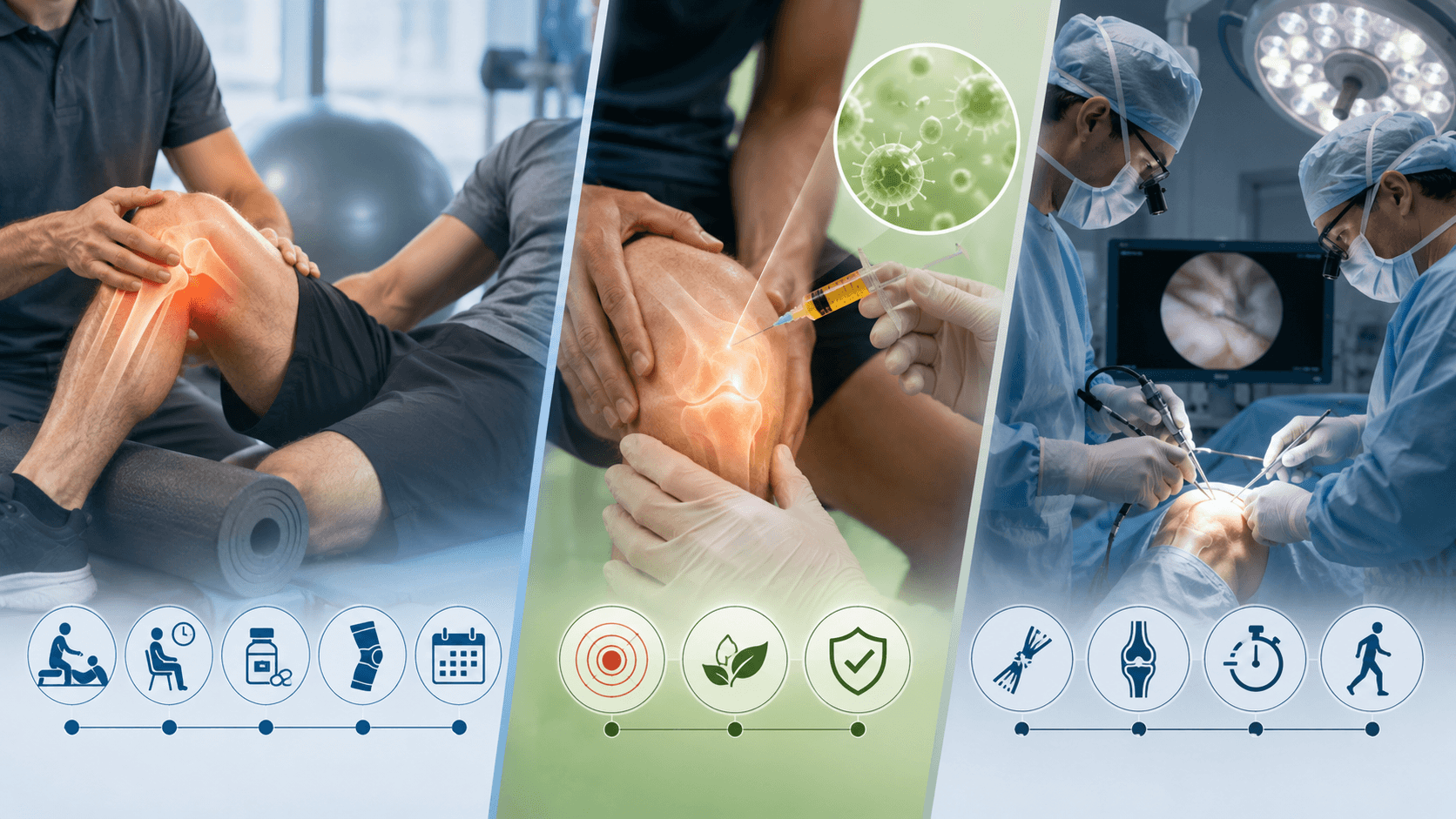
When Conservative Care, Regenerative Treatment, or Surgery Makes Sense
Getting hurt, or getting a diagnosis you weren’t expecting, usually comes with the same question: what now?
For most musculoskeletal issues, from a nagging shoulder to a torn meniscus, there isn’t just one path forward. There are three: conservative, surgery, and regenerative approach.
It’s easy to picture these as a ladder, where you only move up once the step below fails. But it’s really more about fit.
The best starting point depends on how bad the injury is, your age, how active you are, and what you actually want to get back to doing.
Skilled physicians from the regenerative medicine clinic in Cabo point out that this is exactly why such different treatments exist: that all people, ranging from pro athletes to laid-back hikers would have a set of options to make a move.
We’ll explain which fit is your perfect fit and how to approach each method based on your situation.
Conservative (Non-Surgical) Treatment
Conservative treatment refers to anything that doesn’t involve surgery. Doctors almost always start here for muscle and joint pain, and it makes sense why: it’s safer and cheaper, and it doesn’t rule anything out down the road.
Common examples include:
- Physical therapy and guided exercise;
- Rest and activity modification;
- Anti-inflammatory medication;
- Bracing or support devices;
- Simply giving an injury time to heal.
This isn’t just an “avoid the doctor” default, either. There’s real research backing it up.
Research 1
The DREAM trial followed young adults with torn menisci for a year.
- One group had surgery right away.
- The other did a structured exercise and education program instead.
A year later, both groups were doing about the same, no matter how the tear happened in the first place.
Research 2
A group of orthopedic experts from the US and Europe reached a similar conclusion in 2024, agreeing that non-surgical treatment should generally be the first move for wear-and-tear meniscus damage and a reasonable first try for sudden tears too.
But conservative care isn’t magic. It takes longer to work, and it can’t fix everything.
If you’ve fully torn your ACL and you’re still active, physical therapy alone probably won’t get you back to where you were.
Regenerative Medicine: The Middle Ground
Regenerative medicine is the newer option everyone’s talking about.
Treatments like platelet-rich plasma (PRP) and stem cell injections take something from your own body, usually your blood, and put it back into the injured area to help it heal.
Here’s the thing worth knowing before you get your hopes up: despite the name, these treatments usually don’t regrow tissue that’s already gone. If your cartilage has worn down from arthritis, an injection won’t bring it back. What it can actually do is
- Reduce pain and inflammation around the injury site;
- Change the healing environment for surrounding tissue;
- Give you a fair shot at putting off, or even skipping, surgery altogether.
PRP has shown real promise for some people, especially with knee osteoarthritis, and it’s helped some patients avoid surgery entirely.
But it doesn’t work the same for everyone, and nobody’s fully figured out why yet.
Surgical Treatment
Surgery makes sense when the other two options genuinely can’t fix the problem, usually because something is physically broken and needs to be repaired, not just soothed.
Think full ligament tears, badly damaged joints, or large, complicated meniscal tears.
The big draw is speed.
Surgery can bring faster pain relief and get someone back to sport sooner, which matters if you’re an athlete racing a clock. But it comes with real risks too, like infection, a longer total recovery once rehab is counted, and results that don’t always turn out the way you’d hoped.
How to Decide Which Path Is Right for You?
There’s no simple quiz that hands you the right answer, but a few honest questions can point you in the right direction:
- How bad is the injury, and how long ago did it happen?
- Have you already given rehab a real shot? For how long?
- What do you actually want back? Just walking without pain, or getting back to your sport?
- What does the imaging actually show, not just how it feels day to day?
Start with your primary care doctor or a physical therapist. If conservative care isn’t cutting it, they’ll bring in a specialist to talk through regenerative options or a possible surgery, so you’re never guessing on your own.
A Final Comparison
Here’s the whole comparison in one place, so you can see how the three stack up side by side.
| Conservative Care | Regenerative Medicine | Surgery | |
| Best for | Mild sprains, strains, early arthritis | Injuries that haven’t fully responded to rehab | Fully torn ligaments, severe joint damage |
| Recovery time | 4 to 12 weeks | 1 to 4 weeks to feel initial effects | 2 to 6 months, including rehab |
| Risk level | Very low | Low, mild swelling or soreness possible | Higher: infection, anesthesia, complications |
| Backed by | DREAM trial (2024), international consensus | Growing clinical evidence, still maturing | Decades of orthopedic research |
| Time to relieve | Slow and steady | Moderate | Fast, once healed |
Bottom line: try the cheapest, safest option that fits your injury first, and let your body’s response (not impatience) decide whether you need to move up the list.
Pick based on what your body actually needs, not what sounds the most impressive.


