


business resources
Who Are the Essential Airbus RACER Helicopter Component Suppliers?
29 Apr 2026

The Airbus RACER helicopter isn't just another aircraft; it represents a remarkable leap forward in aviation technology, fundamentally pushing the boundaries of speed and design. This experimental marvel isn't the brainchild of a single company. Instead, it stands as a testament to the power of deep collaboration among a diverse group of specialized firms. Taking a closer look at the Airbus RACER helicopter component supplier network reveals the intricate web of partnerships essential to bringing such a sophisticated machine from concept to reality. Let's explore some of the key contributors to this truly groundbreaking project.
Key Takeaways
- Safran is behind the powerful Aneto engine, which gives the RACER its high-speed flight capabilities.
- Avio Aero is a critical Airbus RACER helicopter component supplier, handling the lateral gearboxes and playing a key role in the main gearbox.
- The ASTRAL consortium took on the design and construction of the RACER's innovative, aerodynamically efficient wings.
- The ANGELA consortium was tasked with engineering the landing gear system, with a sharp focus on low drag and operational reliability.
- The central fuselage was built by the RoRCraft consortium, which utilized a hybrid structure combining advanced materials.
Key Engine And Gearbox Suppliers For The Airbus RACER Helicopter
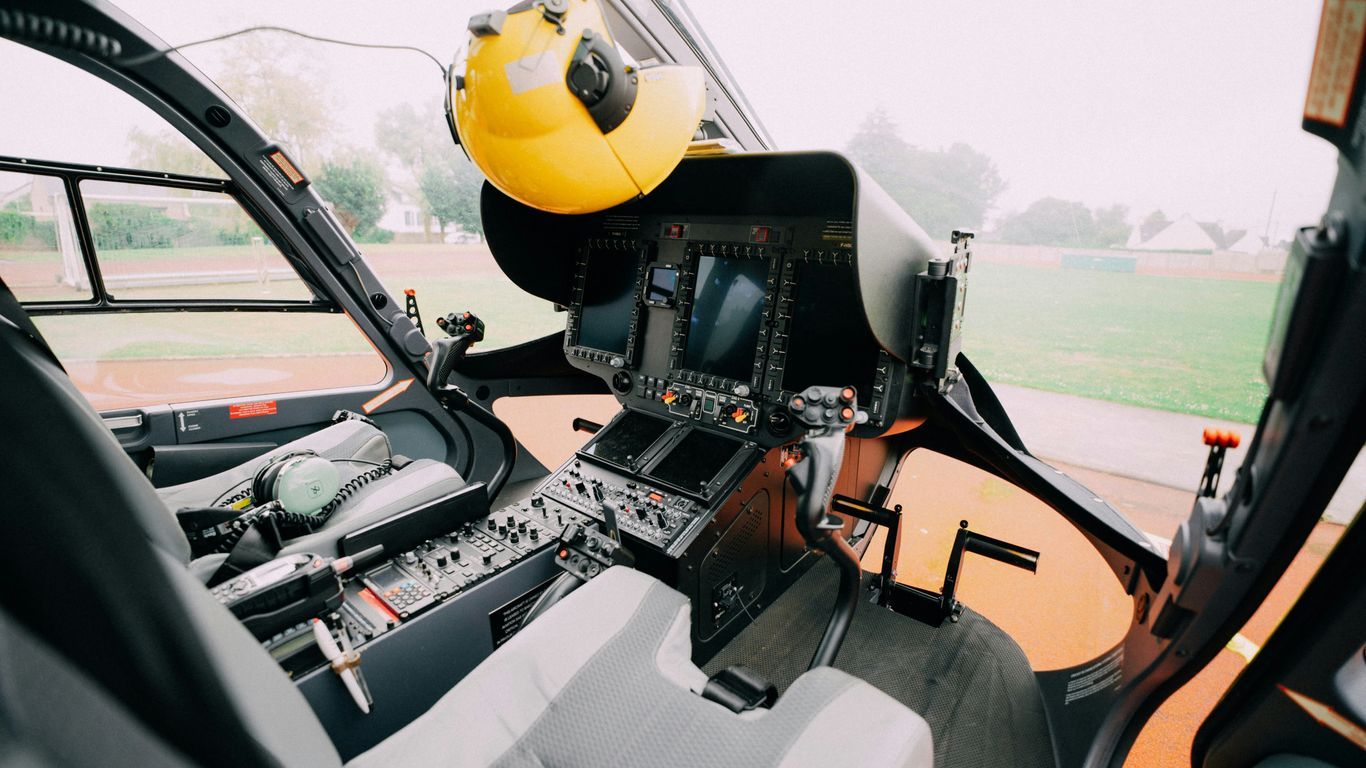
Safran's Aneto Engine: Powering High-Speed Flight
At the very heart of the Airbus RACER's impressive speed and efficiency, you'll find Safran's Aneto engine. This particular powerplant was chosen specifically to meet the high-stakes performance demands of this experimental aircraft. It’s engineered to deliver the necessary thrust for high-speed flight while—crucially—maintaining a respectable level of fuel economy. The Aneto engine marks a major advancement in aviation propulsion, and its integration into the RACER is a clear nod to its advanced capabilities.
Avio Aero's Contribution To The RACER's Drivetrain
Avio Aero plays an absolutely vital role in the RACER's mechanical systems, especially when it comes to its lateral gearboxes. These components are critical for channeling power from the engine to the rotors. Developed through close collaboration with Airbus Helicopters, these gearboxes are engineered with advanced materials to minimize weight and maximize performance. In short, they are built to withstand the immense stresses of flight and operate with unwavering reliability.
Understanding The Main Gearbox's Role
The main gearbox (MGB) is a central component in the RACER’s complex machinery. You can think of it as the hub that takes raw power from the Safran Aneto engine and distributes it to the main rotor blades. It's not just about moving power, though; it’s about doing so efficiently and dependably. This gearbox was a joint effort between Airbus Helicopters and Avio Aero, combining their expertise to forge a system perfectly suited to the RACER's unique configuration. Its job is to reduce the engine's high rotational speed to the optimal speed for the rotor, while simultaneously increasing the torque needed to spin the blades. It’s built to last through tough conditions and integrate seamlessly with the engine and rotor system.
The main gearbox is meticulously engineered to manage power flow, translate engine speed to rotor speed, and amplify torque—all while being robust enough for demanding flight conditions and a long service life.
Innovative Wing And Fuselage Construction For The RACER
The RACER helicopter demonstrator is all about pushing the envelope of rotorcraft design, and its wings and fuselage are prime examples of this forward-thinking philosophy. These aren't just passive structural components; they are actively engineered to contribute to its high-speed capabilities and overall efficiency.
The ASTRAL Consortium's Aerodynamic Wing Design
The wings on the RACER are a significant innovation, brought to life by the ASTRAL consortium. This group, a partnership between AERNOVA Hamble Aerostructures and the University of Nottingham's Institute for Advanced Manufacturing, focused on creating wings that are not only aerodynamically sound but also constructed with more environmentally friendly materials. The primary goal? To help the RACER achieve a much higher level of efficiency, particularly in forward flight.
What's especially interesting is the "double wing" or "box wing" configuration. It's an intelligent design that helps generate lift when the helicopter is cruising forward and even adds a bit of stability when the aircraft is on the ground. These wings are purpose-built to elevate the RACER's performance, giving it more lift and enabling it to fly faster and farther than conventional helicopter designs.
Here’s a breakdown of what the ASTRAL consortium focused on:
- Aerodynamic Shape: The wings feature a carefully sculpted profile designed to minimize air resistance and generate maximum lift.
- Lightweight Build: Using advanced, eco-friendly materials is essential for keeping the aircraft's overall weight down, which aligns perfectly with programs aiming to reduce emissions.
- Improved Performance: The new wing design is a direct contributor to the helicopter's ability to fly faster, travel further, and take off more easily.
RoRCraft Consortium: Building The Central Fuselage
The central fuselage of the RACER helicopter is a major structural accomplishment, assembled by the RoRCraft consortium. This team is a collaboration between Romania's National Institute for Aerospace Research "Elia Cafaroli" (INCAS) and the aerospace firm ROMAERO. Their work on the RACER's main body represents a notable step forward, resulting in a modern hybrid structure. This design skillfully merges both metal and composite elements—a first for Romania in the construction of helicopter airframes.
The RoRCraft team was responsible for fitting the intermediate side shells to the RACER airframe. These shells, measuring about 3.4 by 1.5 meters, are crafted from carbon fibre reinforced plastic (CFRP) and link the tail section to the cockpit area. A new, highly automated process, pioneered by Germany's Fraunhofer Institute for Foundry, Composite and Processing Technology IGCV, was employed to produce these large CFRP shells, marking a significant departure from older, more manual manufacturing methods.
Key responsibilities for RoRCraft included:
- Designing and developing the primary fuselage structure.
- Building and integrating the intermediate side shells.
- Designing and conducting ground tests for fuselage components.
- Performing detailed stress analysis on all fuselage parts.
- Assisting with the flight clearance process for the demonstrator.
Advanced Materials In Fuselage Manufacturing
The use of advanced materials is absolutely central to the RACER's construction. The RoRCraft consortium's work on the fuselage highlights this shift towards composites like CFRP. These materials boast a superior strength-to-weight ratio compared to traditional metals, which is vital for a high-performance aircraft like the RACER. This not only contributes to a lighter airframe but also allows for more complex and aerodynamically efficient shapes that would be difficult, if not impossible, to create with metal alone. The adoption of automated manufacturing for these composite parts further streamlines production and enhances consistency.
The integration of advanced materials and innovative construction in the wing and fuselage is directly linked to the RACER's mission: to demonstrate new levels of speed and efficiency in helicopter flight.
Critical Landing Gear And Canopy Structure Suppliers
The Airbus RACER helicopter demonstrator relies on highly specialized components for its landing gear and canopy, drawing on expertise from both established aerospace firms and companies with deep roots in high-performance motorsport. These elements are nothing short of vital for the aircraft's stability, safety, and aerodynamic profile.
ANGELA Consortium: Engineering The Landing Gear System
The RACER's landing gear system is the product of the ANGELA consortium, a collaboration that united Italy's Centro Italiano Ricerche Aerospaziali (CIRA) and Magnaghi Aeronautica, with further contributions from Lithuania's Techno System Development. So, what was a primary design goal? To slash aerodynamic drag when the gear is retracted. This was accomplished through clever integration into the wing and fuselage, complete with a retractable door system. When deployed, the gear provides a wide track, which is crucial for stability and safe touchdowns. Magnaghi Aeronautica carried out extensive testing at its facility near Naples to validate the system's reliability and secure flight approval.
Key aspects of the ANGELA consortium's work include:
- Design and Manufacturing: Magnaghi Aeronautica spearheaded the design, construction, and rigorous testing of the landing gear.
- Aerodynamic Integration: The system is engineered to retract seamlessly, minimizing drag during high-speed flight.
- Stability: When extended, the gear offers a wide, stable stance for safe and controlled landings.
- Testing and Validation: Comprehensive tests were conducted to ensure all safety and performance standards were met.
Techno System Development, a Lithuanian firm, was entrusted with the control unit for the landing gear's electro-mechanical actuator. This unit serves as the 'brain' of the landing gear, managing its extension and retraction with absolute precision. It ensures the gear deploys reliably for landing and retracts cleanly to cut down on drag in flight. This component underscores the importance of specialized electronic and mechanical systems in today's advanced aircraft.
The landing gear's design prioritizes a delicate balance—minimal drag when stowed and maximum stability when deployed—which is critical for a high-speed helicopter demonstrator.
KLK Motorsport GmbH's Canopy Structure Expertise
The canopy structure for the RACER was skillfully developed by KLK Motorsport GmbH, in partnership with Modell und Formenbau Blasius Gerg GmbH. These companies, drawing from their rich experience in motorsport design, created a canopy that is both lightweight and aerodynamically slick, all while adhering to strict aviation regulations. Their success on the RACER project paved the way for further collaborations with Airbus on other aircraft programs, like the aft fuselage section for the CityAirbus NextGen. This really shows how skills honed in the demanding world of motorsport can be successfully transferred to aviation, resulting in innovative and compliant designs. The application of motorsport principles to aviation is a growing trend, bringing fresh perspectives to aircraft development. You can see similar advancements in cockpit design for aircraft like the A220 and A320.
Key features of the canopy structure include:
- Lightweight Construction: Utilizing advanced materials to cut down on overall weight.
- Aerodynamic Efficiency: Shaped to reduce drag and support the aircraft's high-speed capabilities.
- Regulatory Compliance: Meeting all stringent safety and performance standards required for aviation parts.
- Motorsport Influence: Incorporating design philosophies from high-performance racing to achieve optimized results.
Advanced Rear Fuselage Design And Manufacturing
Unique Asymmetric Design For Enhanced Performance
The rear fuselage of the Airbus RACER helicopter is a genuine standout piece of engineering, thanks to its distinct, non-symmetrical shape. This design choice isn't just for aesthetics; it's a strategic move to improve the helicopter's handling during hover, without creating a drag penalty in forward flight. The teams at Airbus Helicopters, with support from the ASTRAL consortium, faced a significant challenge in creating this part, as it demanded both incredible precision and an extremely lightweight final product.
Additive Manufacturing Techniques In The Rear Fuselage
What's truly revolutionary here is that the RACER is set to be the first Airbus aircraft to use 3D printing for its primary structure. This modern manufacturing approach, also known as additive manufacturing, allows engineers to construct complex shapes that are difficult—or impossible—to make with traditional methods, often resulting in lighter parts. This process enables the creation of intricate geometries and fosters a highly efficient use of materials.
The Role Of ONERA In Tail Configuration
This section of the helicopter incorporates an H-shaped tail with specially angled vertical and horizontal stabilizers. This tail design is a patented concept from Airbus Helicopters and ONERA. Its purpose is to enhance the helicopter's stability and reduce energy consumption during flight. The development of this rear section demonstrates a strong commitment to moving beyond conventional helicopter design, blending novel materials with clever aerodynamics to achieve superior performance.
Key aspects of the rear fuselage include:
- A one-of-a-kind asymmetric cross-section for enhanced hover performance.
- The first primary structure on an Airbus aircraft to be made using additive manufacturing.
- A patented H-shaped empennage design developed with ONERA for improved stability.
The rear fuselage perfectly illustrates how the RACER project is pushing the very limits of aircraft design, combining new materials with smart aerodynamic ideas to achieve next-level performance.
Specialized Systems And Electrical Component Suppliers
Beyond the major structural and propulsion elements, the Airbus RACER helicopter depends on a network of specialized suppliers for its complex systems and electrical components. These companies provide the 'nervous system' and control interfaces that allow this advanced demonstrator to function as intended.
Techno System Development's Control Unit Capabilities
When it comes to the landing gear, one particularly vital component comes from Techno System Development. This company was responsible for creating the control unit for the landing gear's electro-mechanical actuator. It helps to think of this unit as the command center for the landing gear. It simply has to work perfectly every time, ensuring the gear extends smoothly for landing and retracts cleanly to minimize drag during flight. This unit governs the precise movements of the landing gear, making sure it locks securely in place, whether extended or retracted. It also serves as the critical link between electronic commands and the actuator's physical movement, playing a huge part in the overall safety of the system.
Latecoere's Crucial Role in Wiring Systems
Hidden from view is the complex web of wires and connections that keeps the RACER operational—essentially, its electrical backbone. Latecoere, along with its subsidiary LATELEC, is responsible for designing and assembling these intricate electrical and mechanical harnesses. These harnesses do the essential job of carrying power to all the helicopter's systems and transmitting the control signals that dictate every action. It’s a meticulous task, ensuring every connection is perfect for safe and efficient flight. Latecoere brings a wealth of experience in aerostructures and interconnection systems to the project. Their work is key for distributing power and control signals throughout the entire aircraft, showcasing French expertise in aerospace wiring and complex systems integration.
- Power Distribution: Ensuring electricity reliably reaches every system, from cockpit displays to the engines.
- Signal Transmission: Relaying commands from pilots and flight computers to various systems with zero delay.
- Environmental Protection: Designing harnesses robust enough to handle extreme temperatures and intense vibrations.
- Weight Optimization: Keeping harnesses as light as possible without ever compromising on reliability.
The complexity of modern aircraft means that designing and manufacturing these wiring systems requires an incredibly high level of precision and specialized knowledge. It's not just about connecting wires; it's about engineering a robust network that performs flawlessly under the most demanding conditions.
Ensuring Power Distribution and Signal Transmission
Latecoere's contribution really highlights the importance of these often-overlooked components. The company's work involves far more than just assembling wires; it's about creating a reliable network that can withstand the harsh realities of flight. Their expertise in designing harnesses that can handle extreme temperature shifts and vibrations, while also being optimized for weight, is absolutely vital for the RACER's performance. This meticulous attention to detail ensures that power is distributed correctly and signals are transmitted with pinpoint accuracy, allowing the helicopter's diverse systems to operate in perfect harmony.
Looking Ahead
The Airbus RACER helicopter project is a powerful demonstration of what can be achieved when different companies pool their expertise. From the Safran engines and Avio Aero gearboxes to the ASTRAL consortium's wings, it’s abundantly clear that no single company could build something this advanced on its own. This collaborative spirit, bringing together specialists from across Europe, is precisely how aviation progresses. This isn't just about building a faster helicopter; it's about discovering new ways to make aircraft more efficient and quieter by leveraging new materials and innovative construction methods. The RACER's success proves that this collaborative model is a solid blueprint for creating the next generation of flying machines.
Frequently Asked Questions
What is the Airbus RACER helicopter?
The Airbus RACER is a special demonstrator helicopter designed to fly significantly faster than conventional helicopters. It has a unique hybrid look, almost like a cross between a helicopter and an airplane. Its main purpose is to test technologies that can make helicopters quicker, more fuel-efficient, and quieter—perfect for missions like inter-city transport or emergency medical services.
Who are the main companies that built parts for the RACER?
A whole host of specialized companies collaborated to build the RACER. For example, Avio Aero manufactured key components like the gearboxes that drive the rotors, while Safran supplied the powerful Aneto engine. The ASTRAL group designed the innovative wings, and the ANGELA consortium created the landing gear. Airbus Helicopters itself built the main fuselage, including the distinctive tail section.
How fast can the RACER helicopter fly?
The RACER is built for speed! It's designed to cruise at about 400 kilometers per hour (which is roughly 250 miles per hour). That’s substantially faster than most conventional helicopters, which typically cruise at around 260 kilometers per hour.
What is special about the RACER's wings?
The wings on the RACER, designed by the ASTRAL group, are quite special. They're engineered to help the helicopter fly more efficiently and smoothly through the air, especially in forward flight. They were also constructed using materials that are more environmentally friendly.
Why is the rear part of the RACER helicopter designed differently?
The back section of the RACER has a unique, asymmetrical shape. This isn't just for looks; this clever design actually helps the helicopter perform better when it's hovering in one spot, without sacrificing its speed when flying forward. It's an innovative way to optimize its flight characteristics.
What is additive manufacturing and how is it used on the RACER?
Additive manufacturing, more commonly known as 3D printing, is a process of building objects layer by layer from a digital file. The RACER is the first Airbus aircraft to use this technique for its primary airframe structure. It allows engineers to create highly complex parts that are difficult to produce with traditional methods, often making them lighter as well.


