
Fashion Trends & Future
Why 2026 Brides Are Looking Back to Move Bridal Fashion Forward
20 Aug 2026

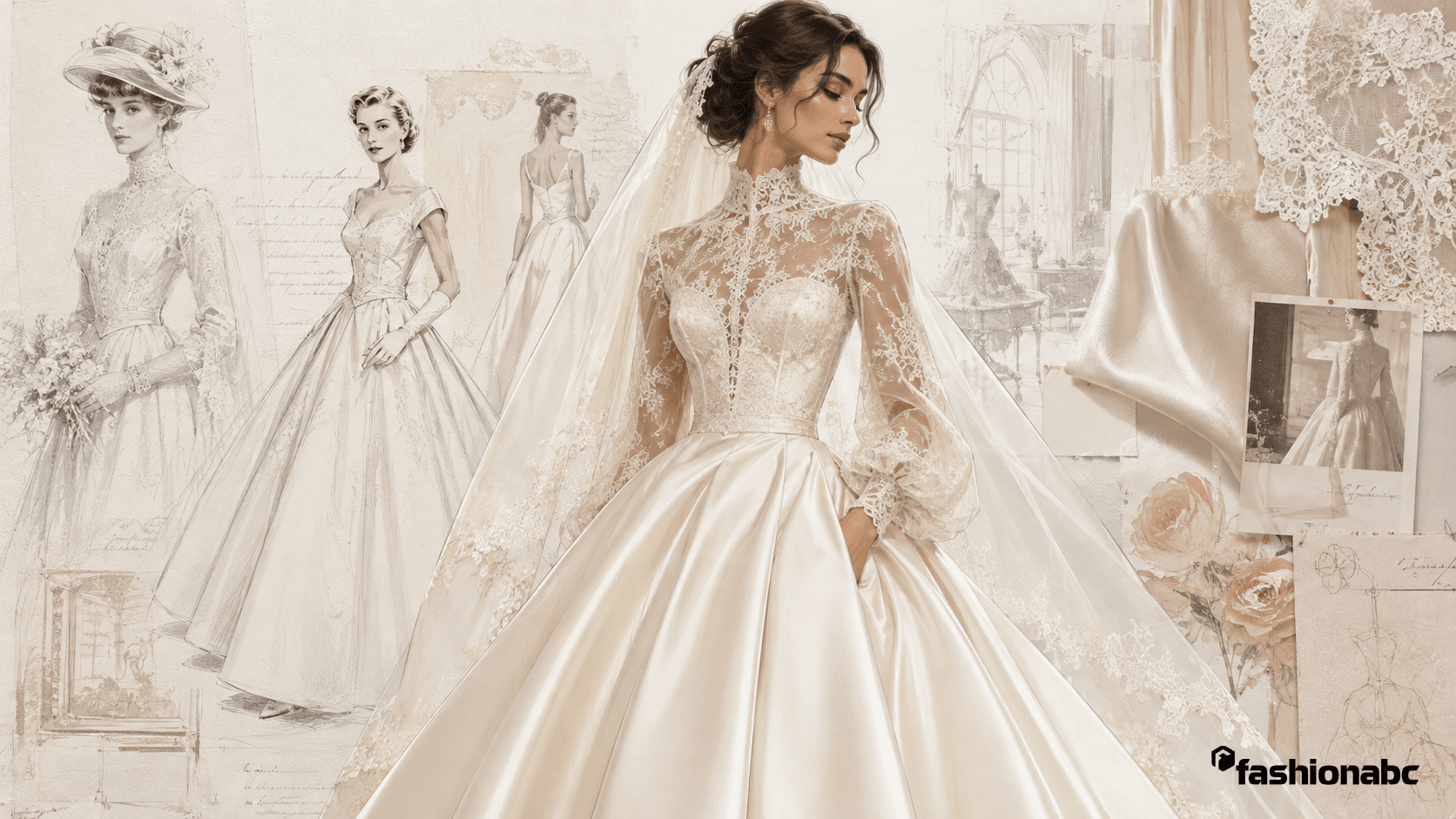
From Edwardian lace to 1950s ball gowns and 1990s satin, bridal fashion in 2026 is drawing heavily from the past. But this is not simply nostalgia. A new generation of brides is using historic silhouettes, fabrics and craftsmanship to build weddings that feel more individual, tactile and personal.
Fashion has always recycled ideas, but bridalwear has a particularly long memory.
In 2026, lace, full-skirted ball gowns, satin dresses and bohemian silhouettes are returning to wedding moodboards and designer collections. Research commissioned by Monsoon, based on more than three million Pinterest uploads, found particularly strong interest in lace wedding dresses, followed by ball gowns, mermaid silhouettes and bohemian styles.
The significance is not that brides have suddenly become interested in vintage fashion.
It is that they are becoming more selective about which parts of fashion history they want to bring forward.
Lace is becoming contemporary again
Lace offers the clearest example.
Its connection with Western bridalwear stretches back well over a century, with Queen Victoria’s 1840 wedding dress playing an important role in popularising white lace bridal gowns.
Yet the material appearing in 2026 collections is not being treated simply as heritage decoration.
Designers are experimenting with transparency, corsetry, architectural shapes and lighter construction, giving lace a more contemporary character.
The result is less about recreating an Edwardian or mid-century wedding dress and more about using an established material in a new visual language.
That distinction matters.
Today’s bride has access to almost every period of fashion history simultaneously. Social platforms, resale marketplaces, museum archives and digital collections have made historical references easier to discover than at any previous point.
The past has effectively become a design library.
The return of the silhouette
The renewed popularity of ball gowns points to another change.
After years in which minimal slips and understated ceremony dresses became increasingly visible, structure and volume are returning.
The 1950s remain an important reference point because of Christian Dior’s post-war New Look: defined waists, exaggerated skirts and carefully constructed femininity.
But contemporary brides are not necessarily seeking the social ideals associated with that period.
They are borrowing its silhouette.
This reflects a broader shift in fashion consumption. Increasingly, consumers separate aesthetic codes from the eras that produced them. A 2026 bride can combine a 1950s skirt, a contemporary corset, vintage jewellery and a modern veil without attempting to reproduce any single historical look.
Bridal fashion is becoming curatorial.
Which decades are influencing 2026 and 2027 brides?
Monsoon’s Pinterest analysis found that the 1950s is currently the strongest historical reference point among brides, followed by the 1920s and 1970s.
| Rank | Era influencing 2026/27 brides | Pinterest pins | Leading bridal trend |
|---|---|---|---|
| 1 | 1950s | 117,909 | Ball gown |
| 2 | 1920s | 76,587 | Flapper |
| 3 | 1970s | 66,118 | Bohemian |
| 4 | 1930s | 63,925 | Dropped waist |
| 5 | 1960s | 59,525 | Short wedding dress |
| 6 | 1940s | 55,953 | Corset |
| 7 | 1990s | 52,911 | Satin |
| 8 | 1980s | 44,575 | Frilled |
| 9 | 2000s | 13,461 | Mermaid |
| 10 | 1910s | 6,170 | Lace |
Source: Monsoon analysis of Pinterest data, collected August 2026.
The data is particularly interesting because the most popular individual trend does not necessarily belong to the most popular decade overall.
For example, lace wedding dresses generated close to 698,000 Pinterest pins in Monsoon’s separate trend analysis, even though the 1910s ranked lower when decades were compared as complete style categories.
That shows how bridal inspiration is increasingly fragmented.
Brides are not copying entire decades. They are taking specific elements from different periods and combining them.
Pinterest has changed how bridal trends evolve
Digital platforms are accelerating this process.
A bride can discover 1910s lace, 1960s mini dresses, 1970s sleeves and 1990s satin during the same browsing session.
That matters because it changes how trends develop.
Rather than one dominant aesthetic replacing another, multiple historical references can circulate at the same time.
The algorithm does not necessarily push bridalwear towards one decade. It can collapse decades together.
This may explain why bridal fashion currently feels nostalgic without belonging to one particular period.
The wedding dress is becoming an heirloom again
There is also a material dimension to the trend.
Lace, embroidery, corsetry and carefully constructed skirts foreground workmanship. They make the process of creating a dress visible.
That carries new significance in a fashion industry increasingly dominated by speed, digital imagery and mass production.
A wedding dress occupies an unusual position. It is often purchased with the expectation that it will be photographed, preserved and remembered for decades.
Designers therefore have an opportunity that goes beyond short-term trend cycles: creating what could be described as new heirlooms.
These are garments that feel contemporary when worn but carry enough craft, materiality and historical reference to remain meaningful afterwards.
Bridalwear is moving beyond the single dominant look
Perhaps the most important 2026 trend is therefore not lace, satin or the ball gown.
It is plurality.
A bride can choose an enormous 1950s-inspired gown for the ceremony and a 1960s mini for the reception. Another might choose 1990s satin. Another might combine antique lace with an extremely modern silhouette.
The old model of a single defining bridal look is weakening.
In its place is a more fragmented and personally assembled aesthetic.
This is also commercially significant.
For bridal designers and retailers, the opportunity is no longer simply to predict the next dominant silhouette. It is to offer enough variety, craftsmanship and styling flexibility for consumers to construct their own references.
That changes how collections can be designed, merchandised and marketed.
Instead of presenting bridalwear as a rigid seasonal trend cycle, brands can increasingly position dresses around mood, material, heritage and personal identity.
Bridal fashion is looking backwards, but not because it has run out of ideas.
It is looking backwards because fashion history has become raw material.
For designers, retailers and brides, the most interesting opportunity lies in what happens when those references are reassembled for the present.
Sources
- Monsoon — Dresses and Bridal Fashion
https://www.monsoon.co.uk/womens/dresses/ - Vogue — Everyone Will Be Wearing a Lace Wedding Dress in 2026
https://www.vogue.com/article/lace-wedding-dress-trend-2026 - Pinterest — Wedding Trends Report 2026
https://newsroom.pinterest.com/en-gb/news/wedding-trend-report-2026/ - Science Focus — The 20-Year Fashion Cycle
https://www.sciencefocus.com/news/major-fashion-rule-mathematically-true-20-years


