
business resources
Why Are Smart Energy Management Systems Essential for Businesses?
25 Mar 2026

Navigating today's business world requires a sharp focus on numerous factors, and energy consumption is undoubtedly a major one. It’s about more than just keeping the lights on; it's about intelligent power utilization. This is precisely where smart energy management systems enter the picture. These sophisticated systems empower businesses to get a firm grasp on their energy usage, which can significantly impact both their bottom line and public perception. Let's explore why these systems are quickly becoming indispensable for companies of every scale.
Key Takeaways
- Smart energy management systems enable businesses to substantially reduce their spending on electricity and other energy sources, leading directly to lower operating costs.
- By fostering more efficient energy use, companies can lessen their environmental footprint—a move that benefits the planet and can elevate their brand image in the eyes of consumers.
- These systems harness data to drive smoother business operations, ensuring equipment functions optimally and that energy consumption is efficiently planned.
- A more comfortable workplace, achieved through superior control over elements like lighting and temperature, can directly contribute to higher employee productivity.
- Adopting a smart energy management system is a forward-thinking move that prepares a business for the future, helping it remain competitive and financially sound in a dynamic world.
Achieve Significant Cost Reductions
In today's climate, businesses are feeling the pressure from two sides: rising energy prices and the persistent need to operate more efficiently. Implementing a smart energy management system (EMS) tackles these challenges head-on by providing the tools to actively control and slash energy expenditure. We're not just talking about minor savings here; this is about fundamentally reshaping your cost structure for the better.
Lowering Operational Expenses
One of the most immediate benefits of an EMS is a tangible drop in day-to-day operational costs. By offering detailed insights into exactly where and when energy is being consumed, businesses can swiftly identify wasteful habits and deep-seated inefficiencies. While upgrading to technologies like LED lighting or smart thermostats is a great start, an EMS elevates this strategy by actively managing these systems for you.
- Identify and eliminate energy waste: Pinpoint specific equipment or processes that are draining excessive power.
- Optimize equipment usage: Guarantee that machinery and systems run only when necessary and at their most efficient settings.
- Reduce utility bills: See direct, measurable savings from a lower overall energy consumption.
Implementing an EMS fundamentally shifts the approach to energy use—moving away from simply reacting to high bills and towards strategic, proactive control.
Optimizing Energy Procurement
Energy costs aren't fixed; they fluctuate based on market demand and even the time of day. An EMS, especially one enhanced with AI-driven analytics, can forecast these price shifts. What does that mean for you? It allows your business to strategically purchase or use energy during off-peak hours when it's cheapest. For instance, if your facility has processes that can be scheduled flexibly, an EMS can help shift those tasks to times of lower electricity rates. This intelligent procurement can result in substantial savings, with some industry reports suggesting potential reductions in energy bills of 10-25%. This kind of strategic purchasing is a primary advantage of modern energy optimizers.
Mitigating Peak Demand Charges
Many commercial electricity tariffs include what are known as peak demand charges, which are calculated based on the highest level of energy consumed during a given billing cycle. These charges can dramatically inflate a company's energy bill, even if the overall consumption is otherwise moderate. A smart EMS can help
Enhance Environmental Sustainability
In our current business climate, environmental consciousness is no longer just a nice-to-have; it's a core expectation. Companies are under increasing pressure to operate responsibly, and how they manage energy plays a huge role in that narrative. Smart Energy Management Systems (EMS) provide a concrete, practical path for businesses to make a genuine positive impact.
Reducing Carbon Footprint
Perhaps the most direct environmental benefit of an EMS is the significant reduction in a company's carbon footprint. Through meticulous monitoring and control of energy consumption, businesses can dramatically cut down on the power they use. Less energy consumed usually translates to less reliance on fossil fuels, which are the primary drivers of greenhouse gas emissions. It's a simple equation: if your facility draws less electricity, the power plants generating it are likely burning fewer fossil fuels. An EMS helps you pinpoint precisely where energy is being wasted, enabling targeted improvements—from switching to more efficient lighting to optimizing HVAC systems or even integrating renewable sources like solar. These actions collectively forge a cleaner, more sustainable operational profile.
Meeting Green Goals
Many organizations have established specific targets for lessening their environmental impact, often called 'green goals.' These objectives might include cutting CO2 emissions by a certain percentage or increasing their reliance on renewable energy. An EMS delivers the essential tools and data to effectively track progress toward these goals. With real-time data on energy usage, businesses can see exactly how their operations align with their environmental targets. If consumption creeps higher than planned, the system can help diagnose the cause and recommend adjustments, making it far easier to stay on course and transparently demonstrate a commitment to sustainability.
Improving Brand Reputation
Today’s customers, investors, and employees are paying closer attention than ever to a company’s environmental stewardship. Businesses that can clearly demonstrate they are actively working to minimize their impact often cultivate a much stronger public image. Implementing a smart energy management system is a powerful, tangible signal of this commitment. It positions the company as both forward-thinking and responsible. This can foster greater customer loyalty, attract top talent who value sustainability, and appeal to investors focused on Environmental, Social, and Governance (ESG) criteria. A stellar reputation for sustainability can—and often does—become a major competitive advantage.
Boost Operational Efficiency
Smart energy management systems offer benefits that extend far beyond just trimming costs; they actively enhance how your business functions on a daily basis. By providing a crystal-clear view of your energy landscape, these systems help streamline operations and ensure everything runs like a well-oiled machine.
Leveraging Real-Time Data
One of the most powerful features of a smart energy management system is the continuous flow of data it provides. You receive live updates on how much energy various segments of your business are consuming. This isn't just about abstract numbers on a dashboard; it's about turning data into actionable intelligence.
- Identify High Usage Areas: Pinpoint the exact sources of your highest energy consumption, whether it’s the HVAC system, lighting, or a specific piece of machinery.
- Track Performance: Observe how energy usage fluctuates throughout the day, week, or across seasons to identify patterns.
- Measure Impact: Instantly see the results of any adjustments you make to reduce consumption, validating your efforts.
This real-time feedback loop allows for immediate, intelligent adjustments, which helps prevent waste and ensures that energy is deployed only when and where it is truly needed. It’s essentially a control panel for your business's energy pulse.
Predictive Maintenance for Equipment
It's a simple fact: equipment that runs efficiently consumes less energy and has a longer lifespan. Smart energy management systems can play a crucial role here by monitoring the performance of your equipment. They are designed to detect subtle anomalies in energy consumption that might signal a developing problem—long before it escalates into a major failure.
By analyzing energy consumption patterns, these systems can flag equipment that's working harder than it should be. This early warning enables proactive maintenance, helping you prevent unexpected breakdowns and the costly emergency repairs that follow. Ultimately, it means your machinery remains in peak condition, minimizing downtime and keeping operations firmly on track.
Streamlining Energy Consumption Patterns
Truly understanding the 'how' and 'when' of your energy use is the first step toward making your operations more efficient. Smart systems provide the visibility you need to see these patterns and then optimize them for your business's benefit.
For example, these systems can automate adjustments to lighting or temperature based on room occupancy or the time of day. They can also manage the startup sequence of large equipment to prevent sudden, costly spikes in energy demand. This intelligent automation ensures energy isn't wasted on empty rooms or during off-peak hours, leading to much smoother operations and, of course, lower utility bills.
Improve Employee Productivity and Comfort
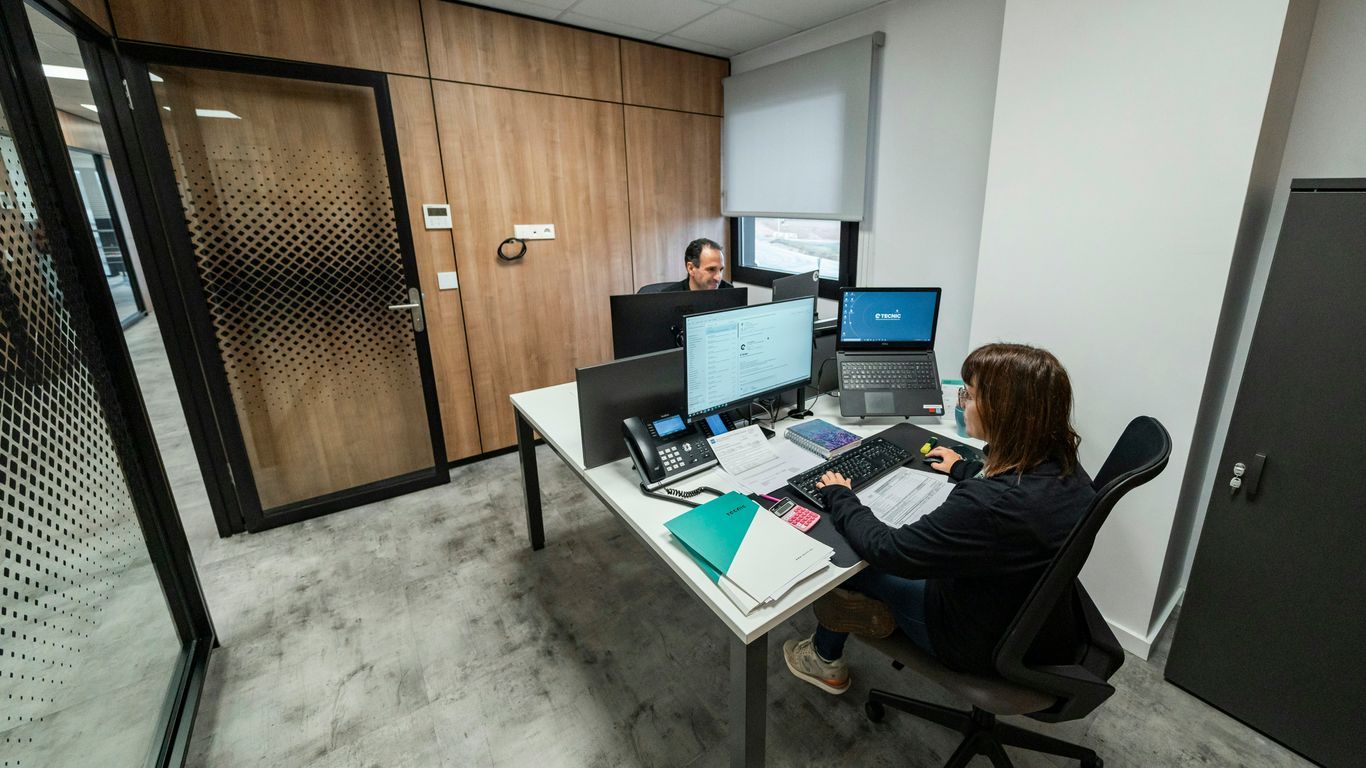
When a business invests in a smart energy management system (EMS), the benefits extend beyond just cutting utility bills or meeting sustainability targets. There's a profound and direct impact on the very people who make the business succeed: your employees. A well-managed energy system can dramatically improve the daily work environment, transforming it into a more pleasant and productive space.
Optimizing Workplace Environment
Consider for a moment how temperature and lighting influence your mood and ability to focus. An office that's too hot, too cold, or poorly lit makes it incredibly difficult to concentrate. An EMS provides precise control over these crucial environmental factors. For example, HVAC systems can be programmed to maintain an ideal temperature based on occupancy and time of day, rather than running on full blast indiscriminately. Lighting can adjust automatically, dimming when there's ample natural light or turning off entirely in unoccupied areas. The result is a more stable, comfortable, and welcoming atmosphere.
- Automated temperature regulation: Eliminates distracting hot or cold spots throughout the day.
- Smart lighting control: Adapts brightness levels to natural light and room occupancy for optimal visibility.
- Ventilation management: Ensures a steady circulation of fresh air without unnecessary energy expenditure.
Ensuring Consistent Comfort Levels
Fluctuations in environmental conditions can be a significant source of distraction. An EMS helps to eliminate these inconsistencies. Instead of relying on manual adjustments, which can be sporadic or delayed, the system works autonomously to maintain a steady state. This leads to fewer complaints about the office being too hot or cold and contributes to a more agreeable workspace for everyone. When employees feel physically comfortable, they are far less likely to be distracted by their surroundings and can dedicate their full attention to their tasks.
A consistent and comfortable workplace isn't merely a perk; it's a powerful driver of productivity. By removing the guesswork from environmental controls, businesses can foster an atmosphere where employees feel looked after and are empowered to perform at their best.
This commitment to consistent comfort can lead to:
- Reduced absenteeism that might be linked to discomfort-related complaints.
- Higher employee morale and overall job satisfaction.
- Improved focus and concentration on core work responsibilities.
Future-Proof Your Business Operations
The business world is in a constant state of flux, and staying competitive means being prepared for whatever comes next. Investing in a smart energy management system (EMS) is a decidedly proactive step, equipping your company for evolving market demands, new regulations, and economic shifts. It’s about building operational resilience and securing long-term success.
Adapting to Market Changes
Markets are inherently dynamic, and energy prices can be particularly unpredictable. An EMS provides the critical insights required to respond with agility. By deeply understanding your energy usage patterns, you can adjust operations to capitalize on lower prices or buffer the impact of sudden cost spikes. This flexibility is crucial for maintaining profitability and ensuring operational continuity. For example, an EMS can help you seamlessly integrate new energy sources, such as solar panels, into your existing infrastructure, empowering you to adapt to changes in energy availability and cost—a vital capability for staying ahead of the curve.
Ensuring Long-Term Financial Stability
Predictable cost savings are a cornerstone of any financially stable enterprise. An EMS helps you achieve this by optimizing energy procurement and driving down overall consumption. Imagine consistently reducing your energy bills by 10-20%, year after year. This reliable reduction in operating expenses creates a valuable financial cushion, making your business less susceptible to economic downturns or unexpected market turbulence. It's a strategic investment that delivers compounding returns over time, reinforcing your company's financial health.
Gaining a Competitive Advantage
In today's marketplace, efficiency and sustainability are far more than just buzzwords; they are powerful competitive differentiators. Companies that master their energy management often outperform their peers. An EMS not only cuts operational costs but also strengthens your sustainability credentials, a factor of growing importance to customers and stakeholders alike. By clearly demonstrating a commitment to responsible energy use, you can attract environmentally conscious clients and cultivate a more resilient brand image. This strategic edge can unlock increased market share and pave the way for new growth opportunities. Learning to deploy smart contracts can also play a role in automating energy transactions, further streamlining operations [bdb6].
A smart energy management system is a forward-thinking tool, enabling a business not only to manage its current energy needs with precision but also to anticipate and adapt to future challenges and opportunities. It's about building a robust foundation for sustained success in an unpredictable world.
Here's how an EMS helps future-proof your operations:
- Proactive Compliance: Stay ahead of emerging environmental regulations with real-time data on your emissions and consumption, making it easier to adapt.
- Technological Integration: Seamlessly adopt new energy technologies, like battery storage or advanced grid services, as they become commercially viable.
- Market Responsiveness: Rapidly adjust purchasing strategies based on real-time energy market data and predictive analytics.
- Operational Agility: Reconfigure energy-intensive processes to align with changing energy costs, perhaps by shifting production loads to off-peak hours. This adaptability is key to long-term survival and growth [6f78].
Understanding Smart Energy Management Systems
So, what exactly is a smart energy management system (EMS)? At its core, you can think of it as the central intelligence for your business's entire energy ecosystem. It's a sophisticated platform engineered to monitor, control, and optimize how your organization consumes power. The underlying principle is simple yet powerful: use energy more intelligently to save money and reduce your environmental impact. These versatile systems can be scaled for nearly any application, from a single office building to a sprawling industrial complex.
Core Components of EMS
For an EMS to effectively work its magic, it relies on a few key components working in concert. These elements are designed to provide a comprehensive, detailed picture of your energy habits.
- Smart Panel: This acts as the central hub, often delivering granular data on energy use right down to the individual circuit level. This allows you to see with precision where every kilowatt is going.
- Consumption Monitors/Sensors: These devices are strategically placed to track energy usage at critical points. Some of the more advanced sensors can even learn the unique
Looking Ahead: The Indispensable Role of Smart Energy Management
In the contemporary business arena, smart energy management systems have transitioned from a luxury item to an operational necessity. They provide a clear and actionable strategy for cutting operational costs, improving your environmental credentials, and boosting overall efficiency. By delivering detailed insights and automated controls, these systems empower businesses to effectively navigate the challenges of rising energy prices and achieve ambitious sustainability goals. Embracing this technology is not just about saving money and resources—it's about positioning your company for a more resilient, responsible, and profitable future. It is truly an investment that pays dividends in financial stability, operational excellence, and a stronger brand reputation.
Frequently Asked Questions
What exactly is a smart energy management system?
Think of a smart energy management system as an intelligent control center for your business's energy usage. It's a combination of hardware and software that monitors everything from lighting and HVAC to industrial machinery, constantly seeking opportunities to optimize consumption without disrupting operations. The end goals are to reduce costs and enhance sustainability.
How can these systems help my business save money?
These systems generate savings in several key ways. First, they provide clear data on where energy is being wasted, allowing you to address inefficiencies directly. Second, they help you avoid peak demand charges—costly fees for high energy usage during busy periods. Finally, some systems can even optimize energy purchasing to take advantage of lower off-peak rates. It all adds up to significant reductions in your utility bills.
Does using less energy really help the environment?
Absolutely. When your business reduces its energy consumption, it also reduces its demand from the power grid, which often relies on fossil fuels. This leads to a decrease in greenhouse gas emissions, such as carbon dioxide, effectively shrinking your company's carbon footprint. This commitment to sustainability is not only good for the planet but also enhances your brand's reputation.
Can these systems make my business run more smoothly?
Yes, they can have a direct impact on operational efficiency. By analyzing real-time energy data from your equipment, these systems can identify signs of mechanical stress or inefficiency. This enables predictive maintenance—fixing a potential issue before it causes a breakdown—which minimizes costly downtime and keeps your operations running smoothly.
Will a smart energy system make my employees more comfortable?
It certainly can. These systems excel at maintaining a consistent and optimal workplace environment by intelligently controlling temperature and lighting. A comfortable setting reduces distractions and can lead to happier, more focused, and more productive employees. It demonstrates a commitment to employee well-being.
Is investing in an energy management system worth the cost?
For most businesses, yes. While there is an initial investment, the long-term savings on energy bills, combined with benefits like reduced maintenance costs and improved operational uptime, typically provide a strong return on investment. It's a strategic move that enhances financial stability and makes your business more resilient for the future.


