


Ben Affleck on AI, Hollywood Economics and Why Technology Should Serve Filmmakers
02 Oct 2026

At Bloomberg Screentime 2026, Artists Equity CEO Ben Affleck discussed Hollywood’s changing economics, the role of AI in filmmaking and why technology should improve production without replacing human creative judgement.
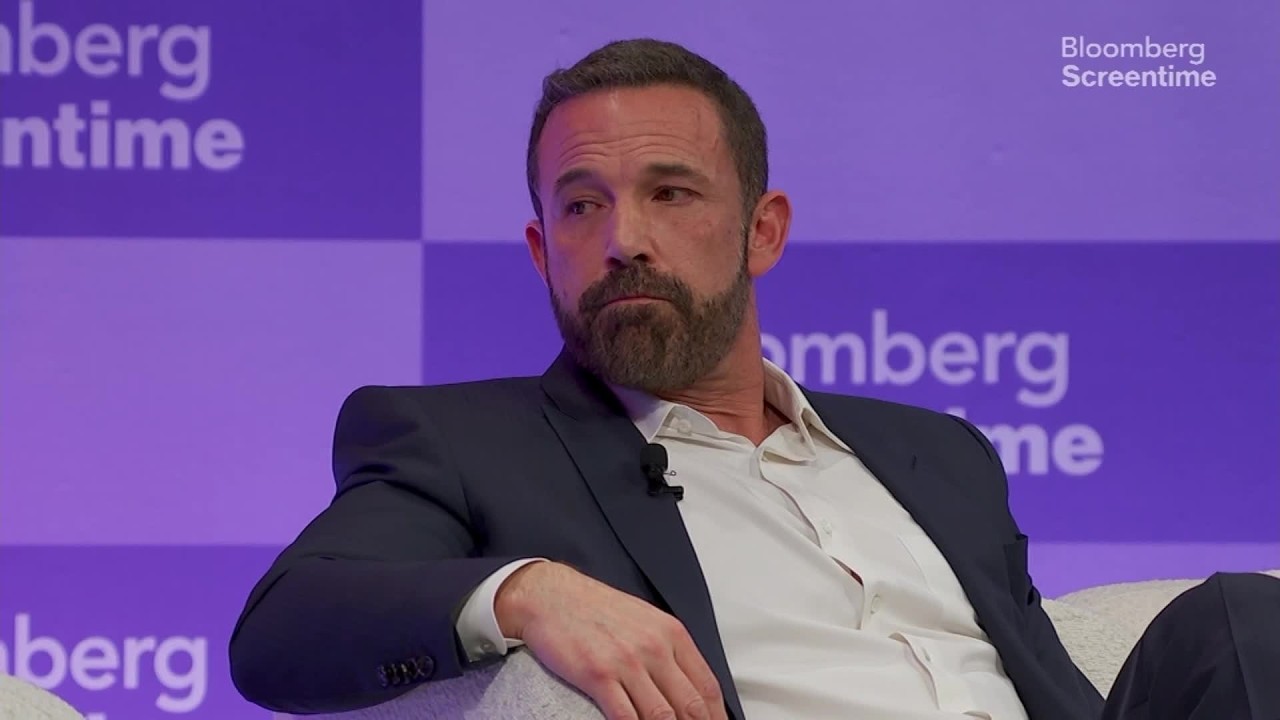
1 October 2026 — Los Angeles — Ben Affleck has argued that artificial intelligence could become an important filmmaking tool as Hollywood searches for more sustainable production models, while warning against the idea that technology alone can replace the judgement and creativity behind successful films.
Speaking with Bloomberg’s Lucas Shaw at Bloomberg Screentime 2026 in Los Angeles, Affleck discussed the economics of contemporary Hollywood, the artist-focused business model behind Artists Equity and the growing role of AI across film production.
The conversation comes as studios face pressure to control production costs while filmmakers, actors and other creative professionals debate how generative AI should be integrated into the industry. AI has already become a major source of tension in Hollywood, particularly around copyright, employment and the use of performers’ work.
AI as a production tool, not a replacement for creativity
Affleck’s position on AI is notably more pragmatic than the idea that generative systems will simply replace filmmakers.
He recently confirmed that AI was used for “lots of things” while making his Netflix thriller Animals, while stressing that the film itself remains fundamentally human. He has also pushed back against the idea that someone will simply be able to enter a prompt and automatically produce a compelling movie.
That distinction is important for the economics of filmmaking.
Film production contains a large number of technically demanding processes that happen before and after performers step in front of a camera. Visual continuity, background replacement, post-production, effects, editing and other repetitive or expensive processes are areas where AI could potentially reduce time and cost without necessarily replacing the creative decisions behind a film.
Affleck has been working directly on that problem rather than only discussing it.
Netflix acquired Affleck’s AI filmmaking company
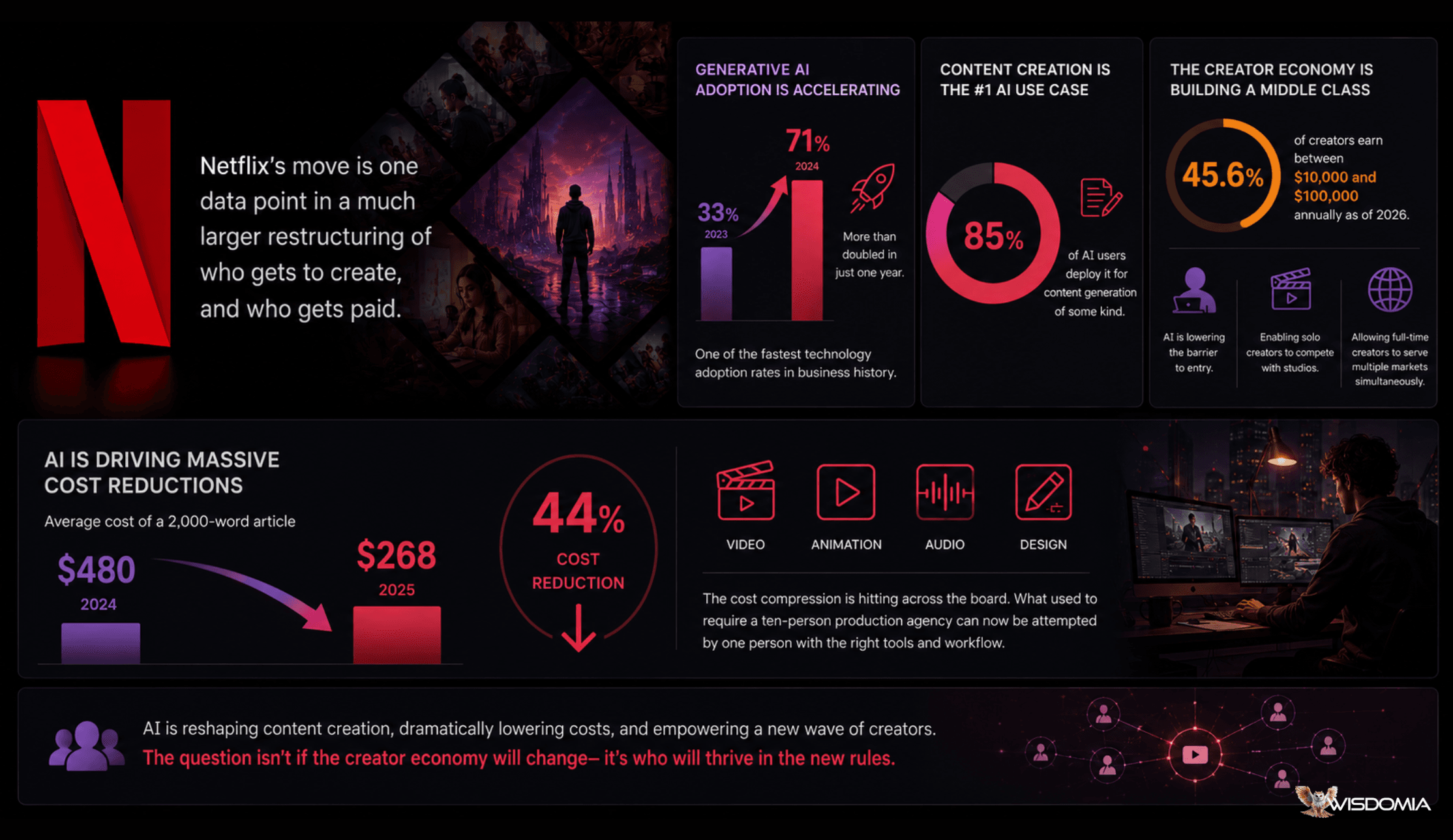
In March 2026, Netflix acquired InterPositive, an AI filmmaking technology company founded by Affleck. Netflix said the company had developed AI-powered tools specifically for filmmakers, with Affleck joining Netflix as a senior adviser following the acquisition.
Affleck said he began developing the company after studying early AI production tools in 2022 and concluding that general-purpose models did not adequately understand the practical language and demands of filmmaking.
InterPositive instead built smaller specialised models using controlled production data, focusing on areas such as visual consistency, missing shots, background replacement and incorrect lighting. Affleck said the technology was deliberately designed around filmmaking techniques rather than reproducing actors’ performances.
The underlying philosophy was that AI should assist creative teams while leaving artistic judgement with people.
Netflix described the acquisition in similar terms, saying that innovation should “empower storytellers, not replace them.”
Hollywood’s economic problem goes beyond AI
The wider discussion around AI is closely connected with another question Affleck has spent several years addressing: who benefits financially when a film succeeds?
Artists Equity, the independent studio Affleck founded with Matt Damon and RedBird Capital’s Gerry Cardinale in 2022, was built around expanding profit participation for people involved in creating productions.
The company says its business model is intended to change the traditional relationship between talent, studios and distributors by allowing creative partners to participate more directly in the value generated by projects.
Affleck serves as CEO, while Damon is Chief Content Officer.
Artists Equity has produced theatrical and streaming projects including Air, The Instigators, Unstoppable, The Accountant 2 and The Rip, as well as documentaries and branded entertainment.
The model reflects Affleck’s argument that Hollywood’s challenges are not simply creative. They are also structural and economic.
What happens if AI reduces production costs?
AI introduces another dimension to that model.
If technology can make parts of filmmaking cheaper or faster, the crucial economic question becomes who captures the savings.
A production company could use AI simply to reduce labour costs and increase margins. Alternatively, lower production costs could make more projects financially viable, allow filmmakers to take greater creative risks or enable a broader group of contributors to participate in a project’s upside.
That debate is likely to become increasingly important as AI tools improve.
Hollywood has already gone through repeated technological changes, from sound and colour to digital cameras, CGI and virtual production. What makes generative AI different is its potential reach across many different creative and technical jobs at the same time.
Affleck’s approach suggests the industry may need to think about AI and compensation together rather than treating them as separate issues.
Artists Equity puts participation at the centre
Artists Equity describes itself as an artist-led studio built around entrepreneurial partnerships with filmmakers.
Its stated objective is to broaden access to profit participation and give creators a greater economic stake in the projects they help build.
That model is particularly relevant at a time when streaming has changed many of the traditional mechanisms through which actors, writers and other creative professionals participate financially in successful productions.
Across the wider entertainment industry, residuals and secondary payments have historically provided performers with additional income when films and programmes continue generating value after their initial release.
Affleck’s studio model attempts to push participation further into the structure of production itself.
The debate is becoming less about whether Hollywood will use AI
AI adoption across entertainment is already advancing.
The more important questions are increasingly about where it should be used, what it should replace and who should benefit from the efficiencies it creates.
Affleck’s work with InterPositive provides one possible model: build specialised AI tools around production problems while protecting the human decisions that define a film.
His work with Artists Equity addresses the economic side of the same question: if filmmaking becomes more efficient or profitable, creative participants should have a clearer route to sharing in that value.
That combination could become particularly significant as Hollywood looks for ways to control escalating production costs without reducing storytelling to automated content generation.
The industry may therefore face a choice that is more complicated than “AI versus artists.”
The real question may be whether AI becomes primarily a mechanism for cutting costs or a technology that allows filmmakers to create more efficiently while preserving both human authorship and economic participation.
Sources
- Bloomberg Live — Ben Affleck on AI and Hollywood Economics, Bloomberg Screentime 2026, 1 October 2026
https://www.youtube.com/@Bloomberg_Live - Netflix — Innovation for Filmmaking, By Filmmakers: Why InterPositive Is Joining Netflix
https://about.netflix.com/en/news/why-interpositive-is-joining-netflix About Netflix - Artists Equity — About
https://artistsequity.com/about/ Home | Artists Equity - Artists Equity — Ben Affleck
https://artistsequity.com/team/ben-affleck/ Home | Artists Equity


