
citiesabc, first_page
Malta, Singapore and Monaco Rank Among the Best Places to Live for the Wealthy in 2026
15 Sept 2026

A new study comparing safety, taxation, passport strength, luxury property and lifestyle infrastructure places Malta first for affluent residents, followed by Singapore and Monaco.
For wealthy individuals and families considering relocation, tax is only part of the decision.
A new 2026 study by Casino.com ranked 30 popular destinations using a mix of financial, lifestyle and quality-of-life factors, including safety, passport strength, average tax rate, luxury real-estate availability, yacht marinas, wellness facilities, nightlife and casinos.
The results place Malta at the top of the ranking, followed by Singapore, Monaco, Hong Kong and Cyprus.
The study suggests that the most attractive destinations for affluent residents are not necessarily those with the lowest taxes, but those that combine mobility, safety, high-end infrastructure and lifestyle choice.
Top 10 Countries for Wealthy Residents
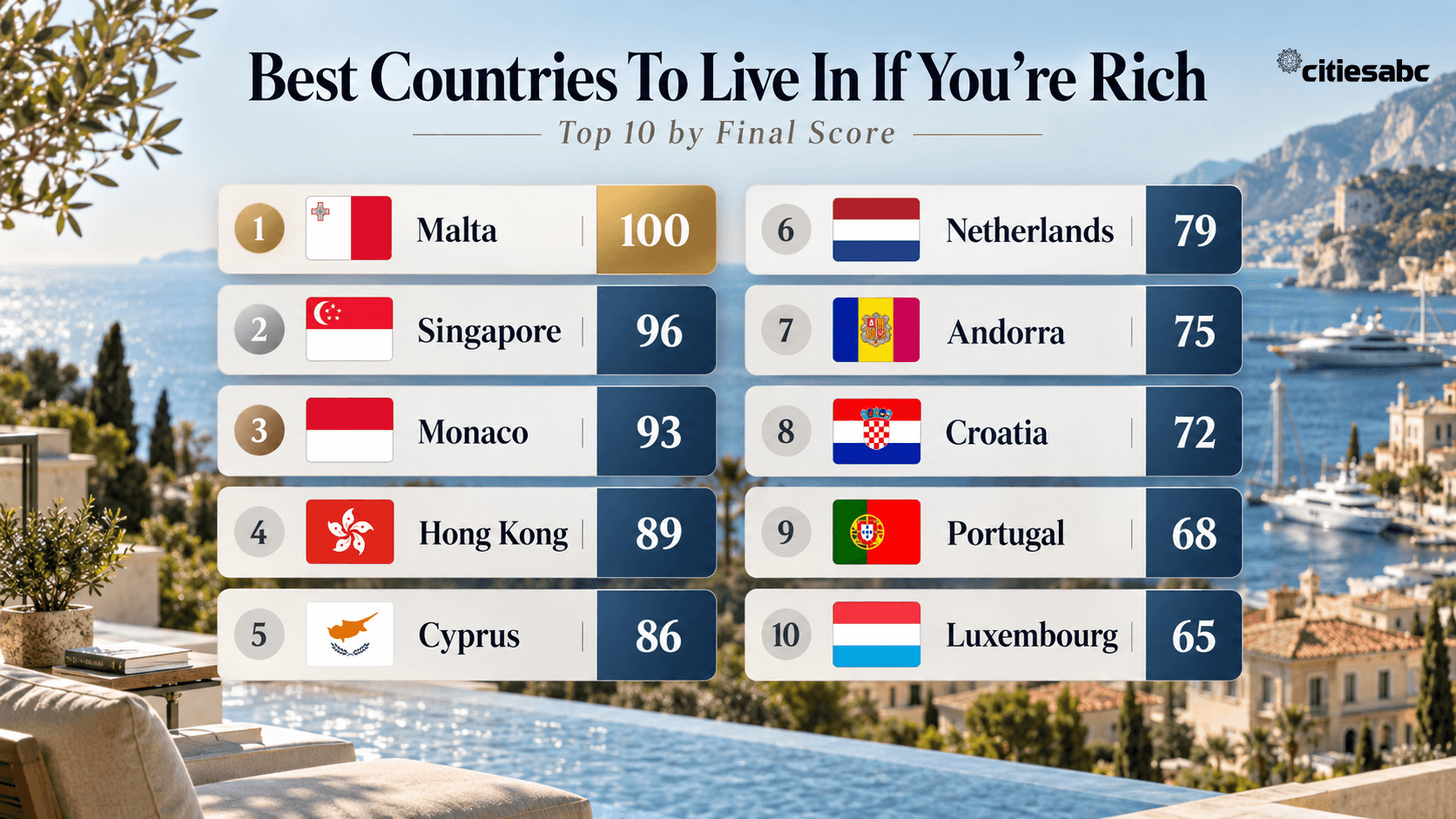
| Rank | Country | Safety Index | Luxury Real Estate | Yacht Marinas | Spas & Wellness | Nightlife Activities | Casinos & Gambling | Final Score |
|---|---|---|---|---|---|---|---|---|
| 1 | Malta | 63.76 | 659 | 12 | 117 | 162 | 8 | 100 |
| 2 | Singapore | 77.72 | 61 | 14 | 733 | 212 | 6 | 96 |
| 3 | Monaco | 73.02 | 397 | 6 | 8 | 9 | 2 | 93 |
| 4 | Hong Kong | 78.24 | 113 | 14 | 258 | 133 | 2 | 89 |
| 5 | Cyprus | 70.96 | 6,264 | 24 | 301 | 265 | 17 | 86 |
| 6 | Netherlands | 70.02 | 436 | 959 | 2,025 | 1,040 | 129 | 79 |
| 7 | Andorra | 88.65 | 1,137 | 0 | 16 | 26 | 1 | 75 |
| 8 | Croatia | 78.40 | 16,585 | 214 | 291 | 699 | 131 | 72 |
| 9 | Portugal | 67.09 | 76,762 | 170 | 1,330 | 1,370 | 26 | 68 |
| 10 | Luxembourg | 71.54 | 864 | 2 | 42 | 45 | 3 | 65 |
Malta Takes First Place
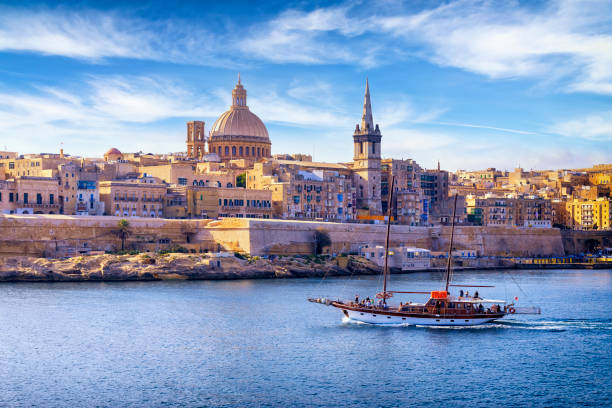
Malta received the highest overall score in the study.
The Mediterranean island combines a relatively moderate tax environment with luxury property availability, yacht marinas and a strong hospitality sector. The report notes a safety score of 63.76, a personal tax rate of 17.5%, and access to 132 visa-free destinations through a Maltese passport.
Its small geographic size also means luxury amenities are concentrated within a relatively compact area.
The report calculates approximately 208.5 luxury property listings per 100 square kilometres, alongside 51.3 nightlife venues per 100 square kilometres.
For wealthy residents looking for a European base, the combination of lifestyle, mobility and comparatively lighter taxation helped Malta outperform larger economies.
Singapore Combines Safety With Global Connectivity
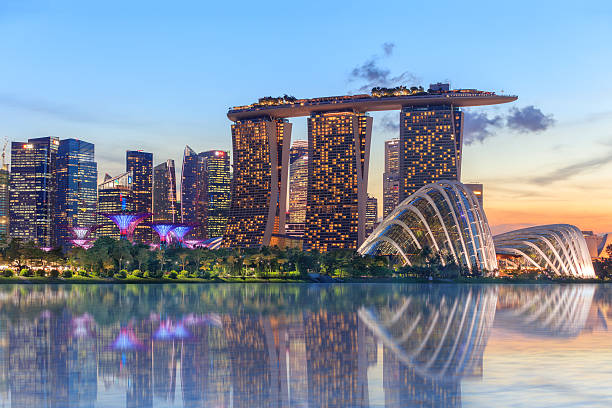
Singapore ranked second with a score of 96.
Its strongest advantage is safety. The city-state achieved a score of 77.72, making it one of the highest-ranked destinations in the study for personal security.
Singapore also performs strongly in wellness infrastructure, with more than 700 spas and wellness facilities included in the dataset. Its passport gives access to 137 visa-free destinations, supporting its position as a highly connected base for international business and travel.
Although the report lists a higher tax rate than some competing destinations, Singapore’s combination of security, connectivity and urban infrastructure keeps it near the top of the ranking.
Monaco Remains a Tax Haven for High Earners
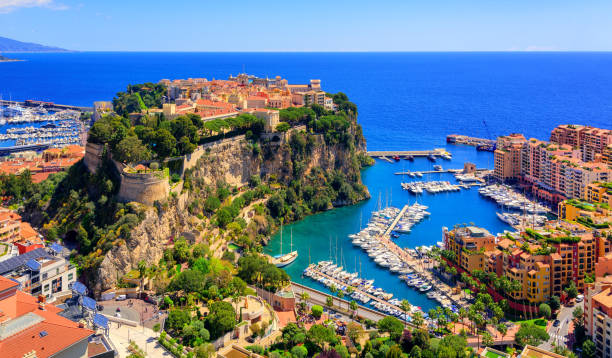
Monaco ranked third.
Its most obvious attraction remains its zero personal income tax, allowing residents to retain their income without the same direct tax burden found in many larger economies.
The principality also benefits from an established luxury ecosystem built around high-end property, yachting and premium leisure.
Despite its small size, the report identified close to 400 luxury property listings, as well as six yacht marinas and the globally recognised Monte Carlo Casino.
For ultra-high-net-worth residents, Monaco continues to offer one of the most concentrated luxury lifestyles in the world.
Hong Kong Scores Highly on Safety and Mobility
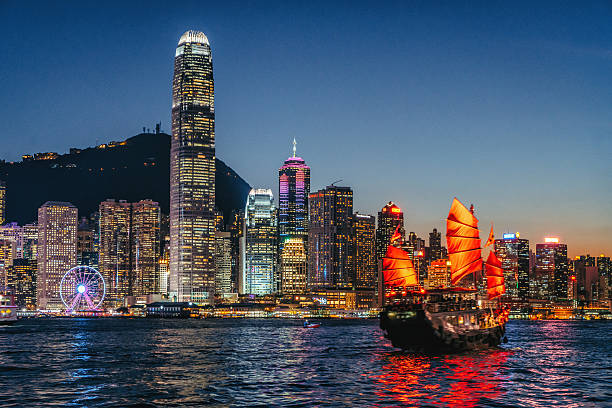
Hong Kong placed fourth.
The study gives the territory a safety score of 78.24, among the strongest in the top 10. It also combines relatively low taxation with strong international mobility and a dense urban lifestyle.
The report cites a tax rate of around 7.5% and visa-free access to 126 destinations.
Hong Kong’s appeal also comes from its concentration of restaurants, nightlife, financial services and international connectivity, making it attractive to wealthy residents who want to remain close to major Asian markets.
Cyprus Offers Scale in Luxury Real Estate
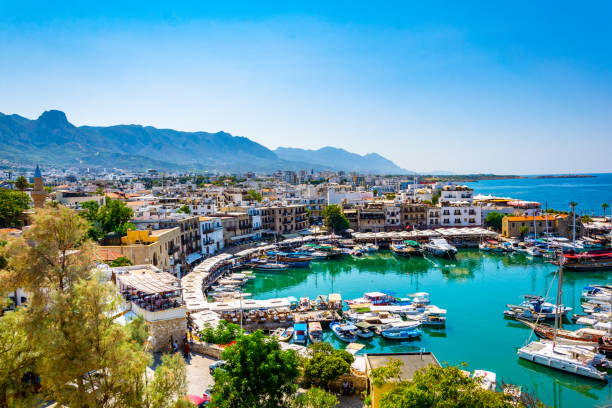
Cyprus completes the top five.
Its strongest feature in the ranking is the depth of its premium real-estate market, with more than 6,000 luxury properties included in the study.
The island also benefits from a strong resort economy, with dozens of five-star hotels and more than 300 spas and wellness venues.
For affluent families considering longer-term relocation, Cyprus offers a mix of space, leisure, property choice and Mediterranean lifestyle.
The Ranking Shows That Tax Is Only One Part of the Decision
One of the more interesting findings in the report is that low taxation alone does not determine the final ranking.
A spokesperson for the company behind the research noted that safety, property, mobility and lifestyle infrastructure can be just as important.
“Tax rate gets a lot of attention, but it's rarely the only reason someone picks where to live,” the spokesperson said. “That’s why we decided to include additional factors to find the best spots for those planning to relocate.”
That broader approach is useful because wealthy relocation decisions are rarely purely financial.
Families may prioritise personal safety, education, healthcare and mobility. Entrepreneurs may prefer access to international financial centres. Retirees may focus on climate and lifestyle. Others may look for jurisdictions with strong luxury-property markets or private aviation and yachting infrastructure.
Why This Matters for Cities
The findings also reveal how cities and small states compete for mobile wealth.
Places such as Singapore, Monaco, Hong Kong and Malta have all developed highly concentrated ecosystems around finance, property, hospitality and international connectivity.
For city governments, attracting wealthy residents can support demand for premium real estate, private services, restaurants, cultural venues and tourism.
But it can also create pressure around housing affordability, inequality and infrastructure if luxury investment becomes disconnected from the wider local economy.
The strongest destinations therefore tend to combine attractive conditions for global capital with strong public services, safety and urban infrastructure.
The US Performs Poorly in the Study
The report also claims the United States ranked as the least attractive destination for wealthy residents among the countries assessed.
The company attributes this to tax rates above 30% and weaker safety metrics compared with many of the top-ranked jurisdictions.
That conclusion should be read in the context of the study’s methodology, which combines lifestyle and tax indicators into a single score. It does not mean the US lacks wealthy residents or luxury markets, but it does show how different criteria can change the ranking significantly.
About Casino.com
Casino.com is a digital entertainment platform that publishes consumer-focused research and rankings across lifestyle, travel and leisure topics. For this study, the company analysed up to 30 destinations using indicators including safety, passport strength, taxation, luxury real estate, marinas, spas, nightlife and casinos.


