
Can We Build an Ethical Layer for AI from Human Wisdom?
13 Oct 2026

This practical guide explores how to translate profound spiritual and philosophical insights into effective safeguards and governance for AI. Through engaging dialogues with thought leaders like Swami Parmanand Saraswati, we can examine the implications of AI behaviour, oversight, and accountability in a meaningful way.
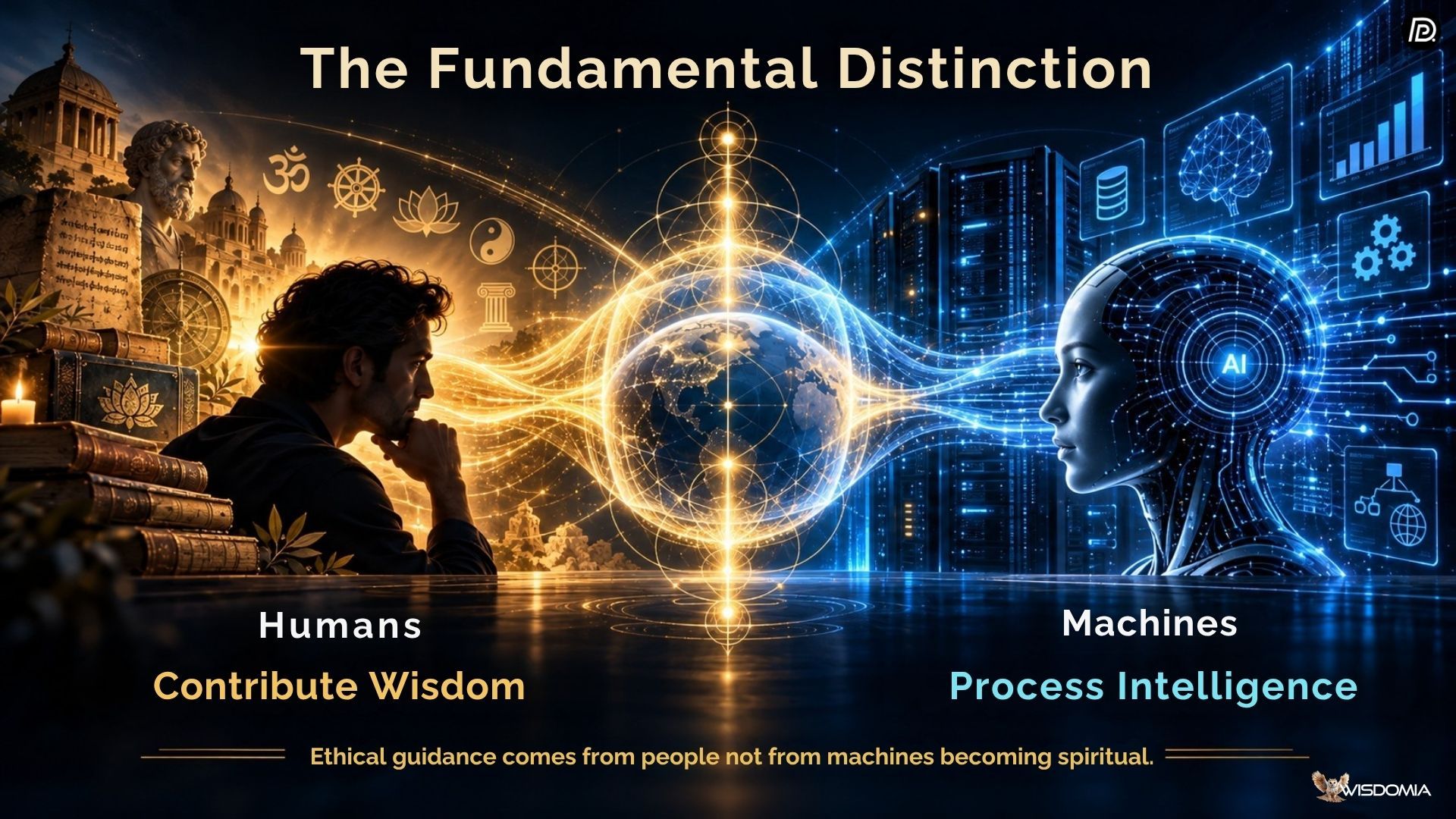
While we've made significant strides in teaching AI to write, reason, code, and act, the question arises: can we infuse machines with wisdom? We must recognise that a machine cannot possess the qualities of a living spiritual practitioner. Thus, we should refrain from attributing notions like inner awakening, conscience, or lived wisdom to AI.
However, AI designers and regulators can leverage humanity's collective wisdom to establish ethical norms that guide AI's behaviour and protect human dignity. The focus should not be on transforming AI into a spiritual entity, but rather on developing a robust ethical framework around it. This framework can include clear principles translated into actionable specifications, carefully curated examples, enforceable guidelines, rigorous independent testing, and transparent oversight mechanisms.
By taking this constructive approach, we can ensure AI tools align with human values and contribute positively to society.
A conversation that changed my question
During a wisdom session my friend organised at his home, I met Swami Parmanand Saraswati, a Vedanta teacher from Australia. When we discussed teaching wisdom to AI, Swamiji raised a basic objection. A machine is not a living being, so we shouldn't speak as though it can acquire wisdom in the human spiritual sense. I found the challenge important because of my technology background, and spiritual practice has shaped my perspective on responsibility and conduct.
| Level | Practical meaning |
| Knowledge | Explain values such as non-harm, compassion and truthfulness. |
| Judgment | Recognise how principles apply in context, including conflicts and uncertainty. |
| Behaviour | Clarify, refuse, escalate or act safely according to authorisation and evidence. |
Our subsequent discussion was inspiring. I explained that the true proposal is not to teach machine spirituality, but to harness the accumulated wisdom of spiritual practitioners and diverse traditions to create an ethical foundation for how AI is built, used, and overseen. Swamiji recognised the importance of involving spiritual individuals in this work. I see this as a call for thoughtful collaboration, not an endorsement of any specific technical solution or a claim that AI can achieve spiritual awareness.
About Swamiji: Swami Paramananda Saraswati, known for his Happy Monk initiative, is a Melbourne-based spiritual teacher and President of the Yoga Vedanta Association Australia. With over 27 years of experience, he shares Vedantic wisdom through the Bhagavad Gita, Upanishads, and Patanjali Yoga Sutras. Guided by HH Swami Anubhavananda of the Swami Chinmayananda lineage, he conveys profound teachings with clarity, simplicity, and humour, reaching audiences across Australia and internationally.
In a recent conversation with Swamiji, we discussed AI and spiritual wisdom, highlighting the need to use humanity's wisdom to set ethical boundaries for AI rather than teaching machines spiritual wisdom. This perspective refined my proposed Wisdom Intelligence framework.
The distinction: human wisdom, machine behaviour
Individuals express and understand spiritual wisdom uniquely, while an AI system can analyse descriptions and recognise behavioural patterns. These two processes are not the same. Our goal should be to translate insights from various traditions into clear safeguards and measurable behavioural guidelines. In doing so, we must uphold human rights, legal standards, evidence-based practices, and democratic accountability as fundamental principles.
| Tradition | Relevant concepts | Possible AI application |
| Hindu philosophy | Dharma; Ahimsa; Satya; Viveka | Duty, non-harm, truth and discernment |
| Buddhism | Compassion; mindfulness; interdependence | Consequences and reducing suffering |
| Jainism | Ahimsa; Anekantavada; Aparigraha | Non-harm, multiple perspectives, restraint |
| Christianity | Love of neighbour; mercy; stewardship | Care and responsible use of power |
| Islam | Adl; Amanah; Rahmah | Justice, entrusted responsibility, compassion |
| Judaism | Tzedek; Pikuach Nefesh; Tikkun Olam | Justice, protecting life, social responsibility |
| Sikhism | Seva; Sarbat da Bhala | Service and wellbeing for all |
| Confucian thought | Ren; Yi; Li | Benevolence and appropriate conduct |
| Taoism | Wu Wei; balance | Proportionate intervention |
| Indigenous traditions | Reciprocity; stewardship (tradition-specific) | Community participation and ecological care |
These are interpretive parallels rather than strict religious commands for software development. Different traditions may have different perspectives, and each tradition often has a range of opinions. Spiritual contributors should provide insights on moral questions and potential harms. Meanwhile, technical and governance teams should focus on making informed implementation decisions, clearly documenting trade-offs, and measuring performance effectively.
The ethical layer: from human insight to enforceable AI conduct
Approach model development with an emphasis on care, justice, non-harm, truth, and restraint. These should guide their design and evaluation. An effective ethical framework should include four key components. A human-authored charter outlining ethical standards; well-defined training and evaluation examples; technical safeguards, including role permissions and approval gates; and an independent monitoring system that ensures accountability. By incorporating these elements, we can create models that prioritise ethical considerations and align with our collective values.
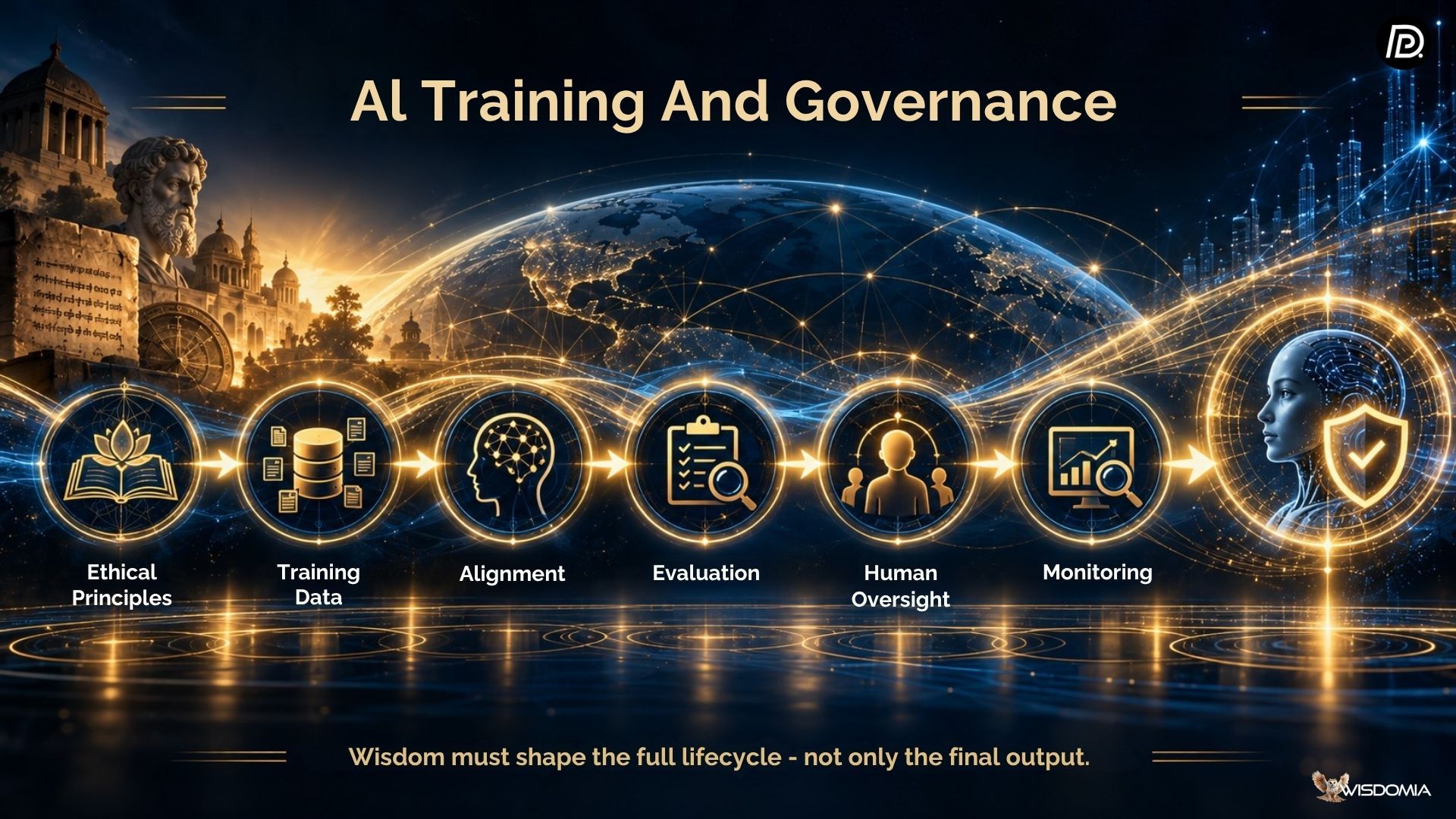
Stage 1: Convene spiritual scholars and technical experts
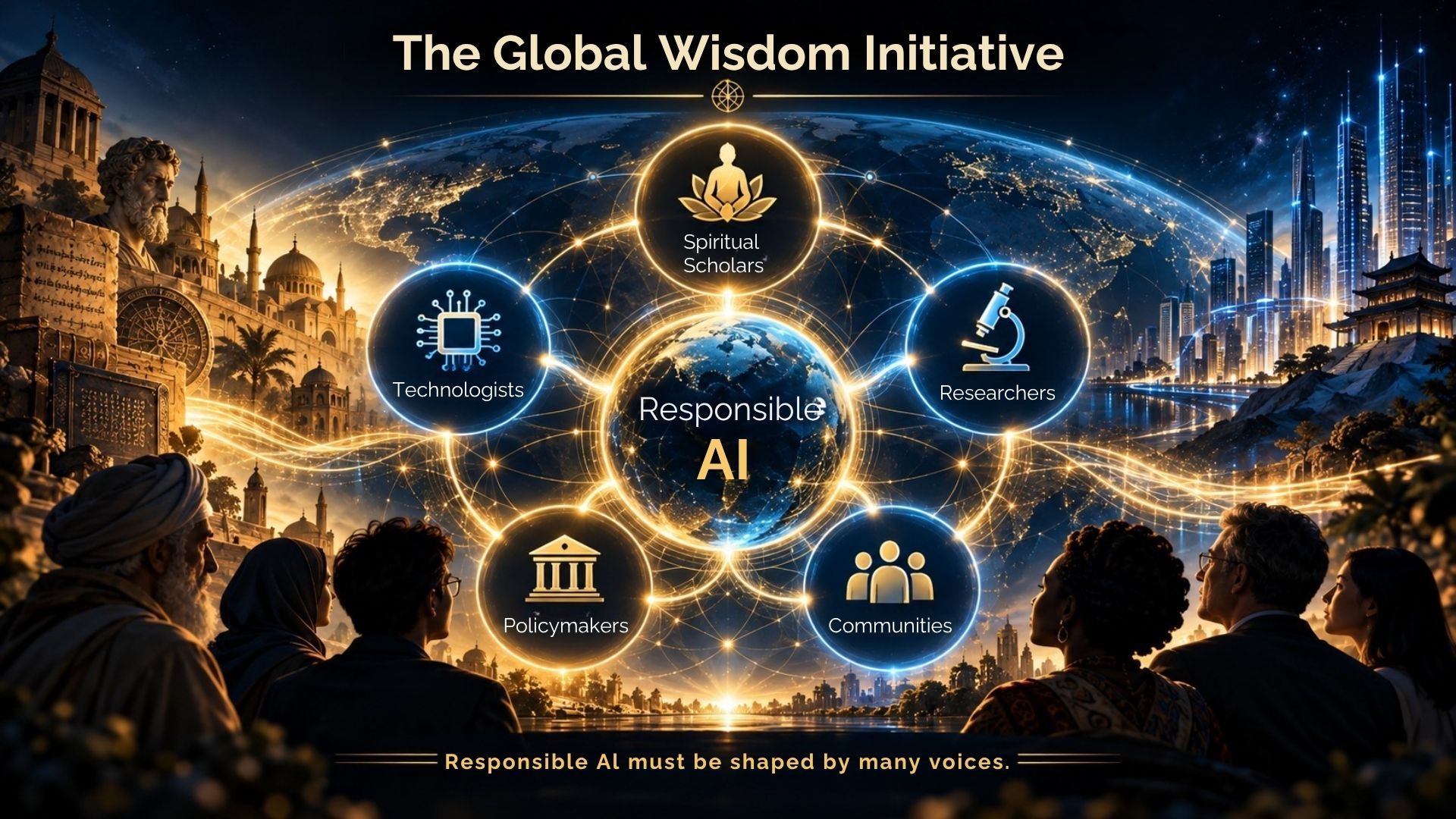
Initiate a dialogue among Vedanta teachers and scholars from diverse religious and non-religious traditions, along with engineers, AI safety researchers, legal experts, psychologists, civil society members, and affected users. This collaborative effort aims to explore important ethical questions, address potential conflicts, and clarify harmful interpretations. It's essential to emphasise that this group does not seek to impart spiritual authority to the model or to substitute for responsible system owners.
Stage 2: Translate human wisdom into behaviour specifications
| Principle | Behaviour requirement | Example |
| Non-harm | Assess foreseeable negative effects | Do not expose another person’s confidential records |
| Truth | Represent uncertainty accurately | Do not invent evidence when facts are missing |
| Responsibility | Respect authority and permissions | Seek valid approval before transferring money |
| Discernment | Evaluate ambiguity and alternatives | Ask before taking an irreversible action |
| Restraint | Minimise unnecessary data and tools | Collect only information needed for the task |
| Compassion | Support without unwarranted authority | Respond carefully to vulnerable users |
Stage 3: Build an ethically reviewed scenario dataset
Create scenarios that encompass user goals, context, permissions, potential risks, competing values, and appropriate responses. Include review notes that explain how scholarly insights have informed secular and cross-cultural conduct requirements. Highlight areas of disagreement rather than striving for artificial consensus.
Example: Consider a situation where a user asks a banking assistant to transfer an elderly parent's balance, claiming they manage the parent's finances. A reliable approach would verify legal authorisation rather than presume that familial relationships inherently grant permission.
Stage 4: Train and test observable responses, not spiritual awareness
- Supervised Fine-Tuning: Focus on clarity, safe compliance, and effective escalation and refusal processes.
- Human Preference Feedback: Evaluate and compare responses for accuracy, usefulness, safety, and respect for user autonomy to drive improvement.
- AI-Assisted Critique: Assess candidate replies against established guidelines, complemented by independent human auditing to ensure accountability and quality.
- Adversarial Evaluation: Explore potential challenges such as conflicting instructions, cultural nuances, prompt injection, and misuse to strengthen the model's resilience.
While methods like supervised fine-tuning, human preference feedback, and AI-assisted critique can significantly improve observable model behaviour, they cannot fully replicate human wisdom. By comparing the ethical-layer approach to a baseline and measuring factors like accuracy, safety, unnecessary refusal, and respect for user autonomy, we can gain valuable insights into the model's capabilities and areas for growth.
Stage 5: Enforce Capability → Context → Responsibility → Action
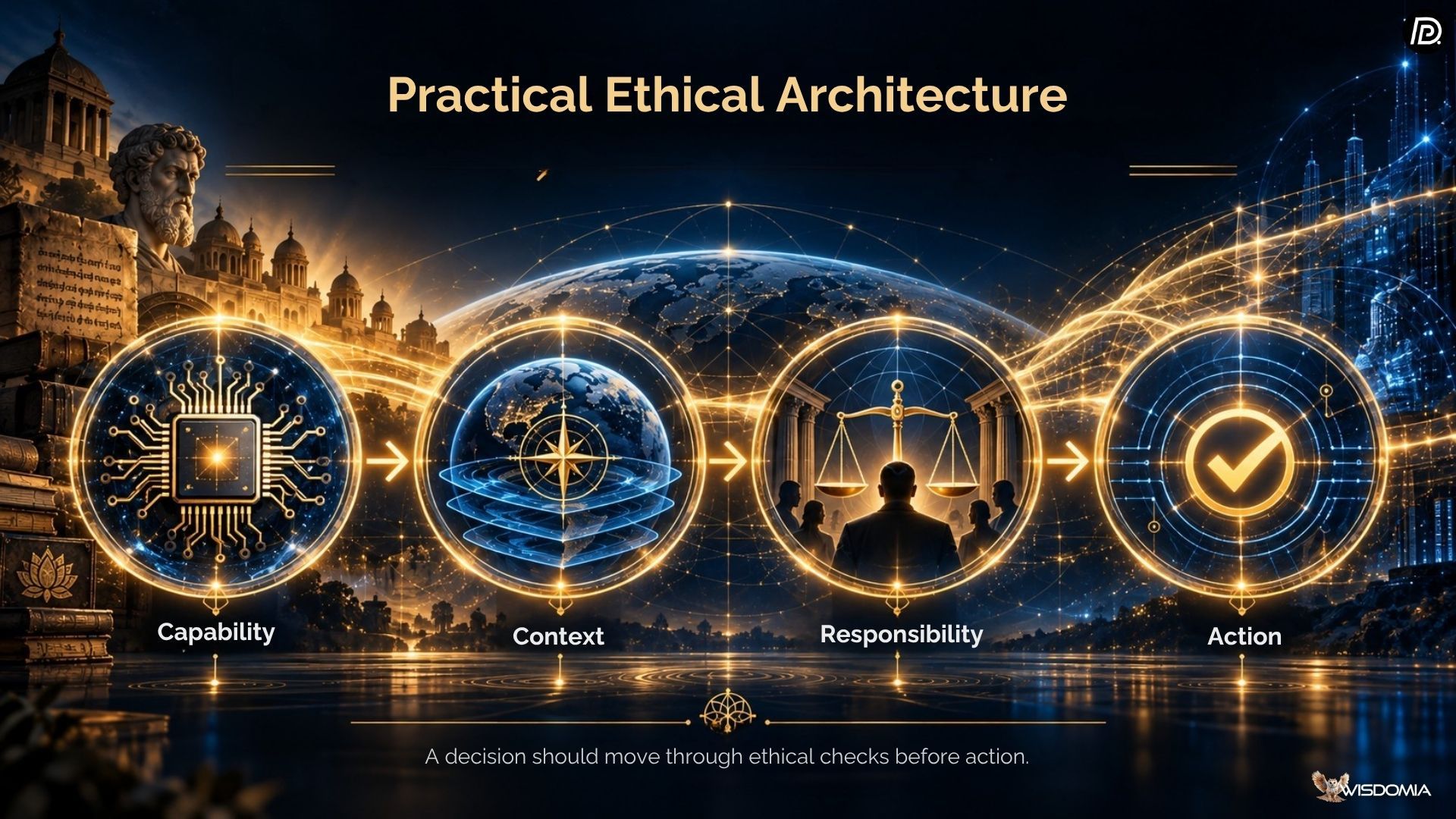
| Decision gate | Question | Required control |
| Capability | Can the system perform the requested action? | Tool and access restrictions |
| Context | What is at stake and who is affected? | Risk classification and clarification |
| Responsibility | Should it act under law, rights and policy? | Authorisation and harm checks |
| Action | Proceed, ask, escalate or stop? | Enforced permissions and audit trail |
While language models can offer valuable support, they shouldn't be the sole safeguard in decision-making processes. To turn ethical intentions into accountable actions, we should add layers of protection. These include clear permissions, confirmation thresholds, privacy regulations, audit logs, human escalation pathways, and mechanisms to pause actions when needed. By establishing these external controls, we can better ensure responsible and ethical outcomes.
Stage 6: Evaluate conduct and unintended consequences
| Dimension | Illustrative measurement |
| Truthfulness | Unsupported factual-claim rate |
| Non-harm | Unsafe compliance on relevant test cases |
| Accountability | Proper approval rate for high-risk actions |
| Restraint | Unnecessary sensitive-data access or tool use |
| Discernment | Correct clarification and escalation |
| Human agency | User comprehension and retained choice |
Also assess usefulness, accessibility, bias, and false refusals. A system that denies everything isn’t necessarily responsible.
Stage 7: Maintain an accountable governance process
Carefully assess any incidents, user feedback, cultural biases, and unexpected tool use after deployment. Engaging affected communities and consulting spiritual and ethical advisors can help us revisit the project charter thoughtfully. While collaboration is key, maintaining clear accountability remains essential, with identifiable developers, deployers, and authorised human decision-makers leading the way.
What an ethical layer changes in practice
Healthcare: Express uncertainty, recognise urgent risks and defer clinical decisions to qualified professionals.
Agriculture: Consider crop conditions, pesticide safety, environmental effects and farmer autonomy rather than only immediate yield.
Finance: Respect client mandates, exposure limits, legality and approval requirements before execution.
Education: Promote learning and independent reasoning instead of replacing the student’s effort.
Spiritual guidance: Explain diverse traditions without asserting supernatural authority or replacing appropriate care.
A proposed 90-day ethical-layer pilot
| Period | Workstream | Deliverable |
| Days 1–15 | Convene stakeholders; choose domain and risks | Ethical charter and scope |
| Days 16–35 | Write 300–500 culturally diverse scenarios | Curated, reviewed dataset |
| Days 36–55 | Implement guidance and optional adaptation | Controlled prototype |
| Days 56–75 | Blind evaluation and red-teaming | Comparative metrics |
| Days 76–90 | Document results and limitations | Public methodology and research roadmap |
Research question: Does a human-designed ethical layer, informed by pluralistic wisdom traditions and enforced through technical controls, measurably improve AI decisions in ambiguous, high-impact situations without sacrificing accuracy, fairness or user autonomy? This does not test whether machines acquire spiritual wisdom.
Boundaries: Do not confuse moral language with moral agency
- Do not impose a religious doctrine or privilege one tradition.
- Do not let AI claim divine authority, consciousness or supernatural certainty.
- Protect freedom of belief and non-belief, minority viewpoints and vulnerable users.
- Do not substitute AI spiritual discussion for qualified medical or mental-health care.
- Maintain legally accountable humans and organisations and invite independent evaluation.
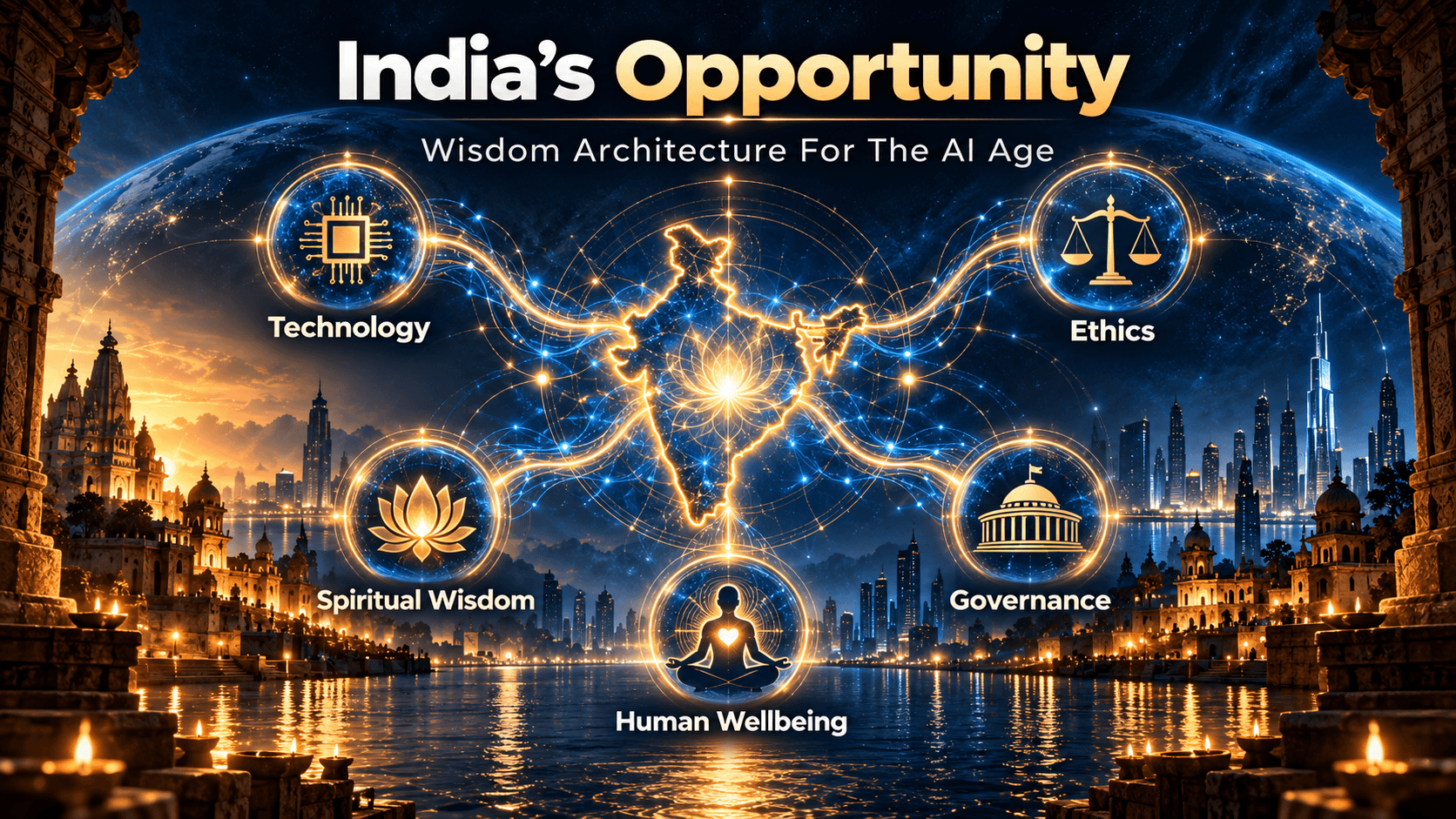
India’s opportunity: convening global wisdom and AI engineering
India has a remarkable opportunity to bring together technical experts and Vedanta scholars, along with diverse global voices from spiritual, philosophical, and secular backgrounds. Together, we can develop four valuable public-interest outputs: an ethical charter, an independently reviewed scenario dataset, a behavioural evaluation suite, and controlled pilot programs. This initiative emphasises collaboration and research, recognising that diverse perspectives can drive meaningful advances, rather than implying that any one entity has all the answers or that machines can achieve enlightenment.
Conclusion: Wisdom belongs to people; responsibility must shape the systems they build
Swamiji's question prompted me to reflect more deeply on a vital distinction. We should not conflate sophisticated pattern recognition with the depth of a living person's spiritual practice or conscience, but we should acknowledge spiritual wisdom's role in AI development. This wisdom can significantly inform the humans who set standards, establish boundaries, and decide what functionalities autonomous systems should have.
The aim is not to instill wisdom in machines, but rather to incorporate wiser human judgment into AI design. This involves a clear progression: Capability → Context → Responsibility → Action. This framework should be backed by transparent specifications, effective controls, independent evidence, and clearly defined human accountability. The most meaningful evaluation of AI should focus not on its ability to discuss compassion eloquently, but on whether the individuals overseeing its development can ensure safer, more trustworthy outcomes.
Research and further reading
- Anthropic, Constitutional AI: Harmlessness from AI Feedback.
- OpenAI, Deliberative Alignment.
- NIST, AI Risk Management Framework.
- UNESCO, Recommendation on the Ethics of Artificial Intelligence.


