
resources
Detailed Map of United States Showing Major Cities and States
05 Jan 2026

Gazing at a map of the United States that clearly delineates its cities can truly help one grasp the essence of the country. It's not merely about pinpointing locations; it's about understanding how these places interconnect and what distinguishes each region. In this guide, we'll delve into the wealth of information a well-designed map provides—from state boundaries to the major urban centers. Given the sheer size of the United States, a visual guide proves immensely valuable, whether you're meticulously planning a journey or simply cultivating a curiosity about American geography. Our aim is to equip you with the insights needed to interpret various map elements and what they signify.
Key Takeaways
- A comprehensive map of the United States, highlighting its cities, serves as an excellent resource for comprehending the nation's spatial organization, including state borders and prominent urban areas.
- Significant cities are geographically dispersed across diverse regions, from the historic Northeast to the innovative West Coast, each possessing its own distinct character and importance.
- Prominent physical features, such as formidable mountains and expansive rivers, exert considerable influence on the country's topography and patterns of human settlement.
- Identifying state capitals and major population centers on a map is crucial for appreciating the administrative and economic significance of various locations throughout the nation.
- Modern digital tools enhance the exploration of a United States map featuring cities, offering interactive capabilities and granular detail, which allow for close-up examination of specific places.
Navigating The United States Map With Cities
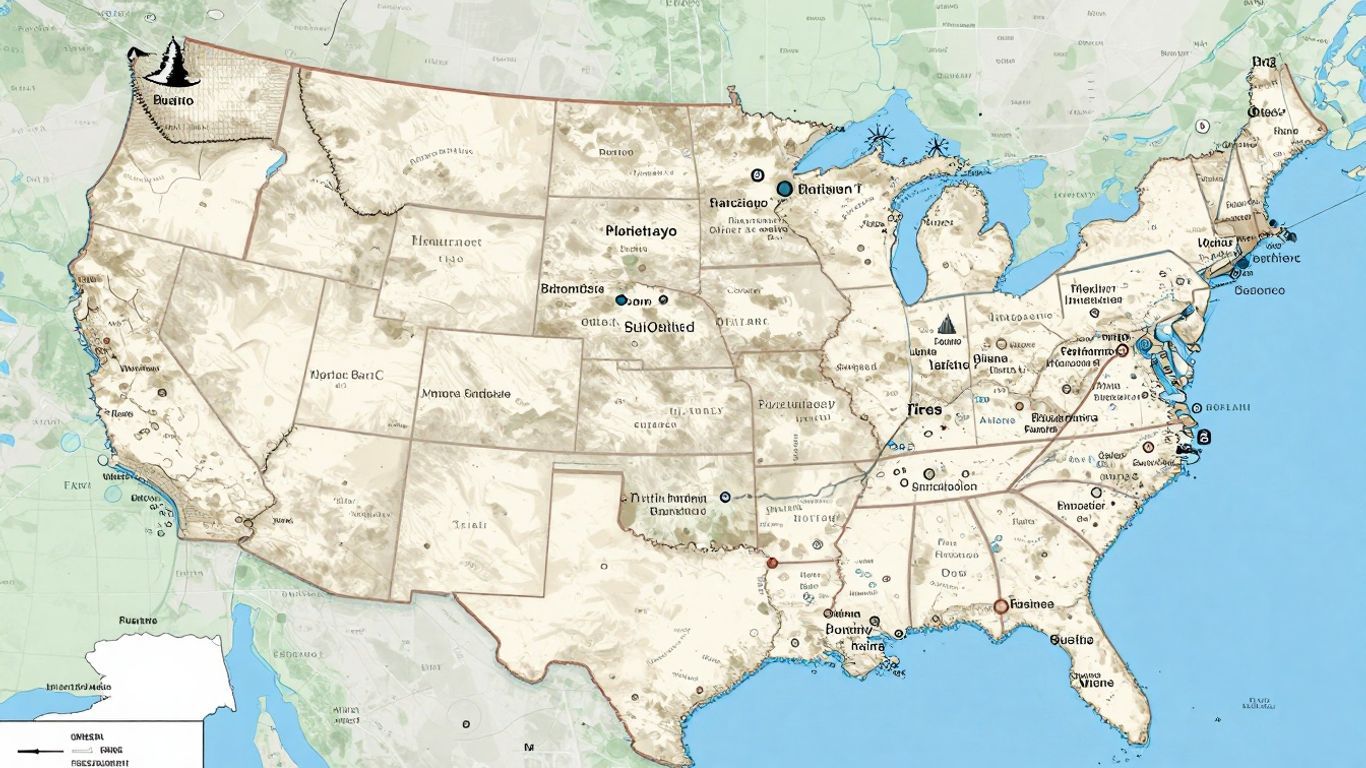
Understanding State Boundaries and Capitals
Upon reviewing a map of the United States, the primary feature that captures one's attention is its division into distinct administrative areas: the states. Each state is delineated by its own borders, which function as invisible lines on the map, indicating where one state jurisdiction concludes and another commences. These boundaries can be naturally occurring, such as formidable rivers or imposing mountain ranges, or they can be demarcations established by human design. Within each state lies a designated city known as the capital, typically serving as the seat of the state government. Familiarity with these capitals offers an excellent starting point for deciphering the nation's intricate geographical arrangement.
Let's take a moment to survey some key states and their respective capitals:
| State | Capital |
|---|---|
| California | Sacramento |
| Texas | Austin |
| New York | Albany |
| Florida | Tallahassee |
| Illinois | Springfield |
| Colorado | Denver |
| Arizona | Phoenix |
| Washington | Olympia |
| Massachusetts | Boston |
| Georgia | Atlanta |
Locating Major Metropolitan Areas
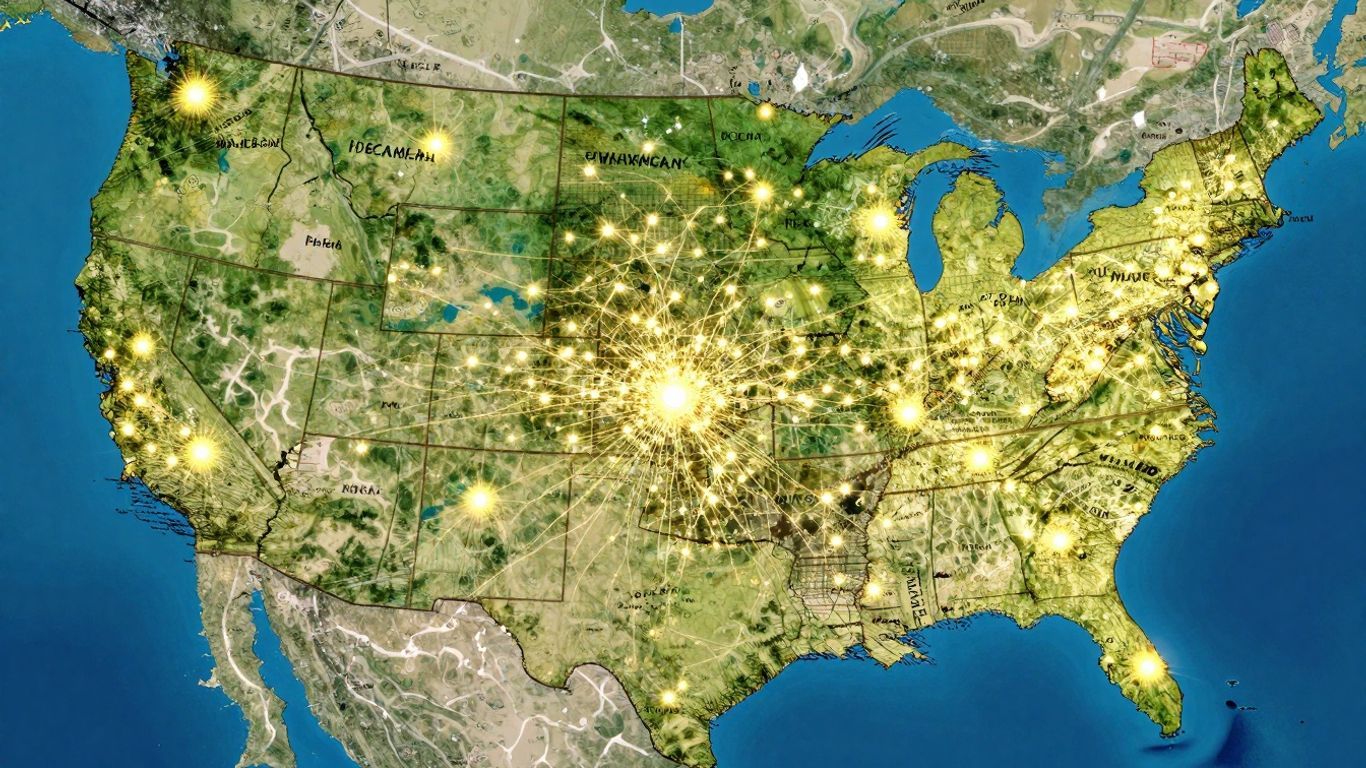
Beyond the delineation of states and their capitals, maps prominently feature major cities. These are the expansive population centers, commonly referred to as metropolitan areas, which serve as crucial hubs across the country. Consider iconic places such as New York City, Los Angeles, Chicago, and Houston; these urban giants typically function as economic and cultural focal points for their respective regions. They are often strategically situated near vital resources, significant transportation arteries like rivers or coastlines, or sites of historical import. **Identifying these major cities is fundamental to comprehending the nation's population distribution and, consequently, its economic vitality.** You'll frequently observe them clustered in particular areas of the country, revealing where the majority of residents live and work.
Key Cities Across Diverse Regions
The United States, by any measure, is an expansive nation, characterized by an array of distinct geographical and cultural landscapes. From the bustling, historic avenues of the East Coast to the vast, open expanses of the West, each region boasts its own significant urban centers. For instance, in the Northeast, cities like Boston and Philadelphia are renowned for their profound historical resonance. Venturing South, Atlanta and Miami emerge as pivotal hubs, blending diverse economies with vibrant cultural scenes. The Midwest is home to industrial and cultural powerhouses such as Chicago and Detroit, while out West, cities like Los Angeles and Seattle are celebrated for their leadership in technology and entertainment. A nuanced understanding of these regional distinctions helps to form a more vivid and accurate portrayal of the entire country.
Maps are far more than mere arrangements of lines and colors; they are profound narratives of geography, human history, and the intricate patterns of settlement. By cultivating the ability to interpret them, we begin to unravel the deep connections that bind places and people together.
Visualizing The American Landscape
When one examines a map of the United States, the scope of understanding extends beyond just the placement of cities and states. The very land itself narrates a compelling story. From one coast to the other, the nation's character is profoundly shaped by its physical features, and appreciating these elements helps us decipher the rationale behind geographical distributions.
Physical Features Shaping The Nation
Indeed, the U.S. showcases an exceptionally diverse terrain. In the western expanse, one encounters the majestic, towering mountain ranges like the Rockies—truly an unmistakable geographical landmark. These elevated regions are commonly depicted on maps with shades of brown and tan. Progressing eastward, the Appalachian Mountains form an extensive chain, gracefully stretching from New England southward. These ancient mountains, though generally less elevated than their Western counterparts, nonetheless play a significant role in defining the landscape and have historically influenced settlement patterns across the eastern seaboard.
The very contours of the land—its grand mountains and expansive plains—have consistently molded how people live, how they travel, and how communities are established and thrive throughout the country.
Waterways Connecting The Country
Water, undeniably, constitutes another monumental aspect of the American landscape. Rivers often serve as the country's veritable arteries, facilitating the movement of water and, historically, the transit of people and valuable goods. The Mississippi River system exemplifies this perfectly, draining an immense area that stretches from the Rocky Mountains all the way to the Appalachians. Furthermore, the Great Lakes in the northeast—Superior, Michigan, Huron, Erie, and Ontario—represent massive bodies of freshwater. Their significance is truly profound; were you to spread their water across the remaining U.S. landmass, it could cover it with several feet of water. For centuries, these lakes have been indispensable for both transportation and industry.
Mountain Ranges And Coastal Areas
Beyond the principal mountain ranges, the U.S. is blessed with extensive and varied coastlines. The Pacific coast, with its dramatic cliffs and pristine beaches, gracefully meets the immense Pacific Ocean. Conversely, the Atlantic seaboard fronts the Atlantic Ocean, presenting a distinctly different coastal character featuring numerous bays, intricate inlets, and protective barrier islands. These coastal areas are not merely picturesque; they function as vibrant hubs for international trade, recreational activities, and harbor unique, delicate ecosystems. As one moves inland from these shores, the terrain transforms markedly, creating incredibly diverse environments often within relatively short distances.
Exploring Major Urban Centers
Key Cities In The Northeast
The Northeast is a captivating region, brimming with both history and dynamic economic activity. Consider Boston, Massachusetts—a city that feels like a living museum, boasting its iconic Freedom Trail and world-renowned universities. It serves as a formidable hub for both education and innovation, notably home to institutions like MIT. Then, of course, there’s New York City, a global epicenter for finance, culture, and, arguably, nearly everything else. Further south, Philadelphia proudly presents Independence Hall alongside a remarkably distinct culinary landscape. And let's not overlook cities such as Baltimore, Maryland, with its vibrant Inner Harbor, or the enduring historic charm of Providence, Rhode Island.
Prominent Cities In The South
Cities across the American South unveil a rich and complex tapestry of culture and industry. Atlanta, Georgia, particularly distinguishes itself as a major transportation and business nexus, underpinned by a remarkably diverse economy. New Orleans, Louisiana, is, of course, celebrated globally for its unparalleled music, distinctive cuisine, and lively festivals. Miami, Florida, functions as a vital gateway to Latin America and represents a dynamic center for international trade and artistic expression. Other notable cities include Charlotte, North Carolina, a burgeoning banking hub, and Nashville, Tennessee, widely recognized as the very heart of country music.
Major Hubs In The Midwest
The Midwest steadfastly remains the industrial and agricultural heartland of the U.S. Chicago, Illinois, stands out spectacularly with its awe-inspiring skyline, world-class museums, and, naturally, its legendary deep-dish pizza. Detroit, Michigan, while carrying a profound legacy of automotive innovation, is currently experiencing an exciting resurgence. Minneapolis, Minnesota, is recognized for its extensive park systems and thriving arts scene, while cities like Cleveland, Ohio, possess a robust industrial past now complemented by a growing cultural footprint. These cities collectively play a vital role in shaping the nation's economy and its overall identity.
Western Cities And Their Significance
Western cities are frequently characterized by their profound connection to the natural world and their pivotal roles in the realms of technology and entertainment. Los Angeles, California, stands as the undeniable capital of the entertainment industry worldwide. San Francisco, also in California, is a global vanguard in technological advancement and innovation. Denver, Colorado, functions as a key gateway to the majestic Rocky Mountains and represents a rapidly expanding economic center. Seattle, Washington, another formidable tech powerhouse, is famously associated with industry giants like Amazon and Microsoft. These dynamic urban centers are indeed driving significant economic and cultural trends across the entire country.
The United States is an undeniably vast country, and its major cities brilliantly reflect this inherent diversity. From the historically rich streets of the East Coast to the cutting-edge tech hubs of the West, each urban center contributes its own unique character and profound impact to the national landscape.
Detailed City Information On The Map
When examining a map of the United States, it’s beneficial to realize that the scope extends beyond the broad overview of states and their borders. The cities themselves are where much of the nation’s dynamic activity unfolds, and a keen understanding of these urban areas significantly enhances one's grasp of the country’s geographical organization. This section is dedicated to exploring how maps depict these urban centers and the deeper meaning embedded within that information.
Identifying State Capitals
Every state, without exception, possesses a capital city, and these are consistently marked on most maps. These cities hold considerable importance, primarily because they serve as the administrative seats of their respective state governments. While a capital might not always be the largest city within its state—for instance, New York City is undeniably more famous than Albany, which is, in fact, New York's capital—these cities fulfill crucial administrative functions. Recognizing these distinct markers on a map is key to deciphering the political geography of each state.
Recognizing Significant Urban Populations
Maps are also adept at highlighting cities based on their population magnitude. You'll likely observe that some cities are represented by larger dots or more prominent, bolder labels than others. This visual cue immediately communicates which places serve as major population centers. Urban behemoths like Los Angeles, Chicago, and Houston, for example, are conspicuously visible as bustling hubs of activity, owing to the sheer volume of individuals residing and working there. This visual distinction greatly assists in comprehending the distribution of people across the diverse expanse of the country.
Understanding City Roles In Their States
Beyond merely reflecting population figures, cities within their states often assume distinct, multifaceted roles. Some emerge as undeniable economic powerhouses, such as the vibrant financial district in New York City [8aed]. Others might specialize as centers for technological innovation, manufacturing, or thriving tourism. A map can subtly hint at these roles by illustrating a city's proximity to essential resources, its integration within extensive transportation networks, or its connection to specific industries. For example, cities strategically located along major rivers or expansive coastlines frequently have roles intrinsically tied to trade and transportation.
Maps offer much more than just a collection of lines and dots; they weave a compelling narrative about where people choose to live, how they earn their livelihoods, and what unique characteristics define each locale. Paying careful attention to the specific details of cities on a map provides a significantly richer and more nuanced perspective of the American landscape.
Here's a concise overview of how various cities might be represented:
- State Capitals: Typically denoted by a star or another distinctive symbol for easy recognition.
- Major Metropolitan Areas: Distinguished by larger text or more substantial map markers to reflect their prominence.
- Smaller Cities: Generally labeled with more modest text, sometimes appearing only when one zooms in for greater detail.
This layered presentation of information facilitates a more comprehensive and nuanced exploration of the United States, allowing one to transition seamlessly from the broad outlines of state boundaries to the intricate specifics of its urban fabric.
Regional Perspectives Of The Map
When one surveys the map of the United States, it becomes immediately apparent that the country is a complex tapestry of distinct regions, each possessing its own unique character and a collection of important cities. Grasping the nuances of these individual areas is fundamental to making sense of the nation's immense and varied landscape.
The Great Lakes Region
This particular area is primarily defined by the colossal freshwater lakes that naturally form a significant portion of the border with Canada. It stands as a pivotal hub for industry and is home to some of the nation's largest urban centers. Consider cities like Chicago, Illinois, gracefully situated on Lake Michigan, or Detroit, Michigan, historically renowned for its pioneering auto industry. Cleveland, Ohio, and Buffalo, New York, also lie directly on the shores of these magnificent bodies of water. The lakes themselves are not only a vital transportation route but also an incredibly significant source of fresh water for millions.
The Pacific Coast
Stretching gracefully along the westernmost edge of the country, the Pacific Coast is celebrated for its dramatic, picturesque coastlines and its major economic powerhouses. California, without a doubt, is the star of this region, boasting cities like Los Angeles, a global epicenter for entertainment, and San Francisco, a dynamic hub for technological innovation. Further north, Seattle, Washington, is famously associated with leading tech companies and its pervasive coffee culture, while Portland, Oregon, presents a unique amalgamation of vibrant urban living and stunning natural beauty. The vast Pacific Ocean exerts a profound influence on every aspect here, from the climate to the economy.
The Gulf Coast and Atlantic Seaboard
These two distinct coastal regions effectively delineate the eastern and southeastern perimeters of the U.S. The Atlantic Seaboard, steeped in history, hosts some of the nation's oldest and most historically significant cities, including iconic metropolises like New York City, Boston, and Philadelphia. Moving southward along this coastline, one encounters major centers such as Miami, Florida—a crucial gateway to Latin America—and Atlanta, Georgia, which stands as a key inland transportation and business hub. The Gulf Coast, featuring cities like New Orleans, Louisiana, and Houston, Texas, possesses a distinct cultural identity, heavily influenced by its proximity to the Gulf of Mexico and its deep roots in the energy industry.
Each of these regions, in its own right, tells a unique story—a narrative woven through its distinct geography, its diverse populace, and the thriving cities that have flourished within its bounds. The map serves as an indispensable tool, helping us discern how these disparate areas connect, interact, and ultimately, form a cohesive nation.
Interactive Exploration Of The Map
Utilizing Digital Mapping Tools
When you first encounter a map displaying the entire United States, complete with all its cities and states, it’s understandable if it feels a tad overwhelming. However, this is precisely where modern digital mapping tools truly excel. Envision them as your personal, highly responsive guides, empowering you to effortlessly zoom in and out, pan across immense distances, and genuinely grasp the country's comprehensive layout. These sophisticated tools are meticulously designed to transform complex geographical information into an intuitive and engaging exploration. Moreover, you can often switch between various map views—perhaps satellite imagery for an authentic, real-world perspective or a terrain view to vividly observe mountains and valleys.
Zooming In On Specific Locations
One of the most potent capabilities inherent in digital maps is the seamless ability to zoom. You can commence with a sweeping, broad overview of the entire U.S., and then, with a simple click or scroll, progressively narrow your focus, getting closer and closer to a particular state or city. This function allows you to uncover intricate details that would be utterly indiscernible on a smaller-scale, static map. For example, you might zoom into a major city like Chicago to meticulously explore its diverse neighborhoods, or perhaps concentrate on a quaint, smaller town to appreciate its specific place within its state. This granular perspective is invaluable for genuinely appreciating the density and the sprawling distribution of urban areas across the nation.
Discovering Detailed City Views
Beyond the impressive zoom capabilities, numerous digital mapping platforms extend an even more immersive experience through street-level views. This particular feature offers something akin to a virtual presence within a city. You can frequently “drop” an avatar onto a street and instantly be presented with a 360-degree panoramic vista of the surroundings. This proves incredibly advantageous for truly capturing the essence of a city’s atmosphere—its unique architecture and the rhythm of its street life—all without the necessity of physical travel. It effectively imbues the map with an enhanced layer of realism and a palpable personal connection, transforming it from a mere static representation into a truly dynamic exploration tool. What's more, you can often pinpoint information about local businesses or significant points of interest directly within these street views.
Digital maps utterly transform static information into a truly interactive experience. They grant users the freedom to customize their exploration, whether focusing on expansive regions or minute details with equal facility. This remarkable adaptability renders them an invaluable resource for anyone seeking a deeper understanding of the geography and the dynamic urban landscape of the United States.
Wrapping Up Our Journey Across the USA
So, we've embarked on a comprehensive journey, taking a thorough look at the United States, from its diverse array of states to its bustling, vibrant cities. Whether your interest lies in meticulously planning an upcoming trip, delving into the intricacies of geography, or simply satisfying a curiosity about spatial relationships, having a clear and informative map is undeniably helpful. We've witnessed firsthand the country's remarkable diversity, characterized by varied landscapes and major urban hubs strategically dispersed across its vast expanse. Hopefully, this exploration has provided you with a clearer comprehension of the nation's layout and perhaps even ignited some new ideas for your own adventures or continued learning. Keep exploring, and do feel free to consult more detailed maps whenever you wish to zoom in even further on specific areas of interest.
Frequently Asked Questions
What is a map of the United States?
Essentially, a map of the United States serves as a comprehensive visual representation that showcases all the individual states and their geographical relationships. It's designed to help us locate important cities, including state capitals, and often illustrates significant natural features like mountains, rivers, and other noteworthy land formations.
How can a map help me learn about the US?
Maps are incredibly effective educational tools! By studying one, you can easily grasp the country's immense scale, identify where different states are positioned, and pinpoint major metropolitan areas such as New York or Los Angeles. It's truly like possessing a personal guide, allowing you to explore the entire nation without ever having to leave your current location.
What are state boundaries and capitals?
State boundaries are best understood as the invisible lines that demarcate where one state concludes and another begins. Furthermore, each state possesses a designated capital city, which typically functions as the operational center for the state government. You might think of it as the principal administrative city for that particular state.
What are major cities?
Major cities refer to the largest and most influential urban centers within a given state or region. These cities are frequently characterized by dense populations, numerous businesses, and often act as crucial hubs for employment, cultural activities, and transportation networks. Excellent examples include vibrant places like Chicago, Houston, or Phoenix.
Can a map show natural features like mountains and rivers?
Yes, absolutely! Many maps are specifically designed to illustrate prominent natural features. They can depict towering mountain ranges, such as the Rockies; extensive river systems, like the Mississippi; and vast bodies of water, like the Great Lakes. These geographical elements are incredibly important as they significantly shape the land and influence human settlement patterns.
How can I use digital maps to explore?
Digital maps, accessible on computers or mobile devices, offer a truly dynamic way to explore! You possess the ability to zoom in incredibly close to examine city streets, zoom out to view the entire country, or even switch between different visual modes, such as detailed satellite imagery. It’s akin to having a remarkably powerful, interactive map at your fingertips!


