
resources
Explore Italy: Discover Essential Maps of Italian Cities
21 Dec 2025

Planning a trip to Italy can certainly feel a bit overwhelming, can't it? With such an abundance of incredible places to visit, the choices seem endless. Yet, this very richness is precisely what makes Italy so uniquely captivating. The country is beautifully structured into distinct regions, each possessing its own particular charm and character. Whether you're envisioning ancient, bustling cities, quaint, idyllic towns, or coastlines that truly take your breath away, having detailed maps of Italian cities and regions proves incredibly valuable. They offer a clear overview, helping you visualize locations and pinpoint the perfect spots for your journey. A well-chosen map of Italy provides a tangible sense of the land, guiding you seamlessly from the majestic Alps all the way down to the sun-kissed island of Sicily.
Key Takeaways
- Maps of Italian cities are indispensable companions for planning any trip, whether it's a grand tour or a focused exploration. They reveal the layout and assist greatly in navigating your way around.
- Italy's geography is remarkably diverse, ranging from the rugged mountains in the north to the inviting, sunny coasts of the south. Maps are excellent for illustrating these striking differences.
- Transportation options vary significantly by region. While trains offer an efficient way to travel between northern cities, you might find a car essential for uncovering those charming, less accessible locales further south.
- Don't limit yourself to the most famous destinations. Maps can actually help you uncover delightful smaller towns and villages that may not appear on every standard tourist itinerary.
- Leveraging maps—be they digital or traditional paper versions—helps you connect the dots between renowned landmarks, natural wonders, and authentic local experiences, ensuring a much smoother and more enriching Italian adventure.
Navigating Italy: Essential Maps For Your Journey
Embarking on a trip to Italy can feel quite ambitious, given the sheer number of stunning places to discover; however, this very abundance is also what makes the country so utterly special. Italy is thoughtfully organized into regions, provinces, and towns, with each one boasting its own distinct ambiance. Whether your heart is set on exploring ancient cities, picturesque villages, or magnificent coastlines, a comprehensive map will prove invaluable in shaping your itinerary.
Understanding Italy's Diverse Geography
Italy itself is an elongated nation, gracefully stretching from the formidable mountains in its northern reaches right down to the sun-drenched islands of the south. Imagine it as a boot poised to kick a ball—that's Sicily! The landscape shifts dramatically, with mountain ranges such as the Apennines carving their way down the peninsula's spine. These varied terrains, coupled with Italy's northern borders with France, Switzerland, Austria, and Slovenia, have profoundly influenced how each region developed its unique culture and historical narrative.
- Northern Italy: Renowned for its significant economic hubs, world-class fashion, and the breathtaking lakes nestled near the Alps.
- Central Italy: Celebrated for its pivotal role in Renaissance art, iconic historic cities like Rome, and its characteristic rolling hills.
- Southern Italy: Offers dramatic, captivating coastlines, deeply ancient roots, and islands vibrant with unique cultural expressions.
Maps are incredibly helpful for visualizing how these disparate parts intertwine and discerning what gives each area its distinct allure. It's not just about identifying cities; it's about grasping the holistic picture of Italy's remarkable diversity.
Utilizing Maps for Itinerary Planning
Employing a map is a remarkably astute strategy for meticulously planning your Italian adventure. Not only can you locate all the major cities, but you'll also discover those smaller, intriguing towns that might not yet be on every traveler's radar. This visual aid assists significantly in determining whether you prefer to settle in one locale or embark on a multi-stop journey. Indeed, a good map empowers you to truly visualize your route, ensuring you don't overlook any pivotal attractions or hidden treasures.
Here’s a straightforward approach to guide your planning:
- Identify your indispensable sights: Begin by marking the cities or towns that are absolute must-visits for you.
- Assess connectivity: Investigate how these chosen locations are linked. Are they close enough for a convenient day trip? Will you need to rely on a train, or is a car a better option?
- Unearth hidden gems: Delve into the areas situated between your primary destinations. You might just stumble upon a captivating village or a scenic vista point well worth exploring.
Digital Tools for Exploring Italian Cities
In our modern era, there's no longer a need to carry an unwieldy stack of paper maps. Applications like Google Maps have become incredibly convenient. You can effortlessly look up directions, examine public transport alternatives, and even gain an accurate estimate of travel times. When utilizing these digital resources, it's crucial to input your specific travel dates to ensure the most precise information, particularly concerning train tickets or bus schedules. They are equally excellent for navigating within cities, clearly displaying bus routes or metro lines.
Northern Italy: Maps of Cultural Hubs and Alpine Escapes
Northern Italy truly offers something for everyone, from the vibrant energy of its major metropolises to the serene beauty of the Alps and its magnificent lakes. Should you be contemplating a journey to this region, a detailed map will unquestionably simplify your planning. It helps you grasp how everything connects—from the high-fashion avenues of Milan to the awe-inspiring mountain panoramas.
Maps of Milan and Lombardy's Economic Centers
Milan, the illustrious capital of Lombardy, is widely recognized as Italy's economic powerhouse and an undeniable fashion capital. Maps of this dynamic area are exceptionally useful for deciphering its extensive public transportation system, particularly the metro lines that efficiently link key districts. You'll also find maps thoughtfully highlighting major business zones, iconic shopping thoroughfares such as the Galleria Vittorio Emanuele II, and vital cultural landmarks like the Duomo and the historic La Scala opera house. Lombardy itself is a vast region, and maps can adeptly illustrate its diverse geography, encompassing everything from the fertile Po Valley to the pre-Alpine areas, thereby aiding you in pinpointing industrial towns and rich agricultural lands.
Exploring the Lakes Region with Detailed Maps
The Italian Lakes—including the renowned Como, Garda, and Maggiore—are an immense draw for visitors. Consequently, detailed maps of this breathtaking area are absolutely invaluable. They not only show you the charming towns gracefully dotted along the shores but also delineate crucial ferry routes, which provide a truly delightful way to journey between lakeside communities. You can trace the gracefully winding roads that embrace the coastlines, revealing spectacular views, and locate smaller villages that often escape the notice of mainstream tourist guides. These maps are instrumental in planning memorable boat trips, invigorating hikes in the surrounding hills, and visits to elegant, historic villas.
Navigating the Italian Riviera and Liguria
Liguria, home to the celebrated Italian Riviera, boasts a remarkably distinct geography—a slender strip of land dramatically wedged between the sparkling sea and rugged mountains. Maps here are pivotal for comprehending this dramatic coastline, with its iconic locations such as Portofino and the enchanting Cinque Terre villages. You'll observe how the towns are often ingeniously built directly into the cliffs, and how train lines and scenic hiking paths intricately connect them. Maps of Genoa, the region's capital, are also essential, showcasing its historic port and labyrinthine old town. Ultimately, these maps help you fully appreciate the unique topographical challenges and inherent beauty of this singular coastal region.
The northern reaches of Italy present an exquisite fusion of sophisticated urban life and truly breathtaking natural landscapes. Employing maps effectively here means gaining a deep understanding of the intricate connections between bustling cities, tranquil lakes, and the majestic, rugged mountain terrain. It's truly about perceiving the complete picture, from the industrial heartland to the most picturesque coastlines.
Here's a quick glimpse at some prominent northern regions and what maps can help you uncover:
- Lombardy: Concentrate on maps that illustrate Milan's metro system and key attractions, alongside broader regional maps for industrial areas and the famous lakes.
- Piedmont: Maps here can effectively highlight renowned wine regions like the Langhe, historic cities such as Turin, and convenient access points to the grand Alps.
- Veneto: Seek out maps that provide intricate details of Venice's labyrinthine canals and islands, Verona's historic center, and the routes leading into the majestic Dolomites.
- Aosta Valley: Maps for this region are superb for outdoor enthusiasts, clearly showing hiking trails, popular ski resorts, and the locations of numerous historic castles.
- Liguria: Maps are indispensable for grasping the layout of the coastal towns, the essential train lines, and the popular hiking paths of the Riviera.
Central Italy: Charting Artistic Treasures and Historic Landscapes
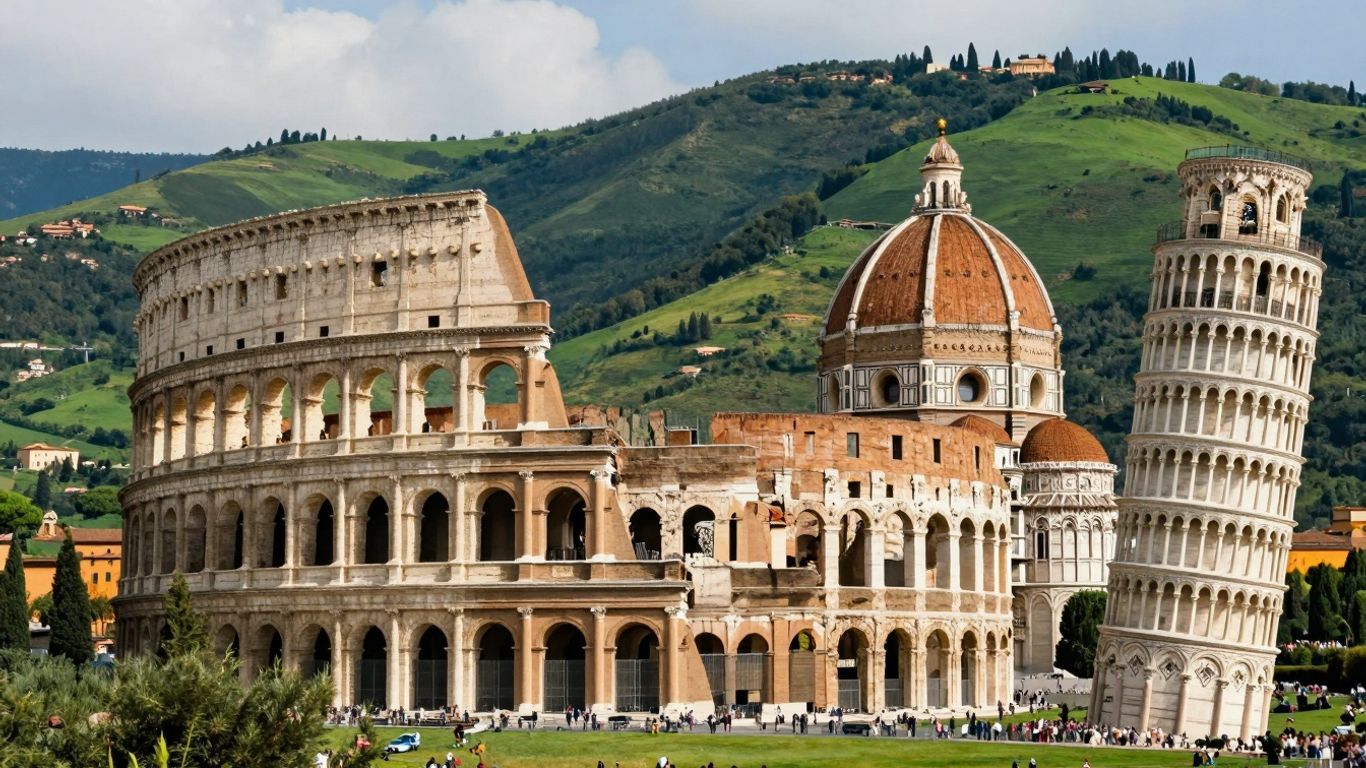
Central Italy is precisely where history, world-class art, and genuinely breathtaking landscapes converge in a spectacular fashion. This segment of the country is frequently regarded as the very heart of Italy, and for good reason. It's replete with locations that have profoundly shaped Western culture and offers vistas that will undoubtedly linger in your memory long after your departure.
Maps of Florence and Tuscany's Renaissance Heart
Tuscany is a region that, in many ways, quite literally defined the concept of a picturesque landscape. Just imagine rolling hills adorned with meticulous vineyards and venerable olive groves, punctuated by elegant cypress trees and ancient medieval towns. Florence, its vibrant capital, is a city that truly breathes art. It was the birthplace of the Renaissance, and that profound history resonates throughout every street and piazza. Maps of Florence are absolutely crucial for navigating its charming, narrow streets, locating the famed Uffizi Gallery, or finding your way to the magnificent Duomo. Beyond Florence, regional maps of Tuscany are invaluable for exploring iconic places like Siena, celebrated for its thrilling Palio horse race, or the delightful walled city of Lucca, where you can leisurely cycle atop its ancient ramparts. Planning an itinerary through Tuscany almost always involves consulting regional maps to connect these artistic marvels with the region's stunning, verdant countryside.
- Florence: Home to the Uffizi Gallery, the Accademia Gallery (where Michelangelo's David resides), the iconic Ponte Vecchio, and the majestic Duomo.
- Siena: Famous for its Piazza del Campo and the stunning Siena Cathedral.
- Lucca: Known for its remarkably preserved city walls and the Guinigi Tower.
- San Gimignano: Distinguished by its numerous medieval towers.
Tuscany's enduring appeal truly lies in its remarkable ability to seamlessly blend world-class art and deep-rooted history with an intrinsic connection to the land and its bountiful produce. Maps not only guide you to the celebrated art, but they also lead you to the authentic local trattorias and acclaimed wineries that are just as integral to the quintessential Tuscan experience.
Discovering Rome Through Its Ancient and Modern Maps
Rome, the capital city, situated within the Lazio region, is a place quite unlike any other. It’s a metropolis where awe-inspiring ancient ruins stand in direct, captivating contrast with the vibrant pulse of modern life. Attempting to comprehend Rome without a reliable map is, quite frankly, a formidable challenge. You'll definitely want maps that clearly show you the Colosseum, Roman Forum, and Pantheon, but also those that expertly guide your way through charming neighborhoods such as Trastevere or assist you in locating the independent Vatican City. Public transport maps are also incredibly beneficial here, as Rome is a sprawling city and moving between major sites can be time-consuming. Maps ultimately help you piece together the rich layers of history, spanning from the grandeur of the Roman Empire to the Baroque period and well beyond.
- Ancient Rome: Features the Colosseum, Roman Forum, Palatine Hill, and Pantheon.
- Vatican City: Encompasses St. Peter's Basilica, the Vatican Museums, and the iconic Sistine Chapel.
- Baroque Rome: Highlights the Trevi Fountain, Piazza Navona, and the Spanish Steps.
Exploring Umbria's Rolling Hills and Villages
Often affectionately termed the "Green Heart of Italy," Umbria is Tuscany's more tranquil, yet no less beautiful, neighbor. This captivating region is characterized by its lush, verdant hills, charming medieval hilltop towns, and serene lakes. Maps of Umbria are perfectly suited for those eager to venture off the well-trodden tourist paths. You'll discover maps highlighting significant locations like Assisi, the revered birthplace of St. Francis—a major pilgrimage site boasting stunning basilicas. Perugia, the regional capital, offers a lively atmosphere and a rich historical tapestry. Gubbio, with its ancient Roman theater and evocative medieval streets, and Orvieto, perched dramatically atop a volcanic tuff cliff, are other essential destinations. Utilizing maps here allows you to truly uncover the region's natural splendor, from the expansive Lake Trasimeno to the impressive Marmore Falls, and seamlessly connect its many historic towns.
- Assisi: Home to the Basilica of Saint Francis and the Rocca Maggiore.
- Perugia: Features the Rocca Paolina and the Fontana Maggiore.
- Orvieto: Known for its magnificent Duomo and the fascinating Orvieto Underground.
- Spoleto: Boasts the Ponte delle Torri and its own beautiful Duomo.
Maps of central Italy will prove to be your indispensable allies in unearthing the rich layers of art, history, and natural beauty that so profoundly define this incredible part of the country. They deftly help you connect the dots between world-famous cities and those captivating, hidden hilltop villages, thereby rendering your journey both thoroughly organized and wonderfully full of delightful discoveries.
Southern Italy: Visualizing Sun-Drenched Coasts and Ancient Roots
Southern Italy offers a truly distinctive travel experience—a place where history gently whispers from ancient ruins and the warm Mediterranean sun bathes vibrant coastlines. This part of the country feels like a world unto itself, profoundly shaped by centuries of diverse influences, ranging from Greek and Arab to Spanish. Here, maps are more than mere navigational aids; they become tools to trace the rich layers of history and grasp the unique character inherent in each region.
Maps of Naples and the Amalfi Coast's Dramatic Scenery
Naples, a city that pulsates with an undeniable energy, frequently serves as the perfect starting point for exploring this utterly captivating area. While maps of Naples itself can present a minor challenge, given its bustling streets and intricate historic center, they are nonetheless invaluable for successfully navigating its vibrant piazzas and unearthing hidden culinary treasures. Beyond the city, the legendary Amalfi Coast unfolds with truly breathtaking vistas. For this area, detailed maps are an absolute necessity for understanding the winding coastal roads, the charming towns like Positano and Amalfi, and identifying the most spectacular viewpoints. They also prove essential for meticulously planning boat excursions to islands such as Capri, vividly showcasing the dramatic cliffs and mesmerizing azure waters.
- Key Towns on the Amalfi Coast:
- Positano
- Amalfi
- Ravello
- Sorrento
Navigating Sicily's Unique Cultural Tapestry
Sicily is an island that genuinely feels like a miniature continent. Its history is incredibly rich, with compelling evidence of past civilizations visible at nearly every turn. Maps of Sicily are crucial for fully appreciating its sheer size and the remarkable diversity found across the island. On a good map, you'll find ancient Greek temples, intricate Roman mosaics, imposing Norman cathedrals, and elegant Baroque towns, all clearly marked. Planning your route across Sicily necessitates considering the varied landscapes, from the active volcanic Mount Etna to the pristine beaches and historic cities like Palermo and Syracuse. A map effectively helps you connect these myriad dots and deeply appreciate the island's complex and captivating cultural heritage.
Truly understanding Sicily's intricate layout, with its distinct historical zones and incredibly varied terrain, is absolutely key to appreciating its unique and profound identity. Maps are instrumental in revealing how different cultures have indelibly left their mark across the island.
Exploring Sardinia's Untamed Beauty with Maps
Nestled to the west of the mainland lies Sardinia, an island renowned for its rugged, wild landscapes and exquisitely clear, stunning waters. Maps of Sardinia will serve as your essential guide to its untamed side. Beyond the more popular beaches, you'll discover ancient Nuragic sites, remote mountain villages, and a magnificent coastline that stretches for seemingly endless miles. Whether you're actively searching for secluded coves or meticulously planning a scenic drive through the island's interior, a comprehensive map will expertly show you the roads less traveled and the pristine natural parks that make Sardinia so remarkably special. It's an island where nature often takes center stage, and maps are your perfect companion for finding your way to its most beautiful, unspoiled corners.
Beyond the Major Cities: Maps of Italy's Charming Towns
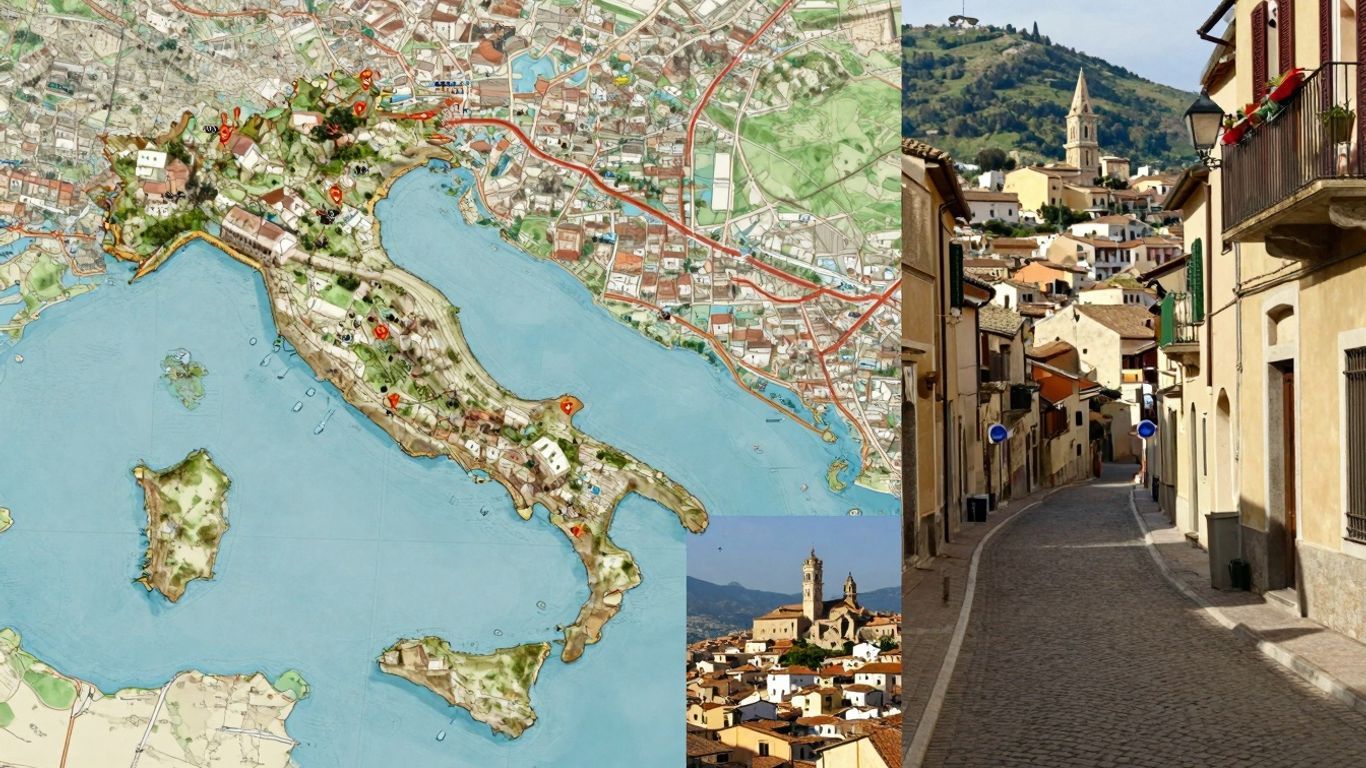
While Italy's most famous cities, like Rome and Florence, certainly garner significant attention, the true enchantment often resides in its myriad smaller towns and villages. These delightful places offer an authentic glimpse into genuine Italian life, characterized by winding cobblestone streets, inviting local trattorias, and a pace that inherently encourages you to slow down and savor the moment. Utilizing maps specifically tailored for these more intimate areas can profoundly enhance your travel experience.
Discovering Smaller Villages with Regional Maps
Regional maps are undoubtedly your most valuable asset when your goal is to explore beyond the well-trodden tourist paths. They adeptly show you not only the main thoroughfares but also the charming, narrower country lanes that lead to truly hidden hamlets. Consider, for instance, the gentle rolling hills of Tuscany, beautifully dotted with medieval villages like San Gimignano or Volterra. A well-designed regional map will precisely highlight these captivating spots, alongside local wineries or scenic viewpoints you might otherwise inadvertently miss. It empowers you to craft a route that feels distinctly personal and wonderfully undiscovered. You can readily find detailed maps for specific regions to help you meticulously plan your perfect, serene seaside escape.
Maps for Off-the-Beaten-Path Italian Destinations
Occasionally, the most memorable and cherished experiences stem from places not featured in every conventional guidebook. Destinations like the captivating cluster of towns in Sicily's Val di Noto—Ragusa, Scicli, and Modica—offer unparalleled cultural experiences, ranging from stunning Baroque architecture to world-famous chocolate. Or, perhaps, consider the enchanting lakeside villages nestled around Lake Como, each possessing its own unique personality. Maps that meticulously detail these less-visited areas are truly invaluable for constructing an itinerary that genuinely surprises and delights you. They might even indicate a lively local festival happening in a small piazza or pinpoint a hiking trail boasting absolutely incredible views.
Connecting Remote Areas with Comprehensive Maps
Reaching some of Italy's most picturesque and secluded spots might indeed necessitate a bit more foresight and planning. For example, accessing certain villages along the famed Amalfi Coast or delving into the rugged interior of Sardinia could prove far more convenient with a rental car. A map that clearly delineates road networks, including smaller provincial roads, is absolutely key. It helps you accurately gauge the distances and approximate travel times between these more remote, yet utterly rewarding, locations.
While planning a trip to Italy can initially feel overwhelming due to the sheer number of places to visit, that very abundance is also what imbues the Italian peninsula with such a magical quality. Italy is comprised of diverse regions, provinces, and towns, each boasting its own unique character. Whether your desire is to explore ancient cities, charming villages, or breathtaking shores, a well-chosen map of Italy will empower you to visualize the regions and select the perfect stops for your upcoming journey.
Here’s a concise overview of what to consider when utilizing maps for navigating smaller towns:
- Scale: Ensure the map's scale is sufficiently detailed to clearly display even minor roads and smaller villages.
- Topography: Look for maps that thoughtfully indicate elevation changes, particularly if you're planning on hiking or exploring hilly areas.
- Points of Interest: Verify if the map highlights significant local attractions, historical sites, or natural landmarks.
- Transportation: Some maps will conveniently indicate public transport routes, which can be remarkably useful even if you have a car.
Transportation Maps for Seamless Italian Travel
Navigating around Italy is truly an integral part of the adventure, and having the appropriate maps at your disposal can make an enormous difference. Italy boasts a rather excellent network connecting its cities and towns, but understanding how best to utilize it is paramount.
Train Network Maps for City-to-City Travel
Trains represent a fantastic and efficient method for traveling between Italy's major cities. High-speed lines, for instance, swiftly connect prominent locations such as Rome, Florence, Milan, and Naples. Regional trains, conversely, are ideal for shorter journeys or for reaching smaller towns that aren't serviced by the high-speed routes. Consulting a train map allows you to visualize which lines traverse where and how frequently they operate. It's often considered the most relaxed way to experience the country, affording you the luxury of watching the scenery unfold without the constant concern of traffic.
- Trenitalia is the primary national rail operator.
- Italo provides high-speed services on key routes.
- Always remember to check schedules and book tickets in advance, especially during peak travel seasons.
Road Maps for Exploring the Italian Countryside
Should your desire be to truly experience the authentic Italy—the one graced with rolling hills, picturesque vineyards, and quaint, tiny villages—then a car often proves to be your optimal choice. Road maps, whether in their traditional paper format or as digital applications, will serve as your indispensable guide. They clearly indicate the *autostrade* (toll highways), the *statali* (state roads), and the charmingly smaller provincial roads. Renting a car inherently grants you the invaluable freedom to stop whenever you encounter a beautiful vista or spot an inviting trattoria.
It's vital to be aware that many historic town centers feature restricted traffic zones (ZTLs). Furthermore, securing parking can often present a challenge in highly popular areas. Always make sure to check local signs and strictly adhere to parking regulations.
Navigating Italian Cities with Public Transport Maps
Once you've arrived in a city, you'll likely find yourself relying heavily on public transportation. Most Italian cities operate comprehensive bus systems, and several also boast efficient tram or metro lines. Maps detailing these systems are incredibly helpful resources. You can typically acquire them at tourist information offices, major bus stations, or readily find them online. Knowing the specific routes and stops empowers you to effortlessly reach museums, key attractions, and acclaimed restaurants without unnecessary hassle. It’s also a remarkably budget-friendly way to get around.
- Buses: Generally the most common form of public transport available in the majority of Italian cities.
- Metros: Accessible in larger urban centers such as Rome, Milan, and Naples.
- Trams: Found in select cities, offering a particularly scenic and charming way to travel.
A comprehensive understanding of these various transportation maps will undoubtedly enable you to navigate Italy with significantly more confidence and unparalleled ease.
Your Italian Adventure Awaits
Italy is a country brimming with an astonishing array of sights, stretching from the majestic, snow-capped peaks in the north to the sun-kissed coasts in the south. Each region, you'll discover, possesses its own compelling narrative, its distinct culinary traditions, and its own special allure. Utilizing maps, whether they're for meticulously planning your train routes or for unearthing those charming, hidden villages, genuinely helps you grasp the entire, beautiful picture. It simplifies the trip planning process immensely, allowing you to carefully select the destinations that resonate most deeply with you. So, why not grab a map, start dreaming, and prepare to immerse yourself in the unparalleled beauty of Italy? We eagerly await hearing about all the wonderful places you decide to explore!
Frequently Asked Questions
What's the best way to get around Italy?
The ideal mode of transport really hinges on your specific destination! In the north, trains are incredibly convenient for effortlessly hopping between major cities. However, if your journey takes you south or you're keen to explore tiny villages and secluded coastal spots, a car might prove much more advantageous. Italy offers a diverse range of travel options, ensuring you can easily discover all its amazing food, art, and breathtaking scenery.
How can a map help me plan my Italy trip?
A well-designed map doesn't just show you the prominent cities; it also illustrates the different regions, provinces, and those delightful hidden gem towns you might otherwise overlook. Pinpointing your desired places on a map is incredibly helpful for ensuring you don't miss anything important and for meticulously planning your route, whether you opt for a car or train travel.
Are digital maps useful for exploring Italian cities?
Absolutely! Applications like Google Maps are fantastic for figuring out precise directions, seeing what attractions are nearby, and even checking various public transport options. Just be sure to input your specific travel dates and destinations to receive the most current and accurate information available.
What's the difference between Northern and Southern Italy for travelers?
Northern Italy typically features bustling metropolises like Milan, renowned for its fashion industry, and stunning lakes such as Como. Southern Italy, on the other hand, exudes a warmer ambiance, showcasing influences from a rich tapestry of different cultures, and boasts magnificent places like Naples, the breathtaking Amalfi Coast, and the iconic islands of Sicily and Sardinia.
Is it easy to travel between major Italian cities?
Yes, indeed! Italy is equipped with an excellent train system that efficiently connects most of its major cities. High-speed trains, in particular, can swiftly transport you from Rome to Florence or Venice to Milan, making it quite straightforward to experience a significant portion of the country without the need for driving.
What if I want to visit smaller towns and villages?
While trains are undeniably excellent for city-to-city travel, opting for a rental car provides you with the invaluable freedom to truly explore the countryside and discover those charming, smaller towns that are not typically situated along the main train routes. Moreover, regional maps can be exceedingly helpful for navigating these less-traveled, yet incredibly rewarding, areas.


