


resources
Explore the Globe: Your Ultimate World Map with Cities Guide
21 Dec 2025

Considering a world map featuring cities? It's quite a compelling idea, wouldn't you agree? Whether you're pinpointing the origin of a favorite musical act, meticulously planning a dream vacation, or simply curious about global geography, a well-chosen map proves immensely useful. In the following discussion, we'll delve into the nuances of selecting such a map and explore what truly defines a high-quality representation of our planet's urban centers. Ultimately, it’s far more than mere cartography; it’s an invitation to understand our vast, intricate world a little more intimately.
Key Takeaways
- A world map, especially one highlighting cities, significantly aids in comprehending geography, national boundaries, and the locations of pivotal global hubs.
- When selecting a map or globe, key considerations include its dimensions, construction materials, and overall aesthetic appeal.
- Certain maps offer engaging supplementary features, such as time zone indicators or integrated lighting, which enhance their utility and enjoyment.
- Maps are invaluable educational instruments, serving to ignite travel aspirations and broaden one's understanding of diverse cultures.
- A wide array of map styles is available, ranging from traditional antique designs to sleek modern interpretations, alongside convenient digital versions accessible on personal devices.
Navigating Continents and Countries
Understanding Global Geography
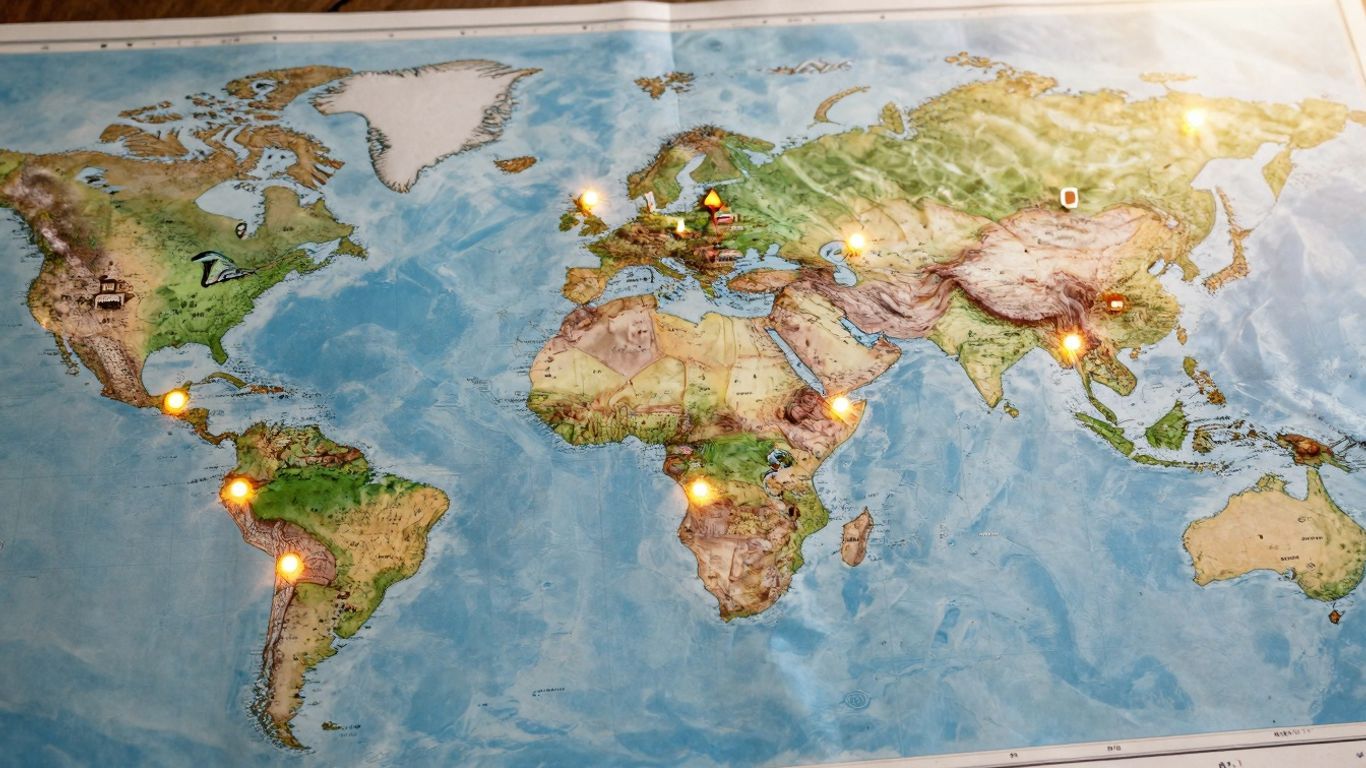
Grasping the comprehensive layout of our planet might initially seem like an ambitious undertaking, yet it truly begins with a foundational understanding. Picture Earth as being partitioned into immense landmasses, commonly referred to as continents. There are seven distinct ones: Asia, Africa, North America, South America, Antarctica, Europe, and Australia (which is sometimes grouped with Oceania).
Each continent, in turn, comprises a multitude of diverse countries. These nations are defined by their own borders—essentially invisible lines on a map that delineate where one country concludes and another commences. Appreciating these divisions offers a clearer perspective on the world's political organization. It's genuinely fascinating to observe the stark contrasts in scale, with some countries, like Russia or Canada, spanning vast territories, while others, such as Vatican City, are remarkably tiny.
- Asia: Recognized as the largest continent, boasting an incredible tapestry of cultures and diverse natural settings.
- Africa: Celebrated for its profound history and remarkably varied ecosystems and wildlife.
- North America: Characterized by an extensive range of landscapes, from expansive plains to formidable mountain ranges.
- South America: Widely known for the majestic Amazon rainforest and the legacies of ancient civilizations.
- Antarctica: A predominantly frozen continent, serving primarily as a hub for critical scientific research.
- Europe: A continent steeped in a rich, long history, home to a multitude of distinct nations.
- Australia/Oceania: An island continent, uniquely surrounded by immense oceans.
Exploring Political Borders
Political borders are, in essence, the demarcations that define the sovereign territories of countries. Unlike natural features such as rivers or mountain ranges, these are not naturally occurring; rather, they are agreements forged by people over centuries. Consequently, these borders can shift due to wars, diplomatic treaties, or other significant historical developments—a dynamic process that truly tells a story. Examining a map that illustrates these boundaries can significantly deepen our comprehension of international relations and the ways countries engage with one another. It's also fundamentally important for practical matters like international travel, global trade, and even interpreting current events reported from around the globe. For an exceptionally detailed view of these divisions, consider exploring a high-resolution world map.
The way countries are drawn on a map tells a story about history, power, and people's decisions. It's not just about lines; it's about who lives where and how they govern themselves.
Identifying Major Cities and Landmarks
Once you've developed a grasp of the continents and their respective countries, the next logical step involves pinpointing the vital locations within them. Major cities typically serve as epicenters of population, commerce, and cultural activity. Think of global powerhouses like Tokyo, New York City, London, or Beijing; these urban areas frequently function as transportation hubs and hold considerable historical or economic importance.
Beyond the bustling metropolises, our world is also dotted with renowned landmarks. These might be awe-inspiring natural wonders, such as Mount Everest or the Grand Canyon, or impressive man-made structures, like the Eiffel Tower or the Great Wall of China. Locating these significant places on a map provides a more comprehensive portrait of what a country or region is celebrated for, often sparking ideas for future explorations. It’s akin to connecting the dots on a canvas, ultimately forming a richer, more complete image of our world.
Choosing Your World Map Resource
Selecting the ideal map or globe can, admittedly, feel a touch overwhelming given the sheer volume of options available. Yet, it’s not merely about acquiring a visually appealing representation of the world; it’s about discovering a tool that genuinely serves your needs, whether for educational pursuits, interior design, or meticulously planning your next grand adventure. The most effective resource, ultimately, is one that perfectly aligns with your available space, budgetary considerations, and intended usage.
Selecting the Right Globe Size
Globes, as you'll discover, come in an impressive array of sizes, from compact desk models to imposing floor-standing editions. Begin by considering its prospective home. A smaller 12-inch globe, for instance, is an excellent choice for a bookshelf or desktop—easy to spin and examine without monopolizing precious space. Should you possess a bit more room—perhaps in a living area or a dedicated study—a larger 16-inch or even a substantial 24-inch globe can command attention and, crucially, display a wealth of intricate detail. In educational settings or public venues, one might even encounter considerably larger versions.
Here's a concise overview of common dimensions:
| Size (Diameter) | Typical Use Case |
|---|---|
| 6-10 inches | Desktop, travel, small spaces |
| 12-14 inches | Desk, bookshelf, general home use |
| 16 inches and up | Floor standing, statement piece, detailed viewing |
Durable Materials for Longevity
The composition of a map or globe truly dictates its lifespan. Lesser-quality plastic globes, for example, might exhibit cracking or color fading over time, especially if exposed to direct sunlight. Conversely, higher-grade globes are frequently crafted from more resilient materials. When making your choice, think about:
- Plastic Globes: Many are constructed from robust plastics such as PVC or acrylic. Aim for those with a superior finish that resists peeling.
- Metal Stands: Bases and meridians (the rings encircling the globe) made of metal typically offer greater stability and a more sophisticated appearance than their plastic counterparts.
- Paper Mache/Cardboard: Traditional globes might utilize this as a core, subsequently covered with a printed map. While often quite beautiful, these can be more susceptible to damage.
- Wood: Some premium globes incorporate wooden bases and stands, imparting a touch of both elegance and enduring strength.
Aesthetic Design Considerations
Beyond their primary function of indicating locations, maps and globes also serve as significant decorative elements. You'll find several principal styles to consider:
- Classic/Antique: These often exude a vintage charm, characterized by sepia tones, traditional fonts, and occasionally depicting historical borders. Such pieces can infuse a room with significant character.
- Modern/Contemporary: Defined by clean lines, vibrant colors, and minimalist designs, these styles are well-suited for contemporary homes and professional environments.
- Political vs. Physical: Political maps distinctly illustrate national boundaries and major cities, whereas physical maps emphasize natural landforms like mountains and rivers. Some globes, cleverly, integrate both perspectives.
When choosing, reflect on the overarching style of the room where the map or globe will reside. Does it need to blend seamlessly, or is it intended to be a striking focal point? Sometimes, a map with a slightly more artistic flair can be just as informative as one designed purely for utility.
Ultimately, the objective is to procure a resource you'll genuinely delight in viewing and utilizing on a regular basis. Whether it’s an intricately detailed globe for academic study or a stylish wall map for your office, the correct selection transforms the act of exploring the world into a decidedly more pleasurable endeavor.
Interactive Features for Enhanced Learning
Understanding Time Zone Differences
Have you ever pondered why it's bright daylight in one corner of the globe while deep night blankets another? This fascinating phenomenon is, of course, entirely attributable to time zones. Many world maps and globes come equipped with integrated features designed to demystify this concept. You might encounter a rotatable bezel marked with hours, or perhaps a dedicated time dial. These tools are incredibly convenient for orchestrating calls with international friends or family, or simply for gaining a deeper appreciation of how our planet rotates.
Exploring time zones can truly amplify your understanding of how interconnected, yet distinct, our world truly is. It's a straightforward principle, yet its ramifications for global communication and travel are profound.
Here's a concise overview of how time zones function:
- Earth's Rotation: The Earth ceaselessly spins on its axis, completing one full rotation approximately every 24 hours. This rotational motion is the fundamental cause of day and night.
- Sunlight: As the Earth rotates, varying sections of the planet are exposed to the sun. The side bathed in sunlight experiences daytime, while the opposing side remains in darkness.
- Standard Time Zones: For the sake of global simplicity and coordination, the world is conventionally segmented into 24 standard time zones, each spanning roughly 15 degrees of longitude. This system helps to harmonize time within specific geographical regions.
- Daylight Saving Time: Certain areas implement a practice of adjusting their clocks forward by an hour during warmer months, aiming to optimize the use of natural daylight. This can introduce another layer of complexity when calculating precise time differences.
Utilizing Illuminated Maps
An illuminated world map or globe can prove to be a genuine revelation, particularly for those endeavoring to grasp geographical concepts. These maps integrate an internal light source, which, shining through translucent sections, causes continents, countries, and oceans to glow with a captivating luminescence. This isn't purely for aesthetic appeal; the integrated lighting can deftly highlight various geographical features, making them considerably more conspicuous and memorable. Imagine beholding the political boundaries of nations or the sheer expanse of oceans brilliantly lit—it makes identification and recall significantly easier.
Illuminated maps can transform a learning space, making geography feel more alive and accessible. They add a touch of wonder and can spark curiosity in learners of all ages.
This particular feature offers distinct advantages, especially for:
- Nighttime Viewing: Effortlessly discern map details even in environments with subdued lighting.
- Highlighting Features: The emitted light effectively draws attention to specific geographical areas, such as major urban centers or prominent mountain ranges.
- Aesthetic Appeal: These maps frequently present a striking visual, functioning as both an informative educational instrument and an elegant decorative item.
Offline Access to World Maps
In our increasingly digital era, it's quite common to assume that every resource necessitates an internet connection. However, when it pertains to world maps, the ability to access them offline offers a considerable advantage. This implies the option to download map data to your device or, of course, to utilize a traditional physical map that functions independently of Wi-Fi or cellular service. Picture relying on a detailed map application on your smartphone that remains fully operational even when you're beyond the reach of service, or consulting a trusty paper map during a remote camping expedition. This form of access guarantees you're never truly disoriented and can always refer to your map, irrespective of your location or connectivity status.
- Reliability: Operates flawlessly anywhere, at any time, eliminating concerns about signal strength.
- Data Savings: Negates the need to consume mobile data for map loading.
- Accessibility: Exceptionally beneficial for remote regions or during travel where internet access might be sporadic or costly.
Educational Applications of World Maps
Teaching Geographic Literacy
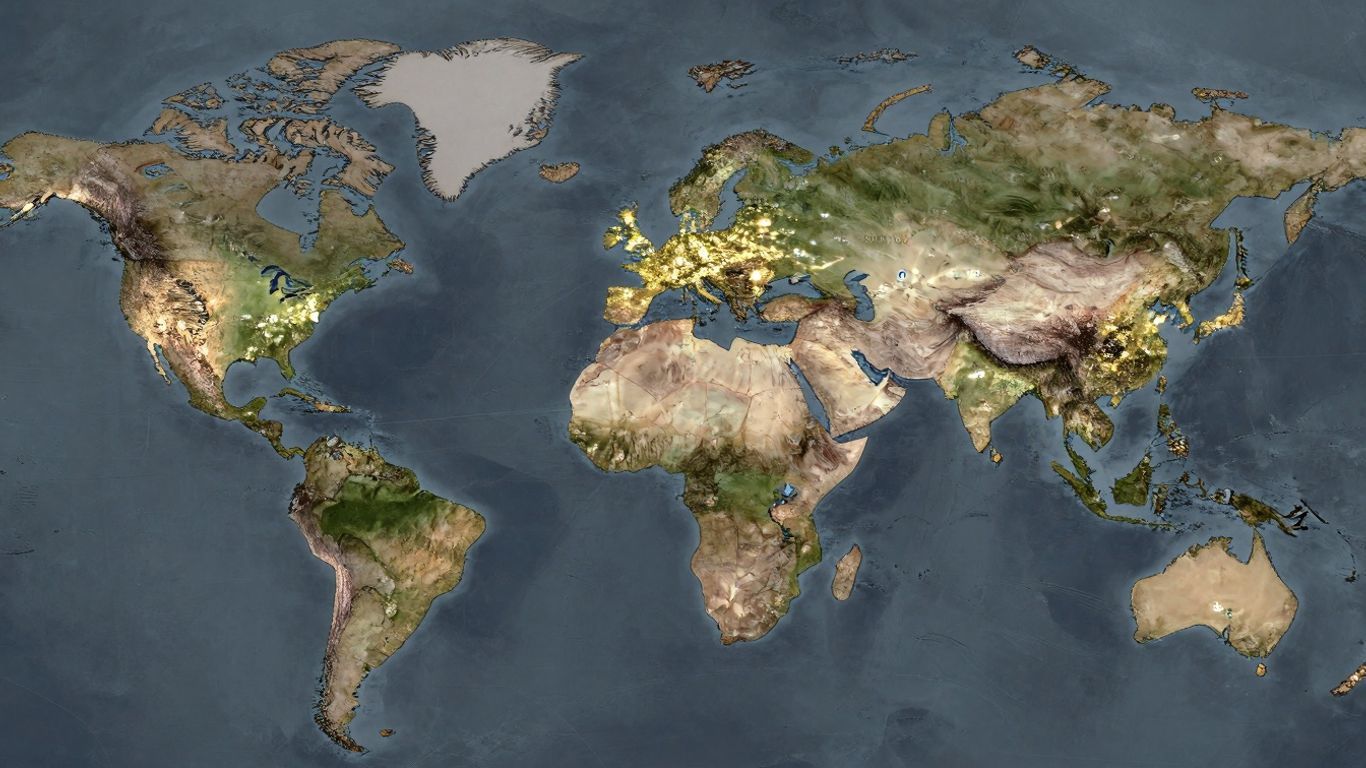
World maps are truly exceptional instruments for instructing both children and adults about global locations. They profoundly assist us in grasping the fundamental layout of our planet—identifying the precise placement of countries, the oceans that separate them, and the relative sizes of various landmasses. This, fundamentally, represents the crucial first step in building a robust foundation for geographic understanding. Rather than merely committing names to memory, a map enables a visual appreciation of these connections. You can effortlessly point to a country and discuss its neighboring nations, its climatic conditions, or even its historical trajectory. This visual, interactive methodology ensures that learning is far more enduring than simply reading about these concepts.
Inspiring Future Travelers
There's something inherently captivating about gazing at a world map that can profoundly ignite a yearning to explore new horizons. One might spot a diminutive island nation or an expansive continent and immediately begin to ponder what life might be like there. It's truly a visual invitation to embark on an adventure. Maps can be wonderfully utilized to plan imaginary voyages, tracing routes with a fingertip while learning about the myriad places you'd encounter along the way. This kind of imaginative journeying often blossoms into concrete travel plans further down the line—an excellent means to cultivate excitement about diverse cultures and landscapes long before your bags are even packed.
Expanding Knowledge of Cultures
Maps, it's important to remember, aren't solely about land and water; they're intrinsically about people too. When you engage with a map, you can begin to acquire knowledge about the distinct countries and the diverse cultures that inhabit them. You can observe the geographical distribution of nations and reflect upon why particular cultures have flourished in specific regions. For instance, studying a map of Africa can initiate an appreciation for the sheer diversity of peoples and traditions spanning that immense continent. It fosters a realization that our world abounds with varied ways of life, and that, in itself, is quite extraordinary.
Maps help us see the bigger picture. They show us how connected everything is, from trade routes to shared histories. Understanding this interconnectedness is key to becoming a more informed global citizen.
Here are several ways maps contribute to our learning:
- Visual Learning: The visual presentation of countries and continents simplifies the process of remembering their locations and interrelationships.
- Contextual Understanding: Maps provide essential context for comprehending historical occurrences, contemporary news events, and cultural information.
- Curiosity Spark: They naturally provoke inquisitive questions like "What's over there?" or "How do people live in that country?"
- Planning and Exploration: Whether for academic projects or personal travel aspirations, maps serve as the fundamental starting point.
Types of World Maps Available
Once you begin exploring maps, you'll swiftly discover an impressive array of different kinds available. It's certainly not a one-size-fits-all scenario, which is advantageous because it ensures you can pinpoint precisely what you require for any given purpose. Each distinct type of map possesses its own inherent strengths and is optimally suited for varying applications.
Political and Physical Maps
Political maps, at their core, are representations of the lines we've drawn. They meticulously depict country borders, state lines, and significant cities. Consider them as visual records of the human-made divisions of the world. They prove exceptionally valuable if you're aiming to comprehend international relations, plan a journey where knowledge of national boundaries is paramount, or simply stay abreast of global news. Typically, these maps employ distinct colors for different countries, rendering them straightforward to interpret.
Physical maps, conversely, direct their focus towards the Earth's natural attributes. You'll clearly discern mountains, rivers, deserts, and oceans. They frequently utilize shading and contour lines to illustrate elevation, thereby imparting a tangible sense of the landscape—what a truly remarkable way to visualize our world! These maps are ideal for those seeking to understand geography, geology, or simply to appreciate the inherent beauty of diverse regions. On occasion, one can find hybrid maps that cleverly merge both political and physical characteristics, offering the best of both perspectives.
Classic and Modern Styles
Maps have graced human civilization for millennia, and their stylistic approach can genuinely alter one's perception of the world. Classic maps often exude a distinct vintage charm. They might feature antiquated fonts, a more subdued color palette, or even portray historical borders. Such pieces can serve as truly beautiful wall decor, imbuing a space with a sense of history. They're like a work of art that also, conveniently, tells you where places are.
Modern maps, on the other hand, tend to be characterized by cleaner lines and a more minimalist aesthetic. They frequently employ bright, crisp colors and unambiguous fonts. Digital maps, naturally, represent the pinnacle of modernity, offering interactive functionalities and seamless zoom capabilities. Whether your preference leans towards the timeless allure of an old-world map or the sharp precision of a contemporary design, there's undoubtedly a style that will complement your taste and your environment. A wide selection of world globes, encompassing political, physical, illuminated, and antique styles, awaits your exploration. Ultimate Globes offers an extensive range to assist you in discovering the perfect globe for your specific requirements.
Navigational and Travel Maps
These particular maps are meticulously crafted with a singular objective: facilitating your journey from point A to point B. Navigational maps—such as nautical charts for mariners or aeronautical charts for pilots—are exceptionally detailed, incorporating specialized data crucial for safe passage, including water depths, approved air routes, or radio beacons. They are, in essence, highly technical instruments designed for professionals.
Travel maps, conversely, cater more to the everyday adventurer. They prominently feature roads, points of interest like tourist attractions, hotels, and dining establishments. You might encounter these as folded paper maps at a service station or, more commonly today, as digital applications on your smartphone. They are instrumental in planning your itinerary, navigating unfamiliar cities, or even unearthing hidden gems. A well-designed travel map undoubtedly renders the exploration of a new destination far less stressful and significantly more enjoyable. Typically, they include:
- Major highways and local road networks
- Key landmarks and popular attractions
- Public transportation routes and stops
- Calculated distances between various locations
The type of map you ultimately select is truly contingent upon your intended use. Are you embarking on a geographical study, mapping out a cross-country road trip, or simply seeking a stylish piece for your office? Pondering its purpose will unequivocally guide you toward the map that best serves your needs.
Digital Tools for Global Exploration
Mapping Applications for Devices
In our contemporary world, the need for a physical map or globe to visualize the entire planet has largely diminished. Your smartphone or tablet can, in fact, function as an exceptionally powerful instrument for geographical exploration. Applications like Google Maps or specialized globe apps enable you to seamlessly zoom in on any country, city, or even a specific street. You can access satellite perspectives, receive turn-by-turn directions, and locate local points of interest, all conveniently from the palm of your hand. It's quite literally like carrying a hyper-detailed, perpetually updated atlas in your pocket.
Interactive Online Globes
Beyond the simplicity of basic map applications, a wealth of websites now provide fully interactive online globes. These platforms frequently extend far beyond merely displaying landmasses and bodies of water. You can delve into historical maps, visualize population density patterns, or even explore terrain in three dimensions. Certain platforms even allow for the layering of diverse information, such as climate data or ancient trade routes, directly onto the globe. This truly makes them invaluable resources for students and indeed anyone aspiring to comprehend complex global patterns.
Satellite Imagery Views
The advent of satellite imagery has irrevocably transformed how we perceive our planet. Services such as Google Earth offer extraordinarily detailed views captured from space. You can virtually soar over towering mountain ranges, investigate secluded islands, or observe the evolutionary growth of cities over time—a truly unique perspective. It provides an unparalleled opportunity to appreciate the sheer scale and profound diversity of Earth's landscapes. You might even uncover historical imagery, allowing you to witness the changes in specific locations across several years.
These digital tools are not just for looking; they are for learning. They make geography accessible and engaging, turning abstract concepts into visual realities. Whether you're planning a trip or just curious about a faraway place, these resources put the world at your fingertips.
Your Journey Starts Now
So, we've explored a multitude of avenues for visualizing our world, from the convenience of digital maps on our phones to the tangible presence of physical globes adorning a desk. Whether your goal is to locate a country for an academic project, meticulously plan your next grand vacation, or simply satisfy a burgeoning curiosity about what lies beyond your immediate horizon, possessing a reliable map or globe makes a substantial difference. These instruments are not merely aids for finding places; they fundamentally assist us in understanding the intricate web of global connections. Continue to explore, persevere in your learning, and allow these remarkable cartographic tools to guide you on your own adventures, whether they be grand expeditions or quiet moments of discovery.
Frequently Asked Questions
What's the best way to start learning about world maps?
A great way to begin is by simply observing a world map and identifying the various continents and oceans. From there, try to pinpoint countries you're already familiar with or those that pique your interest. Many maps thoughtfully include major cities and prominent landmarks, which can significantly enhance your knowledge about different global locations.
Are there different kinds of world maps?
Absolutely, there's quite a variety! Some maps primarily depict land and water formations (known as physical maps), while others concentrate on national borders and urban centers (these are political maps). You'll also encounter maps styled to look antique and classic, alongside those that are distinctly modern and minimalist. Furthermore, specialized maps are available specifically for travel planning.
How can a globe help me understand things like time zones?
Globes frequently incorporate markings or a rotating dial specifically designed to illustrate different time zones. As our Earth rotates, various sections experience daylight or darkness. A globe uniquely helps you visualize how this rotation directly impacts the time across diverse countries globally, proving quite useful for coordinating calls with individuals in distant locales.
Are digital maps and apps useful?
Undeniably! Applications like Google Maps or dedicated globe apps offer the flexibility to zoom in and out, view satellite imagery, and even obtain precise directions. They are superb for orchestrating travel plans or simply exploring places virtually from your device. Moreover, many of these digital tools remain fully functional even without an active internet connection.
Why are world maps important for learning?
World maps are crucial because they help us comprehend the locations of countries, their relative sizes, and their neighboring nations. This knowledge is fundamental to geographic literacy. It enables us to learn about distinct cultures, delve into historical events, and understand the geopolitical reasons behind occurrences. What's more, they often inspire a strong desire to travel and experience new places firsthand!
What should I look for when buying a physical world map or globe?
When making your selection, consider where the map or globe will be placed. Do you require a compact version for your desk, or a larger, more prominent piece for a wall? Additionally, evaluate the materials it's constructed from—you'll certainly want something that offers durability. Some globes also feature internal illumination, which can be visually striking and make discerning details much easier.


