


resources
Explore the Charm of Italy: Essential Maps of Italian Cities for Your Next Adventure
13 Dec 2025

Planning a trip to Italy is undeniably exciting, isn't it? Knowing your way around, and understanding the lay of the land, can certainly make for a far smoother experience. Italy’s geography truly stands out, spanning from the majestic northern mountains right down to its sun-drenched southern islands. Therefore, utilizing maps of Italian cities and regions is an excellent strategy to grasp the country's diverse landscape. This guide aims to help you comprehend Italy's unique topography—from its iconic landmarks to its more serene, lesser-known corners—ensuring you can meticulously plan your adventure without feeling utterly lost before you've even packed your bags.
Key Takeaways
- Given Italy's remarkably diverse geography—ranging from the towering Alps to its numerous islands—maps prove incredibly beneficial for efficient trip planning.
- Iconic urban centers such as Rome, Milan, and Venice stand as primary destinations, and maps are essential tools for navigating them effectively.
- Beyond the main attractions, charming, lesser-known locales like Matera and Bologna provide truly unique experiences, which maps will help you locate with ease.
- Incorporating various map types, including digital and public transport options, significantly simplifies your exploration.
- Strategically planning your route with maps allows you to visualize the interconnectedness of cities and uncover breathtaking scenic pathways.
Understanding Italy's Diverse Geography
Italy, famously resembling a boot, truly unfolds as a fascinating tapestry of landscapes that profoundly influences its culture and, by extension, your travel experiences. Indeed, from the majestic, snow-capped peaks of the north to the sun-kissed islands in the south, the country's geography is astoundingly varied. This rich diversity isn't merely visually striking; it fundamentally shapes everything from distinctive regional cuisines to nuanced local dialects and centuries of historical development. Grasping these broad geographical strokes is, without a doubt, your crucial first step towards truly appreciating the 'Bel Paese'—the beautiful country.
The Boot-Shaped Peninsula
Italy's iconic, elongated boot shape stretches quite dramatically into the sparkling Mediterranean Sea, thereby creating an extensive and varied coastline. This distinctive peninsula is bordered to the north by several neighboring countries, namely France, Switzerland, Austria, and Slovenia—a proximity that has historically shaped and influenced its northernmost regions. Administratively, the country is segmented into twenty distinct regions, each possessing its own unique character and individual identity. These regions are often further organized into broader geographical categories, which can prove quite helpful for travelers seeking a general understanding of what to anticipate in each area.
Given Italy's long, slender, and rather unique shape, it’s no surprise that both climate and landscape can undergo dramatic transformations as one journeys from north to south. This fascinating geographical reality, consequently, has fostered a wealth of distinct regional identities and cherished traditions over many centuries.
Northern Italy's Alpine Charm
Northern Italy is prominently defined by the majestic Alps, which not only form a natural border but also provide truly breathtaking scenery. This enchanting region also hosts stunning glacial lakes such as Como and Garda, and it encompasses significant industrial and cultural hubs like Milan and Venice. What about the climate, you might wonder? It tends to be more continental here, featuring colder winters and warmer summers in contrast to the south. Northern Italy is frequently regarded as the nation's economic powerhouse, boasting a robust focus on industry, world-class fashion, and innovative design. Essentially, it's a vibrant region where time-honored alpine traditions seamlessly blend with dynamic cosmopolitan city life.
Key Features of Northern Italy:
- Alpine Landscapes: This area is home to the dramatic Dolomites and the Italian Alps—ideal for exhilarating skiing and invigorating hiking.
- Major Cities: Key urban centers include the fashion-forward metropolis of Milan and the uniquely enchanting canal city of Venice.
- Lakes Region: Renowned for its picturesque lakes, notably Como, Maggiore, and Garda.
- Culinary Traditions: Celebrated for its hearty and rich dishes, including risotto and polenta.
Central Italy's Historical Heart
Central Italy is, by many accounts, the historical and cultural core of the entire country. This captivating region is largely dominated by the Apennine Mountains, which gracefully run down the spine of the peninsula, thereby carving out picturesque rolling hills and exceptionally fertile valleys. Indeed, it's precisely here that you'll encounter iconic landscapes such as the sprawling vineyards of Tuscany and Umbria, charmingly dotted with ancient medieval towns. Rome, the nation's illustrious capital and a city profoundly steeped in ancient history, also resides within Central Italy. The climate here is typically milder than in the north, with a distinct Mediterranean influence becoming noticeably more pronounced.
Central Italy's Highlights:
- The Apennine Mountains: These ranges majestically shape the terrain with their formidable peaks and verdant valleys.
- Renaissance Art: Florence, indisputably the birthplace of the Renaissance, remains a significant draw for art enthusiasts globally.
- Ancient History: Rome, the Eternal City, provides an unparalleled array of historical sites, including the awe-inspiring Colosseum.
- Picturesque Countryside: Tuscany and Umbria are justly famous for their quintessential rolling hills and exquisite vineyards, presenting visitors with a truly classic Italian vista. For those keen to learn more, additional information about the Apennine Range and its climate is readily available online.
Navigating Italy's Major Urban Centers
Italy is truly brimming with cities, each possessing its own distinct vibe and compelling history. Whether you're captivated by ancient ruins, drawn to cutting-edge fashion, or simply yearn to get delightfully lost amidst charming canals—there's undoubtedly a city here perfectly suited for your tastes. And for exploring these wonders, a reliable map is an indispensable tool, helping you pinpoint attractions and navigate seamlessly.
Rome: The Eternal City's Landmarks
Rome, oh Rome! It's a place where history doesn't just reside in museums—it truly feels alive. One can practically stumble upon ancient ruins while simply strolling to grab a gelato, can't they? As the nation's sprawling capital, Rome is immense, boasting countless layers of history, from the grandeur of the Roman Empire right up to the present day.
- Among the absolute must-sees are: The iconic Colosseum, where gladiators once valiantly fought, and the Roman Forum, which served as the vibrant heart of ancient Roman life.
- A timeless tradition dictates you toss a coin into the magnificent Trevi Fountain—legend promises it ensures your eventual return to Rome.
- Vatican City, a sovereign state nestled within the city, proudly houses St. Peter's Basilica and an astounding collection of incredible art.
Rome's sheer, almost overwhelming, density of historical sites means even weeks spent here might not be enough to see it all. Therefore, a comprehensive map will prove to be your invaluable companion for plotting a course through its myriad wonders.
Milan: Fashion, Design, and Art
While Rome captivates with its ancient history, Milan stands as the vibrant nexus where modern Italy truly shines, particularly in the realms of fashion and cutting-edge design. It's a bustling, undeniably stylish metropolis that also functions as a pivotal hub for both business and culture.
- Recognized globally as one of the world's premier fashion capitals, engaging in window shopping (or indeed, indulging in actual retail therapy!) is a significant and appealing draw here.
- Art enthusiasts will be delighted to discover timeless masterpieces, including Leonardo da Vinci's iconic 'The Last Supper'.
- Despite its sleek, contemporary feel, the city gracefully retains numerous historic churches and picturesque squares, offering a rich blend of old and new.
Venice: A City on Water
Venice is truly a city without parallel—unlike anywhere else on Earth. Entirely built upon a labyrinthine network of canals, its primary thoroughfares are waterways, necessitating travel by boat or by strolling over its countless, charming bridges. It's an undeniably romantic and utterly unique destination.
- Indeed, becoming delightfully lost amidst its enchanting maze of narrow streets and winding canals is, for many, an integral part of its enduring charm.
- A traditional gondola ride remains a quintessential Venetian experience, affording a truly singular perspective of this remarkable city.
- St. Mark's Square (Piazza San Marco) serves as the city's principal public space, magnificently encircled by stunning architecture such as the iconic St. Mark's Basilica and the majestic Doge's Palace.
Significantly, these major cities are remarkably well-connected by an efficient train network, rendering sequential visits quite straightforward. A detailed map, therefore, is indispensable for illustrating the train lines and enabling you to effortlessly visualize the distances between these incredible urban centers.
Discovering Italy's Hidden Gems
Beyond the universally recognized iconic cities, Italy lovingly safeguards a veritable treasure trove of lesser-known destinations. These unique locales promise a more intimate and authentically enriching travel experience. Often, they gracefully fly under the radar of mass tourism, which in turn allows for a deeper, more personal connection with local culture and history. Indeed, venturing to explore these hidden gems can profoundly transform your Italian adventure.
Matera: The Ancient Cave City
Matera, nestled within the southern region of Basilicata, is truly a city that feels as if it has been meticulously plucked from the pages of a history book. Its most captivating and striking feature is undoubtedly the "Sassi"—ancient cave dwellings expertly carved directly into the natural rock face. Inhabitants have called this place home for literally thousands of years, and remarkably, many of these caves have now been exquisitely restored, transforming into unique hotels, charming restaurants, and artisan shops. Taking a stroll through the Sassi is akin to stepping back through millennia, an absolutely remarkable and immersive experience. It stands as a UNESCO World Heritage site for excellent reason, offering a rare glimpse into a distinct way of life that has enduringly persevered. If you're actively seeking truly unique and unforgettable destinations, Matera should unquestionably feature prominently on your itinerary.
Bologna: A Culinary Paradise
While often gracefully overshadowed by its more globally renowned neighbors, Bologna is, unequivocally, a city that culinary enthusiasts absolutely must experience. It is widely heralded as the true gastronomic capital of Italy, celebrated for its incredibly rich pasta dishes such as tagliatelle al ragù (which, for clarity, is the authentic Bolognese sauce) and delicate tortellini in brodo. However, Bologna offers far more than just exceptional dining; it's a vibrant urban center adorned with stunning historic arcades, impressive ancient towers, and a lively, intellectual atmosphere, largely thanks to its venerable old university. For a truly memorable perspective, consider ascending the Asinelli Tower—it affords truly fantastic panoramic views over the city's characteristic terracotta rooftops.
Here are a few essential culinary delights to savor:
- Tagliatelle al ragù
- Tortellini in brodo
- Mortadella
Bologna's bustling food markets are, in essence, a true feast for all the senses. Here, you'll encounter a fascinating array of ingredients you might not immediately recognize and invariably witness the profound passion Italians harbor for their food. Do not, therefore, hesitate to sample new things and engage with vendors for their insightful recommendations; you might just unearth your new favorite flavor.
Cinque Terre's Coastal Villages
While certainly not entirely unfamiliar, the Cinque Terre—a captivating string of five vibrantly colored fishing villages—clings precariously to the rugged Ligurian coastline, presenting a distinctly different, yet utterly charming, facet of Italy. These enchanting villages—Monterosso al Mare, Vernazza, Corniglia, Manarola, and Riomaggiore—are conveniently interconnected by breathtakingly scenic hiking trails, local trains, and coastal ferries. The dramatic cliffs, meticulously terraced vineyards, and sparkling blue sea collectively forge a truly postcard-perfect setting. It’s undeniably a dream destination for anyone yearning for breathtaking coastal scenery and a delightfully slower pace of life. For further exploration, you can uncover more detailed information on these beautiful spots within Central Italy's charming villages.
Essential Tools for Exploring Italian Cities
Leveraging Digital Maps of Italian Cities
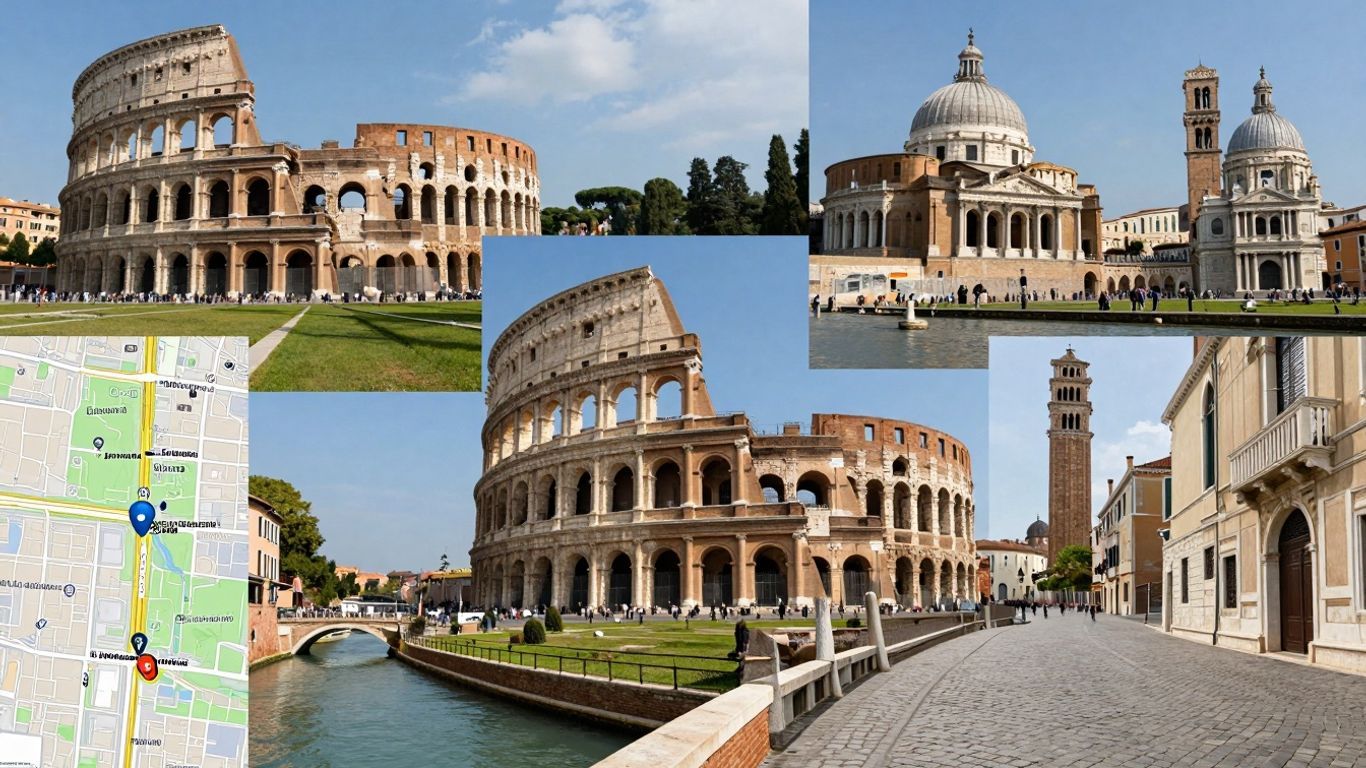
When meticulously planning your Italian sojourn, possessing a reliable map truly becomes a game-changer, doesn't it? It transcends merely pinpointing grand sights like the Colosseum or the enchanting canals of Venice. Rather, it's about gaining an intuitive feel for the distinct neighborhoods—perhaps even serendipitously stumbling upon a delightful little trattoria not yet featured in any guidebook. Digital maps, readily accessible on your smartphone, are exceptionally convenient for precisely this purpose. They offer detailed views of streets, prominent squares, and can even direct you to the nearest gelato shop. Ultimately, these versatile applications streamline your navigation from point A to point B with remarkable ease, minimizing any potential fuss.
The Value of Offline Maps
Now, here's a truly invaluable pro tip: endeavor not to rely exclusively on your phone's mobile data. Occasionally, especially within quaint smaller towns or the labyrinthine older sections of major cities, mobile signal coverage can prove quite sporadic. This is precisely where the utility of offline maps truly shines. Prior to even departing home, you have the foresight to download detailed maps of all the regions you intend to visit. This foresight means you can confidently ascertain your current location and receive precise directions, even in the complete absence of internet connectivity. Trust us, it’s a genuine lifesaver when you're trying to confidently navigate a maze of charming, yet confusing, cobblestone streets.
Understanding Public Transport Maps
Italy, particularly within its larger urban centers, boasts a remarkably efficient public transport system. You'll typically find a comprehensive network of buses, trams, and metros in major cities such as Rome and Milan, complemented by an extensive train system that connects virtually every corner of the country. To truly maximize your travel efficiency, familiarizing yourself with public transport maps is highly advisable. These indispensable maps clearly delineate various lines, their respective stops, and crucial connection points. They are generally readily available at train stations, bus depots, or conveniently accessible online. Proficiently interpreting these maps can save you considerable time and expense, and it frequently represents the optimal method for navigating without the frustrations of traffic congestion or parking challenges.
Here's a quick overview of what you can typically expect to find on a public transport map:
- Metro Lines: These are usually visually represented as distinct colored lines, each with clearly numbered stops.
- Bus Routes: Often indicated by specific numbers or names, with all key stops precisely marked.
- Train Stations: These are clearly labeled points, essential for facilitating seamless inter-city or regional travel.
Occasionally, the most profound way to truly experience a city's soul is to venture a little off the well-trodden path. Possessing a reliable map—be it a cutting-edge digital version or a dependable, classic paper one—imparts the confidence to boldly explore those less-traveled streets and uncover your own cherished hidden gems.
Planning Your Italian Itinerary with Maps
Visualizing Regions and Provinces
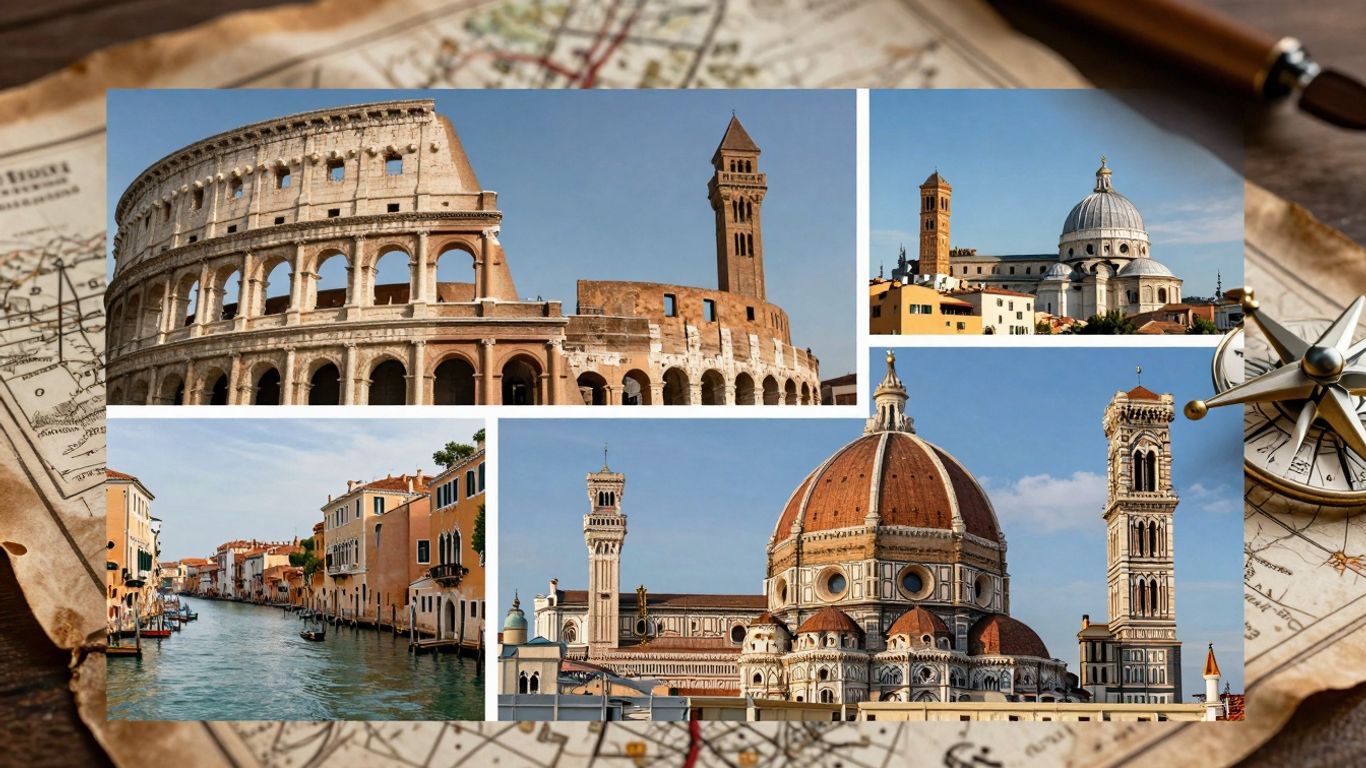
As you begin contemplating your Italian adventure, consulting a map that distinctly delineates the country's regions and provinces can be extraordinarily beneficial for gaining a comprehensive understanding. Italy, as you'll observe, is meticulously divided into 20 distinct administrative regions, each proudly possessing its own unique ambiance, culinary traditions, and historical narrative. For instance, visualizing Tuscany on a map, with its iconic rolling hills and celebrated cities like Florence and Siena, paints a markedly different picture than, say, examining Sicily—a vibrant island steeped in a rich history influenced by countless cultures. These invaluable maps frequently employ varying colors for each region, thereby simplifying the identification of administrative boundaries. Furthermore, you can readily pinpoint the smaller provinces nestled within these regions, a feature that proves particularly advantageous if your plans include visiting charming smaller towns or delving into specific areas with greater detail. Ultimately, this approach significantly enhances your comprehension of Italy's intricate layout, extending beyond just its prominent urban centers.
Mapping Scenic Routes and Day Trips
Maps, quite frankly, are invaluable—they're truly fantastic for discerning optimal routes and unearthing places that may not necessarily feature on the typical tourist trail. For instance, if you're basing yourself in a city such as Naples, a detailed map can immediately illustrate the convenient proximity of captivating sites like Pompeii or the breathtaking Amalfi Coast. With this visual aid, you can meticulously plot out potential day trips, review driving or train routes, and accurately estimate travel durations. It's often through maps that one discovers charming, out-of-the-way villages or stunning natural beauty spots that might otherwise remain entirely unknown. Indeed, a thorough review of a map can often spark brilliant ideas for spontaneous detours or meticulously planned excursions, thereby immeasurably enriching your journey. In essence, it’s akin to possessing a personalized treasure map, guiding you to Italy's most delightful hidden gems.
Connecting Cities and Islands
When it comes to orchestrating seamless movement between Italy's prominent cities and its enchanting islands, maps genuinely prove to be indispensable. You'll readily observe the efficient high-speed train lines effortlessly connecting major hubs such as Rome, Florence, and Milan, making inter-city travel remarkably straightforward. But what if your heart desires a visit to more distant locales, perhaps Sardinia or the glamorous island of Capri? A comprehensive map will clearly delineate ferry routes and strategically located airports. It empowers you to vividly visualize your entire journey, whether you intend to traverse by train, plane, or boat. A clear understanding of these vital connections enables you to construct a far more logical and efficient itinerary, ultimately saving you both precious time and potential hassle. Moreover, it affords a profound sense of the true scale of your explorations, stretching from the majestic northern Alps right down to the sun-drenched southern tip of Sicily.
Beyond the Mainland: Island Exploration
Italy, as many discover, isn't solely defined by its renowned cities and picturesque rolling hills; it proudly boasts some truly incredible islands, each presenting a distinct kind of adventure. These insular destinations are akin to hidden treasures, with every one possessing its own unique atmosphere and stunning natural scenery. Indeed, delving into Italy's diverse islands offers a fantastic, enriching contrast to the more familiar mainland experience.
Sardinia's Beaches and Landscapes
Sardinia, the Mediterranean's second-largest island, is a destination that truly captivates visitors with its unadulterated natural beauty. It has achieved renown for its spectacular coastline, which boasts some of the most exquisite beaches one could ever hope to find. Imagine, if you will, crystal-clear turquoise waters gently lapping against expanses of soft, white sand—it's precisely the sort of idyllic setting where one can effortlessly unwind and let all worldly worries dissipate. It’s truly a slice of paradise.
- Costa Smeralda: Celebrated for its opulent resorts and secluded, pristine coves, this area epitomizes Mediterranean luxury and exclusivity.
- Cala Gonone: This serves as an excellent departure point for boat excursions, providing unparalleled access to hidden beaches and mysterious sea caves.
- Chia: Presents visitors with expansive, sweeping sandy beaches—perfect for a profoundly relaxing day by the shimmering sea.
Yet, beyond its undeniable beach allure, Sardinia also encompasses a rugged, captivating interior that appeals greatly to intrepid explorers. Here, one can unearth ancient ruins and immerse themselves in unique, age-old traditions, proving it to be far more than merely a quintessential beach destination.
Sardinia, in essence, masterfully blends serene relaxation with thrilling adventure—from its world-class, pristine beaches to its wild, untamed interior. It's a truly distinctive place that feels simultaneously exotic and profoundly, authentically Italian.
Capri's Glamour and Grottos
Capri, an exquisitely beautiful, albeit small, island gracefully situated just off the coast of Naples, justly enjoys a reputation for both unparalleled glamour and captivating natural wonders. It remains an exceptionally popular destination, and with excellent reason. The island is famously celebrated for its dramatic cliffs, luxuriant gardens, and, naturally, the world-renowned Blue Grotto.
- The Blue Grotto (Grotta Azzurra): This mystical sea cave is where filtered sunlight creates an absolutely ethereal, incredible blue glow. The journey there by boat, one must admit, is an undeniably memorable experience in itself.
- Gardens of Augustus: These meticulously terraced gardens afford truly breathtaking panoramic views of the iconic Faraglioni rock formations and the magnificent coastline.
- Anacapri: Representing the higher, distinctly more laid-back and tranquil sector of the island, Anacapri delights visitors with its charming, winding streets and utterly stunning vistas.
While Capri certainly serves as a locale to see and be seen, it also graciously presents numerous quiet corners and areas of pristine natural beauty that genuinely appeal to a broader spectrum of visitors. Despite its modest size, it undeniably packs an abundance of charm and a wealth of truly unforgettable sights.
Your Italian Adventure Awaits
So, there you have it—a comprehensive overview! Italy, in essence, is a nation that truly offers something captivating for everyone, ranging from its grand, celebrated cities to those enchanting, lesser-known locales you might not yet have discovered. Employing maps, be they the cutting-edge digital versions on your smartphone or the reassuringly tangible, good old paper kind, is an exceptionally intelligent method for efficient navigation and for unearthing all sorts of wonderful places. Such tools invariably help you visualize how every element seamlessly connects, thereby rendering your trip considerably less stressful. And do remember to explore those delightful, oft-overlooked towns—they frequently conceal some of Italy’s most pleasant surprises. Now, then, with confidence and a trusty map in hand, you are perfectly equipped to embark upon an unforgettable exploration of Italy's unparalleled beauty and profound charm. Buon viaggio!
Frequently Asked Questions
What's the best way to get around Italian cities?
Most Italian cities are equipped with excellent public transport systems, typically including efficient buses and metros. For venturing into charming smaller towns or the picturesque countryside, trains prove exceptionally convenient, and—for ultimate flexibility—renting a car can provide unparalleled freedom. Always remember to consult local maps available at stations for detailed route information!
Are there any apps that can help me navigate Italy?
Absolutely, and they’re often indispensable! Leading navigation apps like Google Maps and Apple Maps are genuine lifesavers for travelers. Crucially, you can even download maps for offline use, ensuring seamless navigation even without internet access. These apps adeptly assist you in finding your way, present various public transport options, and can even help you discover delightful nearby restaurants.
What if I get lost in Italy?
Actually, getting a little pleasantly lost can, at times, be an enjoyable part of the adventure, potentially leading you to some truly cool, unexpected places! However, should you need to reorient yourself, do not hesitate to politely ask locals for directions. Most Italians are more than happy to assist, and fortunately, street signs are generally quite clear.
Besides the famous cities, what are some cool, less-known places to visit?
Italy abounds with an incredible array of hidden gems! Matera, with its ancient cave homes, is truly astonishing. Bologna, on the other hand, is an absolute dream for any food lover. The picturesque Cinque Terre villages offer stunning coastal beauty, while the serene region of Umbria presents itself as a beautifully tranquil countryside escape.
How do maps help me plan my trip to Italy?
Think of maps as your ultimate travel superpower! They provide a holistic perspective, allowing you to visualize the intricate connections between regions, identify mountain ranges, and trace coastlines. This invaluable insight empowers you to judiciously decide which cities to visit, meticulously plan scenic drives, and efficiently ascertain the most advantageous routes between destinations.
Are there special maps for public transport in Italy?
Yes, absolutely! When you arrive at train stations or bus stops across Italy, you’ll frequently encounter specialized maps clearly illustrating all available routes, designated stops, and detailed schedules. These resources are profoundly helpful for comprehensively understanding how to effortlessly navigate from one part of a city to another, or indeed, between different towns.


