


resources
Explore the Map of Cities in the US: A Comprehensive Guide
07 Dec 2025

Have you ever paused to consider why cities across the United States possess such remarkably distinct characters? From the towering skyscrapers of New York to Austin's burgeoning tech hubs, each urban center boasts its own unique ambiance, intricately shaped by history, geography, and cultural influences. This comprehensive guide embarks on a journey across the diverse urban tapestry of the U.S., illuminating how these metropolitan areas originated and what truly makes them thrive. Whether you're meticulously planning your next adventure or simply seeking to broaden your understanding, there’s a wealth of insight to uncover within these captivating destinations.
Key Takeaways
- The USA is home to an extraordinary array of cities, each distinguished by its own cultural and geographical identity.
- Prominent urban centers, including New York, Los Angeles, and Chicago, function as formidable economic and cultural powerhouses.
- Geography plays a pivotal role in shaping urban development patterns and regional characteristics.
- Interactive mapping tools are invaluable for exploring and comprehending intricate city layouts.
- Cities frequently serve as reflections of the historical progression and ongoing growth within their respective regions.
Navigating the Map of Cities in the US
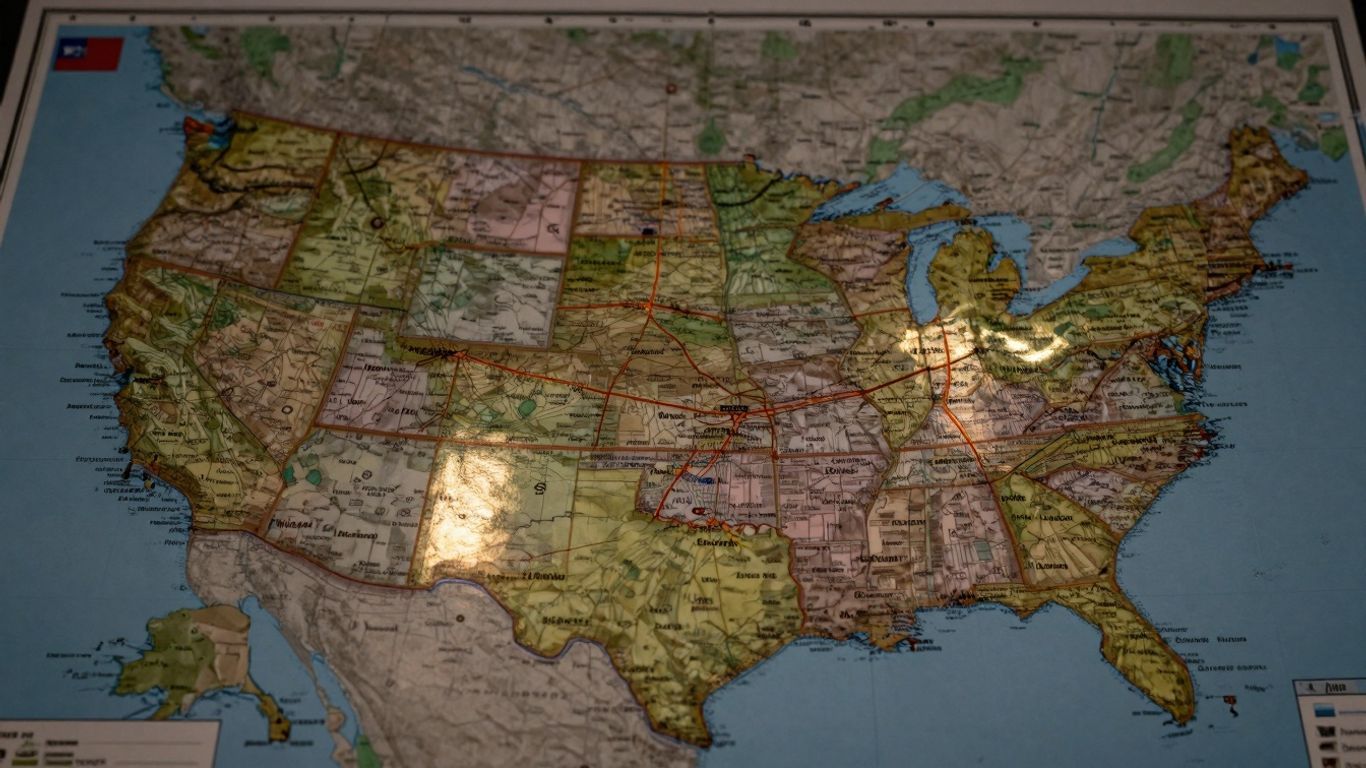
Consulting a map of the United States can feel like unlocking a portal to an entire nation. It’s far more than just charting a course from one point to another; it's about discerning the interconnectedness of disparate elements. In this grand narrative, cities emerge as the principal characters, each contributing its own compelling story and fulfilling a unique role within the broader panorama.
Understanding City Layouts Through Maps
Cities are hardly arbitrary clusters of structures. Rather, they evolve and transform in response to their geographical positioning, the prevailing human activities within them, and the foundational planning from generations past. A detailed city map serves as an illuminating testament to this evolution. It allows one to observe the intricate arrangement of streets, identify the core districts designated for commerce or residence, and understand how transportation networks bind everything together. Consider, for instance, how cities situated along major rivers might have developed differently from those hugging the coastline. Maps, in essence, provide a powerful lens through which we can perceive these fundamental patterns.
Interactive Tools for City Exploration
In our contemporary world, urban exploration has been remarkably simplified by technological advancements. Interactive maps, in particular, prove immensely beneficial for anyone envisioning a visit or simply eager to delve deeper into a city's essence. You can effortlessly zoom in to examine specific neighborhoods, pinpoint popular landmarks, and even strategize your use of public transportation. Many platforms even offer filters, allowing you to tailor your search based on personal interests—perhaps you're seeking historical sites, renowned culinary establishments, or vibrant music venues. It's akin to having a personalized, highly informed guide readily available on your screen.
Here are a few things you can achieve with these sophisticated tools:
- Locate popular tourist attractions and optimize your daily itinerary.
- Monitor real-time traffic conditions to circumvent potential delays.
- Research public transit routes for efficient and effortless navigation.
Planning Your Urban Adventures
As you prepare to immerse yourself in a new urban environment, a well-conceived plan can make all the difference. Initially, reflect upon your primary interests and objectives. Are you drawn to art museums, bustling food markets, or perhaps an exhilarating live sporting event? Once you have a clearer vision, utilize a comprehensive map to identify these locations and strategically group them by proximity. This approach ensures you can maximize your experiences, minimizing time spent traversing the city unnecessarily.
Here’s a straightforward method to commence your planning:
- Compile a definitive list of the destinations you absolutely wish to visit.
- Consult a map to identify which locations are geographically close to one another.
- Chart your route, factoring in estimated travel times between each stop.
Maps are far more than mere lines on paper or pixels on a screen; they represent visual chronicles of human settlement, economic vitality, and cultural exchange. They assist us in deciphering the inherent logic behind a city's design and understanding its intricate functioning as a living, breathing organism.
Exploring Major Urban Centers Across the US
New York City: The Cultural Melting Pot
New York City stands as an iconic metropolis, instantly recognizable to countless individuals worldwide. Renowned for its formidable skyscrapers, ceaselessly bustling thoroughfares, and an unparalleled diversity of inhabitants, it truly captivates. Consider the emblematic Statue of Liberty, or the rich tapestry of neighborhoods like Harlem and Chinatown—these locales powerfully illustrate how NYC seamlessly integrates myriad cultures. Home to over 8 million residents, this dynamic city sees individuals living, working, and pursuing their aspirations in constant motion. For culinary enthusiasts, the offerings are boundless, ranging from classic bagels and pizza to exquisite fine dining experiences. It remains a preeminent destination for gastronomy and nightlife, solidifying its status as an indispensable visit for anyone exploring the U.S.
Los Angeles: The Entertainment Capital
Frequently referred to as "The City of Angels," Los Angeles is inextricably linked with the glamour of Hollywood and the global film industry. Yet, its appeal extends far beyond motion pictures and celebrity sightings. Visitors can luxuriate on the expansive beaches of Santa Monica, embark on a scenic hike to the Griffith Observatory for breathtaking panoramic vistas, or savor the diverse culinary landscape born from the city's rich multicultural fabric. For those who appreciate vibrant evenings, LA offers an impressive array of sophisticated rooftop bars and lively clubs. The city's distinctive blend of glitz and a relaxed, sun-kissed disposition truly sets it apart on any map of the U.S.
Chicago: The Heart of the Midwest
Chicago masterfully marries urban sophistication with that famed, welcoming Midwestern charm. Nestled alongside Lake Michigan, the city is celebrated for its awe-inspiring architecture, iconic deep-dish pizza, and world-class cultural institutions such as the Art Institute of Chicago. Beyond its visual and gastronomic delights, Chicago boasts a profound musical heritage, with jazz and blues forming a significant part of its historical identity. A leisurely stroll along the Chicago Riverwalk or a visit to Millennium Park to admire Anish Kapoor's celebrated "Bean" sculpture—officially titled Cloud Gate—are highly recommended experiences. Indeed, whether your interests lie in history, cuisine, or sports, Chicago genuinely offers something for everyone.
These major cities merely provide a starting point for appreciating the immense urban landscape of the United States. Each possesses a unique narrative, profoundly shaped by its history, geographical coordinates, and the vibrant communities that call it home.
The Geographic Diversity of Cities in the US
Major Urban Centers and Their Unique Features
The United States is, without question, a vast country, and its cities vividly reflect this scale. Here, one finds everything from sprawling metropolises like New York City, which serves as a global nexus for finance and culture, to charming smaller towns, each with its own distinctive character. Intriguingly, every major city tends to cultivate a unique personality, often an amalgamation of its location and historical trajectory. Houston, Texas, for instance, stands as a powerhouse in energy and space exploration, while Denver, situated high in Colorado, is famously known as the 'Mile High City,' positioned dramatically near the majestic Rocky Mountains. It's truly remarkable how profoundly geography can influence a city's identity and renown.
Understanding Regional Differences
Cities frequently feel intrinsically connected to their surrounding regions. Consider this: urban centers in the Northeast, such as Boston or Philadelphia, are characterized by their venerable architecture and palpable sense of history. Journey to the Southwest, and cities like Phoenix are enveloped by arid desert landscapes and showcase a compelling blend of Native American and Hispanic influences. Further north, in the Pacific Northwest, locales like Portland and Seattle wholeheartedly embrace environmental consciousness, surrounded by lush forests and abundant natural beauty. Each city, in essence, acts as a microcosm of its region, proudly exhibiting local traditions and the defining features of its landscape.
Geographical Features of the United States
Geography has always played a critical role in determining where cities emerge and how they subsequently flourish. In antiquity, access to water was paramount. Coastal cities, like San Francisco, or those positioned along major rivers, such as St. Louis, rapidly transformed into vital hubs for trade and human migration. Even today, a city's geographical placement remains crucial. Climate, too, exerts considerable influence. Warm regions like Miami attract distinct demographics and industries compared to colder northern cities such as Minneapolis.
The physical landscape and climate are not merely passive backdrops; they actively sculpt a city's economy, dictate construction methodologies, and even influence the types of recreational activities that gain widespread popularity.
Here's a concise overview of how geography can profoundly influence a city:
- Water Access: Cities situated near oceans or major rivers frequently evolve into pivotal centers for shipping and commerce. Consider the examples of New Orleans or Seattle.
- Terrain: Mountainous regions may foster cities primarily focused on tourism or mining, as seen in Salt Lake City. Conversely, flat plains often prove more conducive to agriculture and associated industries.
- Climate: Sunny, temperate climates can significantly bolster tourism and outdoor recreation sectors, whereas colder climates might encourage different types of indoor enterprises and architectural styles.
Mapping the Historical Evolution of US Cities
Colonial Beginnings and Urban Expansion
Many of the earliest cities in the United States originated as modest settlements established by European colonists. Think, for instance, of Boston, Philadelphia, and New York. These nascent outposts were strategically located near rivers or coastlines, facilitating trade routes and bolstering defensive capabilities. Over time, these initial encampments burgeoned, attracting increasing populations and commercial ventures, gradually evolving into the larger, more complex cities we recognize today. Intriguingly, vestiges of this formative period can still be observed in the older districts of these cities, evident in their distinctive street layouts and the enduring architecture.
Industrialization and Its Impact on City Landscapes
The 19th century ushered in a transformative era with the advent of the Industrial Revolution. Cities such as Chicago, Detroit, and Pittsburgh swiftly became epicenters of manufacturing. Factories proliferated, prompting a significant demographic shift as people migrated en masse from rural areas to urban centers in search of employment opportunities. This migration fueled rapid expansion, causing cities to spread outwards dramatically. New structures were erected with remarkable speed, fundamentally altering the urban aesthetic. This period indelibly shaped the industrial heartland of the nation.
Here's a glimpse into the significant growth experienced by some of these cities:
| City | Primary Industry | Population Growth (approx. 1850-1900) |
|---|---|---|
| Chicago | Meatpacking, Railroads | 30,000 to over 1.7 million |
| Detroit | Manufacturing | 21,000 to over 285,000 |
| Pittsburgh | Steel, Coal | 47,000 to over 321,000 |
This era of intense industrial growth frequently engendered crowded living conditions and presented formidable new challenges for both city planners and residents, as existing infrastructure often struggled to keep pace with the relentless influx of people.
The Evolution of U.S. Maps Over Time
Maps themselves have undergone significant transformations as cities have expanded and developed. Early cartographic representations were typically rudimentary, depicting only basic layouts and prominent landmarks. As urban centers grew in complexity, maps became progressively more intricate, illustrating street names, public transportation lines, and distinct neighborhoods. Today, aided by advanced digital tools, maps can display real-time information, traffic updates, and even specific points of interest, rendering them exceptionally valuable for comprehending how cities have developed and how they dynamically function.
The Role of Maps in Understanding Urban America
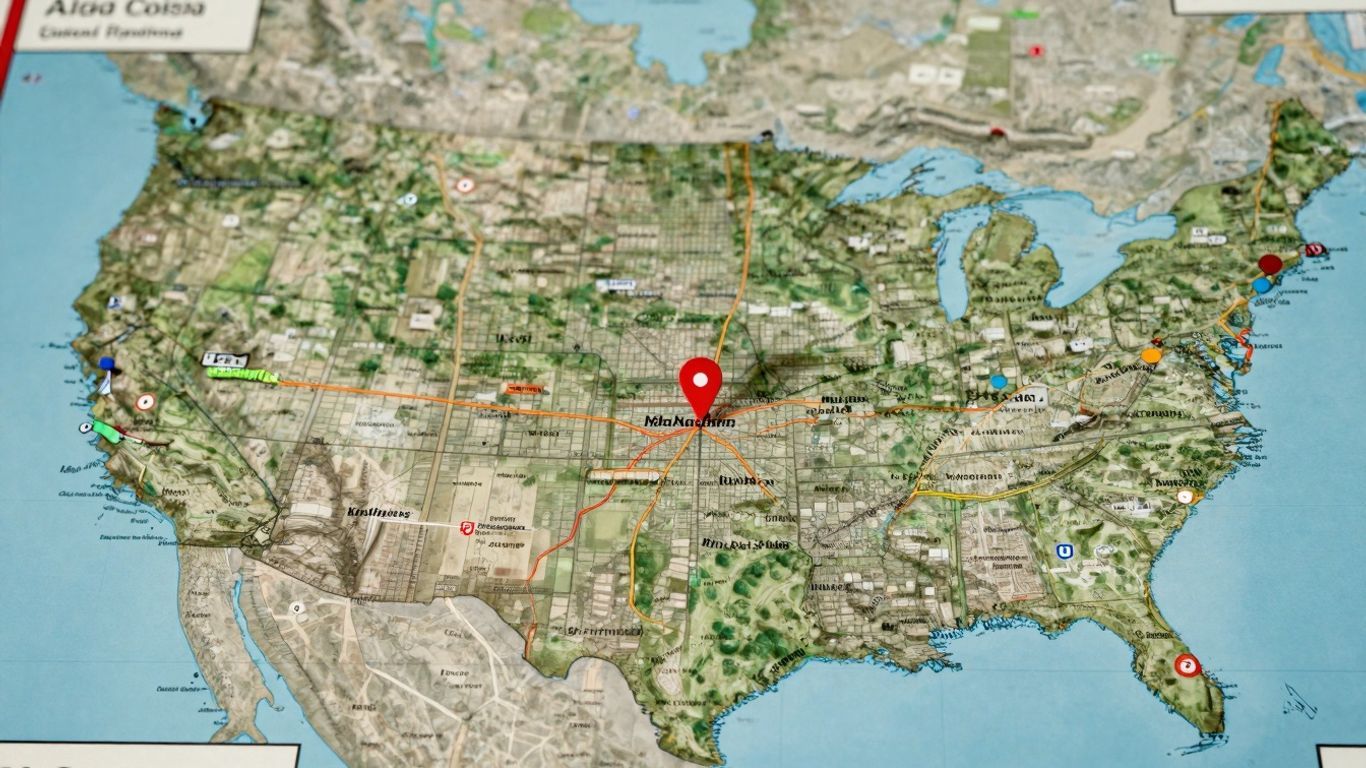
Using the USA Map to Navigate Urban Landscapes
Maps are, without a doubt, incredibly valuable for traversing cities throughout the U.S. Picture this: you find yourself in an unfamiliar locale, perhaps attempting to locate a specific street or a renowned landmark. A well-crafted map, whether it's on your smartphone or a physical copy you've acquired, makes an immense difference. It enables you to visualize the spatial relationships between various points of interest, preventing aimless wandering. Modern utilities, such as interactive maps, elevate this capability even further. You can zoom in with precision, explore different neighborhoods, and even review public transportation options. It’s truly akin to having a personal, expert guide right in your pocket. These sophisticated tools can lead you to serene parks, celebrated museums, or even those charming, lesser-known spots cherished by locals. Ultimately, they transform a potentially bewildering city into a landscape you can confidently explore.
The Role of Maps in Education
Beyond their practical utility for wayfinding, maps serve as powerful pedagogical instruments. Within educational settings, they equip students with an intuitive grasp of the nation's geographical layout. Visualizing the precise locations of states and cities makes historical narratives and current events considerably more comprehensible. Maps illustrate how regions connect and how political boundaries have shifted through time. They are particularly beneficial for visual learners who require a concrete representation to fully internalize concepts. Educators frequently employ them to elucidate everything from ancient trade routes to contemporary population distribution, rendering the study of the U.S. significantly more tangible.
Maps Reflecting Cultural Identity
It’s fascinating to observe how maps transcend mere geographical representation; they also narrate compelling stories about people and their heritage. The configuration of a state, its nomenclature, and the cities nested within its borders all carry historical weight. They reflect the diverse communities that have inhabited these lands, from indigenous Native American tribes to early European settlers. Indeed, every line etched on a map possesses a backstory, revealing the nation's growth and transformative periods. Examining historical maps, such as those detailing the original thirteen colonies, powerfully underscores the profound development the country has undergone. For an even deeper dive, you can access detailed town and building information for many U.S. locations from 1867 to 2007, offering an extraordinary window into the past.
Maps function much like a visual diary of a nation. They not only reveal our current position but also illustrate our origins, meticulously capturing the interwoven layers of history and culture that collectively constitute the American landscape.
Planning Your Journeys with a Map of US Cities
Planning Road Trips
Contemplating an expansive road trip across the United States? A detailed map will undeniably become your most trusted companion for such an ambitious adventure. It provides the crucial wider perspective, from your point of origin to your ultimate destination. With it, you can pinpoint picturesque scenic routes that might not appear on a standard GPS, accurately estimate travel durations, and identify suitable spots for rest and rejuvenation. It's always a prudent measure to keep a physical map stowed away—just in case your digital devices decide to falter, particularly when venturing into areas with unreliable cell service.
Exploring Major Urban Centers
When you're poised to explore a major metropolis like New York, Los Angeles, or Chicago, a high-quality map proves absolutely indispensable. It aids you in navigating bustling streets, locating renowned landmarks, and even discovering exceptional dining establishments. Many contemporary digital maps now integrate features that facilitate public transport planning, provide restaurant reviews, and even offer real-time traffic updates. Utilizing a map enables you to meticulously plan your days, ensuring you can experience more of what the city has to offer without feeling disoriented or unduly rushed.
The Historical Context of USA Maps
Maps of the United States tell a story that stretches back centuries. Early cartographic representations from the colonial era illustrate the initial proliferation and expansion of settlements. As the nation developed, maps evolved in tandem, reflecting newly acquired territories, the proliferation of railroad networks, and the emergence of industrial centers. Reviewing these historical maps can truly impart a profound sense of how cities were originally constructed and how the country progressively expanded over time. They are, quite emphatically, more than mere navigational tools; they are invaluable historical documents.
Maps are not solely instruments for charting a course from point A to point B. They are profound visual records of history, culture, and human settlement. Understanding how maps have evolved enables us to appreciate the intricate development of the United States itself.
Here’s a succinct overview of how maps can significantly enhance your travel planning:
- Identify Key Destinations: Clearly list the places you are most eager to visit.
- Group by Location: Utilize a map to identify attractions that are geographically close to one another.
- Create a Logical Route: Strategically plan your travel itinerary between stops to conserve both time and energy.
- Discover Local Gems: Actively search for parks, distinctive shops, or historical markers situated near your primary destinations.
Conclusion
Reflecting upon the diverse map of cities across the United States truly underscores the remarkable variety within its borders. Each location, from the sprawling, energetic metropolises to the quieter, more intimate towns, possesses its own compelling narrative. These places are intricately shaped by their history, by the very land they occupy, and by the vibrant communities that call them home. Pondering all these distinct areas, whether your intent is travel planning or simply acquiring knowledge, invariably helps us perceive the country in a fresh and insightful manner. There’s an enduring sense of discovery awaiting anyone who chooses to explore these urban landscapes, one city at a time.
Frequently Asked Questions
Why do U.S. cities exhibit such varied appearances?
U.S. cities are distributed across a wide array of geographical features, from expansive mountain ranges to flat plains and extensive coastlines. This inherent diversity in topography profoundly influences their developmental patterns and distinctive cultural identities.
How does climate influence the establishment and evolution of cities?
Climate plays a significant role in dictating preferred human settlement patterns. Moreover, it impacts architectural styles and the types of industries that flourish within a given region.
What pivotal historical moments have been instrumental in shaping American cities?
Formative periods such as the early colonial era, the rapid proliferation of factories during industrialization, and subsequent technological advancements have all profoundly influenced the current appearance and functionality of urban centers.
Why have cities like New York and Los Angeles attained such widespread recognition?
These cities ascended to prominence as major hubs for finance, entertainment, and culture due to a unique confluence of their historical trajectories and strategic geographical locations.
How do cities strive to achieve a balance between urban growth and environmental preservation?
Many cities implement meticulous urban planning strategies that incorporate parks and green spaces, aiming to enhance the quality of life for residents while simultaneously safeguarding the natural environment.
What are some of the contemporary challenges confronting U.S. cities?
Modern urban centers grapple with complex issues such as rising sea levels, prolonged droughts, and increasing occurrences of wildfires. Addressing these concerns necessitates innovative and adaptive solutions.


