
resources
Exploring the 5 Biggest States in USA by Land Area
22 Feb 2026

Have you ever gazed at a map of the United States and found yourself contemplating the sheer scale of some individual states? It's quite easy to overlook just how expansive the U.S. truly is, with certain states occupying an impressive proportion of the nation's landmass. Today, we'll delve into the five largest states in the USA by land area—the veritable giants of the country. Let's explore which states proudly claim the title for their immense geographical footprint.
Key Takeaways
- Unquestionably, Alaska stands as the largest state by land area, dwarfing every other state in its immense size.
- Within the contiguous United States, Texas proudly holds the distinction of being the largest state.
- Though renowned for its dense population, California nonetheless secures the third position in terms of land area.
- Montana, famous for its sweeping open spaces, occupies the fourth spot in overall size.
- Rounding out our top five, New Mexico is celebrated for its expansive desert landscapes and significant land area.
1. Alaska
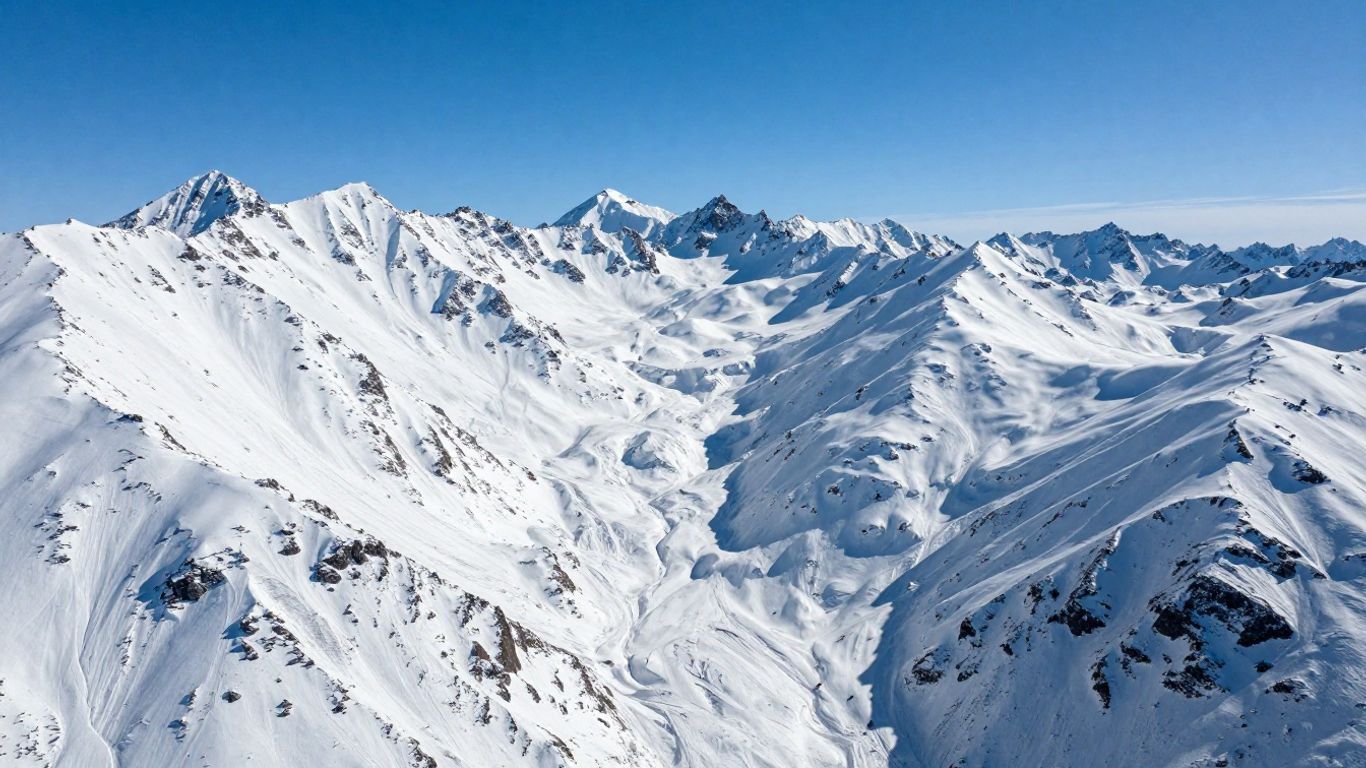
When discussing the largest states in the U.S. by land area, Alaska truly exists in a category of its own. It's not merely large; it's absolutely colossal. Spanning an astonishing 665,384 square miles, Alaska is more than double the size of Texas, which happens to be the next state on our comprehensive list. In fact, it accounts for approximately one-fifth of the entire nation's landmass—a truly breathtaking proportion.
Much of Alaska's topography presents a rugged, formidable character. Imagine vast expanses of soaring mountains and ancient glaciers. Indeed, over half of the state is mountainous, with glaciers themselves covering more than 5% of its diverse geography. Dominating the landscape are two principal mountain ranges: the Brooks Range to the north and the formidable Alaska Range, which traverses the central portion of the state.
Geographically, Alaska's position is also quite distinctive. To its east, it shares an extensive border with Canada, while Russia lies just across the storied Bering Strait to the west—a proximity that highlights its unique global placement.
Here's a concise overview of its land area when juxtaposed with the subsequent states:
| Rank | State | Land Area (sq mi) |
|---|---|---|
| 1 | Alaska | 570,641 |
| 2 | Texas | 261,232 |
| 3 | California | 155,779 |
Among Alaska's most celebrated destinations is Denali National Park & Preserve. This immense wilderness spans over six million acres and proudly hosts Denali (formerly known as Mount McKinley), which stands as the tallest peak in all of North America. Visitors from across the globe flock here to witness its remarkable wildlife—think bears and moose—and to immerse themselves in the truly incredible, expansive scenery.
Owing to its sheer magnitude, Alaska naturally exhibits a remarkably low population density. Extensive swathes of land remain wild and largely undeveloped, thereby providing a unique sense of boundless space and profound isolation—a quality that is genuinely challenging to encounter elsewhere across the United States.
Related Content: biggest state in usa
2. Texas
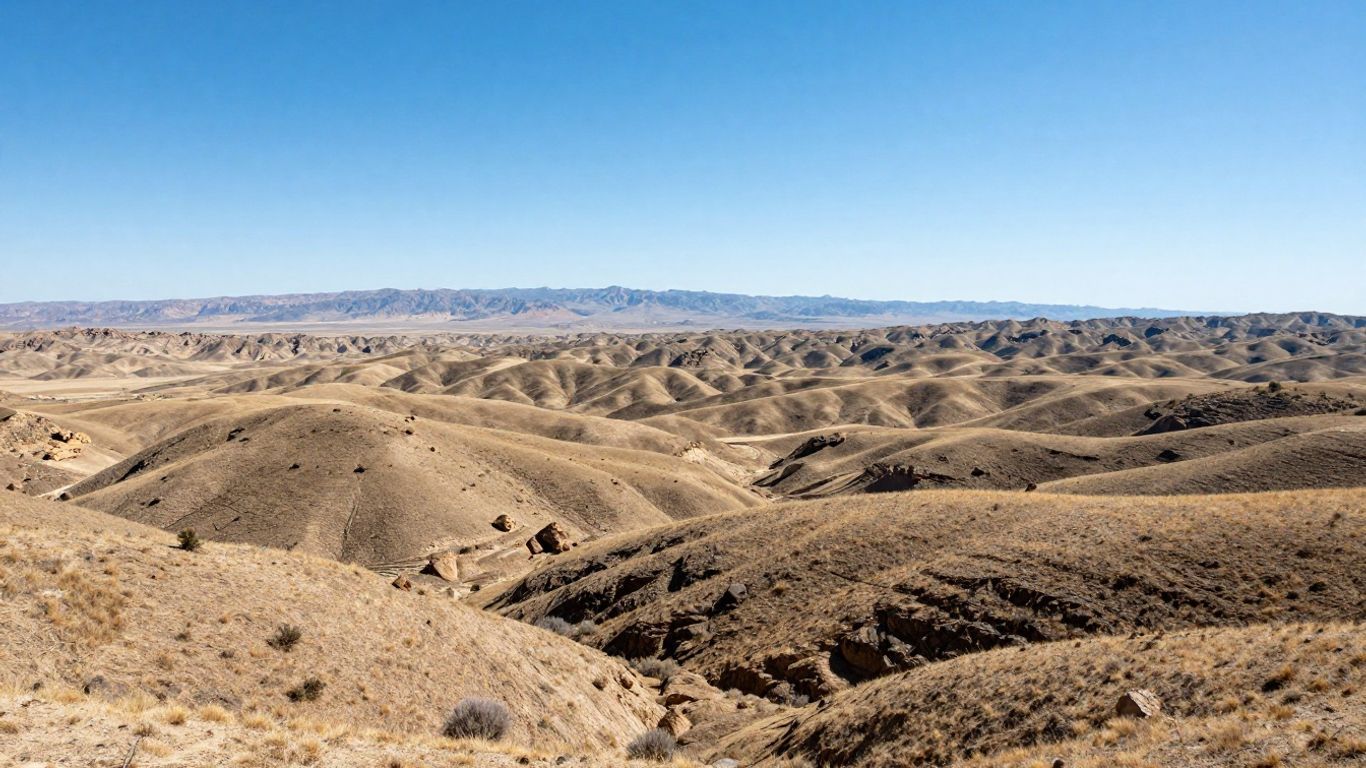
When considering the largest states in the U.S. by land area, Texas unequivocally earns its prominent position. It stands as the largest state within the contiguous United States—meaning it's part of that main block of 48 states, excluding Alaska and Hawaii. This iconic state possesses a truly extensive history, and its borders, as you might imagine, have undergone significant transformations over time. Interestingly, upon its initial annexation into the U.S., Texas was considerably more expansive, encompassing territory that now forms portions of states such as Colorado and New Mexico.
Texas is justly renowned for its diverse and sprawling landscapes, ranging from the seemingly endless flat plains in the north to the arid deserts in the west. Among its most striking natural features is the Chihuahuan Desert, an immense desert region that Texas shares with neighboring Mexico. This is, of course, a predominantly dry environment, home to resilient flora and fauna that have uniquely adapted to thrive under such conditions. And just how vast is this desert? It's remarkably larger than the entire state of California!
Let's consider how Texas measures up in terms of its substantial size:
- Total Area: Approximately 268,596 square miles.
- Land Area: This makes it the second-largest state overall in the U.S., right after Alaska.
- Contiguous U.S. Leader: It holds the top spot for size among the lower 48 states.
The sheer magnitude of Texas inherently dictates a remarkably diverse geography, thereby supporting an extensive array of ecosystems and profoundly shaping both its distinctive culture and robust economy.
Indeed, the expansive size of Texas has profoundly influenced its very identity. These vast, open spaces have sculpted everything from its world-renowned ranches and quintessential cowboy culture to its powerhouse industries. It's a state that, quite genuinely, encapsulates the well-known adage: 'everything's bigger in Texas'.
3. California
Continuing our exploration of the largest states by land area, we arrive at California, famously known as the Golden State. Situated prominently on the western periphery of the U.S., it extends gracefully along the magnificent Pacific coastline. California encompasses a remarkable 163,696 square miles, solidifying its standing as a truly substantial entity in terms of sheer geographical scale.
California's contemporary borders are intricately linked to the aftermath of the Mexican-American War, with a significant portion of its territory officially integrated into the United States in 1848. The precise demarcation of the state's boundaries with its adjacent neighbors—including Oregon, Arizona, and Nevada—was meticulously established through a series of treaties and legislative acts spanning several decades throughout the 19th century.
California, quite simply, is a realm of dramatic and diverse landscapes. It proudly hosts the Sierra Nevada mountain range, an expansive system that stretches for approximately 430 miles. Within this majestic range resides Mount Whitney, which claims the title of the tallest peak in the contiguous United States. Visitors to the Sierra Nevada will discover an astonishing array of natural wonders, from formidable, rugged summits and ancient, towering forests to pristine, clear lakes and captivating waterfalls.
For a concise comparison of its size relative to other prominent states, consider this:
| Rank | State | Area (sq mi) |
|---|---|---|
| 1 | Alaska | 665,384 |
| 2 | Texas | 268,596 |
| 3 | California | 163,696 |
| 4 | Montana | 147,040 |
| 5 | New Mexico | 121,590 |
While California is globally recognized for its immense population, its considerable land area nonetheless secures its position firmly among the nation's top five largest states. It truly represents a unique nexus where diverse geography converges with an extraordinarily large populace.
The geographical tapestry of California is, to say the least, remarkably varied. Beyond its iconic mountains, one discovers expansive deserts, verdant, fertile valleys, and an extensive, picturesque coastline. The Great Basin Desert, for example, extends its reach into California from Nevada, contributing its characteristic arid climate and distinctive geological features such as striking dunes and shimmering salt flats.
4. Montana
Montana, affectionately and aptly dubbed "Big Sky Country," secures its place as the fourth-largest state in the U.S. by land area, encompassing a truly immense 147,040 square miles. It is a captivating realm where sweeping, wide-open spaces dramatically converge with rugged mountain ranges, giving rise to a landscape that is simultaneously breathtakingly beautiful and undeniably imposing—a testament to nature's grandeur.
The precise delineation of Montana's borders is steeped in a history characterized by treaties and, at times, conflict. The momentous Louisiana Purchase of 1803 laid the foundational groundwork for its northern boundary with Canada; however, establishing the internal state lines necessitated countless agreements with various Native American tribes, frequently underpinned by military expeditions. These complex historical negotiations are precisely what sculpted Montana into the state we recognize today.
Montana's geography is profoundly dominated by two formidable mountain ranges: the majestic Rocky Mountains and the iconic Continental Divide. These colossal ranges dramatically carve their way through the western portion of the state, presenting visitors with truly awe-inspiring scenery and an abundance of opportunities for exhilarating outdoor adventures. Beyond these mountainous titans, immense plains unfurl across the western regions, contributing significantly to that celebrated "Big Sky" ambiance.
Among Montana's most celebrated natural treasures is undoubtedly Glacier National Park. This protected wilderness area stands as a veritable hiker's paradise, featuring an impressive network of over 700 miles of trails that meander through breathtaking alpine meadows, past pristine, shimmering lakes, and alongside magnificent, towering peaks. It is a destination that truly exemplifies the untamed beauty of the American West.
While the majestic Rocky Mountains and the expansive plains undeniably serve as defining geographical features, Montana's unique identity is equally sculpted by its rich, storied history and the invaluable natural wonders it assiduously safeguards—such as the incomparable Glacier National Park.
5. New Mexico
Rounding out our esteemed list of the largest states by land area is New Mexico, securing the fifth position. This distinctive southwestern state encompasses a grand total of 121,590 square miles, establishing it as a substantial entity in terms of its impressive geographical footprint.
The historical narrative of New Mexico's borders is deeply intertwined with periods of both Spanish and Mexican governance, predating its eventual status as a U.S. territory and, ultimately, statehood in 1912. Its precise boundaries are meticulously defined by its diverse array of neighboring entities: Colorado to the north, Utah to the northwest, Arizona to the west, Texas to the east, Oklahoma to the northeast, and the nation of Mexico to the south.
New Mexico's landscape is as expansive as its geographical area, presenting a remarkable tapestry of diverse terrains that range from arid, sun-baked deserts to imposing mountain ranges. A particularly striking illustration of its singular geography is Shiprock, a prominent and iconic volcanic formation that rises majestically from the desert floor. It stands as a powerful testament to the dramatic geological features so prevalent within the state.
For a rapid comparison of its dimensions against the other states featured on our list, observe the following:
| Rank | State | Area (sq mi) |
|---|---|---|
| 1 | Alaska | 665,384 |
| 2 | Texas | 268,596 |
| 3 | California | 163,695 |
| 4 | Montana | 147,040 |
| 5 | New Mexico | 121,590 |
Beyond its considerable size, New Mexico is widely celebrated for its rich cultural heritage and its undeniably stunning natural beauty—spanning everything from its vast, ancient deserts to the majestic Sangre de Cristo Mountains. It's truly a place where profound history and captivating geography converge in a most magnificent fashion.
Wrapping Up Our Big State Tour
So, there we have it—a comprehensive overview of the five largest states in the U.S. by land area. From the unparalleled vastness of Alaska to the expansive, open spaces of Montana, these states truly underscore the immense geographical scale of the country. Isn't it remarkable to ponder the sheer acreage these regions encompass, each possessing its own distinctive character and unique geographical features? Whether one is meticulously planning an epic road trip or simply nurturing a curiosity about the world, grasping the scale of these territorial giants provides a more profound appreciation for the American landscape. Continue your explorations, and you might very well uncover your own cherished corner within these colossal states.
Frequently Asked Questions
Which U.S. state claims the title of largest?
Alaska unequivocally occupies the premier position as the largest state in the U.S. by land area. Indeed, its expanse is so vast that it covers more territory than all the other states combined—a truly remarkable statistic!
Is Texas, in fact, larger than California?
Affirmatively, Texas substantially surpasses California in terms of land area. Texas holds the distinction of being the second-largest state nationally, whereas California ranks as the third.
Could you clarify the term 'contiguous U.S.'?
The 'contiguous U.S.' specifically denotes the 48 states that are physically interconnected within the main geographical body of the country, thereby excluding Alaska and Hawaii.
What accounts for Alaska's significantly larger size compared to other states?
Alaska's immense size stems from a combination of its geographical characteristics and historical context. As the last state to be admitted to the U.S., it is situated far to the northwest, and its vastness renders it a singular giant among the states.
Does the largest state by land area also possess the highest population?
Not necessarily! Alaska, despite its colossal size, maintains a relatively modest population. Conversely, California, while ranking as the third-largest state by area, is home to the highest number of residents in the U.S.
Beyond the top three, are there other states of considerable size?
Indeed! Following Alaska, Texas, and California, both Montana and New Mexico are notably counted among the top five largest states by land area. These states are widely recognized for their expansive open spaces and striking natural beauty.


