
business resources
How Do High-Precision Bearings Elevate Aviation Performance?
08 Dec 2025

When we think about the miracle of flight, our minds often jump to the most impressive parts—the roaring engines or the majestic, sweeping wings. But what about the countless smaller components working silently behind the scenes? These less visible parts are just as critical, perhaps even more so, for keeping an aircraft safely in the sky. Among these unsung heroes are high-precision bearings. These aren't your standard hardware-store variety; they're masterpieces of engineering, built to incredibly exact standards and absolutely fundamental to how countless aircraft systems operate.
Key Takeaways
- Aviation's high-precision bearings aren't off-the-shelf; they're custom-engineered parts designed to withstand the intense speeds, heavy loads, and dramatic temperature shifts inherent to flying.
- You'll find these critical components in many vital aircraft systems, including engines, landing gear, flight controls, and even sensitive navigation instruments.
- The aviation industry enforces incredibly strict regulations for the manufacturing and inspection of these bearings, demanding specialized materials and official certifications.
- Bearings in aircraft must be exceptionally durable, performing flawlessly in harsh environments—think extreme heat, high speeds, and immense pressure—where there is absolutely no margin for error.
- Innovation is key, as new developments in materials science and manufacturing are leading to even more advanced bearings needed for the next generation of aircraft, like electric and autonomous planes.
The Indispensable Role of High-Precision Bearings in Aviation
Understanding Precision Bearings in Aerospace
When you picture an airplane, it’s the powerful engines and sleek wings that probably capture your imagination first. Yet, tucked away inside this complex machinery are components that, while less glamorous, are absolutely vital for flight. These are precision bearings. In many ways, they are the unsung heroes that ensure everything moves smoothly and safely, from soaring at 30,000 feet right down to the moment of touchdown. These aren't your run-of-the-mill parts; they are engineered to astonishingly strict specifications that far exceed those of standard machinery. Think of them as the Swiss watches of the mechanical world—designed to handle extreme conditions like intense speeds, heavy loads, and relentless vibrations, all while maintaining incredibly tight operational clearances. It is this very precision that makes them indispensable to the demanding world of aviation.
Why Precision is Paramount in Aviation
In the world of aviation, the margin for error is practically non-existent. Every single component on an aircraft has to function perfectly, and bearings are no exception to this rule. Even a minuscule imperfection in a bearing can lead to a cascade of problems, from increased wear and tear to diminished efficiency or—in the worst-case scenario—a critical system failure. An aircraft's safety and reliability truly hinge on the flawless performance of its precision bearings. This is exactly why aerospace engineers insist on bearings that meet the most rigorous standards, which often go far beyond general industry requirements.
A bearing failure on an aircraft is never a minor issue; the consequences can range from subtle performance degradation to a truly catastrophic event. For this reason, the entire lifecycle of these components, from manufacturing to selection, is subjected to intense scrutiny and uncompromising quality control.
In aerospace, there's simply no room to negotiate on quality—which means bearings must adhere to stringent manufacturing standards, be crafted from advanced materials, and come with complete traceability and certification to guarantee their reliability.
Critical Applications of High-Precision Bearings in Aircraft
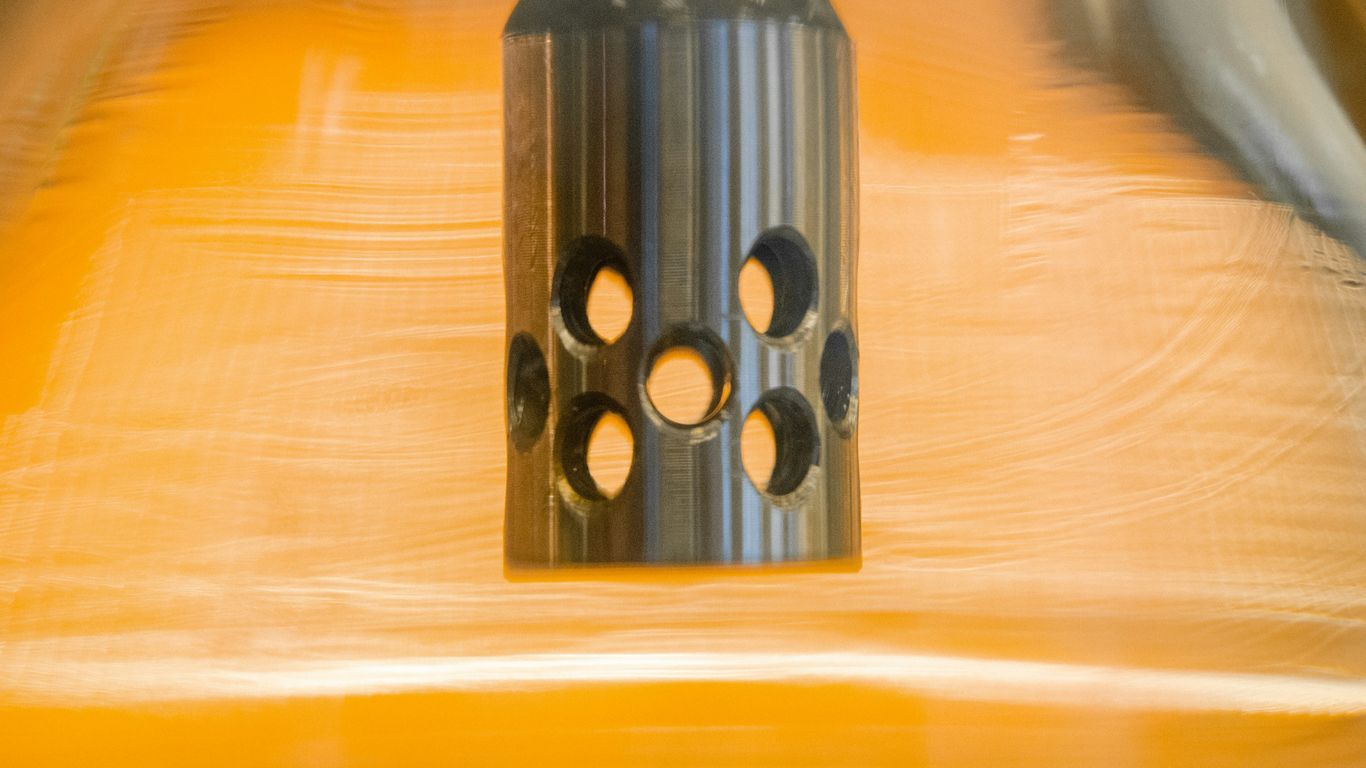
When we consider what keeps an airplane flying, it's easy to credit the big, obvious parts like the engines and wings. But dig a little deeper, and you'll find countless smaller, hidden components that are just as crucial, if not more so. High-precision bearings are a perfect example. These are not just simple metal rings; they're engineered to unbelievably exact standards and play a vital role in a whole host of aircraft systems. Without them, the intricate machinery that keeps a plane airborne just couldn't function properly, especially under the demanding conditions of flight.
Aircraft Engine and Turbomachinery Performance
Picture an aircraft engine operating under immense pressure and heat, with its core spinning at tens of thousands of revolutions per minute. Precision bearings are the key to making this possible. They support the main engine shafts, allowing the compressor and turbine sections to rotate with incredible smoothness and stability. These bearings must handle significant axial and radial forces, all while maintaining perfect alignment. This seamless operation is directly tied to the engine's overall performance, fuel efficiency, and operational lifespan.
Ensuring Reliability in Landing Gear Assemblies
Takeoffs and landings are arguably the most demanding moments for an aircraft's structure. The landing gear absorbs enormous impacts and handles constantly shifting loads. The bearings inside these assemblies are specifically designed to manage these shocks, resist wear from repeated use, and support the aircraft's entire weight on the ground. They must permit smooth, reliable movement as the plane taxis, takes off, and lands. The quality of these bearings has a direct and profound impact on the safety and dependability of these critical phases of flight.
Facilitating Movement in Flight Control Systems
The surfaces that guide an aircraft—the ailerons, rudder, and elevators—all depend on precision bearings within their control systems. These bearings enable the surfaces to move fluidly with minimal friction, responding instantly to pilot or autopilot commands. They're built to handle a mix of loads and fine rotational movements. Since these are the very systems that control the plane's direction and stability, the accuracy and responsiveness that these bearings provide are absolutely essential for safe flying.
Accuracy in Avionics and Instrumentation
It might surprise you, but even the sensitive electronic systems and flight instruments on board rely on these mechanical marvels. While not always obvious, instruments like gyroscopes or other rotating sensors used for navigation depend on small, high-precision bearings to function correctly. These bearings must be incredibly accurate and stable to provide the correct data that pilots and automated systems rely on. Any small inaccuracy here could cascade into a significant navigational error.
Ultimately, an aircraft's performance and safety are inextricably linked to the flawless operation of its many systems. High-precision bearings, though often hidden from view, are fundamental to this operation—enabling everything from the immense power of the engines to the subtle adjustments of flight controls and the pinpoint accuracy of navigation instruments.
The Unseen Force Behind Flight Systems
Let's peel back the layers and look closer at how these bearings work their magic. While engines and wings get the glory, it’s the components tucked away within the complex machinery—the precision bearings—that are the true unsung heroes of flight. They are the reason everything moves smoothly and safely, from the moment a plane leaves the gate until it returns.
How High-Precision Bearings Enable Engine Functionality
Just how harsh are the conditions inside a jet engine? They are truly punishing environments, defined by extreme heat, immense pressure, and parts spinning at speeds that are hard to fathom—we're talking tens of thousands of rotations every single minute. This is where precision bearings are absolutely essential. They support the main shafts, ensuring the compressor and turbine sections spin smoothly while staying in perfect alignment. These bearings must handle tremendous forces pushing and pulling from all directions without faltering. If they don't perform flawlessly, an engine won't just lose efficiency; it could face a catastrophic failure. This smooth, precise operation is the key to engine longevity and fuel economy.
The Crucial Role in Landing Gear Dynamics
Take a moment to think about what happens during takeoff and landing. The landing gear must deploy and retract flawlessly, all while managing colossal forces. The bearings inside these assemblies are engineered to absorb massive impacts, handle shifting loads, and resist wear and tear over thousands of cycles. They carry the aircraft's entire weight on the ground and must allow for smooth rotation during taxiing, takeoff, and landing. The reliability of these bearings has a direct and significant impact on the safety of these crucial flight phases.
Precision in Flight Control Actuation
The flight control surfaces—like ailerons, elevators, and rudders—are how a pilot steers the aircraft. These surfaces are in constant motion, often making minute adjustments to maintain a stable flight path, and they must respond instantly and accurately. Precision bearings are at the heart of the actuators and linkages that move these surfaces. They provide the precise, low-friction movement required to maneuver the aircraft effectively. Even a tiny amount of resistance or "play" in these bearings could compromise the aircraft's handling, especially in turbulent weather or during critical maneuvers.
Ensuring Accuracy in Navigation Instruments
Modern aircraft depend on a suite of sophisticated instruments for navigation and flight management. Systems such as gyroscopes and inertial navigation systems (INS) demand components that can maintain an extraordinary level of accuracy. You'll find precision bearings at the core of these instruments, supporting spinning elements that sense changes in orientation and movement. The slightest inconsistency in a bearing's performance could corrupt the data, potentially altering the flight path. These bearings are the silent guardians of accurate flight data.
Without these meticulously engineered components, modern aviation as we know it simply couldn't exist. They are the silent enablers of flight, guaranteeing that every aircraft operates with the utmost reliability and safety, no matter the conditions.
Advancements Driving Aerospace Bearing Technology
The forward march of aviation never stops, and the components inside our aircraft must evolve to keep up. This is especially true for high-precision bearings. As we venture into the future of flight, these small but mighty parts are playing an even more significant role in turning innovative ideas into reality. It’s a symbiotic relationship: as aircraft grow more advanced, they demand better bearings, and as bearing technology improves, it unlocks the potential for even more sophisticated aircraft designs.
Innovations in Materials Science for Bearings
Engineers are in a constant search for new materials to elevate bearing performance. This quest includes the development of specialized ceramic composites and advanced metal alloys. What's the purpose? These next-gen materials are designed to withstand higher temperatures and greater stresses, all while being lighter than their predecessors. The goal is to create bearings that are stronger, more durable, and more efficient than ever before.
Sophisticated Manufacturing Techniques
Manufacturing processes are also reaching incredible levels of precision. This allows for tighter tolerances and more complex designs, resulting in bearings that are both more efficient and more reliable. The aerospace industry operates under some of the most stringent standards in the world, and for good reason. When you're dealing with parts that must perform flawlessly thousands of feet in the air, there is simply no room for compromise. Manufacturers must follow highly specific protocols to ensure every single bearing is perfect.
- Employing specialized, high-precision equipment
- Maintaining impeccably clean manufacturing environments
- Implementing multiple layers of rigorous inspection
The Rise of Smart and Predictive Bearings
A major focus right now is on predictive maintenance and the development of "smart bearings." Imagine bearings that can self-monitor and report on their own condition; this technology helps maintenance crews prevent failures before they can even happen. This is particularly vital for autonomous flight systems, where absolute, unwavering reliability is non-negotiable.
The continuous improvement in bearing design and materials is what directly enables the next great leaps in aviation. The story of bearing development is inseparable from the story of aerospace itself.
The Growing Demand for High-Performance Bearings
Meeting the Challenge of Higher Speeds
Aircraft are flying faster than ever, and that trend shows no signs of slowing down. As engines and other rotating parts spin at increasingly dizzying rates, the bearings supporting them face enormous stress. They have to perform perfectly without generating excess heat or wearing out prematurely. Just consider the main shaft of a jet engine—it can rotate tens of thousands of times per minute. The bearings that support this shaft must be incredibly robust and meticulously engineered to handle such extreme rotational velocities. This requires using advanced materials and sophisticated designs that can withstand the intense centrifugal forces and friction involved.
Withstanding Extreme Temperature Variations
From the sub-zero chill at 35,000 feet to the blistering heat generated by engines, airplanes operate in a world of temperature extremes. Bearings must perform reliably across this entire spectrum. A bearing might start its journey on a cold runway but quickly heat up during operation. The materials used can't become brittle in the cold or lose their integrity under intense heat. Lubricants are also a critical piece of the puzzle, needing to maintain their protective properties across these vast temperature swings. This is why hybrid bearings, which often use ceramic balls, are becoming more popular—they simply handle heat better than traditional steel bearings.
Managing Increased Operational Loads
Today's aircraft are marvels of complexity, carrying more passengers, cargo, and sophisticated systems than ever before. All that extra weight and capability translates to greater forces on various components, including bearings. The landing gear, for example, must support the aircraft's full weight during takeoff and landing, absorbing incredible shocks. Likewise, control surface actuators and engine components are all subjected to higher stress levels. Bearings must be designed to manage these increased loads without deforming or failing—a challenge often met by using stronger materials and optimizing their internal geometry.
The Constant Objective of Reduced Friction
In the world of aviation, minimizing friction is a never-ending quest. Why? Because less friction means less wasted energy, which directly translates to better fuel efficiency and lower emissions. Bearings represent a key battleground in the war on friction. Even a tiny reduction in friction, multiplied across the thousands of bearings in a single aircraft, can result in significant fuel savings over its lifetime. This ambition drives constant innovation in bearing design, materials, and lubrication, all in pursuit of smoother operation and less energy loss.
The relentless pursuit of higher performance in aviation means that every single component, no matter its size, is under constant scrutiny. High-performance bearings are no longer just about enabling motion; they are about enabling faster, more efficient, and more reliable flight by conquering the most extreme conditions.
Bearings in Next-Generation Aviation Systems
Electric Aircraft and Evolving Load Profiles
As the aviation industry pivots toward electric propulsion, the demands placed on bearings are changing dramatically. Electric motors, while quieter and cleaner, present a whole new set of thermal management challenges and load characteristics compared to traditional turbine engines. Bearings within these new systems have to be designed to handle these unique profiles, often operating at different speeds and generating heat in different ways. This requires a fresh look at bearing materials and lubrication to maintain performance and longevity in these innovative powertrains.
Autonomous Flight and Unwavering Reliability
For an aircraft designed to fly without a pilot in the cockpit, the reliability of every component becomes absolutely paramount. Bearings inside flight control actuators, guidance systems, and other automated functions must perform with near-perfect precision, time after time. Any failure or even slight deviation in performance could have serious consequences. As a result, the design and manufacture of bearings for autonomous aircraft prioritize extreme dependability and a long, predictable operational life—often far exceeding the already high standards for conventional aircraft.
Space Exploration and Extreme Environments
When we look beyond Earth's atmosphere, the rulebook for bearings gets thrown out. Space exploration missions demand components that can function flawlessly in a vacuum, withstand extreme temperature swings (from scorching solar radiation to the deep cold of space), and endure constant bombardment from radiation. Bearings designed for spacecraft, satellites, and deep-space probes must be built from highly specialized materials and often use unique lubrication methods to prevent outgassing and ensure they work in these incredibly harsh conditions. The success of missions to the Moon, Mars, and beyond truly hinges on the performance of these small but vital parts.
The Unseen Force Behind Flight
So, the next time you think about what makes flight possible, it's natural to picture the immense power of engines and wings. But the real story is also in the details—the tiny, often-unseen components like precision bearings that ensure the entire system works in harmony. These parts are masterfully engineered to perform under incredible duress, from extreme temperatures and heavy loads to phenomenal speeds. Without them, critical systems like flight controls and navigation just couldn't deliver the accuracy we depend on. As aviation technology soars to new heights, the demand for these high-quality bearings will only continue to grow. They aren't just parts; they are the quiet enablers of every safe and reliable flight, from takeoff to landing and even into the vastness of space.
Frequently Asked Questions
What exactly are high-precision bearings in planes?
High-precision bearings are highly engineered components inside an airplane, designed for exceptional smoothness and durability. They are built with extreme care to handle demanding tasks, like supporting fast-spinning parts in an engine or ensuring the landing gear operates perfectly. Their job is to function flawlessly under intense heat, incredible speeds, or heavy pressure.
Where are these special bearings used on an airplane?
You'll find these crucial bearings in numerous key locations. They're essential for the rotating shafts inside jet engines, helping them run efficiently. They also do the heavy lifting in the landing gear, absorbing the massive impact of landing. Beyond that, they help control surfaces like the rudder and wing flaps move smoothly and ensure navigation instruments provide accurate data.
Why is being 'precise' so important for airplane bearings?
In aviation, there is virtually no margin for error. If a bearing isn't made to perfect specifications, it could cause excess wear, reduce the plane's fuel efficiency, or, in a worst-case scenario, lead to a critical system failure. The safety of every flight depends on every single part—including these bearings—working exactly as intended, every time.
What makes airplane bearings different from ones in cars?
The main difference is the environment. Airplane bearings must endure far more extreme conditions than those in a car. They face incredibly high speeds, massive temperature swings (from freezing cold to scorching hot), and immense forces. Because of this, they are manufactured to much stricter standards and often use advanced materials to guarantee they won't fail during flight.
Are new types of bearings being made for future planes?
Yes, absolutely! Innovation is constant. Engineers are developing better bearings using new materials that are stronger and lighter. They're also using advanced manufacturing techniques to make them even more precise. Some cutting-edge bearings can even monitor their own health and signal when maintenance might be needed—a huge benefit for future aircraft like electric and autonomous planes.
How do bearings help make planes more efficient?
Bearings boost efficiency primarily by reducing friction. Think of friction as a force that creates resistance, slowing things down and wasting energy. By spinning with very little resistance, high-precision bearings allow engines to operate more smoothly, control surfaces to move with less effort, and ultimately help the aircraft consume less fuel.


