
resources
How Many People Is In London? Latest Population Figures for 2026
14 Mar 2026

So, you're pondering: what's the actual population of London right now? It's undeniably a vast metropolis, and its demographic figures are in a constant state of flux, making it quite challenging to pinpoint an exact number at any given moment. In this exploration, we'll delve into the most recent statistics and consider their profound implications for this sprawling global city. Indeed, it's far more than a mere numerical count; it vividly narrates the ongoing story of who calls London home and how the city continues its remarkable trajectory of growth.
Key Takeaways
- As of 2021, London's population stood at 8,799,800, with projections indicating a sustained upward trend.
- The broader metropolitan area population is anticipated to reach approximately 9.9 million by 2026.
- Between 2011 and 2021, London's population expanded by about 7.7%, though this growth rate was somewhat less rapid than that observed across the rest of England.
- The city is characterized by its extraordinary diversity, with 46% of residents identifying as Black and Minority Ethnic and a substantial 41% having been born outside the UK.
- Population density remains exceptionally high, particularly within Central London, where it exceeds 11,000 people per square kilometer.
Understanding London's Population Size
Current Population Estimates for London
Just how many individuals are currently residing in London? According to the most recent estimations, the population of Greater London hovers around 8.9 million people. This is, by any measure, a staggering figure—cementing London's status as one of Europe's most populous cities. It's crucial, however, to bear in mind that this is an estimate; the precise count can naturally fluctuate. Furthermore, the population density is notably elevated, at roughly 5,854 people per square kilometer. This implies that in many parts of the capital, you'll certainly be sharing your immediate environment with quite a number of fellow Londoners!
Projected Population for the Coming Years
Peering into the future, London's population is widely expected to continue its expansion. While the rate of growth has certainly witnessed various shifts over the past few decades, current projections indicate that by 2026, we could realistically see the population approaching, or even surpassing, the 9 million mark. This persistent growth is a culmination of diverse influences, including both migration patterns and birth rates. It's a truly dynamic scenario, and meticulously monitoring these projections offers invaluable insights into the city's evolving needs.
Historical Population Trends
London's demographic narrative is an extensive one, stretching back through many centuries. For context, if one examines figures from the early 1800s, the population barely exceeded a million. Yet, fast forward to the mid-20th century, and it had burgeoned dramatically, surpassing 8 million residents. The city has experienced periods of contraction, particularly during the latter half of the 20th century, but has invariably demonstrated a remarkable capacity for resurgence. The decade between 2011 and 2021, for instance, evidenced a growth of approximately 7.7%, clearly signalling a renewed vitality.
Here's a succinct overview of how London's population has evolved over time:
| Year | Population | Percentage Change |
|---|---|---|
| 1801 | 1,011,157 | — |
| 1901 | 6,226,494 | +11.9% |
| 2001 | 7,172,036 | +4.1% |
| 2011 | 8,173,941 | +14.0% |
| 2021 | 8,799,800 | +7.7% |
The sheer scale of London's population stands as a powerful testament to its enduring appeal as a preeminent global hub for culture, finance, and unparalleled opportunity. A thorough understanding of its past growth is essential for appreciating its current magnitude and accurately anticipating its future trajectory.
London's Population Growth Over Time
London's population story is, without question, a long and intensely dynamic one—marked by episodes of rapid expansion, some rather surprising downturns, and consistently steady ascents. It's far more than a static numerical fact; rather, it’s a living reflection of the city's rich history, its considerable economic magnetism, and broader societal transformations.
Population Changes Between Censuses
When we cast our minds back, it becomes clear that London's growth hasn't followed a simple, linear upward path. The city saw substantial increases during the 19th century, a transformative era characterized by industrial revolution and expansive development. However, the 20th century ushered in distinctly different patterns. There were notable periods of decline, particularly in the aftermath of World War II, as residents often chose to relocate to surrounding areas. Yet, the tide eventually turned once more, and the city has, in recent decades, consistently experienced significant growth.
Below is an overview demonstrating how the population has shifted over the years:
| Year | Greater London Population | Percentage Change |
|---|---|---|
| 1801 | 1,011,157 | — |
| 1851 | 2,286,609 | +19.3% |
| 1901 | 6,226,494 | +11.9% |
| 1951 | 8,164,416 | +2.2% |
| 2001 | 7,172,036 | +4.1% |
| 2011 | 8,173,941 | +14.0% |
| 2021 | 8,799,800 | +7.7% |
Factors Influencing Population Growth
So, what exactly underpins these constant shifts? It’s truly a confluence of various elements. Historically, industrialization and the compelling promise of employment opportunities were significant draws. More recently, London's esteemed position as a global nerve center for finance, culture, and education continues to attract individuals from across the UK and indeed, the entire world. Conversely, factors like soaring housing costs and the pursuit of alternative lifestyles can motivate people to move away, thereby influencing the city's net growth figures.
Key drivers include:
- Economic Opportunities: London's dynamic job market, especially prominent in sectors such as finance, technology, and the creative industries, remains a primary magnet.
- International Migration: The arrival of people from other nations into London contributes substantially to its overall population count.
- Internal Migration: This refers to the movement of individuals from other regions of the UK into London, and conversely, out of it.
- Natural Change: Essentially, this is the balance between the number of births and deaths occurring within the city.
The period spanning from 1991 to the present day has been particularly noteworthy for a significant surge in the proportion of foreign-born residents—a trend that has fundamentally reshaped the city's demographic makeup and effectively offset earlier population declines.
Growth Rates in Different London Areas
It's also crucial to remember that London is far from a homogenous entity. Population growth, in fact, is not uniformly distributed across all its boroughs. Some areas, often those offering more accessible housing or new development initiatives, may experience more rapid growth than others. Both Inner London and Outer London have exhibited distinct trends over time, with Outer London witnessing more substantial expansion in recent decades as the city has progressively stretched its boundaries outwards.
For instance, the historical transition from Inner London's initial dominance to Outer London's steadily increasing share of the population vividly illustrates this evolving pattern of settlement and urban development within the broader metropolitan expanse.
Demographic Composition of London
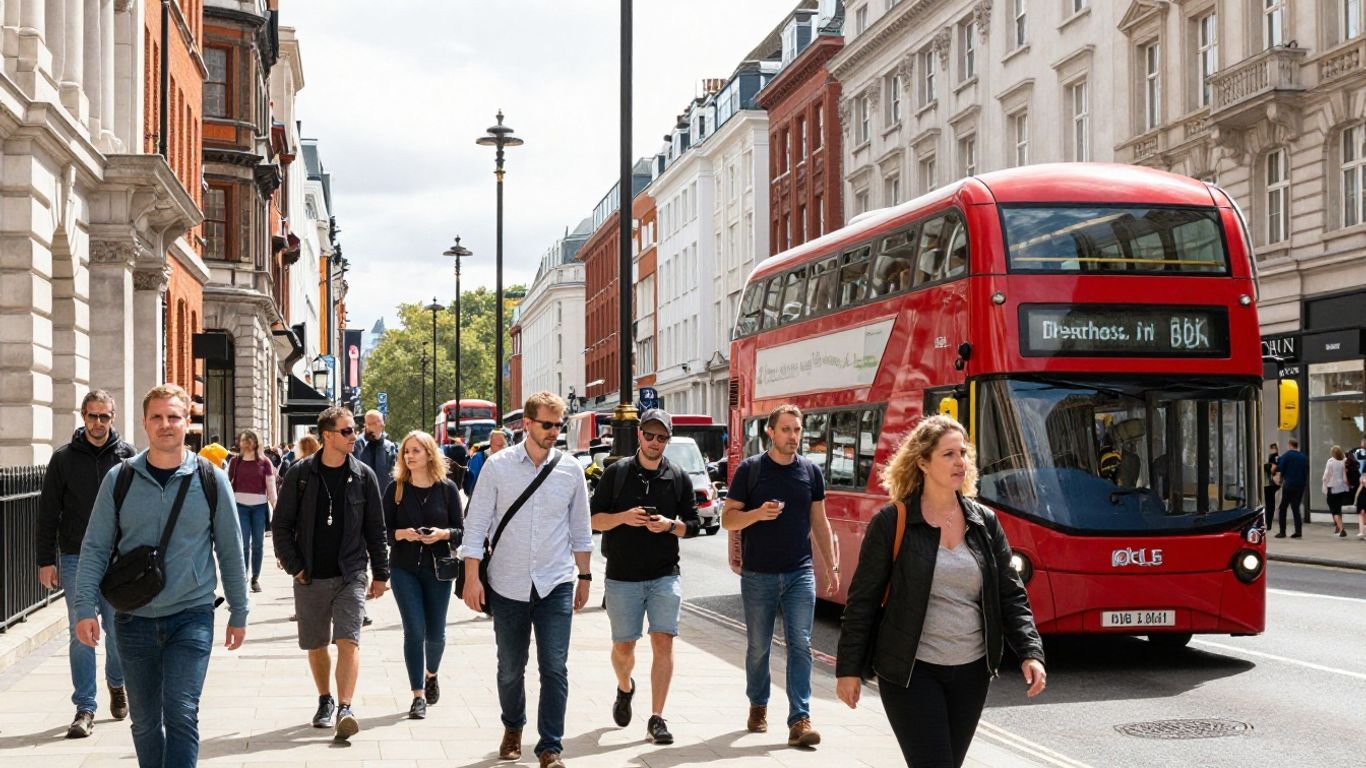
London is a city perpetually in motion, and its vibrant populace forms a central chapter in that ongoing narrative. When we speak of 'demographic composition,' we are, in essence, examining the intricate tapestry of its residents—factors such as ethnicity, place of birth, and age distribution.
Ethnic Diversity in London
London's reputation for being extraordinarily diverse is well-earned, and the data unequivocally supports this claim. While the White British population historically constituted the largest group, it no longer holds a majority status. This profound shift has unfolded over several decades, as individuals from every corner of the globe have chosen to establish their homes within London.
Here's a concise overview of how London's ethnic makeup has transformed:
- White: Comprised approximately 53.8% of the population in 2021.
- Asian British: Representing about 20.8% in 2021.
- Black British: Accounting for roughly 13.5% of residents in 2021.
- Mixed: This category made up approximately 5.7%.
- Other: About 6.3% identified with other distinct ethnic groups.
This remarkable blend ensures London remains a pulsating, vibrant locale, where hundreds of languages are spoken and a rich, intricate tapestry of cultures flourishes.
Foreign-Born Residents in London
Another pivotal aspect of London's demographic profile is the substantial number of residents who were born outside the United Kingdom. This figure has been consistently on the rise, contributing significantly to the city's distinct international character. In recent years, an impressive 41% of Londoners were born beyond the UK's borders—a percentage notably higher than that found across the rest of England.
This continuous influx of people from diverse nations enriches the city with fresh perspectives, invaluable skills, and cherished traditions, all of which undeniably shape London's identity as a truly global metropolis.
Age Structure of London's Population
Grasping the age structure of London's populace helps us discern the delicate balance between its younger and older residents. Much like many expansive urban centers, London exhibits a varied mix of age groups, influenced by critical factors such as birth rates and migration patterns. The city boasts a substantial working-age population, which is, of course, absolutely vital for its economic engine, alongside vibrant younger generations and a steadily increasing number of older adults.
The age distribution within London is inherently dynamic, shaped by both natural population changes and the continuous movement of individuals into and out of the city for purposes of employment, education, or familial reasons. This constant ebb and flow means London's age profile is in perpetual evolution.
Population Density and Distribution
London is indeed a sprawling metropolis, yet its population is by no means uniformly distributed. A clear understanding of how many people reside in a given area—and how closely packed they are—provides us with a far more insightful picture of the city's intricate dynamics.
Overall Population Density
When we discuss population density, we are essentially quantifying the number of people inhabiting a specific expanse, typically measured per square kilometer or square mile. London, strikingly, ranks among Europe's most densely populated cities. According to recent estimates, the city experiences an average density of approximately 5,700 people per square kilometer. This figure dwarfs the average for England as a whole, which hovers around 380 people per square kilometer, meaning London is, on average, about 15 times more crowded than the rest of the country. Is it any wonder the Tube can feel so busy?
Density Variations Across London
However, this overarching density figure rather effectively masks a considerable degree of variation within London itself. The very heart of the city, frequently termed Central London, is astonishingly dense. Areas like the City of London and Westminster record densities that can soar beyond 11,000 people per square kilometer. As one ventures outwards from the core, the density generally diminishes, though it's worth noting that some outer boroughs can still be quite substantially populated.
Here's a glimpse into how density can diverge throughout the capital:
- Central London: Characterized by extremely high density, with a significant concentration of people living and working within a comparatively small area.
- Inner London: Still quite dense, though typically less so than the absolute center.
- Outer London: Density generally tapers off further out, featuring more suburban characteristics and often larger green spaces.
The profound concentration of people in specific areas affects virtually every aspect of urban life—from public transport demands to housing availability and the provision of local services. It represents a complex spatial puzzle that city planners are constantly endeavoring to resolve.
Urban vs. Metropolitan Area Populations
It's equally important to differentiate between London's administrative boundaries and its much broader metropolitan area. The population figures we've often discussed here typically refer to Greater London, the defined administrative region. However, London's influence extends well beyond this, encompassing a far larger commuter belt and an expansive economic region. Consequently, the population of the wider metropolitan area is considerably larger than that of Greater London alone—a clear reflection of the city's pivotal role as a major economic and cultural magnet that draws individuals from a vast surrounding territory for work and myriad other opportunities.
Key Factors Shaping London's Demographics
London's population is never just a static figure; it's a dynamic, ever-shifting mosaic shaped by several potent forces. Truly understanding these elements helps us grasp not only why the city is as it is today, but also to anticipate where it might be headed in the years to come.
Impact of Migration on Population
Migration has, for a very long time, played an absolutely central role in London's unfolding story. It's not merely about people arriving; it's profoundly about how they integrate and contribute to the very fabric of the city. Since the late 1990s, in particular, London has experienced a significant demographic transformation. Consider this: in 1991, approximately 21.7% of its residents were born outside the UK. By 2011, that figure had leaped to 36.7%. This continuous influx of people from all corners of the globe introduces fresh cultures, invaluable skills, and innovative ideas, constantly revitalizing the city's unique identity.
Changes in Ethnic Majority Status
This pronounced shift in London's residency has, predictably, led to some significant demographic reconfigurations. For the vast majority of its history, London was overwhelmingly White British. However, the 2011 census marked a genuine turning point: for the very first time, the White British population no longer constituted the majority, though it undeniably remained the largest single ethnic group. This momentous shift effectively rendered London a "majority-minority" city, reflecting a broader demographic trend now observed in many prominent global urban centers.
Here's a closer look at how ethnic diversity has steadily expanded:
- White British: While still the largest group, its proportional representation has progressively decreased over the decades.
- Asian British: This demographic has witnessed substantial growth, emerging as a significant and integral component of London's population.
- Black British: Mirroring the Asian British group, the Black British population has also considerably increased its presence.
- Other Ethnic Groups: London is famously home to a rich array of additional ethnic backgrounds, all contributing to its celebrated diversity.
Birth and Fertility Rates
Beyond the undeniable influence of migration, birth and fertility rates also play a crucial role in shaping London's population trajectory. While historically high birth rates once significantly bolstered population growth, more recent trends paint a somewhat different picture. The fertility rate in London, much like in numerous other developed urban areas, has fallen below the replacement level. For example, the rate hovered around 1.52 in 2021. This simply means that, on average, women are having fewer children than would be necessary to naturally sustain the existing population size without the compensatory effects of migration. Consequently, this lower birth rate underscores why migration becomes even more critical for maintaining robust population numbers and ensuring a balanced age structure within the city.
The intricate interplay between individuals arriving from international destinations and the number of births occurring within the city itself creates a complex, multifaceted demographic picture. It is this powerful combination that truly defines London's ever-changing, vibrant population.
Wrapping Up London's Population Picture
So, as we've meticulously explored, London is undeniably a city in perpetual motion, and its population dynamics are a central, compelling aspect of that ongoing narrative. From the historical records charting consistent growth to current estimates forecasting continued—albeit perhaps slightly slower—expansion, the statistics offer a wealth of information. Indeed, the projections for 2026 suggest a metropolis that remains a powerful magnet, steadfastly maintaining its venerable status as a major global hub. Ultimately, comprehending these intricate population trends is crucial; it helps us to truly grasp the complex dynamics of urban life and appreciate the sustained evolution of one of the world's most iconic and fascinating cities.
Frequently Asked Questions
What is the current population of London?
As of 2021, London's population was estimated to be around 8.8 million people. Current projections indicate that the wider metropolitan area population is expected to reach approximately 9.9 million by 2026.
How has London's population changed over time?
London's population has undergone significant transformations over centuries. For instance, it expanded by about 7.7% between 2011 and 2021. Historically, the city has experienced periods of both rapid growth and occasional decline, notably in the mid-20th century.
Is London a diverse city in terms of ethnicity?
Absolutely, London is renowned for its remarkable diversity! In 2021, approximately 46% of Londoners identified as Black or Minority Ethnic—a figure substantially higher than that for the rest of England. This rich diversity has seen a considerable increase since the 1990s.
How many people in London were born in other countries?
A significant portion of London's residents hail from outside the UK. As of 2021, about 40.7% of the population was foreign-born, translating to nearly 3.6 million individuals.
Where is London's population most concentrated?
London is considerably more densely populated than the average for England. The overall population density is around 5,690 people per square kilometer. Central London stands out as the most concentrated area, with densities exceeding 11,000 people per square kilometer.
What are the main factors influencing London's population changes?
Key influences include migration—both international and internal within the UK—as well as birth rates. Over time, these factors have collectively led to a more diverse population and notable shifts in the city's ethnic composition.


