
business resources
How Property Managers Can Build More Resilient Commercial Properties
19 Aug 2026

A commercial building never goes out of business at once. Usually, the warning signs start small. Sometimes it is as simple as needing the right contractor, such as KC's 23 ½ Plumber Indio, before a small plumbing issue turns into a costly repair.
That is the real job of a good property manager. You are not only keeping a building clean and occupied. You are making sure it can handle problems without bringing the whole place to a stop.
Start by Knowing What Can Go Wrong
Before you can protect a property, you need to understand its weak points.
Walk through the area and look at it with fresh eyes. What happens if the power goes out for several hours? What if heavy rain floods the parking area? What if the main HVAC system stops working in the middle of summer?
You should also look beyond the building itself. A property can be well maintained and still face problems because of a nearby road closure, storm, flood, fire, or power failure.
Make a simple risk list for each property. Include the building's age, major equipment, roof condition, plumbing, electrical systems, security, drainage, emergency exits, and backup power. Review that list at least once a year.
The goal is to find the problems while you still have time to deal with them.
Maintenance Should Be Planned, Not Rushed
There is a big difference between fixing a problem and preventing one.
A property manager who waits for equipment to fail will often pay more. There is also the added headache of angry tenants, interrupted work, and emergency contractor fees.
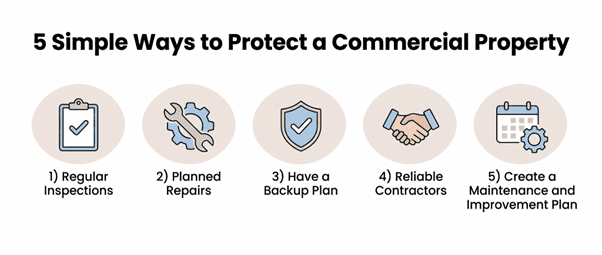
Regular inspections give you a chance to spot problems early.
You should:
- Check roofs before storm season
- Inspect drains and gutters
- Test emergency lighting
- Service HVAC equipment before extreme heat arrives
- Look at plumbing connections, electrical panels, doors, windows, and exterior surfaces
Keep records of repairs, inspections, and equipment replacement dates. A simple spreadsheet can be enough.
It helps you answer practical questions quickly:
- What needs your attention now?
- What will probably need replacing next year?
- Which systems are costing the most to repair?
That information makes it easier to plan spending instead of being surprised by a huge bill.
Give the Building a Backup Plan
Every commercial property needs a plan for when something stops working.
Think about the systems tenants depend on every day. Power, heating and cooling, water, internet, elevators, security, and fire protection all matter.
Some buildings may need backup generators or emergency power systems. Others may benefit from battery storage, extra pumps, water shut-off controls, or backup communication systems.
You do not have to install everything at once. Start with the systems where failure would cause the most trouble.
Then write down what everyone should do during an emergency. Who calls the contractor? Who contacts tenants? Who shuts down equipment? Who meets emergency crews at the property?
And remember, a plan sitting in someone's inbox is not much use. Staff and vendors should know what to do before something goes wrong.
Build Strong Relationships With Contractors
A property manager does not work alone.
You may have electricians, plumbers, HVAC technicians, cleaners, security teams, roofers, and other specialists helping keep the property running. Know who you are calling before an emergency happens.
Do not choose contractors based on price alone. Look at response times, experience, licensing where required, insurance, and familiarity with commercial buildings.
It also helps to have a backup contact for critical services. When one company is unavailable during a major storm or heatwave, you do not want to start searching from scratch.
Good communication matters too. A contractor who understands the building's history can often solve a problem faster than someone who’s seeing it for the first time.
Pay Attention to Heat, Flooding, and Other Local Risks
A building in a flood-prone area does not face the same risks as one in a dry region. A property in a very hot climate may be far more dependent on reliable cooling.
That means building managers need to think locally.
Look at past weather events in the area. Check whether the property has drainage problems, and examine the roof and building exterior.
There is growing concern about these risks in the industry. In RICS' 2025 European Sustainable Real Estate Survey, 75% of respondents said adapting buildings to changing climate conditions and maintaining high energy efficiency and low operational carbon are critical issues for built-environment stakeholders.
You do not need to predict exactly what will happen next year. You need to make the property better prepared for the problems that are already possible.
Think About the Building's Future
Some commercial properties were built decades ago. Their systems, materials, and layouts may not match what tenants need today.
That does not always mean the property needs a complete renovation. Often, smaller improvements can make a noticeable difference.
A property manager can work with the owner to create a five-year maintenance and improvement plan. Include major equipment replacement, roof work, energy upgrades, safety improvements, and repairs that have been postponed.
Strong Buildings Start With Small Decisions
A property does not become resilient because of one expensive upgrade.
It gets there through hundreds of smaller decisions made over time: checking the roof, replacing worn equipment, keeping emergency contacts updated, listening to tenants, training staff, and fixing problems before they grow. That is what makes a commercial property more dependable.
So, how do you run a successful property management business?
The best managers are often the ones you barely notice because everything keeps working. And when something does go wrong, there is already a plan in action.


