
business resources
How Smart Businesses Use Social Viewing Tools to Gain a Competitive Edge
29 Mar 2026

In 2026, Instagram is no longer just a platform for lifestyle content and brand aesthetics. With over two billion active monthly users, it has evolved into one of the most data-rich business intelligence environments on the internet. The brands, agencies, and marketers who understand how to extract and act on that data — without tipping their hand to competitors — are consistently outperforming those who rely solely on native platform features.
The competitive advantage doesn't come from spending more on ads. It comes from knowing more, faster, and more discreetly. That's precisely where a new category of Instagram intelligence tools is delivering measurable business value.
Why Native Instagram Falls Short for Business Research
Instagram was designed to maximize user engagement and advertising revenue — not to serve as a business research platform. This creates a structural gap that professionals encounter constantly:
You want to monitor a competitor's Stories cadence before your product launch. You want to benchmark your engagement metrics against industry peers. You want to understand which types of content are resonating with a target audience before investing in creative production. And you want to do all of this without broadcasting your intentions.
Instagram's native interface makes this difficult. Story views are tracked and logged against your account. Engagement data is presented inconsistently. Comment data is locked inside the platform's UI with no export functionality. For marketers and business strategists who need clean, portable, actionable data, these limitations are a real operational bottleneck.
Third-party Instagram intelligence tools exist specifically to address this gap — and their adoption across marketing agencies, e-commerce brands, PR firms, and investor research teams has grown significantly over the past two years.
Use Case 1: Competitive Intelligence Without Exposure
One of the most direct business applications is competitor research. When a brand is preparing a campaign, launching a new product, or repositioning in a category, understanding how competitors are using Instagram Stories — their messaging frequency, promotional angles, and content formats — is genuinely valuable strategic information.
The problem: viewing a competitor's Story on Instagram means your business account appears in their viewer list. For a major brand, tipping off a direct competitor that you've been watching their activity isn't just awkward — it's strategically counterproductive.
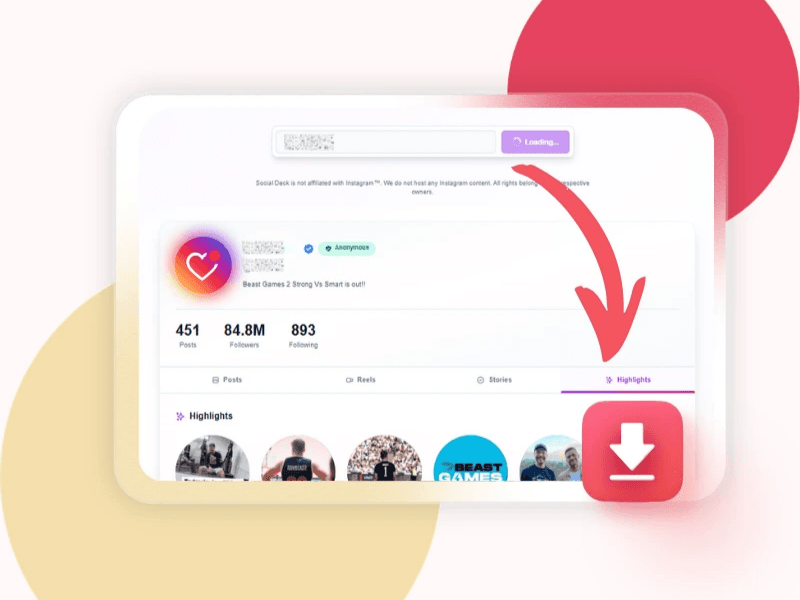
An Anonymous Instagram Story Viewer eliminates this problem. By accessing publicly available Story content through a non-authenticated layer, the tool lets marketing teams and strategists monitor competitor activity on public accounts without leaving a footprint. The intelligence is the same; the exposure is zero.
For agencies managing multiple client accounts, this capability is particularly high-value. Competitive audits that previously required manual workarounds — creating throwaway accounts, using incognito mode with limited effect, or simply avoiding Story research altogether — can now be conducted cleanly and systematically.
Use Case 2: Engagement Benchmarking and Content Validation
Likes on Instagram have been a contested metric for several years. The platform has toggled public like counts on and off across different markets, and the inconsistency has made it difficult to use engagement data as a reliable benchmark — at least through native interfaces.
But for content strategists, brand managers, and influencer marketing teams, like counts remain a meaningful signal. They indicate content-market fit, audience resonance, and posting effectiveness in ways that follower counts and reach metrics don't fully capture.
An Instagram Likes Viewer gives marketers structured, consistent access to this data across public accounts. Practical applications include:
Influencer vetting: Before committing budget to an influencer partnership, engagement rates relative to follower counts are a critical quality signal. Like counts, viewed in aggregate across recent posts, give a clearer picture of true audience engagement than follower numbers alone.
Content benchmarking: Understanding how a competitor's top-performing posts compare to your own in terms of engagement per follower provides a calibration point for your content strategy — separate from algorithmic reach, which is harder to measure externally.
Campaign post-analysis: After a product launch or promotional campaign, tracking engagement across industry accounts gives context for whether your own numbers reflect category performance or are above/below baseline.
This kind of competitive benchmarking is standard practice in virtually every other channel — search (SEMrush, Ahrefs), paid social (Facebook Ad Library), email (industry benchmark reports). Instagram engagement analytics tools simply extend that capability to a channel that has historically resisted external measurement.
Use Case 3: Comment Data as a Business Intelligence Asset
Of all the data Instagram generates, comment data may be the most underutilized from a business intelligence standpoint. Comments represent unfiltered, unprompted consumer language — actual words real people use to describe products, express needs, articulate objections, and signal intent.
For product marketers, this is voice-of-customer research at scale, sitting in plain sight. For brand strategists, it's sentiment data updated in real time. For competitive analysts, it's a window into how a competitor's audience actually feels about their products — not what the brand claims in its messaging.
The challenge is access. Instagram's UI presents comments as an infinite scroll with no export functionality. Manually reading and cataloging hundreds or thousands of comments from competitor posts, influencer content, or your own brand account is not operationally viable for most teams.

An ig comment export tool solves this directly. By pulling comment data from public posts into an exportable format, it transforms what is currently a manual, time-intensive process into a structured, repeatable workflow. Marketing teams can pipe this data into sentiment analysis tools, feed it into customer persona research, or simply use it to identify recurring language patterns for copywriting and positioning work.
The business applications are broad. A DTC brand launching in a new category can analyze comment data from established players in that space to understand what consumers already love, what they're frustrated by, and what language they naturally use — before writing a single line of brand copy. A PR team monitoring a crisis can track shifting sentiment in real time. A product team validating a new feature concept can pull comments from posts about competitor products to surface genuine user feedback.
The Broader Shift: From Social Media to Social Intelligence
What ties these tools together is a broader shift in how sophisticated businesses think about Instagram — not as a publishing channel, but as an intelligence asset.
The brands winning in competitive markets in 2026 are not necessarily the ones with the largest Instagram followings or the highest ad spend. They're the ones with the most disciplined research processes. They monitor what competitors are doing before acting. They validate creative concepts against real engagement data. They mine consumer language from public comment data before writing positioning copy.
This approach — treating social media as a source of structured competitive and consumer intelligence — is no longer the exclusive domain of enterprise brands with large marketing teams and custom data pipelines. Tools like anonymous story viewers, likes analyzers, and comment exporters make this capability accessible to growth-stage brands, boutique agencies, and solo consultants operating with lean resources.
Practical Considerations for Business Implementation
A few things worth clarifying for teams evaluating these tools:
Scope of data access: These tools work with publicly accessible content on public Instagram accounts. They do not access private accounts, bypass authentication, or interact with Instagram's private API. The data they surface is the same data any Instagram user can access manually — they simply make the process faster, cleaner, and anonymous.
Compliance alignment: As with any data collection workflow, teams should ensure their use of these tools aligns with their internal data governance policies and any applicable regulations in their operating markets. Using publicly available social media data for market research is a well-established practice; the tools here simply automate what would otherwise be a manual process.
Integration with existing workflows: The most effective implementations treat these tools as inputs to existing research and strategy workflows rather than standalone solutions. Comment export data feeds into qualitative research. Engagement benchmarks inform content KPI-setting. Competitor Story monitoring plugs into campaign planning calendars.
The Takeaway
Instagram intelligence tools are not a niche capability for social media specialists. They are increasingly standard components of a competitive marketing research stack — the same way keyword research tools, backlink analyzers, and ad transparency databases have become standard for search and paid media practitioners.
For any business that takes Instagram seriously as a channel — whether for direct sales, brand building, or influencer marketing — having the ability to research competitors anonymously, benchmark engagement data consistently, and extract comment data at scale represents a genuine operational advantage.
The brands that recognize this early will compound that advantage over time. The ones that wait are simply leaving intelligence on the table.


