
Businesses
India–UK FTA: Beyond the Tariffs, From Lower Tariffs to Higher Margins Rethinking Business Models
10 Nov 2026

As trade flows shift following the India–UK Free Trade Agreement, businesses face more than just the challenge of accessing new markets. Turning lower trading costs into stronger margins, smarter supply chains, better cash flow and sustainable growth.
Reducing tariffs can lower import costs, making products more affordable. However, it raises an important question: does this change actually improve business profitability?
This is a thought-provoking issue I've been reflecting on since the India–UK Free Trade Agreement took effect.
In my previous Businessabc article, The India–UK FTA Is Here. But Are Businesses Ready to Make Money From It?, I explored the opportunities emerging for entrepreneurs, manufacturers and investors.
As the initial trade figures come in, I'm eager to examine the business economics more closely.
While lower tariffs present an opportunity, they don't guarantee increased profits on their own. Businesses still need to manage production costs, logistics, inventory, distribution, financing, and competition effectively.
In fact, increased sales can sometimes create greater demands on working capital. Thus, the real opportunity lies not just in exporting more, but in rethinking how businesses operate and generate revenue.
This is a chance to innovate and optimise our approach to business.
The Early Trade Numbers Tell an Interesting Story
The first two full months after implementation provide early evidence.
Indian merchandise exports to the UK rose about 8% year on year to $2.43 billion in August and September 2026.
However, India's merchandise imports from the UK declined approximately 16.8% to $1.36 billion over the same period.
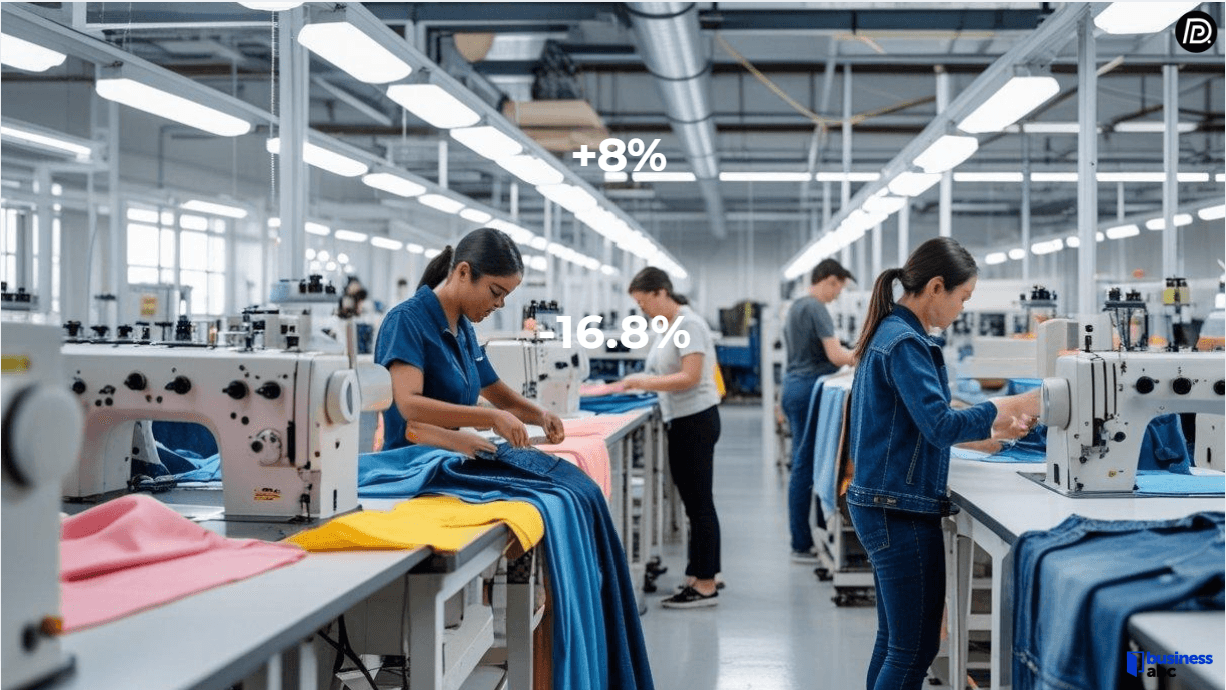
A closer examination shows that the situation is more complicated.
India's imports from the UK increased by more than 24% year on year in August before falling sharply in September. The decline was influenced by reduced shipments of precious metals, particularly silver.
Meanwhile, Indian exports to the UK grew in both August and September.
According to India's Department of Commerce, exports to the UK reached $6.15 billion during April–August 2026, growing approximately 7.5% year on year.
More importantly, non-fuel exports grew by over 15%, with strong movement in electronics, gems and jewellery, iron and steel, and vehicles.
Smartphone exports more than doubled, while gems and jewellery exports increased approximately 87% during those five months.
These are important signals, although much of the reporting period predates the FTA's implementation. We therefore cannot attribute the entire increase to the agreement.
What interests me is the changing composition of trade.
The next opportunity may not be about selling more of the same products. It may be about moving into higher-value products, better manufacturing capabilities and more sophisticated supply chains.
For British businesses, the picture also requires a longer-term perspective.
Many Indian tariff reductions are being phased in over several years. Companies must therefore align their market-entry strategies with product-specific tariff schedules rather than expecting immediate benefits across every sector.
The First Business Decision: Who Keeps the Tariff Saving?
Consider a simplified example.
An Indian manufacturer exports a product to the UK with a customs value of £100 per unit.
Assume that before the FTA, the relevant import duty was 10%, but after implementation, the qualifying product attracts zero duty.
The importer previously paid £10 in customs duty.
That £10 saving creates several commercial possibilities.
Option A: Reduce the selling price.
The business passes the savings to customers, potentially increasing competitiveness and market share.
Option B: Retain some of the savings.
The importer or exporter negotiates new pricing and captures part of the economic benefit through higher margins.
Option C: Reinvest in growth.
The business uses the savings to improve product quality, branding, marketing, warehousing or distribution.
Option D: Share the benefit across the supply chain.
The manufacturer, importer, distributor and retailer agree on a pricing structure that improves competitiveness while protecting commercial returns.
The calculations are straightforward, but the business implications are significant.
A tariff reduction does not automatically become the exporter's profit. Its value depends on commercial contracts, the importer of record, Incoterms, negotiation and market competition.
There is also a risk.
If every competitor passes through the full savings, the market price could decline while margins remain unchanged.
The real management question is not how much duty has been removed. It is how much economic value the business can retain or create from that removal.
Procurement: Buying Better May Matter More Than Selling More
Cost, availability, supplier relationships and quality have traditionally shaped international procurement decisions.
The FTA gives businesses another reason to reconsider those choices.
A British engineering company importing components from different countries might now assess whether sourcing certain products from India delivers a more competitive total cost.
Likewise, an Indian manufacturer could explore specialised British machinery, engineering equipment and technology where tariff reductions improve the investment case.
The opportunity is not limited to replacing one supplier with another.
Businesses could rethink how they divide production, design, technology development and assembly between the two countries.
But the lowest quoted price rarely reflects the full cost.
Procurement teams must examine:
- Product cost and applicable customs duties
- Transport, warehousing and insurance
- Currency and payment risks
- Quality assurance and certification
- Delivery reliability and inventory requirements
- Rules-of-origin compliance
A supplier offering a 5% lower product price may end up more expensive when you factor in longer lead times, quality issues, and additional inventory.
Conversely, an apparently more expensive supplier may deliver greater value through consistent quality and faster inventory turnover.
In my view, the businesses that benefit most will treat procurement as a strategic capability, not simply a purchasing function.
Supply-Chain Redesign: From Individual Transactions to Integrated Operations
One of the more interesting developments is the increasing commercial activity between the two countries beyond conventional goods trade.
In October 2026, the UK government announced that commercial deals worth nearly £12 billion had been struck since the FTA was signed in July 2025.
Among the announcements, Menzies Aviation secured a 15-year ground-handling licence in India, expected to generate more than £600 million in revenue.
British engineering consultancy Buro Happold outlined plans to expand its Indian operations, with anticipated revenue of £90 million from Indian projects.
These are announced opportunities and projections, not fully realised revenues. However, they highlight an important shift.
Businesses are not simply looking to ship products across borders. They are building operational capacity inside each other's markets.
For a manufacturer, this could mean retaining advanced design in Britain while developing manufacturing capacity or supplier partnerships in India.
For an Indian company, it might mean using British technical expertise, certification services and distribution capabilities to expand into Europe and other international markets.
Such arrangements can reduce duplication, improve production planning and bring companies closer to customers.
The strongest long-term business models may combine the capabilities of both countries rather than treating trade as a one-way transaction.
Distribution: Market Access Is Not Customer Access
A product entering a country at a lower tariff still needs someone to buy it.
This is especially challenging for SMEs.
A manufacturer might receive a new export enquiry, offer a competitive price and secure its first order.
But what happens next?
Does it have a local distributor?
Who manages customer complaints and returns?
Where will inventory be stored?
Who provides installation, maintenance or after-sales support?
How will new customers be acquired?
These operational questions often determine whether an international business can scale.
Consider British premium childrenswear brand Angel & Rocket, which announced plans in October 2026 to expand to 100 stores in India over five years, targeting approximately £43 million in revenue.
The significance isn't just moving products across borders.
It is the investment in local customer relationships, distribution and retail presence.
Not every SME can establish an overseas retail network.
But companies can explore local distribution partnerships, shared warehouses, digital marketplaces and fulfilment providers.
The business model might evolve from shipping individual orders overseas to running a coordinated distribution operation that serves multiple customers.
That shift can improve delivery reliability and customer satisfaction, although it also creates new inventory and financing requirements.
The FTA opens market access. Distribution determines whether that access becomes revenue.
Working Capital: The Hidden Challenge Behind Export Growth
This is one area that I believe deserves much more attention.
We often celebrate companies when their revenues increase.
But higher sales do not always translate into stronger cash flow.
Imagine an Indian exporter with annual sales of ₹100 crore.
Suppose the FTA helps the company secure new orders and revenue increases to ₹130 crore.
On the surface, that is excellent growth.
However, the company may now need additional raw materials, larger production runs, more finished-goods inventory and longer customer credit periods.
If customers pay after 90 days while suppliers demand payment within 30 days, the company may have to finance a substantial gap.
Even a profitable export order can strain liquidity.
For example, consider a company with annual sales of ₹130 crore.
If average collection time increases by just 15 days, approximately ₹5.34 crore of additional receivables could become tied up, assuming sales are spread evenly through the year.
That is cash the business cannot immediately use for wages, manufacturing or new orders.
For SMEs with limited banking facilities, the effect can be significant.
Businesses therefore need to negotiate better payment terms, improve inventory planning and explore export credit insurance, receivables finance or other suitable trade-finance arrangements.
The FTA creates commercial opportunities, but companies still need financing structures that can support them.
Growth without working-capital discipline can become a financial burden rather than a competitive advantage.
AI and Digital Platforms Could Transform the Economics
Another opportunity lies in applying technology.
Today, international supply chains produce large amounts of information.
Customer forecasts, purchase orders, inventory positions, shipping schedules, customs documentation, supplier performance and financial transactions all generate useful data.
Yet many SMEs still rely on disconnected spreadsheets, emails, and manual processes.
AI-supported systems could help businesses connect this information and make more informed decisions.
A manufacturer could use demand forecasts to plan production more accurately.
A distributor could identify slow-moving inventory before it becomes a financial problem.
An exporter could monitor shipment delays, currency exposure and potential payment risks.
A procurement business could compare suppliers using quality, total landed cost and delivery reliability rather than quoted prices alone.
Digital trade platforms could also make it easier to discover verified partners, manage documentation and track transactions across borders.
However, technology alone is not a solution.
Reliable data, commercial judgement, cybersecurity and regulatory compliance remain essential.
The real opportunity is to combine market access with more efficient business operations.
Better trade agreements can reduce the cost of crossing borders. Better technology can reduce the cost of doing business.
Together, they could make international expansion more accessible to smaller companies.
Different Sectors Will Need Different Strategies
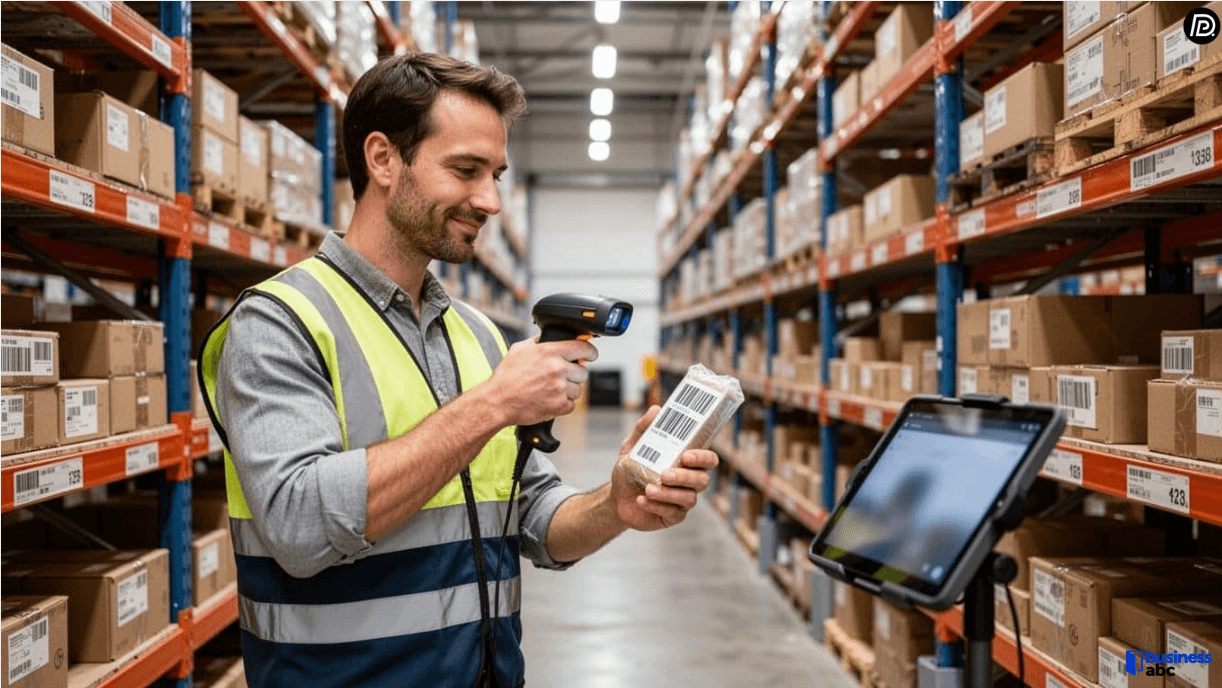
Specific strategy is important, an infographic by Dilip Pungliya, for Businessabc
Not every sector will benefit in the same way or at the same speed.
For Indian textiles and apparel businesses, improved tariff access may create opportunities to strengthen competitiveness with other international suppliers. But success will still depend on design, production efficiency, compliance and distribution.
Engineering businesses may benefit through component sourcing, manufacturing partnerships and industrial technology collaboration.
Electronics manufacturers could use growing export capabilities to develop new customer relationships, although rules of origin and product-specific requirements remain essential.
For British companies, opportunities in sectors such as machinery, medical technology, professional services and premium consumer products will depend on the applicable tariff schedules and market-entry conditions.
The October commercial announcements show how different these opportunities can be.
Menzies Aviation is expanding its service operations. Angel & Rocket is pursuing retail distribution. Technology firms are exploring AI, data and research investment. Engineering consultancies are expanding project delivery.
Collaboration in agriculture will help both countries improve self-reliance and food security.
Each requires a different operating model.
There is no single FTA business strategy. Sector-specific strategies must translate market access into measurable returns.
What Should Business Leaders Do in the Next 12 Months?
I would approach the opportunity in three stages.
First 90 days: Understand the economics.
Identify which products qualify for preferential treatment, review existing trade contracts and calculate potential landed-cost savings.
Examine the impact on selling prices, margins, procurement costs and customer competitiveness.
Next 90 days: Redesign the operating model.
Assess alternative suppliers, distribution partners and logistics arrangements.
Review working-capital requirements and identify where digital technology could reduce operating costs.
Following six months: Build scalable partnerships.
Establish distribution or manufacturing partnerships, negotiate longer-term customer contracts and invest selectively in market development.
Most importantly, monitor measurable business indicators.
Are gross margins improving?
Are inventory and receivable days reducing?
Are customer acquisition costs becoming more competitive?
Are export orders turning into repeat business?
The answers will reveal much more about commercial progress than headline trade values.
The Next Phase: From Higher Trade Volumes to Higher Business Value
The India–UK FTA is still in its early implementation phase.
The initial figures suggest movement in Indian exports, particularly across several manufactured and value-added product categories.
UK export performance has been more uneven, while new commercial deals, partnerships and investment plans are developing.
It is too early to determine the agreement's full economic impact.
But I see an important opportunity emerging.
For years, international trade discussions have largely focused on tariffs, market size and export targets.
These remain important.
However, for a business owner, success is measured differently.
How much profit does the company retain?
How quickly does cash return after a sale?
How efficiently can it source and deliver products?
Can it serve customers without excessive inventory or financing costs?
Can its business model scale sustainably?
These are the questions that should shape the next phase of India–UK commercial collaboration.
A successful FTA should do more than increase trade volumes. It should help businesses improve margins, productivity, cash flow and competitiveness.
The opportunity is to move from tariff savings to operating efficiency, from individual export transactions to integrated supply chains, and from market access to sustainable business growth.
Because, ultimately, the value of a trade agreement is not simply what it removes from the cost of a product. It is what businesses create from the opportunity.
Share

Dilip Pungliya
Industry Expert & Contributor
Dilip Pungliya is a business leader, Artificial Intelligence consultant, blockchain advisor, metaverse solution expert, data leader, technologist, and business, process, & technology architect. As a board member and significant shareholder of ztudium, Dilip brings a wealth of experience in business leadership and data technology. In his role as the Managing Partner of the ztudium Group, he benchmarks his strategic acumen in steering effective strategy and framework development for the company. Dilip also plays a pivotal role in his family's limited company in India, VPRPL, where he oversees operations and strategic planning. His professional journey includes impactful collaborations with esteemed organisations such as Shell, the Department for Environment Food and Rural Affairs, Deutsche Bank, ICBC Standard Bank Plc, BNP Paribas, and HSBC Investments. Beyond his professional endeavours, Dilip is deeply committed to philanthropy and charitable work, particularly during the global challenges presented by the COVID-19 pandemic.


